
Downstate Illinois Keeps A 55-Foot River Cave Big Enough For Your Whole Family To Explore
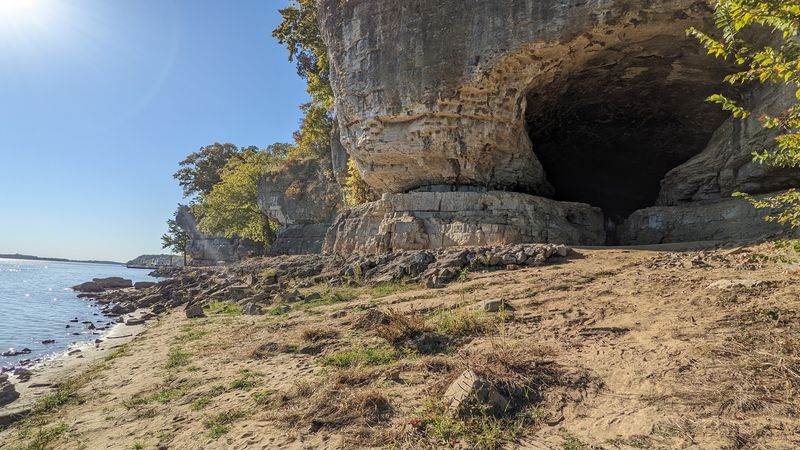
Way down at the southern tip of Illinois, where the state runs out of road and the Ohio River takes over, there is a limestone opening in a bluff that swallows sunlight and spits it back out again. You can walk right into it, no ticket, no guide, no helmet, just a set of stairs and a little curiosity.
Families wander in, kids shout to hear their echo, and everyone leaves with photos they did not plan on taking. It is the kind of stop you pencil in for twenty minutes and end up stretching into an afternoon.
A Limestone Mouth On The Ohio River
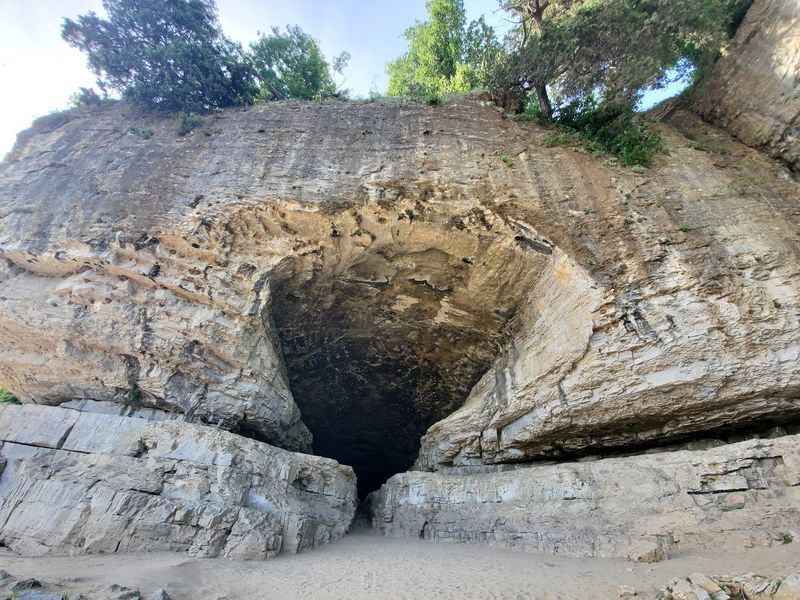
Roughly six hours south of Chicago, in the small river town of Cave-In-Rock, sits a state park built around one very large hole in a cliff. The address is 1 New State Park Rd, Cave-In-Rock, IL 62919, and the main attraction is exactly what the town name promises.
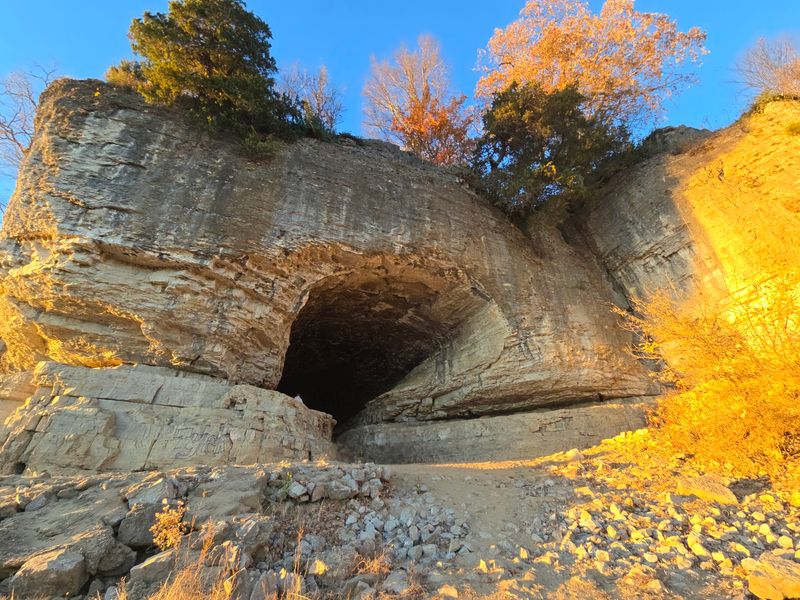
The cave measures about 55 feet across at its opening, a keyhole shape carved into limestone by water working patiently over thousands of years. Inside, it runs roughly 120 feet deep, with ceilings reaching around 50 feet at the tallest point.
What surprises most first-timers is how walkable it all is. There is no ladder, no crawling, no guided tour schedule to catch.
A short trail and a run of stairs bring you down to the shoreline, and the entrance is right there waiting.
The park itself covers 204 acres of wooded bluffs above the water. Visitors consistently rate it highly, and the cave dominates conversation, showing up in hundreds of comments as the reason people made the drive at all.
Named By A French Explorer In 1729
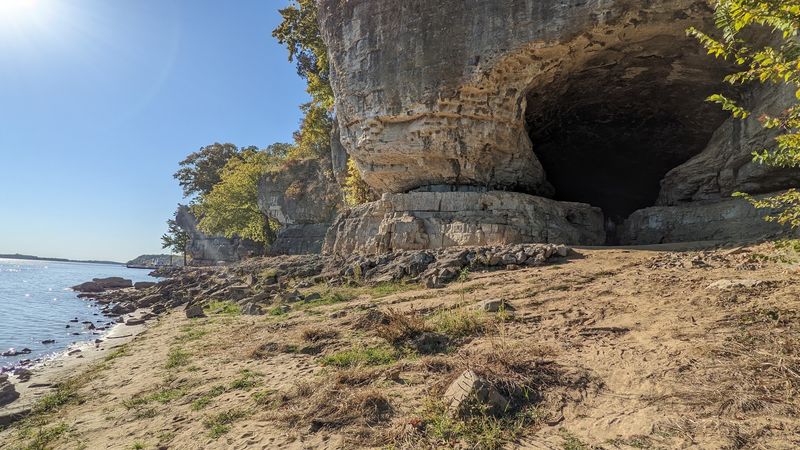
Long before Illinois was a state, a French explorer named M. de Lery took note of this opening in 1729 and called it caverne dans Le Roc, which translates roughly to cavern in the rock. The name stuck, got Anglicized, and eventually gave the whole town its identity.
Because of that early record, the cave began appearing on some of the first maps drawn of the interior United States. For river travelers navigating an unfamiliar continent, a landmark that size was genuinely useful, a fixed point you could not miss from the water.
Later chapters got rougher. The cave earned a reputation in the flatboat era as a hideout for river bandits who preyed on traffic drifting downstream, and visitors today still bring up that outlaw history as part of the appeal.
Standing inside, it is easy to picture why. The chamber is dry, sheltered, and hidden from anyone passing by until they are practically on top of it.
Several guests mention imagining settlers taking shelter here on their way west.
The Keyhole Entrance And What Waits Behind It
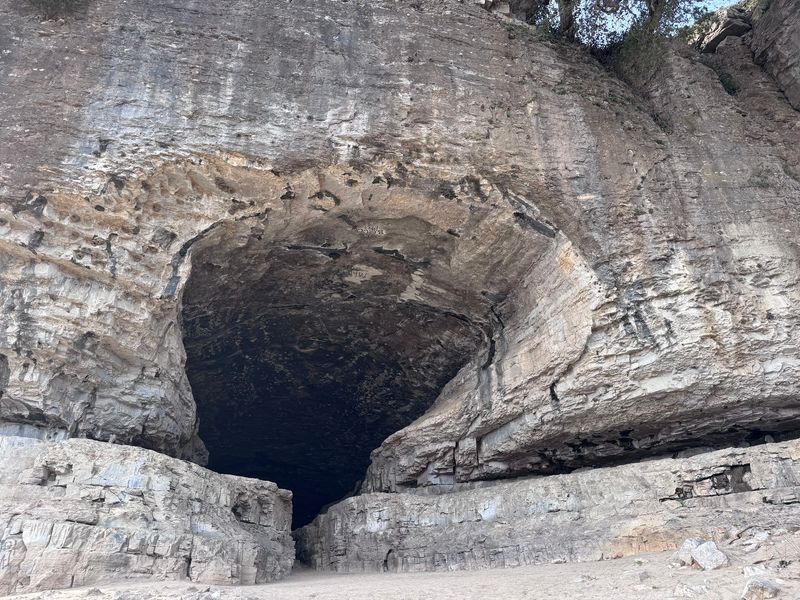
Step through the arch and the space opens up fast. The entrance narrows into a short walkway before widening into a broad chamber, and that moment of compression followed by release is what makes the interior feel bigger than its measurements suggest.
Depth-wise, you are looking at somewhere between 100 and 120 feet before the back wall stops you. Guests describe walking in roughly 50 yards and being able to see the entire cave in one go, which means nobody in your group gets lost or nervous.
The floor can be muddy, especially after rain, though most people report it as messy rather than slippery. Boots are smarter than sandals.
Some visitors bring flashlights and say it improves the experience, particularly for peering at the ceiling.
Air temperature inside runs noticeably cooler than outside, a detail that summer visitors appreciate after the walk down. The damp, stony smell hits immediately.
One recurring reaction: people expect something deeper and narrower, then find themselves impressed instead by how wide and open the whole thing feels.
Sunlight Falling Through The Natural Chimney
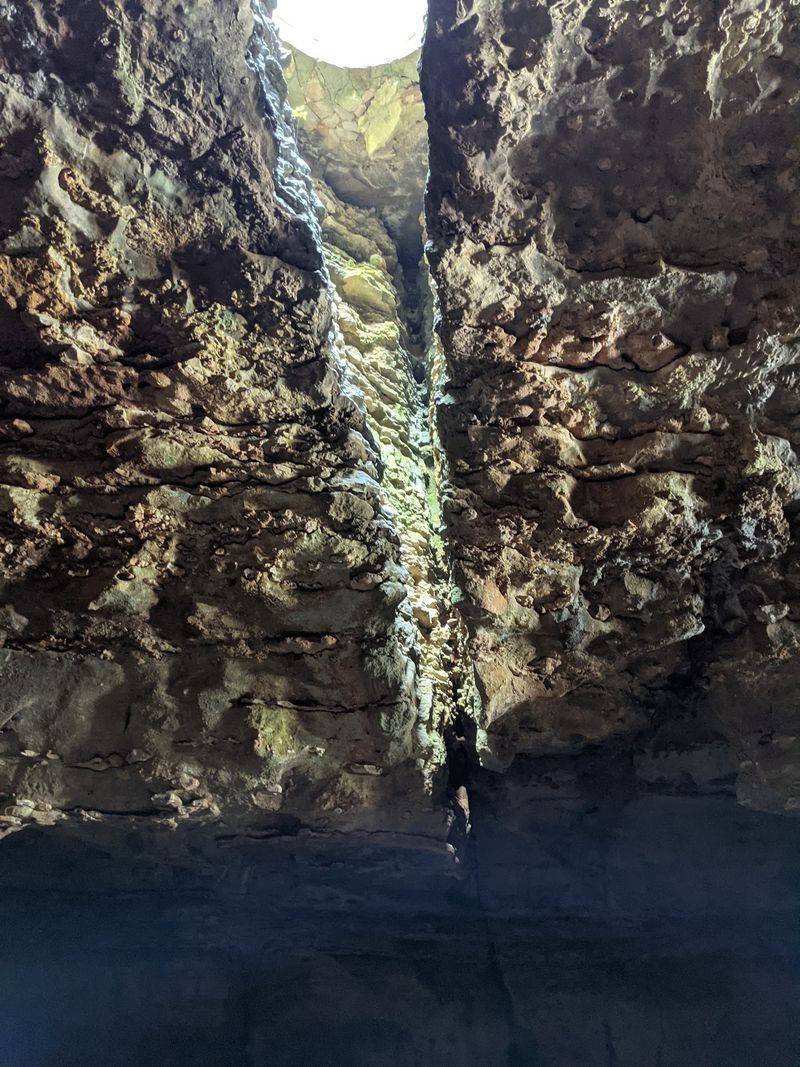
Here is the feature nobody puts in the brochure but everybody talks about afterward. A natural fissure splits the top of the cave, and around midday sunlight pours straight down through it, lighting the back wall like a stage.
Geologists would call it a solution feature. Practically speaking, it works as a chimney, and it is the reason you can explore the rear of the chamber without much artificial light at all.
Timing matters if you want the full effect. Visitors who arrive in the middle of the day report the strongest beam, while morning and late afternoon trips get softer, more diffused light.
Photographers tend to lose track of time here. The contrast between the dim stone walls and that single bright column makes for shots that look staged even when they are not.
Kids notice it immediately too, usually before the adults do. There is something about a hole in a ceiling of solid rock that turns a cave visit into an actual discovery rather than a walkthrough.
Bluff-Top Views Over The Water
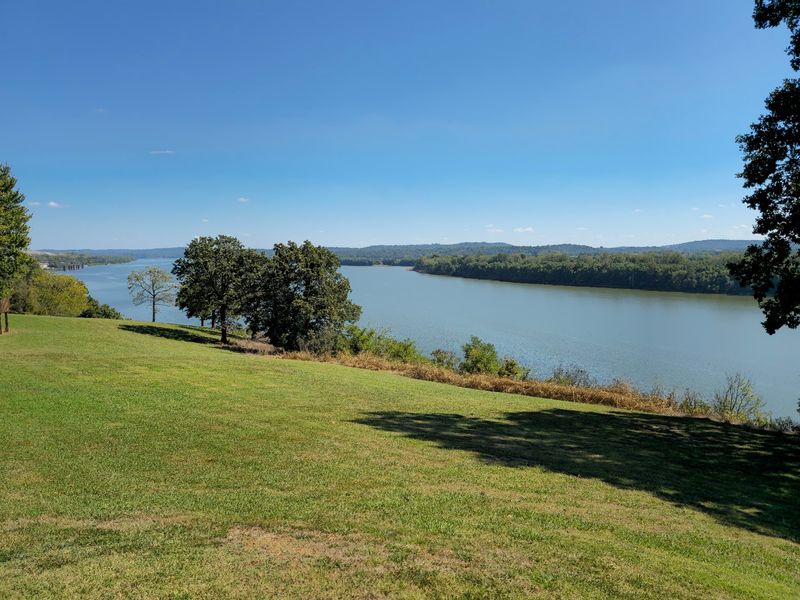
Climb back up from the shoreline and the payoff shifts entirely. From the bluffs above the cave, the Ohio River stretches wide and slow, with Kentucky filling the horizon on the far bank.
Barges push through regularly, and watching one round the bend from that height is oddly hypnotic. River views come up in dozens of visitor comments, second only to the cave itself.
Gazebos and picnic tables are positioned to take advantage of the vantage point, so you can eat lunch with the whole valley laid out below you. Several guests say they lingered far longer up top than they had planned.
Sunset is a popular window, since the park stays open until 10 PM. The light coming off the water in late evening turns the whole bluff gold.
One visitor summed up the geography nicely by wondering why nobody ever built a fort up there, given how far you can see. Standing at the railing, that thought makes complete sense.
Stairs, Shoreline, And The Short Walk Down
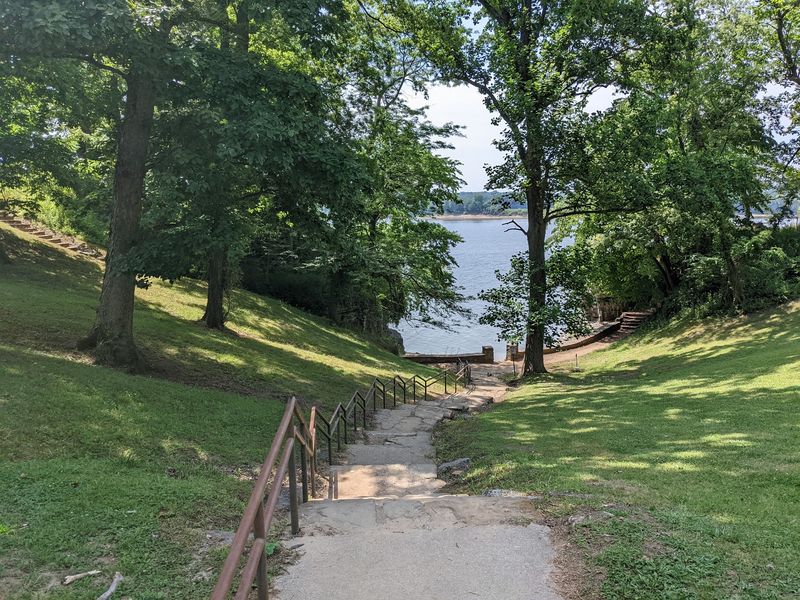
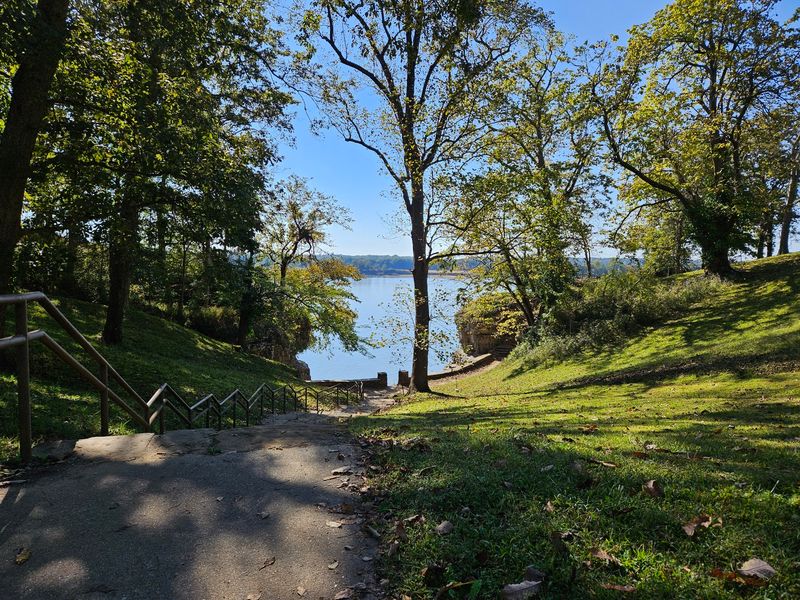
Nobody should be shocked by this part, but plenty of people are: getting to the cave involves stairs. Quite a lot of them, up over a small rise and then back down toward the beach.
Stairs show up in around 70 visitor comments, which tells you it is the single most discussed logistical detail of the whole park. The route is short, roughly a three minute walk from the correct parking area, but it is not flat.
At the bottom you land on a rocky shoreline. Turn left and the cave mouth is right there, wide open and unmistakable.
Footing along the shore can be uneven, and dried fish sometimes wash up along the waterline depending on the season. Nothing dangerous, just worth knowing before you send kids sprinting ahead.
For anyone with mobility concerns, the stairs are the limiting factor rather than the cave itself. Once you are down, the interior is described as accessible in its entirety, no scrambling required.
Picnic Shelters, Playground, And Cabins
Families who show up expecting a fifteen minute cave stop often end up staying because the park quietly gives them reasons to. Picnic tables with grills sit scattered under the trees, and gazebos offer shade when the afternoon heat sets in.
A playground near the first parking area keeps younger kids busy before or after the descent, which helps if half your group is not up for stairs.
Overnight options exist too. The park has cabins for those who want to stretch the trip into a weekend, plus camping facilities within its 204 acres.
Hiking trails wind through the woods around the cave, and several visitors describe them as genuinely pretty rather than just filler. Dogs are welcome on them, and a fair number of guests bring theirs.
Restroom facilities are limited to pit toilets in a few spots, and cleanliness varies, so plan accordingly. A restaurant sits up on the hill, praised by guests for fair pricing, though it closes earlier than you might expect.
Boat Ramps, Fishing, And The Free Ferry
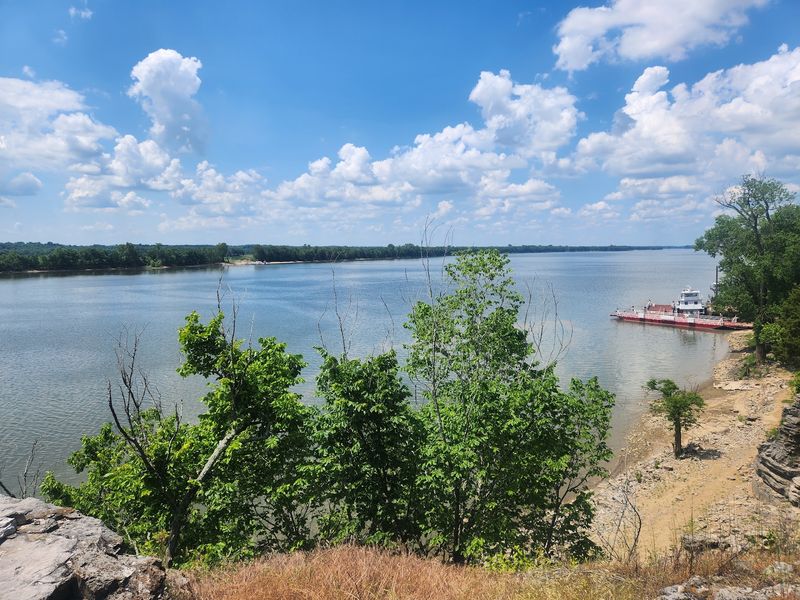
Two boat ramps connect the park directly to the Ohio, which opens the place up to anglers and anyone hauling a trailer. Fishing and boating are steady draws here, separate from the cave crowd entirely.
Then there is the ferry, and it delights people out of all proportion to its simplicity. A car ferry runs across the river between Illinois and Kentucky nearby, and it costs nothing to ride.
Guests describe pulling up, asking the fare, and being genuinely stunned to hear it is free. Motorcycles, cars, and the occasional curious traveler load up and cross in a few minutes.
Several visitors call the ferry the highlight of their day, right alongside the cave. Crossings like it have become rare, which adds to the novelty.
Trailer parking is available at the first entrance, the same lot with the stairs and playground. If you are combining a boating day with a cave walk, that lot handles both without any repositioning.
Who Tends To Enjoy It Most
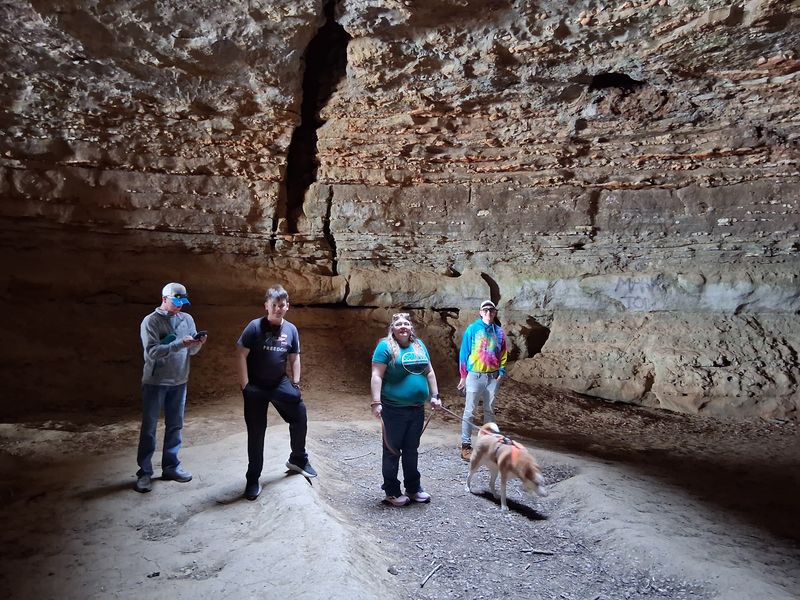
Picture a Saturday here and you get a real cross-section: young families with strollers parked at the top of the stairs, retirees taking the descent slowly, motorcycle groups pulling in off the winding roads.
Curious kids do well because the cave rewards noise, echoes, and running around without ever feeling genuinely risky. History-minded adults get the 1729 naming, the outlaw era, and the graffiti carved into the ceiling decades ago.
Photographers may be the biggest winners. Between the light shaft, the arched entrance framing the river, and the bluff views, it is hard to leave with a boring camera roll.
Expectations matter, though. A few visitors note the cave is shallower than they pictured and describe it as a strong short stop rather than a full-day destination on its own.
Pair it with something else in the region and it shines. Plenty of people arrive as a bonus stop on the way back from Garden of the Gods and wish they had budgeted more time.
Hours, Cost, And Finding The Right Parking Lot
Admission is free, every day, all year. That single fact comes up again and again from visitors who expected to pay something for a natural attraction this size.
Gates operate 6 AM to 10 PM, seven days a week, which gives you generous flexibility for sunrise walks or evening river watching. The park number is 618-289-4325 if you need to check conditions.
Here is the tip that saves the most frustration: navigation apps frequently route drivers to the restaurant at the top of the hill instead of the cave lot. From there it is roughly a 20 minute walk.
Park instead at the first lot you encounter, the one with stairs heading up a small hill and a playground nearby. From that lot, the cave is about three minutes away.
Budget an hour minimum. Most people report spending one to two hours total, longer if the trails, picnic tables, or ferry pull them in.
Worth The Drive Down
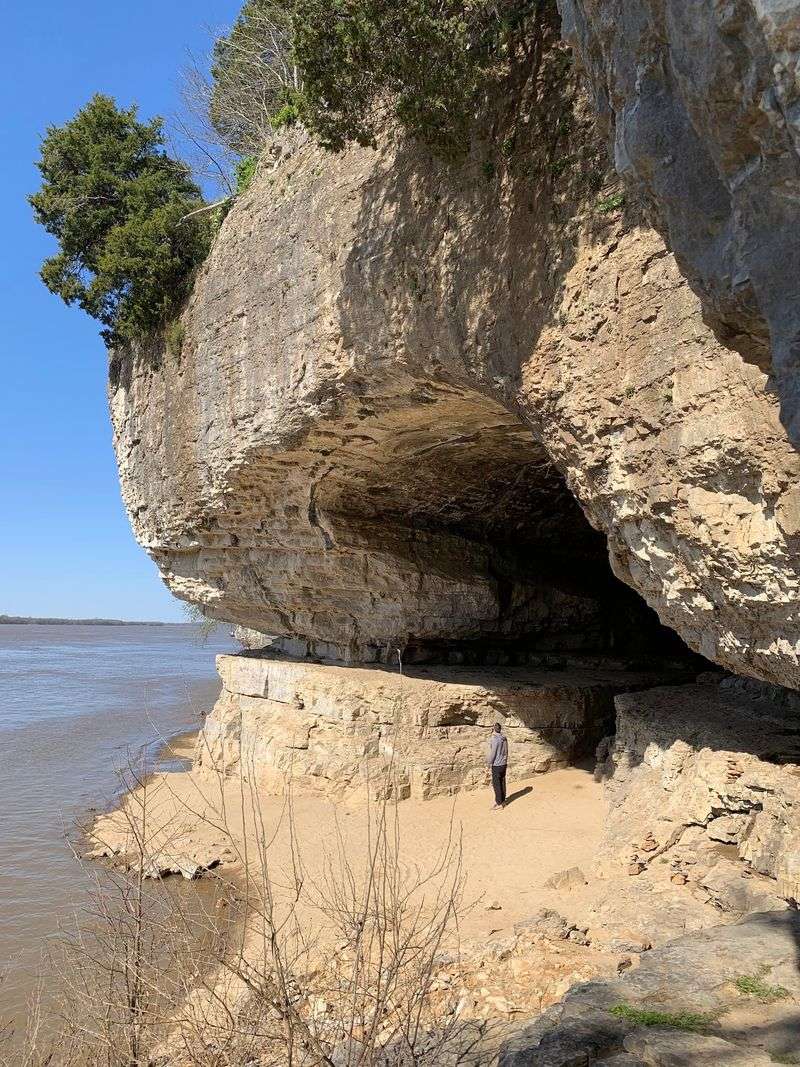
Some places oversell themselves and some barely bother. Cave-In-Rock falls firmly in the second camp, a 55-foot limestone opening that has been sitting in the same bluff since long before anyone thought to name it.
What makes it work is the lack of friction. No ticket booth, no timed entry, no equipment rental, just stairs, a shoreline, and a chamber you can walk into with a toddler on your hip.
The 4.7 star average across more than 2,000 visitors reflects that ease as much as the scenery. People come expecting a photo op and leave talking about the light shaft, the river, and the free ferry ride.
Southern Illinois hides a lot in its far corner, and this park sits at the end of narrow, winding roads that keep the crowds manageable. That remoteness is part of the charm.
If your route ever bends toward the Ohio River down here, give it two hours. The cave will handle the rest.