
Forgotten Massachusetts Ruins Where The History Feels Like Time Stood Still
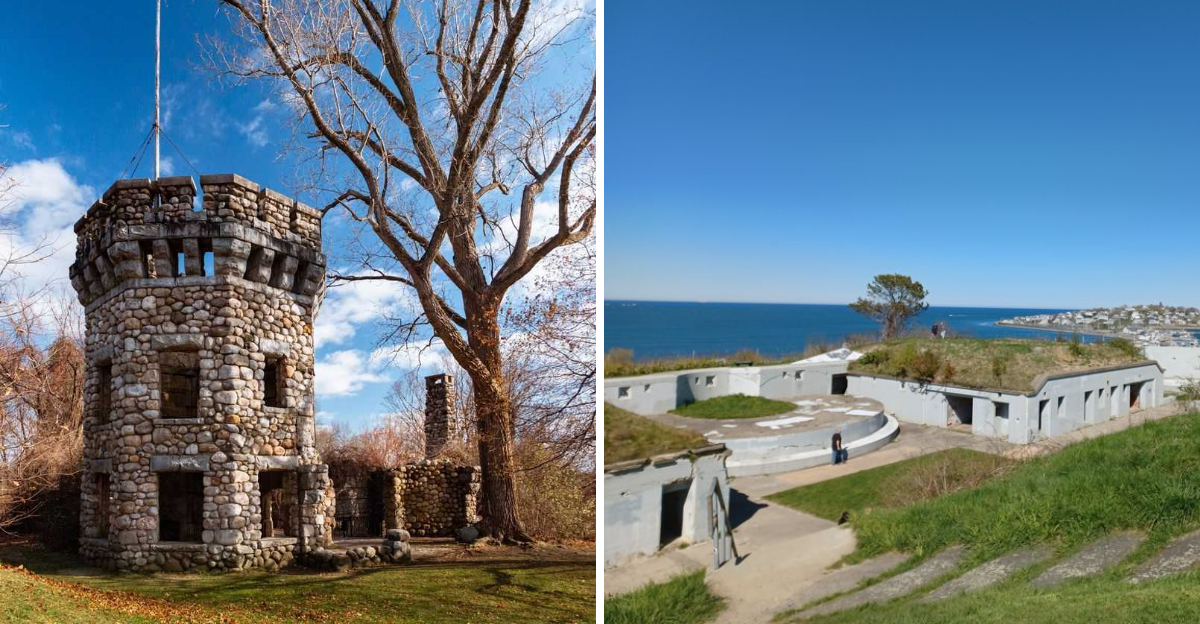
Some places refuse to disappear, even after the people, buildings, and busy days are long gone.
Massachusetts is filled with ruins that still hold traces of old hotels, abandoned settlements, military forts, and forgotten communities. Crumbling stone walls rise beside quiet trails.
Empty foundations sit beneath trees that have grown around them for decades.
Each site feels frozen between past and present. You can stand where families once lived, soldiers kept watch, or travelers gathered for meals and music.
The silence makes every broken staircase and weathered doorway feel even more powerful.
These places are not polished attractions with bright signs and crowded gift shops. Their stories live in cracked stone, old pathways, and structures slowly being reclaimed by nature.
Bring sturdy shoes and a curious mind. These forgotten ruins offer a rare chance to walk through Massachusetts history and see what remains when time moves on but never completely erases the past.
1. Eyrie House Ruins, Mount Tom State Reservation, Holyoke
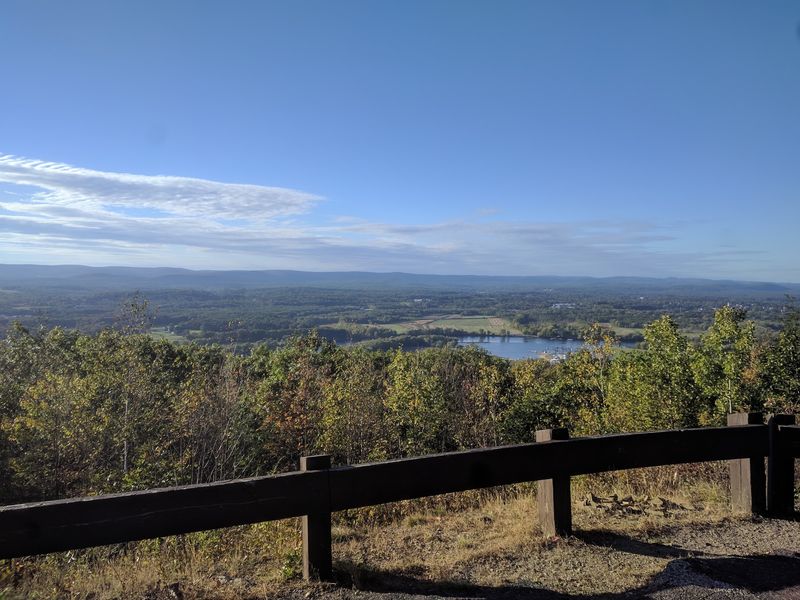
Long before ski lifts and selfie sticks, nineteenth-century travelers made the climb to Mount Nonotuck in Holyoke just to sleep in a grand hotel perched above the Connecticut River valley.
The Eyrie House Hotel opened in 1861 as a twelve-room retreat, eventually growing to thirty guest rooms complete with promenades and a croquet field.
Its end came fast and dramatically in 1901, when a fire set to dispose of horses reignited in the wind and consumed the entire structure. What remained were the stone bones of something once magnificent.
Today, Massachusetts DCR offers a self-guided walk to the ruins along Mount Nonotuck Road, a nearly three-mile round trip from the Stone House area.
Stone walls and empty window frames stand in quiet contrast to the forest that has grown up around them.
The views of the Connecticut River below are still as sweeping as they were when guests gathered on the hotel’s promenades over a century ago. Autumn is particularly stunning up here, when the valley turns gold and rust beneath the ridge.
There are few places in western Massachusetts where the scenery and the history compete this evenly for your attention.
2. Rutland Prison Camp Ruins, Rutland
Most prison stories involve fences and watchtowers. The Rutland Prison Camp, established in 1903 in Rutland, Massachusetts, had neither.
Instead, it operated as an open-air farm where non-violent offenders grew crops and raised livestock in what was considered a progressive approach to corrections at the time.
By 1907, the site had expanded to include a tuberculosis hospital, making it one of the more unusual combinations of facilities in New England history.
The whole experiment ended in 1934 when the land was absorbed into the Quabbin Reservoir watershed.
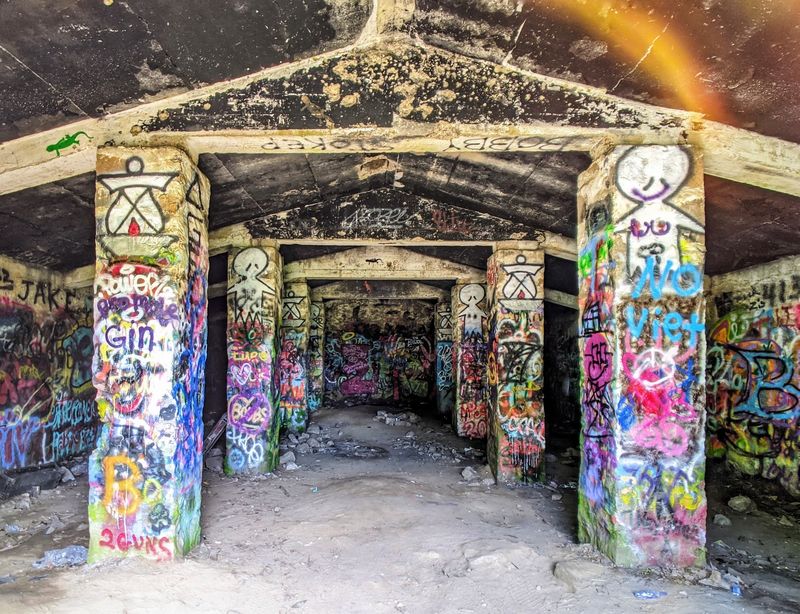
What survives today is genuinely eerie in the best possible way. Concrete cells still stand in the woods, a root cellar remains largely intact beneath a nearby field, and old stone foundations trace the outlines of buildings long since gone.
The Rutland Historical Commission is actively working to preserve what remains and plans to add informational signage to help make sense of the site’s layered past.
Because preservation work is ongoing, it is worth confirming current access conditions before making the trip.
Few places in central Massachusetts carry this much quiet, complicated history in such an unexpected package.
3. Dogtown Cellar Holes, Gloucester
Somewhere between a ghost town and a forest, Dogtown sits in the interior of Cape Ann in Gloucester, holding the outline of a community that simply faded away.
The settlement, originally called the Commons Settlement, was founded around 1642 as a place where early colonists could stay safely inland, away from coastal pirates and the threat of attack.
For roughly a century it worked. Then new roads opened up the shoreline, the dangers of naval bombardment eased after the War of 1812, and people gradually drifted toward the sea.
The village was empty by the early nineteenth century.
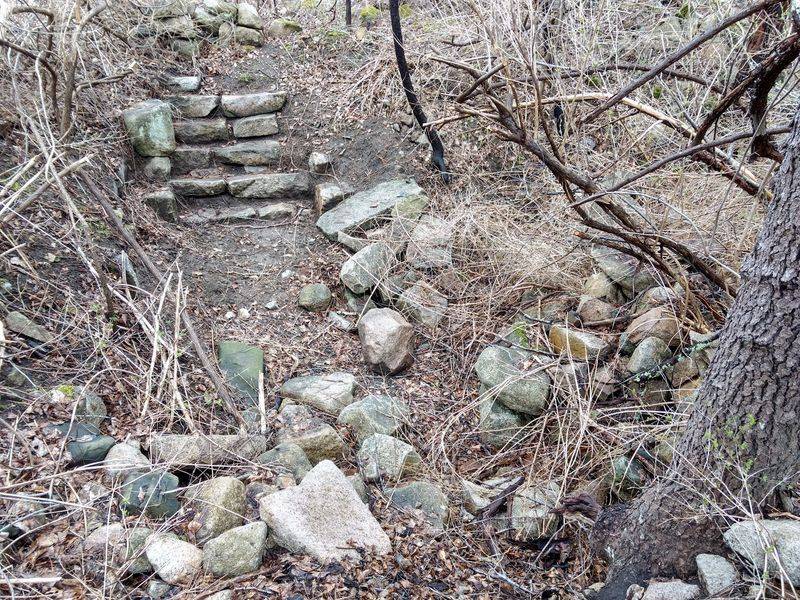
What makes Dogtown so compelling today are the numbered cellar holes scattered across the landscape, each one marking where a family once had a hearth, a door, a life.
Roger Babson, the eccentric naturalist and philanthropist who mapped these holes, also hired stonecutters to carve motivational phrases onto the site’s glacial boulders.
Walking through Dogtown means reading messages like “Keep Out of Debt” and “Be On Time” carved into rocks the size of small cars. It is part history lesson, part philosophical scavenger hunt, and entirely unlike anywhere else in Massachusetts.
The boulders alone make the hike worth every step.
4. Dana Common, Petersham
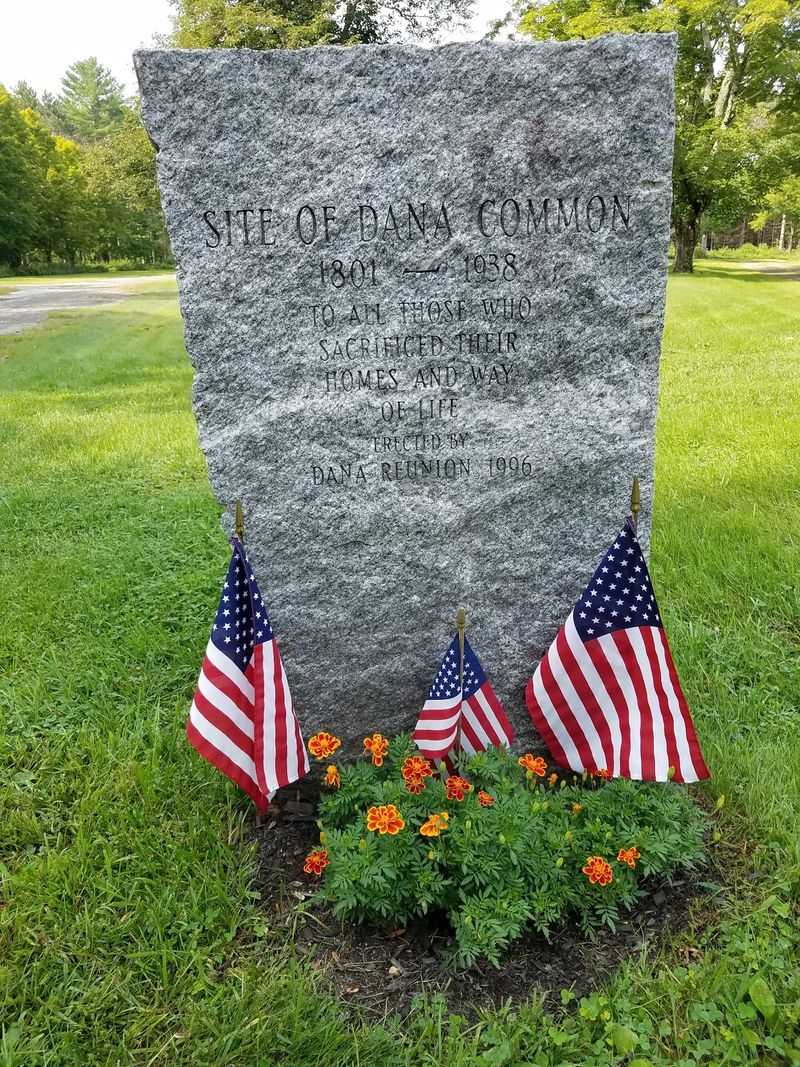
Some towns get bypassed by progress. Dana, Massachusetts, was erased by it.
Along with three neighboring communities, Dana was disincorporated in the late 1930s to make way for the Quabbin Reservoir, which was built to supply drinking water to greater Boston.
Buildings were demolished, residents were relocated, and the land was flooded.
Dana Common, however, sat just above the waterline and survived as an open-air archaeological landscape rather than disappearing beneath the surface like much of the rest.
Walking Dana Common today means reading history through what is left behind. Granite steps lead up to foundations where houses once stood.
Stone walls follow property lines that no longer mean anything. And then there is the safe, an enormous metal vault that proved too heavy to move, now sitting in the open air like a punchline to a story that is mostly sad.
Access is available through Quabbin Gate 40 on Route 32A in Petersham. The quiet here is deep and deliberate, shaped by the knowledge that this ground was once someone’s front yard, their town center, their home.
Dana Common rewards patience, and it tends to leave people a little more thoughtful than when they arrived.
5. Bancroft Castle Ruins, Groton
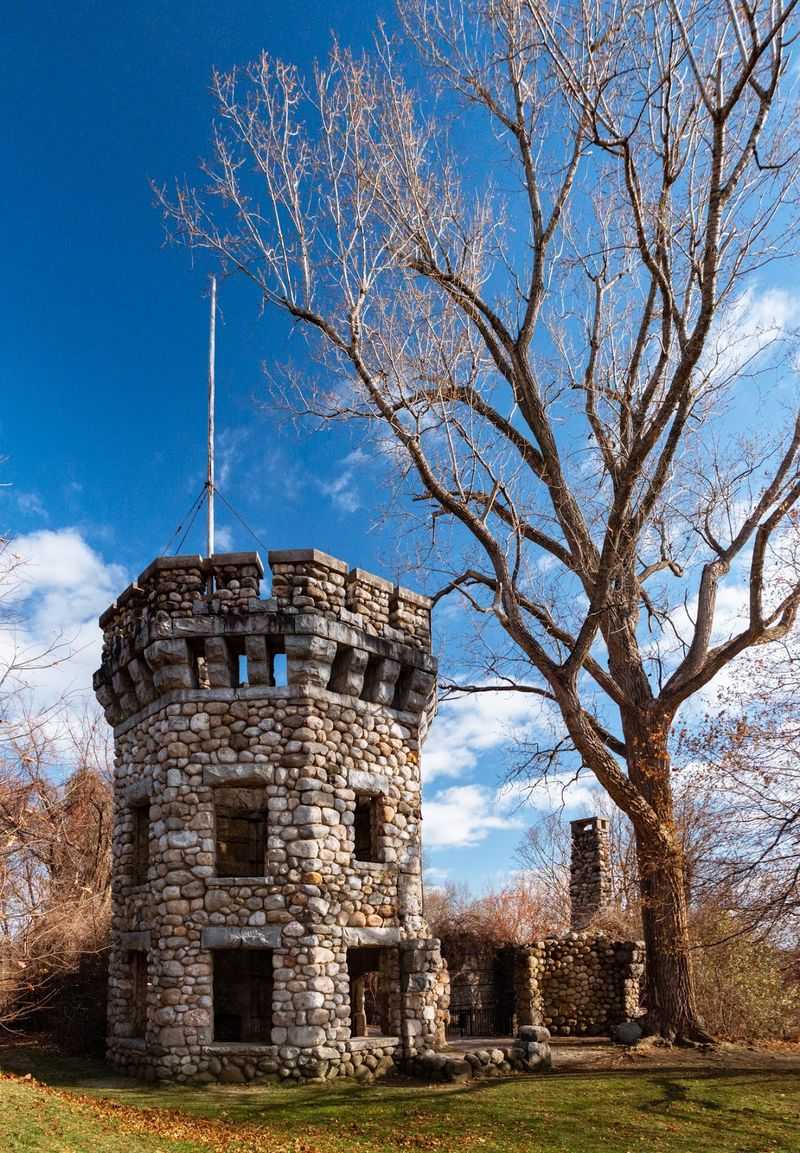
General William Bancroft had a plan. In 1906, he began building a castle-like mansion on Gibbet Hill in Groton, imagining it as his grand retirement project.
Then the money ran short, construction stopped, and the dream stalled permanently in stone.
The property changed hands and purposes over the years, briefly operating as a private sanitarium before the Groton Hunt Club took it over as a social gathering spot.
A fire in 1932 destroyed much of the accompanying bungalow, but the stone observation tower and exterior walls held firm.
Today, the ruins are reachable by a short public trail, roughly a quarter to half mile of hiking that climbs steeply enough to remind you that the views are earned.
And the views genuinely deliver, stretching west across Groton’s rolling farmland and all the way into southern New Hampshire.
The stone shell of the unfinished castle sits at the top with a certain quiet dignity, its empty window frames framing the landscape like a painting that nobody planned. Staying on marked paths is important here since the surrounding land is privately owned.
Autumn sunsets seen through those open stone arches are the kind of thing that makes you forget you were ever in a hurry.
6. Fort Revere Ruins, Hull
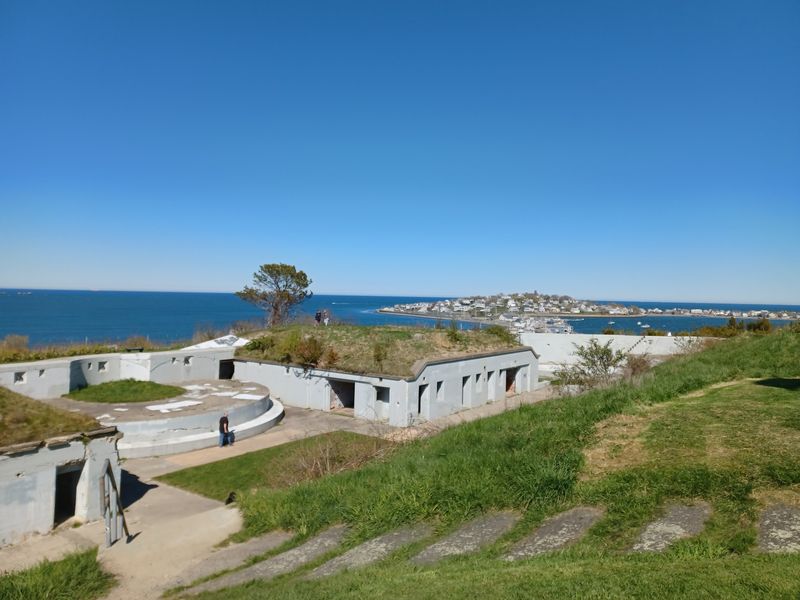
Telegraph Hill in Hull has been watching over Boston Harbor for a very long time. Patriot forces first fortified the site in 1776, calling it Fort Independence, using its commanding position to monitor British naval movements during the American Revolution.
The hill stayed strategically relevant for well over a century, eventually becoming Fort Revere in the late 1800s as part of a broader coastal defense network that remained active through both World Wars.
Decommissioned in 1947, the 8-acre site is now preserved as Fort Revere Park.
The park holds remains from multiple eras of American military history. Some concrete Endicott-period batteries are still clearly visible, while others have been absorbed back into the hillside over decades of weathering.
Standing out above them all is the 1903 water tower, reportedly the first reinforced concrete water tower built in the United States.
The panoramic views of Boston Harbor from the top of Telegraph Hill explain exactly why military planners kept returning to this spot generation after generation.
On a clear afternoon, the water spreads out in every direction and the city skyline sits on the horizon like a backdrop to all that history.
Fort Revere does not need much drama to make its point; the landscape does the talking.
7. Fort Andrews Ruins On Peddocks Island, Boston Harbor
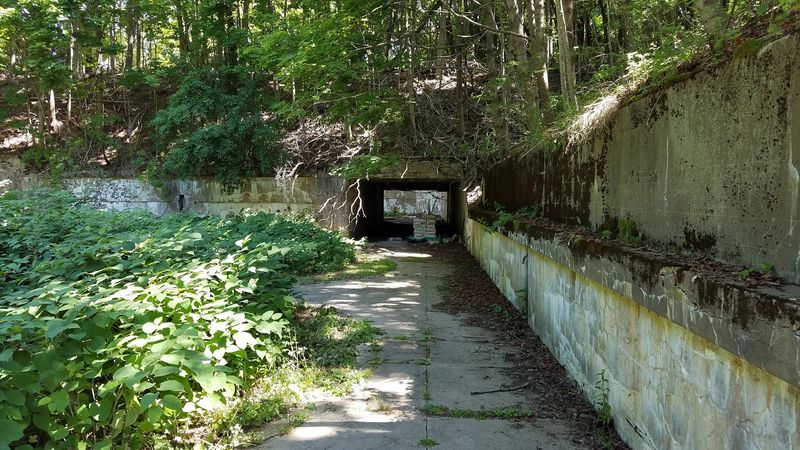
Getting to Peddocks Island requires a ferry ride, and that short trip across Boston Harbor feels like crossing a threshold into a different era entirely.
Fort Andrews was established in the early 1900s as part of Boston’s coastal defense system, armed with mortars and gun emplacements that stood ready through two World Wars.
After the fort was decommissioned in 1947, the island was left largely to its own devices.
Nature moved in gradually, winding vines and creeping moss across former barracks, stables, guardhouses, and storage buildings that once supported hundreds of soldiers.
Most of the structures are closed for safety, but the roads and paths that once connected them are still walkable, giving a real sense of the fort’s scale.
Peddocks is one of the largest islands in Boston Harbor and has miles of trails that wind past both the ruins and the island’s natural shoreline.
Island access is seasonal, typically running through the warmer months via ferry service from the mainland.
The combination of military history, salt air, and total separation from the city makes Peddocks feel genuinely remote even though Boston is clearly visible across the water.
It is the kind of place where the silence feels earned rather than accidental.
8. The Old Bear Dens At Franklin Park, Boston
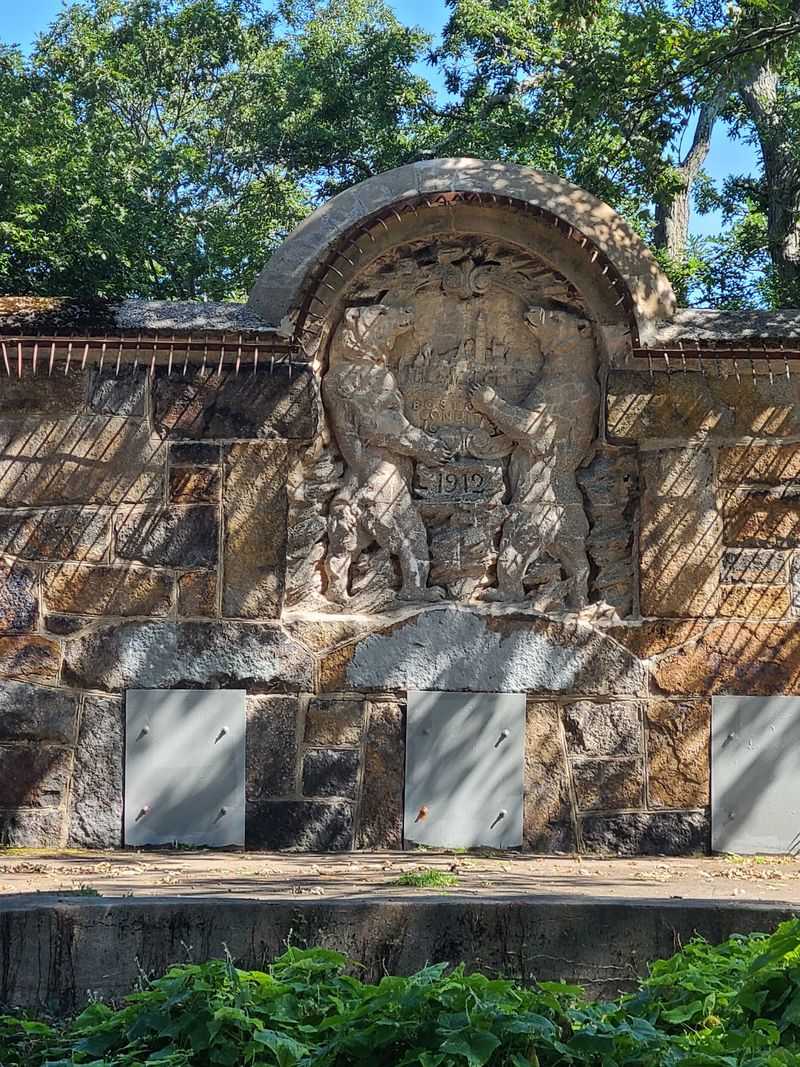
Somewhere inside Franklin Park in Boston, there are stone enclosures that once held grizzly bears, black bears, and polar bears, and they have been sitting empty and quietly crumbling for decades.
The Old Bear Dens were designed by Arthur Schurcliff and opened in 1912 as one of the Franklin Park Zoo’s most popular features.
Boston schoolchildren famously raised pennies to help keep the dens running during financially lean periods, which says something about how much the city loved them.
By the 1950s and 1960s, changing standards in zoo design and growing safety concerns led to their closure, and the bears were relocated.
For years the structures stood in a kind of limbo, slowly being reclaimed by the park’s vegetation. That changed when the City of Boston took over management of the area in late 2024, signaling a renewed commitment to the site’s future.
The Boston Parks and Recreation Department is now overseeing safety and structural improvements.
Future plans reportedly include transforming the dens into community spaces that draw inspiration from the original pools and enclosure designs.
For now, the stone walls and mossy ledges carry enough atmosphere to make any walk through this corner of Franklin Park feel unexpectedly atmospheric.
9. Brook Farm Ruins, West Roxbury
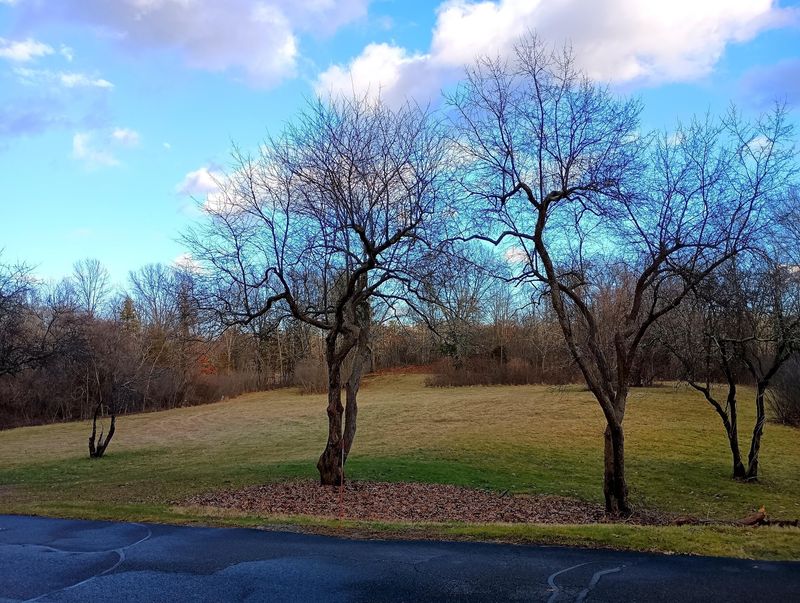
In 1841, a former Unitarian minister named George Ripley gathered a group of idealists on 179 acres in West Roxbury and tried to build a better world.
Brook Farm was a Transcendentalist experiment in communal living, designed to blend intellectual life with honest manual labor in a way that the competitive pressures of city life made impossible.
Nathaniel Hawthorne worked the fields here. Ralph Waldo Emerson came to talk and observe.
For a few years, it genuinely hummed with energy and ambition.
Then in 1846, a fire tore through the nearly completed Phalanstery, the large central building that was supposed to anchor the whole community. The financial loss was too great to recover from, and Brook Farm disbanded the following year.
No original buildings remain on the site today, but the foundations, cellar holes, stone walls, and historic lanes that survive across the rolling fields and woodlands tell the story in outline.
Brook Farm is a National Historic Landmark now, managed by the Department of Conservation and Recreation, with periodic tours offered through the West Roxbury Historical Society.
Walking these grounds, it is easy to feel the weight of the ambition that once lived here, and just as easy to understand how one bad night changed everything.