
8 Forgotten Montana Ghost Towns With Fascinating History Most Tourists Miss
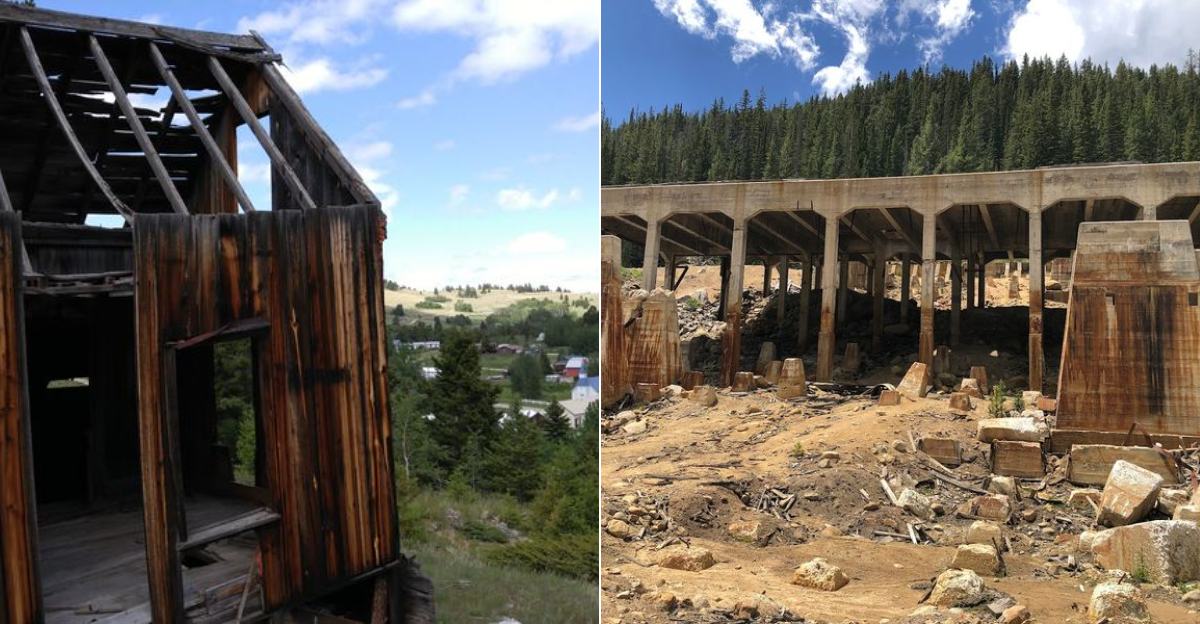
Ghost towns have a strange way of making the past feel loud. One creaky board, one weathered storefront, one empty street, and suddenly the old boomtown days do not feel so distant.
Montana knows that feeling better than most. Beyond the postcard mountains and big-sky road trips, there is a wilder story waiting in the dust.
These towns were once packed with miners, dreamers, shopkeepers, families, gamblers, and fortune-seekers who believed the next strike could change everything. Then the crowds vanished. The buildings stayed. That is what makes them so fascinating.
They are eerie, beautiful, rugged, and strangely alive with stories that never made it into the glossy travel brochures. If you love history with a little mystery, these forgotten towns deliver the kind of adventure that feels raw, real, and unforgettable.
1. Bannack
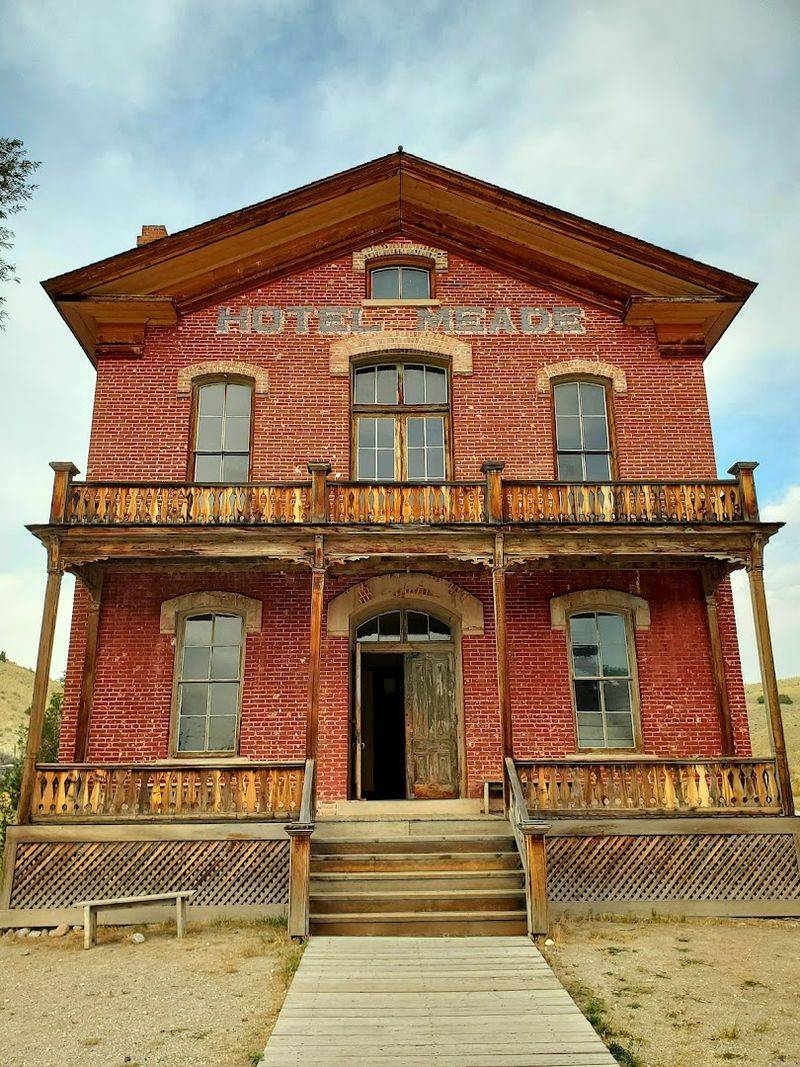
Gold changed everything here. When prospectors struck it rich along Grasshopper Creek in 1862, Bannack exploded almost overnight into Montana’s first territorial capital. At its peak, the town had hotels, saloons, a school, and even a Masonic lodge, all carved out of raw frontier land.
What makes Bannack especially gripping is its darker story. Sheriff Henry Plummer, the man supposed to keep the peace, was secretly leading a gang of road agents who terrorized the mining routes.
Vigilantes eventually took justice into their own hands, and Plummer was hanged on the very gallows he had built himself. That twist of history gives Bannack a dramatic edge that few places can match.
Today, more than 60 original structures still stand at Bannack State Park, making it one of the best-preserved ghost towns in the entire American West. You can walk through the old jail, peek inside the hotel, and imagine life in a place where fortunes were made and lost daily.
The park hosts a popular Bannack Days event each summer, where living history demonstrations bring the 1860s back to life. Rangers are on-site during summer months to answer questions and share stories that go far beyond what any sign can tell you.
Even in winter, the quiet, snow-dusted buildings carry a powerful atmosphere. You will find Bannack State Park at 4200 Bannack Road, Dillon, MT 59725. The park is open year-round, with summer hours running 8am to 9pm and winter hours from 8am to 5pm.
For anyone serious about Montana history, Bannack is an experience that sticks with you long after you leave.
2. Garnet
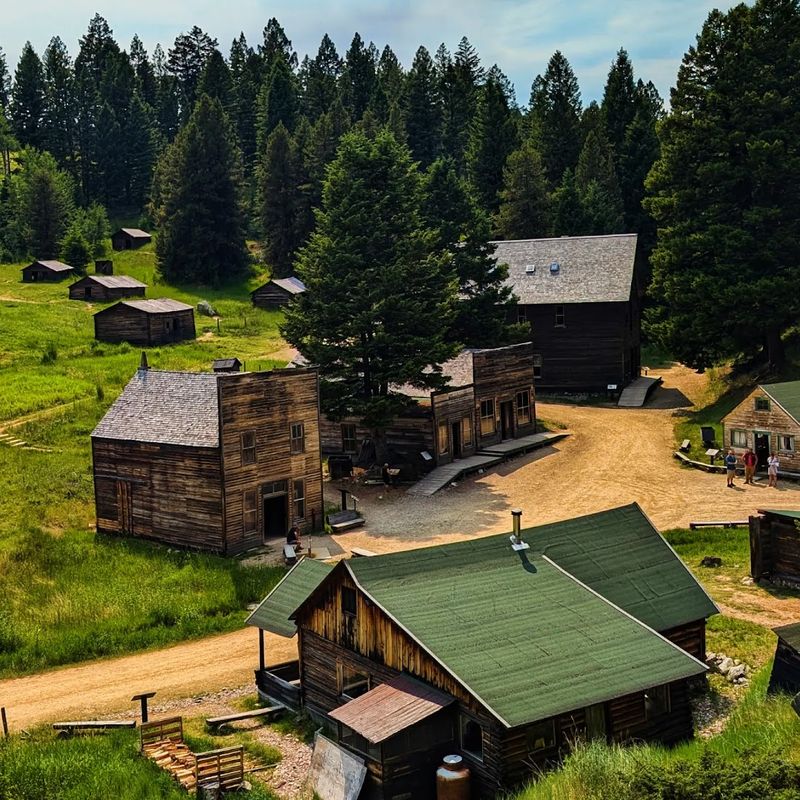
Garnet rests quietly in the hills east of Missoula, and getting there is half the adventure. You follow MT-200 and then bump along 12 miles of dirt road before the trees open up and reveal a cluster of sagging cabins and old mine works.
That sense of earning your arrival makes the place feel even more special. The town had two major booms. The first came in the 1870s when gold was discovered in the area.
Then, after a fire nearly wiped everything out in 1912, Garnet came back to life during the Great Depression. As gold prices rose, desperate men returned to work the old claims.
At its second peak, around 1,000 people lived in these hills, surviving brutal winters and working long shifts underground.
One of the most talked-about features of Garnet is its winter legend. Old-timers in the area have long claimed that during cold, quiet months, strange sounds and lights sometimes appear among the abandoned buildings.
Believe those stories or not, the atmosphere at Garnet is genuinely eerie and captivating on its own.
The Bureau of Land Management maintains the site and keeps it accessible to visitors. During summer, the site is open daily from 9:30am to 4:30pm, and a small visitor center offers helpful context about the town’s layered past.
You can explore the cabins, peer through windows, and follow a short trail through the ruins. Garnet Ghost Town Road, off MT-200 in Granite County, MT 59832, is the address to search before you go.
High-clearance vehicles handle the dirt road better, so plan accordingly. For anyone who loves raw, unpolished history, Garnet delivers exactly that.
3. Granite
High on Granite Mountain above Philipsburg, the ghost town of Granite once ranked among the richest silver-producing sites in the country. At its height in the late 1880s, the Granite Mountain Mine was pulling out millions of dollars worth of silver ore every year.
The town that grew around it had a population pushing 3,000 people. The collapse came fast. When silver prices crashed in 1893 following the repeal of the Sherman Silver Purchase Act, Granite emptied out almost overnight.
Workers left mid-shift, families packed up within days, and a thriving community became a ghost in a matter of weeks. That sudden abandonment gives Granite a haunting quality that is hard to describe until you see it for yourself.
What remains today is striking. The massive stone walls of the miners union hall and the superintendent’s house still stand against the mountain sky, their roofless frames open to the elements.
These ruins are among the most photogenic in all of Montana, and the hike up to reach them adds a layer of physical connection to the experience.
Getting there requires a five-mile drive up a steep gravel road from Philipsburg, and a high-clearance vehicle is strongly recommended. The site is open seasonally during daylight hours, so you will want to arrive with enough time to explore properly.
The address to note is Granite Mountain Road, Philipsburg, MT 59858. Once you reach the top, the views of the Flint Creek Valley below are genuinely breathtaking.
Granite is the kind of place that makes you stop and think about how quickly fortune and community can rise and disappear.
4. Virginia City
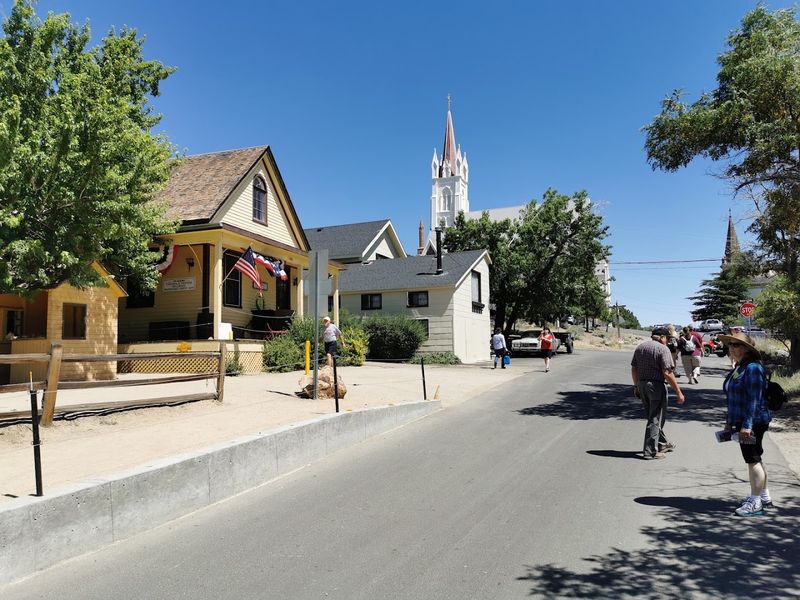
Few places in Montana have held onto their past as carefully as Virginia City. Founded in 1863 after a gold strike along Alder Gulch, this town became the territorial capital and one of the early West’s most important communities.
The street plan, the buildings, and even some of the original merchandise inside the shops have survived into the present day.
Exploring Wallace Street feels like moving through a living museum. Original storefronts line both sides of the road, many of them still housing businesses, exhibits, and demonstrations that reflect 1860s life.
The Thompson-Hickman Museum, the Wells Fargo building, and the old territorial courthouse are just a few of the landmarks you can explore on foot.
Virginia City also carries a rich frontier history shaped by boomtown growth, law-and-order struggles, and the challenges of life in a fast-moving mining community.
Several sites around town share that story thoughtfully, showing how this once-bustling capital helped shape Montana’s early identity.
The town is open year-round, with the main visitor season running from May through September. During that stretch, you will find guided tours, stagecoach rides, and theatrical performances that bring the 1860s to life in an entertaining way.
The full address is Wallace St, Virginia City, MT 59755. Virginia City is also a short drive from Nevada City, so pairing the two makes for a full day of exploration.
For families, history buffs, and curious travelers, Virginia City offers more depth than most people expect from a town this size.
5. Nevada City
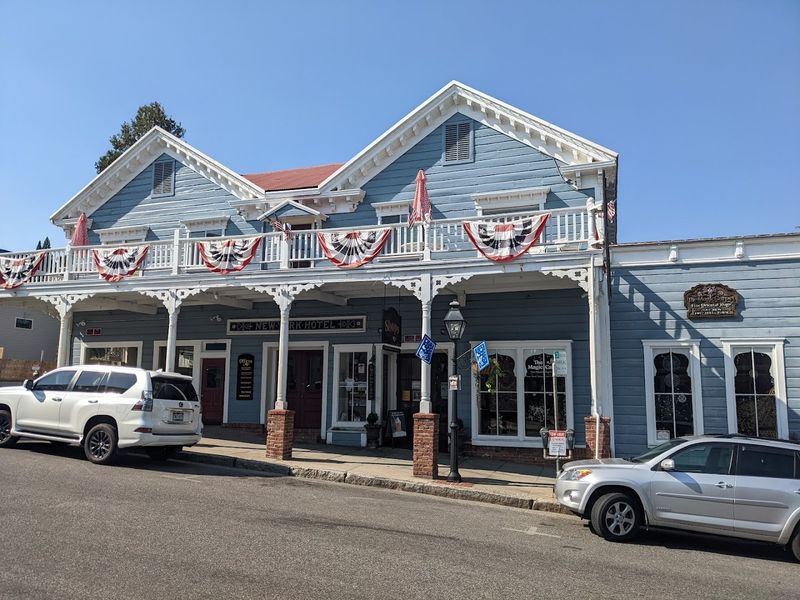
Nevada City is located just 1.5 miles west of Virginia City along US-287, and it operates almost as a companion to its more famous neighbor.
But Nevada City has its own distinct character, and it rewards visitors who take the time to explore it separately rather than treating it as an afterthought.
The site works as an open-air museum, with dozens of historic buildings from across Montana arranged to recreate a 19th-century mining community.
You will find original cabins, a music hall, a Chinese railroad workers cabin, and a collection of period vehicles and equipment. Together, they paint a broad picture of life during the gold rush era.
Each building tells a different story, and the variety keeps the experience fresh as you move from structure to structure.
One of the most memorable features is the Nevada City Music Hall, which houses an impressive collection of antique mechanical music machines.
These rare instruments, some of them massive and elaborately decorated, still play, and hearing them echo through the wooden hall is a genuinely surprising moment. It is the kind of detail that makes Nevada City feel unlike any other historic site in the state.
The site is open seasonally from May through September alongside Virginia City, and a combined visit to both towns makes excellent use of a full day. The address is NV City Rd, Nevada City, MT 59755.
During peak season, horse-drawn transportation runs between the two towns, adding another layer of period atmosphere to the experience.
If you are traveling with children, Nevada City tends to spark their imagination in a way that more traditional museum formats sometimes do not. The hands-on, outdoor setting makes history feel approachable and genuinely fun.
6. Marysville
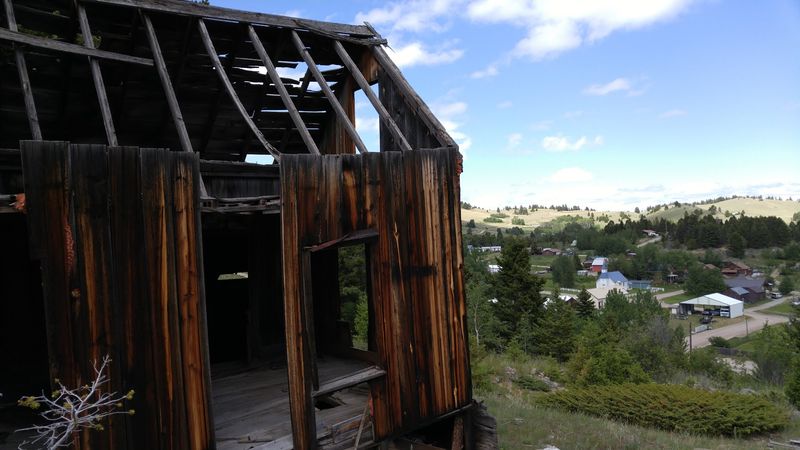
Marysville is the kind of place that surprises you. Located about 22 miles northwest of Helena via Marysville Road, this former mining town still has a few residents and historic structures. They speak to its once-booming past.
It does not feel like a typical ghost town at first glance, but the more time you spend there, the more its history reveals itself.
The town grew up around gold and silver mining in the 1870s, and by the 1880s it was producing serious wealth. The Drumlummon Mine, one of Montana’s most productive, brought millions in ore from the surrounding hills and drew workers nationwide.
At its peak, Marysville had a population of around 4,000 people, several churches, multiple schools, and a bustling commercial district. Today, the town is a quiet shadow of that former self. A small local museum is open Saturdays and Sundays from 12pm to 4pm.
It holds photographs, artifacts, and documents that help show the scale of what once existed here. The volunteers who run the museum are knowledgeable and genuinely enthusiastic about sharing the town’s story.
The surrounding landscape is beautiful in its own understated way, with rolling hills and open skies that feel far removed from modern noise.
You can walk the old streets, read interpretive signs, and visit the historic cemetery, which tells its own quiet stories through the names and dates on the markers.
The address is Grand St, Marysville, MT 59640. Marysville rewards patient, curious visitors who are willing to look closely and let the details sink in slowly.
7. Elkhorn
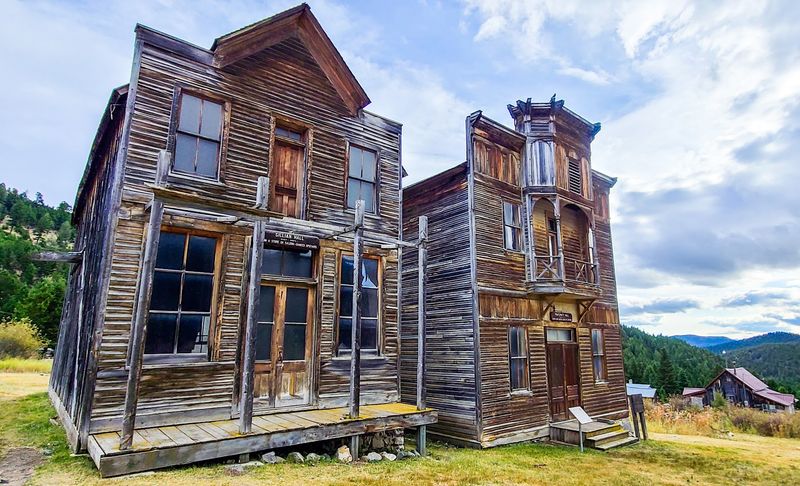
Elkhorn is one of those places that feels genuinely forgotten, and that is exactly what makes it worth the effort to find. Located about 12 miles northeast of Boulder on a rough dirt road, this former silver mining town has just two original structures left, but they are remarkable.
The Fraternity Hall and Gillian Hall stand side by side in an open meadow, their Victorian-era facades still surprisingly intact. The town boomed in the 1870s and 1880s, when silver ore from the surrounding mountains attracted miners and merchants in large numbers.
Elkhorn grew to hold a population of around 2,500 people, complete with hotels, a post office, and several businesses catering to the mining crowd.
Then the silver crash of 1893 hit, and Elkhorn followed the same pattern as so many other Montana mining towns, emptying out quickly and quietly.
What sets Elkhorn apart visually is the quality of its remaining architecture. Fraternity Hall in particular has an ornate wooden facade that stands in striking contrast to the wild, open landscape around it.
Seeing a building that detailed and deliberate standing alone in a mountain meadow creates a genuinely memorable image that stays with you.
The site is managed by the Bureau of Land Management and is accessible year-round. Both historic buildings are open for visitors to walk through, which gives you a closer look at the craftsmanship and layout of frontier-era construction.
The address is Elkhorn Rd, Boulder, MT 59632. Be prepared for the rough dirt road and bring sturdy footwear for exploring the grounds.
Elkhorn is a place where Montana history feels raw, real, and remarkably close.
8. Coolidge
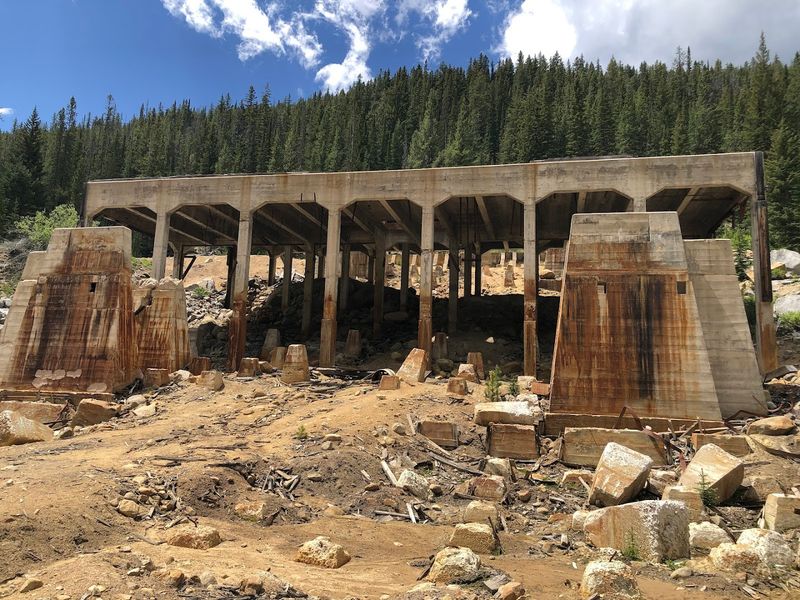
Coolidge earns its place on this list by being the most remote and least visited of the group. Set in the Pioneer Mountains of Beaverhead County, this former silver and lead mining town requires a one-mile hike from the parking area.
That extra effort filters out casual visitors and rewards those who make the trip with a sense of genuine discovery.
The town was established in the early 1900s and named after President Calvin Coolidge during a period when the Elkhorn Mine was producing steadily. At its peak, Coolidge had a mill, post office, worker housing, and a tight-knit community shaped by hard work and remote conditions.
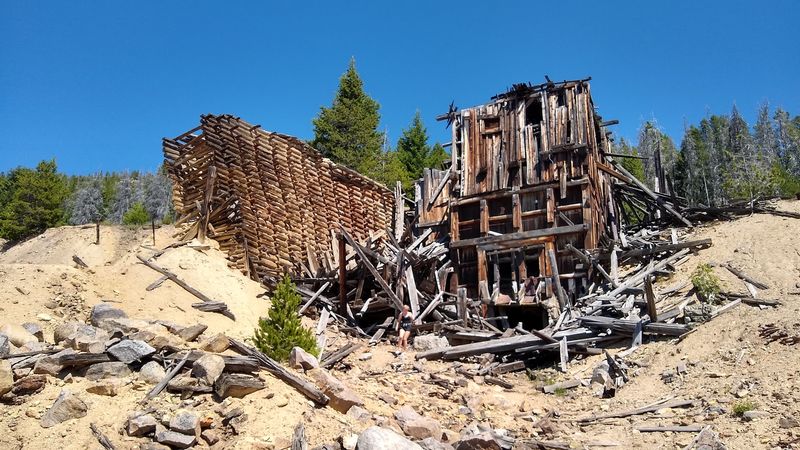
The mill alone was an impressive operation, processing ore from the surrounding mountains on a large industrial scale. Today, you will find collapsing wooden structures, rusted machinery, and the skeletal remains of the old mill.
Forested mountain slopes surround the site, slowly reclaiming the land after decades of quiet.
The atmosphere is peaceful rather than eerie, with wind in the trees and birdsong making the hike feel restorative and historical.
The Pioneer Mountains Scenic Byway provides access to the area, and the site is accessible year-round, though snow can make the trail challenging in winter months.
The address to reference is Elkhorn Creek Rd, Polaris, MT 59746. Bring water, wear comfortable shoes, and give yourself at least a couple of hours to hike in, explore, and take it all in.
Coolidge is proof that some of the best Montana history requires a little extra effort to reach, and that effort is always worth it.