
9 Hidden City Parks Across New York With Waterfalls, Gardens And Quiet Corners You’ll Want To Find This Season
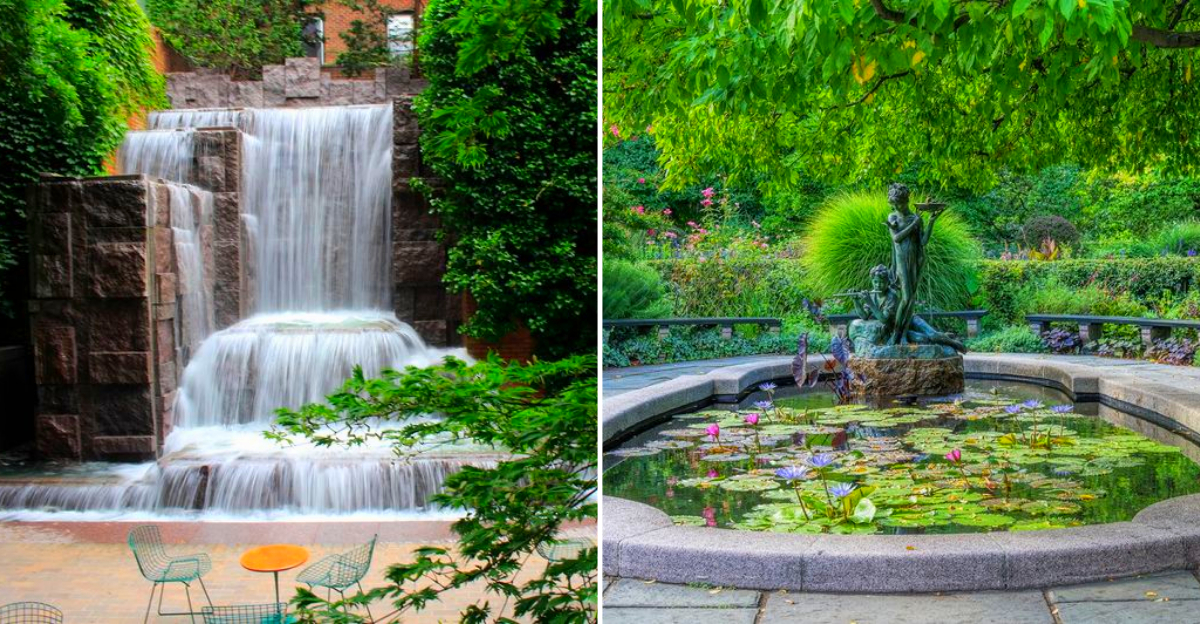
The entrance doesn’t make a big deal of itself. A gate, a path, and then the city noise starts to drop away.
This is New York off-script, hidden parks with waterfalls, gardens, and quiet corners that feel way too calm to exist this close to everything this season.
Walk a little further and it all starts to layer. Water moves somewhere just out of sight, greenery fills in around you, and benches appear in spots that make you want to stop.
You don’t rush through places like this. You wander, turn back, sit for a while, then keep going.
It’s simple, low-key, and exactly the kind of find that makes you wonder how more people haven’t caught on yet.
1. Greenacre Park
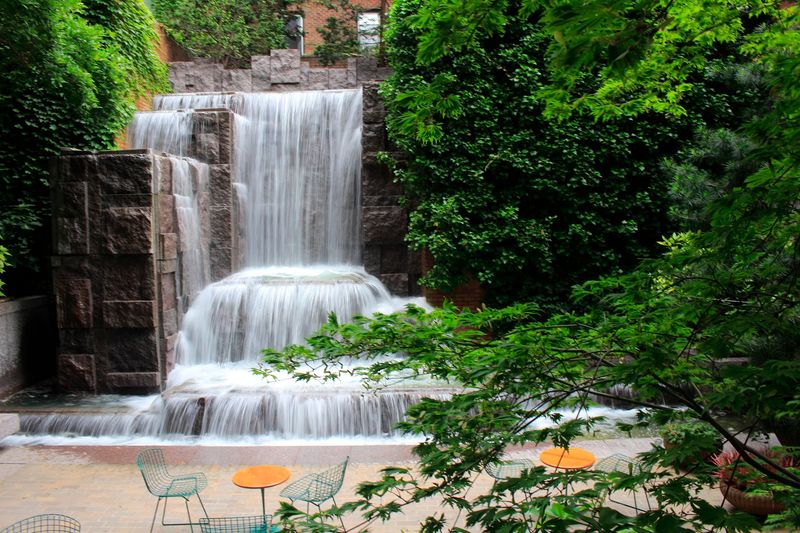
Right in the middle of Midtown madness, Greenacre Park pulls off something that feels almost impossible. A 25-foot waterfall drops straight down a textured stone wall, and the sound alone is enough to make you forget that taxis are honking two feet away.
Located at 217 E 51st St, New York, NY 10022, this vest-pocket park is only about one-seventh of an acre, but it punches way above its weight class.
Honey locust trees stretch overhead and create a canopy that makes the whole place feel like a green room in the middle of concrete chaos. Azaleas and pansies add splashes of color throughout the warmer months, and the multi-level seating means you can always find a good spot.
A trellis fitted with heat lamps keeps things comfortable even when the temperature drops.
There is also a small cafe on site, so grab something warm and just sit with the waterfall doing all the talking. The park was a gift to New York City from Abby Rockefeller Mauze, opened in 1971, and it has been a cherished secret ever since.
Honestly, most people walk right past it without even knowing it exists. That is your advantage.
Go early on a weekday morning and you might have the whole waterfall practically to yourself, which in New York City terms is basically winning the lottery.
2. Conservatory Garden
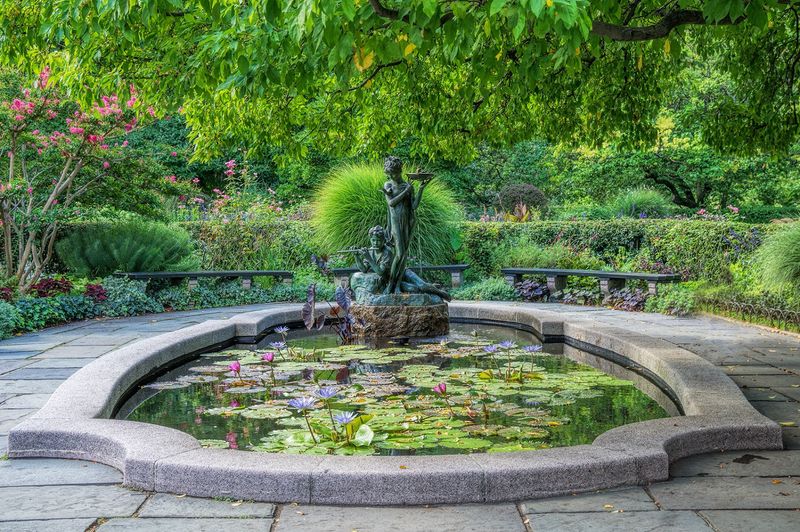
Central Park gets all the headlines, but the Conservatory Garden is the part that actually deserves them. Located at 1233 5th Ave, New York, NY 10029, this six-acre formal garden sits at the northeast corner of the park and operates on a whole different level of beauty.
You enter through the Vanderbilt Gate, a grand wrought-iron entrance that was originally part of the Cornelius Vanderbilt II mansion, and the shift in atmosphere is immediate.
Three distinct garden styles share the space here. The Italian garden greets you first with a long central lawn and a wisteria pergola that blooms in spectacular fashion each spring.
The French garden to the south features a circular pattern of tulips in spring and chrysanthemums in fall, surrounding a bronze fountain sculpture of two children from Frances Hodgson Burnett’s “The Secret Garden.”
The English garden takes up the north section and feels the most relaxed of the three, with a reflecting pool and wildflower plantings that shift with the seasons. The whole garden is quiet by Central Park standards, partly because it sits away from the main paths and partly because it has a no-bicycle rule that keeps foot traffic calm.
Spring and fall are the peak seasons for color, but honestly, any visit here feels like a reward. Bring a book, find a bench near the fountain, and take your time.
The city will still be there when you get back.
3. Morningside Park Waterfall
Most people know Morningside Park as the green strip between Harlem and Morningside Heights, but the waterfall at the southern end is a genuine surprise.
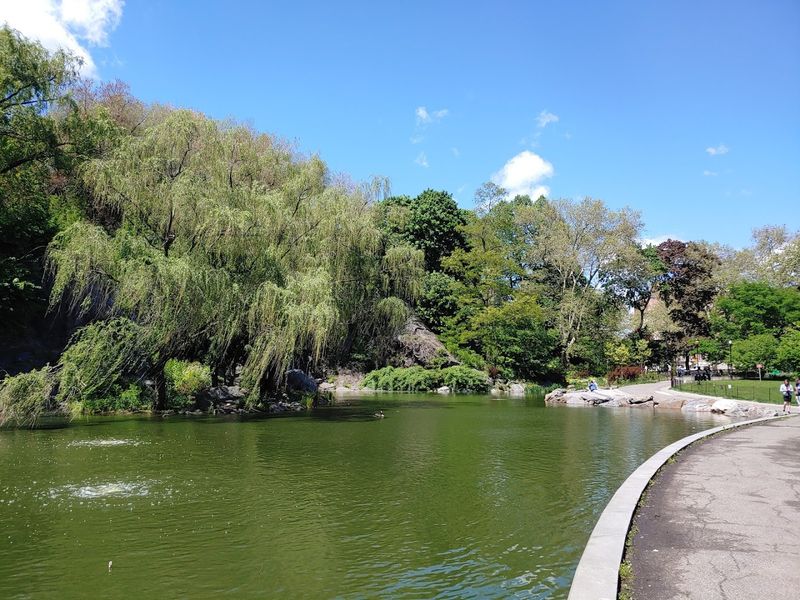
Located near Morningside Pond at New York, NY 10026, this rocky cascade drops down a natural stone cliff face into a calm pond below, and the whole scene looks like it was lifted out of a state park and dropped into the middle of Manhattan.
That contrast is exactly what makes it so good.
The waterfall is fed by city water infrastructure and flows year-round, which means even a January visit has something worth seeing. The pond sits at the base of the drop and reflects the surrounding trees beautifully in the calmer months.
A mix of stone paths and open green space surrounds the water, giving you plenty of room to wander without feeling crowded.
The park stretches along Morningside Drive from 110th to 123rd Street, and the waterfall section sits near the southern entrance. It is one of those spots where the neighborhood regulars have a quiet pride about knowing it exists.
The park also has a playground, ball courts, and open lawn areas that make it a full community space. But the waterfall is the headline act, and it earns that billing every single time.
Go on a clear morning when the light hits the water and the pond is still, and you will understand why locals treat this place like their own personal secret.
4. The Loch, Central Park North Woods
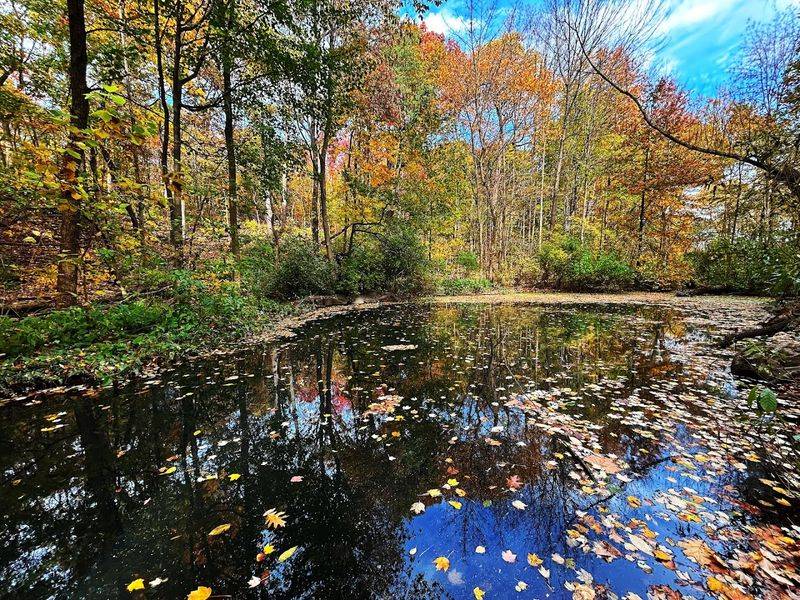
Central Park has layers, and most tourists never get past the first one. The North Woods section of the park holds a stream called the Loch, and walking through it feels genuinely wild in a way that the rest of the park rarely does.
Accessible from Central Park W near New York, NY 10026, the Loch is a winding rocky stream that flows through dense woodland, crosses under old stone arches, and creates the kind of quiet that makes you stop mid-step just to listen.
The surrounding forest is one of the most ecologically diverse sections of Central Park, with tall oaks, tulip trees, and a thick understory that blocks out the skyline entirely. The path along the Loch is unpaved in sections, which adds to the feeling that you have genuinely left the city behind.
Birdwatchers love this area during migration season, and for good reason.
The Ravine, a connected section just north of the Loch, contains the only remaining forested ravine in all of Manhattan. A small waterfall feeds the stream near the Huddlestone Arch, one of the largest stone arch bridges in the park.
The whole area was designed by Frederick Law Olmsted and Calvert Vaux in the 1860s as a naturalistic landscape, and their vision holds up beautifully. Wear shoes you do not mind getting a little muddy.
The Loch rewards the people who actually show up for it, and that group is always smaller than it should be.
5. Secret Garden At St. Luke In The Fields
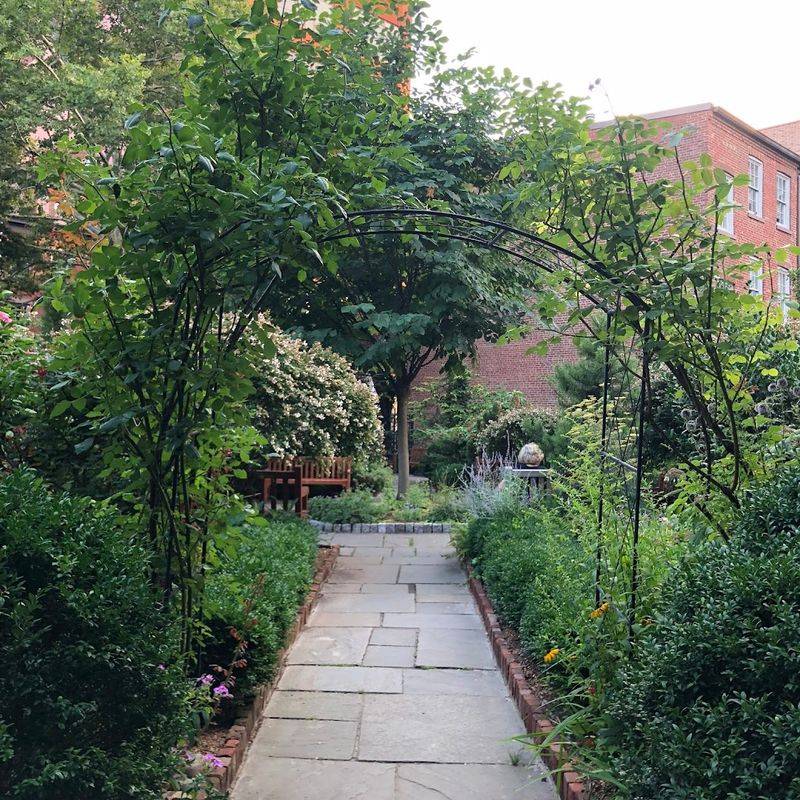
Behind a Federal-style church that dates back to 1821, there is a garden that most West Village regulars have walked past a hundred times without ever stepping inside.
The garden at St. Luke in the Fields sits at 487 Hudson St, New York, NY 10014, and it is one of the most genuinely peaceful spots in all of Manhattan.
Four interconnected garden sections wrap around the church grounds, each with its own planting style and mood.
The gardens include a rose garden, a perennial border, a wildflower meadow section, and a shaded woodland corner that feels completely removed from the street. Stone paths wind between the beds, and mature trees provide deep shade during the warmer months.
The whole space is maintained by volunteers from the congregation, which gives it a cared-for quality that feels personal rather than institutional.
The church itself was partially destroyed by fire in 1981 and rebuilt by the community over several years, and that same spirit of collective effort lives on in the garden today. Visitors are welcome during daylight hours, and the only real request is that you keep things quiet and respectful, which honestly is not a hard ask when the garden itself puts you in that kind of mood automatically.
Spring brings the roses and perennials into full bloom, making April through June the standout window for a visit. This is the kind of place you want to keep to yourself, but it is too good not to share.
6. Swindler Cove Park
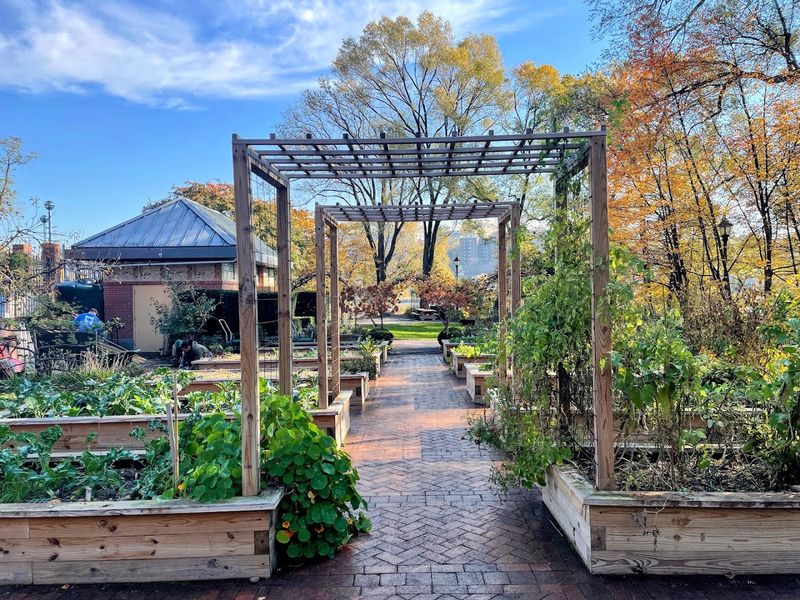
Up in Inwood, where Manhattan starts to feel like a whole different borough, Swindler Cove Park sits along the Harlem River and offers something the rest of the island rarely delivers: actual waterfront access with a natural feel.
Located at 3703 Harlem River Dr, New York, NY 10034, the park was transformed from an illegal dumping ground into a thriving green space through the work of the New York Restoration Project, founded by Bette Midler in 1995.
The shoreline here is lined with native plantings and wetland vegetation that support local wildlife, including migratory birds that stop through during spring and fall. Open lawns stretch back from the water, and the whole park has a relaxed, unhurried quality that is hard to find this far into the city grid.
A community boat launch serves the local rowing and kayaking programs that operate out of the park.
The Peter Jay Sharp Boathouse sits at the edge of the park and is home to youth rowing programs that have been changing lives in the neighborhood for years.
On a clear day, the views across the Harlem River toward the Bronx are genuinely striking, and the park benches along the water are perfect for watching the river move.
Swindler Cove is not on most tourist maps, and the locals who love it seem perfectly happy keeping it that way. Show up on a weekend morning and the park has an easy, community-cookout kind of energy that feels completely authentic.
7. Bronx River Waterfall, NYBG
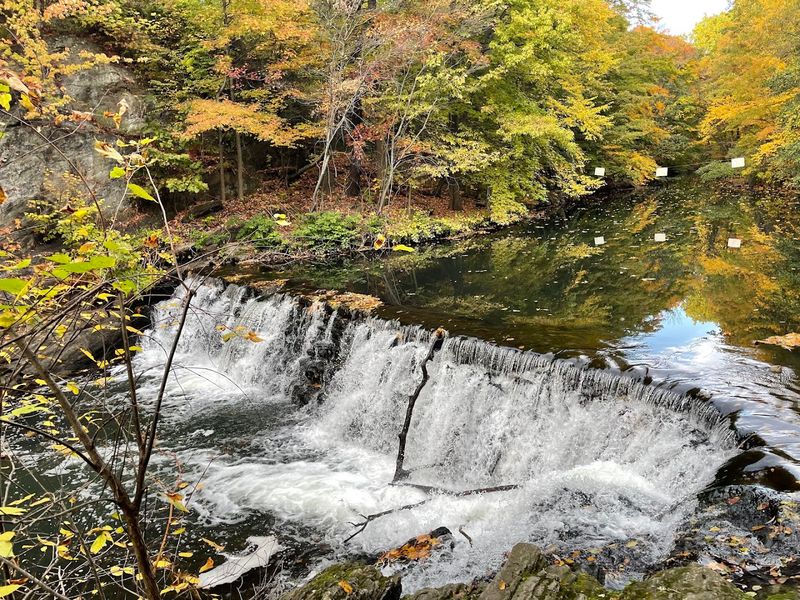
The New York Botanical Garden holds 250 acres of living collections, but the Bronx River waterfall might be the single most underrated feature on the entire property.
The garden sits at 1575 Bronx Park Rd, Bronx, NY 10467, and the waterfall is found along the Bronx River as it cuts through the old-growth forest section of the grounds.
Old-growth forest in New York City sounds like a contradiction, but the NYBG contains 50 acres of it, making it one of the largest remaining tracts in the entire city.
The waterfall itself is a natural cascade over exposed bedrock, and the river runs clear and fast through the rocky gorge below. Surrounding trees include oaks and tulip trees that have been growing for over 200 years, and the canopy they create is extraordinary.
The forest floor is covered with ferns, wildflowers, and mosses that shift through the seasons in endlessly interesting ways.
General admission to the NYBG is required to access the grounds, but the forest and river walk are included with entry and are worth the price on their own. The waterfall area is accessible via a trail that follows the river through the forest, and the whole walk takes about 30 to 45 minutes at a relaxed pace.
Spring wildflowers and fall foliage are the two peak seasons for color, but summer in the old-growth canopy has its own quiet magic. The Bronx has been holding this one close for a long time, and it absolutely deserves the recognition.
8. Japanese Hill-And-Pond Garden
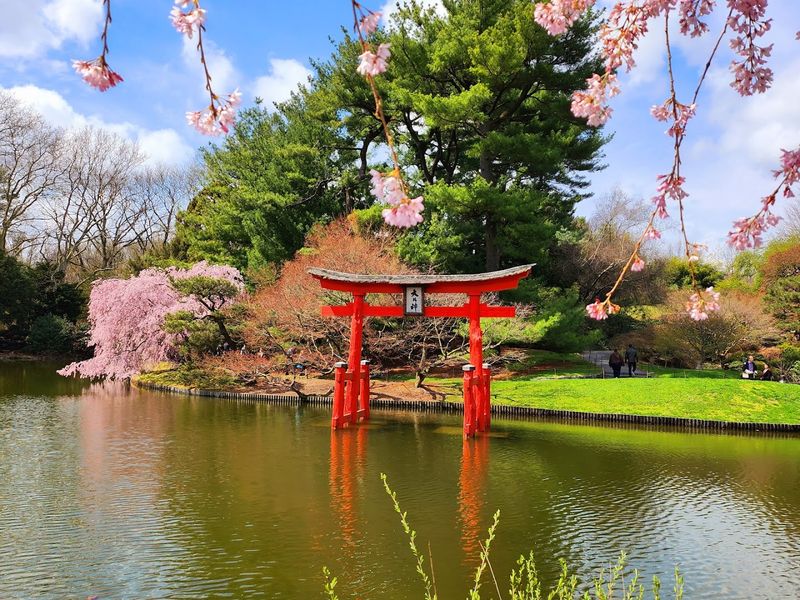
Brooklyn Botanic Garden has been stunning visitors since 1910, but the Japanese Hill-and-Pond Garden is the crown jewel that keeps people coming back year after year.
Located within the garden at 990 Washington Ave, Brooklyn, NY 11225, the Japanese garden was designed by landscape architect Takeo Shiota and opened in 1915, making it one of the oldest Japanese-style gardens in the United States.
That is a lot of history sitting quietly behind a stone lantern.
A central pond reflects the surrounding landscape with almost mirror-like clarity on calm days, and the koi that move through the water add flashes of orange and gold to the scene. A traditional torii gate stands at the water’s edge, and a wooden viewing pavilion offers a framed view of the whole composition.
Weeping cherry trees arch over the water during spring bloom season, which is honestly one of the most photographed moments in all of Brooklyn.
Stone bridges, carefully placed lanterns, and a waterfall that feeds the pond from the hill above complete the design, and every element feels intentional in the best possible way. The garden is included with general admission to the Brooklyn Botanic Garden, and the entry fee is well worth the experience.
Visiting during the Cherry Blossom Festival in April is spectacular but crowded. A visit in early October, when the maples begin turning and the garden empties out, gives you a completely different and equally rewarding experience.
Brooklyn keeps winning, and this garden is a big reason why.
9. The Ravine, Prospect Park
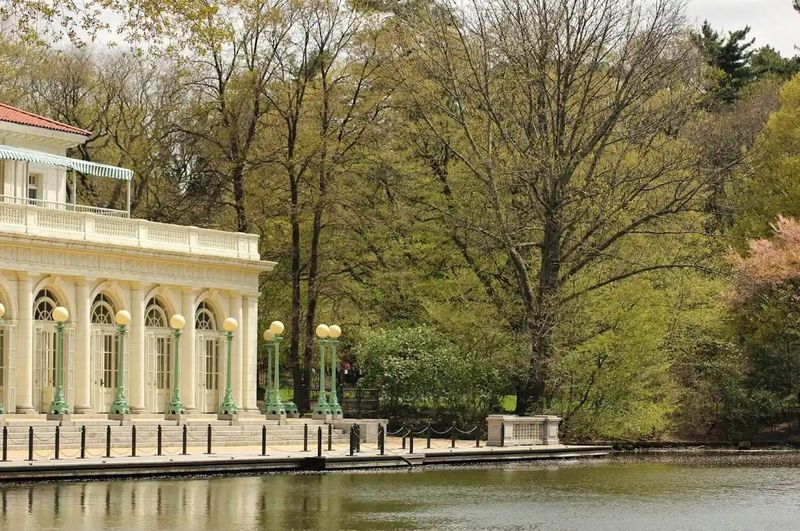
Prospect Park does not get enough credit, and the Ravine is the section that makes the strongest case for a full reassessment. Located within the park at 95 Prospect Park W, Brooklyn, NY 11215, the Ravine is Brooklyn’s only remaining forest and the only remaining forested ravine in all of New York City.
That distinction alone should have people lining up, but somehow it stays quieter than it deserves.
A rocky stream called the Fallkill runs through the gorge and feeds a series of small cascades before emptying into Prospect Park Lake. The forest surrounding the stream is dense with oaks, beeches, and red maples, and the canopy closes overhead in a way that makes the space feel genuinely remote.
The Ravine was designed by Frederick Law Olmsted and Calvert Vaux, the same duo behind Central Park, and their skill at creating naturalistic landscapes is on full display here.
The path through the Ravine is unpaved and follows the stream closely, giving you the sound of moving water for most of the walk. The whole trail loop takes about 20 to 30 minutes, but most people end up slowing down and stretching it out naturally.
Fall is the absolute peak season here, when the maples go full orange and the light filters through in a way that makes every step feel cinematic. Spring brings the stream to its fullest flow after winter rain and snowmelt.
Year-round, the Ravine is one of the most genuinely wild experiences available inside New York City limits, and Brooklyn should be proud of every single acre of it.