
Hiking This Trail In Massachusetts Is Like Entering A Fairytale

Some trails feel ordinary. This one feels like it belongs in a storybook.
Along the Massachusetts coast, sandy paths, salt marsh views, twisting trees, and wide-open water create a walk that feels calm one minute and cinematic the next. The scenery keeps changing, which makes every stretch feel like a small surprise.
You might pass quiet beaches, breezy overlooks, and woodland sections that seem far removed from everyday life. It is the kind of hike that slows you down in the best way, especially when the light hits the dunes and the shoreline starts to glow.
The Landscape That Keeps Changing Around Every Bend

Few trails on the entire East Coast shift their personality as frequently as this one. Within a single hike here, you move through aromatic pitch pine forest, across open sandy dunes, along tidal flats, and beside salt marsh embayments that shimmer at low tide.
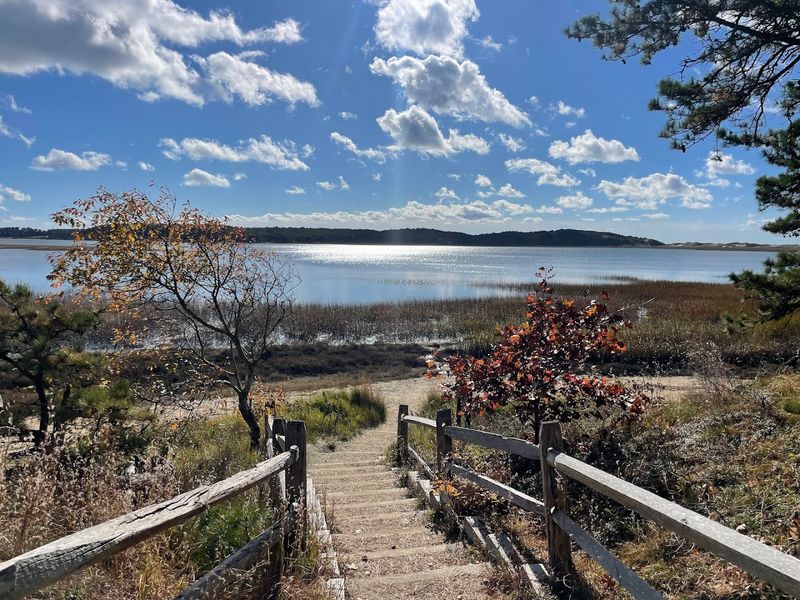
The transitions happen gradually, so you never feel a jarring shift. One moment you are walking under a canopy of low, wind-sculpted pines, and the next you are standing on an open bluff with Cape Cod Bay stretching out ahead of you.
The variety keeps your attention fully engaged throughout the entire route.
Many hikers report that the changing scenery makes the miles feel shorter than expected. The landscape does not repeat itself, and that quality alone sets this trail apart from most coastal hikes in New England.
Bring a camera, because the light plays differently in each environment, and the photographs from the pine sections look nothing like those taken on the open dunes.
Sandy Terrain That Turns An Ordinary Walk Into A Real Workout

Do not let the flat elevation profile fool you into thinking this is a casual stroll. The soft sand that covers much of the Great Island Trail creates a level of resistance that will tire your legs faster than most mountain paths.
Hikers who have done both report that a few miles here can feel comparable to twice that distance on firm ground.
The trail earns a moderate to difficult rating largely because of this terrain. Your feet sink with each step, and the narrow paths are often bordered by tall beach grass that crowds the edges.
Sturdy footwear with ankle support is strongly recommended, and some sections near the water may require you to remove your shoes entirely.
That physical challenge is part of the appeal. There is a satisfying exhaustion that comes at the end of this hike, the kind that tells you the body worked honestly.
Pack more water than you think you need, wear a well-fitted hat, and apply sunscreen generously before you start. The open stretches offer almost no shade, and the sun reflects off the sand with surprising intensity even on overcast days.
Jeremy Point And The Desolate Beauty At The End Of The Trail

Reaching Jeremy Point feels like arriving at the edge of the known world. This narrow strip of white sand sits at the southernmost tip of the Great Island peninsula, surrounded by water on nearly all sides, with views that extend across Cape Cod Bay in one direction and Wellfleet Harbor in the other.
The silence out here is the kind that city dwellers rarely experience.
The round trip to Jeremy Point covers approximately 8.8 miles, making it the longest route option on the trail. That distance filters out casual visitors, so the solitude at the point feels genuinely earned.
On calm days, the surface of the bay mirrors the sky so closely that the horizon disappears entirely.
One practical note worth remembering: parts of the path near Jeremy Point can flood at high tide. Checking a tide chart before you set out is not optional, it is essential.
Planning your arrival at the point around low tide gives you the most access and the best experience. The extra planning is a small price for what amounts to one of the most extraordinary endpoints on any trail in Massachusetts.
Wildlife Encounters That Make Every Visit Feel Brand New
A 74-year-old regular visitor to this trail once noted that every single outing produces a new experience, and the wildlife is a large reason why. Ospreys circle overhead during warmer months, scanning the shallows with focused intensity.
Herons and egrets stand motionless in the tidal flats, patient in a way that makes human stillness seem restless by comparison.
Fiddler crabs scatter across the exposed mud as the tide recedes, and horseshoe crabs appear along the flats in season, moving with the unhurried confidence of creatures that have existed for hundreds of millions of years. Offshore, seals occasionally surface, and the trail even posts warning signs in some sections alerting hikers to their presence nearby.
Shorebirds nest along parts of the trail during spring and summer, and those sections are clearly roped off with markers to protect the breeding activity. Dog owners should note that pets on leashes are permitted in designated areas, but certain sections are closed to them entirely during nesting season.
The wildlife activity changes with each season, which is one reason so many visitors return multiple times throughout the year rather than treating this as a one-time destination.
The Colonial Tavern History Buried Beneath The Sand

History has a quiet way of making itself known along this trail at 1440 Chequessett Neck Rd in Wellfleet. Near the interior of the route, a marker identifies the site where a colonial-era tavern once operated, serving the whalers and fishermen who worked these waters centuries ago.
No physical structure remains, just a modest sign standing in the sand where a busy gathering place once stood.
The contrast between that vanished world and the wild, undeveloped landscape surrounding the marker is striking. Wellfleet was a significant fishing and whaling community in the 17th and 18th centuries, and Great Island was far more inhabited then than it is today.
The gradual return of the land to its natural state is a slow, ongoing story that the trail tells without narration.
Near the trailhead, a grave marker honors a Wampanoag woman, acknowledging the Indigenous history of this land that predates European settlement by thousands of years. Taking a moment at both markers adds depth to the hike that pure scenery cannot provide on its own.
The trail becomes more than a walk through beautiful terrain; it becomes a passage through layered time, where each era left its impression and then quietly stepped back.
The Pitch Pine Forest And Its Unexpected Fragrance
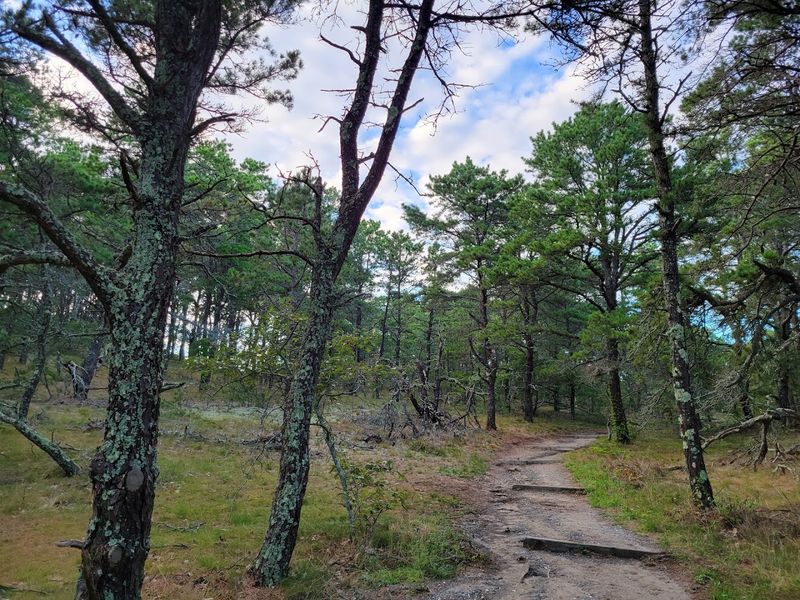
Most people associate Cape Cod with beaches and open water, so the forest section of this trail catches first-time visitors pleasantly off guard. The pitch pines here grow low and twisted, shaped over decades by the persistent coastal wind.
Their bark carries a resinous warmth that becomes especially noticeable on sunny afternoons when the temperature rises inside the tree canopy.
Walking through this section feels genuinely different from the open stretches. The light filters through the branches in broken patterns, the sand underfoot is firmer and cooler in the shade, and the sound of the wind softens considerably.
Mosquitoes do concentrate here during warmer months, particularly in early morning hours, so insect repellent is a practical addition to your pack.
The forest does not cover a large portion of the trail, but it provides a meaningful contrast to the exposed dune sections. That alternation between shade and open sky, between enclosed forest atmosphere and wide coastal panorama, is part of what gives this hike its particular rhythm.
The pitch pine section also tends to be where hikers slow down naturally, drawn by the texture of the bark, the angle of the light, and the quiet that settles between the trees.
Views Of Cape Cod Bay And Wellfleet Harbor From The Bluffs

From the elevated sections of the trail, the views open up in a way that stops most hikers mid-stride. Cape Cod Bay spreads out to the west with a calm that feels almost theatrical, and Wellfleet Harbor sits to the east, its surface dotted with small boats during the warmer months.
On clear days, Provincetown is visible to the north, its distinctive water tower rising above the horizon.
These vistas reward the effort of the sandy climb that precedes them. Standing on the bluff, you can trace the outline of the peninsula below, watching where the tidal flats end and the deeper water begins.
The colors shift throughout the day, from the pale silver of early morning to the deep copper tones of late afternoon, making the view worth experiencing at different hours if you have the time.
The bluff sections also catch the sea breeze most consistently, offering welcome relief on warm days when the lower sandy paths hold heat. Many hikers choose to stop here for lunch or a water break, and it is easy to understand why.
The combination of panoramic water views, open sky, and steady wind creates a sensory experience that no photograph fully captures, though visitors attempt it enthusiastically regardless.
Tide Timing And Why It Changes Everything About Your Hike

Planning around the tide is not a suggestion at Great Island Trail; it is the difference between a complete experience and a frustrating one. At high tide, certain sections of the route near Jeremy Point become submerged, cutting off access to the most remote parts of the peninsula.
Arriving about an hour before low tide gives you the maximum window to explore the full length of the trail without interference from rising water.
The tidal flats themselves are one of the trail’s most compelling features when exposed. Shallow water channels snake across the mud in patterns that shift with each cycle, and the wildlife activity on the flats increases significantly at low tide as birds and crabs move in to feed.
The crossing to the island section can also become wet and difficult at high tide, requiring you to navigate carefully or accept soggy footwear.
Checking a reliable tide chart for Wellfleet Harbor before your visit takes about thirty seconds and saves considerable inconvenience. The National Park Service website for Cape Cod National Seashore provides current information and trail conditions.
Most experienced visitors treat tide planning as the first step of trip preparation, ahead of packing water or choosing footwear, because the tide governs everything else about the day.
Trail Length Options For Every Kind Of Hiker
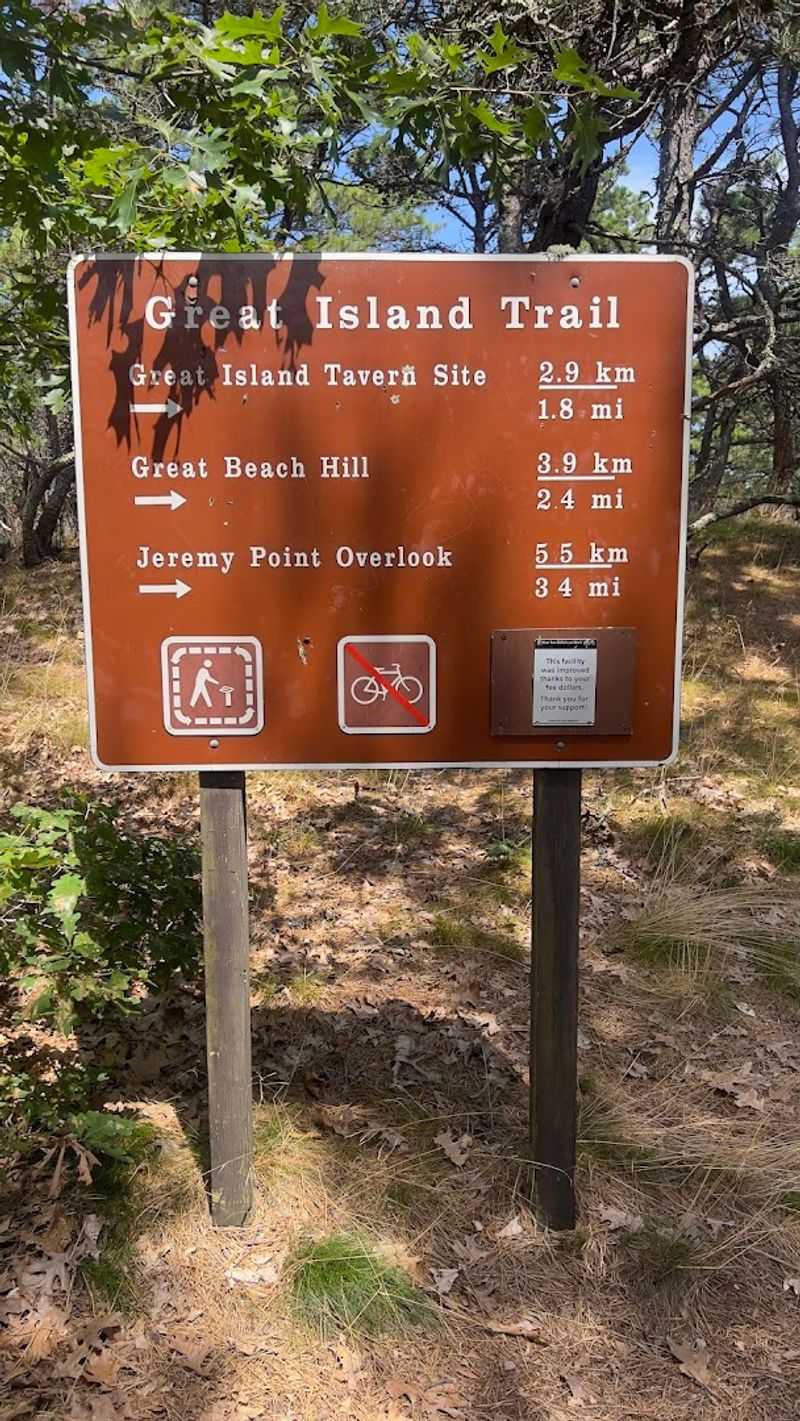
One of the more practical virtues of this trail is that it does not demand an all-or-nothing commitment. The shortest meaningful loop, often called the tavern loop, covers roughly 3.9 miles and gives you a solid taste of the terrain without requiring a full day.
The longest option, extending to Jeremy Point and back, reaches approximately 8.8 miles and qualifies as a legitimate endurance outing.
Between those two extremes, there are intermediate options that allow groups with mixed fitness levels to customize their experience. Families with younger children often hike to the beach and then walk along the shoreline before cutting back through the interior, creating a satisfying loop without overextending anyone.
The trail markers are clear enough that navigation does not require prior experience or specialized equipment.
First-time visitors often underestimate the time required because the distances look modest on a map. The soft sand adds roughly thirty to fifty percent more time compared to a firm-surface trail of equivalent length.
A 4-mile hike here might take the same time as six miles on a mountain path. Building extra time into your schedule prevents the frustrating experience of having to turn back before reaching your intended destination simply because the afternoon light is fading.
Practical Gear And Visitor Tips For A Smooth Experience

Experienced hikers who return to Great Island Trail repeatedly tend to offer the same core advice: bring more water than seems reasonable, wear shoes with real ankle support, and never underestimate the sun. The open sections of the trail provide almost no natural shade, and the sand reflects heat upward while the sun pushes it down from above.
A wide-brimmed hat is not an accessory here; it is a functional necessity.
The trailhead has a large parking area with porta-johns available, and during summer months a daily fee may apply. Arriving early, around 7:30 in the morning, typically means a quieter experience with fewer vehicles and cooler temperatures.
The parking lot is accessible via a narrow one-lane bridge that several visitors describe as a memorable part of the approach.
Tick awareness is worth taking seriously, particularly in the vegetated interior sections away from the beach. Wearing long socks and checking carefully after the hike reduces risk considerably.
Leashed dogs are welcome in designated areas, though some sections close to nesting birds are restricted. The National Park Service website for Cape Cod National Seashore provides current seasonal closures and any updated conditions before you make the drive out.