
8 Historic Churches Across Tennessee With Captivating Stories Every History Lover Should Know
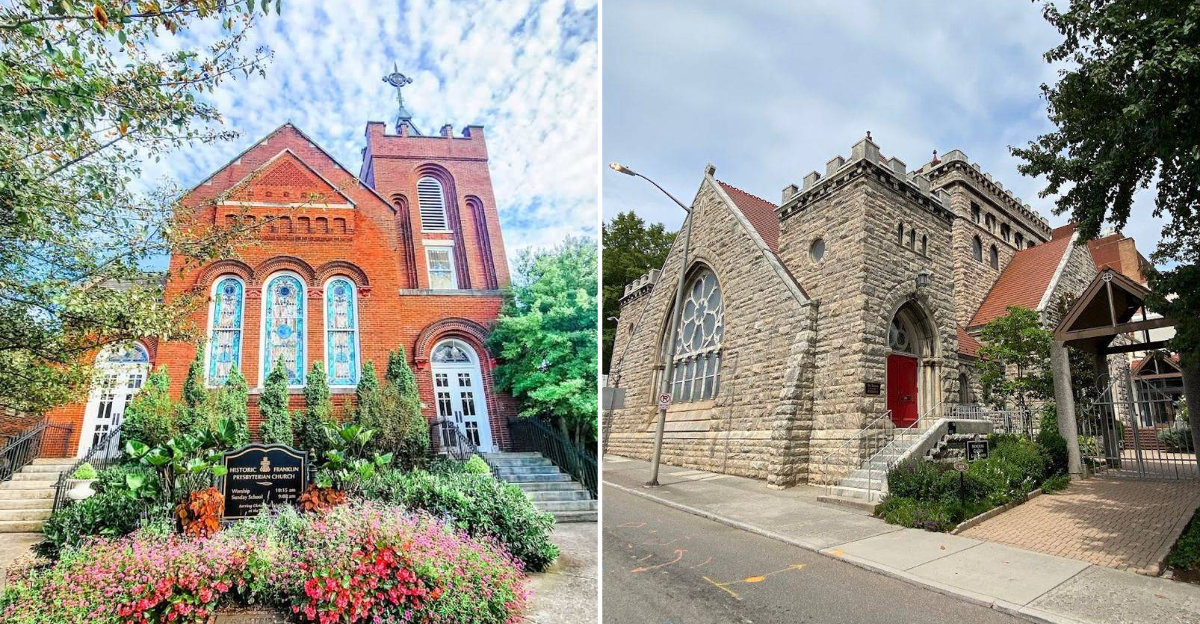
Tennessee keeps its most compelling history inside its oldest walls. Those walls belong to churches that witnessed more than their congregations ever put into writing.
The state carries a long memory, and the communities that built these buildings lived through chapters of American history that shaped everything around them. Some of those stories were celebrated.
Others were buried, surfacing now only through the people willing to look past the architecture. Each church on this list holds something beyond stained glass and wooden pews.
A founding that defied its era’s politics, a congregation whose decisions still shape the community, and a silence that carries more weight than most visitors first realize.
Tennessee history runs deepest in places that were never designed to be tourist destinations.
1. Christ Church Cathedral
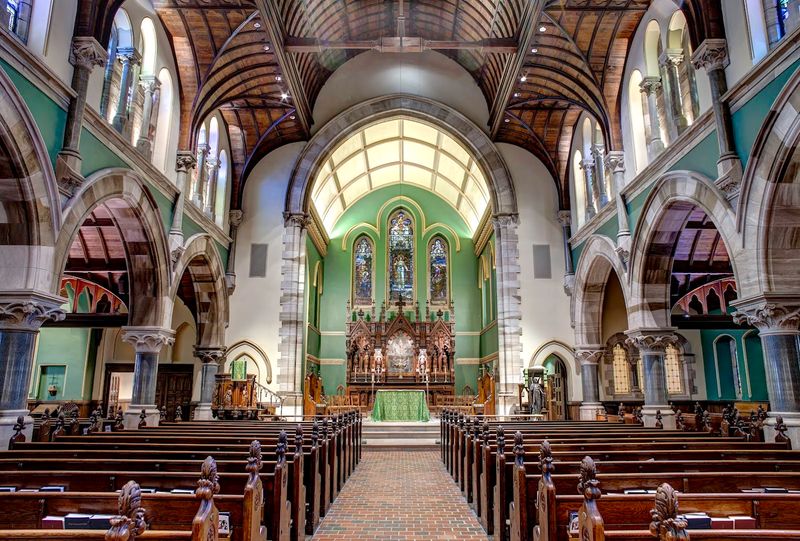
Few buildings in Nashville carry as much weight as this one. Christ Church Cathedral has been standing on Broadway since 1831, making it one of the oldest Episcopal congregations in the entire state.
That is nearly two centuries of history packed into one Gothic Revival building.
During the Civil War, Union soldiers actually used the church as a hospital. Imagine pews pushed aside to make room for wounded soldiers.
That detail alone makes this place feel like something out of a history novel.
The cathedral was rebuilt and expanded several times over the years. Each addition kept the character of the original structure while adding new layers of craftsmanship.
The stained glass windows are genuinely breathtaking up close.
What makes this church stand out is its role in shaping Nashville’s Episcopal community. It became the mother church for several other congregations across Middle Tennessee.
That kind of influence is rare and worth recognizing.
The building sits right in the heart of downtown Nashville. You can walk past it on a Tuesday afternoon and feel like time has slowed down.
The stone facade and tall steeple create a striking contrast against the modern skyline.
Local historians consider it a cornerstone of Nashville’s religious and cultural identity. It hosted community events, civic gatherings, and even political conversations throughout its long history.
This church did not just witness history. It helped shape it.
Visitors are welcome to explore the grounds and the interior. The atmosphere inside is quiet, reverent, and genuinely moving.
This church is located at 900 Broadway, Nashville, TN 37203.
2. Historic First Community Church
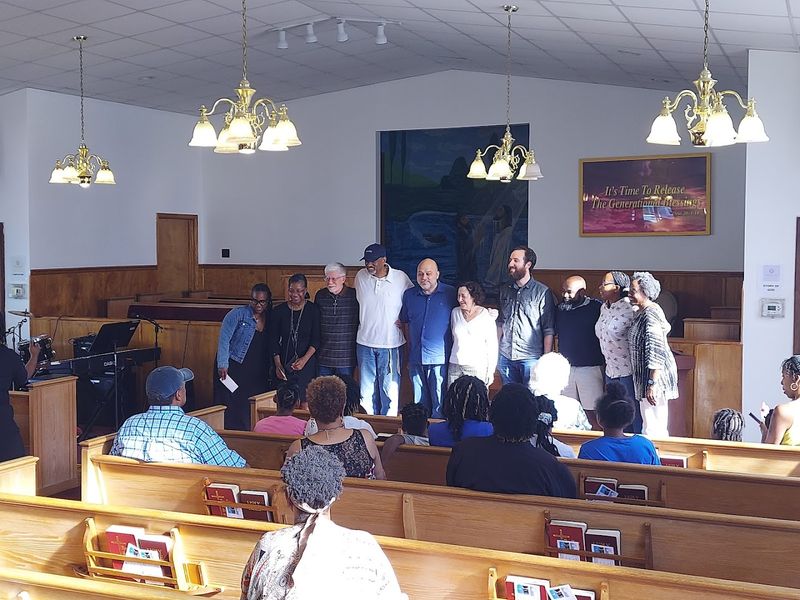
Not every historic church gets the attention it deserves, and First Community Church on Knowles Street is a perfect example of that. This Nashville congregation has deep roots in the African American community.
Its story is one of resilience, faith, and community-building against serious odds.
The church was established during a time when Black Nashvillians were navigating life under segregation. Faith communities like this one became safe spaces.
They were gathering places for organizing, educating, and supporting one another in ways that went far beyond Sunday services.
The building itself reflects the dedication of a community that built something lasting with limited resources. Every brick tells a story of people who showed up, contributed, and refused to let their community go unrecognized.
That spirit still lives in the walls.
First Community Church also played a role in the civil rights movement that swept through Nashville in the late 1950s and 1960s. Nashville was a hub of nonviolent protest, and churches like this one helped fuel that movement.
The congregation provided support, strategy, and solidarity.
Walking through the neighborhood today, you get a sense of how much this area has changed over the decades. The church remains a constant.
It anchors the block with a quiet dignity that commands respect.
Residents still talk about the church with real pride. It represents a chapter of Nashville history that deserves more spotlight.
History lovers who skip this one are genuinely missing something important.
The stories here are personal, powerful, and worth your time. Find it at 1815 Knowles St, Nashville, TN 37208.
3. Mason Temple: Church Of God In Christ
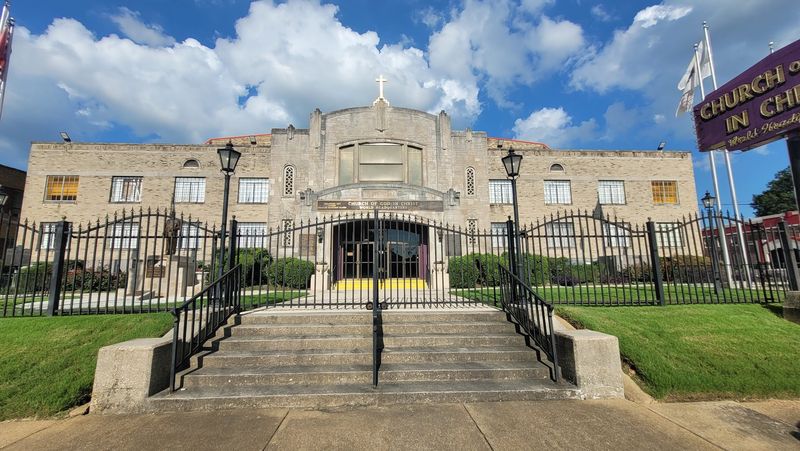
If walls could talk, the walls of Mason Temple would have one of the most powerful things to say in American history. On April 3, 1968, Dr. Martin Luther King Jr. delivered his final speech here.
The next day, he was assassinated. That connection alone makes this building one of the most significant in the entire country.
The speech, known as the Mountaintop speech, was delivered to striking sanitation workers. King spoke about justice, perseverance, and hope.
The crowd that night was electric, and the building absorbed every word of it.
Mason Temple is the world headquarters of the Church of God in Christ, one of the largest Pentecostal denominations in the United States. It was named after Bishop Charles Harrison Mason, the founder of the denomination.
His legacy is enormous in American religious history.
The building itself is massive and imposing. It has hosted countless major events, conventions, and worship services over the decades.
The scale of it tells you something about the ambition and vision of the people who built it.
Memphis has a complicated and layered history, and Mason Temple sits right at the center of some of its most painful and powerful moments. Visiting this church is not just a religious experience.
It is a civic and historical one.
Many visitors come here specifically because of King’s final speech. They stand in the same space where those words were spoken and feel the weight of that moment.
It is genuinely moving in a way that is hard to describe.
This place is at 930 Mason St, Memphis, TN 38126.
4. Historic Franklin Presbyterian Church
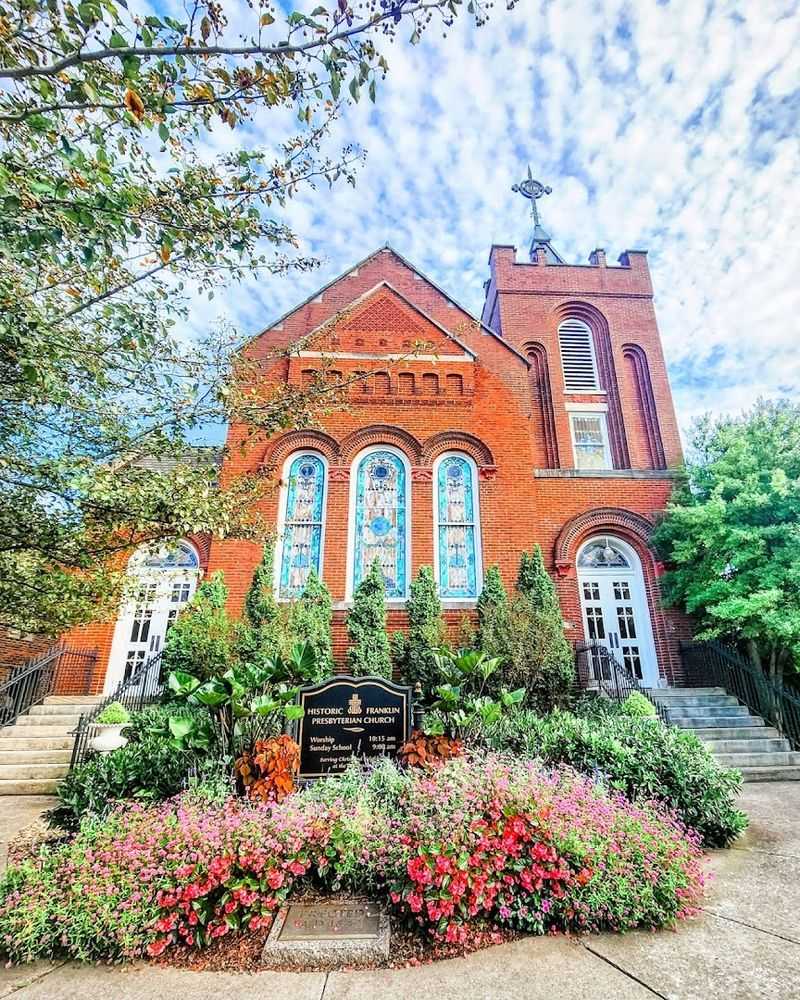
Franklin, Tennessee, is one of those towns where history follows you around every corner, and the Presbyterian Church on Main Street is no exception. Founded in 1815, this congregation is one of the oldest in Williamson County.
Two hundred years of community life happened right here.
During the Civil War, Franklin was the site of one of the bloodiest battles in the entire conflict. The Battle of The Battle of Franklin on November 30, 1864, left thousands of casualties in a matter of hours.
The church became a refuge and a field hospital in the chaos that followed.
Wounded soldiers from both sides were brought inside. The congregation had no choice but to open its doors to the suffering.
That act of humanity in the middle of war says a lot about the people who called this church home.
The building has been carefully preserved over the years. Walking up to it on Main Street, you feel the weight of everything that happened nearby.
The architecture is classic and elegant, fitting perfectly with the historic character of downtown Franklin.
Franklin itself has done an excellent job of preserving its Civil War history, and this church is a major part of that effort. It sits within walking distance of the Carter House and Carnton, two other major Civil War landmarks.
The entire area feels like an open-air museum.
Local historians frequently reference this congregation when discussing the social and spiritual life of antebellum Tennessee. The church records contain fascinating details about life before, during, and after the war.
Those records are a treasure for genealogists and history buffs.
Visit at 435 Main St, Franklin, TN 37064.
5. Church Of The Immaculate Conception
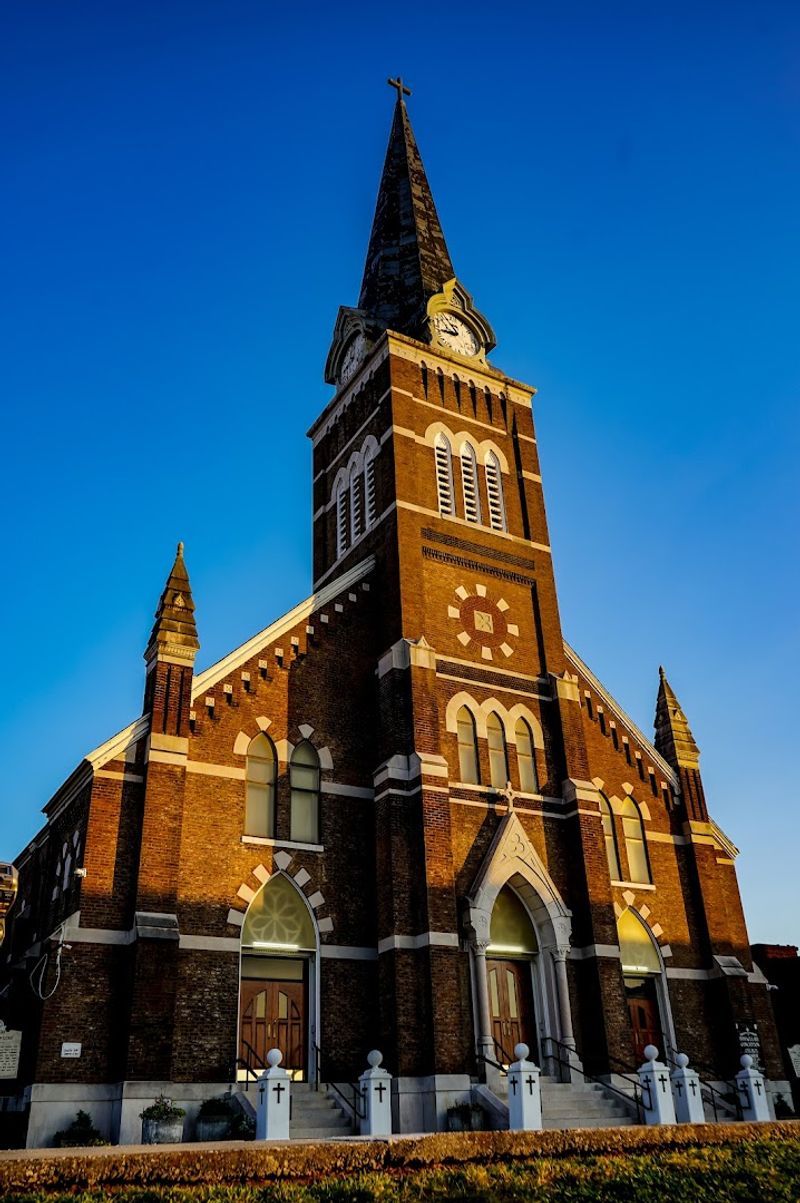
Knoxville is not always the first city that comes to mind when people think about Catholic history in the South, but this church changes that conversation fast.
The Church of the Immaculate Conception has been a cornerstone of Knoxville’s Catholic community since the mid-1800s.
It was one of the first Catholic parishes established in East Tennessee.
The congregation was founded to serve the growing Catholic population in the region, many of whom were Irish and German immigrants.
These were working people who brought their faith with them across the ocean and built something permanent in Tennessee.
That immigrant story is woven into every stone of this building.
The architecture is stunning in a way that catches you off guard. Gothic details, arched windows, and careful stonework give the church a presence that dominates its block on Vine Avenue.
It feels almost European, which makes sense given its immigrant roots.
During the Civil War, Knoxville was a divided city. East Tennessee was largely Unionist, but Catholic communities had their own complicated loyalties and experiences.
The church served as a spiritual anchor during years of enormous uncertainty and fear.
Over the decades, the congregation grew and the building was expanded and restored multiple times. Each renovation respected the original character while addressing the needs of a changing community.
The result is a building that feels both ancient and alive.
Visiting on a weekday afternoon is a quietly remarkable experience. The light through the stained glass creates patterns on the floor that shift as the sun moves.
History and beauty rarely combine this well. Find it at 414 W Vine Ave, Knoxville, TN 37902.
6. St. John’s Episcopal Cathedral
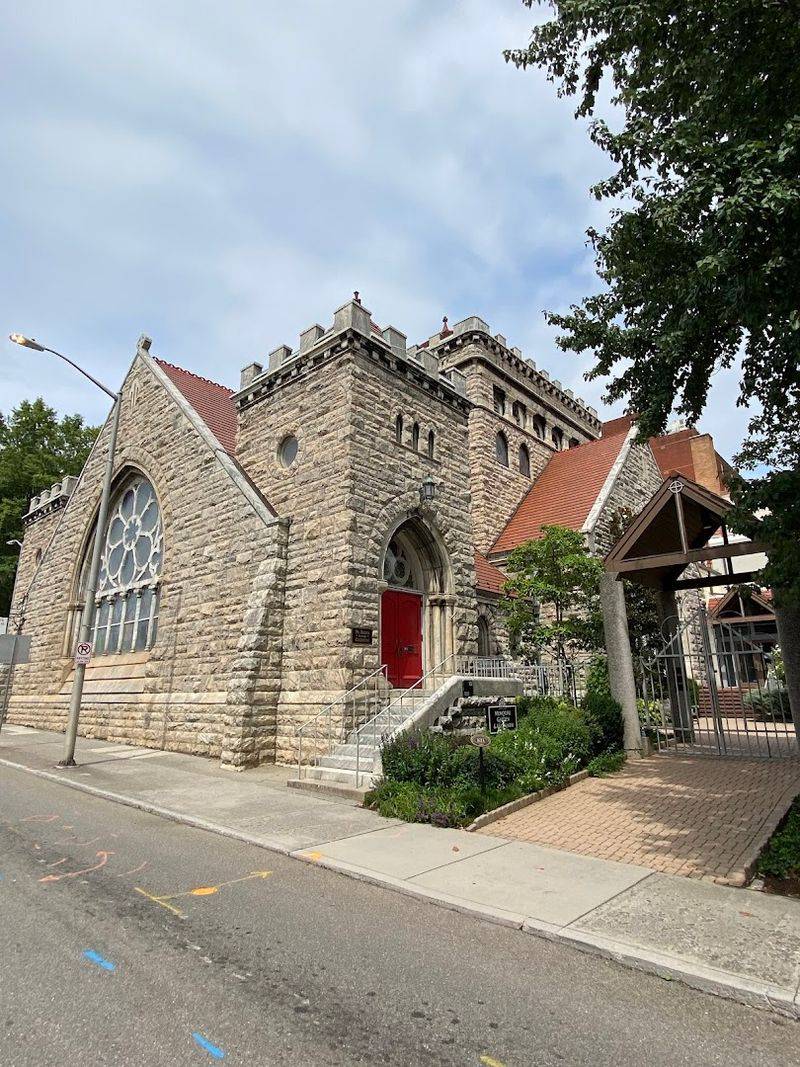
Right on Cumberland Avenue in Knoxville sits one of the most architecturally impressive churches in all of East Tennessee. St. John’s Episcopal Cathedral has been shaping the religious and civic life of Knoxville since 1844.
That is almost 180 years of continuous presence in the heart of the city.
The cathedral was elevated to cathedral status in 1893 when the Diocese of East Tennessee was formed. Before that, it functioned as a parish church serving the growing Episcopal community.
The shift to cathedral status reflected just how central the congregation had become to the region.
The building is a genuinely beautiful example of Gothic Revival architecture. The stone tower is visible from a distance and serves as a kind of landmark for the Cumberland Avenue corridor.
Architecture fans will want to spend extra time examining the exterior details.
During the Civil War, Knoxville changed hands multiple times between Union and Confederate forces. St. John’s remained standing through it all.
The congregation navigated those turbulent years with a careful determination to keep their community together.
The cathedral has long been involved in civic life beyond Sunday worship. It has hosted community events, memorial services, and gatherings that brought people together across denominational lines.
That kind of open-door tradition is part of its DNA.
One of the most interesting aspects of this cathedral is its connection to Tennessee’s Episcopal history. Several bishops associated with the diocese have deep ties to this congregation.
Their portraits and memorials line the interior walls, creating a visual timeline of leadership and faith.
The address is 413 Cumberland Ave, Knoxville, TN 37902.
7. Historic Chapel Hill Church (Ca. 1884)
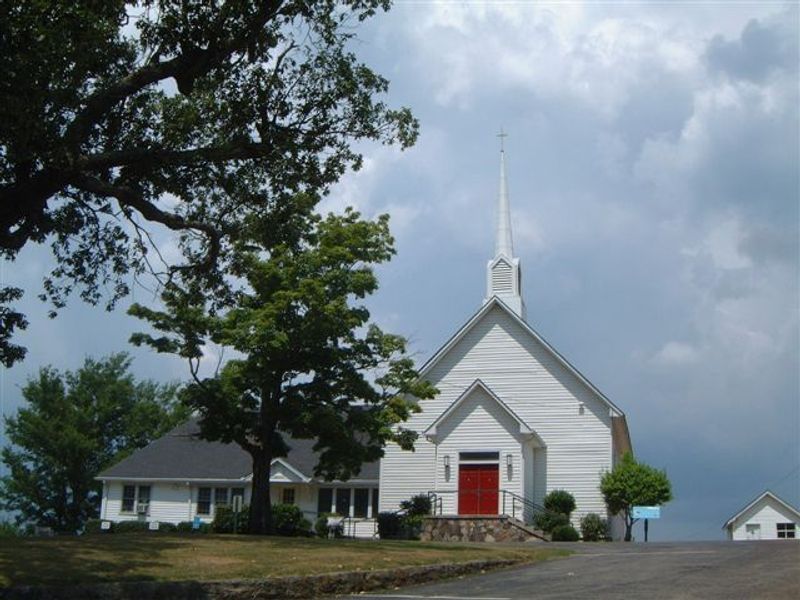
There is something completely different about a small rural church that has been standing since 1884. Chapel Hill Church in Dunlap sits in the Sequatchie Valley, one of the most scenic and underappreciated parts of Tennessee.
The setting alone is worth the drive.
Built around 1884, this church served a tight-knit farming community in the valley for generations. The people who built it were not wealthy.
They were neighbors who pooled their resources and labor to create a place of worship that would outlast all of them. That kind of collective effort is rare and inspiring.
The Sequatchie Valley was relatively isolated for much of the 19th and early 20th centuries. Churches like Chapel Hill were not just spiritual centers.
They were the social hub of the entire community. Weddings, funerals, community meetings, and holiday gatherings all happened here.
The building retains much of its original character. Simple wooden construction, modest windows, and a straightforward design reflect the practical values of the people who built it.
There is no ornamentation for its own sake. Everything here is honest and functional.
Dunlap itself is a small town that does not get nearly enough attention from Tennessee history enthusiasts. The surrounding area is full of stories about coke ovens, coal mining, and Appalachian life in the late 1800s.
Chapel Hill Church fits right into that fascinating regional narrative.
Visiting this church feels like traveling back in time without a ticket. The quietness of the valley surrounds you.
The simplicity of the building reminds you that history does not always announce itself loudly. Sometimes it just waits patiently for you to show up.
This church is located in Dunlap, TN 37327.
8. Basilica Of Saints Peter & Paul
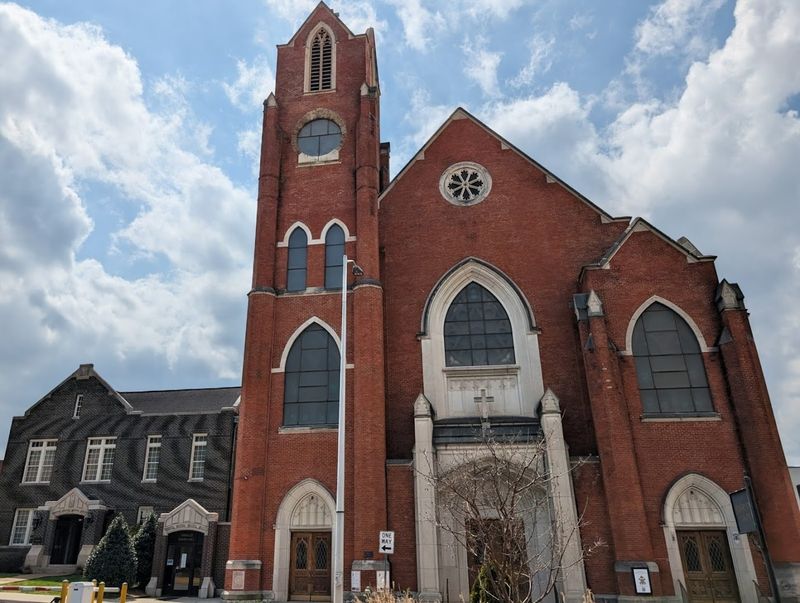
Chattanooga has a lot going for it, but not everyone realizes it is home to a genuine basilica. The Basilica of Saints Peter and Paul on East 8th Street is one of the most visually striking religious buildings in the entire state.
When you see those twin towers rising above the surrounding buildings, your jaw drops a little.
The parish was established in 1852, making it one of the oldest Catholic congregations in Chattanooga. The current building, constructed in the late 1800s, reflects the ambition of a community that wanted to build something worthy of their faith and their future.
They absolutely succeeded.
The interior is equally impressive. Vaulted ceilings, detailed stonework, and carefully preserved artwork create an atmosphere that feels genuinely sacred.
Visitors who are not even Catholic frequently describe it as one of the most beautiful interiors they have ever seen in Tennessee.
In 2019, Pope Francis elevated the church to basilica status, which is a rare and significant designation. Only a small number of churches in the United States hold this honor.
Chattanooga now has one, and locals are rightfully proud of that distinction.
The basilica has served Chattanooga’s Catholic community through the Civil War, industrialization, the Great Depression, and multiple waves of social change. Each era left its mark on the congregation and the building.
That layered history makes it endlessly interesting to explore.
The surrounding neighborhood has changed dramatically over the decades, but the basilica has remained a constant. It anchors its block with a gravity that feels earned.
History, beauty, and faith all converge in one remarkable place.
Find it at 214 E 8th St, Chattanooga, TN 37402.