
8 Historic Coastal Spots In Southampton, New York That Most Visitors Walk Right Past
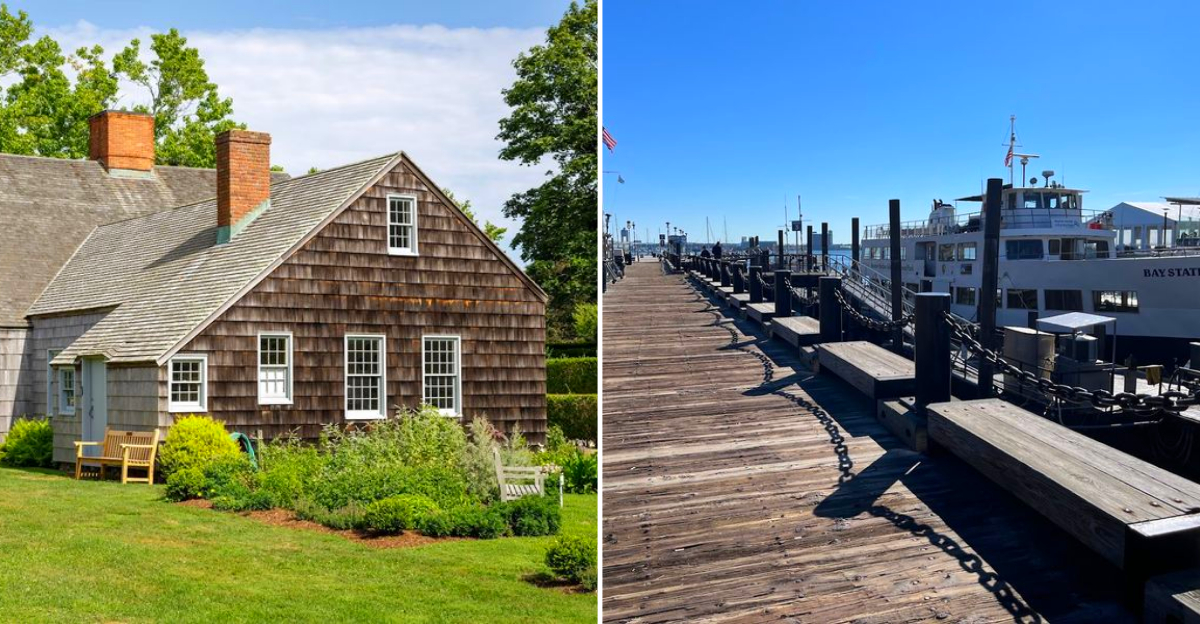
New York’s Southampton gets busy in summer and the crowds have a very specific agenda. Beach, restaurant, repeat.
Nobody is stopping to look at the building that has been standing since before the country had a name, and the building has long since made peace with that.
Eight historic coastal spots sit right there along the same streets and shorelines that thousands of visitors move through every weekend without a second glance.
Pre-Revolutionary structures, landmarks that watched the area transform from a quiet colonial settlement into one of the most visited summer destinations on the East Coast, all of it hiding in plain sight behind the seasonal rush.
Southampton, New York rewards the people who slow down with the kind of stories that no glossy guidebook quite manages to capture. That is partly because the history is specific and partly because it requires actually stopping to find it.
The beach will still be there after an hour of looking at what came before it. The crowds, unfortunately, will also still be there.
1. Conscience Point Historic Site
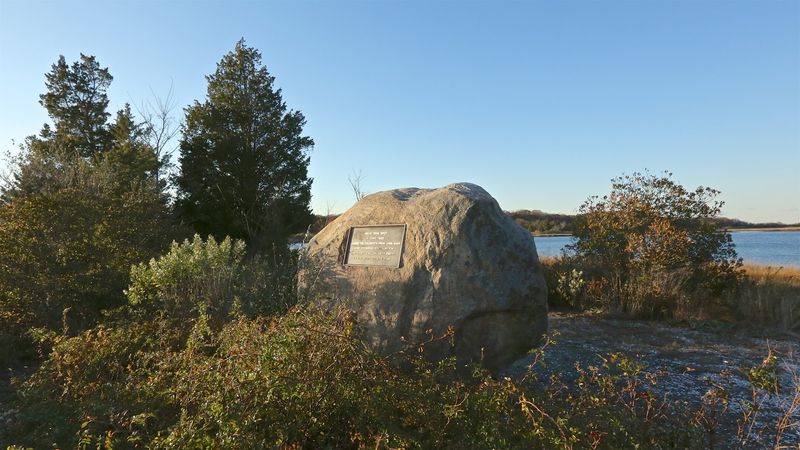
Long before New York was New York, a group of determined English Puritans sailed into a quiet inlet and changed American history forever.
On June 12, 1640, those settlers landed at what we now call Conscience Point, making Southampton the first English settlement in all of New York State.
A massive 20-ton boulder marks the spot today, and it hits differently when you realize you are standing at the actual starting line of a colony.
The address is 1640 Conscience Point Rd, Southampton, NY 11968, and yes, the road number matching the founding year is not a coincidence.
The site also honors the Shinnecock people, who had called this land home for thousands of years before any ship appeared on the horizon.
Their story is woven into the fabric of this place, and that layered history makes it feel genuinely important.
The Southampton History Museum has protected and maintained Conscience Point since 1910, which is pretty impressive stewardship.
Admission is completely free, and the nature trail along the waterfront is peaceful enough to make you forget your phone exists.
Locals sometimes call it the Plymouth Rock of Southampton, which tracks because most tourists also walk right past Plymouth Rock without really stopping. Do yourself a favor and actually stop here.
The quiet is the kind that makes you think, and the view across the water is the kind that makes you stay longer than you planned.
2. Halsey House And Garden
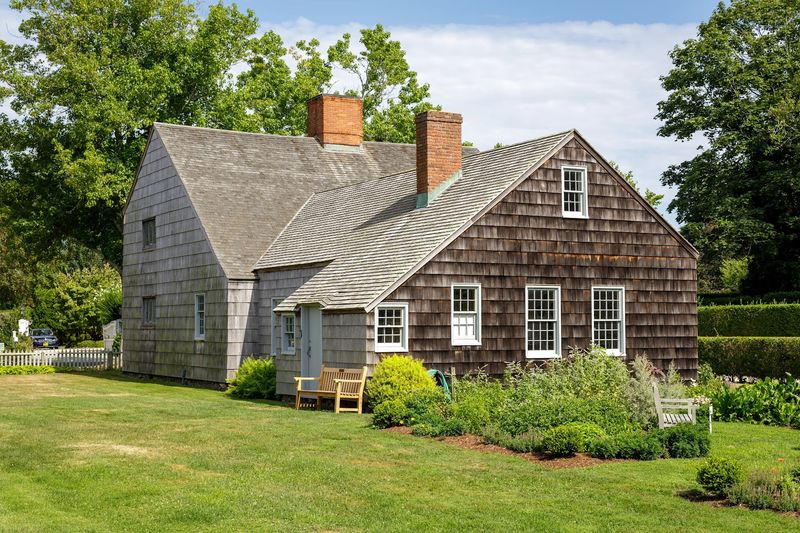
Somewhere between a history lesson and a genuine jaw-drop moment, the Halsey House earns its reputation as the oldest surviving English frame house in New York State.
Thomas Halsey Jr. built the structure around 1683, though the family connection to the property goes back even further to 1657 when his father was among Southampton’s founding settlers.
Around 1730, the house got its iconic saltbox shape during a remodel, giving it the silhouette that stops photographers in their tracks.
The house sits at 249 S Main St, Southampton, NY 11968, which puts it directly in the path of everyone heading toward the famous Gin Lane beach. And yet, somehow, people keep walking right past it without a second glance.
Inside, the restored rooms showcase 17th and 18th century furnishings, including a Dominy clock and a rare 16th century Breeches Bible that is genuinely one of a kind.
The surrounding gardens are gorgeous in a quietly confident way, with herb and flower beds alongside a small orchard that feels like it belongs in a painting.
The Southampton History Museum acquired the property in 1958 and has kept it beautifully maintained ever since.
Visiting feels like pressing pause on the modern world for a few minutes. The house does not shout for your attention the way a billboard would, but once you step onto the grounds, it holds it completely.
Any building that has outlasted four centuries of Long Island weather clearly has something worth saying.
3. Southampton History Museum
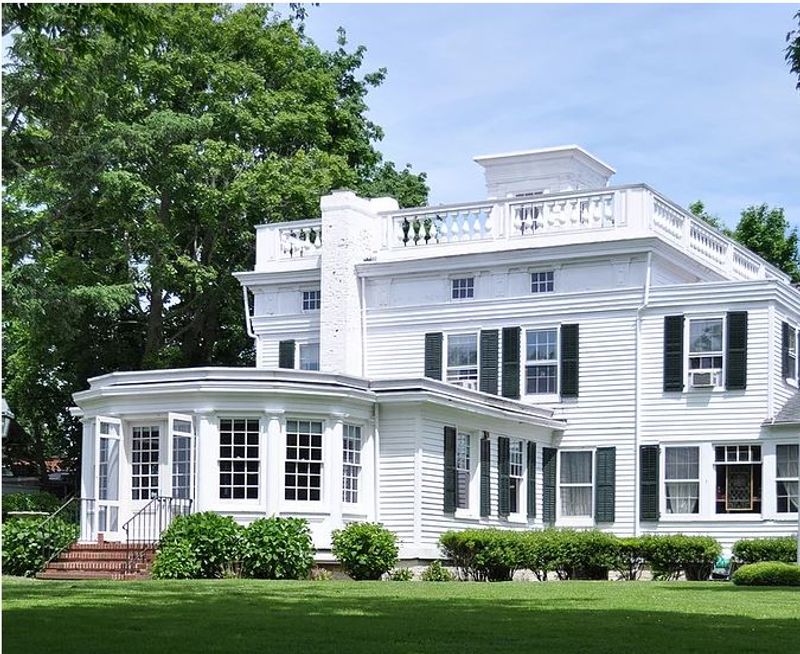
Free admission and nearly 400 years of history packed into one address sounds like a deal that should come with a catch. At the Southampton History Museum on 17 Meeting House Ln, Southampton, NY 11968, there is no catch whatsoever.
The centerpiece is the Rogers Mansion, a Greek Revival beauty built around 1843 by Captain Albert Rogers, a direct descendant of the town’s original English settlers.
The museum complex stretches across 12 to 14 distinct historic structures, and each one tells a different chapter of the region’s past. You can wander through a one-room schoolhouse that makes modern classrooms look absolutely luxurious by comparison.
There is also a traditional barn and an active blacksmith shop where demonstrations bring old trades back to life in a way that no textbook ever quite manages.
The collections hold over 3,000 artifacts and archival materials, which means every visit can surface something new. New York has plenty of paid museums that offer far less substance than what you get here for free.
The blacksmith demonstrations alone are worth the trip because watching someone shape hot metal with pure skill is genuinely thrilling. If you have kids in tow, they will remember the sparks flying at the forge long after they forget every other part of the vacation.
For adults, the Rogers Mansion’s architecture alone is worth a slow, appreciative walk around the exterior. Bring comfortable shoes because the grounds reward those who take their time exploring every corner.
4. Pelletreau Silver Shop
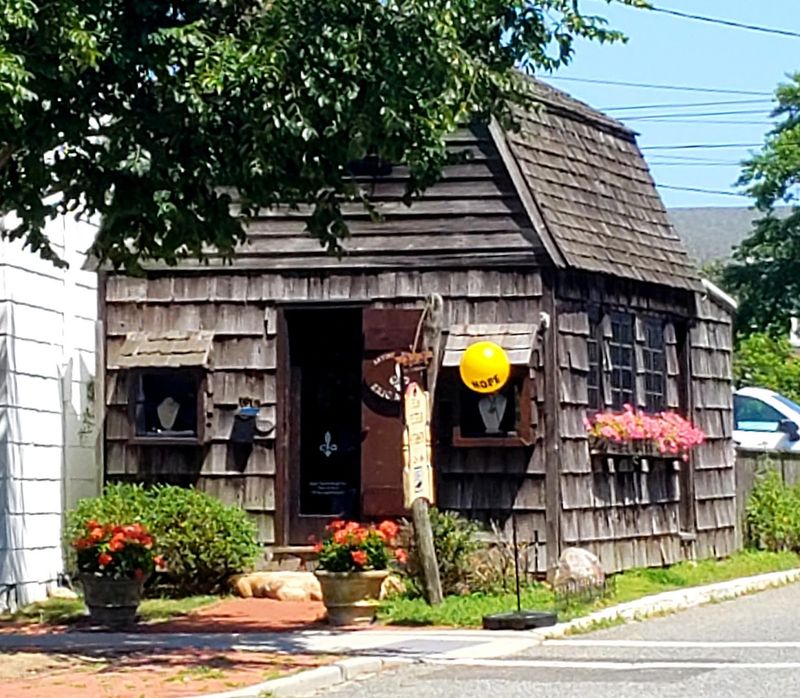
Right on Main Street, hiding in plain sight like the most confident secret keeper in town, the Pelletreau Silver Shop has been part of Southampton’s commercial life since 1686. That is not a typo.
The building originally opened as a dry goods store, making it one of the oldest continuously operating shops in the entire Western Hemisphere. It quietly holds that title while tourists browse past it without a second thought.
The silversmith chapter began in 1717 when Francis Pelletreau purchased the shop. His grandson, Elias Pelletreau, who lived from 1726 to 1810, turned it into a celebrated workshop between 1750 and 1810.
Elias earned a reputation as Long Island’s foremost silversmith, crafting everything from intricate jewelry to sturdy tankards.
The shop at 80 Main St, Southampton, NY 11968 underwent restoration in the mid-1960s to accurately recreate its original workshop appearance.
Today the Southampton History Museum owns and operates the space, and it functions as an active jewelry shop with an artist-in-residence who demonstrates traditional silversmithing techniques.
Watching someone work silver by hand using methods that have barely changed in centuries is a genuinely rare experience.
The craftsmanship on display connects directly to a lineage of skill that shaped this community long before mass production existed.
For anyone who appreciates handmade objects or old-world trades, this shop is a full stop moment on a street that otherwise moves very fast.
Pop in, say hello to whoever is working, and appreciate that some things age remarkably well.
5. Sag Harbor Whaling And Historical Museum
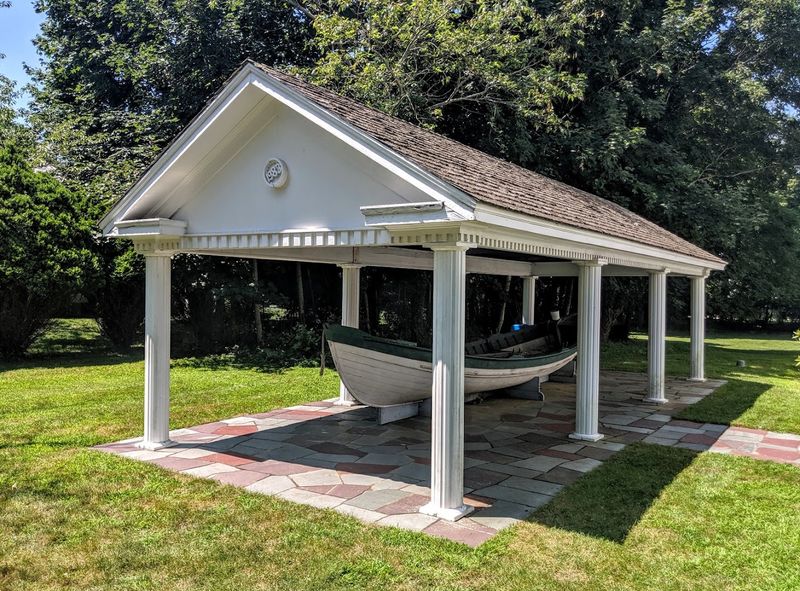
Before the Hamptons became synonymous with beach clubs and summer traffic, Sag Harbor was one of the most important ports in the entire world.
The Sag Harbor Whaling and Historical Museum at 200 Main St, Sag Harbor, NY 11963 keeps that extraordinary legacy alive inside one of the most striking buildings on the East End.
The museum occupies the Benjamin Huntting House, a Neo-Gothic structure built in 1845 for a prominent whaling ship owner, and it is listed on the National Register of Historic Places.
Inside, you will find New York State’s largest collection of whaling equipment, alongside fascinating scrimshaw and detailed models of whaling ships.
The museum has been gathering and displaying local artifacts since the 1930s, which gives the collection a depth that newer institutions simply cannot replicate.
Sag Harbor earned the distinction of being New York State’s first Port of Entry in 1789, one full day before New York City claimed that designation. Let that sink in for a moment.
Most Hamptons visitors breeze through Sag Harbor on their way to somewhere else, which means the museum rarely gets the crowd it deserves.
That is honestly their loss and your gain, because a quiet afternoon here feels like a private tour through a pivotal era of American maritime history.
The Native American history woven throughout the exhibits adds important context that many visitors do not expect. Plan at least 90 minutes because the collections reward curiosity, and curiosity is absolutely the right energy to bring through these doors.
6. Old First Presbyterian Church
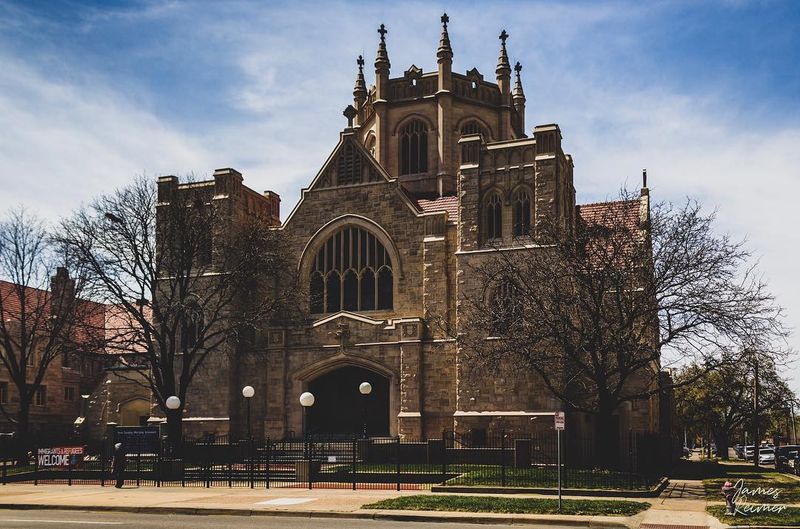
Founded in 1640, the Old First Presbyterian Church shares its birth year with Southampton itself, which tells you everything about how central it was to the town’s identity from the very beginning.
The congregation traces its roots to the same English Puritans who landed at Conscience Point and immediately set about building a community with a spiritual foundation.
At 60 Union St, Southampton, NY 11968, the current wood gothic church building went up in 1843 and has anchored this corner of town ever since.
The congregation holds recognition as one of the two oldest Presbyterian churches in the entire Presbyterian Church U.S.A., which is a distinction that carries real historical weight.
Services here connect a living community to a chain of worship that stretches back nearly four centuries without a single gap.
That kind of continuity is rare anywhere in America, and it is especially striking in a town that reinvents itself every summer season.
The coastal cemetery alongside the church grounds deserves its own moment of appreciation. Rows of worn headstones mark generations of Southampton families, and the quiet there has a particular quality that feels earned rather than designed.
Walking through it is not morbid at all. It feels more like reading a very condensed version of local history written in stone.
The church and cemetery together form one of the most complete historic experiences in all of New York, and most beach visitors drive past without ever glancing over. Their loss is genuinely your opportunity to connect with something lasting.
7. Long Wharf
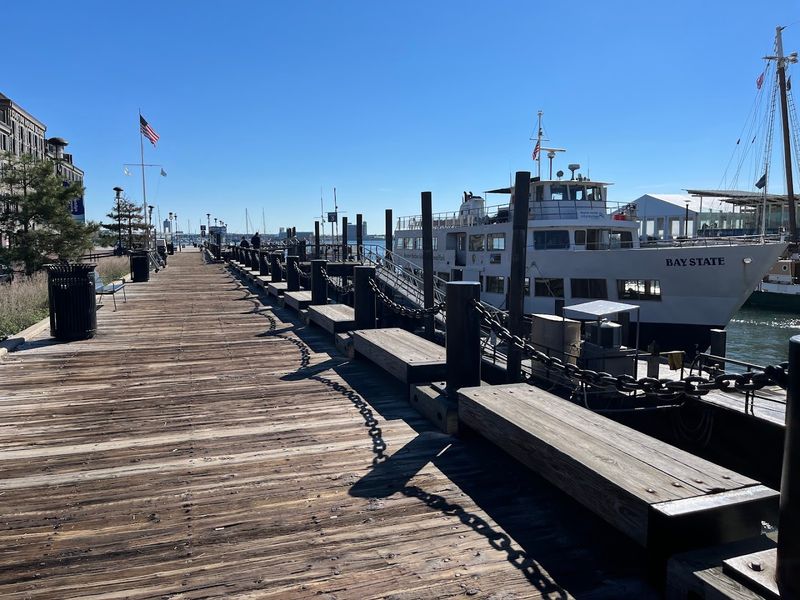
Few places in the Hamptons carry the weight of genuine maritime adventure the way Long Wharf does in Sag Harbor.
Since 1771, this wharf on Bay St, Sag Harbor, NY 11963 has been the point where land meets water and where history made some of its boldest moves.
In 1821, the structure was significantly rebuilt and expanded to handle the booming whaling trade that was putting Sag Harbor on maps around the world.
Ships once lined up several deep along this wharf, loading supplies and crew before setting off on Pacific voyages that could last months or even years.
The sailors who departed from here were chasing whales across oceans most people in Southampton had never seen and would never see.
That scale of ambition, launched from a wooden dock on the edge of Long Island, is genuinely staggering when you let yourself think about it for more than a second.
Sag Harbor’s designation as New York State’s first Port of Entry in 1789 owed a great deal to the activity centered around this wharf.
The surrounding area once buzzed with sail makers, foundries, and every trade that a working port needs to keep running.
Today the wharf hosts sport fishing boats and elegant yachts, which keeps the water connection alive even as the whaling era fades further into memory.
Beach tourists tend to overlook the wharf entirely, which means you can often enjoy the view and the history in relative peace.
That combination of quiet and depth is exactly what makes Long Wharf worth seeking out.
8. St. Andrew’s Dune Church
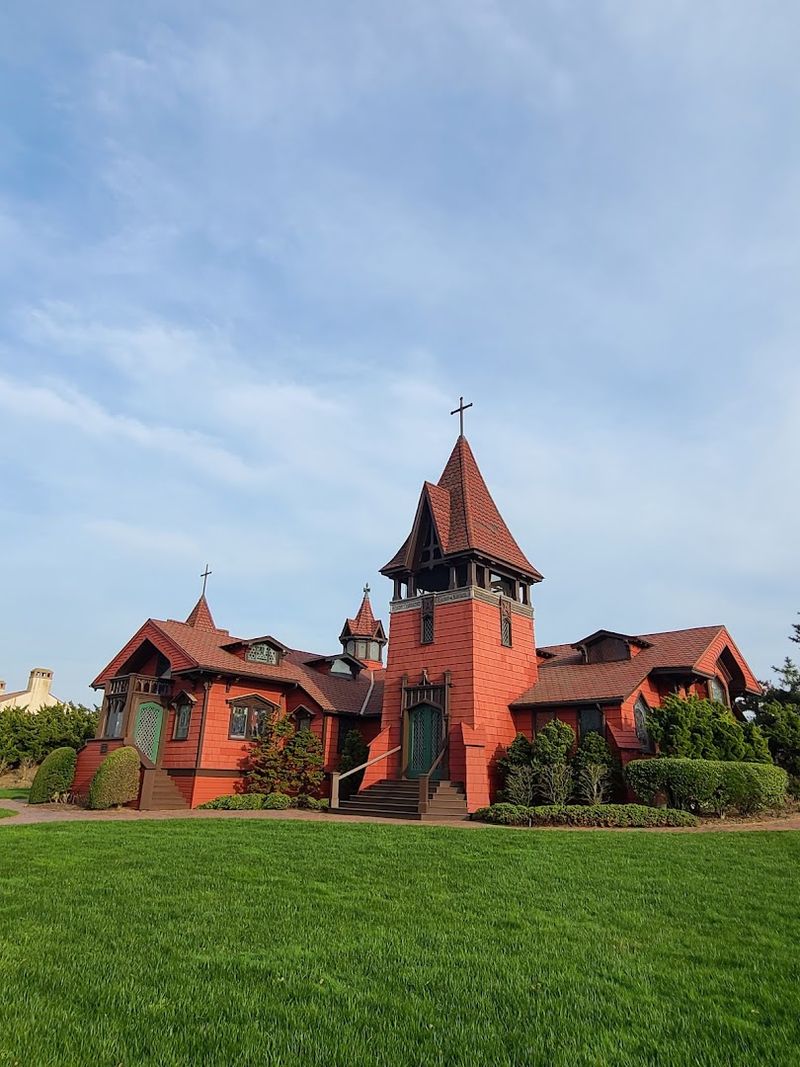
Built directly into the dunes near the Atlantic Ocean, St. Andrew’s Dune Church is the kind of place that makes you stop and ask out loud whether you are actually seeing what you think you are seeing.
The structure at 15 Shore Rd, Southampton, NY 11968 began its life in 1851 not as a church at all, but as a U.S.
Life Saving Service station. A surf boat was kept inside, ready to launch toward ships in trouble off the coast, which means this building has a rescue mission literally baked into its origins.
In 1879, five prominent Southampton families stepped in to preserve the aging station and transformed it into a church, initially called Saint-Andrews-by-the-Sea.
The name shifted to Saint Andrew’s Dune Church in 1884, and the interior still carries subtle scripture references that nod to its original life-saving purpose.
The Carpenter Gothic architecture gives the building a storybook quality that photographs beautifully but feels even more striking in person.
The 1938 hurricane hit the church hard enough to force a full reconstruction, and it reopened in 1939 with the same spirit intact. Stained glass windows inside the space are attributed to Tiffany, which adds a layer of artistry to a building already overflowing with character.
Ecumenical summer services draw a faithful seasonal crowd, but the church is worth visiting outside of service times just to stand in the dunes and take in the setting.
Long Island has many historic buildings, but none of them sit quite like this one does, right at the edge of the ocean with history and salt air all around.