
11 Historic Courthouses In Indiana With Stunning Architecture
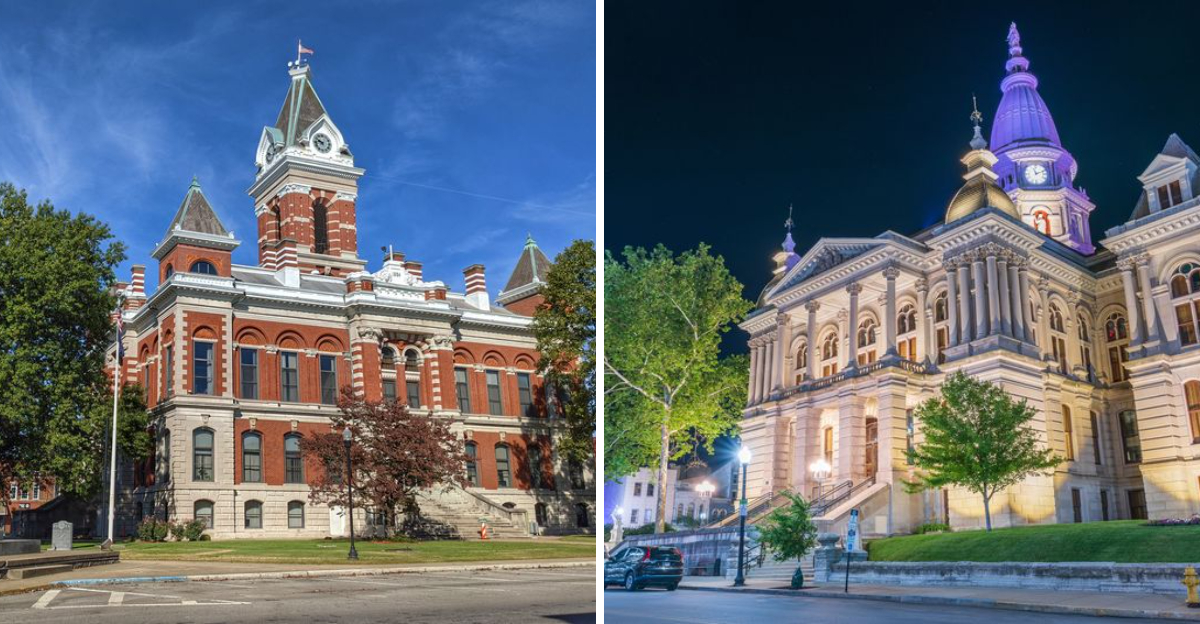
Indiana’s courthouses are more than just places where legal matters get settled.
They’re architectural masterpieces that tell the story of communities, craftsmanship, and the evolution of design across generations.
From towering clock towers to intricate stone carvings, these buildings showcase styles ranging from Romanesque Revival to Art Deco.
Join me as we explore eleven of the most breathtaking historic courthouses scattered across the Hoosier State, each one a testament to the pride and vision of the people who built them.
1. Allen County Courthouse
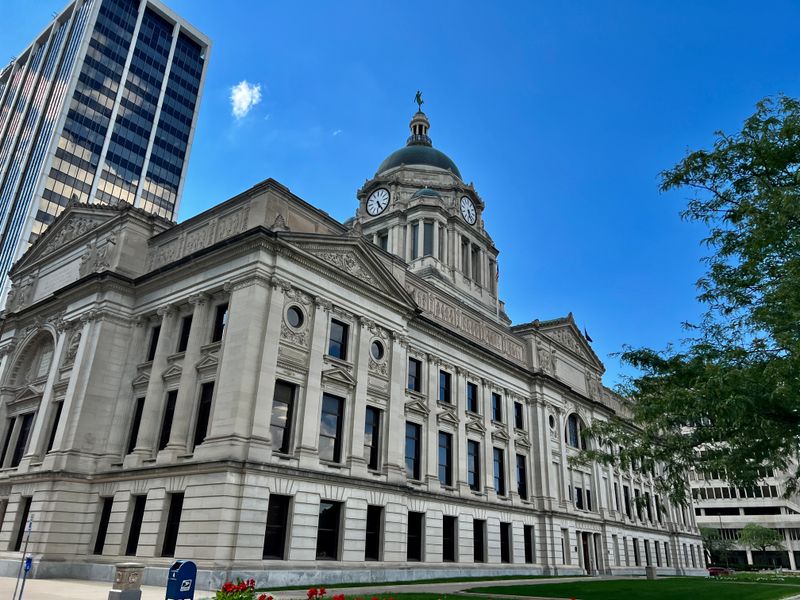
Standing proudly in downtown Fort Wayne since 1902, this courthouse is an absolute showstopper with its gleaming copper dome that catches sunlight like a beacon.
The Beaux-Arts design features Indiana limestone walls, Corinthian columns, and intricate sculptures that make you feel like you’ve stepped into a European palace.
Inside, marble staircases wind upward beneath stained glass skylights that paint rainbow patterns across the floors.
Architects Brentwood Tolan designed this gem to reflect the county’s growing importance and prosperity at the turn of the century.
The building cost around $1 million back then, which was absolutely massive for the time.
Restoration efforts have kept the courthouse looking fresh while preserving its historical charm.
Walking through its halls, you can almost hear echoes of the thousands of cases and community moments that have unfolded here over more than a century of service.
2. Tippecanoe County Courthouse
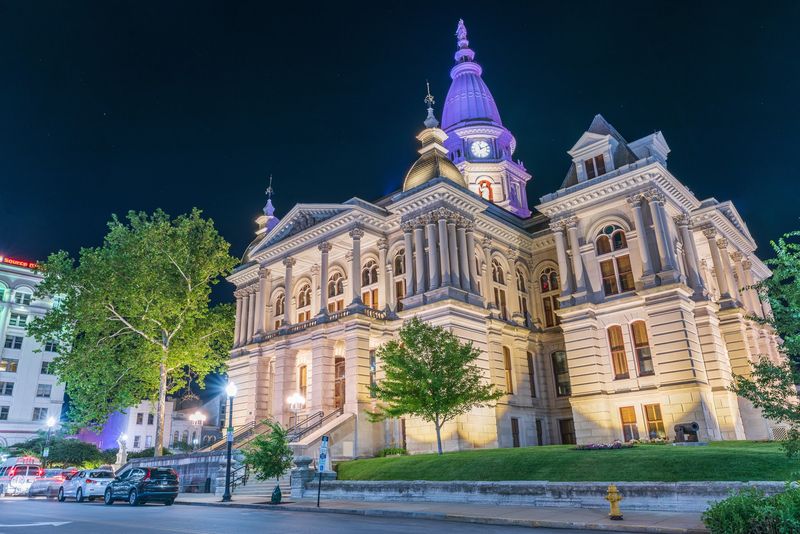
Lafayette’s courthouse rises like a fortress from the heart of the city, its red brick walls and massive clock tower visible from blocks away.
Built in 1884, this Romanesque Revival beauty showcases arched windows, turrets, and a clock tower that’s become the symbol of downtown Lafayette.
The architects, James F. Alexander and Elmer E. Dunlap, created something that feels both imposing and welcoming at the same time.
The tower houses a clock that’s been keeping time for the community for nearly 140 years, its chimes marking the hours for generations of residents.
Inside, original woodwork and decorative details have survived remarkably well, giving visitors a genuine glimpse into Victorian-era craftsmanship.
The courthouse underwent significant restoration in recent years to preserve its structural integrity and historical features.
Standing in the square, looking up at those towering walls, you really get a sense of permanence and tradition.
3. Vigo County Courthouse
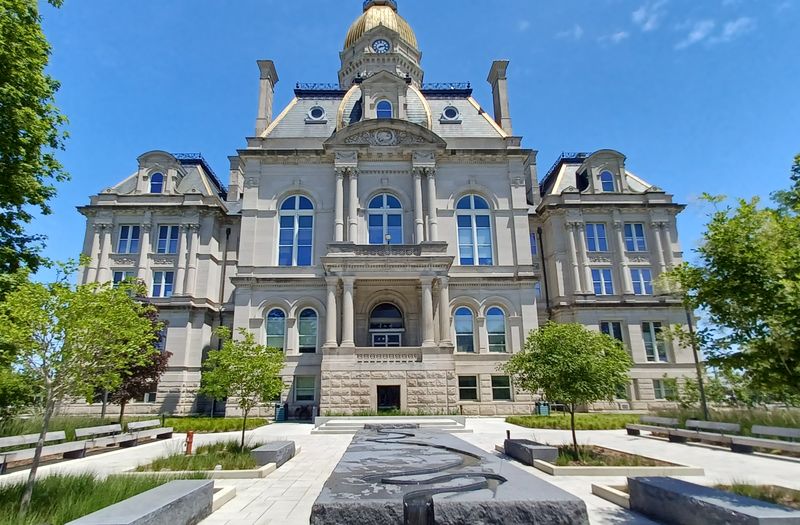
Terre Haute’s courthouse, completed in 1888, commands attention with its French Second Empire style that feels almost theatrical in its grandeur.
The mansard roof, dormer windows, and elaborate stone detailing make this building look like it belongs on a Parisian boulevard rather than the Indiana prairie.
Architect Samuel Hannaford brought European elegance to the Midwest with this design, and it absolutely works.
The courthouse features a central tower that once served as a lookout point, offering panoramic views of the growing city below.
Intricate carvings around doorways and windows show the level of craftsmanship that went into every square inch of this structure.
Over the decades, the building has witnessed countless historical moments, from major trials to community celebrations.
Restoration projects have carefully maintained the original character while updating systems for modern use, ensuring this architectural treasure continues serving the community for generations to come.
4. Bartholomew County Courthouse
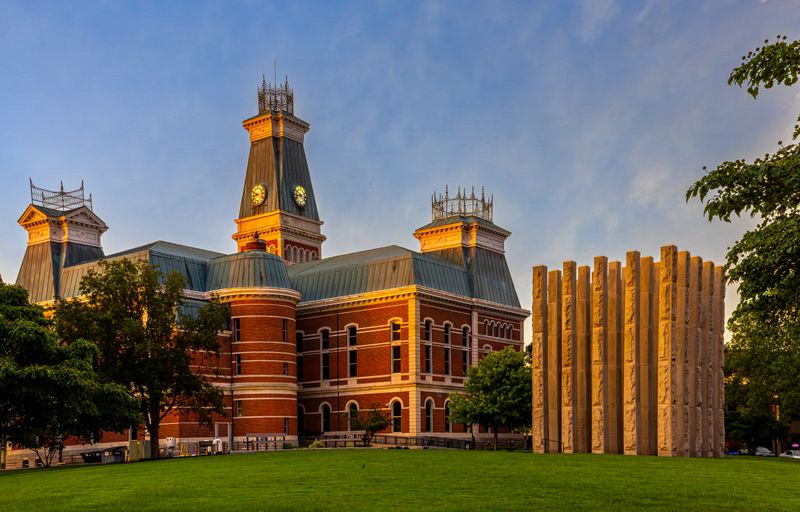
Columbus is famous as a mecca of modern architecture, and its courthouse breaks from tradition in the most refreshing way.
Designed by architect J. Timothy Anderson and completed in 1874, the original structure featured Italianate styling that was later modified.
What makes Columbus unique is how the city embraced contemporary design throughout the 20th century, creating a courthouse square that blends history with innovation.
The courthouse underwent renovations that respected its historical roots while incorporating modern elements that reflect the city’s architectural legacy.
Surrounding the courthouse, you’ll find some of the most significant modern buildings in the Midwest, making this an architectural pilgrimage site.
The building serves as a reminder that courthouses don’t have to be stuck in the past to be meaningful.
Walking around the square, you experience layers of architectural history, from Victorian details to sleek modernist structures, all coexisting in harmony and demonstrating how communities evolve.
5. Decatur County Courthouse
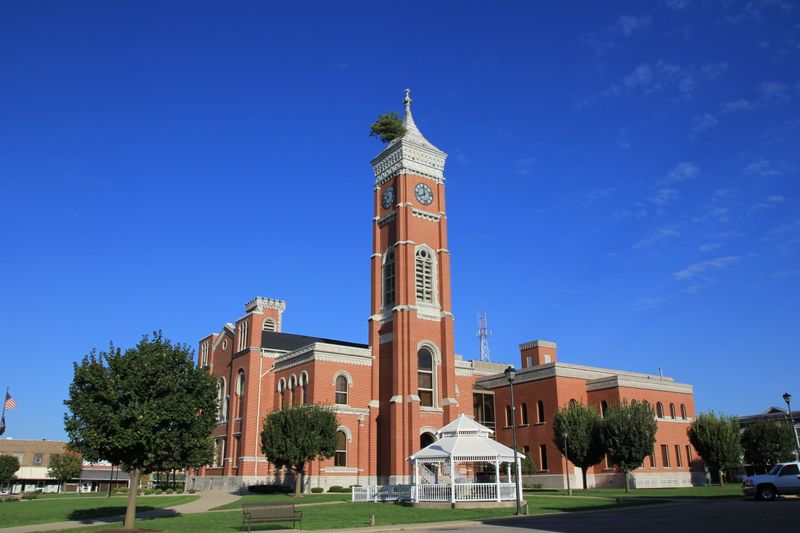
Here’s something you won’t see anywhere else: a full-grown tree sprouting from the courthouse tower, and it’s been there for over a century!
Built in 1860, this Romanesque Revival courthouse in Greensburg became internationally famous for the large deciduous tree growing from its seven-story tower.
Nobody planted it there—nature just decided the tower was the perfect spot, and the tree has thrived despite being over 100 feet in the air.
The building itself features beautiful brick construction, arched windows, and a clock tower that would be impressive even without its botanical tenant.
Architects designed it to be sturdy and functional, but they never imagined it would become famous for its unexpected greenery.
The tree has survived storms, harsh winters, and countless years of curiosity from visitors who can’t quite believe what they’re seeing.
It’s a perfect symbol of resilience and the unexpected beauty that can emerge when nature and human creation intersect.
6. Dearborn County Courthouse
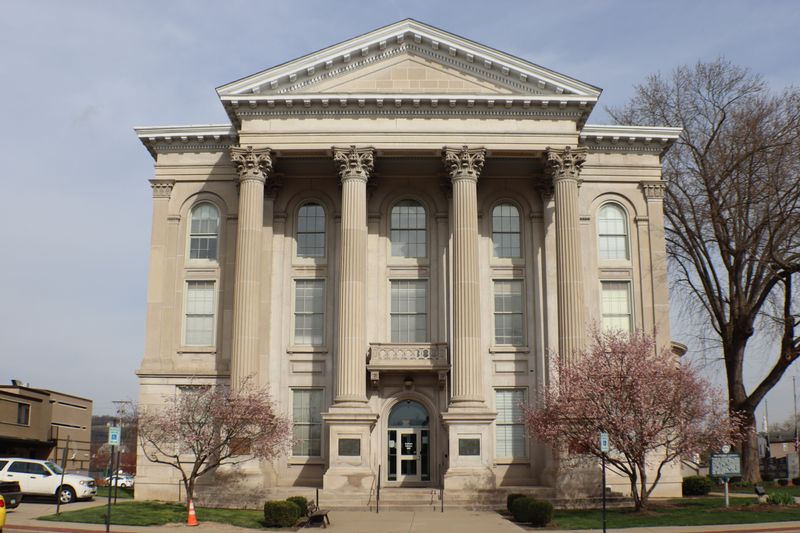
Perched on a hill overlooking the Ohio River, the Dearborn County Courthouse in Lawrenceburg radiates classical elegance with its Greek Revival design.
Completed in 1826, this is one of Indiana’s oldest courthouses still in use, and walking up to it feels like approaching an ancient temple.
The white columns, symmetrical facade, and triangular pediment create a sense of order and dignity that perfectly captures the ideals of justice.
Architect Jesse Hunt drew inspiration from classical antiquity, believing that ancient Greek architecture represented democracy and civic virtue.
The building’s hilltop location wasn’t just for dramatic effect—it also protected it from Ohio River floods that regularly threatened the town below.
Inside, you’ll find period details that have been lovingly preserved through nearly two centuries of use.
The courthouse has witnessed the entire arc of Indiana’s history, from frontier settlement to modern times, standing as a constant reminder of enduring values and community commitment to justice.
7. Posey County Courthouse
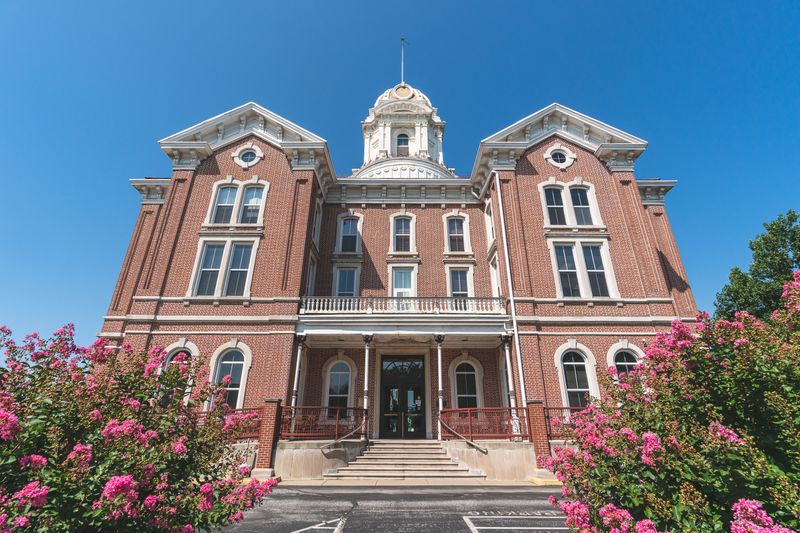
Mount Vernon’s courthouse, built in 1876, brings a touch of Victorian romance to Indiana’s southwestern corner with its Second Empire styling.
The mansard roof, ornate brackets, and tall windows give this building a storybook quality that makes it one of the most photogenic courthouses in the state.
Architect Edwin May designed it during a period when French-inspired architecture was all the rage across America.
The courthouse sits on the banks of the Ohio River, and its tower once served as a navigation landmark for riverboat captains traveling the waterway.
Inside, original woodwork, pressed tin ceilings, and period light fixtures transport visitors back to the Gilded Age.
The building has survived floods, fires, and the test of time, emerging from each challenge with its character intact.
Restoration work has been undertaken with tremendous care, ensuring that modern safety standards don’t compromise the historical integrity that makes this courthouse so special to the community and visitors alike.
8. Carroll County Courthouse
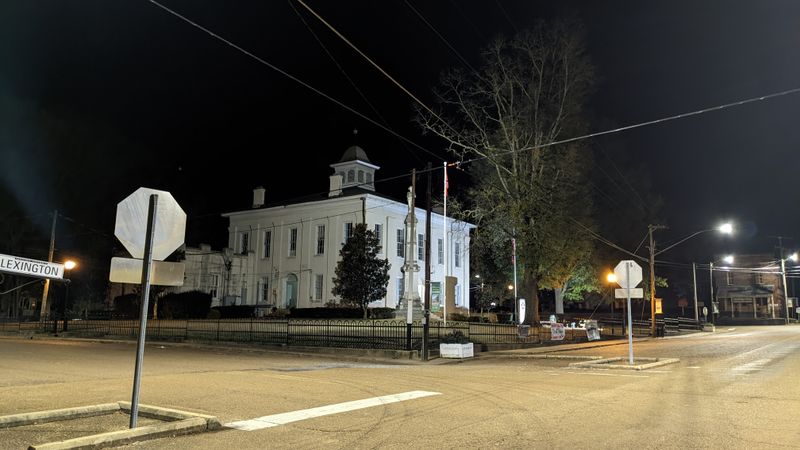
Delphi’s courthouse, completed in 1916, represents a later era of courthouse construction when architects were blending traditional styles with early modern sensibilities.
The red brick and limestone structure features Neoclassical elements, including a grand entrance with columns and a dome that crowns the building like a jeweled cap.
Architects Patton & Miller created a design that balanced dignity with accessibility, making the courthouse feel both important and welcoming.
The building replaced an earlier courthouse that had served the county for decades, and residents wanted something that would last for generations.
The construction quality shows in every detail, from the marble floors to the ornate plasterwork that decorates the interior spaces.
Carroll County takes tremendous pride in maintaining this building, and it shows in the careful upkeep and periodic restorations.
Standing in the rotunda, looking up at the dome, you feel connected to a century of community history and the countless people who’ve passed through seeking justice and resolution.
9. Knox County Courthouse
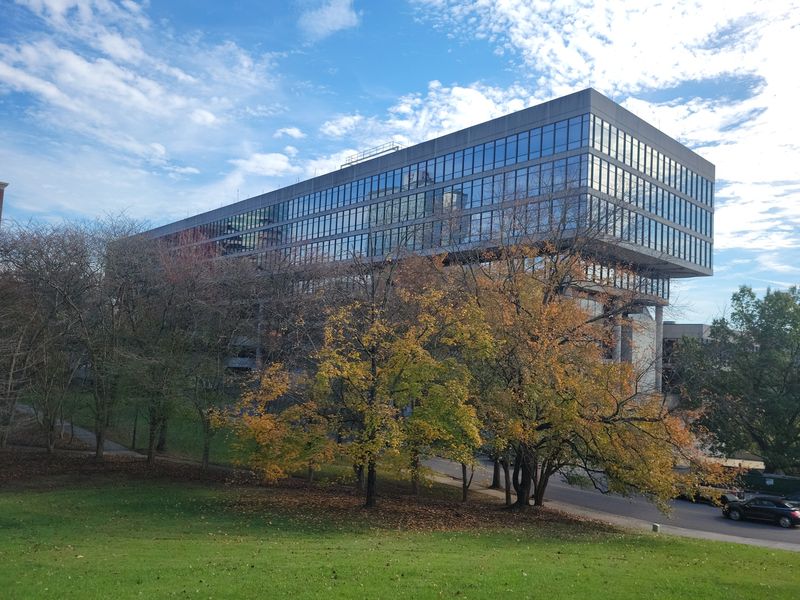
Vincennes, Indiana’s first capital, deserves a courthouse that reflects its historical significance, and this 1876 Greek Revival beauty absolutely delivers.
Towering Corinthian columns support a classical pediment, creating a facade that could easily grace a museum or capitol building.
The courthouse sits on land that has hosted government buildings since territorial days, connecting present-day residents to the earliest chapters of Indiana history.
Architect Andrew J. Lemon designed the structure to embody timeless principles of justice and democracy through classical architectural language.
The building’s proportions follow ancient Greek mathematical ratios believed to create visual harmony and psychological balance.
Inside, a grand staircase rises beneath a skylight, and courtrooms feature original wooden benches and judge’s stands that have witnessed over a century of legal proceedings.
The courthouse underwent major restoration in recent decades, carefully preserving historical elements while upgrading infrastructure, ensuring this architectural treasure continues serving Knox County’s needs well into the future.
10. Gibson County Courthouse
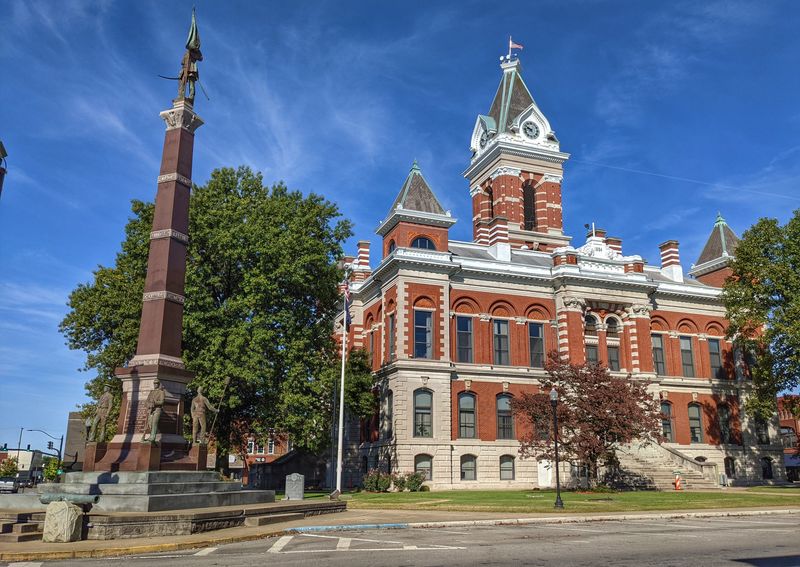
Princeton’s courthouse, erected in 1884, stands as a testament to the ambition and prosperity of Gibson County during the late 19th century.
The Second Empire style features a dramatic mansard roof, elaborate brackets, and a central tower that rises above the surrounding buildings like an exclamation point.
Architect George W. Bunting created a design that balanced function with flair, giving the county a courthouse that was both practical and impressive.
The building’s red brick exterior, accented with stone trim, has weathered beautifully over the decades, developing a rich patina that adds character.
Inside, original staircases, woodwork, and courtroom fixtures remain largely intact, offering visitors an authentic Victorian experience.
The courthouse has been the center of community life for nearly 140 years, hosting everything from trials to celebrations.
Recent preservation efforts have focused on maintaining the building’s historical integrity while ensuring it can continue serving modern needs, proving that old buildings can remain relevant and functional.
11. Harrison County Courthouse
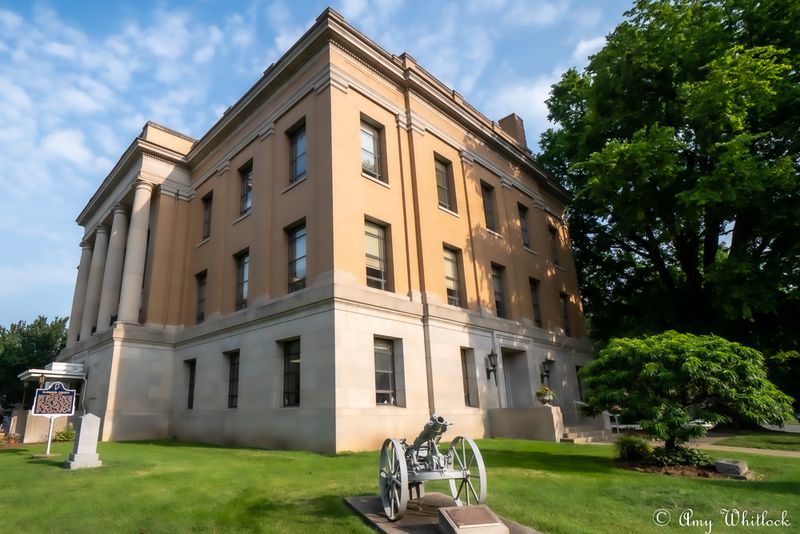
Corydon holds a special place in Indiana history as the state’s first official capital, and its courthouse reflects that distinguished legacy.
Built in 1929, this limestone structure replaced earlier courthouses that had served the county since territorial days.
The Neoclassical design features a colonnade of Ionic columns, a copper dome, and symmetrical wings that create a balanced, authoritative presence.
Architects Venable & Mahurin chose a style that honored Indiana’s heritage while incorporating modern construction techniques and materials.
The courthouse sits near the original state capitol building, creating a historic district that tells the story of Indiana’s early government.
Inside, marble floors, ornate plasterwork, and period light fixtures create an atmosphere of dignified elegance.
The building serves not just as a functioning courthouse but as a monument to Harrison County’s role in shaping Indiana’s destiny, reminding residents and visitors alike of the deep roots that connect present communities to their pioneering past.