
8 Historic Parks In Massachusetts That Feel Like The Past Never Left
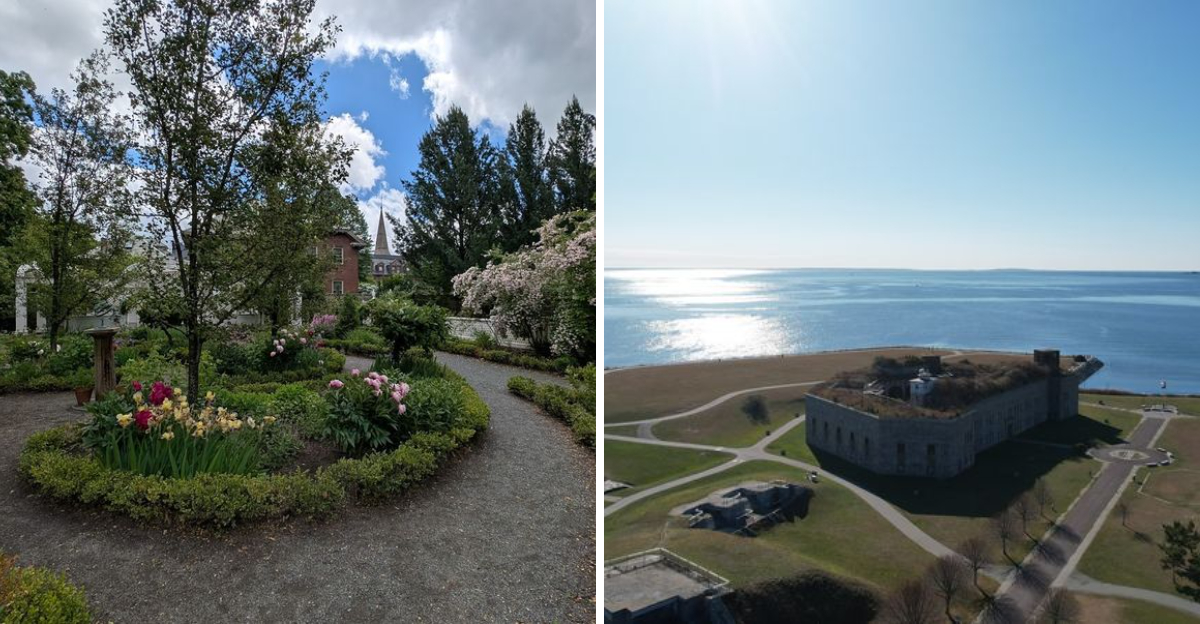
History feels different when it surrounds you instead of sitting behind glass. Massachusetts has parks where the past still seems to linger in the paths, views, quiet corners, and weathered details.
These places are not just pretty spots for a walk. They carry a sense of time that makes you slow down and look a little closer.
You might arrive for fresh air and leave thinking about the people, moments, and stories that came long before you. That is what makes these Massachusetts parks so memorable.
They blend calm outdoor space with a feeling that something important once happened there. The experience is simple, but it stays with you.
A stroll can feel like a small step into another era, without making the day feel heavy or formal.
1. Minute Man National Historical Park, Lincoln
On April 19, 1775, the world changed along a quiet stretch of Massachusetts countryside, and you can still walk that very ground today.
Minute Man National Historical Park, spread across Lincoln, Concord, and Lexington, preserves the landscape where the opening battle of the American Revolutionary War took place.
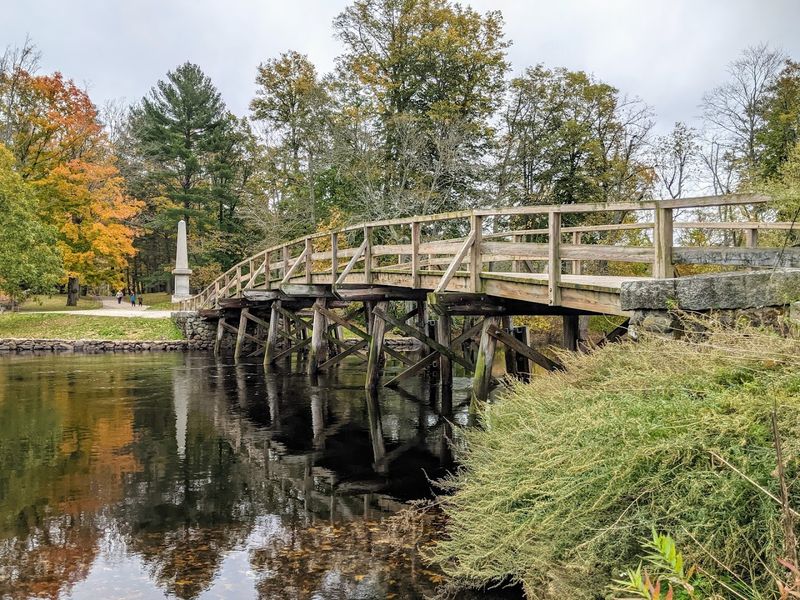
The centerpiece is the famous North Bridge in Concord, where colonial Minutemen fired what became known as the “shot heard ’round the world.”
Standing on that bridge, with the river flowing quietly below, makes the weight of that moment feel very real.
The 5-mile Battle Road Trail winds through forests and meadows, passing historic farmhouses and stone walls that soldiers hid behind during the fighting.
Interpretive signs along the way turn the trail into an outdoor history lesson that is easy to follow for all ages.
Rangers lead guided programs throughout the year, and the visitor center uses maps, artifacts, and displays to help you understand exactly how the day unfolded.
Spring and fall are especially beautiful times to visit, when the landscape mirrors what those colonial fighters would have seen.
Families with kids will find the park surprisingly engaging, since there is so much ground to cover and so many stories tied to specific spots. Few places in America let you feel the pulse of the Revolution quite like this one does.
2. Salem Maritime National Historic Site, Salem
Salem is a city that carries centuries of story in every cobblestone, and its waterfront tells a tale that goes far beyond the famous witch trials of 1692.
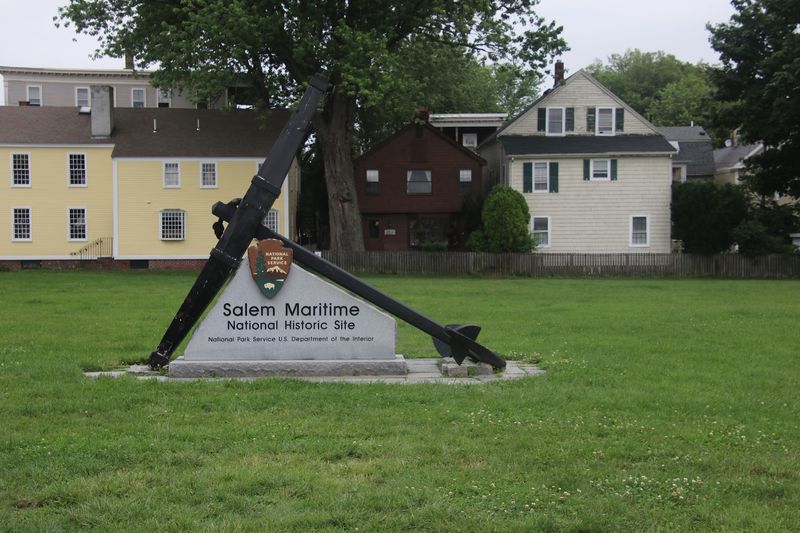
Salem Maritime National Historic Site, established in 1938 as the very first National Historic Site in the entire United States, preserves more than 600 years of New England’s seafaring history.
The nine-acre park lines the Salem waterfront with twelve historic structures, including the remarkable Derby Wharf, originally built in 1762.
At its peak, Salem was one of the most important trading ports in the young nation, sending ships across the Atlantic and into the Pacific with remarkable regularity.
Visitors can tour historic buildings, explore the wharves, and get a vivid picture of what life looked like for the merchants, sailors, and customs officers who made this port hum with activity.
The tall ship Friendship of Salem, a full-scale replica of a 1797 merchant vessel, is often docked nearby and open for boarding.
The surrounding neighborhood is full of Federal-style architecture that adds to the sense of stepping into another era entirely. Salem itself is a walkable city, so pairing a visit to the maritime site with nearby museums makes for a rich full day.
Whether you are drawn by the seafaring history or simply curious about how global trade shaped early America, this waterfront park delivers a genuinely immersive experience.
3. Lowell National Historical Park, Lowell
Lowell is where the American Industrial Revolution did not just begin, it roared to life with the thunderous rhythm of power looms and rushing canals.
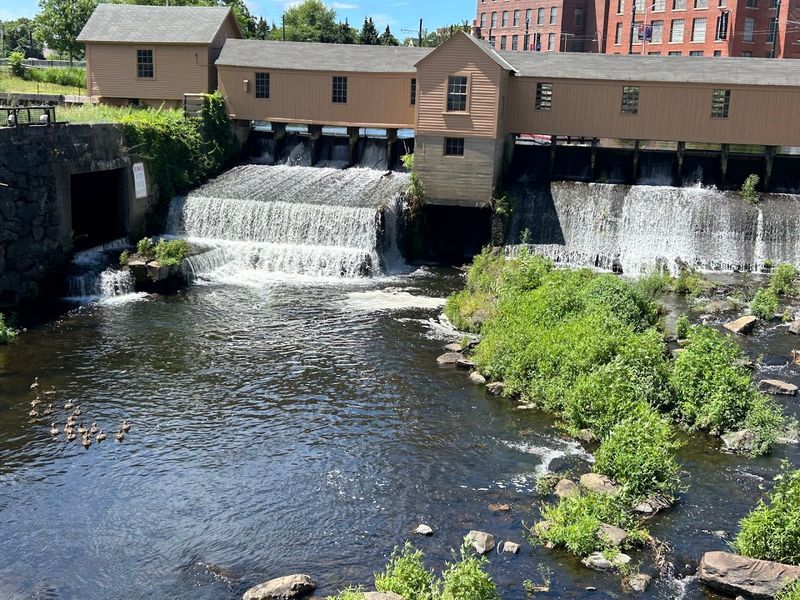
Lowell National Historical Park, established in 1978, preserves the mills, waterways, and worker neighborhoods that once made this city the manufacturing capital of a growing nation.
The Boott Cotton Mill and Museum is the undisputed highlight, where rows of working power looms still clatter and spin loud enough to remind you why mill workers of the 1800s often went partially deaf.
The sound alone is unforgettable and gives you an immediate respect for the people who worked those machines twelve hours a day.
The Lowell Canal System is another star attraction, a network of waterways that channeled river power directly into the factories.
Canal boat tours are available seasonally and offer a completely different perspective on how the city was engineered with remarkable precision.
The park also tells the human story behind the machines, focusing on the immigrant communities who poured into Lowell seeking work and opportunity.
Exhibits highlight the experiences of Irish, Greek, French-Canadian, and Southeast Asian workers who each left their mark on the city’s culture.
Walking through the brick-lined streets of downtown Lowell while the park’s history unfolds around you is an experience that feels both educational and deeply moving. This is industrial heritage done right, with heart and honesty in equal measure.
4. Adams National Historical Park, Quincy
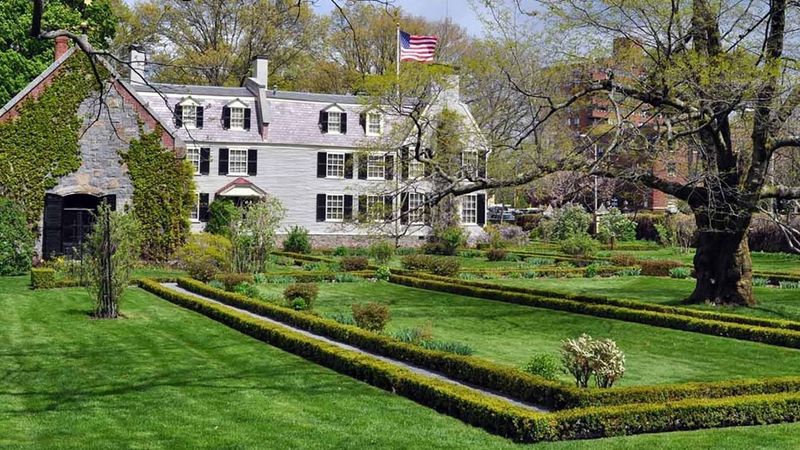
Not many families can claim two U.S. presidents, but the Adams family of Quincy managed it with remarkable distinction.
Adams National Historical Park preserves the homes, libraries, and personal spaces of John Adams and his son John Quincy Adams, offering one of the most intimate presidential experiences in the entire country.
The Old House at Peacefield served as the family’s main residence for nearly two centuries and is still furnished with original pieces that feel like the family just stepped out for a walk.
Touring the rooms, you get a genuine sense of the intellectual and political life that unfolded within those walls.
The Stone Library on the property is a particularly special stop, widely considered the first presidential library in American history.
It holds thousands of historic books and documents collected by generations of the Adams family, and the room itself has an almost reverent atmosphere.
The park also includes the birthplaces of both presidents, which are small, modest homes that stand in striking contrast to the grandeur of Peacefield. That contrast tells its own story about ambition, service, and what it meant to rise in early American society.
Trolley tours connect the various sites during the visiting season, making it easy to cover everything without wearing yourself out.
If you have ever wanted to understand the founding generation on a personal level, Quincy is the place to do exactly that.
5. Saugus Iron Works National Historic Site, Saugus
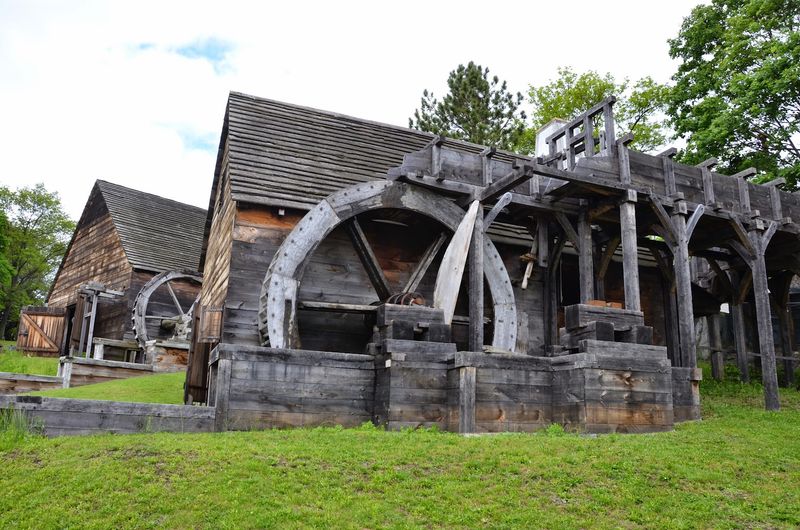
Long before steel mills and assembly lines, a small operation along the Saugus River in Massachusetts was quietly changing the future of American industry.
Saugus Iron Works National Historic Site preserves the remains of what historians consider America’s first successful integrated iron works, built in the 1640s by European iron makers who brought their specialized skills to a young colony.
The twelve-acre site features reconstructed waterwheels, forges, and a rolling mill that demonstrate exactly how raw iron ore was transformed into usable metal using nothing but water power and human skill.
Watching the waterwheel turn and imagining the heat and noise of the original operation is a surprisingly powerful experience.
A restored 17th-century ironmaster’s house sits on the property and is open for tours, giving visitors a window into domestic colonial life alongside the industrial story.
The contrast between the rough, smoky iron works and the relatively comfortable home nearby says a lot about colonial society’s structure.
The park is smaller and quieter than some of Massachusetts’ bigger historic sites, which actually works in its favor. Without the crowds, you can take your time, ask questions, and really absorb what you are looking at.
Knowledgeable rangers are on hand to explain the iron-making process in plain language that anyone can follow, including younger visitors who might not yet know much about colonial industry.
Saugus proves that big history sometimes comes in surprisingly compact packages.
6. Longfellow House Washington’s Headquarters National Historic Site, Cambridge
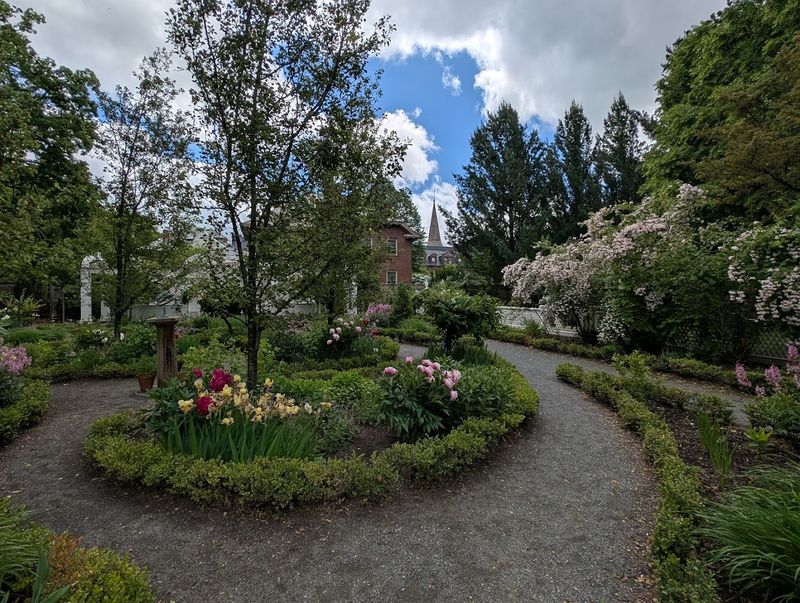
A single building in Cambridge managed to serve as George Washington’s military headquarters during the Revolutionary War and later as the beloved home of poet Henry Wadsworth Longfellow for nearly fifty years.
That layered history makes the Longfellow House Washington’s Headquarters National Historic Site one of the most genuinely fascinating stops in all of New England.
The elegant Georgian mansion, painted a warm yellow with white columns, sits on Brattle Street and looks very much as it did when Washington used it to plan the siege of Boston in 1775.
The architecture alone is worth the visit, but the interior tells an even richer story.
Longfellow moved in during 1837 and filled the house with an extraordinary collection of art, books, and personal belongings that remain on display today.
His writing desk, family portraits, and the cozy rooms where he composed some of America’s most beloved poems all survive intact.
The surrounding garden, carefully restored to reflect Longfellow’s own plantings, adds a peaceful outdoor dimension to the visit. Sitting in that garden, it is easy to understand why the poet found so much inspiration within these walls.
Guided tours run regularly and are led by rangers who clearly love the material, weaving the Washington and Longfellow chapters together into one coherent and compelling narrative.
Cambridge itself is endlessly walkable, so pairing this visit with a stroll through Harvard Square makes for a truly memorable afternoon.
7. Borderland State Park, North Easton
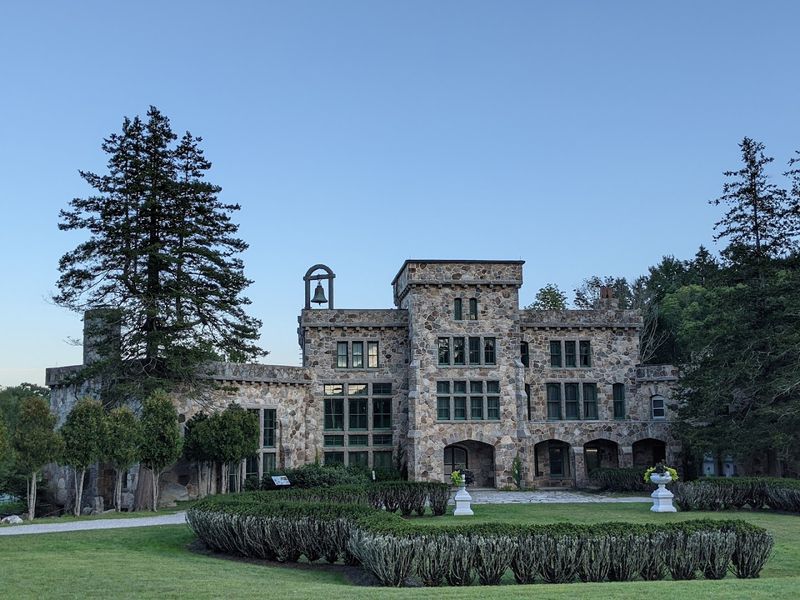
Tucked into the rolling landscape of North Easton, Borderland State Park offers something that most historic parks cannot quite match: the feeling of walking through a private world that time simply forgot to dismantle.
At the center of it all stands the Ames Mansion, a striking three-story stone estate built in 1910 and still furnished exactly as it was when the Ames family lived there.
Touring the mansion is like flipping through a living catalog of early 20th-century wealth and taste, from the formal dining room to the sunlit sitting rooms filled with original furniture, art, and personal objects.
Nothing feels staged or recreated, because very little needed to be.
Beyond the mansion walls, the park spreads across more than 1,800 acres of forests, meadows, and ponds that once formed a grand gentleman’s country estate.
Over 20 miles of trails wind through this landscape, offering everything from easy lakeside walks to more challenging woodland routes.
Fishing and non-motorized boating are permitted on the ponds, making the park popular with outdoor enthusiasts who want history and nature in the same visit. Spring wildflowers and fall foliage both transform the trails into something genuinely beautiful.
The combination of architectural grandeur and open natural space is what sets Borderland apart from every other park on this list.
Come for the mansion, stay for the trails, and leave wondering how a place this special managed to stay so wonderfully quiet.
8. Fort Taber Park, New Bedford
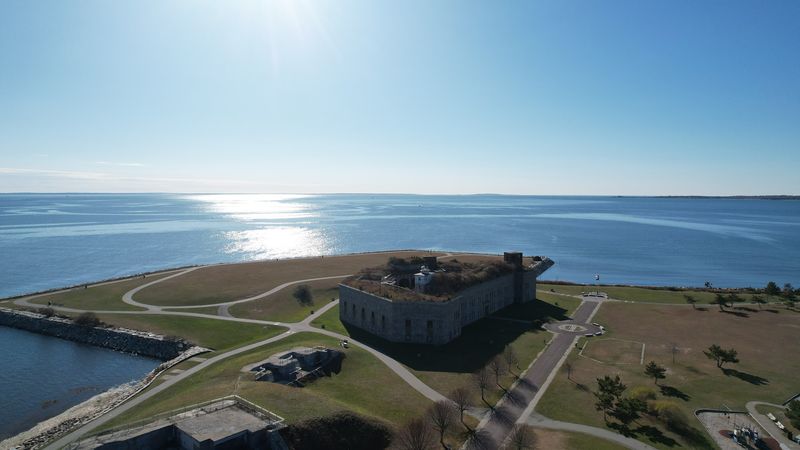
Perched at the southern tip of Clark’s Point in New Bedford, Fort Taber Park guards the entrance to one of America’s greatest whaling ports with the quiet authority of a place that has seen a lot of history roll in on the tide.
The fort itself is a well-preserved granite structure built in the mid-1800s and designed to protect the harbor during the Civil War era.
You get sweeping views of Buzzards Bay and the surrounding coastline that make it easy to understand why this location was chosen as a defensive stronghold.
The sea air and open sky give the whole experience an expansive, freeing quality.
New Bedford was once the whaling capital of the world, and the park sits within a city that still carries that maritime identity with enormous pride.
The nearby New Bedford Whaling National Historical Park adds even more historical depth if you want to extend your visit into the city itself.
Fort Taber is also a popular spot for birdwatchers, since the coastal location attracts a wide variety of shorebirds and migratory species throughout the year. Bring binoculars and you might spot something unexpected perched on the old stone walls.
The park is free to enter and open year-round, which makes it an easy addition to any South Coast Massachusetts itinerary.
Standing on those old ramparts with the ocean stretching out before you, the past and present feel perfectly balanced.