
Illinois Has A Little Grand Canyon That Looks Almost Unreal
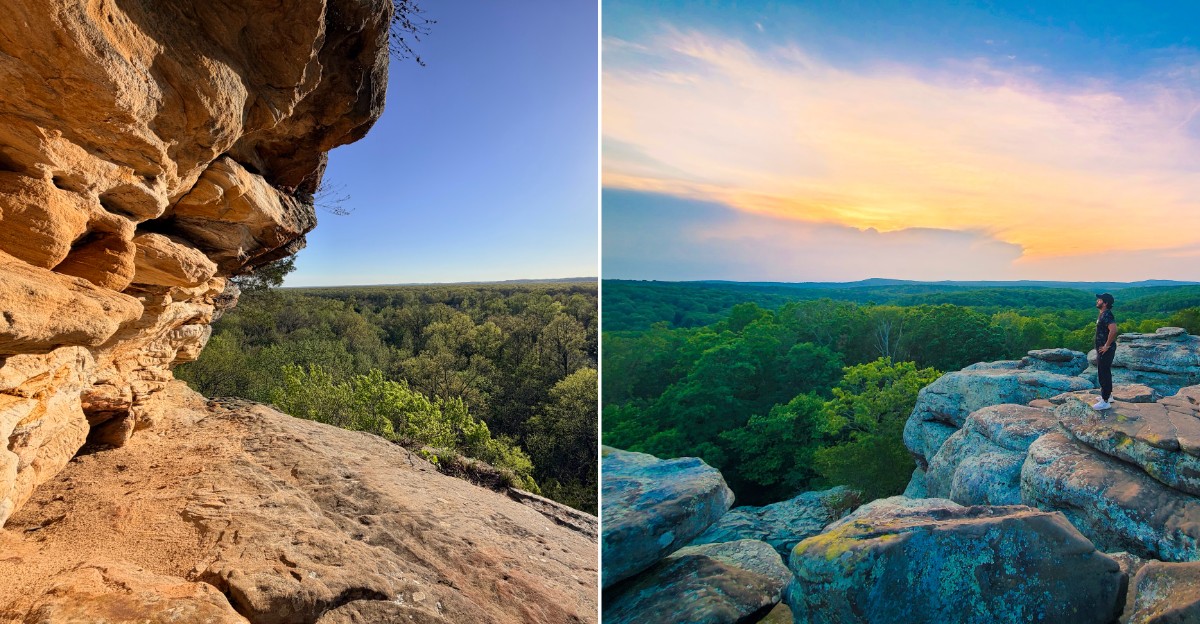
Most people picture flat farmland when they think of this state, never a canyon carved deep into stone. In Illinois, sandstone walls rise up dramatically in one quiet corner most visitors never expect to find.
What could possibly hide inside a landscape known mostly for cornfields and skylines? Waterfalls spilling over ancient rock and ferns covering a cool canyon floor answer that question fast.
Old stone steps lead hikers down into a world that feels miles from everyday life. Every climb earns a new view, and every turn along the trail brings another small surprise.
Wide overlooks stretch across river bottomlands toward distant bluffs on a clear day. Illinois hides this kind of canyon in plain sight, waiting for anyone willing to hike down and see it.
A Canyon Where Nobody Expects One
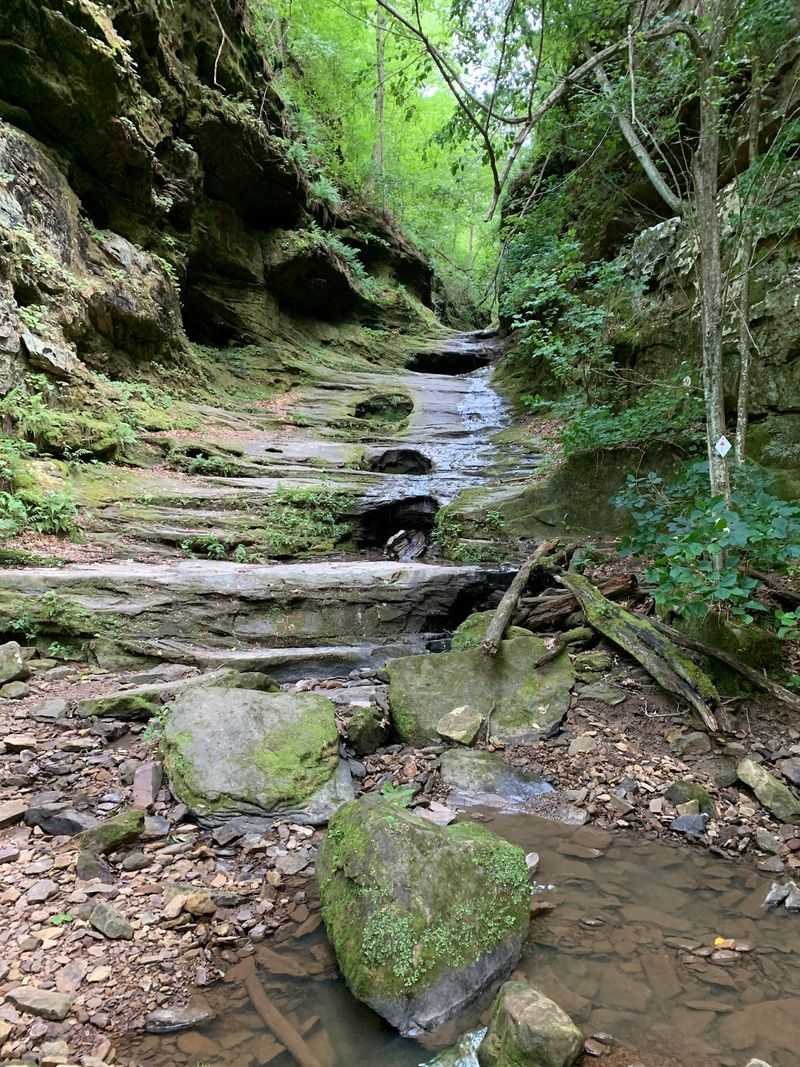
Surprise is the first feeling most visitors get here. Somewhere in the rolling Shawnee Hills sits the Little Grand Canyon, a box canyon that seems to belong in a western movie.
Yet it sits right inside the Shawnee National Forest in Jackson County, Illinois.
Officially, the place is simply called Grand Canyon. Locals and hikers added the word Little, and the nickname stuck.
It lies near the small town of Pomona, south of Murphysboro.
So what makes it so special? In February 1980, it was named a National Natural Landmark.
That honor goes to places with rare geology and unique ecosystems. Not many spots in the Midwest earn it.
Picture sandstone walls climbing up to 100 feet over your head. Imagine a quiet creek winding along the bottom.
Add seasonal waterfalls, deep green ferns, and wide lookout views. That mix is what keeps people coming back.
Of course, it is not a copy of the famous Arizona canyon. Trees cover much of the gorge, so the magic feels close and personal.
You walk right through the rock instead of staring at it from far away.
Could a single hike change how you see Illinois forever? Plenty of first timers say yes.
The canyon proves the state hides wild beauty in places few expect. Come ready for a real adventure, and you will not be let down.
Rocks Older Than The Dinosaurs
Put a hand on the canyon wall and you are touching deep time. The rock here is mostly Beechy Creek Sandstone.
It formed during the Pennsylvanian period, around 300 million years ago.
That is older than the first dinosaurs. Back then, this land looked nothing like today.
Sand and sediment piled up layer by layer, then slowly hardened into stone.
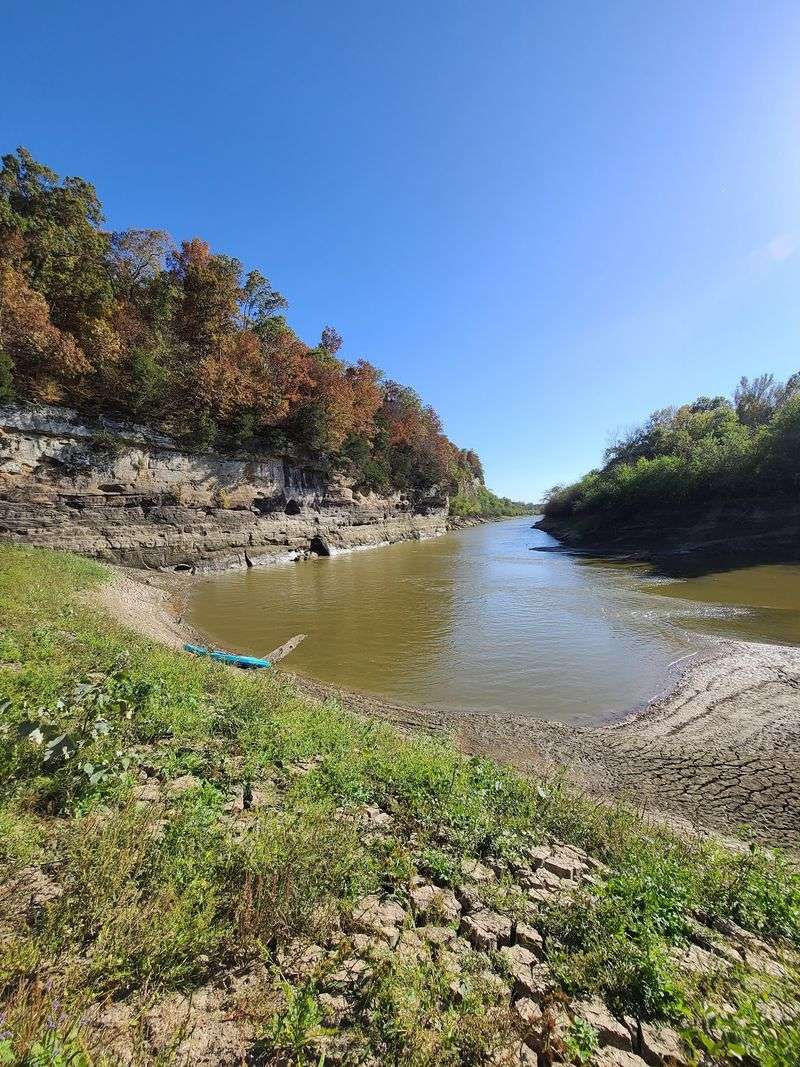
Water did the sculpting. Over countless years, a small creek and glacial meltwaters wore down the sandstone.
They carved a deep, twisting gorge through the Shawnee Hills.
That same water still has somewhere to go. The creek flows into the Big Muddy River.
From there, it joins the mighty Mississippi River. In a way, the canyon is still being shaped right now.
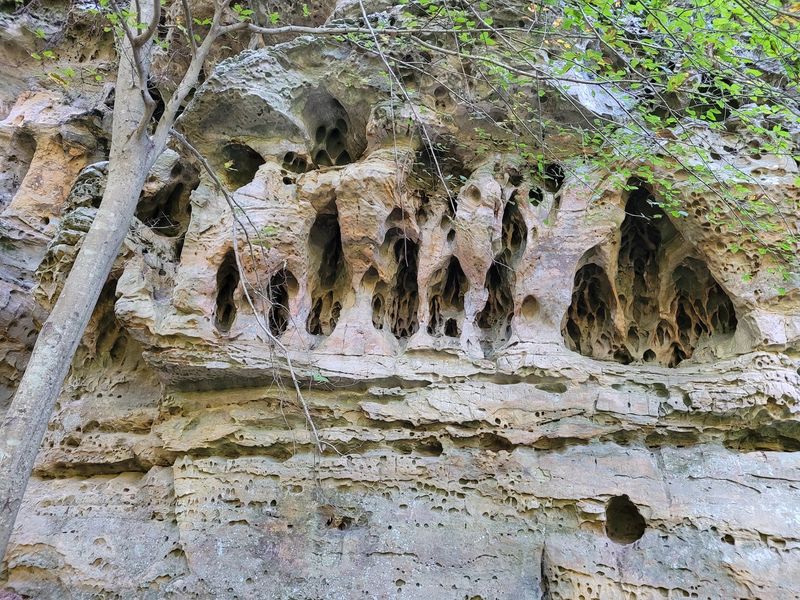
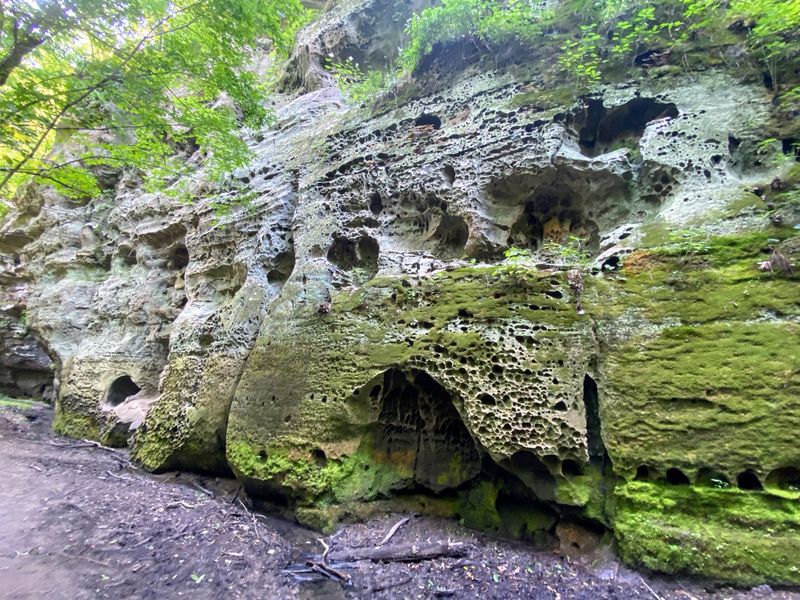
Look closely as you hike. You will see smooth curves, grooves, and ledges carved by moving water.
Some spots look like giant stone ribbons frozen in place. Kids love spotting odd shapes, and adults love snapping photos of them.
Which rock shape will be your favorite find of the day? Maybe a curved ledge, or a wall streaked with color.
Every turn offers a fresh little puzzle from the ancient past.
Here is a fun thing to try. Stand still for a minute and picture those 300 million years.
Suddenly, a busy week at work does not feel so long.
Stone Steps With A Story
Back in the 1930s, a group of young workers left their mark on this canyon. They were part of the Civilian Conservation Corps, better known as the CCC.
Their job was to build parks, trails, and projects across the country.
Here, they carved steps right into the rocky creek beds. These stone stairs still lead hikers into and out of the canyon today.
Some even have chiseled hand holds and foot holds to help climbers.
Think about that for a moment. Nearly a century later, people still use the same steps.
Each one was shaped by hand, with hard work and simple tools.
Climbing them feels like a mini adventure. Some spots ask you to use your hands, not just your feet.
Tourists often say these sections are the most fun part of the whole loop.
Still, respect the rock. Algae can make wet stone very slick.
Take your time, test each step, and keep three points of contact when things get steep.
Would you have the grit to carve a staircase into solid sandstone? Most of us would give up after one step.
That makes each climb feel like a small thank you to those workers.
Snap a photo of the carved holds when you reach them. It is a neat piece of history that many hikers walk right past.
Waterfalls That Play Hide And Seek
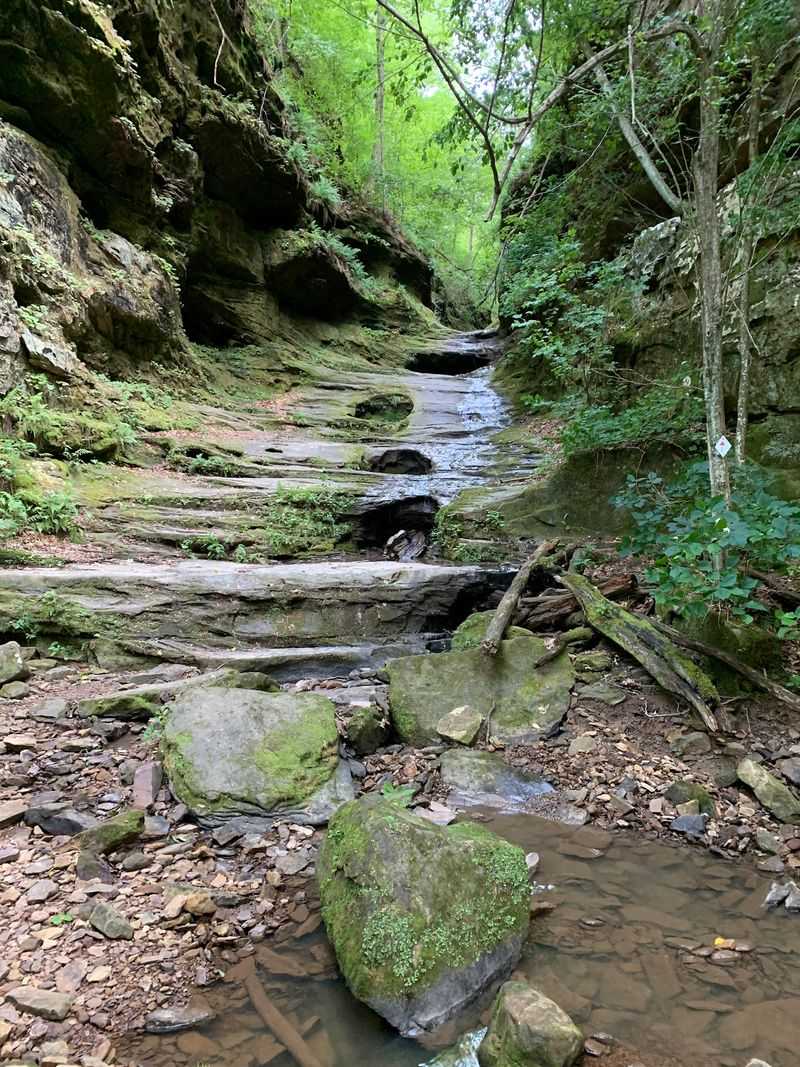
Timing is everything with these waterfalls. They are seasonal, which means they come and go with the weather.
After spring rains or summer showers, water tumbles over sculpted sandstone in dramatic cascades.
During dry spells, the falls may shrink to a trickle. Some might vanish completely.
That makes spotting a full flow feel like winning a small prize.
Many hikers even climb right up the rock beside the falls. One visitor called it a blast to climb up and down a waterfall.
The sound of rushing water makes the whole canyon feel alive.
But here is the tricky part. The same rain that feeds the falls also makes the trail slippery.
The canyon can flood during heavy storms, and parts of the path may become impossible to pass.
So what is the smart move? Aim for a day or two after moderate rain, not during a downpour.
Always check the forecast before heading out. Flash floods are no joke in narrow canyons.
How lucky do you feel about catching the falls at their best? Half the fun is the gamble.
Even a thin ribbon of water looks lovely against the golden rock.
Bring a camera with a steady grip. Slow shutter shots turn the moving water silky and smooth.
Just keep your footing first and your photo second.
Two Worlds On One Trail
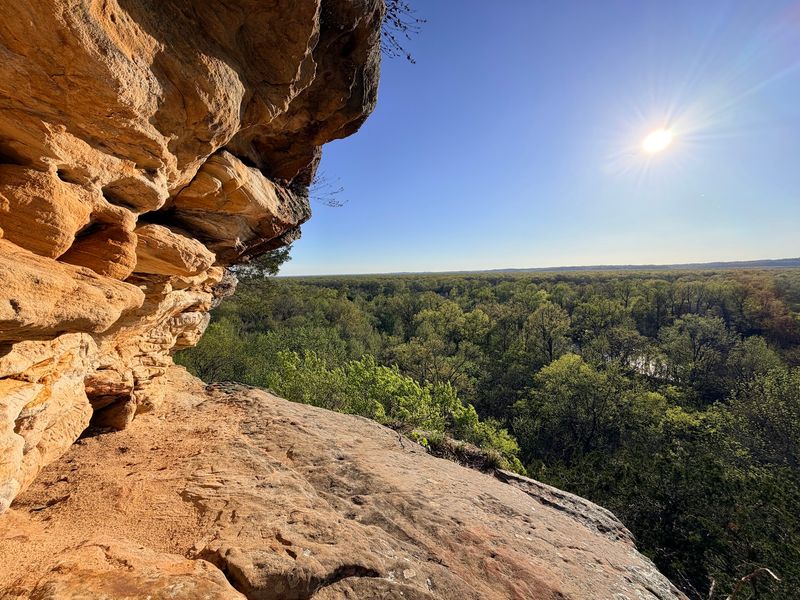
Up top, the forest feels dry and sunny. Oaks and hickories stand tall on the upland ridges.
Leaves crunch underfoot, and hawks circle overhead.
Then you head down, and the air changes. The canyon floor holds a cool, damp microclimate.
Suddenly everything turns lush and green, like a different state altogether.
Down here, giant cinnamon ferns spread their wide fronds. Soft mosses cover rocks and logs.
These rare plants love the shade and moisture tucked away from the summer sun below the bluffs.
Wildlife enjoys both zones. Deer and wild turkeys roam the woods.
Red-tailed hawks glide above the ridges. Frogs, salamanders, lizards, and snakes hang out closer to the water.
Keep your eyes open, and watch where you place your hands. One visitor even spotted an armadillo off the trail.
Snakes live here too, so give them plenty of space.
Which world will you like better, the sunny ridge or the shady floor? It is hard to pick.
Most people enjoy the contrast more than either side alone.
Here is a nice tip for nature fans. Bring a small field guide or a plant app.
Naming a fern or a bird call turns a hike into a treasure hunt, and kids especially love it.
Please leave plants and animals just as you found them.
Views That Reach Missouri
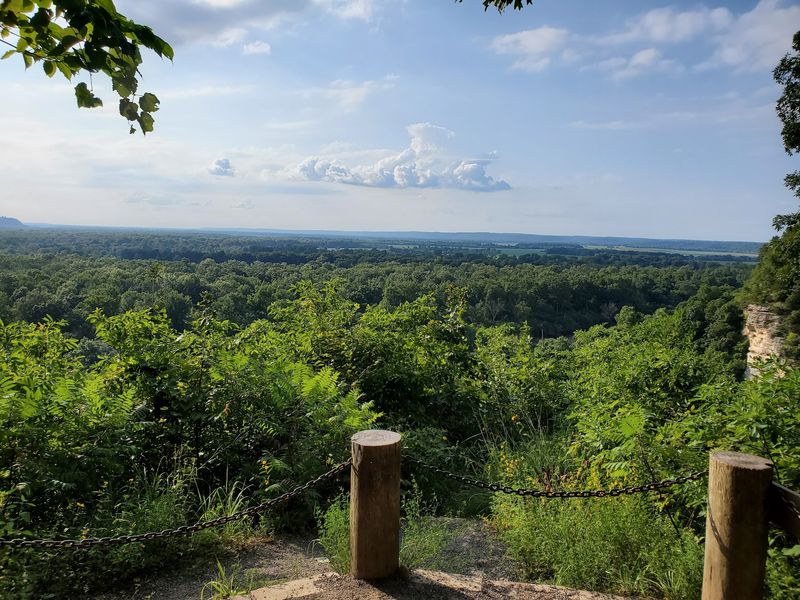
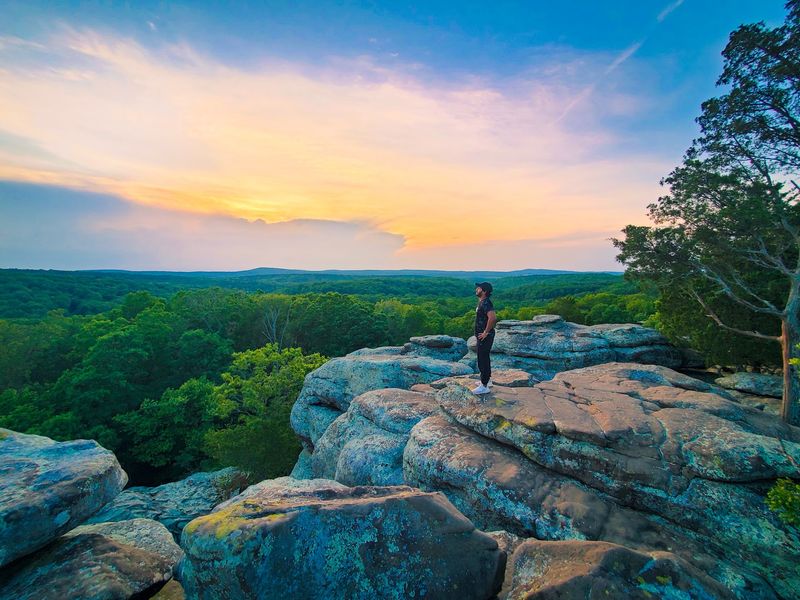
Few trails in the Midwest let you peek into another state. From the high points here, you can do just that.
On a clear day, the view stretches to the Missouri bluffs across the Mississippi River.
Before that, your eyes sweep over the canyon itself. Then comes the wide Big Muddy River bottomland.
Beyond it lies the flat, green Mississippi River floodplain.
The best part? You do not have to climb down into the canyon to enjoy it.
Overlooks are available for folks who prefer an easier outing. A visitor noted that the top of the canyon works well for everyone.
Fall turns this lookout into pure magic. Reds, oranges, and yellows blanket the hills.
Spring brings fresh green leaves and bright wildflowers below.
Now for a serious word. Cliff edges here are unmarked and unguarded.
Stay on the trail, hold little hands tight, and skip the risky selfie near the rim.
What would you name the view if it were yours? Some hikers sit quietly for a long while, just soaking it in.
Pack a snack and give yourself that moment.
Sunlight changes the scene all day long. Morning brings soft, hazy light over the valley.
Late afternoon adds warm glow to the bluffs. Either way, your camera will stay busy.
Tackling The Loop Like A Pro
Ready for a workout? The loop trail runs roughly 3 to 3.6 miles.
It is rated moderate to difficult, and your legs will know it the next day.
Expect about 350 feet of elevation change between the canyon floor and the trailhead. Some stretches climb or drop steeply.
The path mixes asphalt sections with natural dirt, roots, and rock.
Direction matters here. Many hikers suggest going counterclockwise, so you climb up the canyon rather than down it.
Going up tricky rock is often easier than coming down it.
Pay attention to the trail markers. Look for white blazes on the trees.
Some groups have wandered off track by following other hikers, so trust the markers instead.
Pack smart. Wear sturdy hiking boots and long pants.
Bring plenty of water, snacks, and bug spray for mosquitoes and ticks. Trekking poles help a lot on slick spots.
How long will it take you? One family finished in about three hours at a steady pace.
Plan extra time for photos and rest breaks.
Bringing a dog? Some pups struggle on the big rock steps and need a lift.
Kid carriers are not advised on the slickest parts. Families with young ones should stay close together.
Hike with a buddy, carry a charged phone, and pack basic first aid.
Plan Smart, Hike Happy
Good planning makes a great day even better. Spring and fall are the favorite seasons.
April brings wildflowers, and October brings brilliant leaves.
You will find the trailhead in a quiet, remote corner near Pomona, Illinois. Access comes from Hickory Ridge Road to the east.
For your map app, the listed address is Little Grand Canyon, Pomona, IL 62975.
A gravel parking lot sits at the start of the trail. It fills up fast on busy weekends and holidays, often by late morning.
Arriving early gives you a spot and cooler temperatures.
Facilities are simple. Picnic tables wait near the parking area, perfect for a trail lunch.
There is a vault toilet, but no running water.
Conditions can change quickly. Rain makes rocks slick and parts of the canyon may flood.
Always check the Shawnee National Forest website for updates and current access details before you go.
What will you pack for your picnic after the climb? A cooler of sandwiches and fruit tastes amazing after a tough hike.
It turns a trail day into a full outing.
Leave no trace, carry out your trash, and stay on marked paths. Treat the canyon kindly, and it will wow future visitors too.
Southern Illinois is waiting, and the canyon is ready.