
Inside A Marion, Ohio, Museum Sit Rows Of Antique Popcorn Wagons And Peanut Roasters
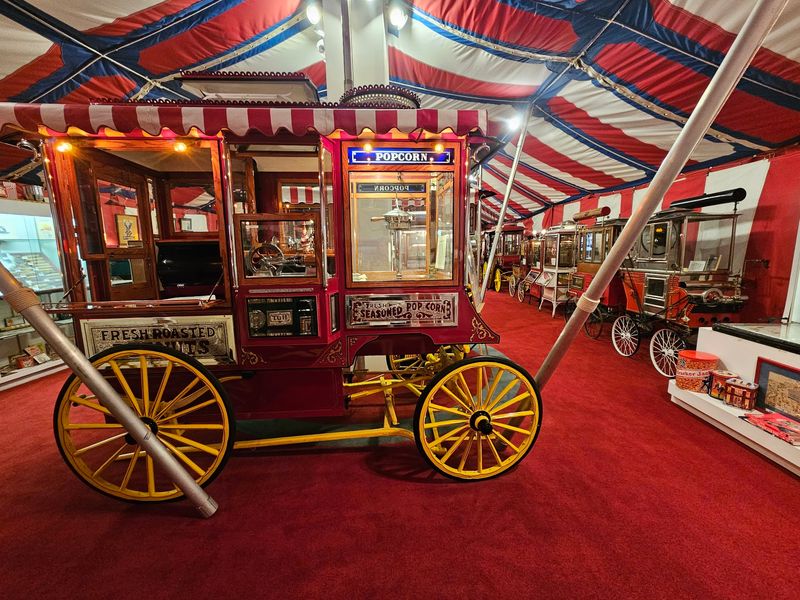
Somewhere in central Ohio, behind the columns of an old post office, there is a room where the air smells faintly of butter and the walls are draped like a circus tent. Rows of brass-trimmed wagons sit inside, the kind that once rolled down sidewalks and circus lots selling warm bags of popped corn for pocket change.
I went in expecting a small display and came out an hour later knowing more about snack history than I ever planned to. And yes, you get popcorn on the way out.
A Columned Post Office on East Church Street
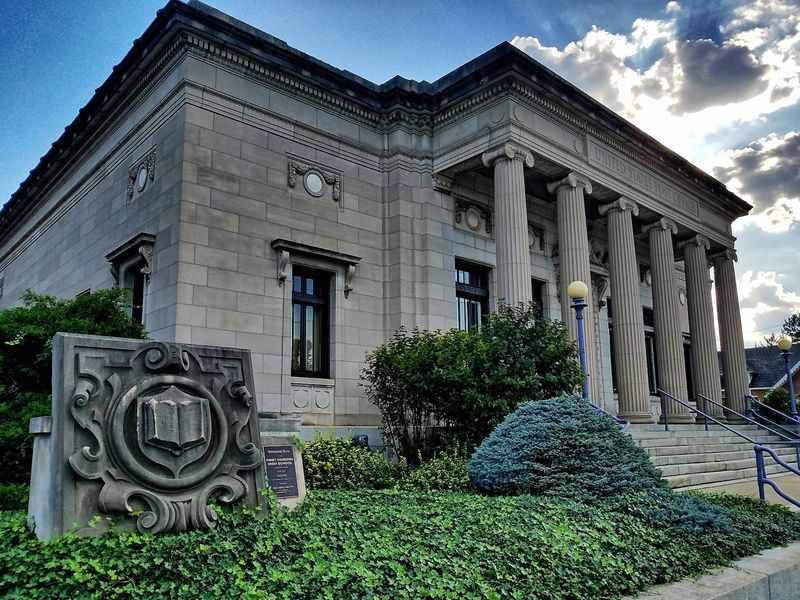
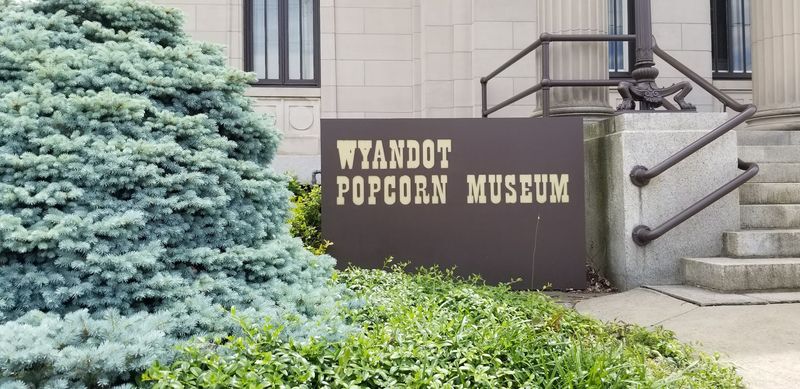
East Church Street in downtown Marion, Ohio, holds a stone building that looks far too formal for a snack museum. Wide steps climb to elegant columns, a leftover from the years it served as the city’s U.S.
Post Office.
Today it goes by Heritage Hall, and the Wyandot Popcorn Museum lives inside at 169 E Church St.
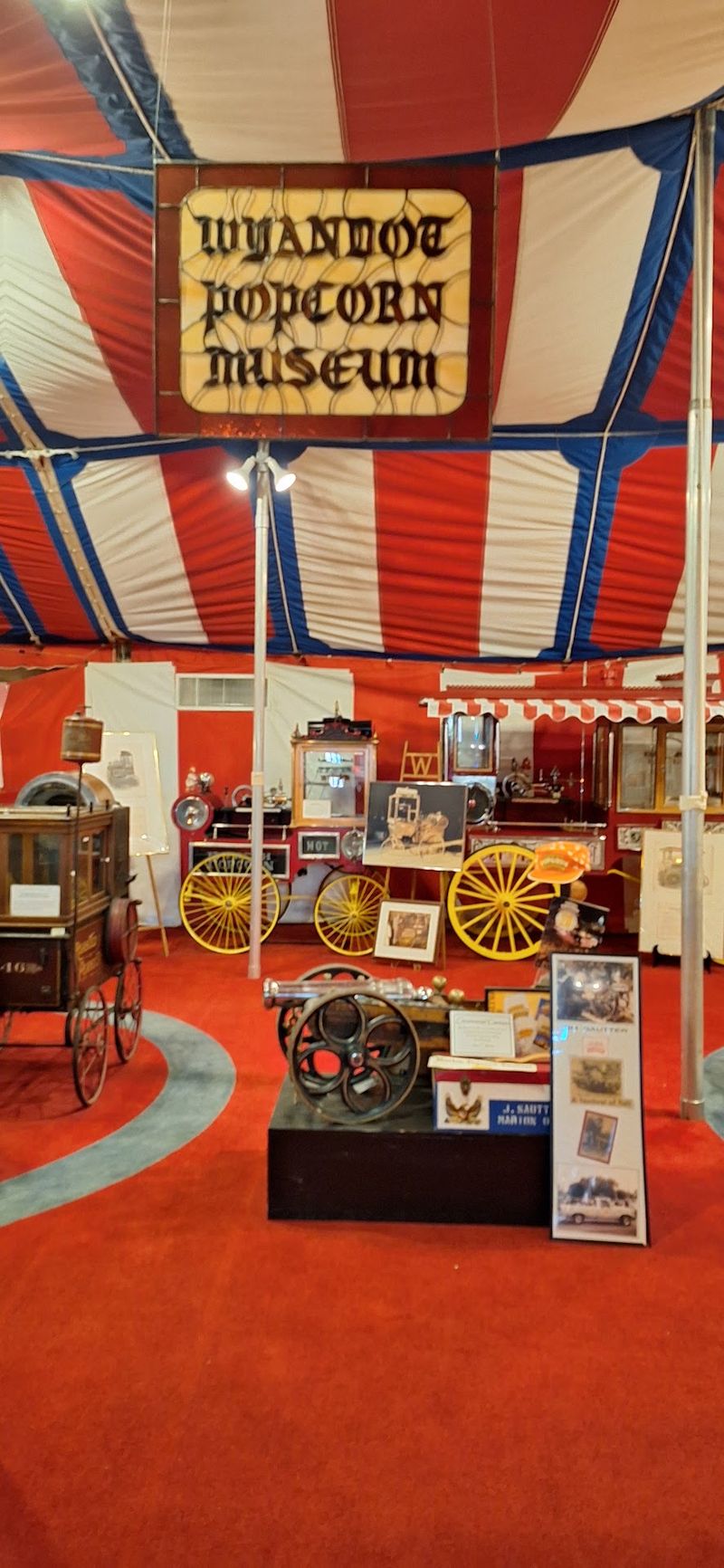
What waits behind those doors is not a modest handful of curiosities. More than fifty restored antique popcorn carts, wagons, and machines fill one dramatic room, recognized as the largest collection of antique popcorn wagons and peanut roasters in the United States.
Brass fittings, glass globes, painted lettering, and spoked wheels sit shoulder to shoulder.
Marion has a legitimate claim to the subject. The Wyandot Popcorn Company was founded here in 1936, tying this small Ohio city to a snack that Americans eat by the ton.
Admission covers other collections in the same building too, which is why plenty of people arrive planning a fifteen minute stop and end up wandering for an hour or more.
George K. Brown and the Collection That Started It
Family businesses tend to collect things, and the Brown family collected popcorn machines. George K.
Brown, whose family founded the Wyandot Popcorn Company in Marion back in 1936, gathered antique poppers, carts, and roasters with the patience of someone who knew exactly what he was looking at.
In 1982 that private hoard became a public museum. The idea was straightforward: celebrate Marion’s place in American snack history and give these strange, beautiful machines a permanent home rather than letting them scatter to auctions and attics.
The museum’s first location was not the one visitors see now. In 1989 the collection moved into the former U.S.
Post Office building in Marion’s downtown district, a much grander setting that suited the pieces well.
Restoration has been the quiet work behind all of it. Machines that once sat neglected under tarps were brought back to working polish, complete with original signage and lighting where possible.
Visitors regularly comment that the wagons look nearly showroom fresh, which says a great deal about the decades of care poured into them since Brown started collecting.
Heritage Hall’s Grand Interior and Its Old Mail Boxes
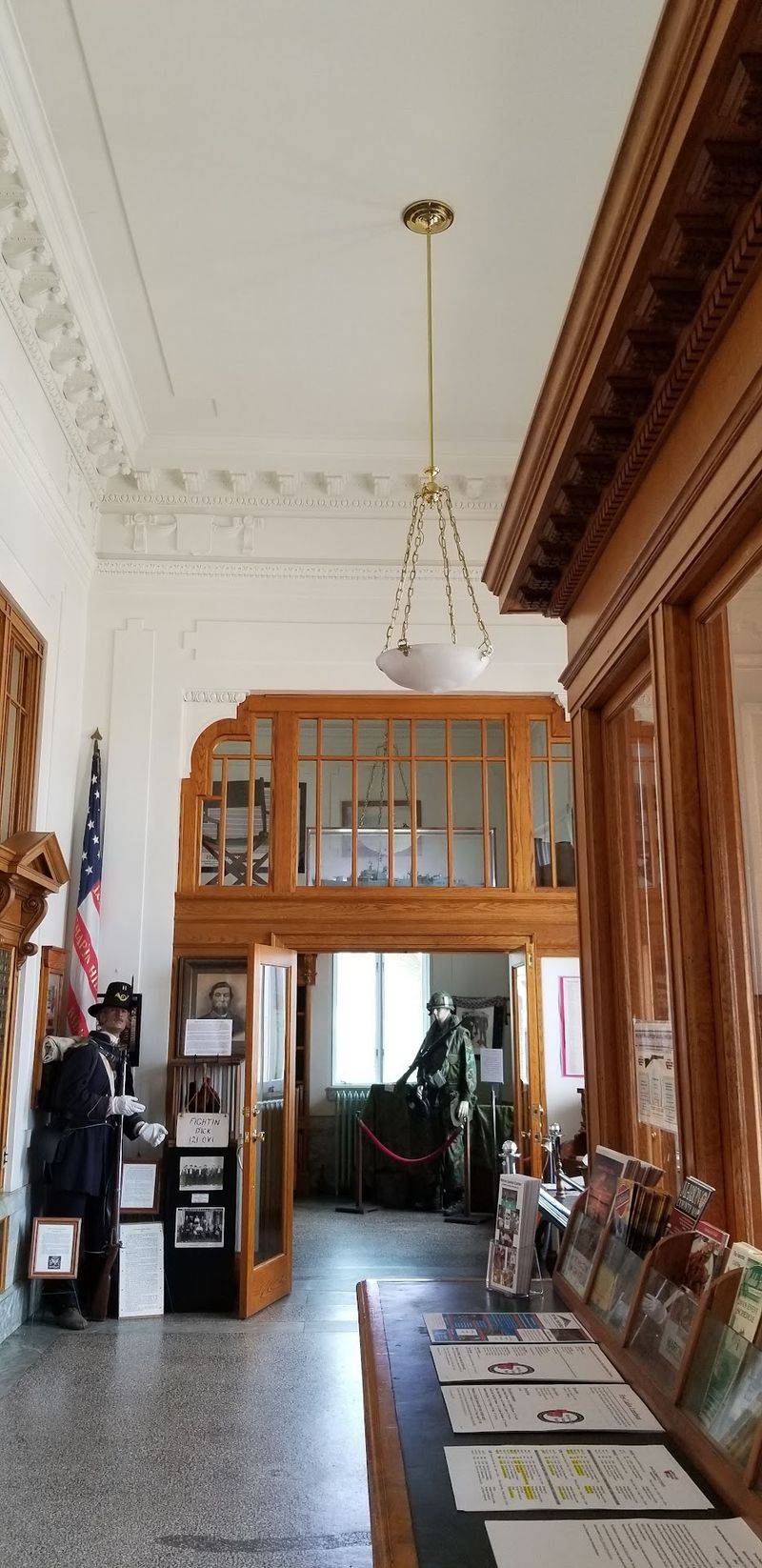
Marble, tall ceilings, and the kind of woodwork nobody builds anymore give Heritage Hall a sense of occasion the moment you step in. The grand steps and columns outside are only the introduction.
Original post office boxes still line part of a wall inside, small brass doors with combination dials, a direct link to the building’s earlier working life. Local history displays are folded into the same space, so the story of the structure and the story of the city sit side by side.
People who visit often remark on how well kept everything is. Exhibits are neatly labeled, the floors gleam, and the whole building has a theatrical quality that makes the popcorn collection feel like a headline act rather than a side attraction.
Practical touches matter here too. The main entrance sits at the front of the building, parking is in the back, and an entrance on the east side serves anyone who would rather skip the steps.
Together it makes an old civic landmark feel genuinely usable rather than merely preserved behind velvet rope.
Under the Red, White, and Blue Circus Tent
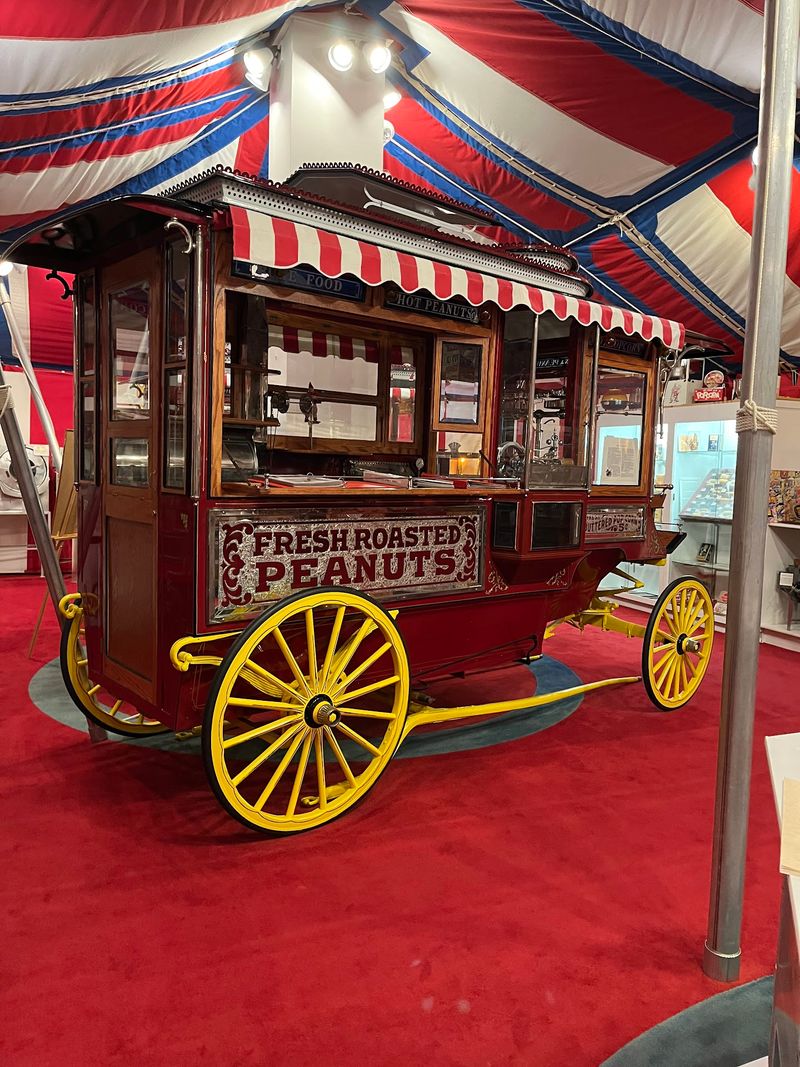
Walk into the main popcorn gallery and the ceiling is the first surprise. Red, white, and blue striped fabric hangs overhead like the inside of a big top, and the lighting has been staged to make brass and glass glow.
Below it stand the wagons. More than fifty carts and machines are arranged in rows, some horse-drawn, some pushcart size, some built as storefront showpieces with lighted globes and mirrored panels.
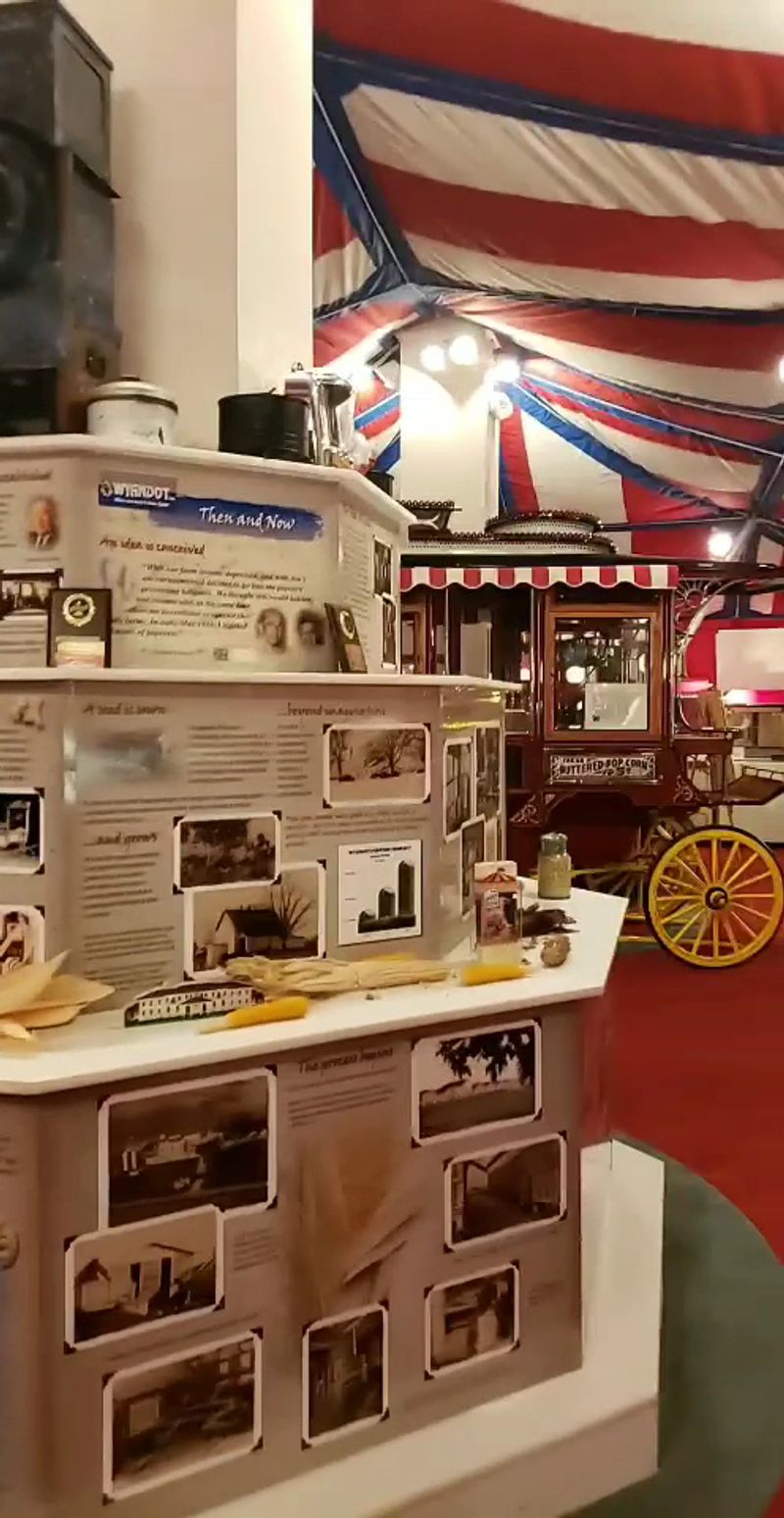
Photographs and popcorn memorabilia reaching back to the nineteenth century fill the gaps between them, showing street vendors, fairgrounds, and theater lobbies where these machines once earned their keep.
The circus tent design is not just decoration. Traveling shows and fairs were where popped corn found its first big audiences, so the setting places the machines in their natural habitat.
Guests frequently say the room photographs beautifully and that the machines look as though they could fire up tomorrow. Whether you know anything about vintage equipment or not, the sheer visual density of the place tends to slow people down considerably.
The 1899 Cretors No. 1, One of the Oldest Survivors
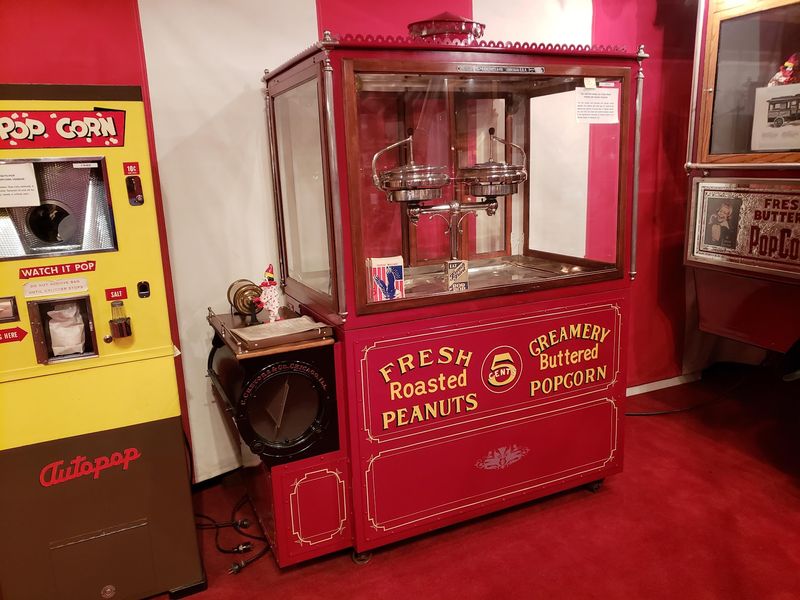
Some objects earn attention simply by having lasted. The 1899 Cretors No. 1 Popcorn Cart is one of the oldest existing Cretors machines anywhere, and it sits in this Marion gallery looking remarkably composed for its age.
Charles Cretors is the name behind the first commercial popcorn machine, patented work from 1885 that turned a fussy hearthside snack into a street-corner business. The No. 1 represents the early years of that revolution, when the whole concept of a mobile popping rig was still novel.
Details reward a slow look. Hand-lettered panels, a small brass kettle, spoked wheels built for cobblestones, and a compact frame designed to be pushed by one person rather than pulled by a horse.
Guides in the building enjoy pointing out how the mechanics worked, and visitors often note that hearing the story behind a machine changes how it looks. A cart that reads as quaint at first glance becomes a piece of industrial history once you understand it helped invent an entire American habit of eating popcorn in public.
A 1909 Cretors Model D That Traveled With Ringling Bros.
Picture a circus lot at the turn of the last century: canvas going up, animals unloading, and a horse-drawn popcorn wagon parked where the crowds funnel in. That wagon is here.
The 1909 Cretors Model D on display was once used by the Ringling Bros. and Barnum & Bailey Circus, which makes it something closer to a traveling performer than a piece of equipment. Its size alone separates it from the pushcarts nearby.
Tall wheels, an ornate painted body, and a glass display case built to show off fresh popcorn all served one purpose, catching the eye of families walking past. Horse power moved it from town to town along with the rest of the show.
Circus association gives the museum’s tent theme its anchor. Standing in front of the Model D, the connection between big top entertainment and hot buttered popcorn stops being abstract.
It also happens to be one of the pieces guides talk about most, partly because the history is so vivid and partly because the restoration work on it is genuinely impressive up close.
Paul Newman’s Dunbar Model 950
Hollywood turns up in the collection in an unexpected way. A 1909 Dunbar Model 950 Popcorn Wagon parked here was owned by actor Paul Newman, who used it for product promotions tied to his food brand.
Newman’s popcorn business gave the antique a second working career decades after its original one ended. Instead of serving fairgoers, it served as a rolling advertisement, which is oddly fitting for a machine designed from the start to attract attention.
Its Dunbar badge also broadens the story. Cretors dominates the early history of popping machinery, but rival makers built their own designs, and comparing a Dunbar with a Cretors side by side shows how differently companies solved the same problem.
The celebrity link tends to be the hook that gets people to stop, then the craftsmanship keeps them there a minute longer. Glass panels, painted trim, and a compact profile make it easy to imagine on a busy street.
Of all the pieces in the room, this is the one guests are most likely to text a photo of to somebody back home.
Butter-Kist Globes and an 1892 Olson Popper
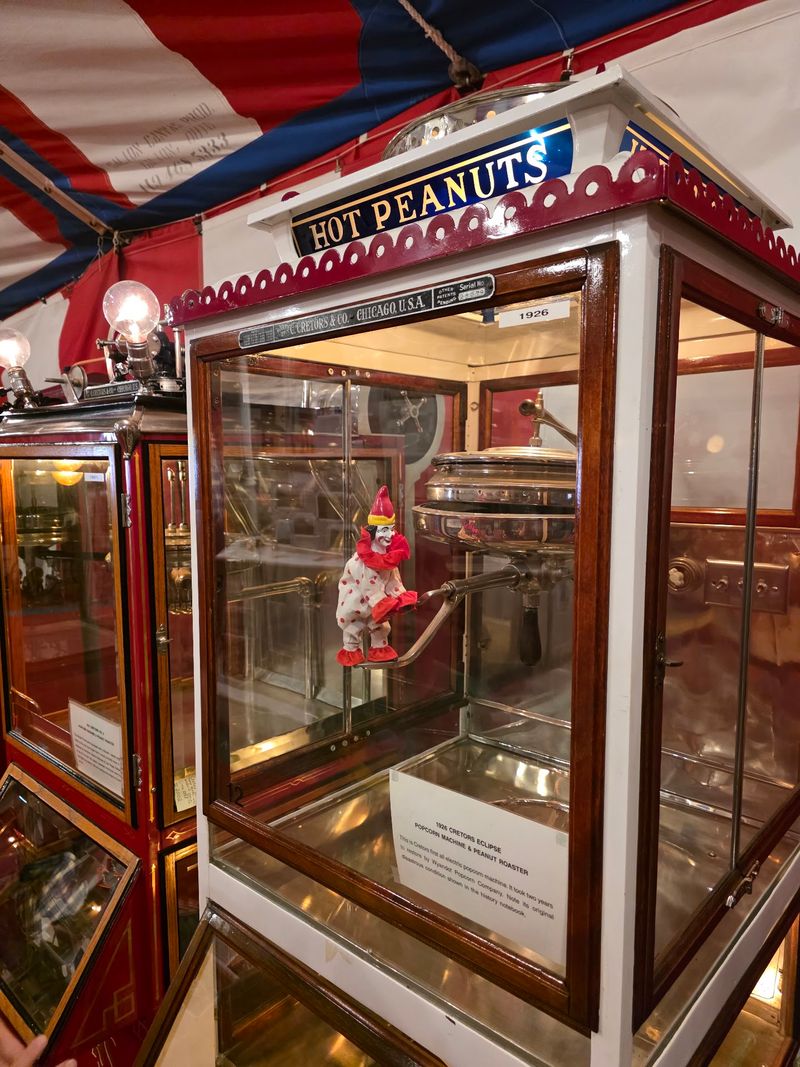
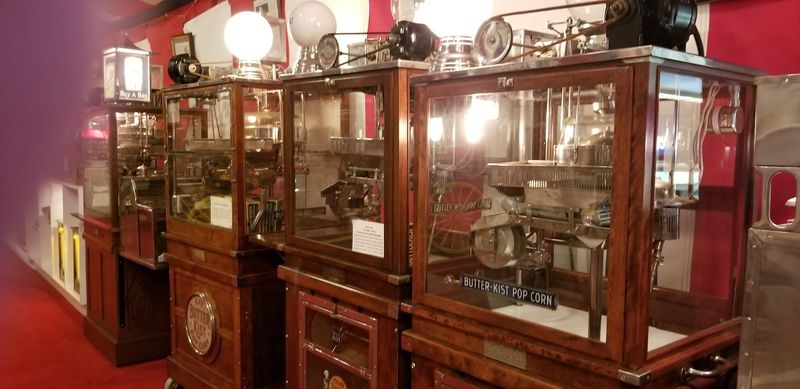
Three Holcomb & Hoke machines from the 1920s carry lighted globes advertising Butter-Kist popcorn, and when the bulbs are on they look like small stained-glass lanterns. Storefront advertising in the Jazz Age was rarely subtle, which is exactly what makes them fun.
Butter-Kist was a household name in its day, sold from drugstores, theaters, and shops where a glowing machine in the window did the selling. Seeing three lined up gives a sense of how competitive the popcorn trade became.
At the other end of the timeline sits an 1892 Olson popper, a much plainer contraption from the era when the industry was still finding its shape. Simple frame, simple mechanism, no marketing flourish at all.
Putting the two generations near each other tells a story in objects. In roughly thirty years, popping corn went from a modest hand-worked device to an illuminated branded showpiece designed to pull customers off the sidewalk.
Visitors with an eye for signage and industrial design usually linger longest right here, and it is one of the most photographed corners of the gallery.
Peanut Roasters and Popcorn’s Depression-Era Boom
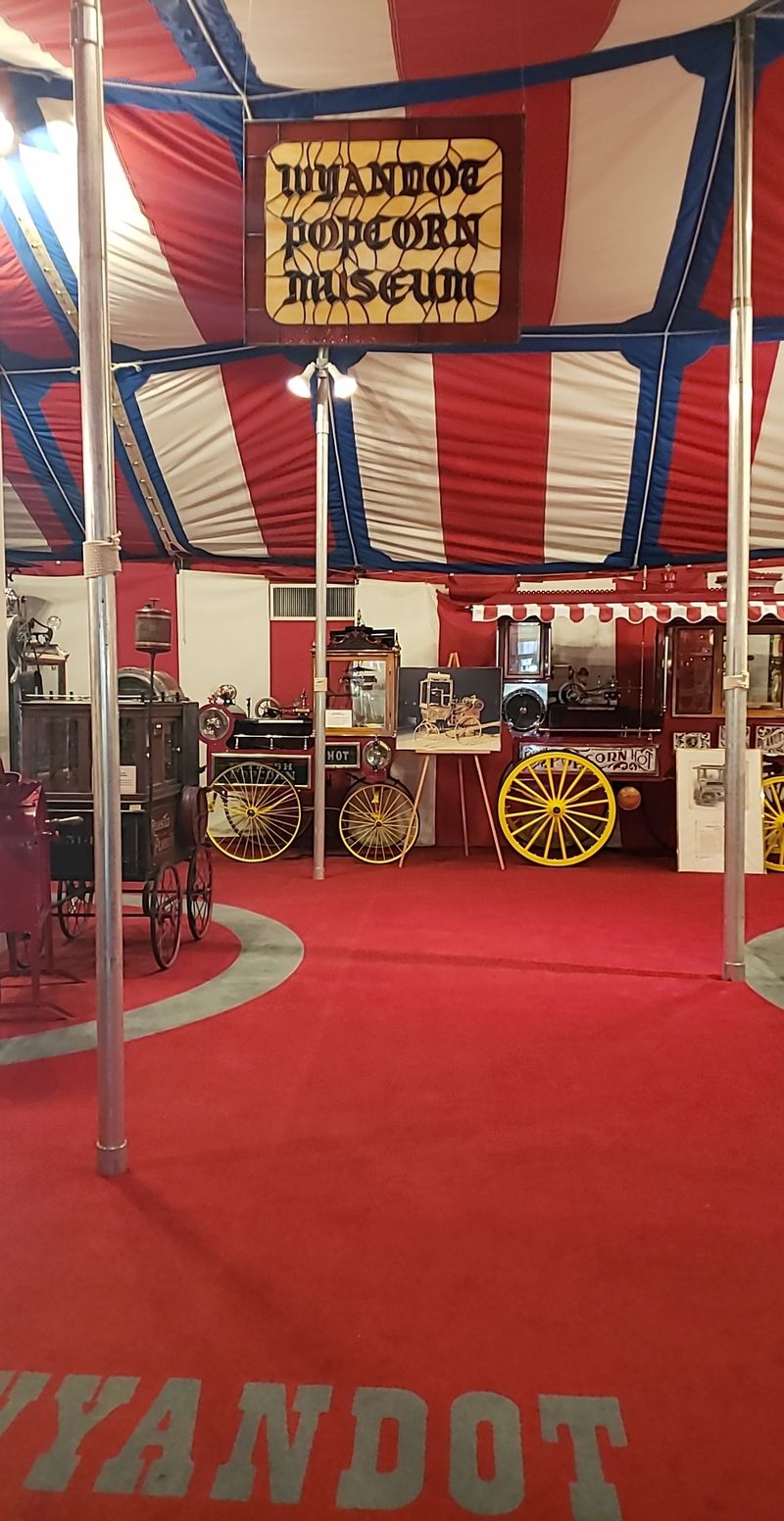
Peanuts share the billing here, and the roasters deserve it. Squat, glass-fronted, often trimmed in brass and finished with hand lettering, they were the popcorn wagon’s constant companion at fairs, ballparks, and street corners.
Many of the same manufacturers built both, so a roaster and a popper from the same year can look like siblings. Together they made up the standard toolkit of the American snack vendor for decades.
Popcorn’s real surge came during the Great Depression. It was cheap to grow, cheap to sell, and cheap to buy, which meant a bag of popped corn was one of the few small pleasures still within reach for most families.
Charles Cretors set that possibility in motion in 1885 with the first commercial popcorn machine, and vendors across the country did the rest. What began as a novelty became a fixture of movie houses and midways.
Reading the labels while standing among the machines makes the economics click. These were not toys, they were livelihoods, and the wear patterns on the older frames quietly show how many hours they worked.
Cracker Jack Toys and Wyandot’s Snack Legacy
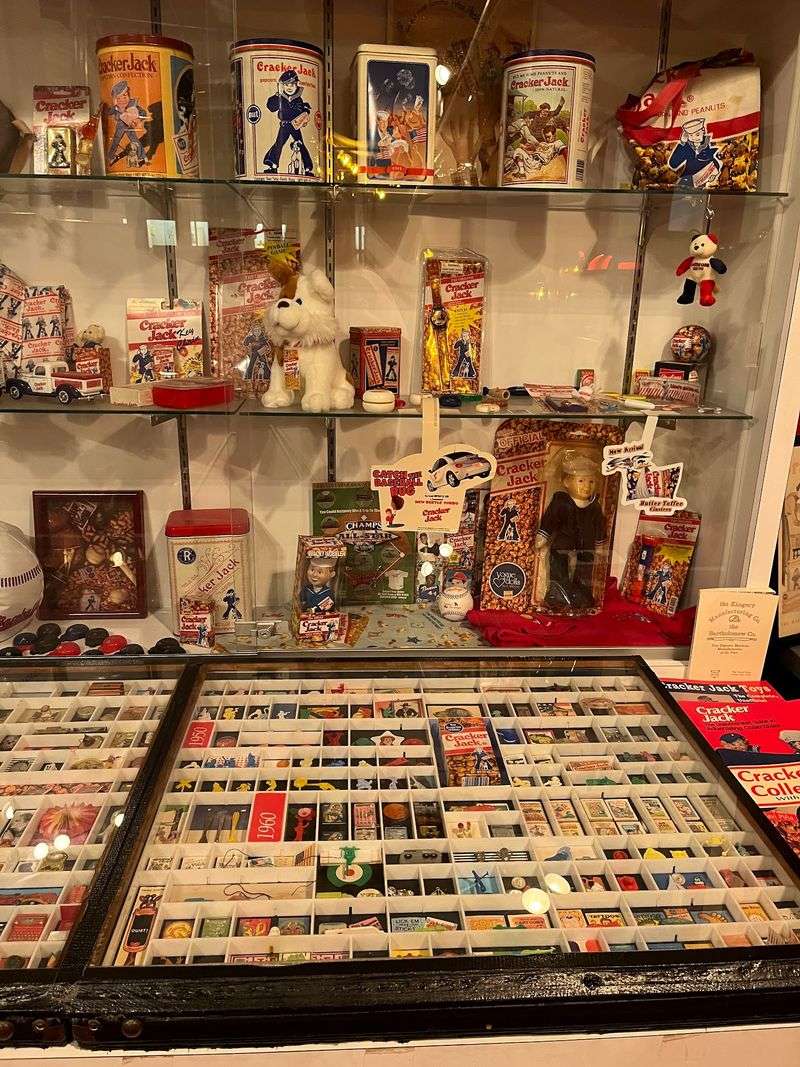
Anyone who ever dug to the bottom of a box hunting for the prize will want to see this case. Vintage Cracker Jack toys are displayed here, small trinkets that once made a nickel snack feel like an event.
There is a local reason for their presence. The Wyandot Popcorn Company spent a decade producing the classic snack, tying Marion directly to one of the most recognizable treats in American history.
Alongside the toys sit photographs and popcorn memorabilia dating back to the nineteenth century, packaging, advertisements, and images of vendors at work. The paper ephemera fills in the human side that machines alone cannot show.
Little exhibits like this tend to spark the most conversation between generations. Grandparents recognize prizes they once owned, while younger visitors are usually surprised the toys were ever that small or that odd.
Set against the towering wagons a few feet away, the case works as a nice change of scale. Big machines built the industry, but tiny prizes in a box are what a lot of people actually remember about it.
Several Museums Sharing One Roof
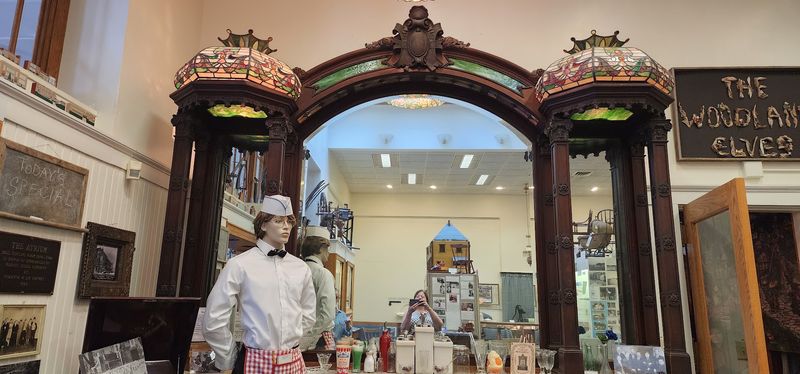
Buy one ticket and you get more than popcorn. Heritage Hall also holds the Marion County history museum and a telephone museum, all covered by the same admission.
The telephone rooms surprise people the most. Switchboards, handsets, and interactive equipment stretch across a large space, and guests often mention needing more time than they expected to work through it.
Downstairs, a section devoted to President Warren G. Harding draws its own crowd, with several visitors admitting the Hardings turned out to be far more interesting than anticipated.
Exhibits on the Marion Fair, World War II, and Mary Ellen Withrow round out the local story.
Then there are the oddities. Sculptures built entirely from toothpicks have their fans, and a set of detailed fairy and elf houses charms nearly everyone who wanders past.
Knowledgeable volunteer guides tie it all together, offering stories rather than recited facts. Between the wagons, the phones, the presidential material, and the curiosities, an hour is a reasonable minimum, and people who rush through commonly say they plan to come back for the rest.
Hours, Admission, and Finding the Door
Calling ahead is the single best piece of advice for this stop. Hours are limited, and the building has been closed for the winter season at times when online listings suggested otherwise, which has left travelers standing outside after a long drive.
The phone number is 740-387-4255, and marionhistory.com hosts the museum’s page.
Admission has been reported by recent guests at around eight dollars for one adult, with lower senior pricing noted in earlier years. Discount vouchers have occasionally been available online, so it is worth checking before you go.
Weekend afternoons are a popular window, and the museum has been free during Marion’s Popcorn Festival, which is a busy but festive time to show up.
Getting inside is simple once you know the layout. Parking sits behind the building, the main entrance faces the front steps, and an east side door provides easier access for anyone with mobility concerns.
Plan on at least an hour. Thirty-five minutes will cover the popcorn gallery and leave most of the building unseen, which several visitors have learned the hard way.
A Warm Bag of Popcorn on the Way Out
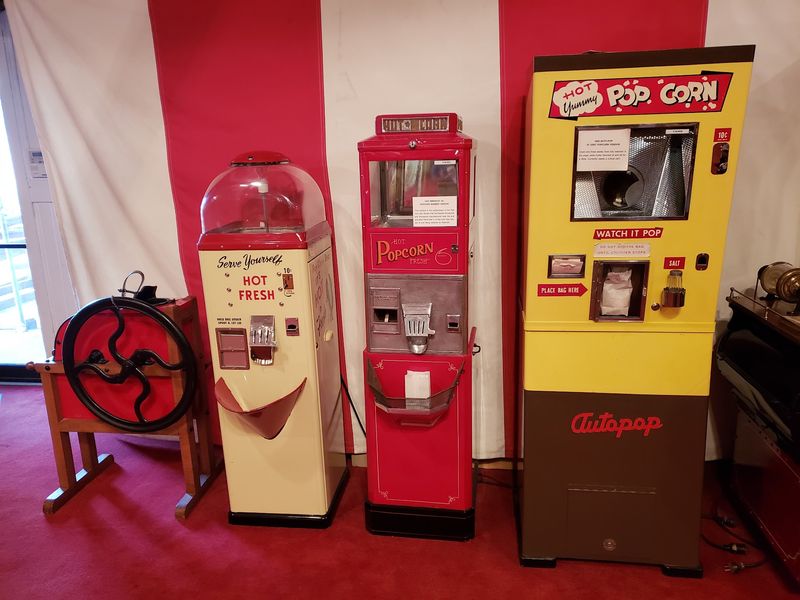
Here is the detail that sends everyone out smiling: a complimentary bag of freshly popped popcorn as you leave. One guest joked that the timing is deliberate, so the mess ends up in your car instead of on the museum floor.
That small gesture sums up the whole place. Volunteer-run, unpretentious, generous with its time, and clearly built by people who genuinely love the subject.
Who does it suit? Anyone curious about industrial design or American food history, families looking for an indoor afternoon, road trippers crossing central Ohio, and anybody who likes a museum where the staff will happily talk for twenty minutes about a single machine.
Rainy Sundays seem especially well matched to it. Several people have described stumbling in without expectations and staying far longer than planned, which is about the highest compliment a small museum can collect.
Between the largest collection of antique popcorn wagons and peanut roasters in the country and the four or five other museums tucked around it, Marion has quietly built something no other town can duplicate. Bring your appetite and a little extra time.