
Kids Stand Beside 225-Million-Year-Old Sea Reptile Fossils At This Remote Nevada State Park
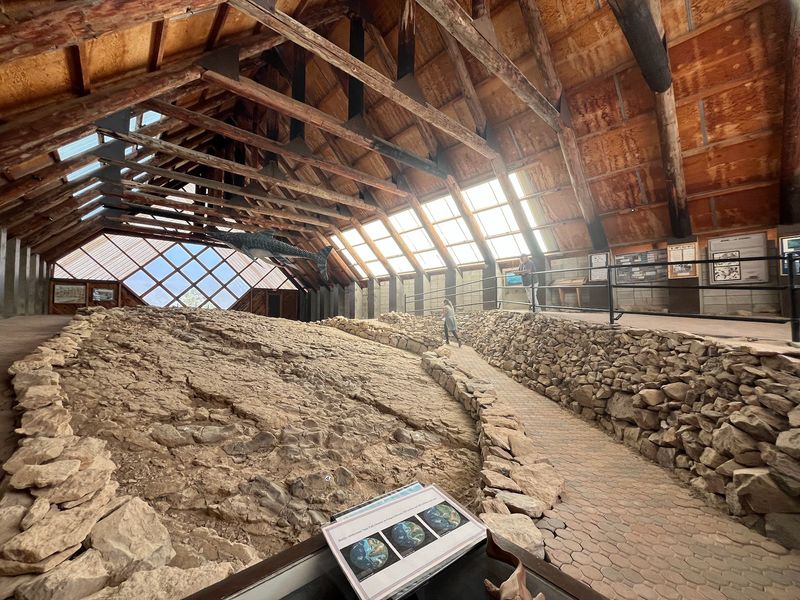
A dirt road in central Nevada doesn’t look like the sort of place that ends at a fossil bed, yet that’s exactly what happens here. Tucked into a mountain range far from any freeway, a locked stone building shelters the bones of sea creatures that swam over this spot when the whole region sat under warm ocean water.
Down the hill, an old mining camp still stands with its buildings mostly intact, free to wander at your own pace. For a five or ten dollar entry fee, a family can spend an entire day walking between two wildly different chapters of Nevada history.
A Fossil Bed Hiding In The Shoshone Mountains
Nye County holds a lot of empty space, and roughly 1,500 acres of it belong to a state park where two attractions sit within walking distance of each other. The address reads NV-844, Austin, Nevada, though the park itself sits in the Shoshone Mountains well away from any town worth the name.
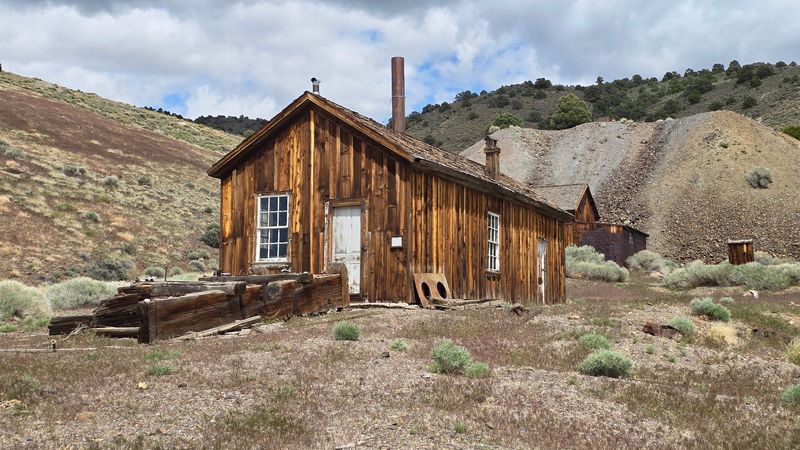
Fossils of marine reptiles called ichthyosaurs rest here in the rock where they were found, sheltered inside a building that visitors can look into or tour with a ranger. A few hundred yards downhill, the mining camp of Berlin still stands with weathered wood and rusted equipment.
Google Maps lists the park as open 24 hours a day, every day of the week, which reflects the reality that nobody locks a gate on a mountain road. Reviewers repeatedly describe the setting as isolated and quiet, with one noting they saw nobody else during their entire visit.
The park carries a 4.6-star rating across more than 320 reviews, which is unusually strong for somewhere this hard to reach. Fossils, mining history, and the ghost town dominate what visitors talk about afterward.
When Central Nevada Sat Under A Warm Ocean
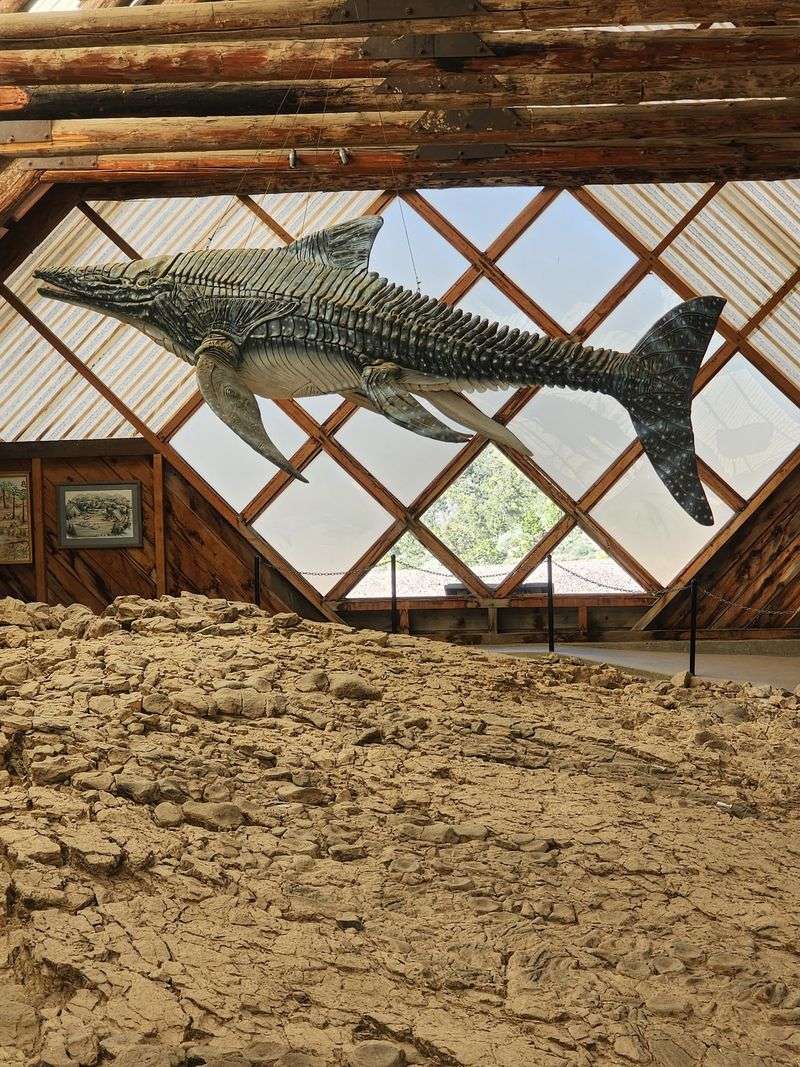
Picture the drive out here with about 225 million years stripped away, and you’d need a boat. During the Triassic period, a warm ocean covered what is now central Nevada, and ichthyosaurs cruised through it the way dolphins move through open water today.
Despite the fish-shaped bodies, these were reptiles, not fish. They had long toothy snouts, they breathed air, and species across the group ranged from roughly two feet long to giants stretching close to fifty feet.
The species preserved at this park is Shonisaurus popularis, named partly for the Shoshone Mountains where it was uncovered. Nevada later made it the official state fossil, which explains why one reviewer cheerfully called it the state dinosaur even though ichthyosaurs were not dinosaurs at all.
Standing in sagebrush at mountain elevation while a ranger explains how deep the water once ran overhead does something odd to your sense of scale. Several visitors mention that moment specifically, the realization that the ridge above them was once seafloor, as the part of the trip their kids kept bringing up on the way home.
The Fossil House And Its Numbered Bones
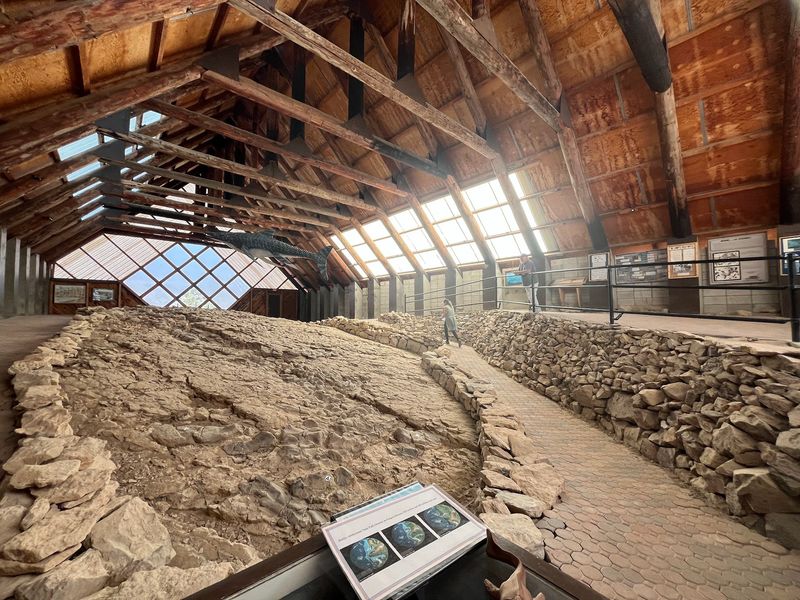
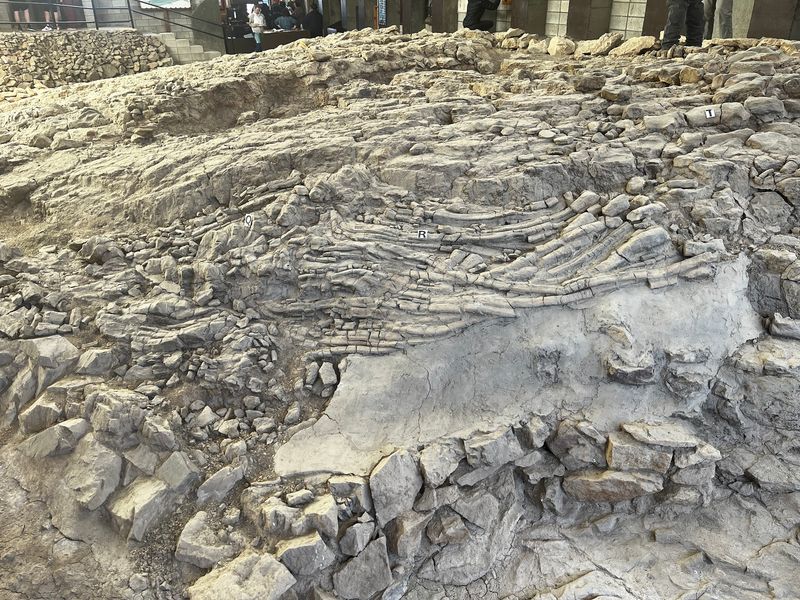
Inside the Fossil House, the bones have never been moved. They lie in the rock exactly where excavators found them, which is far more striking than a mounted skeleton in a glass case because you’re looking at an actual dig floor.
Small numbered markers sit beside different bones so visitors can sort out vertebrae from ribs from jaw fragments. Without those markers, the jumble can read as gray shapes in gray stone, and one honest reviewer admitted that without a ranger explaining things, it doesn’t look like much at first glance.
Guided tours run about 40 minutes and cost roughly $5 per adult, with children 12 and under free. Reviewers have mentioned tours at 10am and 2pm on weekends, though schedules shift, so calling ahead or checking with the park before driving out is the smart move.
If you miss the tour window, large viewing windows at each end of the building let you peer in and read interpretive panels. One visitor said the signage alone was enough to make sense of things, while another found the distance and glare frustrating.
Forty Skeletons And A Dig That Started In 1954
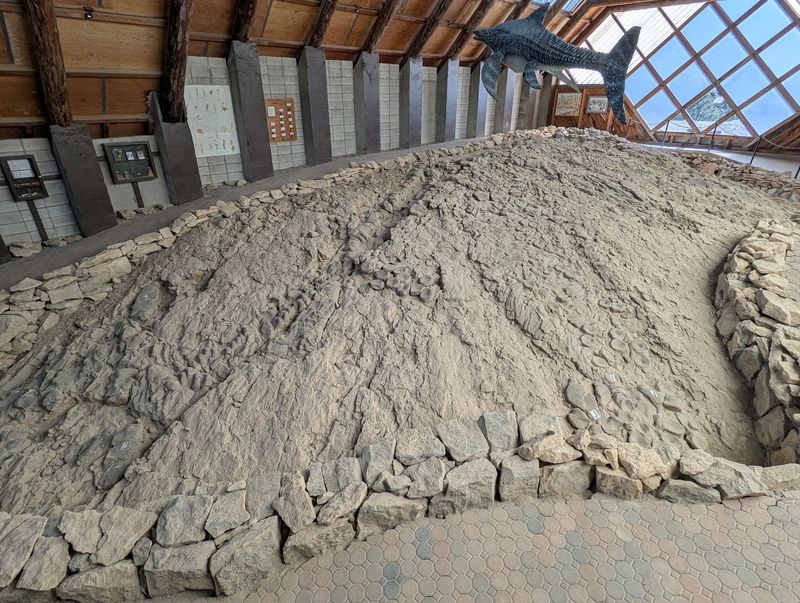
Serious excavation kicked off in 1954, and by the time crews finished pulling back rock, close to 40 ichthyosaur specimens had turned up in one concentrated area. That makes this the largest known gathering of these marine reptile remains anywhere in North America.
Numbers like that are hard to picture until you’re standing at the railing looking at overlapping rib cages. Some of the individuals here approached fifty feet, which puts them in the same size conversation as modern whales.
A reviewer who visited as a child 62 years ago remembers a very different scene: two older residents living on site, no rangers, and purple sun-tinted glass bottles scattered around. They found small fossil pieces just walking and picking up stones, something nobody should attempt today since everything in the park is protected.
What the state has built since then is a proper protective structure, interpretive signage, and staff who know the material well. Visitors consistently single out the rangers, with friendly ranger coming up in more than twenty reviews, often alongside praise for how patiently they field questions from kids and adults alike.
The Maternity Ward Theory Rewriting The Site
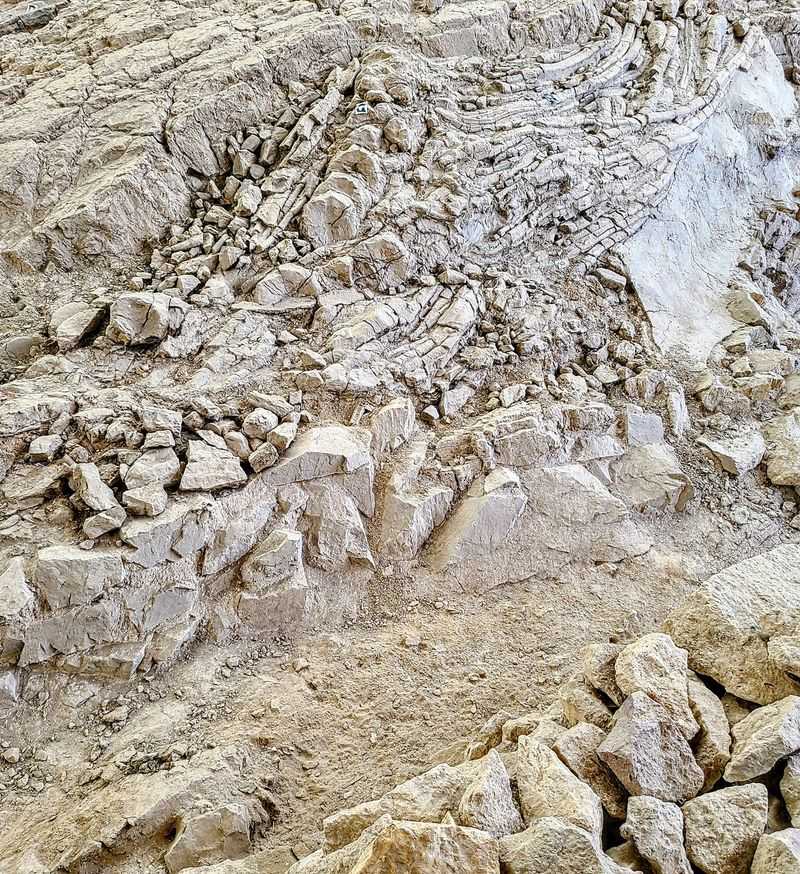
For decades the leading explanation for so many skeletons in one place was a single catastrophic event that affected the whole group at once. That story had a certain drama to it, and older interpretive material often repeated it.
Newer research has quietly complicated things. Using 3D scanning and careful study of the different rock layers, scientists found that the remains accumulated across hundreds of thousands of years rather than all at once, which knocks out the one-bad-day explanation entirely.
What replaced it is arguably more interesting. Researchers now suggest the location may have functioned as an ancient birthing ground, a place these enormous animals returned to repeatedly, much as certain whale species gather in specific waters today.
Supporting that idea are tiny bones mixed among the adults, identified as embryos and newborns. Finding the very young alongside full-grown adults in the same deposit is the kind of detail that shifts an entire interpretation.
Some reviewers still describe the older version they heard on tour, which is a reminder that science keeps moving. Ask your ranger what the current thinking is.
Berlin, The Mining Camp That Never Got Torn Down
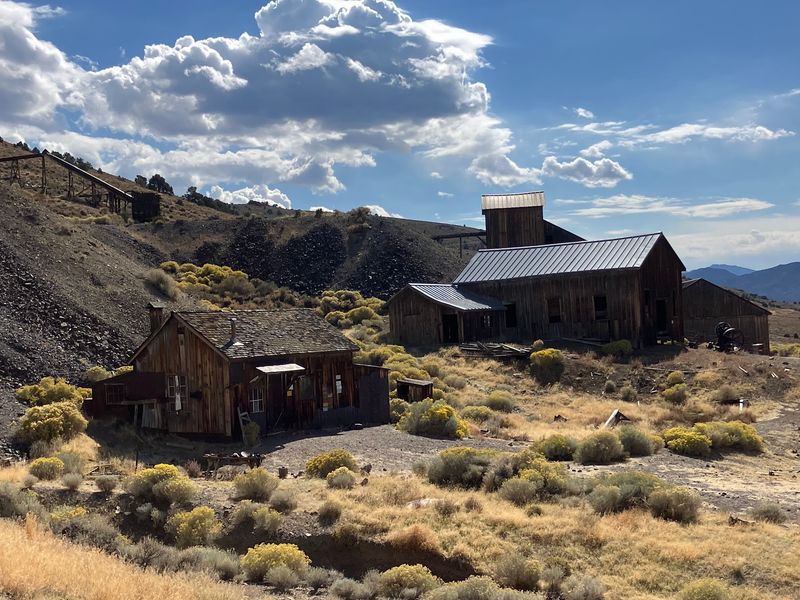
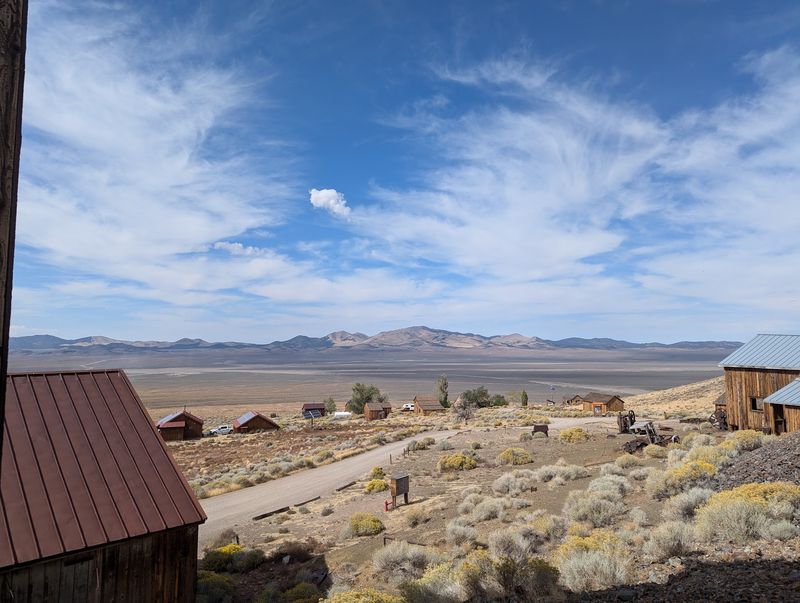
Downhill from the fossils sits Berlin, a mining camp founded in the 1890s and left behind by 1911. Rather than being restored into something polished, it has been stabilized and left looking its age.
Visitors can walk through on a self-guided basis, following trails and signs that explain what each structure did during the camp’s working years. Several reviewers point out that unlike more famous preserved towns where everything is roped off, here you can walk right up to buildings and step inside a few of them.
That access comes with a caution repeated in reviews: watch your footing, because rusty nails and scattered debris are part of the authentic package. Sturdy shoes make more sense than sandals.
One visitor described it as more of a ghost mining plant than a townsite, and that’s a fair read given how much of what remains is industrial. Another mentioned the town stays open for exploration only as long as people keep treating it respectfully.
A second, far fainter site called Union sits within the park too, marked mostly by signs and one standing building.
Trails, Picnic Tables, And Shade Between Stops
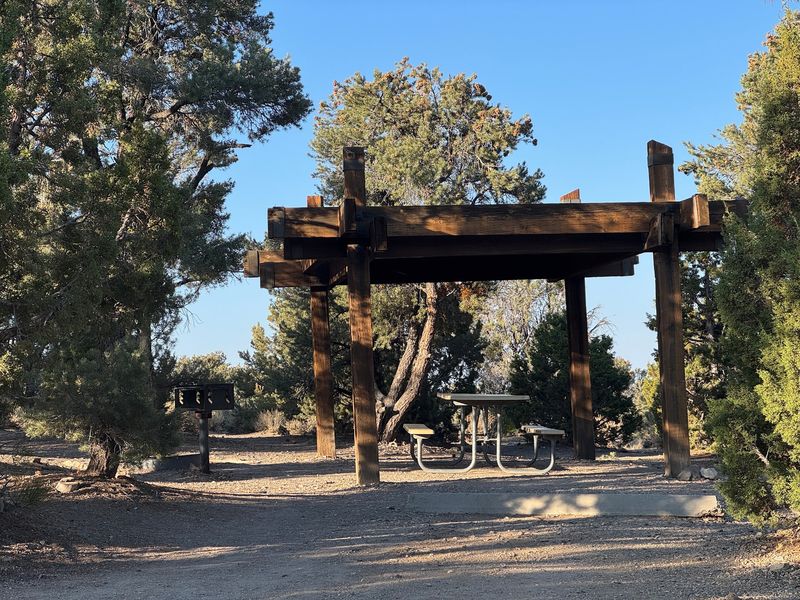
Shade is not something you expect at this elevation in Nevada, yet the picnic area near the Fossil House has plenty of it. One reviewer specifically noted lots of shady spots for eating, which matters when you’re pacing an all-day outing with kids.
Walking trails connect the main areas, including a loop around the ghost town that circles back past interpretive markers. Multiple visitors mention running out of time before finishing that loop and planning to return for it.
Trail upkeep gets consistent praise. Descriptions include immaculately maintained and nicely kept, with cleared sides that let you see well off the path, which is reassuring in country that hosts deer, coyotes, and rattlesnakes.
Bring your own food. There are no stores or gas stations close by, and one camper flagged that plainly as something to sort out before you leave pavement.
Leashed pets are welcome throughout the park and on trails, so the family dog doesn’t have to sit this trip out. Between the fossils, the town, and a couple of trails, filling five or six hours here is easy.
Fourteen Campsites Tucked Into The Pinyons
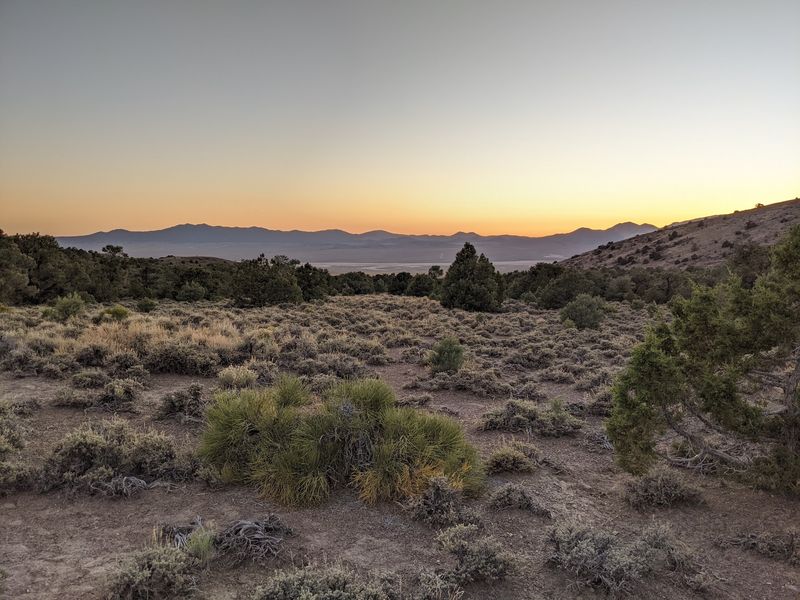
Fourteen sites make up the campground, spaced generously enough that reviewers keep using the word tucked when describing them. Tents work fine, and RVs up to about 25 feet fit, though drivers with trailers mention narrow roads and tight turns getting in and out.
Each site comes with a fire ring, a grill, and a covered table, that last item drawing real appreciation from campers who arrived expecting bare dirt. One family described their shade structure as sturdy and clean, and their fire ring cleared of old debris before they arrived.
Rates run about $15 per night for Nevada vehicles, which includes park entry, and around $20 for out-of-state vehicles. Sites can be reserved in advance online through the state park system.
No hookups, no electricity at sites, and no showers. Water spigots are spread through the campground, with drinking water typically available mid-April through October.
Vault toilets are the restroom situation, and honestly, they get some of the warmest comments in the whole review set. Visitors repeatedly describe them as spotless, which is not a sentence you write often.
Dark Skies Over An Empty Valley
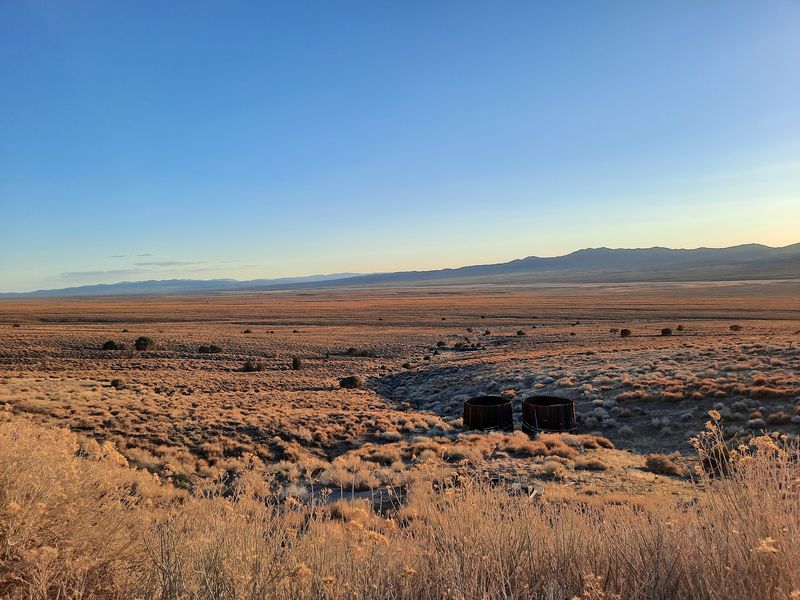
Once the sun drops, the reason to stay overnight becomes obvious. With no towns nearby throwing light into the sky, the star field overhead is about as unobstructed as it gets in the Lower 48.
A camper who described the park as a beautiful spot in nowhere, Nevada also called it a wonderful dark sky area for anyone into astronomy. No special equipment required, though binoculars help.
Quiet is the other thing people notice. One reviewer used the words quiet and isolated back to back, and another mentioned seeing nobody else in the park during their visit.
Cell service exists, barely. A detailed reviewer reported one bar of service at campsite number 3, enough for calls, texts, and light browsing, fading in and out along the trails.
Temperatures drop hard at night given the mountain setting, and tent campers have flagged the cold specifically. Spring and fall come up repeatedly as the sweet spots, with one family calling spring an ideal time and saying they’d happily return in autumn.
Pack layers regardless of the season.
Getting There Without Losing Your Nerve
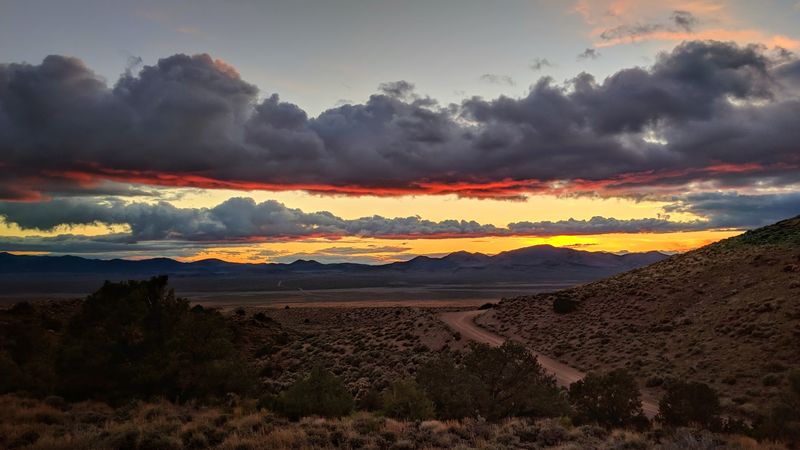
Dirt roads come up in reviews often enough that they deserve straight talk. The final stretch off NV-844 is unpaved, and opinions on it range from rough for a small RV to easier than the paved road right outside the park.
Most standard vehicles make it in dry conditions if the driver slows down. One visitor who came in from Dayton through Fallon and Middlegate described the approach as a peaceful backroad with a few dodgeable potholes, nothing more dramatic than that.
Weather changes the math. Wet conditions on unpaved mountain roads are a different proposition, and the park has closed for road work in the past, so confirming conditions before you commit is just sensible.
Navigation apps have been known to route people onto odd backroads getting here. One reviewer found that stressful at first and then genuinely enjoyed it, but if you’d rather not gamble, map your route on paper before you lose signal.
Fill the tank ahead of time. Services are scarce, and there’s nothing resembling a convenience store waiting at the gate.
What A Family Of Four Actually Spends
Math is refreshingly simple here. Entry runs $5 per vehicle for Nevada residents and $10 for out-of-state plates, and that covers everyone riding in the car.
Add the Fossil House tour and a Nevada family with two kids under 12 spends about $15 total for the day, since children 12 and under join the tour free and only the adults pay $5 each. That’s a full afternoon of fossils, a ghost town, and trails for less than a single movie ticket in Reno.
Camping bumps the figure to roughly $15 a night for Nevada vehicles, entry included, or about $20 for out-of-state. A weekend trip stays well under most fixed-income thresholds for what you get.
One detail trips people up: fees are cash or check only. Credit cards are not processed at the park, so stop at an ATM before you head into the hills.
Prices and tour schedules can change, particularly seasonally, so verifying before you drive several hours is worth the phone call. Pack a cooler and the whole day gets cheaper still.
Who Gets The Most Out Of A Day Here
Curious kids do well here, especially the ones who have burned through every dinosaur book at the library. Standing three feet from bones that size, with a ranger explaining what each numbered marker means, tends to land harder than any screen.
Retirees and history-minded travelers get a second payoff in Berlin itself, where mining-era structures still hold their shape. Reviewers with a lot of park visits behind them single out the upkeep here as unusually thorough.
Campers looking for quiet rather than amenities will be satisfied. Those wanting showers, hookups, or a camp store should plan accordingly, because none of that exists on site.
Anyone with a tight schedule should think twice about timing. Tours run on a limited schedule, and missing them means viewing through windows, which one visitor found perfectly workable and another found disappointing.
Families with very small children may want to keep a close hand in the ghost town given the debris underfoot. Mobility-wise, the terrain is uneven dirt and gravel throughout, so shoes with grip beat anything else in your bag.
Worth The Long Drive Out
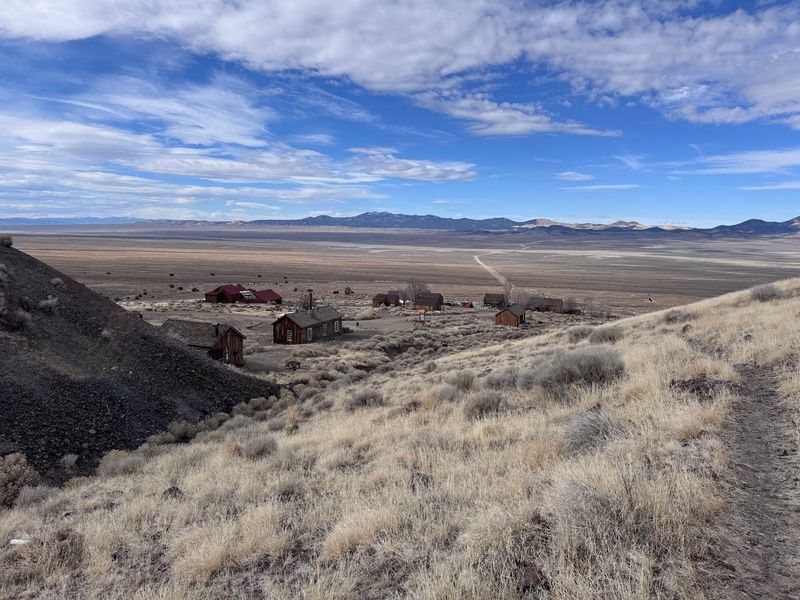
Few Nevada destinations pack this much into one stop: a Triassic seabed, a state fossil, a mining camp frozen around 1911, trails, and a campground, all inside the same boundary.
The remoteness is part of the appeal rather than an obstacle to work around. Reviewers who came in expecting a quick detour describe staying far longer than planned, with one suggesting you could stretch a whole week out of the trails and driving routes nearby.
Budget-wise, it is hard to beat. Five or ten dollars gets the car in, and even with the tour, a family day here tends to cost less than lunch for four on the way home.
Plan around the tour times, bring cash, pack food and water, and give yourself more hours than you think you need. Confirm conditions before leaving, since roads and schedules shift with the seasons.
If the idea of standing where a fifty-foot sea reptile came to rest appeals to you, the drive sorts itself out. Nevada does not hand this experience over anywhere else.