
Kids Wander Past Giant Bison And Hands-On Science Exhibits At This Las Vegas Museum
We only meant to duck out of the Nevada heat for twenty minutes. Then a baby giraffe met us at the door, a dinosaur roared from the next room, and the kids stopped asking when lunch was.
Nearly three hours later, we were still finding new corners, and the whole outing cost less than a family pizza night. If you want a cheap, all-afternoon escape that teaches without feeling like school, keep reading.
A Science Stop on Las Vegas Boulevard North
Far from the flashing casino signs, the museum sits at 900 Las Vegas Blvd N in downtown Las Vegas. The building looks modest from the curb, and that is part of its charm.
Inside, though, the galleries stretch across two levels packed with animals, fossils, and hands-on stations.
What exactly is it? The Las Vegas Science and Natural History Museum is a family-focused spot that blends classic natural history with interactive science.
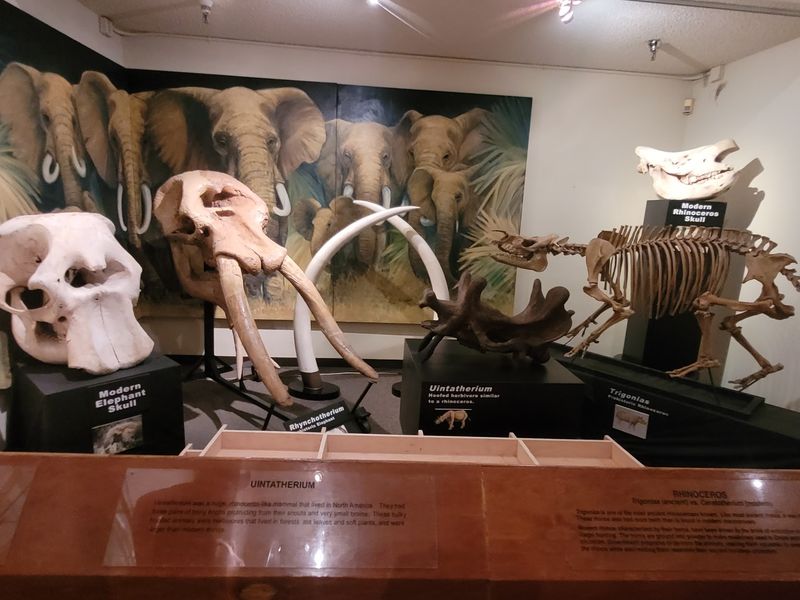
Exhibits cover prehistoric life, world wildlife, ocean creatures, Mojave Desert animals, minerals, and ancient Egypt, all under one roof.
For Nevada families watching every dollar, the location helps too. Free parking sits directly behind the building, and some visitors mention covered spaces, which matters a lot on a hot summer afternoon.
Downtown neighbors like the Neon Museum are close enough that staff sometimes suggest pairing the two for a fuller day.
Picture a place built for curious kids and patient grandparents rather than tourists chasing the Strip. Crowds tend to stay light, and several visitors say it rarely feels packed.
That calmer pace gives children room to linger at whatever grabs them, whether that is a roaring dinosaur, a live snake, or a drawer of shiny minerals from around the world.
Older Building, Big Ambitions
Walking in feels a little like stepping into a 1990s school field trip, and some grown-ups say exactly that. The facility is older and has a limited footprint, so the galleries are compact instead of sprawling.
Honestly, that can be a plus when little legs tire quickly.
Size, however, has not stopped the museum from packing in variety. Its description promises educational exhibits, programs, dioramas, and classes that explore the natural world and historical artifacts.
The museum also carries a Smithsonian affiliation, a detail that surprises plenty of first-time guests.
Fair expectations help here. A few visitors note that certain video screens or displays were not working during their trip, and some exhibits look a bit worn.
The Egypt gallery, for example, uses replicas rather than real artifacts, which the museum does not hide.
Still, the heart of the place shows up in its people. Staff and volunteers get steady praise for being friendly and knowledgeable, and field-trip guides reportedly keep kids so engaged that the lesson barely feels like one.
Think of it as a neighborhood museum with a big personality, one that trades polish for approachability and gives families a relaxed way to learn together.
Roaring T. Rex in the Prehistoric Life Gallery
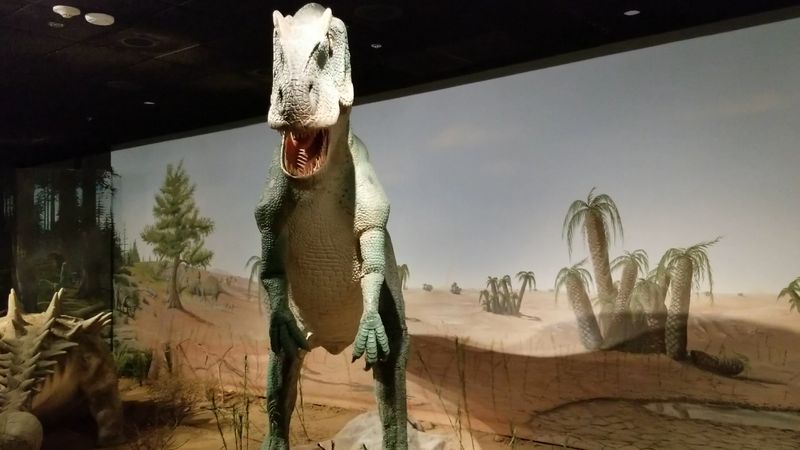
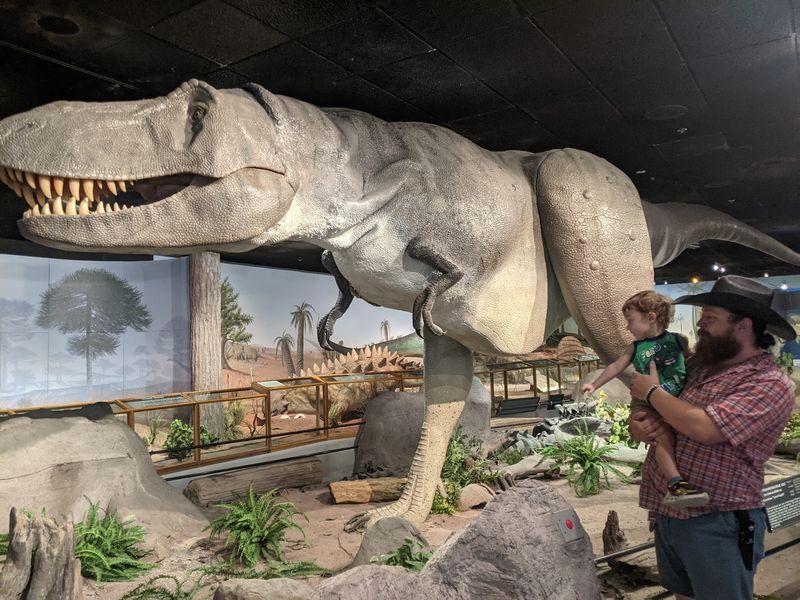
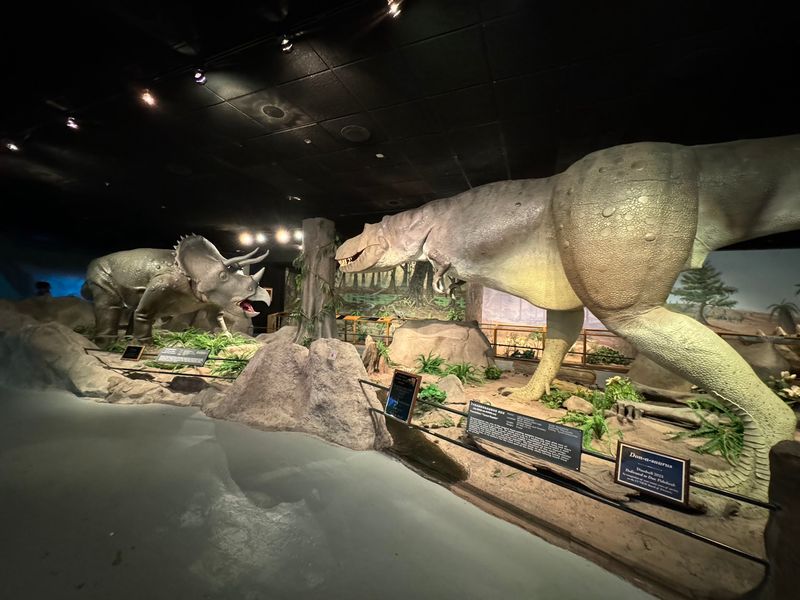
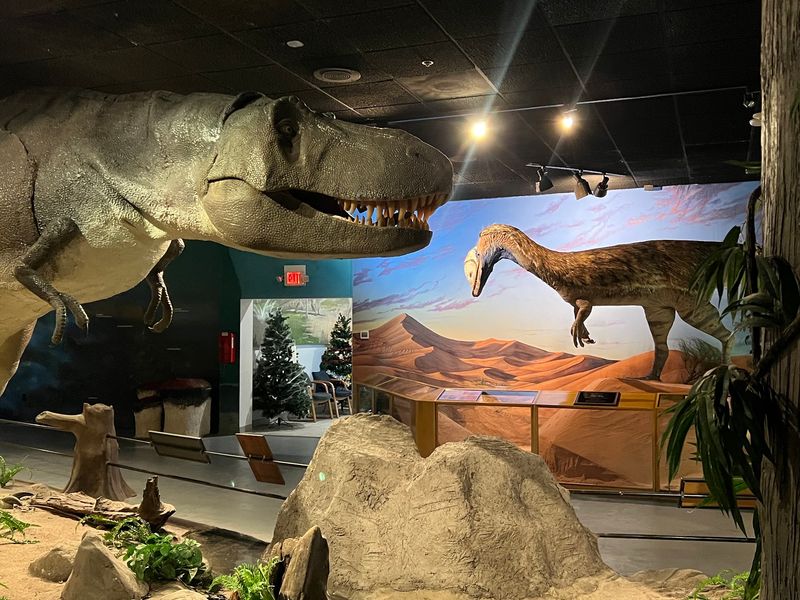
Thirty-five feet of Tyrannosaurus rex swings its head and lets out a roar, and suddenly every kid in the room goes quiet. The Engelstad Family Prehistoric Life Gallery is where most young visitors want to spend their time, and dinosaurs come up more than any other topic in visitor chatter.
Beyond the big T. rex, the gallery holds an Ichthyosaur, a marine reptile from ancient seas, plus other dinosaur replicas and animatronic creatures. Kids who like a little mystery will enjoy Dinosaur Mummy CSI: Cretaceous Science Investigation, a look at Leonardo, a remarkably well-preserved dinosaur.
Got a future fossil hunter? An interactive dig pit lets children brush through sand and uncover buried finds.
Families also mention coloring a dinosaur, scanning it, and watching it appear on screen, along with a station where kids pretend to feed a dinosaur.
Some science-minded adults find the animatronics more playful than precise. For a seven-year-old, though, a moving, roaring giant tends to spark questions that last the whole drive home.
That curiosity is really the point, and plenty of parents say the dinosaur room alone keeps kids busy for a good stretch of the visit.
Bison, Bears, and a Very Tall Giraffe
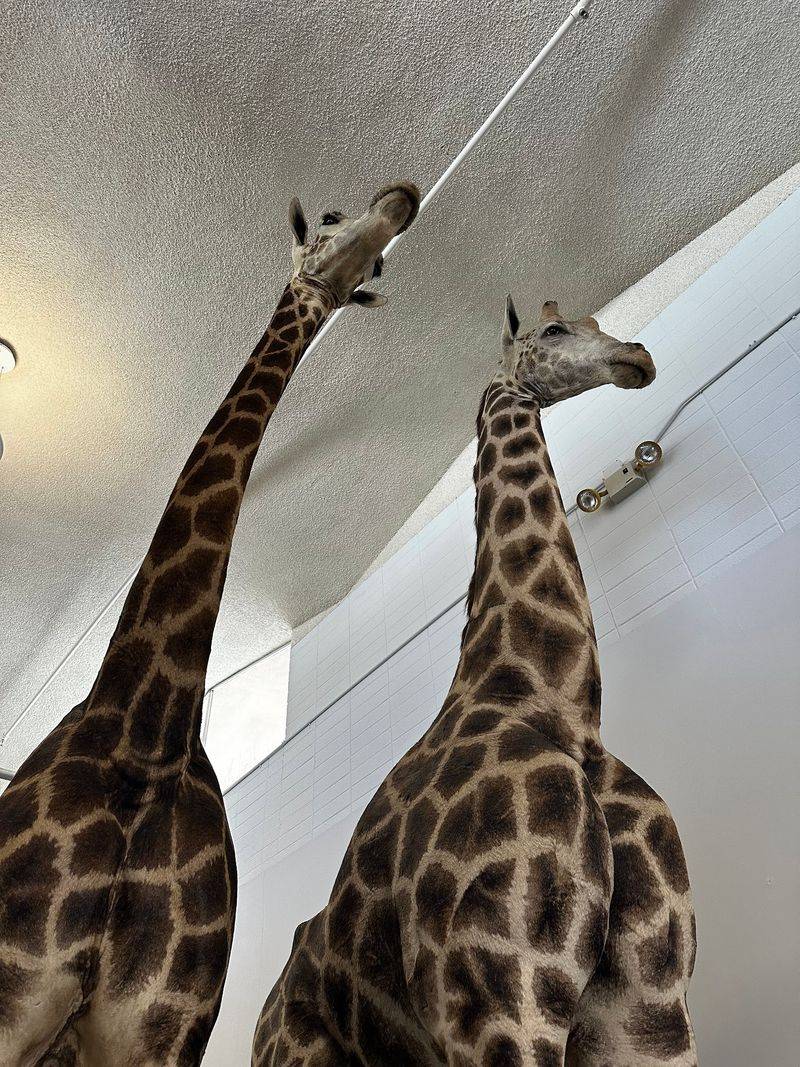
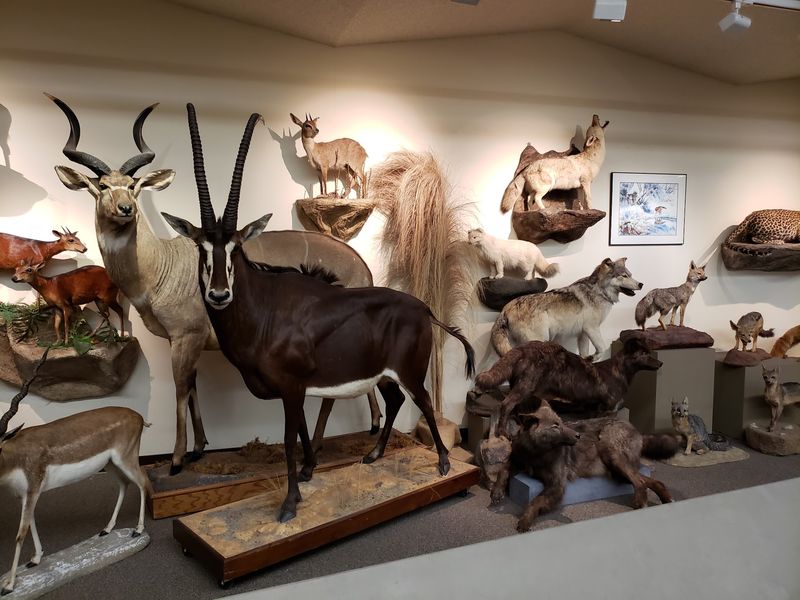
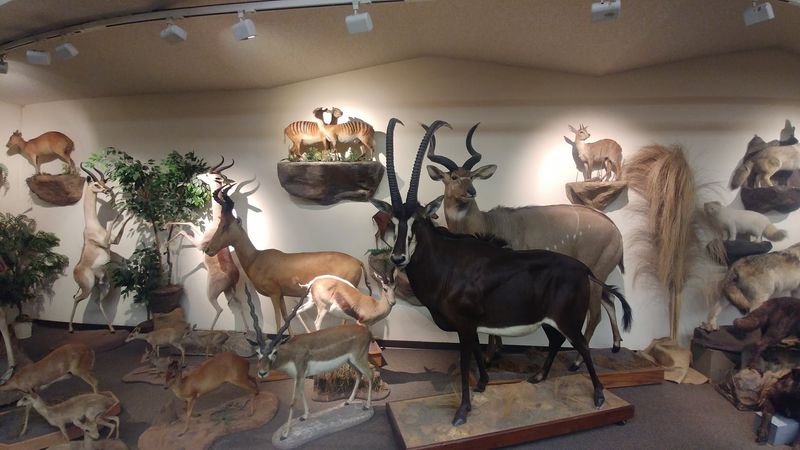
Right by the entrance, a giraffe towers over arriving guests, and it is only a baby. That first surprise sets the tone for the International Wildlife Gallery, where taxidermy animals fill habitat displays from around the globe.
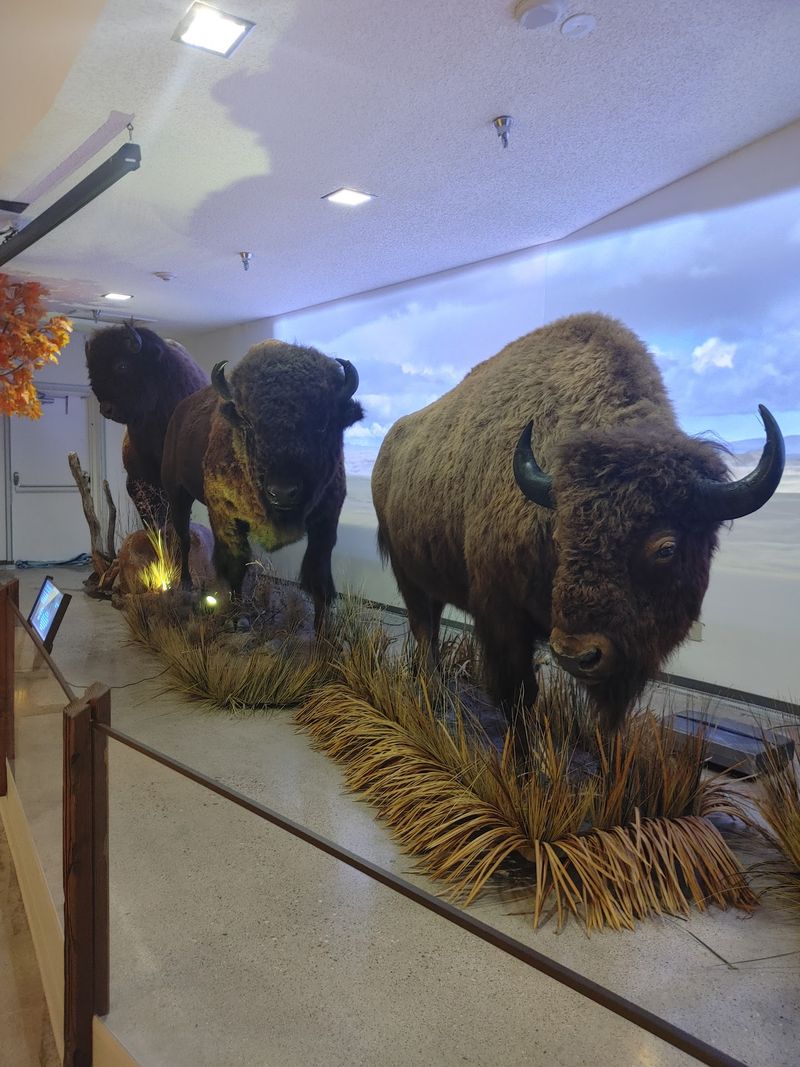
The American bison is a showstopper. Standing close to one gives kids a real sense of how massive these animals are, something no textbook photo can match.
Nearby, visitors find bears, antelope, big cats, and wild dogs grouped by mammal family, which quietly teaches how animals are related.
Here is a detail children love: certain taxidermy bears have fur guests can actually touch. That small permission turns looking into exploring, and it often becomes the moment kids talk about later.
Downstairs, an Africa section adds more animals, and many families say not to skip it. Taxidermy ranks among the most mentioned features of the whole museum, and several guests praise the quality of the dioramas.
One adult did wish the plain white walls behind some displays were painted to match each habitat. Even so, the sheer number of animals impresses most visitors, and for kids who have never seen a bison up close, the scale alone makes a lasting impression.
Fifty-Plus Stations in the Young Scientist Center
Bubbles big enough to wrap around a small child might be the fastest way to win over a preschooler. The Young Scientist Center offers more than 50 interactive stations designed for kids ages 3 to 12, and it is the reason many family visits run longer than planned.
Each zone has its own flavor. In the Bubble Laboratory, children stretch giant bubbles, while the Build and Engineer area supplies blocks, gears, and magnetic tiles for tinkering.
The Nature Investigation zone hands over microscopes and magnifying glasses for studying plants, insects, and minerals.
Then there is Water Works, a table where kids explore flow and currents by moving water around. Parents may want a spare shirt handy.
Visitors also mention sand building and an earthquake block challenge, where kids test whether their towers survive the shaking.
Behind the fun sits a real plan. The activities teach STEAM ideas, meaning science, technology, engineering, arts, and math, through play instead of lectures.
A solo adult might breeze through the whole museum in about an hour, but one visitor guessed that bringing children could stretch that closer to three. The Young Scientist Center explains most of that difference, since kids rarely want to leave it.
Stingrays, Sharks, and the 2 PM Feeding
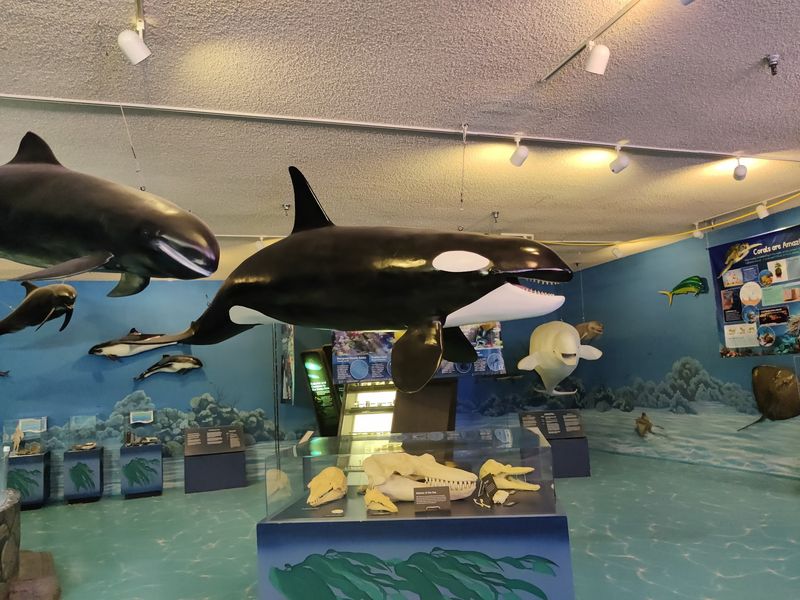
Timing matters in the Marine Life Gallery. One family reported catching the shark feeding at 2 PM, and others say planning around it made their day.
Schedules can change, so check the museum’s posted feeding times before you go.
The main attraction is a 3,000-gallon tank holding live stingrays and sharks. Watching them glide past gives desert kids a rare look at ocean life, no beach trip needed.
Guests have specifically complimented how clean the tanks are.
Overhead and around the room, life-size models of sharks and fish show just how big some sea creatures grow. An egg hatchery adds a quieter, fascinating corner where children can see where new life begins.
Live animals continue beyond the marine area too. Visitors mention snakes, reptiles, live insects, and spiders, and a special arachnid installation has appeared as well, though one guest found it light on information.
Another visitor raised concerns about cramped reptile and amphibian enclosures, so animal-loving families may want to observe with a thoughtful eye. For most kids, though, the feeding is a highlight worth building the afternoon around.
Arrive a little early to claim a good spot near the glass, since the moment passes quickly.
Mojave Neighbors in the Wild Nevada Gallery
How many Nevada kids have spotted a kit fox in the wild? Probably few, since these small desert hunters stay out of sight.
The E. L.
Weigand Foundation Wild Nevada Gallery brings those shy neighbors into view.
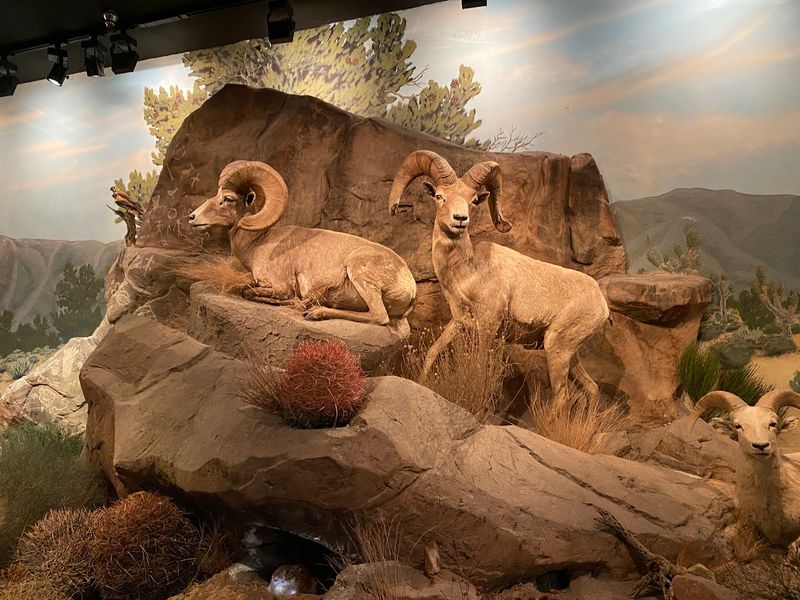
Focused on the Mojave Desert, the gallery introduces native plants and animals that share the land around Las Vegas. Bighorn sheep, the state animal that climbs rocky cliffs with ease, appear alongside the kit fox and other desert dwellers.
For local families, this section can feel surprisingly personal. After seeing these creatures up close, kids may start scanning the hillsides on drives to Red Rock or Lake Mead, hoping to spot something familiar.
That connection between museum and backyard is hard to beat.
Retirees who have called Nevada home for decades often enjoy this gallery too. It celebrates the desert as a living place rather than empty space, which fits the pride many longtime residents feel.
Nearby, displays on minerals explain where different stones are found, another nod to Nevada’s rich mining heritage. Pairing the desert gallery with the rock collections makes a nice lesson in how the land, its animals, and its history all fit together here at home.
King Tut’s Tomb, Replicated
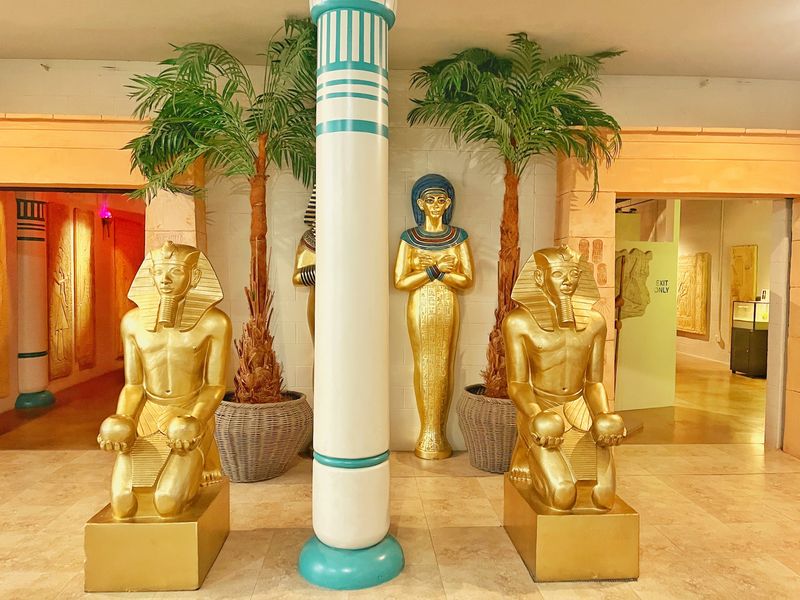
Golden treasures, a pharaoh’s tomb, and hieroglyphs glowing in dim light: the Treasures of Egypt exhibit feels like a time machine. King Tut comes up often when visitors talk about their trip, and many call it a favorite.
Every piece here is a replica. According to one guest, the displays were originally built for a 1990s casino attraction, so do not expect genuine ancient artifacts.
For children, however, the recreated tomb still delivers plenty of wonder and a clear picture of how Egyptian royalty was honored.
Technology adds a modern twist. Guests can virtually explore a mummy replica using medical imaging, peeking inside without unwrapping anything.
Another hit lets kids draw on a small screen and watch their artwork pop up on a large display across the room.
Families also mention a hands-on station about farming the way ancient Egyptians did, which connects daily life to the grand monuments. A teacher who visited even said she hoped to bring her students on a field trip.
Put simply, the Egypt gallery works best as a storytelling space. It sparks questions about history, and those questions often lead to library books and more learning long after the visit ends.
Who Feels at Home Here
Quiet hallways and a relaxed pace set this museum apart from much of Las Vegas. One visitor called it a peaceful escape from the noisy Strip, and that calm suits several kinds of guests.
Young children are the obvious fit. Between the Young Scientist Center, the dig pit, and roaring dinosaurs, kids ages 3 to 12 have plenty to touch and explore.
Parents often say the museum is small enough to see everything without feeling overwhelmed.
Grandparents on a fixed income also find a lot to like. Senior admission is discounted, benches and compact galleries make walking manageable, and air conditioning offers welcome relief on triple-digit days.
Several guests call it a smart way to beat the heat.
Here is a fun bonus for curious minds: an in-house paleontologist sometimes works in a downstairs lab, and visitors have enjoyed chatting with them about fossils. Solo adults and museum lovers visiting from out of state have also left happy.
Birthday outings, Halloween visits, and homeschool trips all come up in visitor stories. Those hoping for a cutting-edge science center may find it dated, but families wanting an easygoing, educational afternoon together usually leave smiling.
Hours, Ticket Prices, and Parking Tips
Doors open daily from 9 AM to 4 PM, with last admission at 3 PM. Arriving in the morning gives kids more time before the afternoon slump.
Admission runs $12 for adults and $10 for seniors, military members, and students 12 and older. Children ages 3 to 11 pay $6, and kids two and under get in free.
Nevada residents with a valid ID save $1 per ticket, so a local family of two adults and two young kids often spends around $32.
Extra savings exist too. Bank of America cardholders may get in free on the first Saturday of the month, covering just the cardholder, and members of the ASTC reciprocal program have reported free entry.
One traveler found a $9 third-party ticket, though deals vary.
Free parking sits directly behind the building. Plan on one to two and a half hours for an unhurried visit, or longer with little ones who love the hands-on areas.
A quick tip from visitors: staff sometimes call the lower level the second floor, so starting downstairs and working up can avoid confusion. Prices and hours can change, so confirm details with the museum before heading downtown.
The Afternoon Verdict
Six dollars for a child’s ticket buys a roaring T. rex, a bison up close, live stingrays, and a room full of giant bubbles. That math is hard to argue with in a city known for pricey entertainment.
Not everything shines. Some displays show their age, a few screens may be dark, and science buffs hoping for real fossils or authentic Egyptian artifacts could feel let down.
Going in with realistic expectations makes all the difference.
What the museum does well, it does warmly. Friendly staff, a paleontologist at work downstairs, and dozens of hands-on stations turn a simple outing into a real learning afternoon.
Kids ask questions here, and that might be the best sign any museum can offer.
For Nevada families and grandparents seeking an affordable, air-conditioned half-day, it fits neatly into a weekend plan. Pack a snack for the car, time your visit around the shark feeding, and let the children lead the way from gallery to gallery.
Some families even add a stroll through nearby downtown afterward. Chances are the drive home will be filled with dinosaur facts, bubble stories, and a surprisingly strong request to come back soon.