
Locals Consider This New York Swimming Hole One Of The State’s Best Summer Getaways
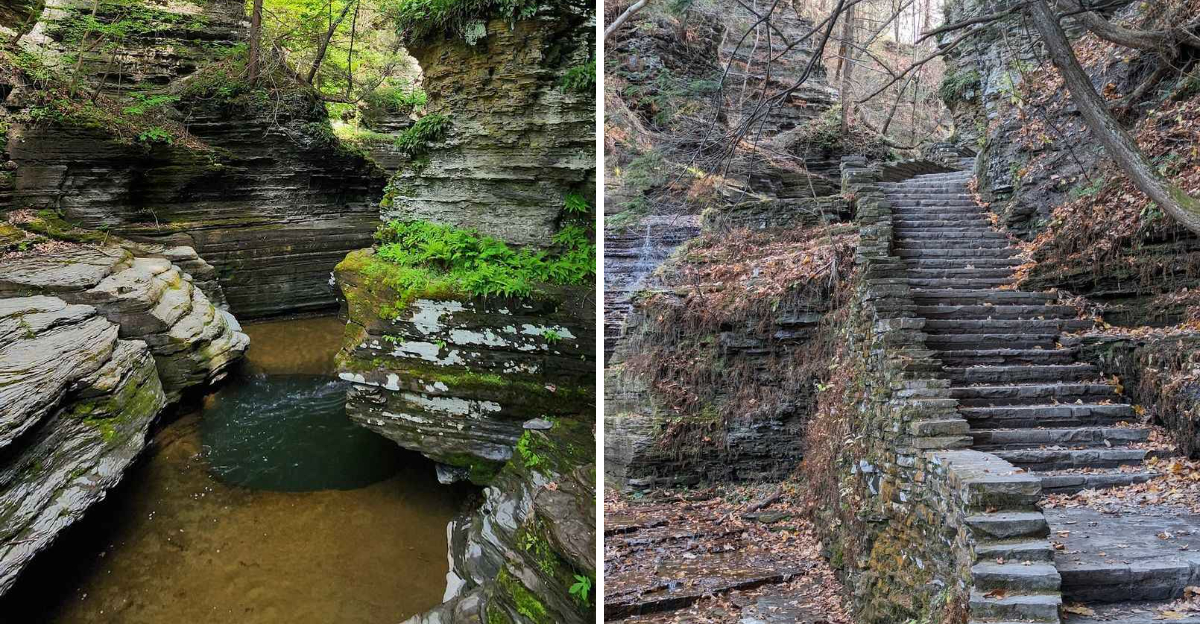
Picture water that looks whipped instead of poured, crashing through solid rock. That’s the scene locals brag about in New York.
A creek carves through layered stone here, dropping over a hundred feet in frothy, stair-step tiers. Cold water waits at the bottom for anyone brave enough to jump in.
Hundreds of stone steps climb beside the falls, and fresh waterfalls keep appearing the higher you go. Ten cascades hide along one gorge, and most visitors never spot them all.
New York holds plenty of scenic corners, but locals swear this one outshines them every weekend. Swimming holes wait below the stairs, and picnic tables fill fast once the sun climbs high.
Curious which stretch of the map hides all this? Save it for your next summer plans.
The Frothy Cascade That Named The Park
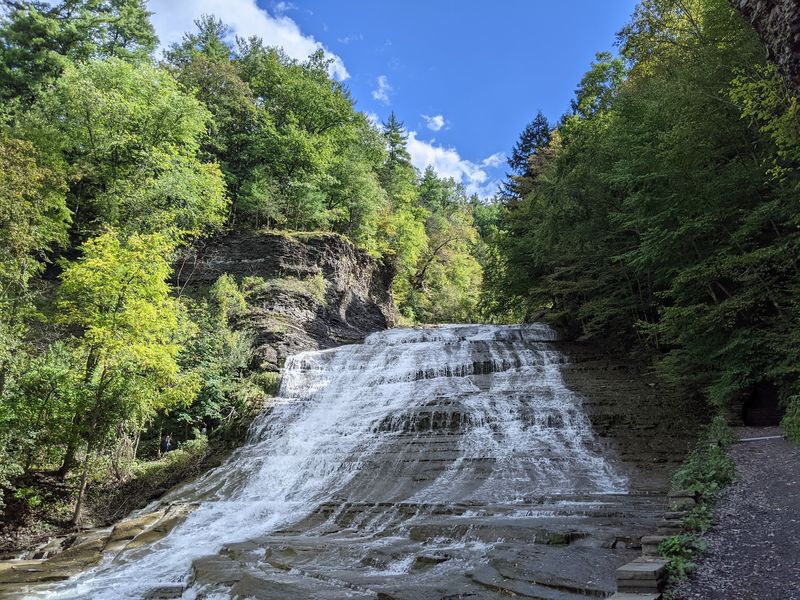
Water that looks whipped rather than poured. That is the first impression the main cascade at Buttermilk Falls State Park leaves on visitors.
The name came from early observers who thought the churning white water resembled buttermilk. The description stuck, and it still fits.
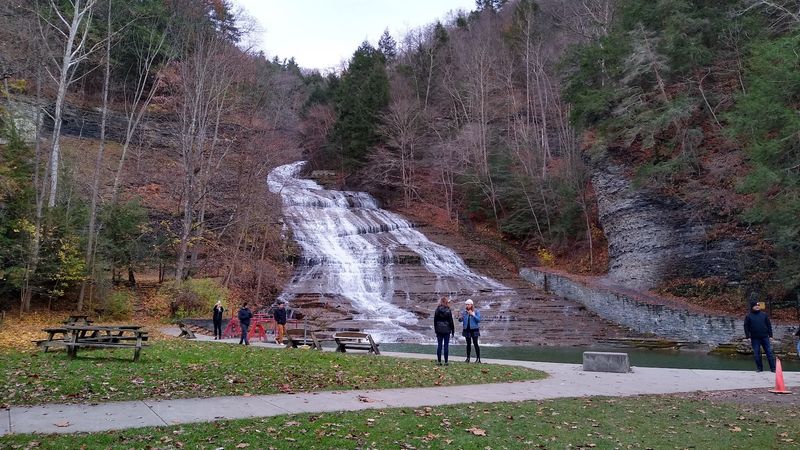
The main drop falls about 165 feet across broad shale shelves. Instead of plunging straight down, the creek slides and skips over each layer.
Some visitors joke that it looks more like water stairs than a waterfall. The comparison is fair, and it explains why photographers linger at the base for so long.
Flow changes with the calendar. Spring runoff and heavy rain turn the cascade thunderous, while late summer can leave it thin and glassy.
Both versions have their fans. Lower water reveals the rock structure underneath, which is its own kind of show.
The park sits at 112 E Buttermilk Falls Rd, Ithaca, NY 14850, just off the southern edge of town in the Finger Lakes region of New York.
Arrive early on weekends. The base viewing area fills quickly once the sun climbs.
A Swimming Hole Built By Nature
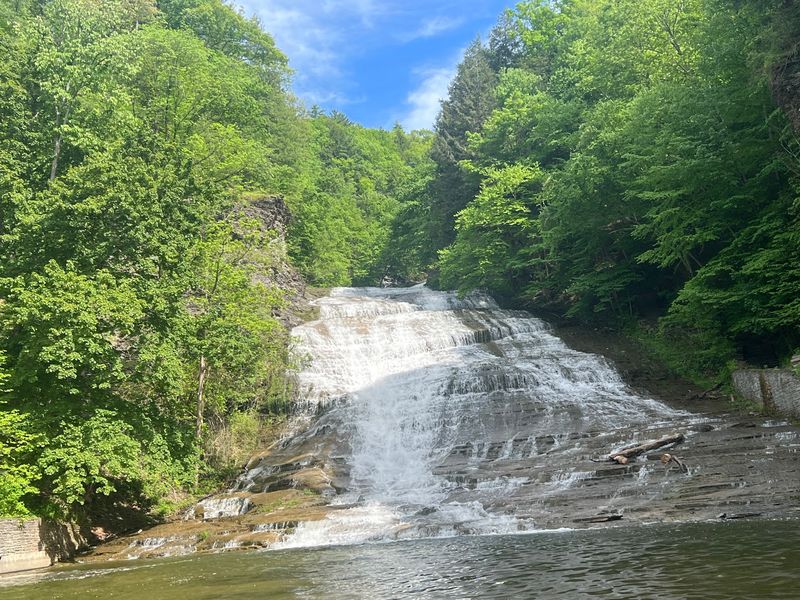
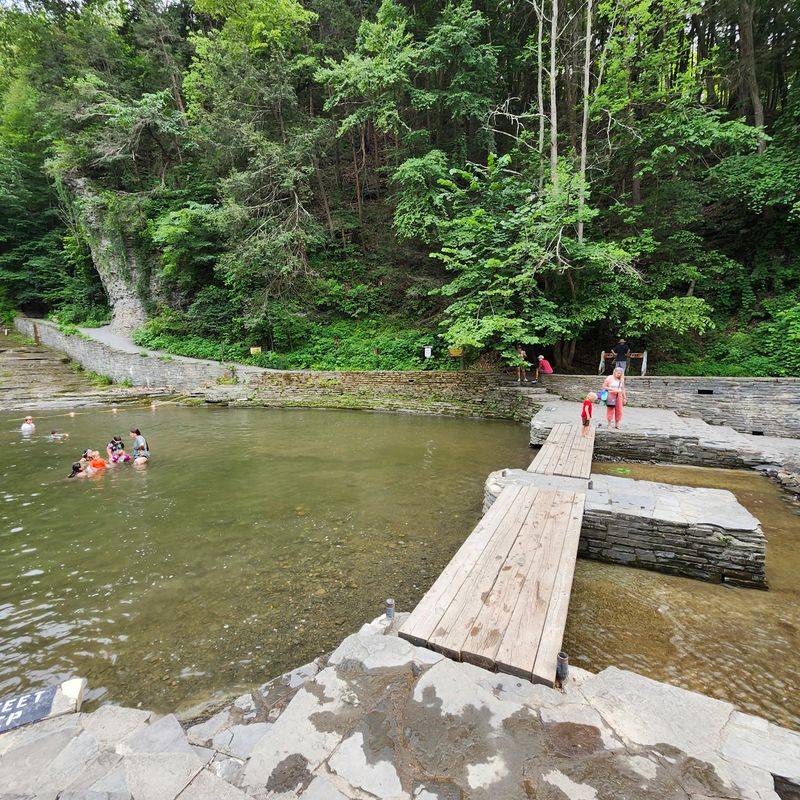
Cold water, hot day, instant relief. The pool at the base of Buttermilk Falls State Park has been the summer reward for Ithaca locals for generations.
Buttermilk Creek collects in a shallow basin right below the main cascade. The result is an old-fashioned swimming hole with a waterfall backdrop most pools cannot match.
Lifeguards staff the area seasonally, and swimming stays limited to the marked zone. That rule keeps things calm even on busy afternoons.
Access matters here too. The pool sits close to the parking area and restrooms, so families with small children do not face a long walk.
Conditions can change. Heavy rain or maintenance work sometimes closes the swimming area, so checking ahead saves disappointment.
Bring water shoes. The creek bed holds smooth stone that turns slick under bare feet.
Shade comes and goes depending on the hour, and towels dry fast on the warm rock ledges nearby.
Few places in New York pair a dip with a 165-foot cascade this closely. That combination explains the loyal crowd.
Climbing The Gorge Trail Stair By Stair
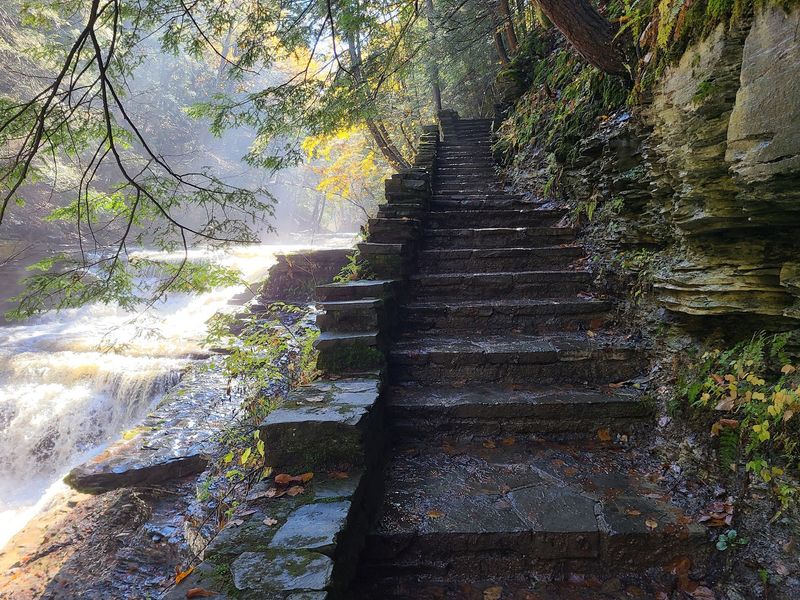
Count the steps if you dare. Hikers on the Gorge Trail at Buttermilk Falls State Park regularly report several hundred stone stairs on the way up.
The route follows Buttermilk Creek uphill for roughly 600 feet of elevation. It covers a short distance but earns every bit of that climb.
Rewards come fast. Waterfalls appear within the first few minutes, then keep arriving around each bend.
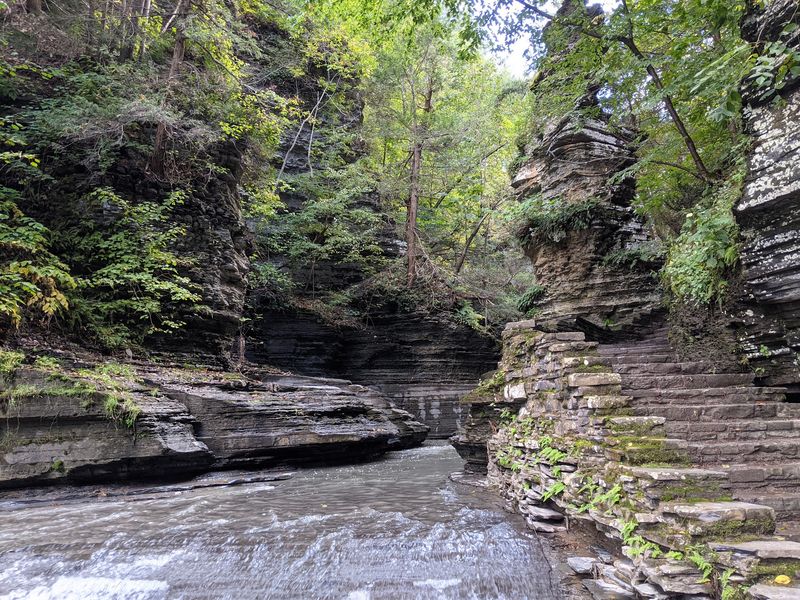
The stonework deserves attention too. Hand-set walls and staircases hug the gorge walls and blend into the shale.
Footing can turn slippery near spray zones. Sturdy shoes beat sandals here without question.
Railings exist in places but not everywhere, so children need close supervision along the ledges.
Water bottles are essential. Shade helps, but humid Ithaca afternoons still take a toll on the legs.
Seasonal closures affect this trail more than others in the park. Winter ice and spring repairs can shut sections without much notice.
Anyone skipping the climb still sees plenty. The lower viewing area delivers a strong look at the main falls.
The Rim Trail Loop For A Different Angle
Prefer dirt underfoot instead of stone steps? The Rim Trail at Buttermilk Falls State Park offers exactly that.
Running along the opposite side of Buttermilk Creek, it connects with the Gorge Trail to form a loop. Most hikers climb the gorge, then descend on the rim.
Scenery shifts noticeably. Instead of standing beside the water, walkers move through shaded woodland with occasional gorge views.
The trade-off is honest. Fewer waterfall close-ups, but easier footing and cooler air under the canopy.
Knees appreciate the change. Going down hundreds of stone stairs punishes joints far more than a soft forest path.
Birdsong replaces the roar of falling water for long stretches. The quiet catches some visitors off guard after the noisy gorge.
Trail markers keep navigation simple, and the loop returns hikers near the main parking area.
Timing helps. Late afternoon light filters through the trees and makes the return walk especially pleasant.
Pair the two trails and the park delivers two entirely separate moods within a couple of hours.
Ten Waterfalls Hiding In One Gorge
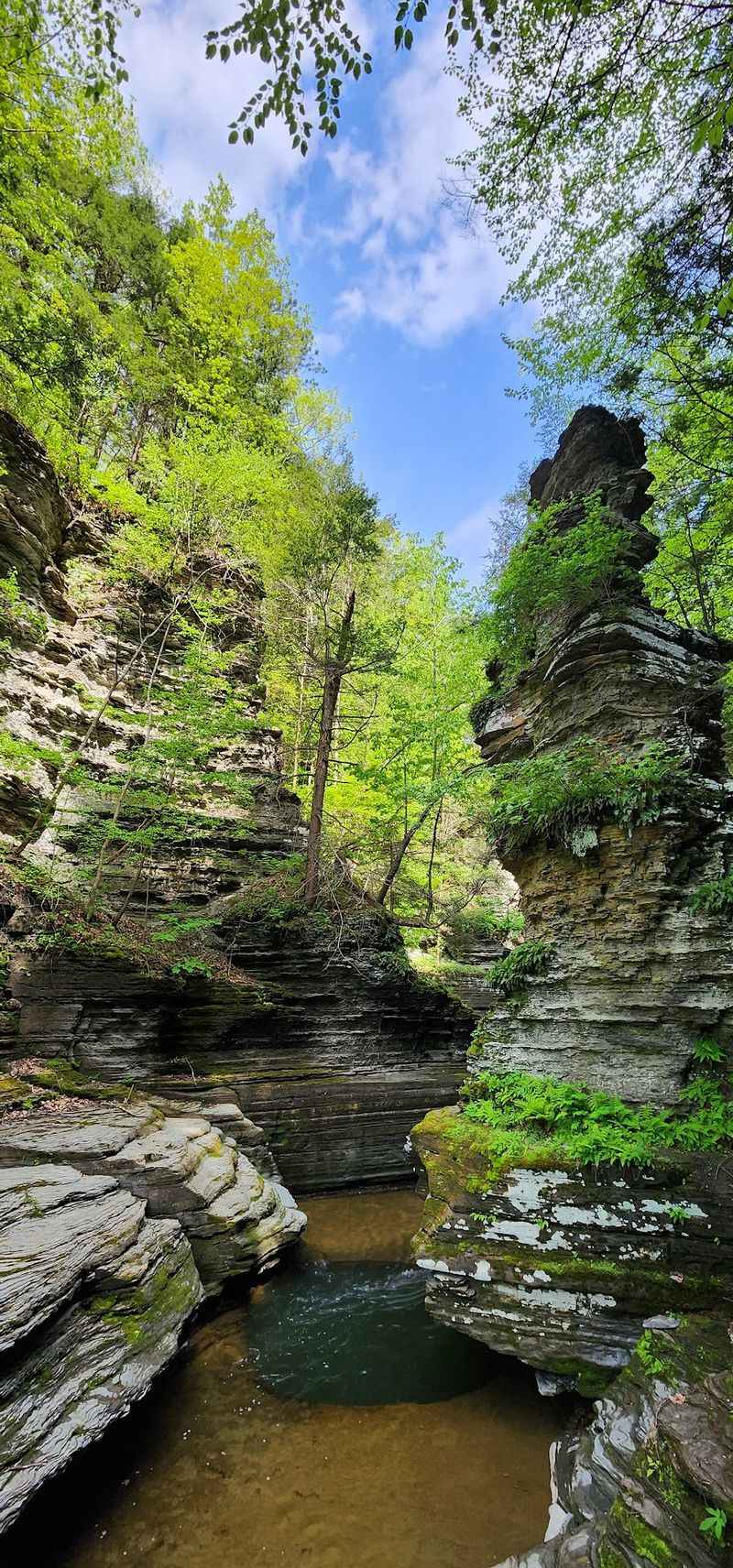
The big one gets the headlines. Yet Buttermilk Falls State Park holds ten distinct waterfalls scattered along its creek.
Buttermilk Creek tumbles through flumes, chutes, and short drops as it works down the gorge. Each has its own personality and sound.
Smaller cascades often surprise hikers most. They appear suddenly after a curve in the trail, with no warning sign or crowd.
Pinnacle Rock stands out among the geological features. The tall stack of shale rises near the upper section of the park.
Emerald potholes carved into the creek bed catch light in odd ways. Their green tint comes from depth and mineral-rich stone.
Photographers benefit from cloudy days. Flat light softens the contrast between white water and dark rock.
Flow strength decides how dramatic the smaller falls look. After steady rain, the whole gorge seems to come alive at once.
Give the walk extra time. Rushing through means missing half of what makes this corner of New York memorable.
Rock Layers Carved Over Thousands Of Years
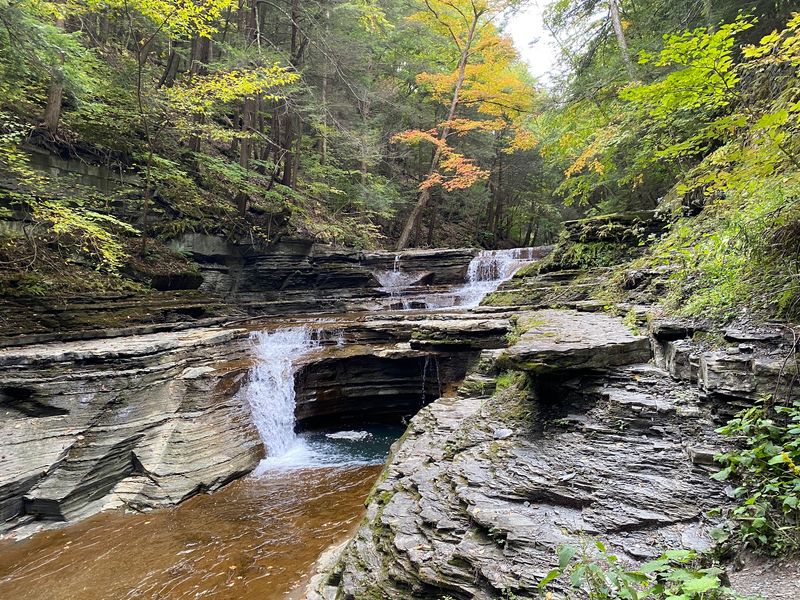
Geology fans get a free lesson here. The gorge walls at Buttermilk Falls State Park read like stacked pages of stone.
Buttermilk Creek has been carving this channel for roughly ten thousand years, ever since the last glaciers retreated from the region.
Horizontal bands of Devonian shale and sandstone create the sharp edges and flat slabs visible along the trail. Softer layers erode faster, which produces those stair-step ledges.
That structure explains the waterfall’s shape. Water cannot plunge cleanly when the rock keeps interrupting it.
Erosion has not stopped. The creek continues shifting stone, meaning the gorge looks slightly different across decades.
Fossil hunters sometimes notice ancient marine traces in the shale. Collecting is not permitted, but looking costs nothing.
Guardrails and paths keep visitors off unstable edges, and staying on the marked route protects both people and the rock.
Understanding the process changes the view. What looks like scenery is actually a slow-motion construction project still underway in this pocket of New York.
A Gift That Became Public Land
Private generosity started all of this. Robert and Laura Treman donated the original 164 acres of Buttermilk Falls State Park to New York State in 1924.
Later state purchases expanded the property to about 811 acres. The park grew well beyond its first boundaries.
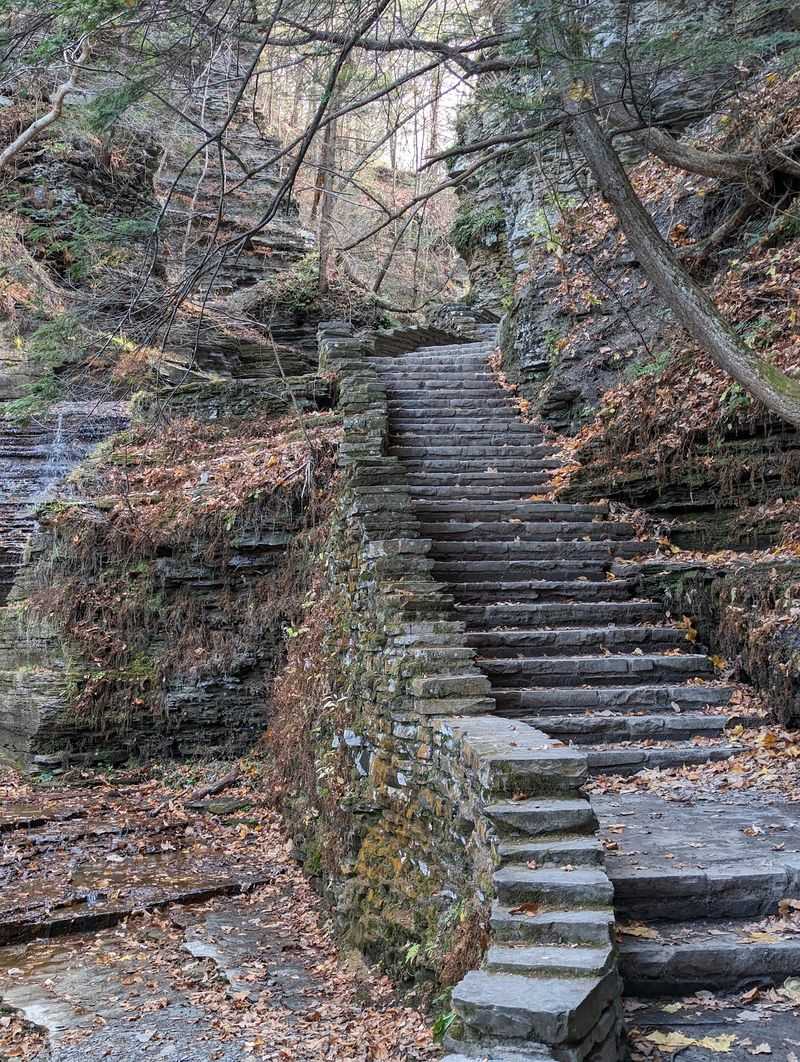
During the 1930s, Civilian Conservation Corps crews arrived and reshaped how visitors experience the gorge. Their stone walls, staircases, and bridges still carry foot traffic today.
Craftsmanship shows in the details. Stones fit tightly, curves follow the terrain, and the work rarely looks out of place against natural rock.
Maintenance continues year after year. Freeze cycles and rushing water constantly test structures built nearly a century ago.
The Treman name appears elsewhere nearby, including at another state park in the same area. The family’s influence on this landscape runs deep.
History adds weight to an ordinary walk. Every step on those stairs follows decisions made long before current visitors were born.
Preservation like this is why the falls remain open to everyone rather than fenced off.
Camping, Picnics, And Playground Afternoons
Not everyone comes to hike. Plenty of visitors treat Buttermilk Falls State Park as a full-day picnic headquarters.
Tables and grills sit within easy reach of the lower falls. Lunch beside a cascade beats a crowded restaurant patio.
A pavilion handles larger gatherings, which makes the park popular for family reunions and group outings during warm months.
Overnight options exist too. Campsites and cabins operate seasonally, and reservations are strongly recommended when demand peaks.
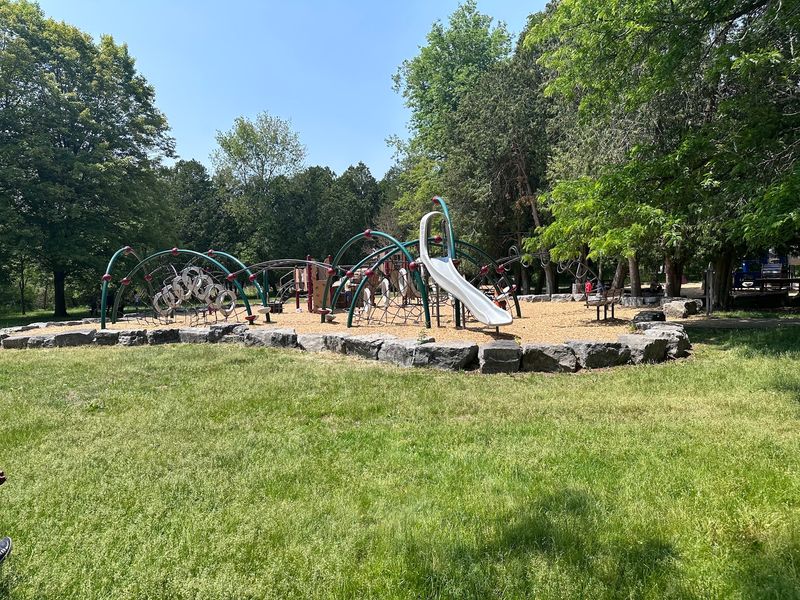
Children find their own entertainment. A playground with unusual climbing features keeps younger visitors busy while adults rest.
Playing fields give room for a ball game after the hiking finishes. Space rarely feels cramped despite the crowds.
Restrooms sit near the main lot, a small detail that matters enormously with kids in tow.
Grandparents often stake out a shaded table while the rest of the group climbs the gorge. Everyone still leaves happy.
Flexibility is the real advantage. Buttermilk Falls works for an hour or an entire weekend.
Four Seasons, Four Different Parks
Same falls, wildly different experiences. Buttermilk Falls State Park reinvents itself every few months.
Spring brings snowmelt and rain, pushing the creek to full strength. That is when the frothy buttermilk effect looks most convincing.
Summer means swimming, picnics, and the busiest parking lot of the year. Mornings on weekdays stay noticeably quieter.
Autumn may be the sleeper favorite. Red and gold foliage frames the white water, and cooler air makes the stair climb far more comfortable.
Winter turns the gorge into something hushed and strange. Partially frozen cascades hang against dark rock.
Access shrinks in cold months though. The Gorge Trail often closes for safety, leaving other paths as alternatives.
Late summer can disappoint anyone expecting a torrent. Low flow reduces the falls to a thin veil over stone.
Checking recent rainfall helps set expectations before the drive. Rain a day or two earlier usually means a stronger show.
Repeat visits pay off in this part of New York, because the park never looks the same twice.
Planning A Smooth Visit Near Ithaca
Small preparations make a big difference. Buttermilk Falls State Park sits minutes from downtown Ithaca, which makes it an easy add-on to any Finger Lakes trip.
A parking fee applies during the busy season, and the receipt generally covers other state parks the same day. Keeping it handy saves money.
Arriving early beats fighting for a space. Midday weekends bring the heaviest traffic by far.
Dogs are welcome in designated areas on leashes no longer than six feet. Campground stays require proof of rabies vaccination.
Robert H. Treman State Park sits close by, so two waterfall destinations fit comfortably into one afternoon.
Footwear matters more than anything else. Wet stone and worn soles make a poor combination on the gorge stairs.
Water, sunscreen, and a light snack cover most needs. Cell service can be patchy inside the gorge.
Accessible viewing areas near the base let visitors with mobility limits enjoy the main cascade without stairs.
Plan loosely, pack sensibly, and this corner of New York rarely disappoints.