
Many People Don’t Know This Massachusetts Hot Dog Stand Is A Part Of American History
Some food places serve lunch. Others serve a little piece of the past with every order.
This Massachusetts hot dog stand has the old-school energy people love, with sizzling franks, quick counter service, and a history that reaches far beyond a simple meal. It is casual, familiar, and full of character, where a short stop can feel like a tiny history lesson with mustard on top.
Classic American eats, local stories, and wonderfully unchanged traditions all come together here.
A Century-Old Story That Started With A Simple Lunch Counter
Back in 1918, Catherine and George Tsagarelis walked into a small lunch counter in Worcester, Massachusetts, and saw something most people would have overlooked: potential. The couple purchased the modest space and began building what would eventually become one of the most enduring food businesses in New England.
Hot dogs were the focus from the very beginning, and that singular commitment turned out to be a masterstroke.
This place did not start as a landmark. It started as a practical, affordable place where working people could grab a quick, satisfying meal without spending much.
That simplicity became its greatest strength over time.
More than 100 years later, the business is still family-owned and still centered on the same core menu. The Tsagarelis family planted deep roots in Worcester, and those roots have only grown stronger with each passing decade.
Starting something from scratch and watching it survive a full century of American history is a feat that very few small businesses anywhere in the country could ever claim.
The Secret Chili Sauce That Nobody Has Ever Been Able To Copy
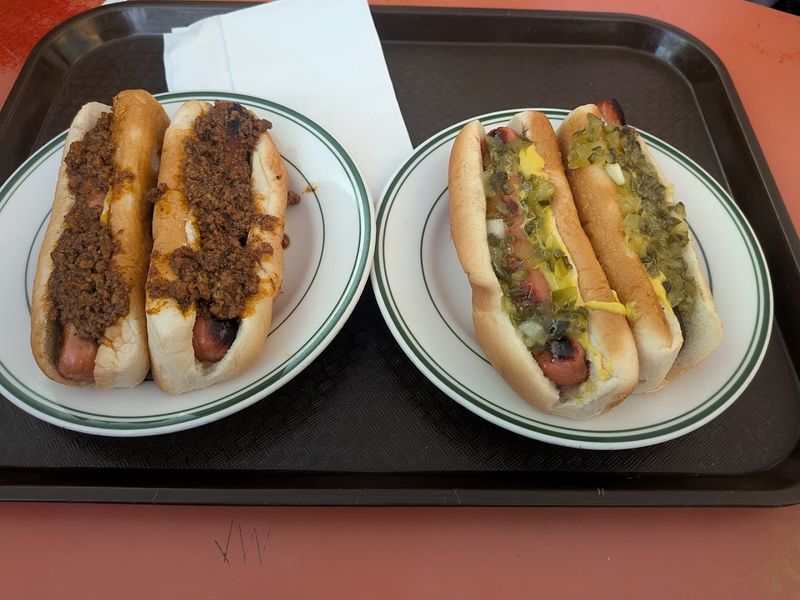
Long before the Tsagarelis family took ownership, the woman who ran the original lunch counter had developed a chili sauce recipe that was unlike anything else in the area. Pure meat, no beans, deeply savory, and built on a combination of spices that has never been made public.
When Catherine and George took over, they inherited that recipe and treated it like the treasure it truly was.
Generations have passed through George’s Coney Island ordering a dog “up” or “with everything,” which means chili sauce, yellow mustard, and raw onions. The chili sauce is the anchor of the whole experience, and customers who have been eating there for decades say it has never tasted any different.
That kind of consistency is extraordinarily rare in the restaurant world.
The recipe has been passed down through three generations of the same family, kept tightly within the circle of those who need to know. No franchise, no mass production, no shortcut has ever touched it.
For anyone curious about what makes a hot dog worth a 100-year reputation, that sauce is the most honest answer available.
The Iconic 60-Foot Neon Sign That Became A Worcester Landmark
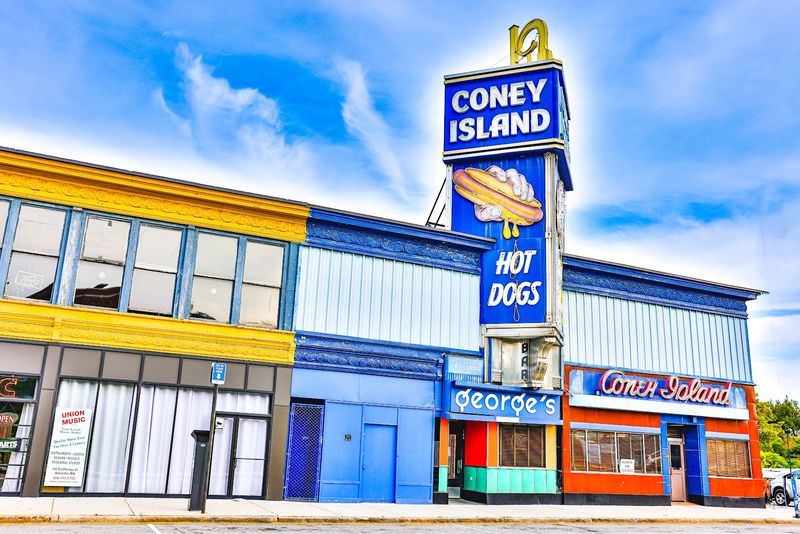
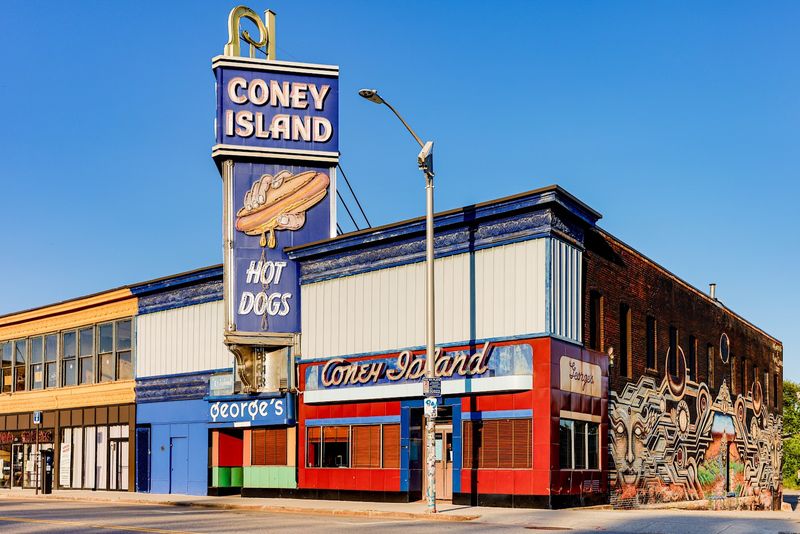
Few signs in Massachusetts carry the kind of weight that the towering neon display outside George’s Coney Island does. Installed in 1940 after a 1938 Art Deco renovation of the building, the sign stretches 60 feet tall and features George Tsagarelis’s own hand clutching a hot dog.
It is impossible to miss, and for generations of Worcester residents, spotting that sign has meant one thing: lunch is close.
Neon signs of that scale were a statement of confidence in the mid-20th century. Businesses that invested in bold, glowing signage were telling the neighborhood they planned to stick around.
George’s Coney Island has more than delivered on that promise, and the sign still draws curious visitors who stop on Southbridge Street just to take a photo.
The Art Deco renovation that preceded the sign gave the building a visual identity that has aged remarkably well. Retro styling that was fashionable in 1938 now reads as genuinely historic, and the combination of that architecture with the towering neon has made the building itself a recognizable piece of Worcester’s visual identity.
It stands as a physical reminder that some things are simply built to last.
Surviving The Great Depression, Two World Wars, And Twelve Presidents
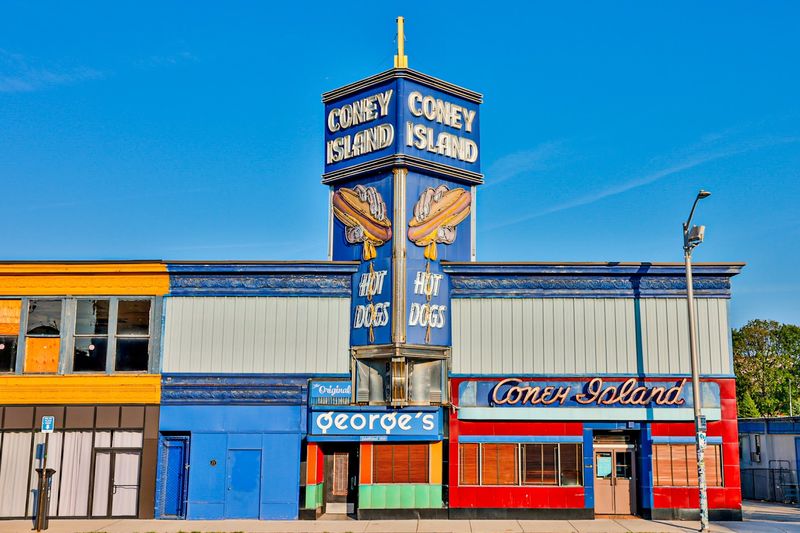
Operating a small food business through even one major economic crisis is an achievement. George’s Coney Island has operated through the Great Depression, World War II, the Korean War, Vietnam, multiple recessions, and more than a dozen presidential administrations.
That kind of endurance is not accidental. It reflects a business model built on consistency, value, and genuine community connection.
During the darkest years of the Great Depression, the Tsagarelises reportedly gave away hot dogs to boys from the local Boys Club who could not afford to pay. That decision to prioritize people over profit during a national crisis says a great deal about the values that have kept the business alive for so long.
Kindness, it turns out, is also a business strategy.
Each era of American history has brought new challenges, and George’s Coney Island at 158 Southbridge St in Worcester has absorbed them all without losing its identity. The menu has stayed focused, the prices have remained reasonable, and the atmosphere has resisted the pressure to modernize in ways that would strip away its character.
Surviving a century of American upheaval while remaining recognizably the same place is a genuinely extraordinary accomplishment for any small business.
The Historic Wooden Booths Where Visitors Carve Their Names Into History
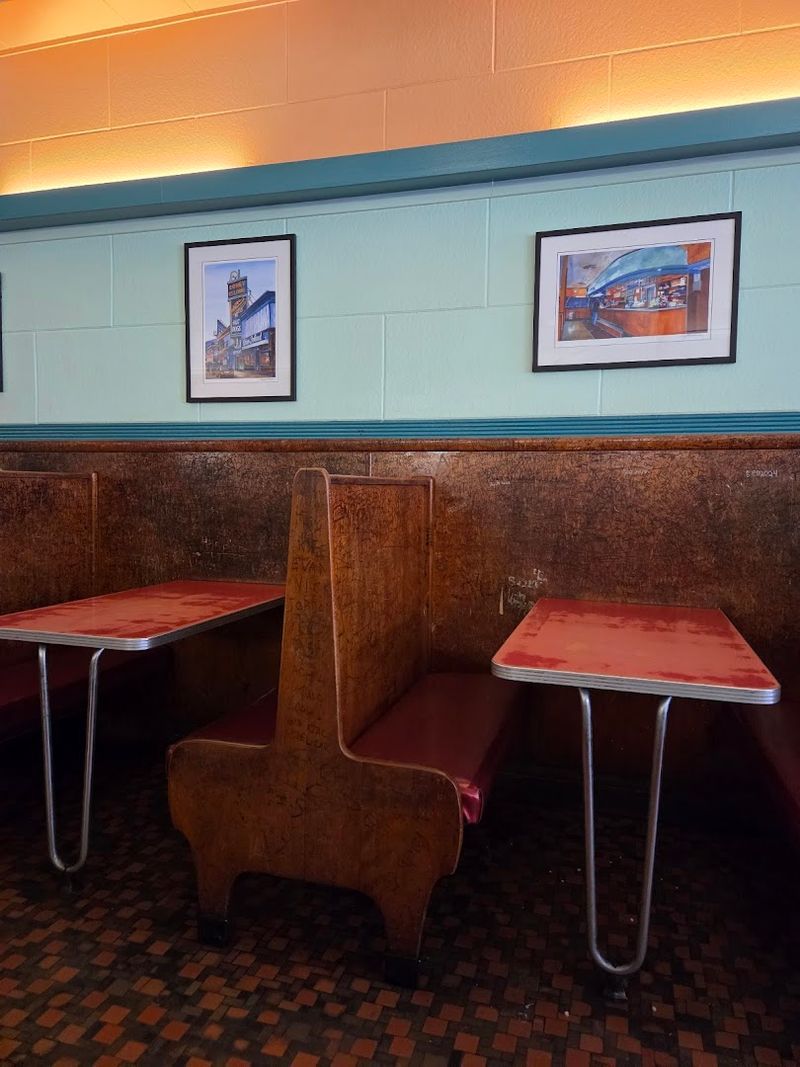
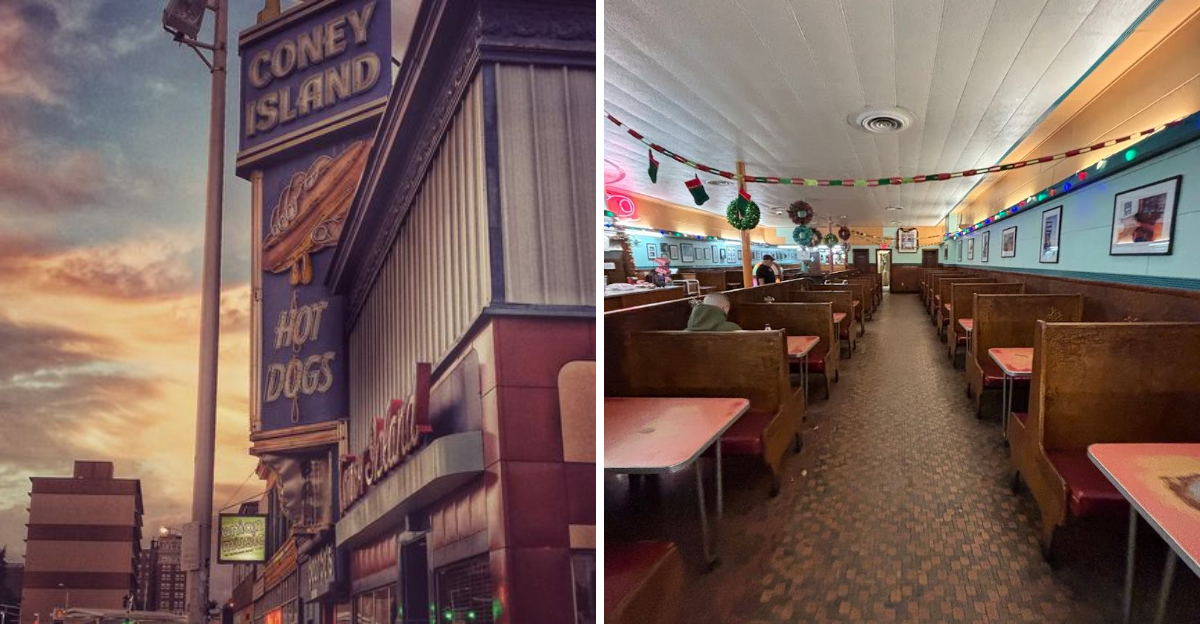
Slide into one of the wooden booths at George’s Coney Island and look closely at the surface around you. Carved names, initials, and dates stretch back decades, left behind by customers who wanted to mark the moment they were there.
Some carvings are recent, and some appear to be from eras long past, creating a layered, tactile archive of everyone who has sat in that exact spot.
The booths themselves have absorbed an enormous amount of life. The wood is worn in the way that only genuine, heavy use produces.
Edges are softened, surfaces are darkened, and the whole structure carries the kind of weight that reproduction furniture simply cannot replicate. Sitting in one of these booths feels like joining a very long conversation that started more than 80 years ago.
Customers are still welcome to add their names to the booth side of the restaurant, continuing a tradition that has turned the furniture into something closer to a community monument. It is a simple, low-tech form of connection that social media cannot replicate.
The booths here hold more personal history per square foot than most museums.
Four Generations Of Family Ownership And What That Actually Means
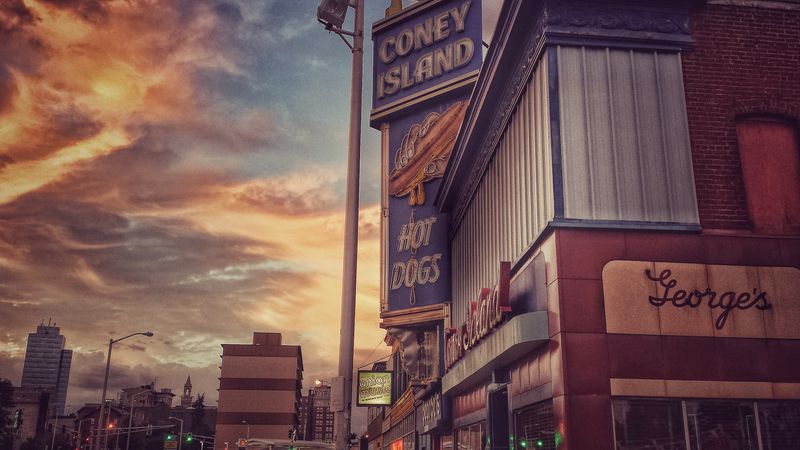
Family-owned businesses are often described warmly, but the reality of keeping one alive across four generations is something far more demanding than the phrase suggests. At George’s Coney Island, the current owner Kathryn Tsandikos represents the third generation of the Tsagarelis family to run the business, and her son has already stepped into the fourth generation of involvement.
That chain of continuity is genuinely rare in American small business history.
Each generation has had to make decisions about what to preserve and what to update, and the pattern at George’s Coney Island suggests a philosophy of deep preservation with careful, minimal change. The core menu has remained intact.
The atmosphere has been maintained rather than renovated away. The secret chili sauce recipe has stayed in the family without ever being commercialized or sold.
What four generations of ownership produces is a kind of institutional memory that no hired management team could replicate. The people running the restaurant carry the full weight of its history personally, which changes how decisions get made at every level.
For customers, that translates into a consistency of experience that feels almost impossible to find anywhere else in modern dining.
The Atmosphere Inside: Retro, Worn, And Completely Unself-Conscious
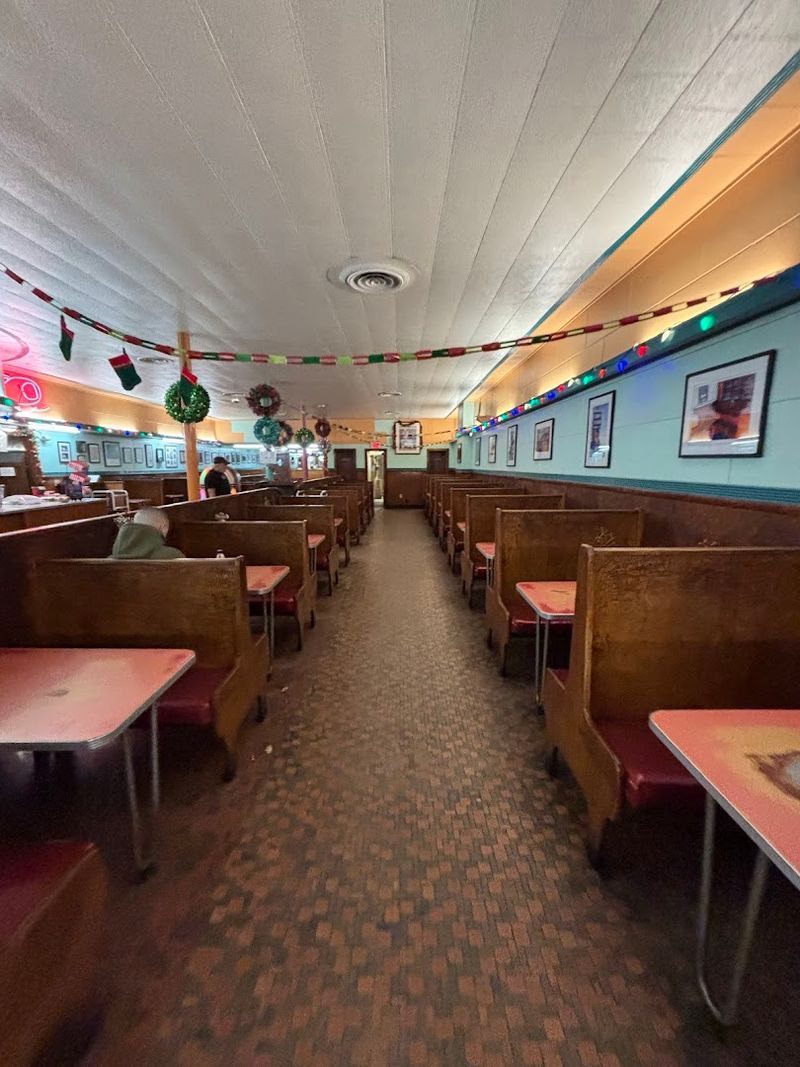
Walking into George’s Coney Island is not like walking into a restaurant that has been designed to look vintage. The retro atmosphere here is the real thing, accumulated over more than a century of actual use.
The floors are worn where they should be worn. The counter is the kind of smooth that comes from thousands of elbows resting on it.
The jukebox in the corner is not decorative.
Noise levels tend to stay conversational rather than overwhelming, which makes it a comfortable place to actually talk while eating. The lighting is warm without being dim, and the space feels compact without feeling cramped.
Service at the counter moves quickly, and the rhythm of the place has a relaxed efficiency that comes from decades of practice rather than any formal training program.
The venue sits in a part of Worcester that has changed considerably around it, but the interior has resisted the pressure to update in ways that would erase its character. Customers consistently note that the place looks the same as it did 30 or 50 years ago, and that observation is meant as the highest possible compliment.
Authenticity that old cannot be manufactured or rushed.
Pricing That Has Always Reflected The Community It Serves
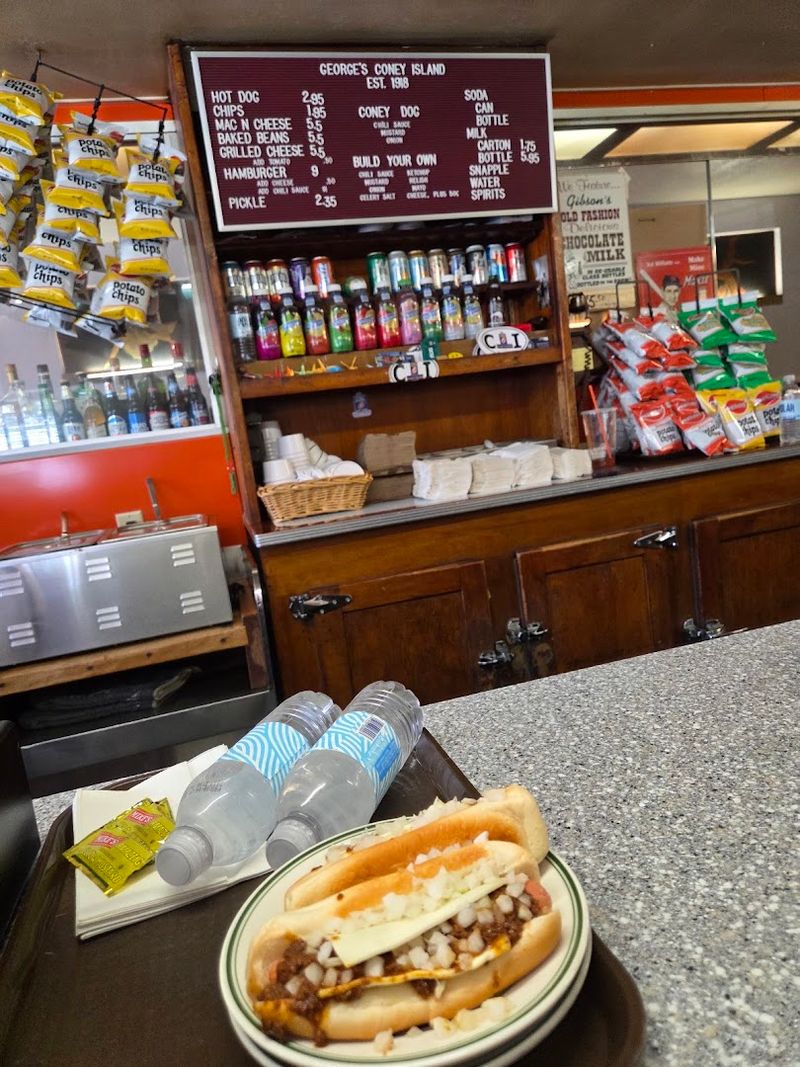
A nickel bought a hot dog at George’s Coney Island when the doors first opened in 1918. Prices have naturally adjusted over the decades, but the commitment to keeping the menu accessible has remained a defining characteristic of the business.
In a food landscape where modest meals often carry immodest price tags, George’s Coney Island has consistently offered something real at a price that does not require a second thought.
Customer reviews from recent visits note that a standard hot dog currently runs around $2.57, with toppings priced individually. Some visitors feel the portions lean small for the price, while others consider the value strong given the quality and the experience surrounding it.
Both perspectives are fair, and the restaurant’s rating of 4.7 stars across nearly 3,000 reviews suggests that most people land on the satisfied side of that equation.
The pricing philosophy traces back to the Great Depression, when the Tsagarelises chose to feed hungry boys for free rather than turn them away. That spirit of accessibility has never fully left the business.
Keeping food affordable in a neighborhood that has faced real economic challenges over the decades is a quiet but meaningful form of community service that extends well beyond the menu.
The 100th Anniversary Celebration That Stopped Traffic On Southbridge Street

In 2018, George’s Coney Island turned 100 years old, and Worcester did not let that milestone pass quietly. The community commemoration was large enough to close down Southbridge Street entirely, filling the block with people who had personal connections to the restaurant spanning multiple decades.
For a hot dog stand, that kind of public celebration is a remarkable measure of how deeply the place has embedded itself into the city’s identity.
Centennial anniversaries are rare for any business, and rarer still for a single-location, family-owned restaurant serving a focused menu in a mid-sized American city. The fact that the celebration drew a crowd large enough to shut down a street reflects something genuine about how Worcester residents feel about the place.
It is not just a place to eat. It has become a shared reference point for generations of families.
The 100th anniversary also prompted broader media attention that introduced George’s Coney Island to audiences well outside Worcester. Food writers, historians, and travelers who had never heard of the place began making the trip specifically because the story of a century-old hot dog stand with a secret sauce and carved wooden booths turned out to be exactly the kind of American story people want to hear.
What To Know Before Visiting George’s Coney Island For The First Time
First-time visitors tend to do best when they arrive knowing a few basics. George’s Coney Island is open Monday from 10 AM to 4 PM, closed on Tuesdays, and open Wednesday through Sunday from 10 AM to 8 PM.
Arriving closer to opening time on busier days could mean a short wait, but the counter service moves quickly enough that lines tend to clear faster than expected.
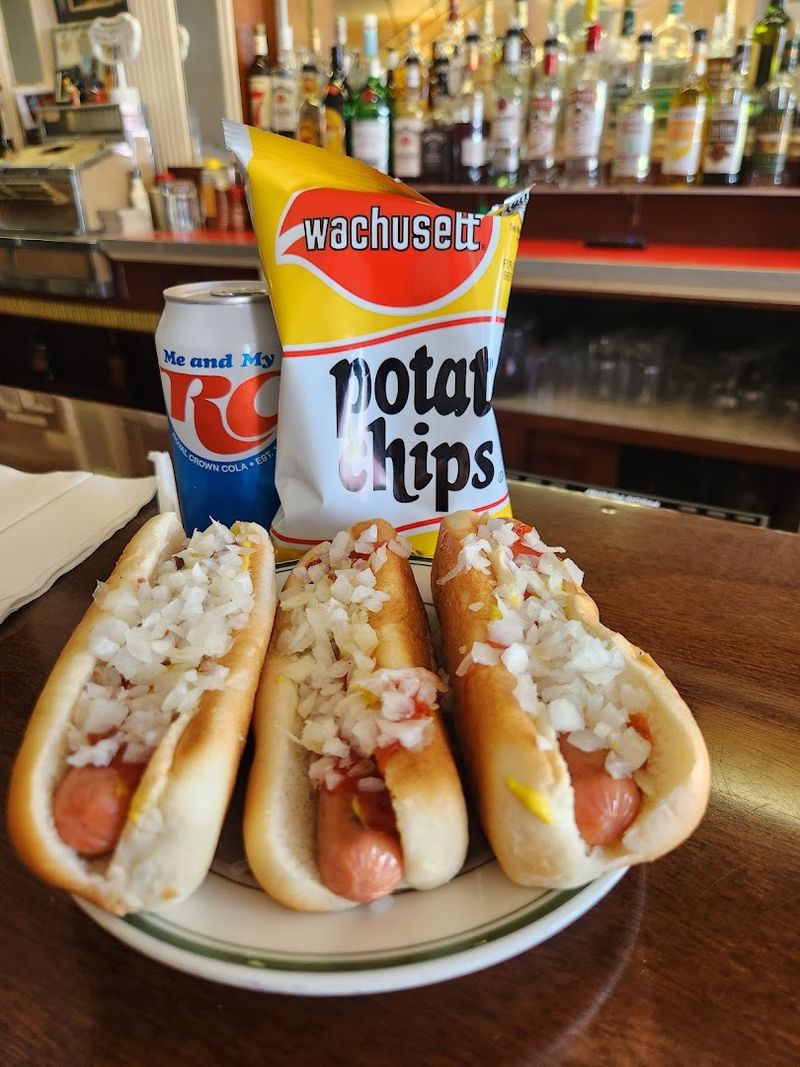
Ordering is straightforward once the terminology clicks. A hot dog “up” or “with everything” means chili sauce, yellow mustard, and raw onions.
The chili sauce is the star, and skipping it on the first visit would mean missing the point entirely. Pairing a dog with a Polar Ginger Ale and a bag of Wachusett chips is the local approach, and it holds up well.
Street parking is available nearby, though it may require a short walk depending on the time of day.
The space has two entrances leading to two distinct sides of the restaurant. The booth side is where visitors are welcome to add their names to the woodwork, continuing the tradition.
Phone inquiries can be directed to +1 508-753-4362, and more information is available at coneyislandlunch.com. Cash and a clear order go a long way here.