
10 Massachusetts Observatories And Stargazing Spots Perfect For Exploring The Night Sky
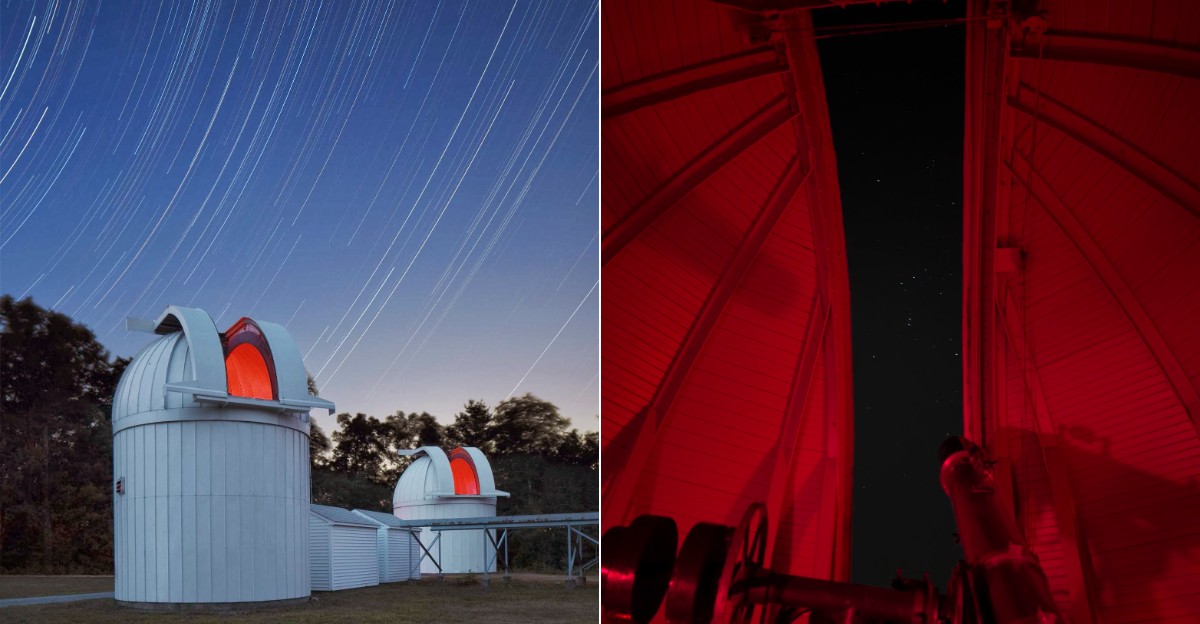
A college professor and his students built an observatory in the 1830s, and it still stands today. It’s considered the oldest existing observatory in the United States.
That detail alone made me want to grab a coat and a thermos.
Massachusetts turns out to be loaded with spots that feed that same curiosity. One island observatory honors the first American woman astronomer, who spotted a comet in 1847.
A city rooftop has hosted free public nights since 1967.
I love that so many of these places welcome total beginners. No fancy telescope or science degree required, just clear skies, a little patience, and maybe a sweater.
Some public nights are hosted by students who light up the moment you ask about Saturn. Other spots skip the crowds and let a quiet lake or an open campus lawn do the talking
All you need is a clear night and a little curiosity. Which of these starry spots will you visit first?
1. Orchard Hill Observatory
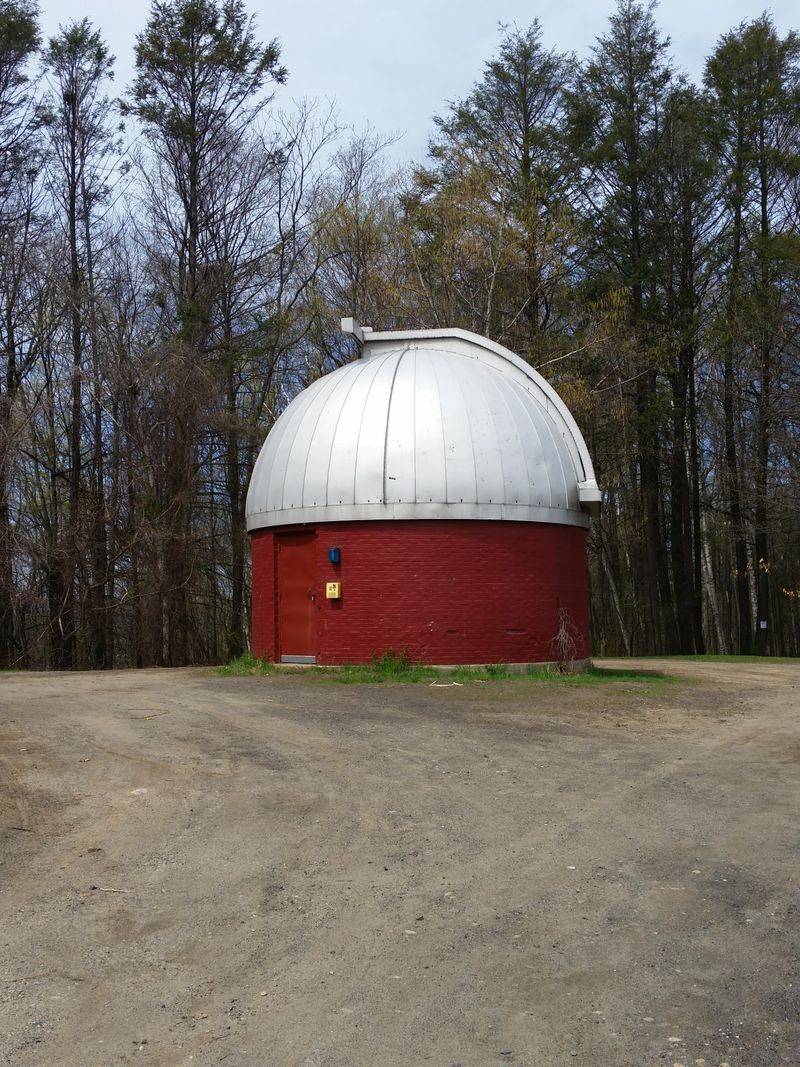
Tuesday nights in Amherst get an upgrade once the sun clocks out. During the fall and spring semesters, this hilltop spot opens to the public for night sky viewing.
The star of the show is a 16-inch telescope. Backing it up is a small fleet of 8-inch telescopes, so there’s more than one eyepiece to explore.
Hours run from 7:30 to 9:30 PM, weather permitting. That last part matters, because clouds have zero respect for your plans.
Check the sky before you leave home. A clear evening means you’re in business, while a gray blanket overhead means a bonus night on the couch.
The observatory is connected to the University of Massachusetts Amherst astronomy program. That campus link gives the outing a classroom-meets-campout feel, minus the homework.
Two hours is a sweet window for a weeknight adventure. You can swing by after dinner, peek at the sky, and still be home at a reasonable hour.
Bring layers for the evening. Hilltops in western Massachusetts can feel chillier after dark than you might expect.
Kids who think space is the coolest thing ever will love this one. So will grown-ups who secretly feel the same way.
A pair of binoculars in the car is never a bad idea. Practice spotting things on your own, then see how the big telescope compares.
Plan your Tuesday, cross your fingers for clear skies, and head up the hill. You’ll find Orchard Hill Observatory on the UMass campus in Amherst, MA 01003.
2. Loines Observatory, Nantucket, MA
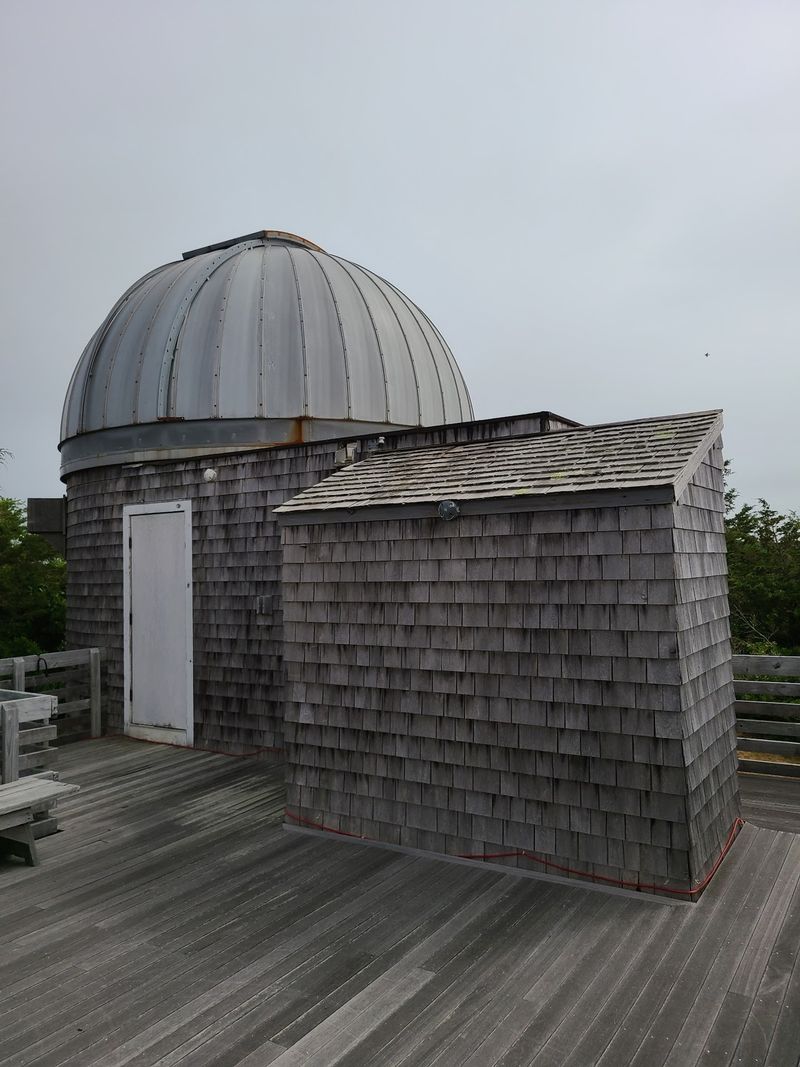
Nantucket’s beaches get the daytime glory, but the island has a nighttime trick too. Loines Observatory opens for stargazing on select evenings, and grabbing tickets ahead of time is the smart move.
Two telescopes share the spotlight here. One is a beautifully refurbished antique Clark refractor, and the other is a 24-inch research telescope installed in 2006.
That pairing is a total treat. You get old-school charm and modern research power under the same roof.
Days and times shift through the season, so check the schedule before you plan your evening. Friday nights from 9 to 10 PM are one listed window.
The observatory belongs to the Maria Mitchell Association, which has championed science on the island since 1902. Its namesake is recognized as the first American woman astronomer.
Ready for a fun bonus fact? The association preserves more than 8,000 glass photographic plates of the sky taken between 1913 and 1995, and researchers still use them.
Think about that for a second. Decades of night skies, captured on glass, are still helping people learn new things.
Families will feel right at home, since kids are welcome. A giant telescope might just become the best toy on the island for a young stargazer.
Wear a jacket, because ocean air gets brisk after sunset. Then let the telescopes do the rest.
Reserve your spot, catch a ferry, and look up. Loines Observatory sits at 59 Milk St Ext, Nantucket, MA 02554.
3. Judson B. Coit Observatory, Boston, MA
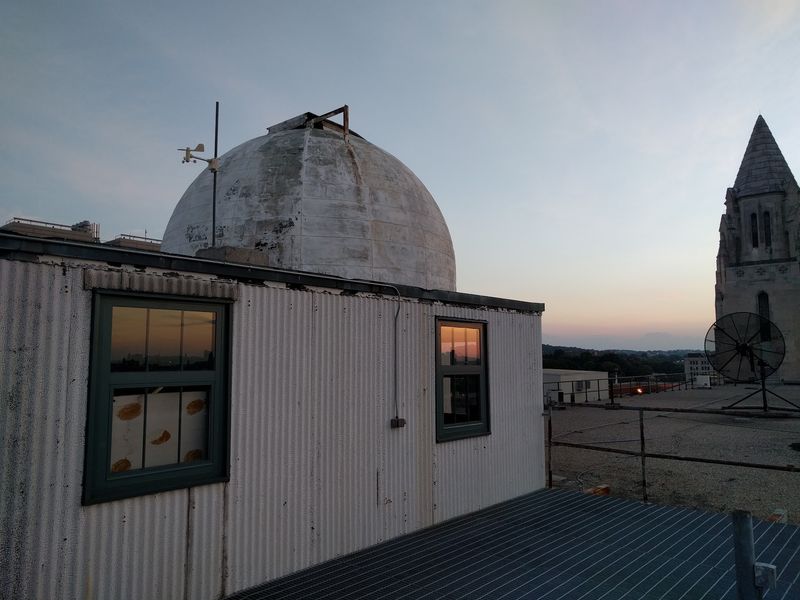
Free stargazing on a Boston rooftop sounds too good to be true, yet it’s been happening since 1967. Boston University runs Public Open Nights on most Wednesdays, weather permitting.
Tickets cost nothing, but you still need one. Reservations open online each Thursday morning, so set a reminder and pounce.
Timing matters here more than almost anywhere else. Once the program starts, nobody else gets in, so arrive on time.
Getting to the roof takes some stair power. You’ll climb to the fifth floor of the College of Arts and Sciences, and your legs will forgive you once you see the view.
Up top, Schmidt-Cassegrain telescopes and binoculars wait for you. On a good night, you might spot the moon, Saturn, and other cosmic showstoppers.
Then there’s the skyline bonus. Panoramic views stretch across the Charles River toward Cambridge, a pretty great backdrop for a science lesson.
The observatory honors Judson Coit, the school’s first Professor of Astronomy. It once sat on a rooftop on Boylston Street before moving to Commonwealth Avenue in the late 1940s.
Students use the space for astronomy courses and club projects too. That makes it a working classroom as well as a viewing deck.
Bright planets and the moon make terrific city targets. That makes this a great first stop for curious beginners.
Grab your ticket, lace up your sneakers, and head for the roof. Judson B.
Coit Observatory is at 725 Commonwealth Ave, Boston, MA 02215.
4. Maria Mitchell Observatory, Nantucket, MA
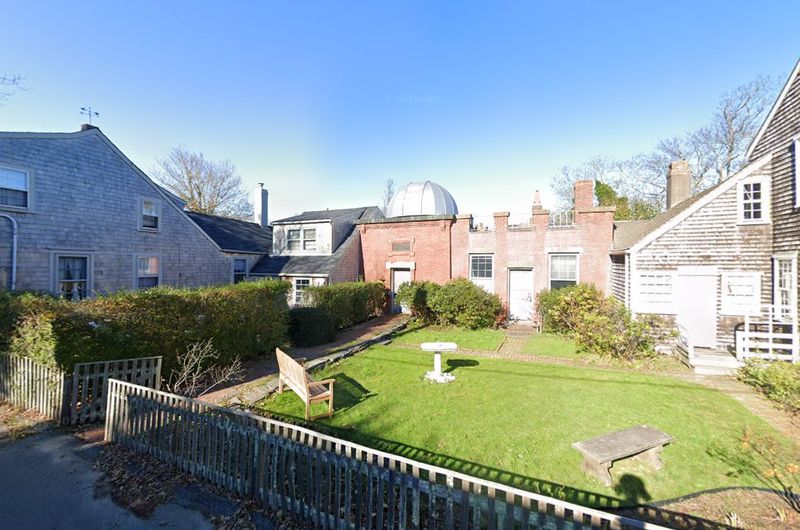
Maria Mitchell was born on Nantucket in 1818 and later spotted a telescopic comet in 1847. The observatory bearing her name keeps that spirit of discovery alive on Vestal Street.
Plan a summer visit to catch it. The Vestal Street Observatory offers seasonal tours from June through September.
Research has been happening on this site since 1908. Today, a 17-inch PlaneWave Dall-Kirkham telescope, installed in 2008, handles serious science work.
History gets personal here too. The Mitchell House, built in 1790, is the birthplace of the astronomer herself.
Inside, you’ll find a collection of artifacts. One of her original telescopes is among them, which is a pretty amazing thing to see up close.
She’s recognized as the first American woman astronomer. Standing where her story began is a fun way to connect one curious kid to a whole career.
The Maria Mitchell Association offers more than stars. An aquarium and a natural science museum round out the day, so you can explore before the sky gets dark.
Families with young kids will find plenty to keep everyone interested. Science feels a lot more exciting when it comes with sea creatures and comets.
Schedules change by season, so check when tours and stargazing are available. A little planning makes this stop easy to fit into an island getaway.
Pack your curiosity and head for Vestal Street. The Maria Mitchell Observatory is at 3 Vestal St, Nantucket, MA 02554.
5. Hopkins Observatory, Williamstown, MA
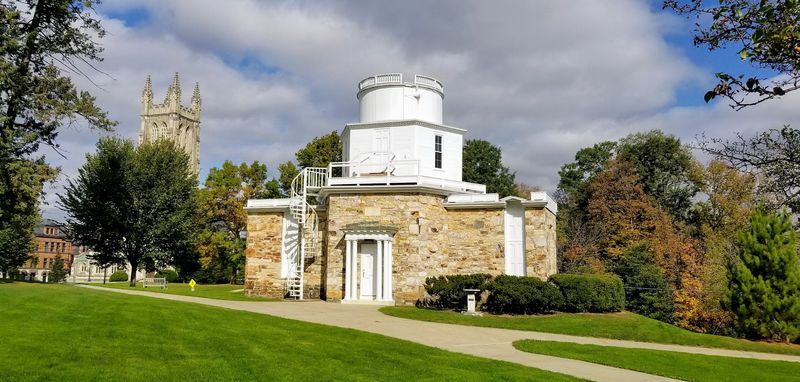
Students helped build this observatory between 1836 and 1838, long before anyone had heard of a planetarium projector. Today it holds the title of oldest existing observatory in the United States.
Professor Albert Hopkins led the project with his students. He even traveled to England in 1834 to gather astronomical equipment.
The building has been on the move, too. It was relocated in 1908 and again in 1961 to reach its current spot on the Williams College campus.
Fridays at 8 PM are the magic hour during the fall and spring semesters. The Milham Planetarium inside hosts free public shows.
A Zeiss Skymaster ZKP3/B projector runs the show. It can demonstrate moon phases, retrograde motion, star colors, and where neighboring galaxies hang out.
Retrograde motion is when planets seem to drift backward across the sky. Seeing it explained on a dome beats squinting at a textbook diagram.
History fans get the Mehlin Museum of Astronomy too. The building also keeps its original transit, a regulator with a mercury-compensated pendulum, and a rule.
Then there’s the 7-inch Alvan Clark refracting telescope from 1852. It was Clark’s first professional telescope and helped launch his famous telescope-making business.
Williamstown makes a lovely evening trip in the Berkshires. Grab dinner in town, then catch the show.
Arrive a little early so you’re seated before the lights dim. Hopkins Observatory welcomes you at 829 Main St, Williamstown, MA 01267.
6. Wilder Observatory, Amherst, MA
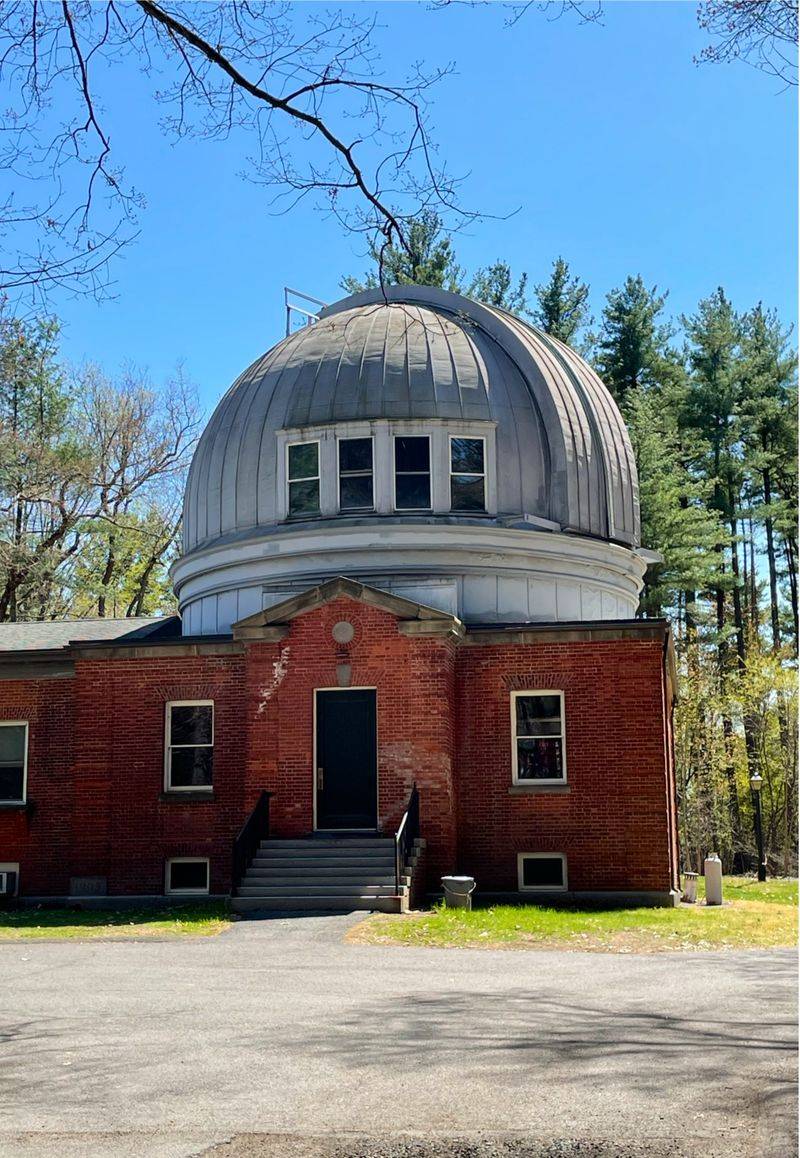
Amherst gets a double helping of astronomy on this list, and this one belongs to Amherst College. Wilder Observatory is the school’s historic home for astronomical exploration.
Historic is the key word. A campus observatory like this carries a long tradition of looking up.
Amherst College lists the observatory among its museums. That alone tells you this place deserves to be treated like a real destination.
Before you go, check the college’s schedule for any open nights or visitor events. Plans can shift with the semester and the weather, so a quick look saves surprises.
Pair it with Orchard Hill for a full Amherst astronomy adventure. Two campuses, one town, and a whole lot of sky.
College towns are great for this kind of trip. You can explore campus by day, grab a bite, and save the sky for later.
Bring a star chart app on your phone. Matching what you see overhead with names on a screen turns a quiet night into a scavenger hunt.
Kids especially love that game. Finding the Big Dipper first is a classic bragging right.
Dress in layers and toss a blanket in the trunk. Western Massachusetts evenings cool off quickly once the sun disappears.
History, science, and a dark sky make a fine trio. Look up and enjoy the show at Wilder Observatory, located at 76 Snell St, Amherst, MA 01002.
7. Smithsonian Astrophysical Observatory, Cambridge, MA
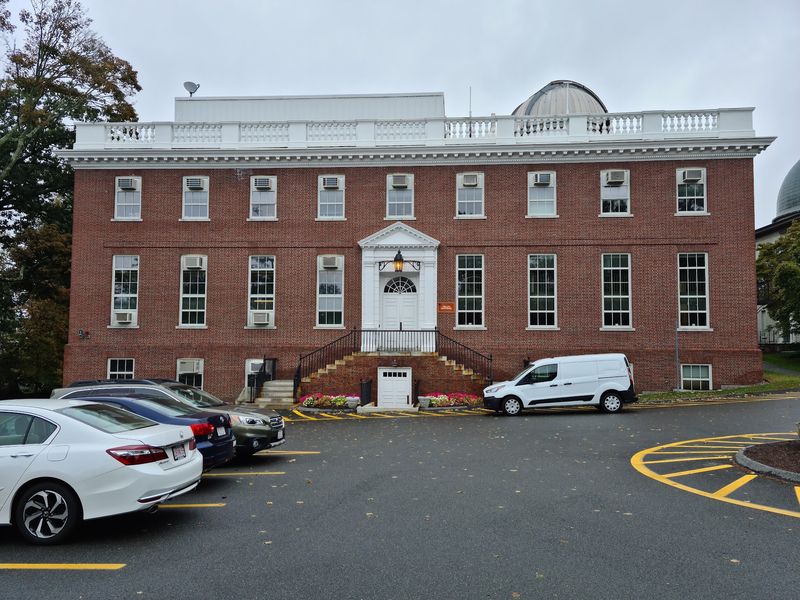
Big questions about the universe have a home base in Cambridge. The Smithsonian Astrophysical Observatory is part of Harvard’s historic observatory complex.
This place is all about discovery. A long history of amazing findings about the universe has come out of this campus.
A stargazing tour doesn’t always have to involve an eyepiece. Sometimes the thrill comes from standing where so much space science happens.
Harvard and the Smithsonian share the science here. That teamwork gives one Cambridge campus a huge reach into the cosmos.
Cambridge makes a fun day trip on its own. Walk the neighborhood, grab lunch, and save a moment for this corner of astronomy history.
Check ahead for any public talks or events before you visit. Research campuses keep busy schedules, and a little planning goes a long way.
Bring along a young space fan if you’ve got one. Seeing a real research observatory can make science feel like a job you could actually have someday.
Then take the excitement outside after dark. Even from the city, the moon and bright planets put on a dependable show.
Massachusetts has a deep bench of astronomy history, and this campus is a big part of it. It’s a great reminder that stargazing can start with a story.
Snap a photo of the building and start planning your next night under the stars. Find the Smithsonian Astrophysical Observatory at Observatory Building E, 60 Garden St, Cambridge, MA 02138.
8. Whitin Observatory
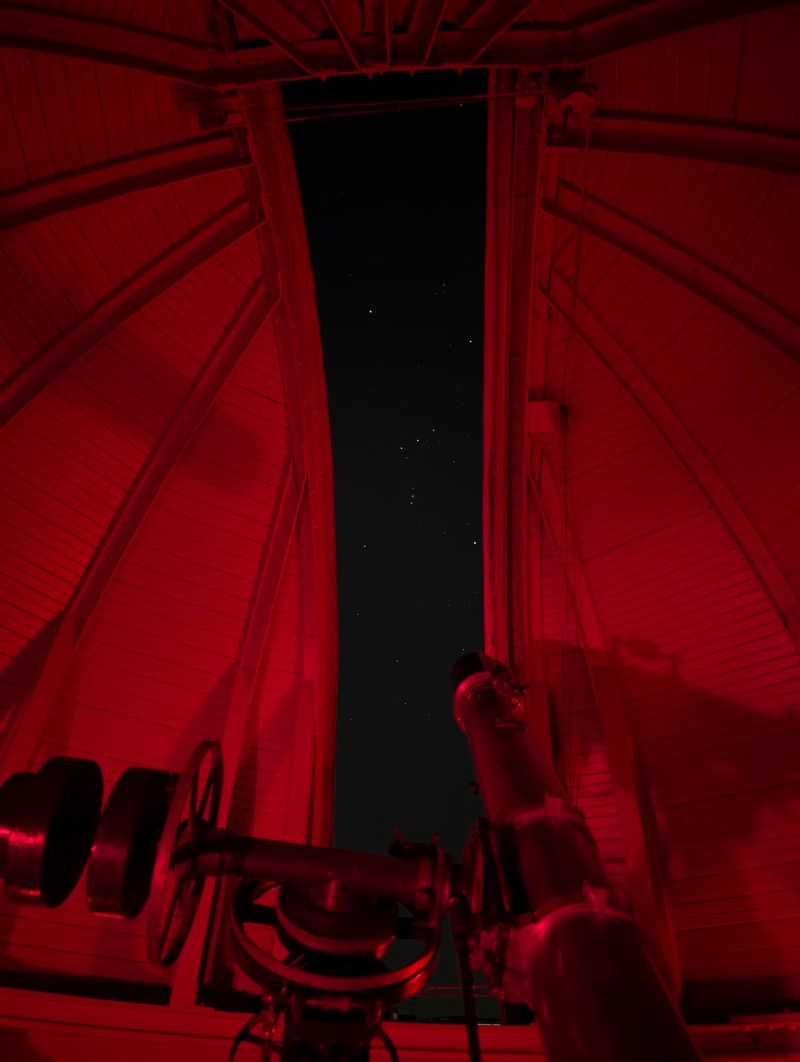
Wellesley College has been pointing telescopes at the sky since 1900, and the building still shows off its history. Whitin Observatory grew with expansions in 1906, 1966, and 2010.
About once a month during the semester, the student-run A.S.T.R.O. Club throws open the doors.
Public nights are free, which makes this a sweet deal for a family outing.
Here’s a nice twist. Events go on even when the weather won’t cooperate, though telescope viewing needs clear skies.
So a cloudy night still has plenty to offer. Expect astronomy talks, demonstrations, and hands-on crafts that keep curious minds busy.
On clear evenings, the telescope lineup steals the show. A PlaneWave 0.7-meter reflector shares space with a historic Fitz and Clark 12-inch refractor.
A Clark 6-inch refractor rounds out the classic crew. There’s even a Hale spectrohelioscope, a tool built for studying the sun’s spectrum.
Peering through a historic telescope feels a bit like time travel. Astronomers here more than a century ago aimed at the same stars you’ll see.
Park in the Davis Parking Facility and stroll over to the observatory. The short walk across campus builds the anticipation.
Kids will love the crafts, and teens might get hooked on the gear. Grown-ups get the fun of watching both happen.
Check the club’s schedule, pick a night, and bring your questions. Whitin Observatory sits on the Wellesley College campus at 106 Central Street, Wellesley, MA 02481.
9. MIT Wallace Astrophysical Observatory, Westford, MA
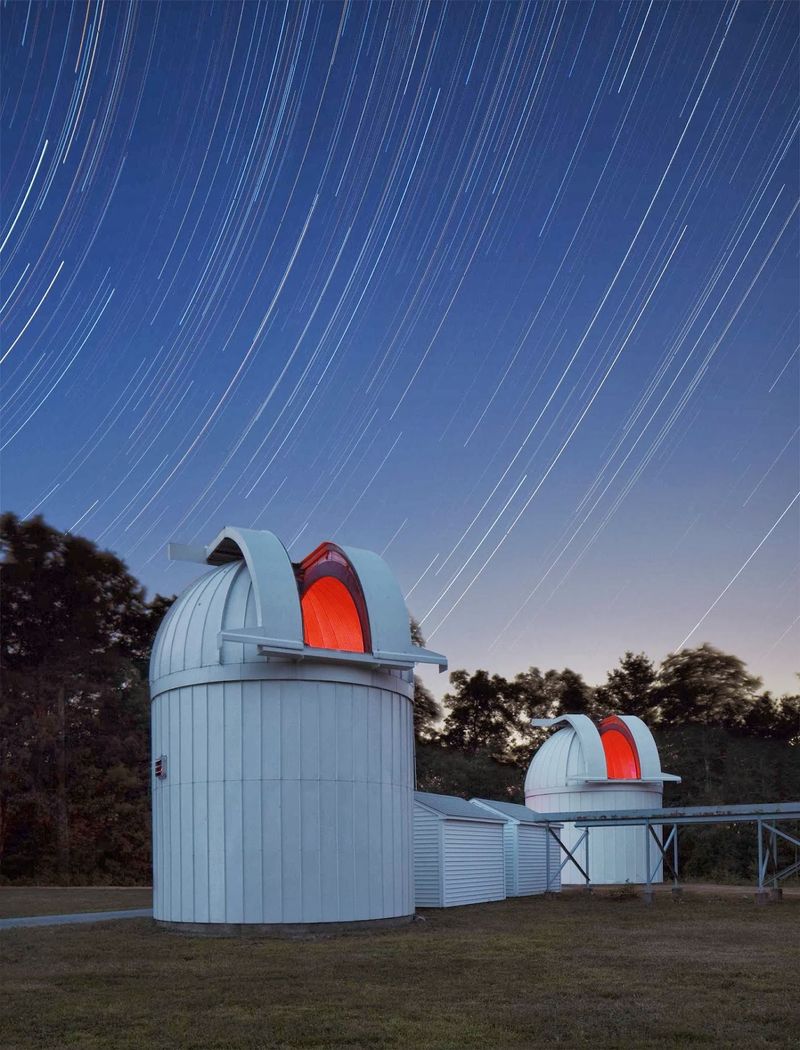
MIT’s reputation for big brains extends all the way out to the quiet roads of Westford. The MIT Wallace Astrophysical Observatory is an active site for astronomical study and observations.
That word active is the fun part. It’s a working spot where real sky-watching happens.
Westford sits northwest of Boston, away from the busiest city glow. That distance gives the stars a better shot at showing off.
The observatory welcomes kids, which is great news for young science fans. A visit could spark the kind of curiosity that lasts for years.
On-site parking makes arrival simple. Pull in, step out, and let your eyes start adjusting to the dark right away.
The site is also LGBTQ+ friendly and a transgender safe space. Everyone gets the same big sky, and that’s how it should be.
Before you go, check with the observatory about upcoming visitor opportunities. Research sites keep their own schedules, so a quick look ahead saves guesswork.
Dress for the night, not the afternoon. Evening air can feel brisk, even when the day felt mild.
Bring a notebook if you have a young astronomer in the family. Sketching the moon or a bright planet is a classic way to remember what you saw.
A red flashlight is handy too. It helps you see your path without ruining your night vision.
Set your sights on the stars and point the car toward Westford. MIT Wallace Astrophysical Observatory is located at 50 Groton Rd, Westford, MA 01886.
10. Between the Lakes, Middleborough, MA
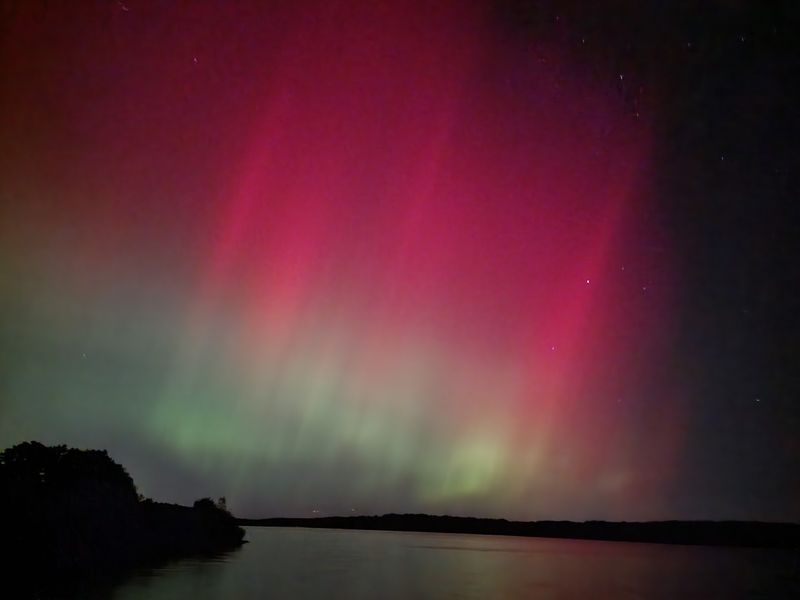
Sunsets get first billing at Between the Lakes, but the night shift deserves its own applause. This Middleborough spot is a peaceful place to sit back and watch the stars come out.
No ticket booth, no dome, no schedule to memorize. Just you, the water, and the sky.
Bring your own telescope for this one. A full moon over the lakes makes a fantastic first target for beginners.
Daytime is just as fun. Nature trails wind through the area, and anglers can drop a line at a nice fishing spot.
Photographers will want to arrive early. The scenery practically begs for pictures, especially as the sun goes down.
Early risers get a reward too. Sunrises here are just as lovely, so a dawn trip can end your stargazing night on a high note.
Pack a folding chair and a blanket. The whole point is to relax, slow down, and let your eyes adjust to the darkness.
Keep your phone screen dim once it gets dark. Faint stars pop out more easily when your eyes aren’t fighting a bright screen.
A thermos of hot cocoa makes the night even better. It’s the perfect sidekick for a slow evening.
Hike in the afternoon, fish near sunset, then look up. That’s a full day of Massachusetts outdoors in one easy trip.
Between the Lakes is waiting with open skies and quiet water. Grab your gear and head to 10-12 Long Point Rd, Middleborough, MA 02346.