
Michigan’s Most Beautiful Lake Is Famous For Its Crystal-Clear Water
How many times have you driven past a lake and found your eyes drifting toward the water instead of the road? I always assumed that kind of beauty only works from a distance.
That it loses something when you get close. It does not.
Some places look just as stunning the moment you step out of the car. Michigan holds one of those places.
A lake so impossibly clear, so saturated with color, you genuinely stop and question what you are seeing. Is this real?
Is this edited? It is neither.
It is just a place that reminds you why life is worth living. I am not going to tell you exactly where it is.
But I will tell you this: once you find it, you will understand why people keep coming back.
Water Quality And Transparency Factors
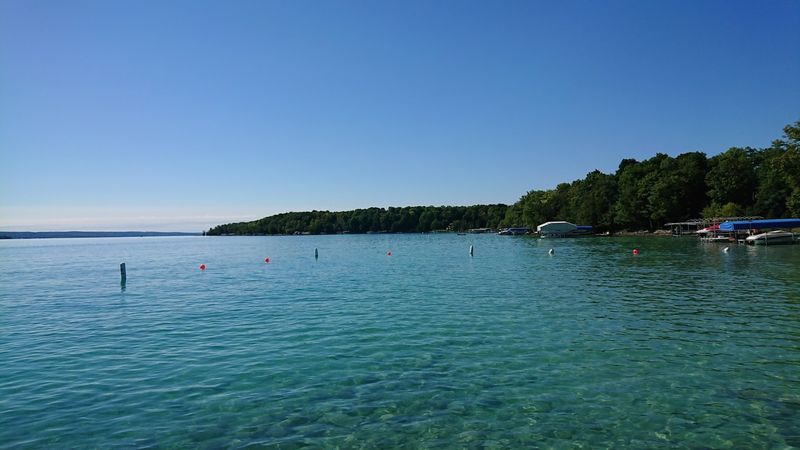
Water clarity at this lake is not an accident. The lake sits over a bed of fine white calcium carbonate sediment left behind by ancient glaciers.
That bright lakebed reflects sunlight upward, creating the signature turquoise color that shocks first-time visitors.
The lake has extremely low organic content. Fewer particles mean less cloudiness.
Visibility in the water can reach over 30 feet deep on a calm, sunny day. That kind of transparency is rare for any inland lake anywhere in the country.
Natural cold underground springs feed the lake year-round. Water temperatures from these springs range between 45 and 50 degrees Fahrenheit.
Low nutrient levels, especially low phosphorus, keep algae growth minimal.
Algae is basically the enemy of clear water. Without it, the lake stays vibrant and clean-looking all season long.
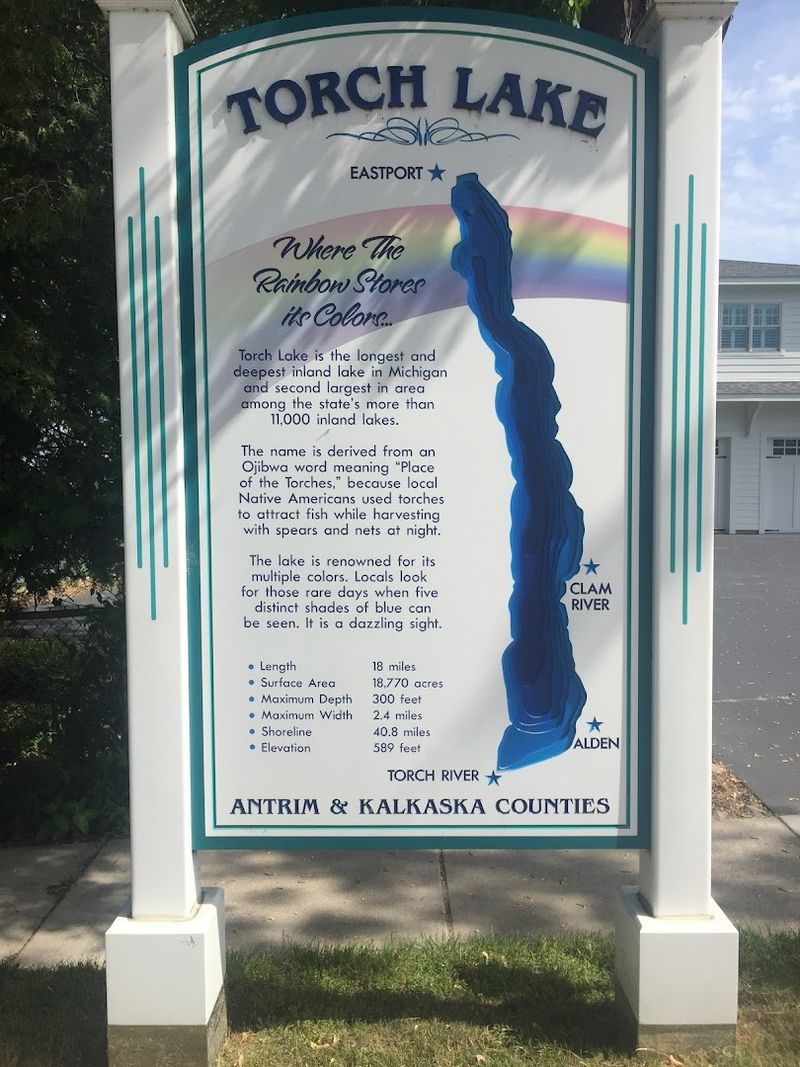
Torch Lake is also Michigan’s deepest inland lake, reaching up to 285 feet at its deepest point.
That depth allows sunlight to penetrate far below the surface. The combination of depth, white sediment, cold springs, and low nutrients creates a water quality system that is nearly impossible to replicate artificially.
You can find Torch Lake in Michigan 49648.
Wildlife In And Around The Lake
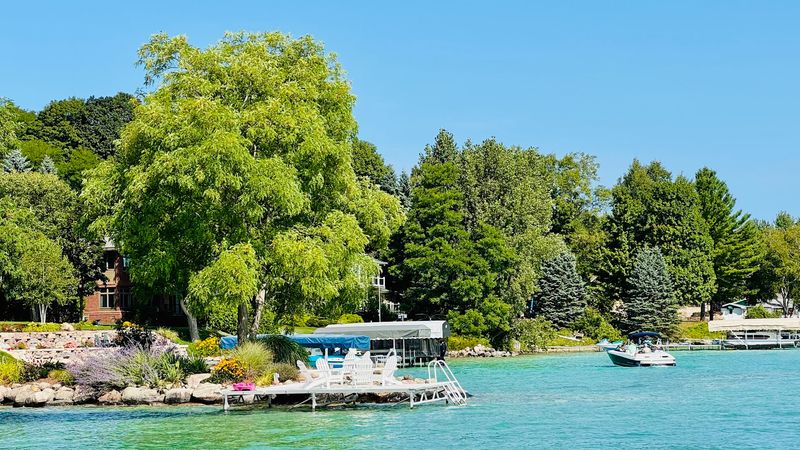
Torch Lake is alive in ways that go far beyond its famous color. The surrounding forests and shoreline support a surprisingly wide variety of wildlife.
Bald eagles are a regular sight here, soaring overhead or perching in tall pines along the water’s edge.
Great blue herons wade in the shallows near the marshy areas at the lake’s northern end. They move slowly and deliberately, hunting for small fish.
Watching one stand perfectly still for minutes at a time is oddly fascinating.
Osprey also patrol the lake regularly. They dive feet-first into the water to grab fish, which is one of the most dramatic things nature puts on for free.
Loons are another highlight, especially early in the morning when their calls echo across the water.
Below the surface, the lake supports smallmouth bass, northern pike, and lake trout. Anglers love this place for good reason.
The clear water actually makes it easier to spot fish moving through the shallows.
White-tailed deer are common along the forested shoreline, especially at dawn and dusk. Painted turtles sun themselves on logs near quieter coves.
The wildlife here is varied, active, and easy to observe from the water or the shore.
Popular Recreational Activities On The Lake

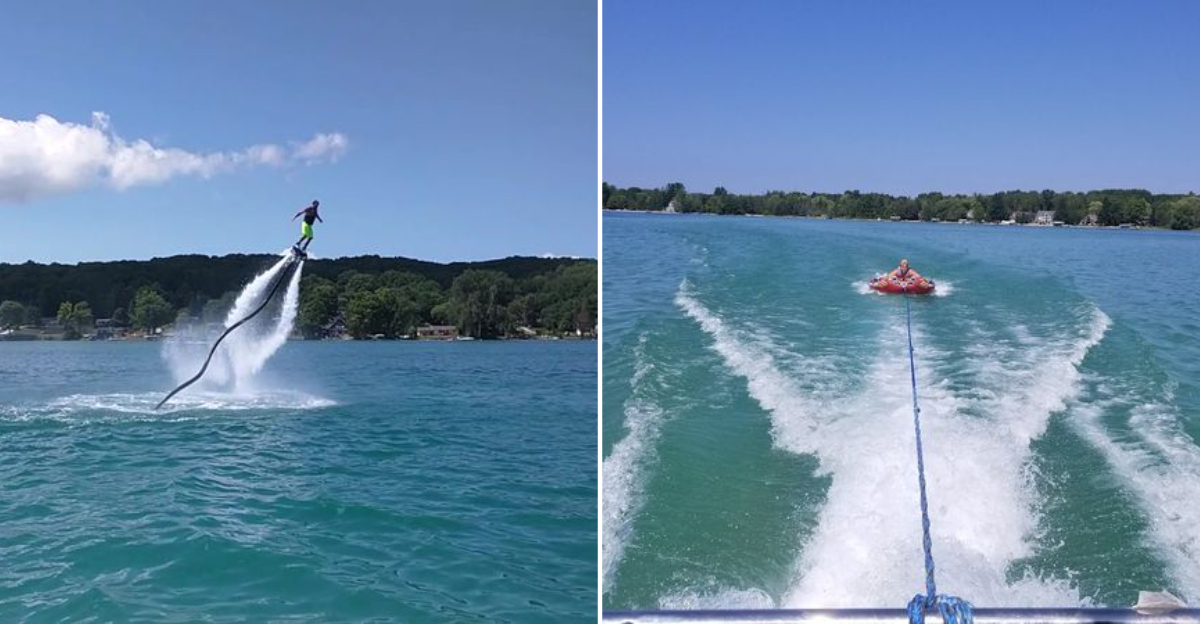
Summer on Torch Lake is basically one long outdoor party, and the activities are the main attraction. Boating is the most popular thing to do here by a wide margin.
On warm weekends, the lake fills with pontoon boats, speedboats, and jet skis moving across that impossibly blue water.
There is a famous sandbar near the southern end of the lake that becomes a social hub in summer. Boaters anchor there, hang out in the shallow water, and enjoy the sun.
It is one of the most photographed spots in all of Michigan.
Kayaking and paddleboarding have grown in popularity here, too. Both activities give you a slower, quieter way to experience the lake up close.
The calm morning hours are perfect for paddling before the motorized boats pick up.
Swimming is a must. The water is cool, clear, and refreshing in a way that most lakes simply cannot match.
Many visitors say swimming in Torch Lake feels cleaner than any pool they have ever been in.
Fishing draws a dedicated crowd throughout the warmer months. Smallmouth bass fishing in particular gets strong attention from local anglers.
Whether you are on a boat or casting from shore, the lake delivers a full recreational experience every single time.
Environmental Conservation Efforts
Keeping Torch Lake this beautiful takes real, consistent work. The Torch Lake Association has been active for decades, pushing for responsible land use and water quality protection.
Their efforts have helped maintain the lake’s legendary clarity over many generations.
Phosphorus runoff is one of the biggest threats to any freshwater lake. Fertilizers from nearby lawns and farms can wash into the water and fuel algae blooms.
Local conservation programs actively educate homeowners about reducing fertilizer use near the shoreline.
Invasive species are another concern. Eurasian watermilfoil and other non-native aquatic plants can choke a lake’s ecosystem quickly.
Monitoring programs check for new invasive species regularly to catch problems before they spread.
Shoreline development is managed carefully in the Torch Lake area. Keeping natural vegetation along the water’s edge helps filter runoff before it reaches the lake.
Buffer zones of native plants act as a natural cleaning system between land and water.
Local government and environmental groups work together on water quality testing throughout the year. Results are shared publicly so residents and visitors stay informed.
The ongoing commitment from the community is a major reason Torch Lake still looks the way it does today.
History And Formation Of The Lake
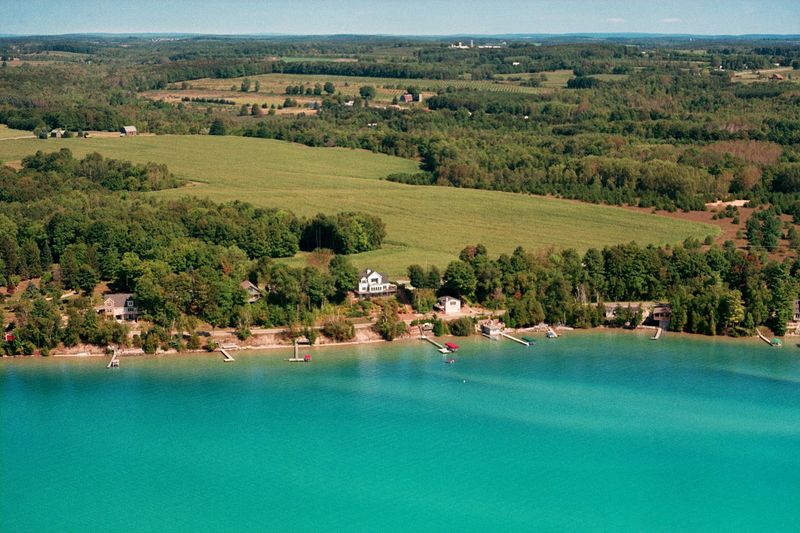
Torch Lake did not just appear on the map. It was carved out by massive glaciers during the last Ice Age, thousands of years ago.
Those glaciers moved slowly across the land, grinding down limestone bedrock and digging a deep, fjord-like basin into the earth.
When the glaciers finally retreated, they left behind fine white sediment made mostly of calcium carbonate. That sediment settled on the lakebed and has stayed there ever since.
It is the primary reason the lake floor appears so bright and reflective.
The name Torch Lake comes from the Odawa people, who originally called it something meaning lake of the torch or torches. Early French explorers and fur traders passed through this region in the 1600s and 1700s.
The area around the lake was used for fishing and travel long before European settlement.
The lake connects to the Chain of Lakes, a series of connected waterways in Antrim County. This chain links Torch Lake to Clam Lake and several others via rivers and channels.
The Clam River contributes roughly 72 percent of the lake’s water supply.
Torch Lake was officially recognized by National Geographic as one of the most beautiful lakes in the world. That recognition brought international attention to a place locals had treasured for generations.
Impact Of Seasonal Changes On Water Clarity
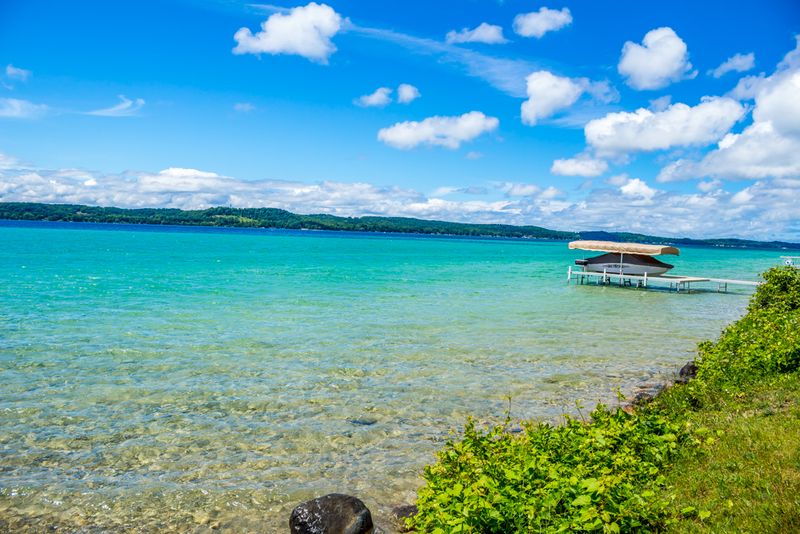
Seasonal shifts affect Torch Lake in ways that are both dramatic and fascinating. Summer brings the most famous version of the lake.
Warm sunlight hits the white calcium carbonate lakebed and bounces back up, creating that vivid Caribbean-blue color that floods every social media feed.
Spring snowmelt can temporarily reduce clarity as runoff carries sediment and organic material into the water. However, the lake recovers quickly because of its natural filtration systems and low baseline nutrient levels.
Within a few weeks, the clarity returns to its impressive standard.
Fall is genuinely underrated on Torch Lake. The surrounding hardwood forests explode into orange, red, and gold.
The reflection of autumn colors on the calm water surface creates a completely different kind of beauty than summer offers.
Winter transforms the lake into something almost otherworldly. Ice covers the surface by late December in most years.
Ice fishing becomes popular, and the frozen lake takes on a quiet, glassy stillness that feels completely removed from the summer crowds.
Water temperature plays a role in clarity, too. Colder water holds less algae-feeding nutrients in suspension.
The cold underground springs that feed the lake help maintain low temperatures even during peak summer, which supports consistent clarity throughout the warmer months.
Local Flora Surrounding The Lake
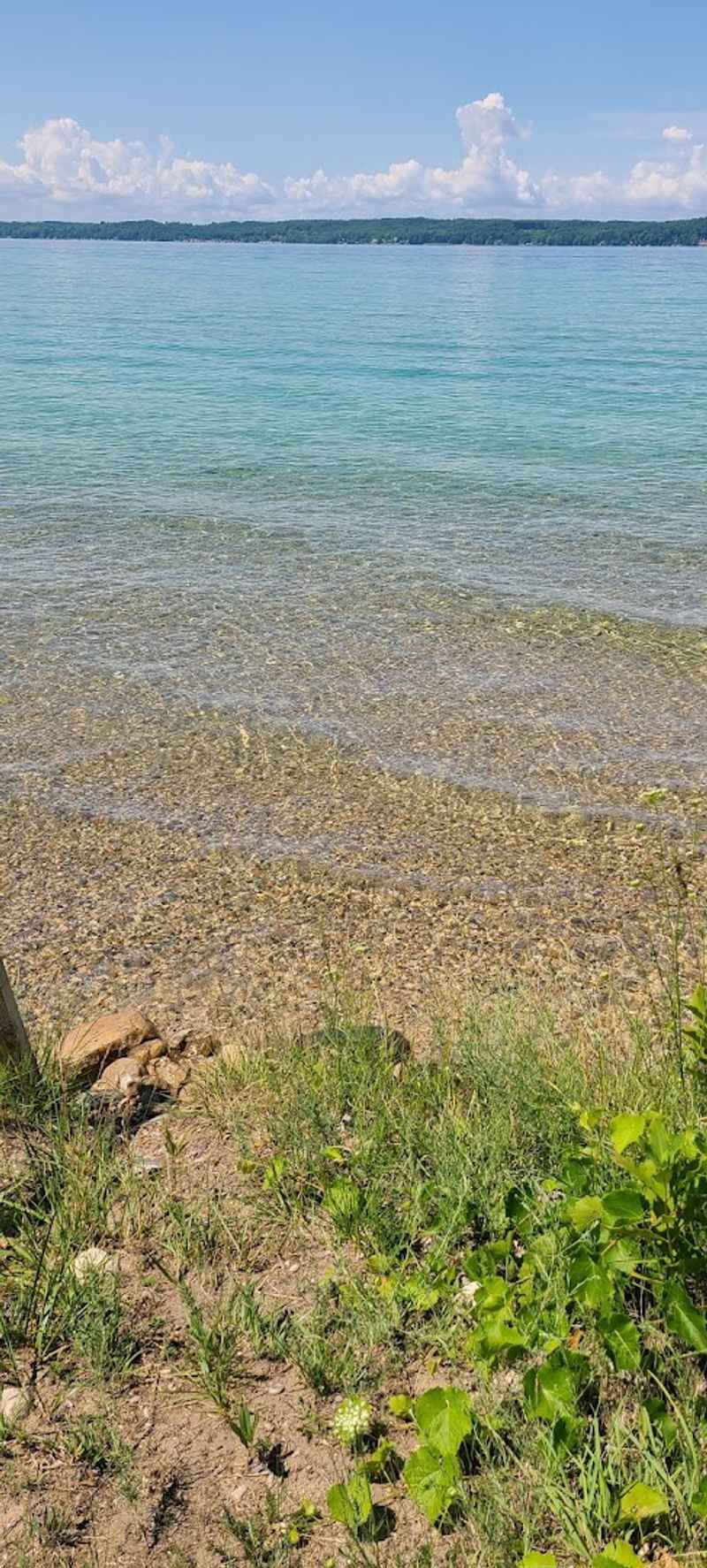
The plant life around Torch Lake is as much a part of its identity as the water itself. White birch trees are everywhere along the shoreline, their pale bark standing out against the deep greens of summer.
They add a distinctly northern Michigan character to the landscape.
Sugar maples are dominant in the surrounding forests. They are the reason the fall color season here is so spectacular.
When those leaves turn, the whole shoreline lights up in warm reds and oranges that reflect beautifully on the water.
Native wildflowers grow in open meadows and along forest edges near the lake. Wild bergamot, black-eyed Susans, and native ferns are common sights during the warmer months.
These plants support local pollinators and contribute to the overall health of the shoreline ecosystem.
Aquatic plants in the shallows include native species like water lilies and cattails. These plants provide habitat for fish, frogs, and nesting birds.
Healthy native aquatic vegetation is a good sign that the lake’s ecosystem is functioning well.
Conservation groups actively work to maintain native plant buffers along the shoreline. Removing invasive plants and replacing them with native species helps protect water quality.
The plant life here is not just pretty. It is doing real ecological work every single day.
Tourist Attractions Near The Lake
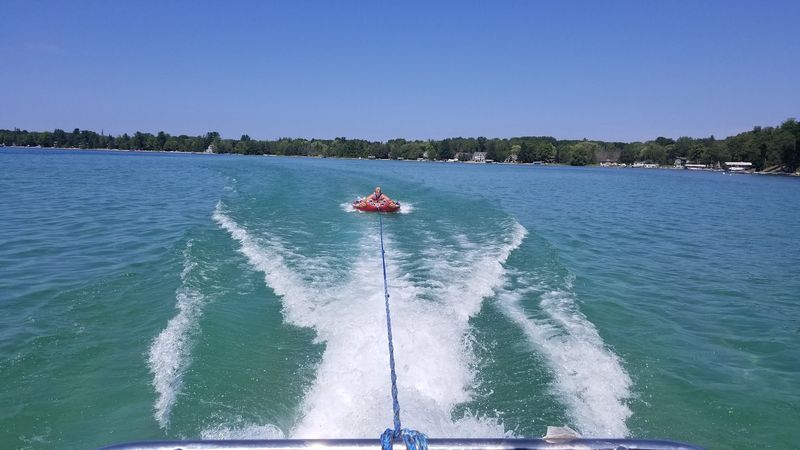
Torch Lake sits in one of the most visitor-friendly corners of northern Michigan. The nearby town of Elk Rapids is a short drive away and offers waterfront dining, local shops, and a charming small-town atmosphere worth exploring.
It sits right on Grand Traverse Bay, which adds another layer of stunning water views.
Traverse City is about 30 miles south and is one of Michigan’s most popular destinations. It is known for its food scene, and the National Cherry Festival is held every July.
A day trip from Torch Lake to Traverse City is very easy and very worthwhile.
The Chain of Lakes Water Trail connects Torch Lake to a series of other lakes and rivers. Paddlers and boaters can travel significant distances through this linked waterway system.
It is one of the best ways to explore the broader region at a relaxed pace.
Antrim County has several state forests and hiking trails nearby. The Jordan River Valley, just east of the lake, offers some of the best backpacking terrain in the Lower Peninsula.
The scenery along the Jordan River corridor is genuinely stunning in every season.
Shanty Creek Resorts in nearby Bellaire provides golf, skiing, and spa services year-round. It is a full-service resort that caters to visitors who want comfort alongside outdoor adventure.
The whole area around Torch Lake rewards exploration in every direction.