
8 New Mexico Ghost Towns Packed With Fascinating History Most Tourists Never See
History gets a lot more exciting when it comes with creaky doors, dusty streets, and the feeling that the past might still be hanging around. New Mexico has plenty of places where old boomtown dreams did not exactly go quietly.
Silver strikes, railroad hopes, and desert grit once pulled people into these towns with big plans and bigger ambition. Then the crowds left, the buildings weathered, and the stories stayed behind.
That is what makes these ghost towns so fascinating. They are not polished museum pieces.
They are rugged, strange, beautiful reminders of lives built fast and abandoned faster. You get ruins, legends, old storefronts, desert silence, and the kind of history that feels almost too cinematic to be real.
If you love your adventures with a little dust and a lot of atmosphere, this list is ready to haunt your itinerary.
1. Shakespeare Ghost Town
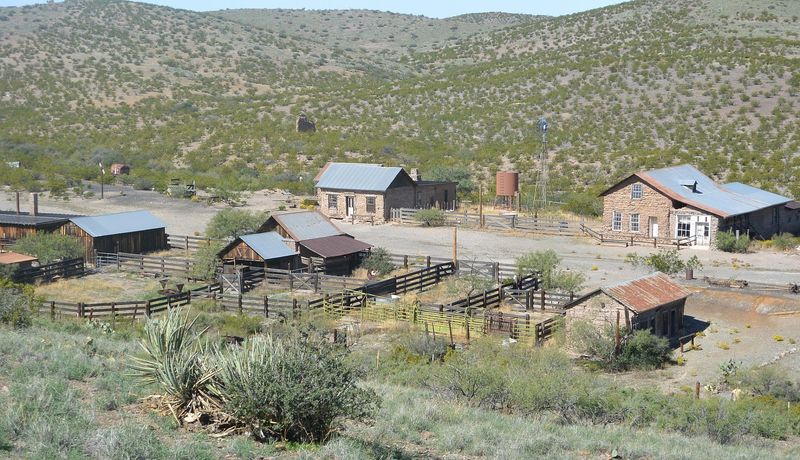
Few ghost towns in the American West have a backstory as dramatic as Shakespeare. Once a booming silver mining camp in the 1870s, this place attracted outlaws, prospectors, and dreamers chasing fortune in the New Mexico desert.
Notorious figures like Billy the Kid and Russian Bill reportedly walked these very streets, and that alone is enough to make your imagination run wild.
Today, Shakespeare is privately owned and carefully preserved by the Hill family, who have dedicated decades to maintaining its authenticity. You can visit at 92 Ghost Town Rd, Lordsburg, NM 88045, where guided tours run daily at 10am, 12pm, and 3pm.
Calling ahead is strongly recommended since tour availability can vary by season.
During the tour, you will walk through original buildings that have barely changed since the 1880s. The old stage stop, assay office, and general store all still stand, and the guides share vivid stories that bring the town back to life.
You get a real sense of what frontier existence actually felt like, without the polish of a museum exhibit.
Shakespeare went through several booms and busts tied directly to silver and gold prices. At its peak, the town had hotels, saloons, and a population eager to strike it rich.
When the ore ran out, people simply packed up and left, leaving behind an eerie but remarkably intact snapshot of the 1800s.
One of the most fascinating details is that two men were reportedly hanged from the rafters of the old grant house on the property. The guides share this and other gritty stories with enough detail to keep you hooked from start to finish.
Shakespeare is truly one of New Mexico’s most rewarding historical stops.
2. White Oaks
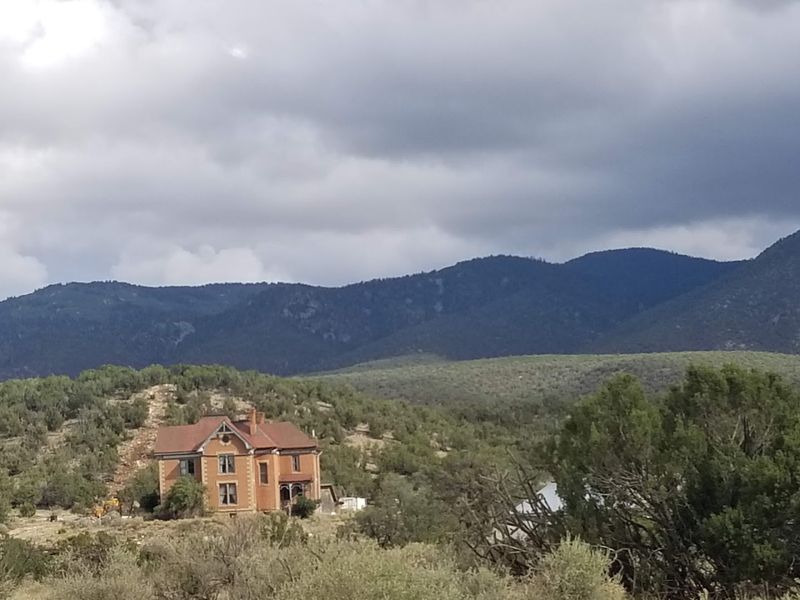
Gold changed everything in White Oaks. When prospectors struck it rich in 1879, this small patch of New Mexico territory transformed almost overnight. It became a thriving mining town with thousands of residents, schools, newspapers, and even a brief bid to become the state capital.
That kind of ambition does not fade quietly, and the ruins left behind reflect just how big White Oaks once dreamed.
Located along White Oaks Rd, White Oaks, NM 88301, the townsite is accessible year-round. You can wander the area daily, and if you time your visit right, the old saloon opens on Fridays through Sundays.
That building alone holds more stories per square foot than most history books could contain.
Exploring White Oaks feels like flipping through a photo album where someone forgot to add captions. Crumbling stone buildings, old homestead foundations, and weathered wooden structures sit scattered across the landscape in various states of decay.
Each one invites you to wonder about the people who built it and what they hoped to find here.
The town declined sharply when the El Paso and Northeastern Railroad chose a different route, bypassing White Oaks entirely. Without rail access, businesses dried up and families moved on.
It is a reminder of how closely tied prosperity once was to infrastructure decisions made by people far away.
New Mexico has dozens of ghost towns, but White Oaks stands out because of the sheer scale of what it once was. The No Scum Allowed Saloon is a local landmark that adds a lively counterpoint to all the ruins around it.
Plan a weekend visit so you can catch it open and talk to locals who keep this remarkable history alive.
3. Lake Valley
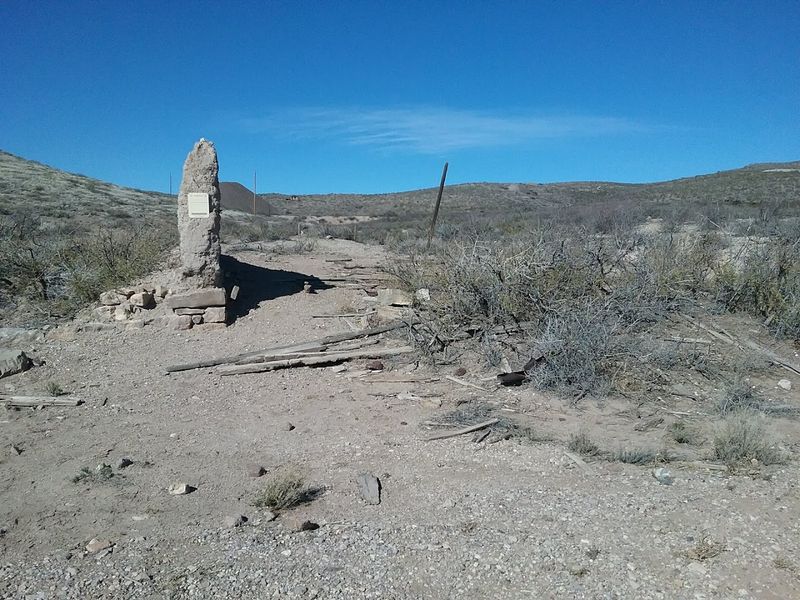
Lake Valley is the kind of place that makes you stop and stare. Set in the southern New Mexico desert, this former silver boomtown once produced remarkably rich ore.
During the 1880s, a single room in the Bridal Chamber mine reportedly yielded over a million dollars worth of silver in just a few years. That is not legend. That is documented history, and it makes Lake Valley genuinely remarkable.
The townsite is managed by the Bureau of Land Management and sits along Lake Valley Rd, Hillsboro, NM 88042. It is open Thursday through Monday from 9am to 4pm, making it easy to work into a road trip through the Black Range region.
The small chapel that still stands on the property is one of the most photographed structures in all of southern New Mexico.
Ore veins in this area were so pure that miners sometimes pulled out chunks of almost solid silver. The boom attracted hundreds of workers and their families, and the town quickly developed saloons, a school, and multiple businesses.
When the silver ran out and prices dropped, the departure was swift and the silence that followed was total. You can explore the remaining structures at your own pace, which gives the visit a reflective, unhurried quality.
The landscape around Lake Valley is stark and beautiful, with wide open desert views that stretch in every direction. It is easy to understand why people came here full of hope.
New Mexico preserves places like Lake Valley because they represent real chapters of American economic and social history. The self-guided tour materials available on-site give you enough context to fully appreciate what you are seeing.
Lake Valley rewards curious visitors who take time to look closely.
4. Chloride
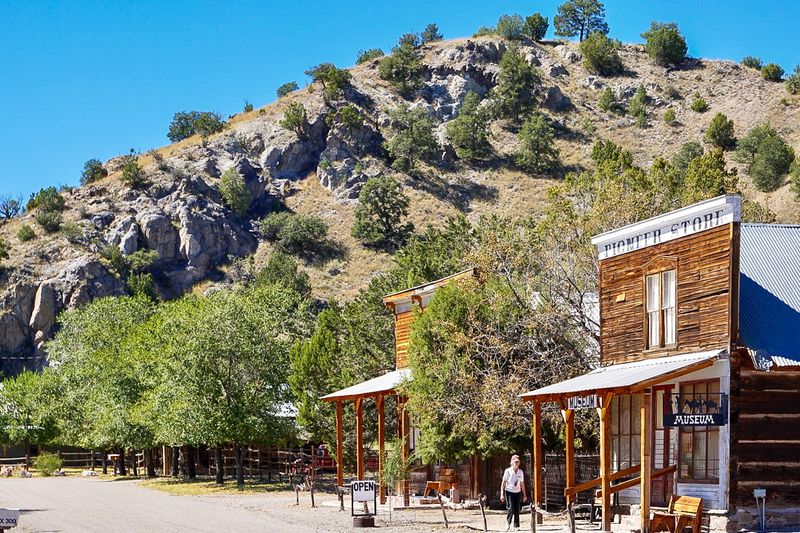
Chloride has a stubborn kind of charm. Named after silver chloride ore discovered here in 1879, this small New Mexico mining town refused to disappear after the mines gave out.
A handful of residents still live here, and the Pioneer Store Museum offers a personal connection to the past that larger sites rarely match.
You can find Chloride along Forest Road 226, Chloride, NM 87939, about two miles southwest of Winston via NM-52 from I-25 Exit 83. The Pioneer Store Museum is open daily from 10am to 4pm, and the experience inside is unlike anything you will find at a polished heritage center.
Original merchandise, tools, and household items from the late 1800s remain in place, creating a frozen-in-time atmosphere.
At its height, Chloride had a population of around 3,000 people and supported multiple businesses, a post office, and a school. The town even published its own newspaper.
When silver prices collapsed following the repeal of the Sherman Silver Purchase Act in 1893, Chloride lost most of its population within a few years. What makes Chloride special is the human scale of it all. You are not looking at exhibits behind glass.
You are standing in a real place where real families once lived, argued, celebrated, and struggled. That immediacy is what separates Chloride from more commercialized historical stops.
The surrounding Black Range mountains give the drive to Chloride a scenic quality that adds to the overall experience. New Mexico roads through this area pass through rugged, beautiful terrain that feels far removed from the modern world.
Chloride earns its place on any serious ghost town itinerary without trying too hard.
5. Mogollon
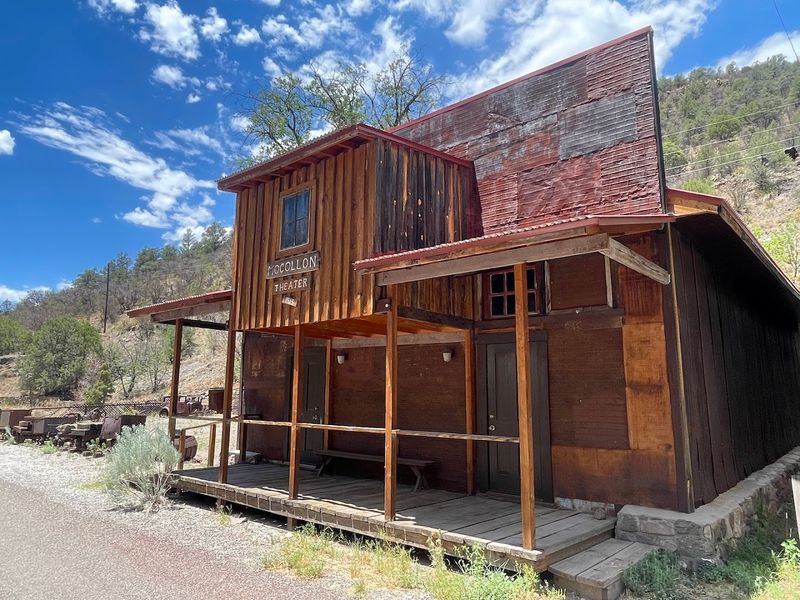
Getting to Mogollon is half the adventure. High in the rugged Mogollon Mountains of Catron County, this remote ghost town requires a narrow, winding drive along NM-159.
The payoff at the end of that road is a strikingly well-preserved mining town that most New Mexico visitors never make the effort to find.
Located on NM-159 (Bursum Road) in Catron County, NM 88039, about nine miles east of US-180 near Glenwood, Mogollon is accessible year-round.
The museum and small shops open Fridays through Sundays from May through October, giving you the richest visit during that window. Outside those hours, the town is still worth seeing for its architecture and mountain setting alone.
Silver and gold were discovered here in the 1870s, and Mogollon eventually grew into a significant mining operation. At its peak, the area produced millions of dollars in ore and supported a lively community complete with hotels, a newspaper, and churches.
Floods, fires, and eventually the exhaustion of ore deposits brought the boom to an end, though the town never fully vanished.
The setting is genuinely dramatic. Buildings cling to steep canyon walls, and the forest presses in close on all sides.
Nature seems to be reclaiming what people once carved from the wilderness, creating something both melancholy and beautiful.
New Mexico has few places that feel as remote and raw as Mogollon. If you are the kind of traveler who prefers discovery over convenience, this is exactly the type of destination that will stay with you long after the drive home.
Pack water, wear good shoes, and take your time.
6. Madrid
Madrid defies easy categories. Once a coal mining town for the Santa Fe Railroad, it fell so silent by the 1950s that the whole town was put up for sale. Artists and free spirits arrived in the 1970s, turning Madrid into one of New Mexico’s most unusual success stories.
Situated along NM-14, Madrid, NM 87010, on the Turquoise Trail about 25 miles south of Santa Fe, the town is open year-round with businesses operating daily. You will find galleries, studios, a live music venue, and shops occupying buildings that once housed miners and their families.
The bones of the original coal camp are still visible beneath the colorful paint and creative signage. The Turquoise Trail itself is a designated National Scenic Byway, and Madrid sits at one of its most compelling stops.
Driving through on a weekend means encountering artists selling their work alongside residents who have built entire lives around this improbable revival. The energy is relaxed but genuinely vibrant.
What makes Madrid historically interesting is its company town origins. The Albuquerque and Cerrillos Coal Company once owned every building and structure in town.
Workers paid rent to the company, bought from the company store, and lived entirely within a system their employer controlled. That history adds depth to what might otherwise seem like a simple arts community.
The old mine shaft and original tipple structure are still visible near the edge of town, grounding the creative present in a gritty industrial past. Madrid rewards visitors who look past the galleries to notice the layers of history underneath.
It is genuinely unlike any other stop on the Turquoise Trail.
7. Hillsboro
Hillsboro moves at its own pace, and that is exactly what makes it worth stopping for. Located in the Black Range foothills along NM-152 in Hillsboro, this former mining town still has original 1880s buildings in various states of preservation.
The main street feels like a place where time slowed down and simply forgot to speed back up.
Gold was discovered nearby in 1877, and Hillsboro quickly became the seat of Sierra County and a center of regional commerce. Courthouses, hotels, and general stores filled the small valley, and for a few decades the town hummed with activity.
When the ore played out and the county seat moved to Truth or Consequences, Hillsboro settled into a quiet existence that persists to this day. A small number of residents still live here, giving Hillsboro a lived-in quality that pure ghost towns lack.
You can visit the Black Range Museum, browse a handful of shops, and get a meal at the local diner on weekends. The combination of authentic history and just enough present-day life makes for a visit that feels grounded rather than theatrical.
The surrounding landscape is stunning. The Black Range mountains rise dramatically to the west, and the drive along NM-152 through Emory Pass is one of the most scenic routes in all of New Mexico. Pairing a Hillsboro visit with that drive makes for a full and rewarding day.
Hillsboro also hosts an annual Apple Festival each fall that draws visitors from across the state and beyond. But even outside festival season, the town holds its own.
The quiet streets and well-preserved storefronts tell a story of persistence and community that is genuinely moving to witness in person.
8. Kingston
Kingston was once the largest city in New Mexico Territory, and that fact alone should stop you in your tracks. At its silver mining peak in the 1880s, this remote mountain town had over 7,000 people, dozens of saloons, and huge ambition.
Today, only a tiny handful of residents remain among the scattered original buildings that still stand in the Black Range wilderness.
You will find Kingston along NM-152, Kingston, NM 88042, about 18 miles west of Hillsboro deep in the mountains. The town is accessible year-round, and you can explore the surviving structures on your own time.
There are no gates or admission fees, just open roads and a landscape that rewards patient, observant visitors willing to look carefully.
The silver discovered here in 1882 triggered one of the fastest population explosions in territorial New Mexico history. Merchants, entertainers, and laborers poured in from across the country.
The famous frontierswoman Sadie Orchard reportedly ran a stagecoach line serving Kingston and nearby towns during this period. That adds a layer of colorful human history to an already remarkable story.
When silver prices collapsed in 1893, Kingston lost the vast majority of its population almost overnight. Buildings were abandoned, businesses shuttered, and the mountain reclaimed its silence.
A few determined residents stayed on, and their descendants and successors still maintain a quiet presence in the valley today.
The drive to Kingston through the Black Range is breathtaking in every season. Tall pines, dramatic canyon views, and the occasional deer sighting make the journey as memorable as the destination.
Kingston is the kind of place that makes you grateful New Mexico still has corners this wild and this honest about its past.
So grab your map, charge your camera, and let these New Mexico ghost towns prove that the past still knows how to put on a pretty great show.