
New York Has The Oldest Thoroughbred Racetrack In America And The Town Around It Treats August Like A National Holiday
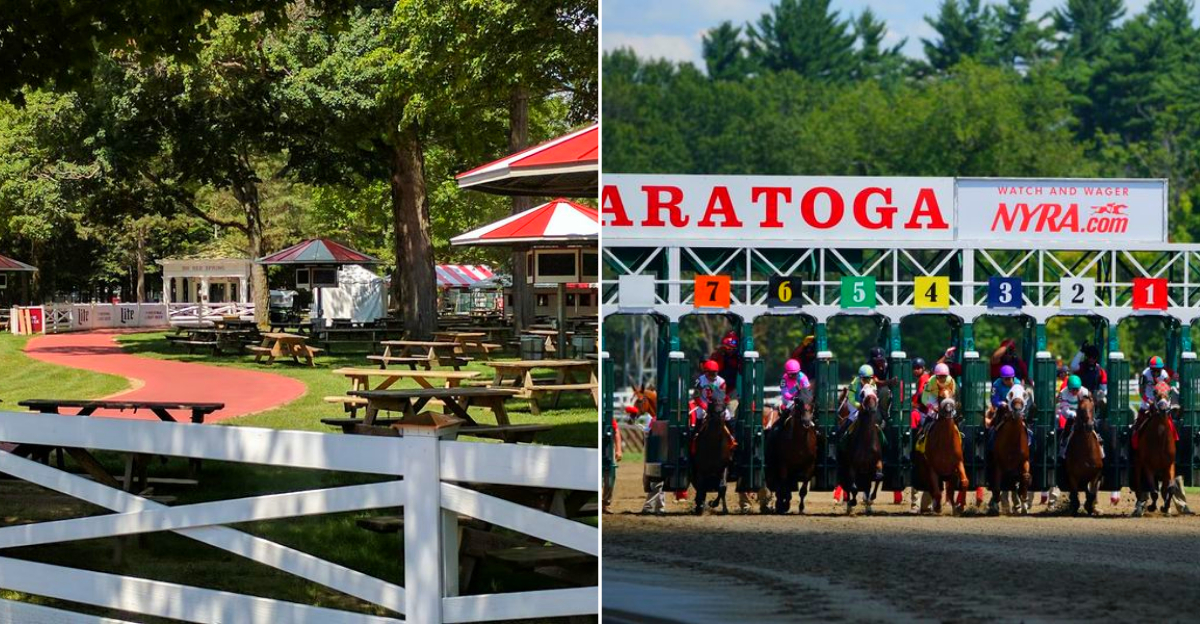
August has a special sound in this New York town: hoofbeats, crowd noise, porch conversations, dinner reservations, and the buzz of a place that knows its biggest season has arrived.
The racetrack at the center of it all has been drawing fans since 1863, making it the oldest thoroughbred racetrack in America and one of the most storied sporting landmarks in the country.
But the magic does not stay inside the gates. The racing season here turns into a full-town celebration, with packed restaurants, lively streets, historic hotels, morning workouts, fancy hats, and generations of visitors who treat the trip like an annual tradition.
It feels elegant, energetic, and proudly old-school without becoming stiff. Spend one August day here, and you start to understand why people do not just attend the races. They return to them.
A Place Where History Runs At Full Speed
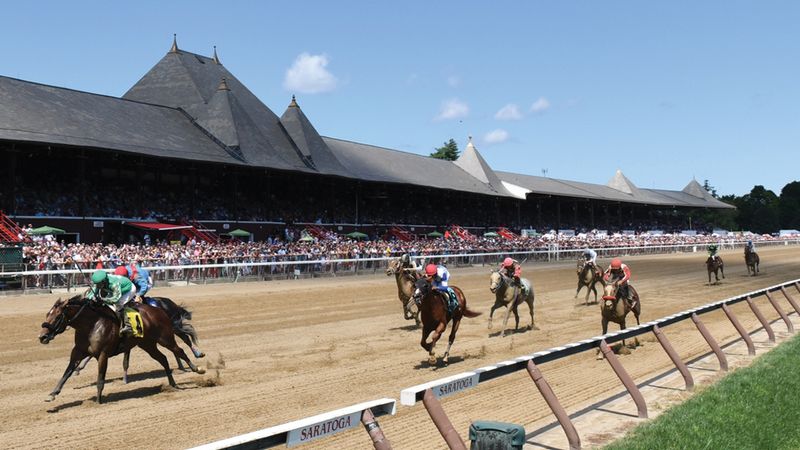
Not every sporting venue earns a nickname, but fewer still earn two. Saratoga Race Course is known as both the Graveyard of Champions and the House of Upsets, titles that carry real weight in the thoroughbred world.
Legends like Secretariat, Man o War, and American Pharoah all faced surprising losses here, which tells you something remarkable about this track.
The first official race card was organized on August 3, 1863, at the Oklahoma Track nearby.
The current grounds formally opened on August 2, 1864, making it the oldest continually operating thoroughbred racetrack in the United States and the oldest major sporting venue in the country. That is not a small claim.
The man behind it all was John Morrissey, a former bare-knuckle boxing champion who had the vision to build something lasting. He partnered with investors like William R.
Travers and Leonard Jerome to make it happen. Over 150 years later, the track still draws massive crowds every summer.
Brief closures occurred in 1896, 1911 to 1912, and 1943 to 1945, but Saratoga always came back stronger. History does not just live here. It races here.
Where The Legend Lives At Union Avenue
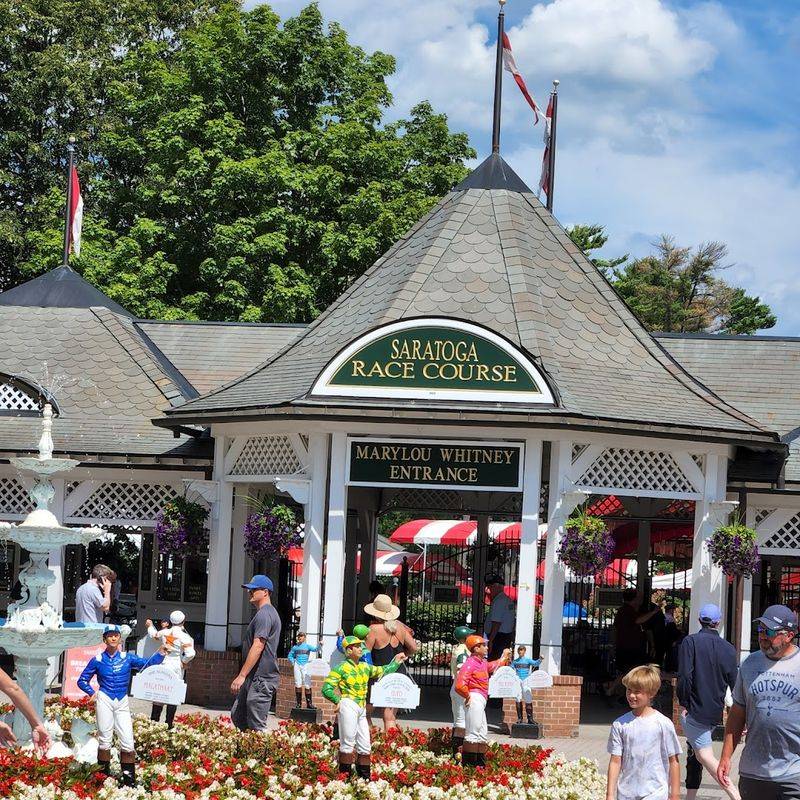
Pull up to 267 Union Avenue in Saratoga Springs, NY 12866, and the first thing you notice is how unhurried everything feels for a place that has been running at full speed for over 160 years.
The wooden grandstands greet you with Victorian charm, and the red and white striped canopies overhead give the whole property a festive, timeless look that no modern stadium could replicate.
The grounds spread across 350 acres and include hundreds of buildings, some of which date back to the original 1864 construction. The Clubhouse with its turreted roof stands as one of the most photographed structures on the property.
Every corner of this place has a story attached to it.
Racing runs six days a week from mid-July through Labor Day, with gates opening at 7 AM on most days. General admission tickets start at around $8 before fees, making it surprisingly accessible for such a legendary venue.
The track holds a 4.6-star rating across thousands of visitors, and it earned every fraction of that score. You can reach the track by phone at 518-584-6200 or visit nyra.com/saratoga for schedules and ticketing information.
August In Saratoga Springs Is Its Own Kind Of Holiday
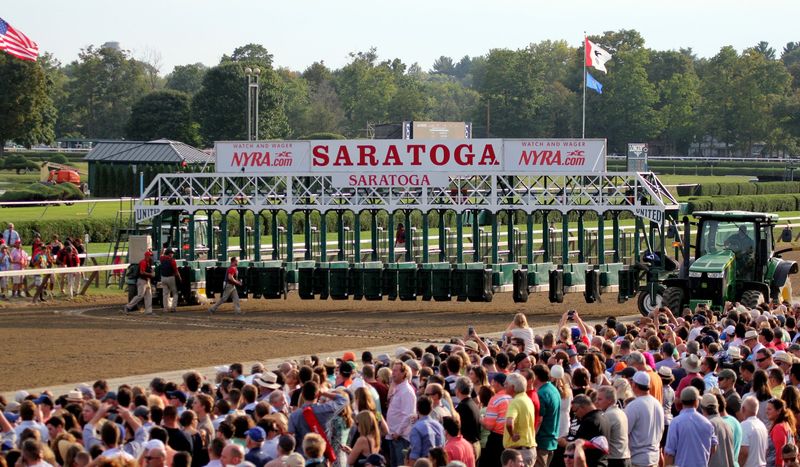
Saratoga Springs does not simply host a racing season. It transforms entirely.
Locals call it The Season, spoken with the kind of reverence usually saved for major holidays. Every shop, restaurant, and sidewalk in town feels electric from mid-July straight through Labor Day weekend.
The Saratoga Performing Arts Center, known as SPAC, hosts concerts and performances throughout August that complement the racing schedule perfectly.
The Saratoga Farmers Market runs steadily through the summer, giving visitors a chance to explore the town beyond the track.
Cultural festivals pop up regularly, layering the calendar with reasons to linger a little longer.
There is a genuine community spirit here that sets Saratoga Springs apart from other racing destinations. Residents do not just tolerate the influx of summer visitors.
They celebrate alongside them. The town has built its identity around August in the same way other cities build around their biggest annual traditions.
New York has no shortage of world-class destinations, but Saratoga Springs during racing season offers something uniquely warm, festive, and impossible to replicate anywhere else in the state.
Come for the races, stay because the town will not let you leave without one more reason to return.
The Travers Stakes: America’s Oldest Major Race Still Running Strong
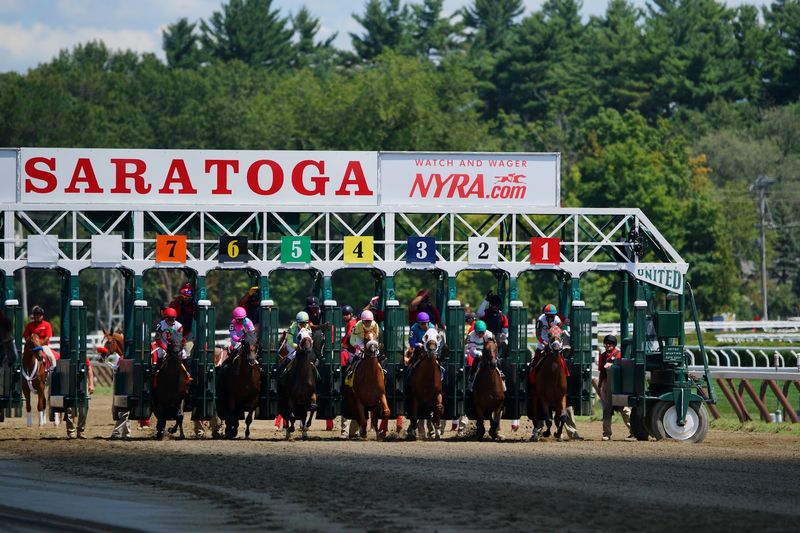
Since 1864, one race has anchored the Saratoga calendar above all others. The Travers Stakes holds the distinction of being the oldest major thoroughbred race in the United States, and it has called Saratoga home since its very first running.
That kind of continuity is extraordinary in any sport.
Named after William R. Travers, one of the original investors in the track, the race draws some of the finest three-year-old thoroughbreds in the country each year.
Saturdays and Sundays during stakes races bring the largest crowds of the entire meet, and Travers Day is the peak of the peak. The energy in the grandstands on that afternoon is genuinely electric.
A typical racing day at Saratoga can feature up to twelve races, giving fans plenty of action from early afternoon onward. Betting windows and self-service machines are spread throughout the property, and the NYRA app allows wagering directly from your phone.
For first-time visitors, Wednesday and Thursday tend to offer a more relaxed experience before the weekend crowds arrive.
However you choose to experience it, the Travers Stakes is the kind of race that reminds you why thoroughbred racing has captivated audiences for over a century and a half.
Morning Workouts And Mist: A Ritual Worth Waking Up For
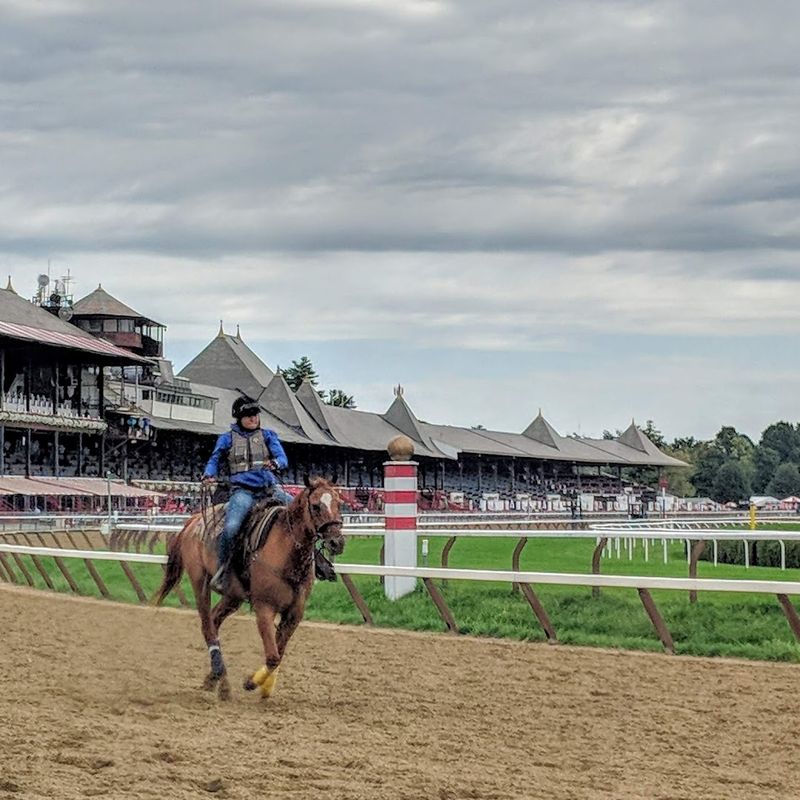
Most people think the races are the main event at Saratoga. Regulars know better.
The Oklahoma Training Track comes alive well before noon, and the morning workout session is one of the most quietly spectacular free experiences the track offers. Watching a thoroughbred move at full stride through a soft morning mist is something that stays with you.
The Whitney Viewing Stand at the Oklahoma Track gives visitors a prime vantage point to observe horses during their morning conditioning runs.
Gates open at 7 AM, and the track offers a program called Breakfast at Saratoga that lets visitors arrive before 11 AM to take in the sights and sounds without race-day crowds.
It is unhurried, peaceful, and genuinely memorable.
The track is often described as the most classic racecourse in the country, set among the pines and beautiful to the eye. That description holds up perfectly in the morning hours when the grandstands are quiet and the horses are doing what they were bred to do.
Trainers, jockeys, and stable hands move with purpose around the grounds, and the whole scene feels like a behind-the-scenes look at a world most people never get to witness. Early risers are richly rewarded here.
The Big Red Spring And The Backyard Picnic Tradition
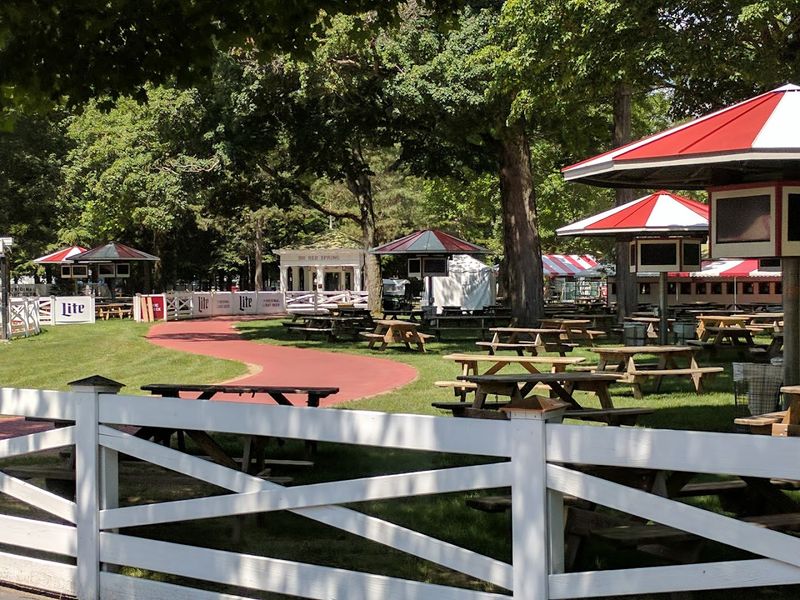
Right in the middle of the backyard picnic area sits a natural mineral spring with a name that carries enormous meaning in thoroughbred racing history.
The Big Red Spring was named to honor both Man o War and Secretariat, two of the sport’s most celebrated horses, both of whom carried the Big Red nickname during their careers.
Finding a natural spring on a racetrack property is already unusual. Naming it after two legends makes it unforgettable.
The backyard itself is one of the most relaxed and family-friendly spaces on the entire property. Hundreds of picnic tables are spread across the grounds, and visitors are encouraged to bring their own coolers filled with food and non-glass beverages.
Many regulars treat this as their preferred way to spend a race day, setting up a comfortable base and watching the action from the rail or on the monitors scattered throughout the area.
Red and white flowers echo the iconic canopy colors throughout the backyard, giving the whole space a cohesive and cheerful aesthetic. Families spread out, friends gather around tables, and the atmosphere hums with easy conversation between races.
The picnic tradition at Saratoga is not just permitted. It is celebrated as part of what makes this track genuinely different from every other racing venue in America.
Walking With Champions: The Paddock Experience
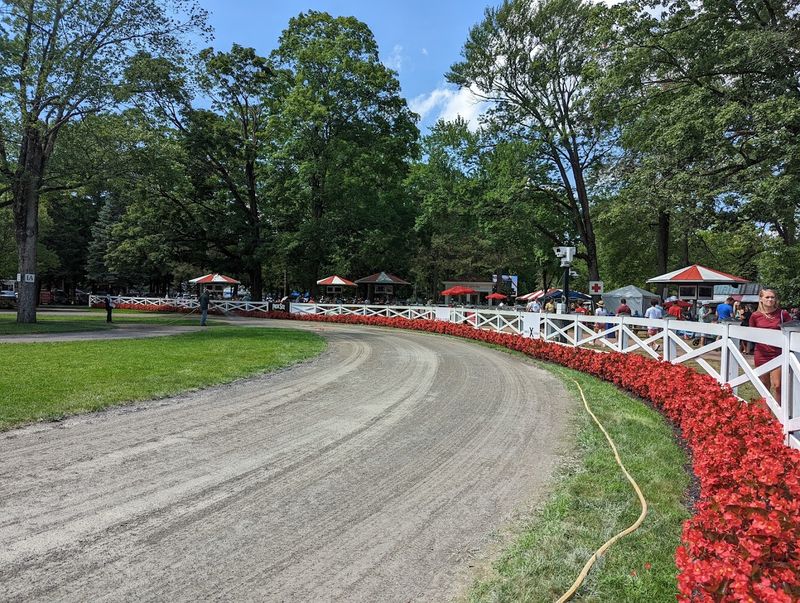
There is exactly one racetrack in the country where the horses walk directly through the crowd on their way to the paddock, and you are reading about it right now.
At Saratoga, thoroughbreds are led along a white-fenced path through the assembled spectators before each race, giving fans a genuinely close-up look at the athletes about to compete.
It is thrilling in a way that no television broadcast can replicate.
The paddock itself is a hub of pre-race activity. Trainers give final instructions, jockeys receive their mounts, and the horses move with that coiled, alert energy that only comes right before a race.
The Clubhouse features a dedicated area called Jockey Lane, which functions as a kind of red carpet for riders and offers guests a real chance to interact with the people who actually steer these incredible animals.
For families visiting with children, the paddock walk is often the highlight of the entire day. Seeing a 1,200-pound thoroughbred at arm’s length is a different experience than watching one from the grandstand.
The track also maintains its original, manually operated jockey weight change boards in the infield, a small but deeply satisfying nod to the traditions that have shaped this place across more than fifteen decades of continuous racing.
Food, Fun, And A Dress Code Worth Respecting
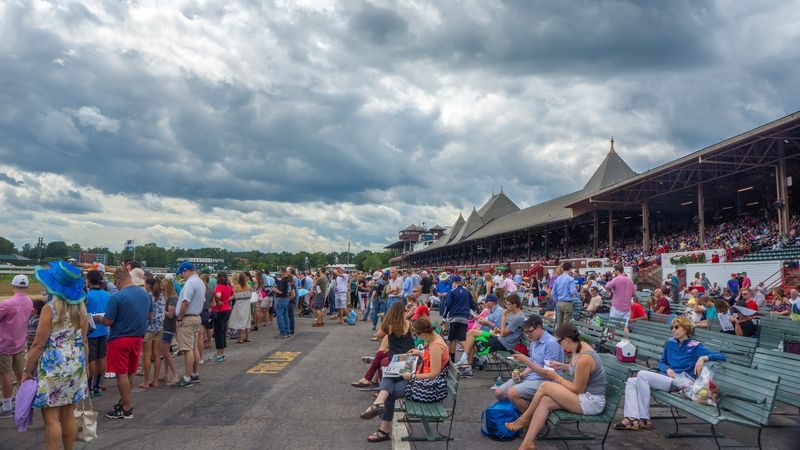
Saratoga Race Course takes its dress code seriously, and honestly, the crowd is better for it. Certain areas require men to wear collared shirts and pants, while the picnic area permits a more casual look.
On Whitney Day, the tradition of wearing pink has taken hold in a way that turns the entire crowd into a sea of rosy enthusiasm. Dressing up for the races here feels like participating in something genuinely special rather than following an arbitrary rule.
The food options at Saratoga are among the most varied of any sporting venue in the country. Concession choices include Shake Shack, Carnegie Deli, Taco Republic, Capital Q, and Dunkin Donuts, among many others.
The Turf Terrace offers a more refined sit-down experience, though reservations well in advance are strongly recommended during peak racing weeks.
Bringing your own cooler with food and non-glass beverages is not only allowed but encouraged by veterans of the track. Parking ranges from free lots to premium spots closer to the entrance.
General admission tickets are available online or at the gate, and purchasing ahead of time saves both money and time at entry.
The whole operation runs with the kind of smooth efficiency that only comes from over 160 years of hosting some of the most passionate racing fans in the world.
Why People Keep Coming Back Every Single August
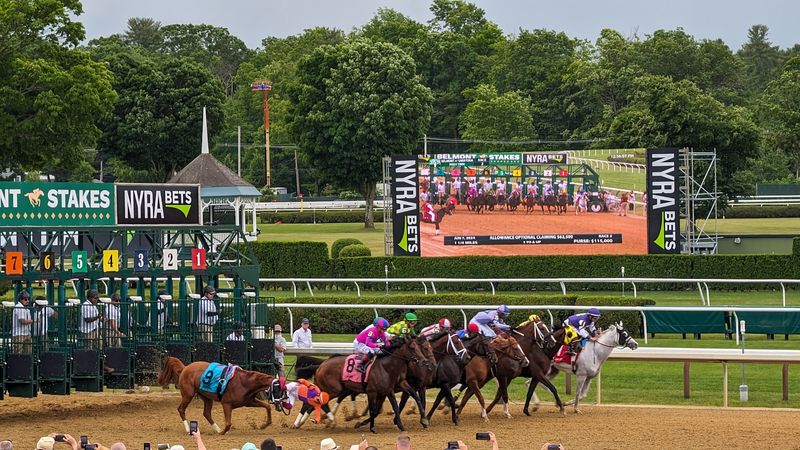
Repeat visitors to Saratoga Race Course share a common trait. They do not talk about it the way people describe a nice trip.
They talk about it the way people talk about a place that got into their system and never quite left. The combination of history, atmosphere, tradition, and sheer spectacle creates something that is genuinely hard to find elsewhere in American sport.
The track covers 350 acres and includes over 200 buildings, some dating back to the original 1864 construction. Stables, workout tracks, grandstands, and picnic areas all coexist in a way that feels organic rather than planned.
Free stable tours are offered early in the morning on select days, giving visitors a look at the working side of a major racing operation that most guests never see.
Saratoga Springs itself adds another layer to the appeal. The mineral springs, the performing arts scene, the farmers market, and the general summer energy of the town make every trip feel fuller than a single day at the races could account for.
New York offers countless destinations that earn their reputations, but few deliver the kind of layered, immersive experience that Saratoga provides across an entire month. August here is not just a season.
It is a state of mind that serious racing fans plan their entire year around.