
Nothing In The Desert Compares To This Singing Sand Dune In Nevada
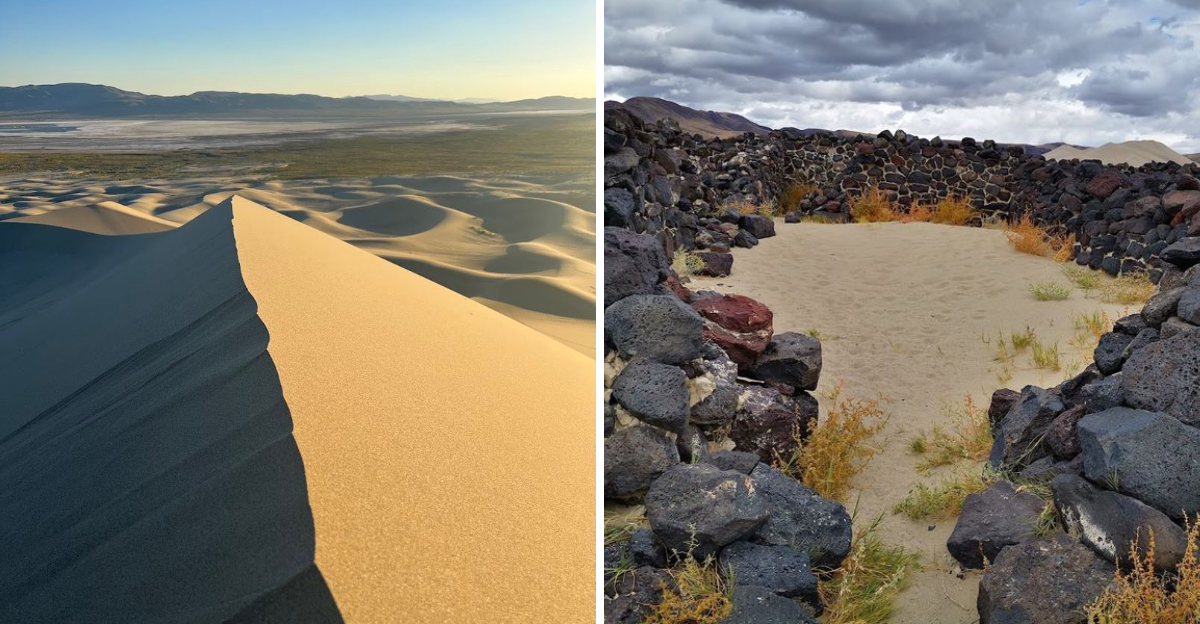
A wall of sand booms like distant thunder, and it’s no folklore tale. Your boots feel the vibration the instant you reach its base.
Curious what turns solid ground into a musical instrument? Nobody really believes it until they hear it firsthand.
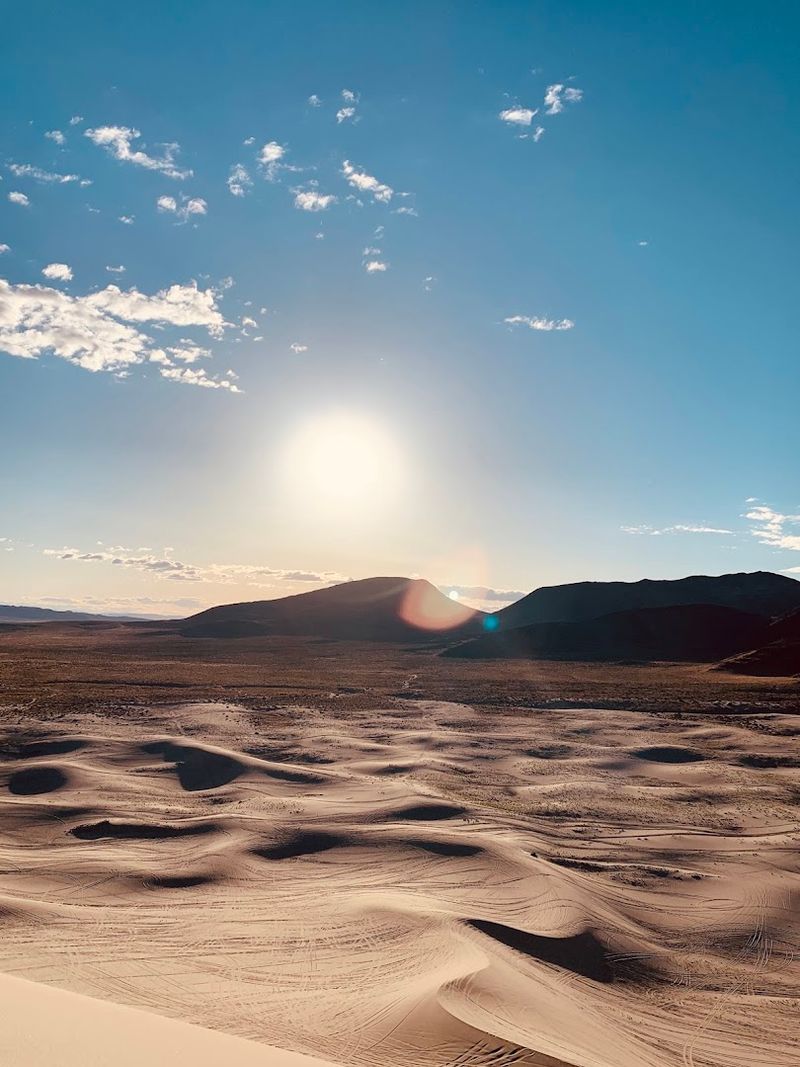
Out in the Nevada desert, this dune rises taller than a football field standing on end. Wind and time packed it together, grain by grain, over thousands of years.
Old wagon trails, a rare blue butterfly, and a legend about a giant snake all share this same ground. Every ridge keeps a different secret.
Riders carve fresh lines down the slopes while campers watch stars fill the open Nevada sky. That booming giant deserves a spot on your next road trip, and the sand will do the talking.
A Mountain That Actually Makes Noise
Sand can sing. That is not a metaphor or a marketing slogan.
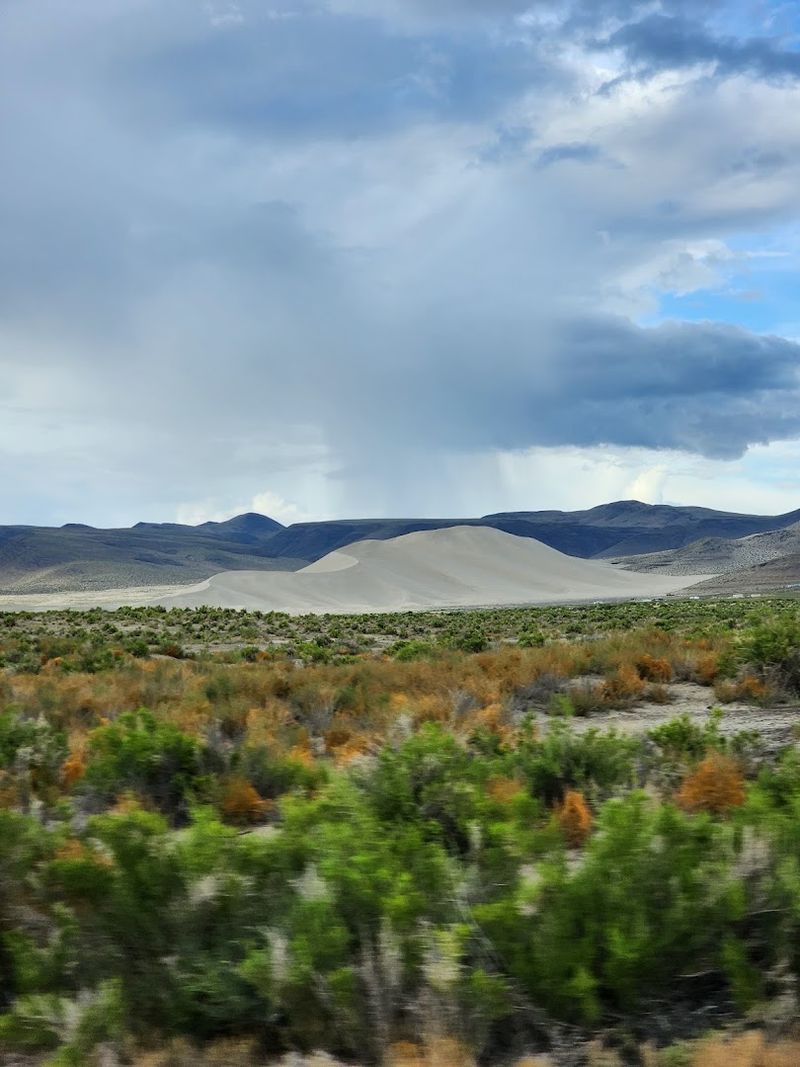
Sand Mountain, a massive isolated dune in west-central Nevada, produces real, audible sounds that have startled and delighted visitors for generations.
The booming can reach up to 105 decibels under the right conditions. That is roughly as loud as a chainsaw.
The sound can persist for several minutes and sometimes carries as far as six miles across the open desert.
Researchers have identified the primary tones as falling near low B and C sharp. These tones resemble the deep register of a cello.
Some visitors describe it more like a low moan, while others hear something closer to a thunderous roar.
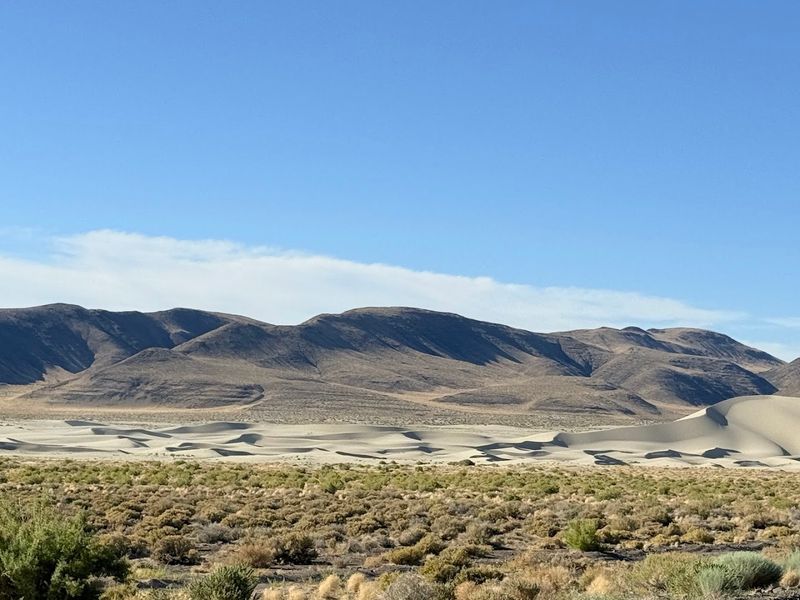
The dune stretches approximately 3.5 miles long and about one mile wide, rising some 600 feet above the desert floor. Standing at its base while it hums beneath your feet is one of the more unusual things the Nevada desert has to offer.
The Science Behind The Song
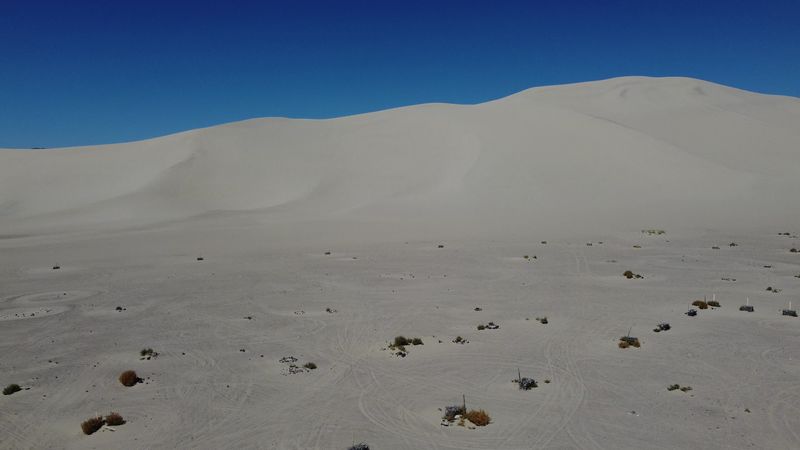
The singing is not magic, but the explanation is almost as fascinating. Billions of tiny sand grains vibrate simultaneously to produce the dune’s signature sound.
Each grain must be smooth, rounded, and extremely dry to participate in the performance.
The grains at Sand Mountain consist primarily of quartz, silica, feldspar, and magnetite. That specific mineral mix, combined with near-zero moisture content, creates ideal conditions for acoustic resonance.
Even a small increase in humidity can silence the dune entirely.
Wind triggers the sound naturally. Human movement can also set it off.
Sliding down the steep face of the dune or simply disturbing the surface can cause a chain reaction among the grains.
Sand Mountain is one of a small handful of singing dunes in the United States, part of a rare group of fewer than three dozen such locations found worldwide. That puts this quiet stretch of Nevada desert in genuinely exclusive company on a global scale.
Off-Road Paradise In The Open Desert
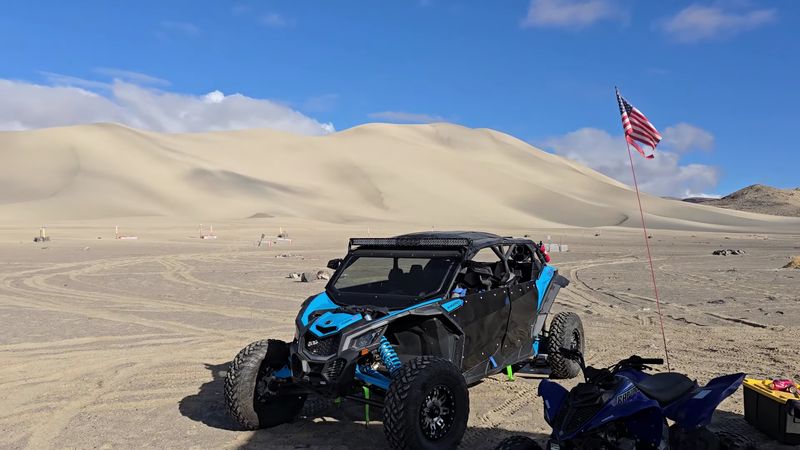
Engines roar here on most weekends. Sand Mountain Recreation Area draws off-highway vehicle enthusiasts from across the western United States.
ATVs, dirt bikes, sand rails, and dune buggies all find a home on these sweeping slopes.
The recreation area offers around 23 miles of designated trails. Famous spots like the Super Bowl and Drag Hill attract riders looking for serious challenges.
The open dune face itself is a natural playground for high-speed climbs and steep descents.
Sandboarding is another popular option for those without a motor. The long, smooth faces of the dune make for fast, exciting runs.
Sand sailing is also possible when conditions cooperate.
Beginners should approach with caution. The terrain shifts constantly, and sharp ridgelines with no flat tops can catch riders off guard.
Experience matters here. For those who know what they are doing, though, Sand Mountain delivers a level of riding that is very hard to match anywhere else in Nevada.
Ancient Waters Left This Behind
Long before ATVs and sandboards arrived, an enormous lake covered much of what is now Nevada. Lake Lahontan stretched across a massive portion of the Great Basin roughly 9,000 years ago.
As the climate shifted and temperatures rose, the water slowly evaporated.
What the lake left behind was a thick blanket of fine sand and silt across the desert floor. Persistent winds swept those particles eastward over centuries.
They piled against the Stillwater Mountains until a single, towering dune took shape.
Sand Mountain is now considered the largest single dune within the entire Great Basin. Its formation was not a quick geological event.
It was a slow, steady accumulation driven by wind patterns that have not changed much since the lake disappeared.
The address for the recreation area is Unnamed Rd, Fallon, NV 89406, situated along U.S. Route 50 in Churchill County.
Understanding the dune’s origins makes standing at its base feel like a conversation with deep time.
The Rarest Butterfly You Have Never Heard Of
Hidden among the roaring engines and shifting sands lives one of the rarest insects on the planet. The Sand Mountain blue butterfly exists nowhere else on Earth.
This small, gossamer-winged creature depends entirely on a single plant species for its survival.
That plant is the Kearney buckwheat. It provides both food for butterfly larvae and nectar for adults.
Without it, the butterfly simply cannot complete its life cycle. The two species are locked in a fragile, irreplaceable partnership.
The Bureau of Land Management has designated specific areas of the recreation site as off-limits to motorized vehicles. These closures protect the buckwheat habitat and give the butterfly a fighting chance.
Designated trails guide riders away from the most sensitive zones.
Most visitors never even notice this tiny creature darting above the sand. But its presence transforms Sand Mountain from a recreational playground into something more significant.
It is a living example of how extraordinary life can be, even in the harshest corners of the Nevada desert.
Where The Pony Express Once Galloped
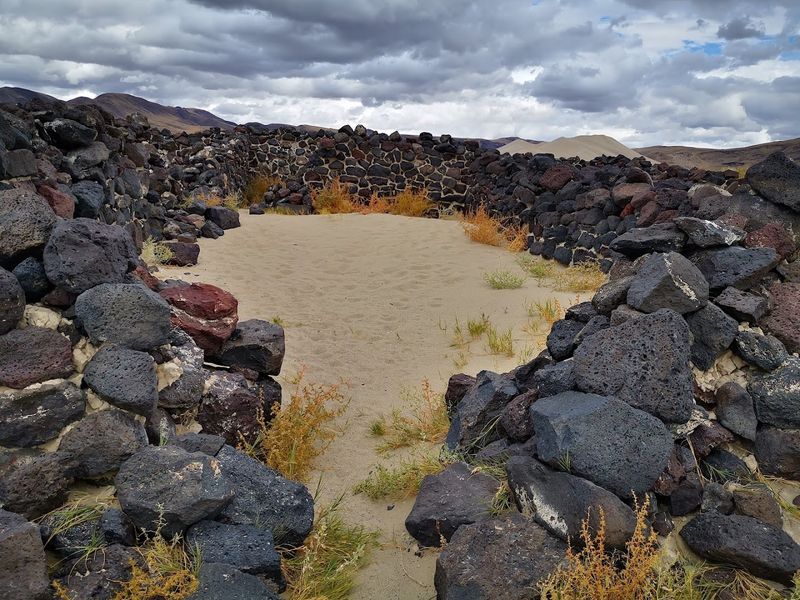
Hoofbeats once echoed across this sandy stretch of Nevada. The Sand Springs Pony Express Station stood near the base of the dune starting in 1860.
It served as a critical relay point for riders carrying mail across the continent at full speed.
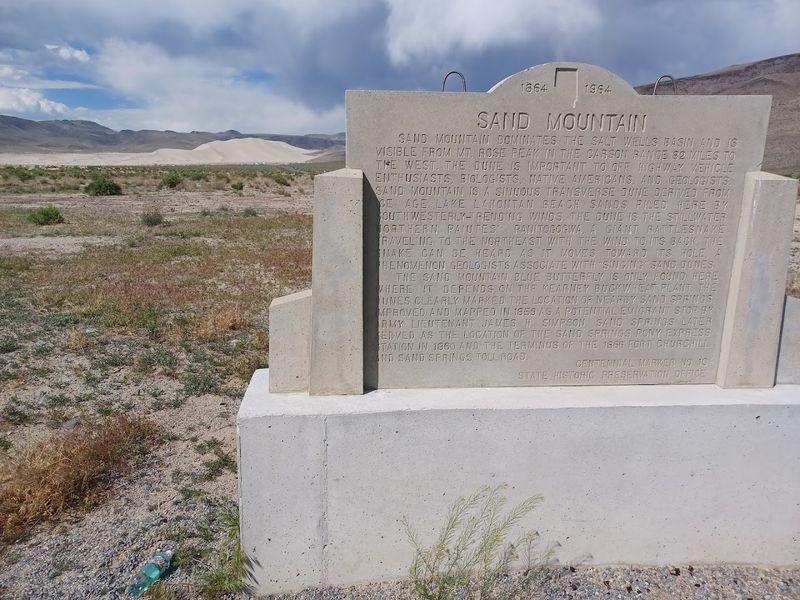
The ruins of that station are still visible today. A Nevada state historical marker stands nearby to acknowledge the site’s significance.
Visitors can walk to the remains and imagine the urgency that once defined this remote outpost.
The combination of ancient geology and frontier history makes Sand Mountain uniquely layered. Most recreation areas offer scenery or thrills.
This one quietly adds a chapter of American history to the experience, right at the edge of the dunes.
Sacred Ground For The Northern Paiute
Long before explorers and settlers arrived, the Stillwater Northern Paiute people knew this dune well. They called it Panitogogwa, a name that translates roughly to a giant rattlesnake traveling with the wind.
The sound of the singing sand was not a geological curiosity to them. It was the movement of a powerful living presence.
This cultural understanding predates modern science by centuries. It reflects a deep, sustained relationship between the Paiute people and the landscape they called home.
The dune was not simply a landform. It carried meaning, memory, and spiritual weight.
Visitors who know this history tend to experience the dune differently. The booming sound takes on a different quality when understood through that lens.
It becomes less of a novelty and more of a conversation.
Respecting that heritage is part of visiting responsibly. Sand Mountain sits in a region of Nevada with rich Indigenous history, and the dune itself stands as one of the most tangible expressions of that living tradition.
Camping Under A Sky Full Of Stars
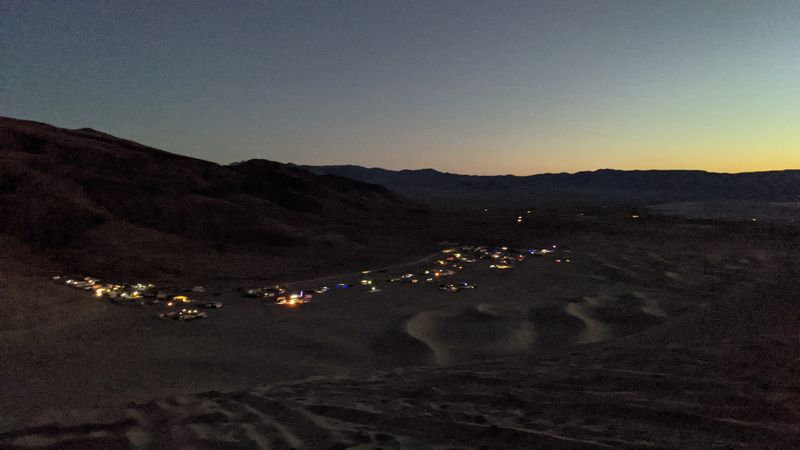
City lights are far away out here. That absence transforms the night sky into something extraordinary.
Camping at Sand Mountain puts visitors directly beneath one of the cleaner, darker skies in the region.
Primitive camping is available at the base of the dunes. The setup is simple: sand, desert air, and vault toilets.
There is no potable water on site, so bringing more than enough is non-negotiable. Dumpsters are available, but the experience is deliberately stripped back.
Holiday weekends like Halloween and Easter draw large crowds. The camping areas fill fast during those periods.
Arriving early is the most reliable strategy for securing a good spot. On quieter midweek visits, the solitude can feel almost absolute.
Dispersed camping allows groups to spread out and gather around fires in the open desert. The combination of warm firelight, cool desert air, and a sky packed with stars creates an atmosphere that no campground with hookups can replicate.
Some things only happen far from town.
What To Know Before You Go
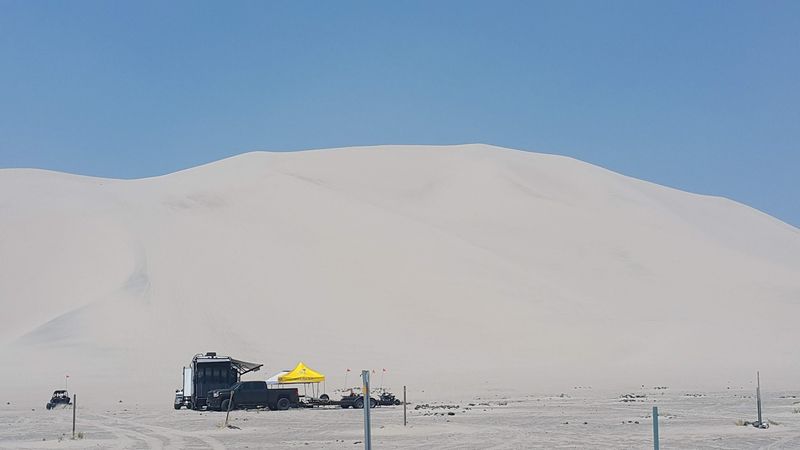
Preparation is not optional at Sand Mountain. The site is remote, and the nearest services are a solid drive away.
Water is the most critical item to pack. None is available on site, and the desert heat can be deceptively draining even on mild days.
All OHV riders must display an 8-foot whip flag while on the dunes. This improves visibility across the rolling terrain and helps prevent collisions between riders coming from opposite sides of a slope.
Speed limits apply in camping areas and must be respected.
Glass containers are not permitted anywhere in the recreation area. Burning wood that contains metal or tires is also prohibited.
These rules protect both the environment and other visitors.
A recreation pass is required for entry. Weekly and annual passes are available for purchase.
Non-motorized visitors stopping for under an hour on certain weekdays may enter without a fee. Checking current fee information before arrival helps avoid any surprises at the gate.
When The Desert Weather Turns Wild
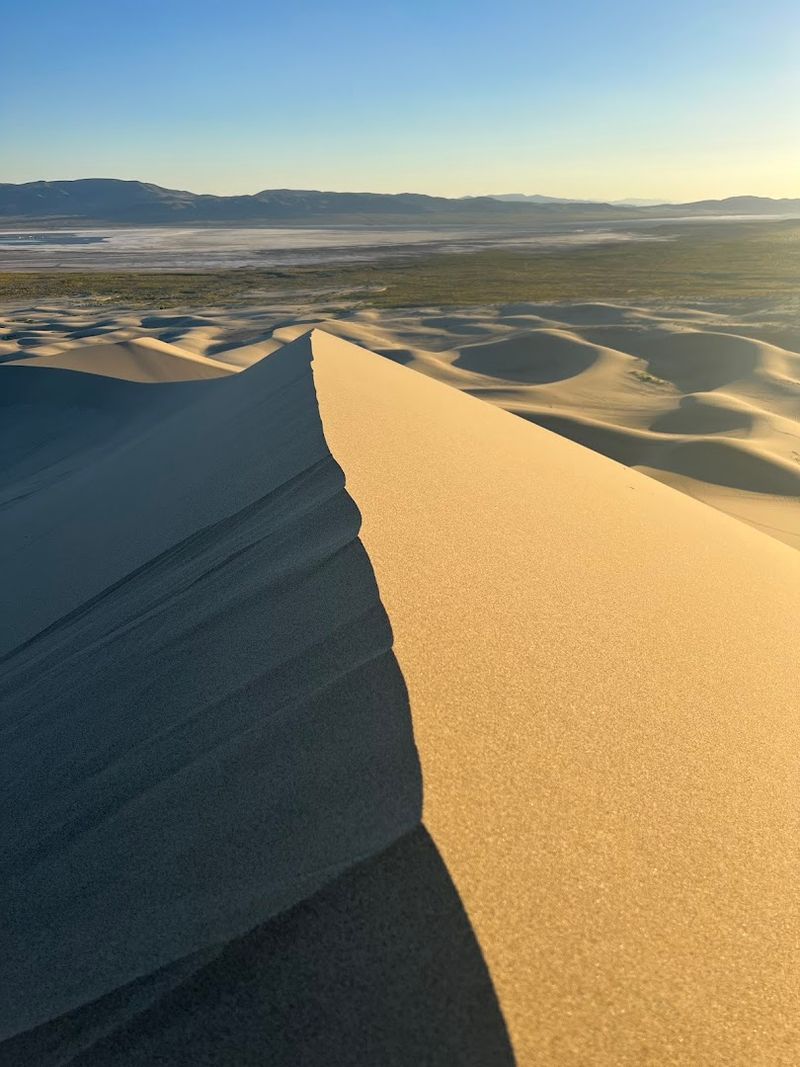
Weather at Sand Mountain plays by its own rules. Spring and fall bring the most comfortable conditions.
Temperatures are moderate, wildflowers occasionally bloom in the surrounding flats, and the sand is pleasant to ride or hike.
Summer pushes temperatures into extreme territory. The sand itself becomes very dry, which can actually enhance the dune’s acoustic properties.
But the heat demands extra caution, extra water, and a serious respect for sun exposure.
Winter is unpredictable. Snow is possible, and cold snaps can arrive without much warning.
Some visitors have found the dune dusted with snow, which creates a striking visual contrast against the pale sand. Others have arrived to find gusty winds and sandstorms that cut visibility sharply.
Sandstorms are a real consideration here. When they hit, most visitors retreat to their vehicles or trailers and wait them out.
Once the wind settles, the dune surface smooths out beautifully. Nevada weather has a way of reminding visitors who is actually in charge out here.
The Road That Made Nevada Famous
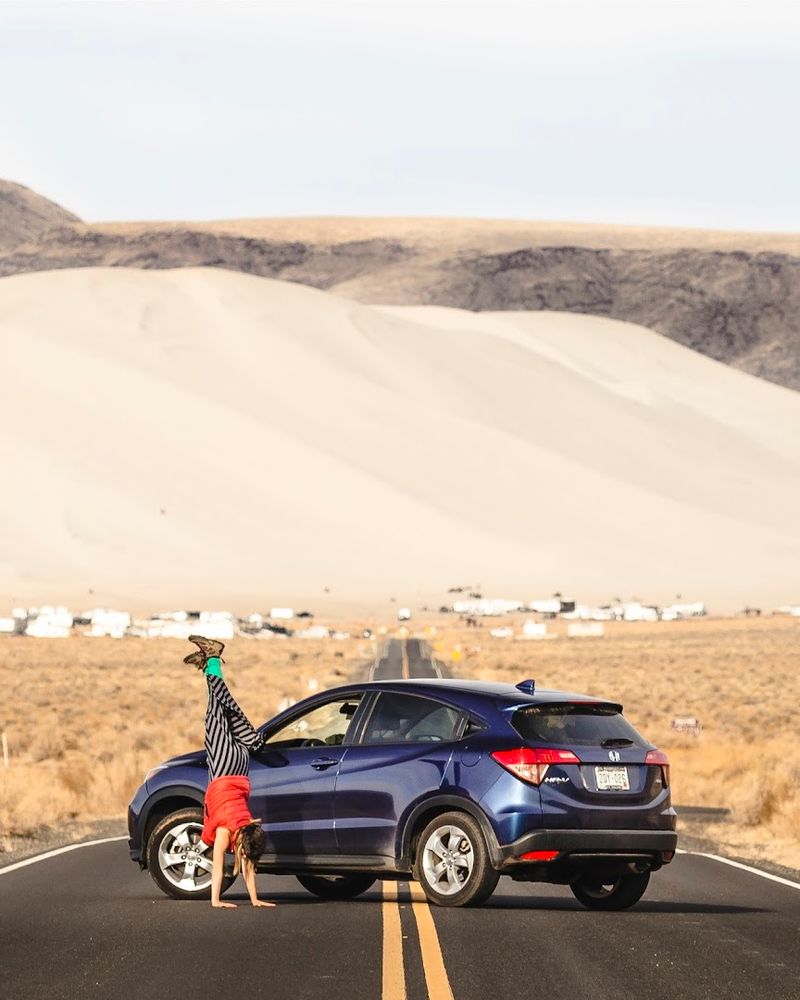
Getting to Sand Mountain is part of the adventure. U.S.
Route 50, famously nicknamed the Loneliest Road in America, runs directly past the recreation area. The highway cuts through open desert with minimal traffic and sweeping views that stretch for miles.
Along the road approaching the dune, rocks have been arranged by visitors to spell out names and messages on the desert floor. It is a low-key tradition that adds a human touch to an otherwise stark landscape.
The effect is oddly charming.
The drive itself rewards patience. Antelope sometimes appear along the roadside.
The Stillwater Mountains provide a steady backdrop as the dune grows larger on the horizon. Concrete washouts cross the access road, and they require a sharp reduction in speed.
Missing them at full speed is a mistake that leaves marks on the undercarriage.
The Loneliest Road lives up to its name, but Sand Mountain gives travelers a very good reason to pull over, step out, and stay for a while in this quiet corner of Nevada.