
Off-The-Beaten-Path New York Attractions That Are Worth A Road Trip
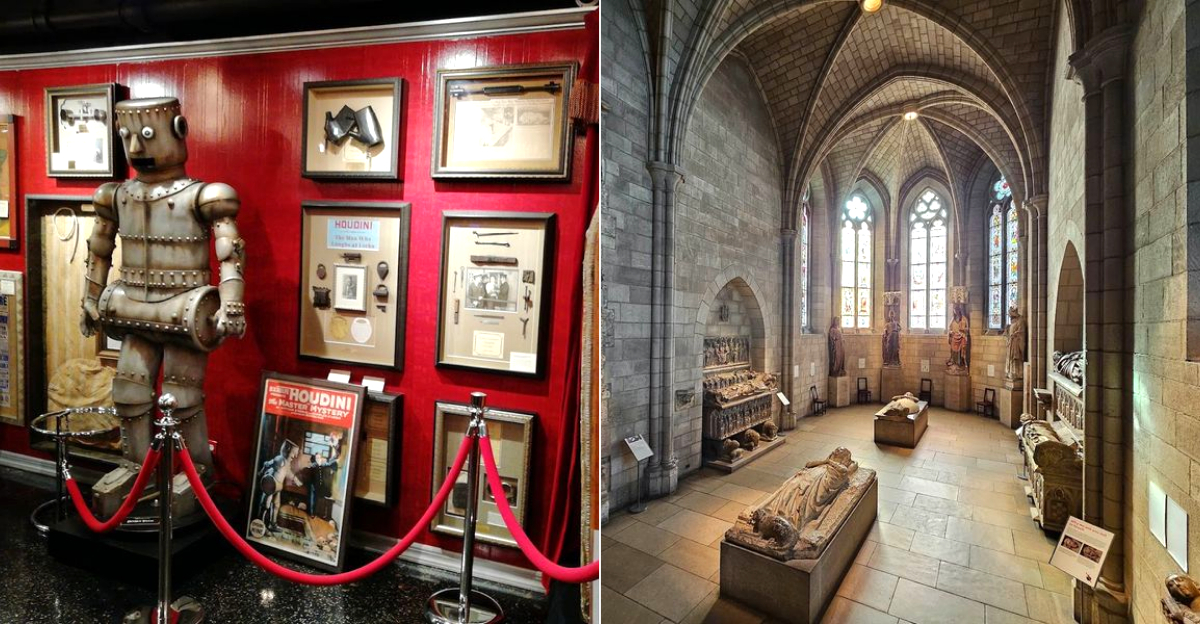
If you’re craving a road trip that feels like actually exploring something new, New York has some off‑the‑beaten‑path attractions that make the drive part of the fun. These are the places that don’t show up on every tourist list but somehow leave you grinning by the time you get there.
These off‑the‑beaten‑path New York attractions are worth a road trip, with quirky sights, hidden gems, and unexpected experiences waiting at every turn.
Some stops are delightfully weird, others are beautifully peaceful, and a few just make you go “wow, I’m really glad we found this.” Whether you’re into nature, history, or simple surprises, there’s a little something for every kind of adventurer.
So roll down the windows, cue up the playlist, and get ready — these hidden New York spots are calling your name.
1. The Elevated Acre (Manhattan)
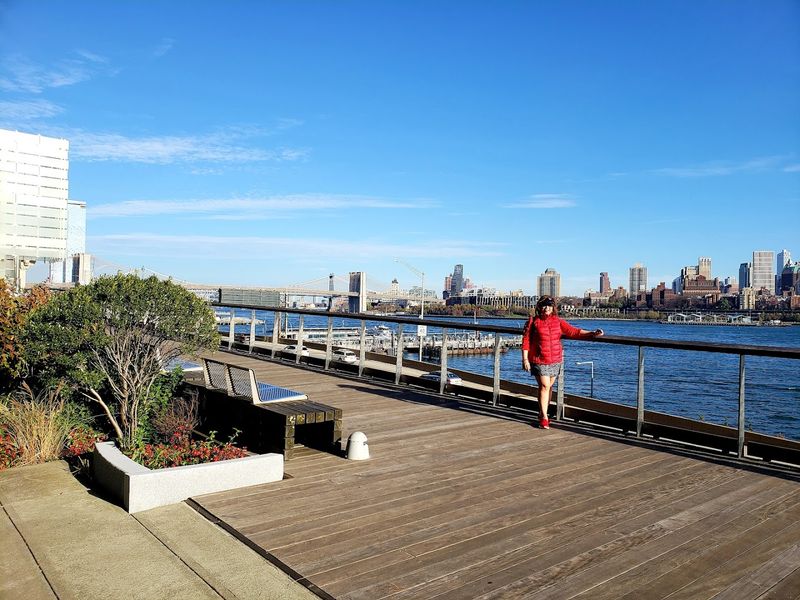
Right above the busy streets of the Financial District, a peaceful rooftop garden sits quietly like a well-kept secret among the skyscrapers. The Elevated Acre is a public space that most New Yorkers walk right past without ever knowing it exists.
You get there by taking an escalator hidden inside 55 Water Street, and just like that, you are transported to a whole different world.
The space features rolling green lawns, wooden boardwalks, and sweeping views of the East River that honestly feel unreal. On a clear day, you can see the Brooklyn Bridge and the entire Lower Manhattan skyline stretching out beside you.
It is the kind of spot that makes you feel like you found something the city was keeping just for you.
Locals sometimes bring lunch here to enjoy a quiet break away from the midtown madness. The park is free to visit and open to the public during regular hours.
Whether you are visiting for the views or just need five minutes of calm in a loud city, the Elevated Acre delivers every single time.
2. The Houdini Museum (Manhattan)
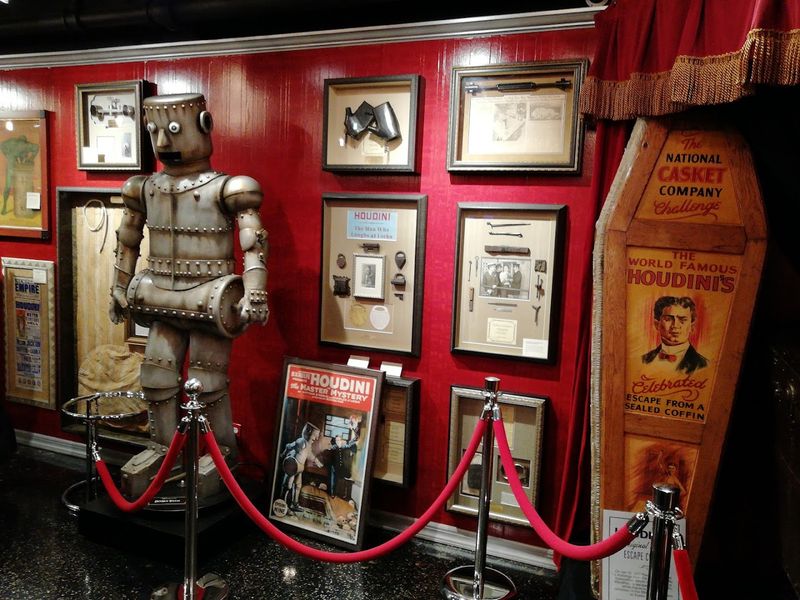
Harry Houdini was the kind of guy who made impossible look routine, and his New York museum keeps that magic alive in the best possible way. Located at 153 West 26th Street in the Flatiron area, this compact museum is packed with real memorabilia from the legendary escape artist himself.
Old posters, handcuffs, letters, and photographs fill every corner with stories that feel larger than life.
The exhibits walk you through Houdini’s rise from a poor immigrant kid to the most famous performer in the world. You learn about his techniques, his obsessions, and the sheer physical courage it took to pull off his most dangerous stunts.
It is genuinely fascinating, even if you already think you know the Houdini story.
Kids absolutely go wild for this place, but honestly, adults are the ones who end up staying the longest. The museum keeps things engaging without overwhelming you with text-heavy panels.
If you have ever wanted to understand what made Houdini tick, this is the spot where the curtain finally gets pulled back. Go before everyone else figures out this gem exists.
3. The Cloisters (Upper Manhattan)
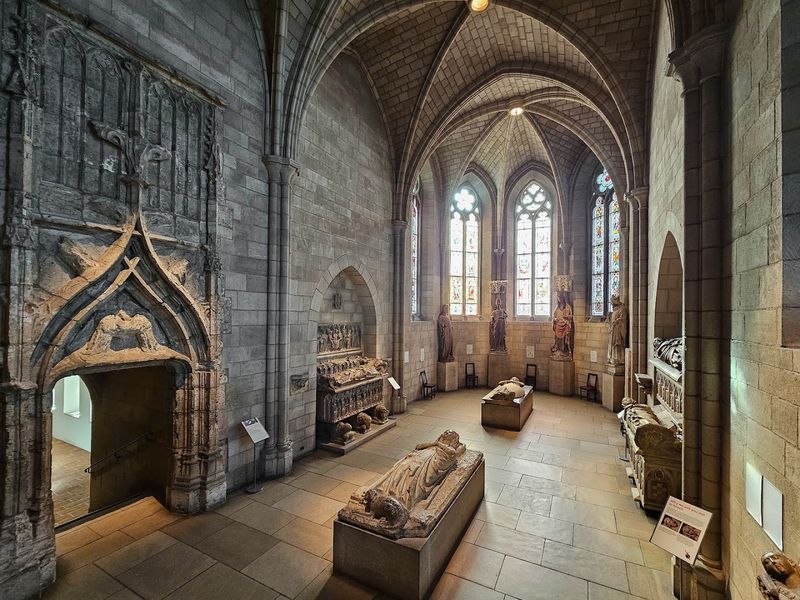
Forget hopping a flight to Europe because Upper Manhattan has something that will genuinely shock you. The Cloisters is a branch of the Metropolitan Museum of Art, and it is built using actual architectural pieces from medieval European monasteries.
Sitting at 99 Margaret Corbin Drive inside Fort Tryon Park, this place looks like it was airlifted straight from the French countryside.
Inside, you will find an extraordinary collection of tapestries, sculptures, illuminated manuscripts, and stained glass that spans centuries of European medieval art. The famous Unicorn Tapestries alone are worth the entire trip uptown.
Outside, the gardens are planted with herbs and flowers that were actually used during the medieval period, making the whole experience feel immersive in a way most museums never achieve.
The views of the Hudson River from the grounds are spectacular, and the surrounding park adds an extra layer of calm that downtown museums simply cannot match. Admission is covered by your standard Met ticket, so there is no extra charge.
Go on a weekday morning if you want the place mostly to yourself. It feels like stumbling into another century without leaving New York City.
4. The New York Earth Room (SoHo)
Some art makes you think. Some art makes you feel.
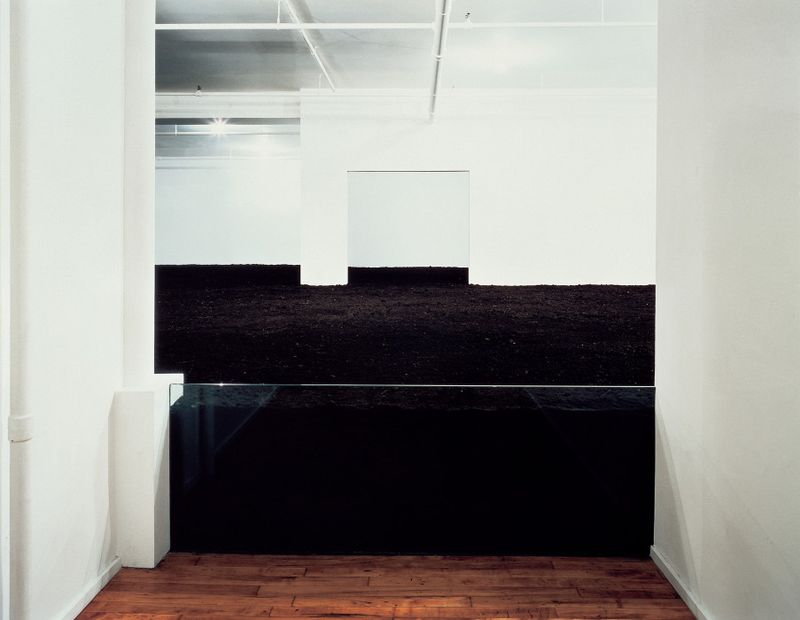
And then there is the New York Earth Room, which makes you stop completely and just stand there with your mouth open. Created by artist Walter De Maria in 1977, this permanent installation at 141 Wooster Street in SoHo is exactly what the name promises: a room filled with 280,000 pounds of actual earth.
The soil sits about 22 inches deep across the entire floor of the second-floor gallery space. You cannot touch it, you cannot enter it, and you certainly cannot explain to your friends why it moved you as much as it did.
That is kind of the whole point. The contrast between the quiet, earthy smell and the busy SoHo streets below is jarring in the most wonderful way.
Admission is completely free, and the space is maintained by the Dia Art Foundation. It is open Wednesday through Sunday during gallery hours.
Most people walk right past the unmarked entrance without a second glance, which means you will often have this strange, beautiful room almost entirely to yourself. Truly one of New York’s most unexpected and unforgettable experiences.
5. The Whispering Gallery (Grand Central Terminal, Manhattan)
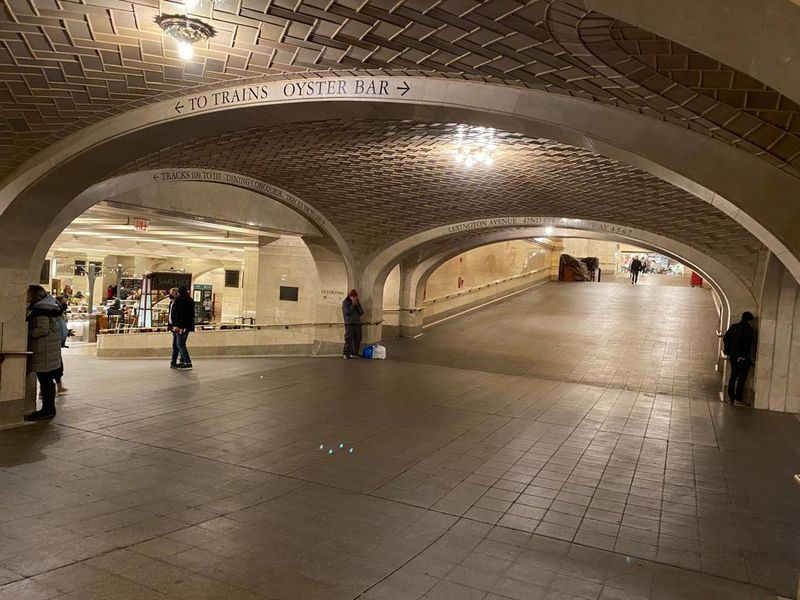
Grand Central Terminal already has enough wow factor to keep you spinning in circles for an hour, but there is one feature most visitors completely miss. Right outside the entrance to the Grand Central Oyster Bar, four curved arches meet at a central point in the lower dining concourse.
Stand in one corner, whisper softly into the wall, and someone standing diagonally across the hall can hear you as clearly as if you were standing side by side.
This acoustic phenomenon happens because of the way sound waves travel along the curved ceiling surfaces. The arches were designed by the architectural firm Reed and Stem and completed in 1913, and nobody planned this whispering trick on purpose.
It just happened, and over a hundred years later, it still works perfectly every single time.
Watching strangers discover this for the first time is genuinely one of the more joyful free experiences New York has to offer. Kids especially lose their minds over it, and honestly, so do adults.
You do not need a ticket, a reservation, or even a plan. Just show up at 89 East 42nd Street, find the arches, and let the building do its thing.
Pure magic, no Houdini required.
6. The Brooklyn Navy Yard (Brooklyn)
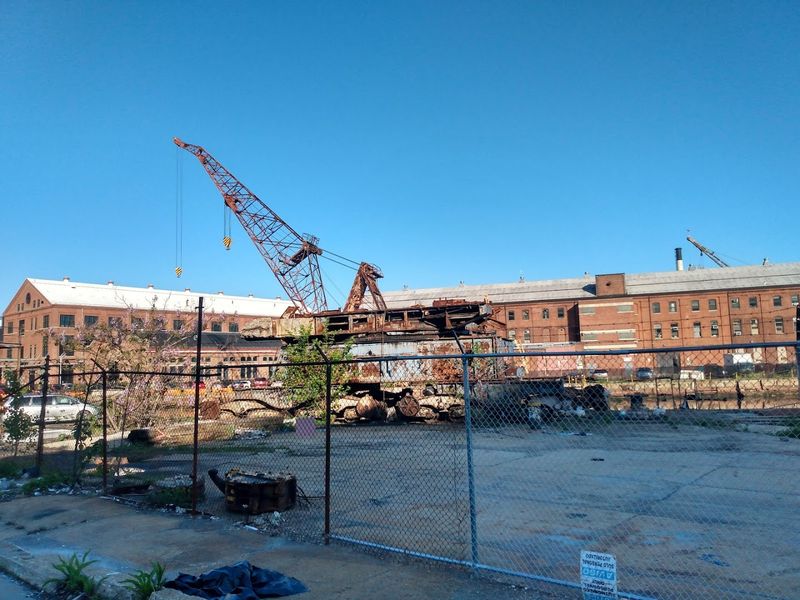
Back in the day, the Brooklyn Navy Yard built warships that changed history. Today, it is home to over 500 businesses, artist studios, rooftop farms, and one of the most interesting industrial tours you can take in all of New York.
Located at 63 Flushing Avenue in Brooklyn, the Yard spans 300 acres along the East River and mixes gritty history with forward-thinking creativity in a way that feels uniquely Brooklyn.
The BLDG 92 museum inside the Yard tells the full story of the site, from its founding in 1801 through its role in World War II and its current life as an innovation hub. Tours run regularly and take you through spaces that most people never get to see.
You might walk past a film production studio, a sustainable fashion brand, or a high-tech manufacturing facility all within the same block.
The views of Manhattan from the Yard’s waterfront are genuinely stunning, and the whole atmosphere feels alive with creative energy. It is the kind of place that reminds you New York never really stops reinventing itself.
Plan a few hours and bring comfortable shoes because there is a lot of ground to cover and even more to take in.
7. The Morris-Jumel Mansion (Washington Heights)
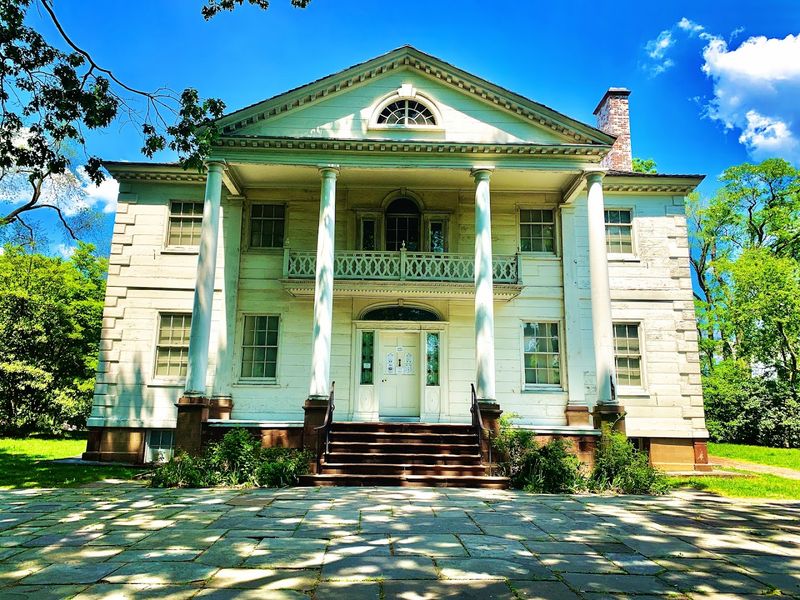
Manhattan has been standing for a long time, and the Morris-Jumel Mansion is living proof of just how deep those roots go. Built in 1765 at 65 Jumel Terrace in Washington Heights, this is the oldest surviving house in all of Manhattan.
George Washington used it as his headquarters during the Battle of Harlem Heights in 1776, which means you are literally walking through Revolutionary War history every time you visit.
The mansion is beautifully preserved and filled with period furniture, portraits, and artifacts that paint a vivid picture of life in colonial New York. The building itself is a stunning example of Georgian and Federal architecture, and the octagonal parlor is particularly striking.
Few places in the city carry this much historical weight in such a compact, accessible space.
The surrounding neighborhood of Washington Heights adds its own layer of culture and character to the visit. The mansion’s hilltop location also offers some surprisingly lovely views of the northern Manhattan landscape.
Admission is affordable, and guided tours are available to help bring the stories to life. If American history gets your pulse going, this one belongs at the very top of your New York road trip list.
8. The Old City Hall Station (Manhattan)
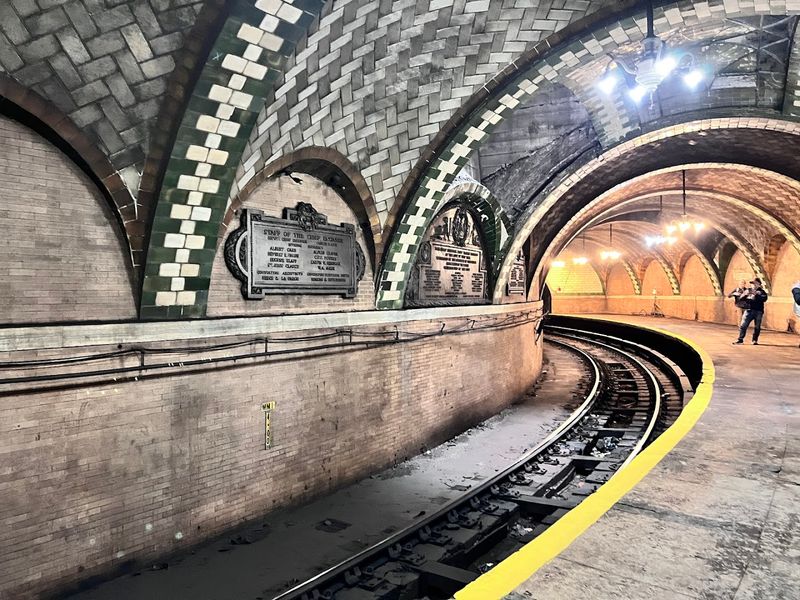
Somewhere beneath the streets of Lower Manhattan, one of the most beautiful rooms in the entire city sits in quiet, glorious retirement. The Old City Hall Station opened in 1904 as part of New York’s original subway line and closed to regular passengers in 1945.
What remains is a breathtaking example of Guastavino tile vaulting, curved arches, brass chandeliers, and skylights that still let in soft natural light from the street above.
Access to this station is not straightforward, which is exactly what makes it so special. The New York Transit Museum occasionally offers tours that allow a small number of lucky visitors to see the space up close.
You can also catch a brief glimpse by staying on the 6 train past the Brooklyn Bridge stop and watching through the windows as the train loops around the old platform.
The station sits at the southern end of the original IRT Lexington Avenue line near City Hall Park. Booking a Transit Museum tour in advance is highly recommended because spots fill up fast.
Seeing this place in person feels like finding a secret the city buried on purpose and forgot to dig back up. Absolutely worth every bit of effort it takes to get there.
9. The Socrates Sculpture Park (Queens)
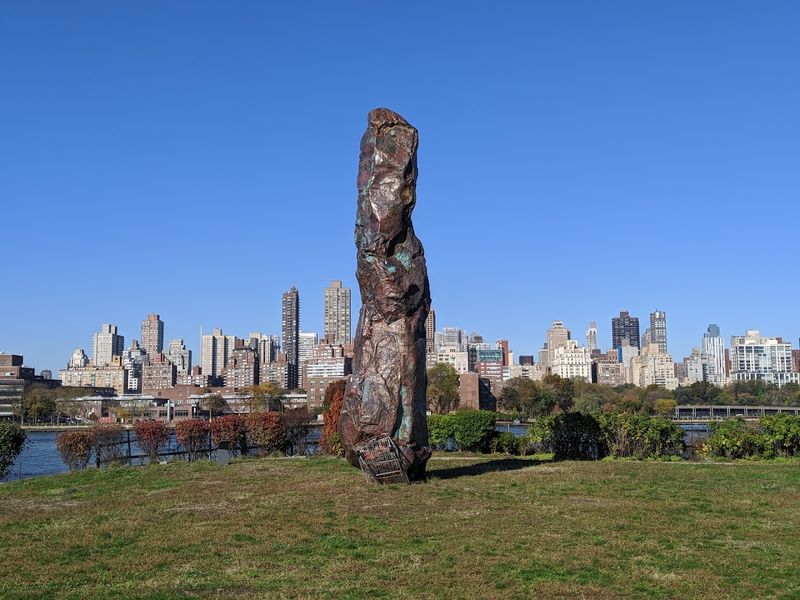
Astoria has always had a personality of its own, and Socrates Sculpture Park fits right into that spirit with zero apologies. Sitting at 32-01 Vernon Boulevard along the East River waterfront, this open-air museum in Queens is completely free and open to the public every single day of the year.
Large-scale sculptures and rotating installations fill the grounds, and the Manhattan skyline hovering across the water makes the whole scene look almost too good to be real.
The park was founded in 1986 on a formerly abandoned landfill and waterfront site, which gives it an origin story as compelling as the art it now displays. Artists from around the world are selected each year to create new works specifically for this space, meaning the park is always changing and always worth a return visit.
No two trips are exactly the same.
Families, solo visitors, and dog walkers all share the grounds with equal enthusiasm. The grassy areas are perfect for spreading out and spending a slow afternoon surrounded by creativity and fresh air.
Yoga classes and outdoor film screenings are held here during warmer months. Socrates Sculpture Park proves that world-class art does not always require a museum building or an admission fee.
10. The Tenement Museum (Lower East Side)
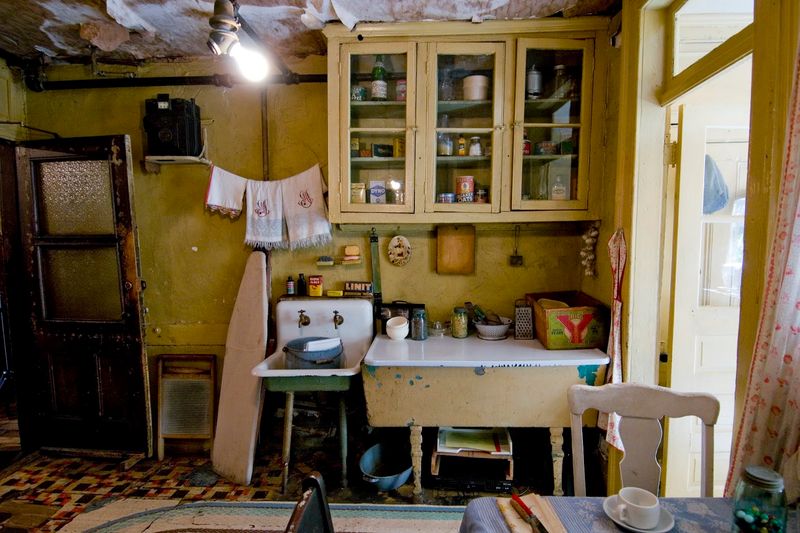
Few museums in New York hit as hard or as honestly as the Tenement Museum on the Lower East Side. Located at 103 Orchard Street, this building was home to nearly 7,000 immigrants from over 20 countries between 1863 and 1935.
The museum preserves the actual apartments where real families lived, worked, and built their American lives, and walking through those rooms feels like stepping directly into someone’s memory.
Guided tours are the main way to experience the museum, and each one focuses on a specific family whose story is documented through historical records. You might follow a German Jewish family navigating economic hardship in the 1870s, or an Italian Catholic family managing life during the Great Depression.
The detail and care put into each tour is remarkable and deeply moving.
The neighborhood surrounding the museum is itself a living piece of New York immigration history, so arriving early and walking the streets of the Lower East Side beforehand adds wonderful context. Tickets should be booked online in advance because tours sell out regularly.
The Tenement Museum does not just tell you about the immigrant experience; it puts you inside it in a way that stays with you long after you leave.
11. The Catacombs Of Old St. Patrick’s Cathedral (Manhattan)
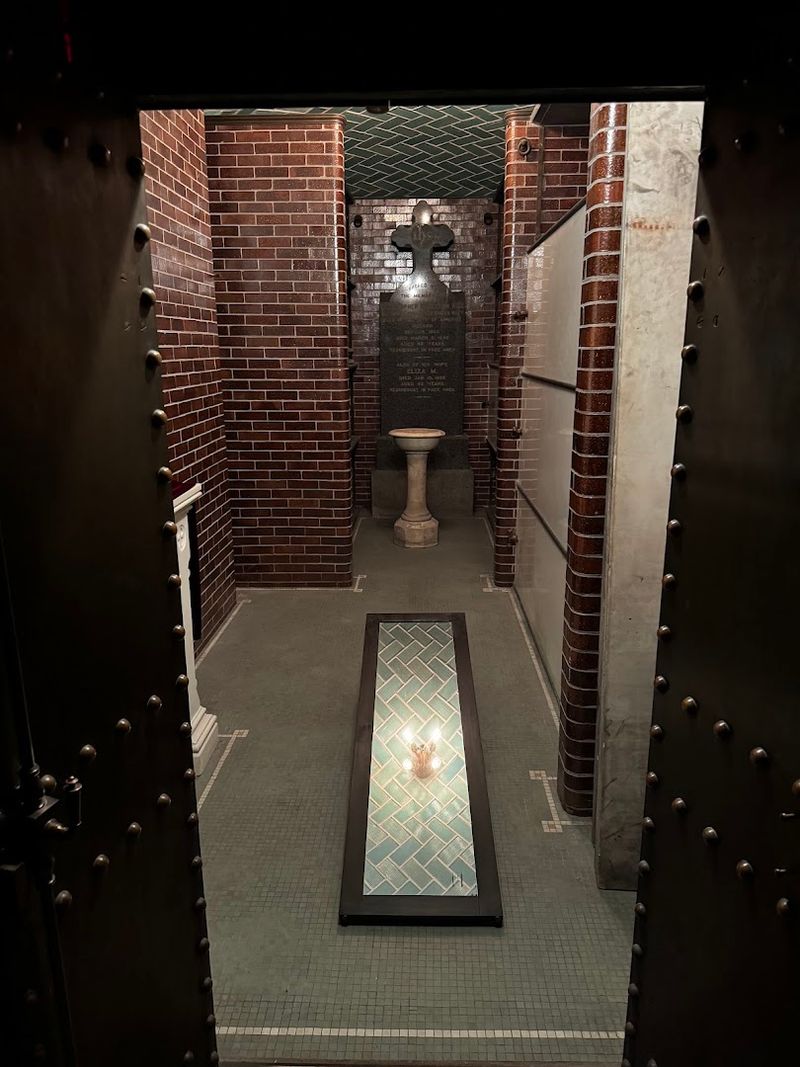
Old St. Patrick’s Cathedral on Mulberry Street in NoLita has been standing since 1815, and most people who walk past it every day have absolutely no idea what is hiding directly beneath their feet. The catacombs under the cathedral contain burial vaults that hold the remains of some of New York’s earliest Catholic families, prominent clergy, and even a few Civil War-era figures.
It is history you can literally stand inside.
Tours of the catacombs are offered periodically and must be booked in advance through the cathedral’s official website. The experience is atmospheric without being overwhelming, guided by knowledgeable docents who bring the history of each vault to life with real stories and verified details.
The cathedral itself, located at 263 Mulberry Street, is a gorgeous piece of Gothic Revival architecture worth exploring even before you head underground.
Martin Scorsese, who grew up nearby, reportedly used the cathedral and its grounds as inspiration for scenes in his films. The churchyard cemetery visible from the street is one of the oldest intact burial grounds in Manhattan.
Visiting the catacombs feels like accessing a layer of New York that most of the city has completely forgotten. Eerie, educational, and genuinely unforgettable in equal measure.
12. The High Bridge (Manhattan And The Bronx)
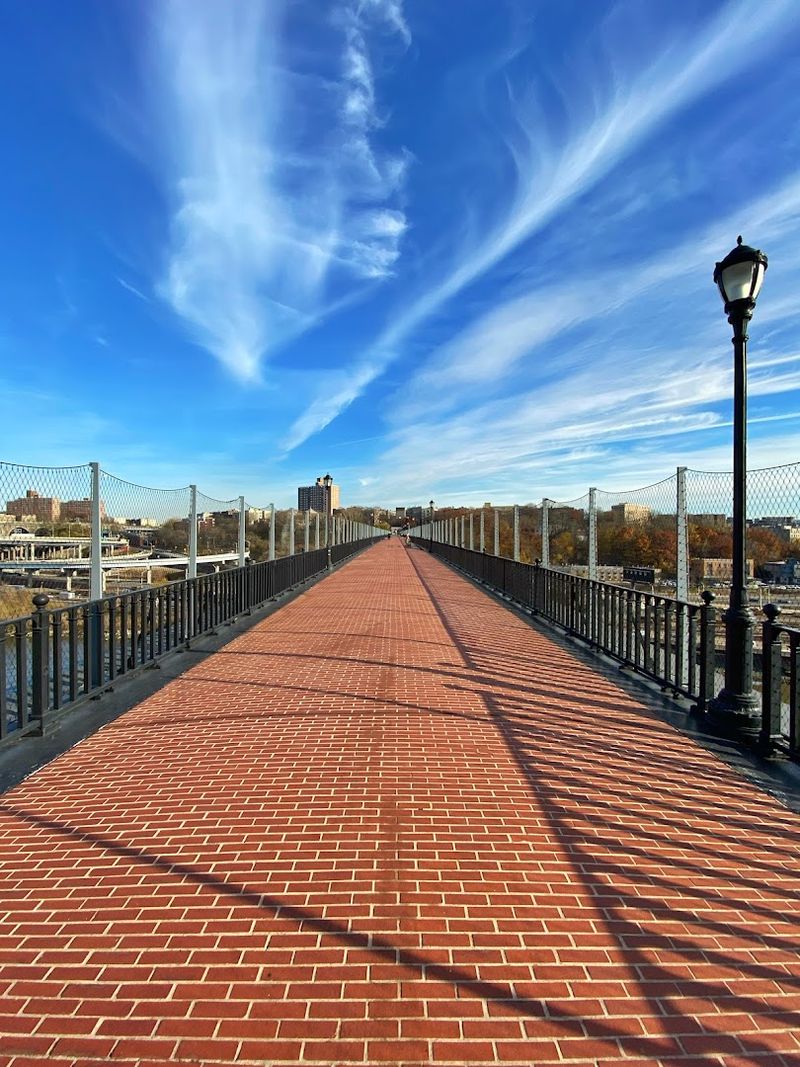
New York City’s oldest bridge does not get nearly enough credit, and that is a situation worth correcting immediately. The High Bridge was completed in 1848 as part of the Croton Aqueduct system, originally built to carry fresh water into Manhattan from upstate New York.
After decades of closure, it was beautifully restored and reopened to pedestrians in 2015, and the views it offers of the Harlem River below are nothing short of spectacular.
Walking across the bridge connects Highbridge Park in Manhattan to Highbridge Park in the Bronx, making it one of the few places in the city where you can cross between boroughs entirely on foot over open water. The stone tower on the Manhattan side is an original 1872 structure and adds a striking historical silhouette to the crossing.
The Manhattan entrance is accessible from Amsterdam Avenue and West 173rd Street.
The surrounding parks on both sides of the bridge offer additional trails, picnic areas, and a public pool that has been part of the community for generations. Weekend mornings bring joggers, cyclists, and families out to enjoy the bridge at its most relaxed.
High Bridge rewards visitors who make the trip uptown with a genuinely peaceful and historically rich experience that feels completely removed from the city’s usual rhythm.
13. The Museum At The Fashion Institute Of Technology (Chelsea, Manhattan)
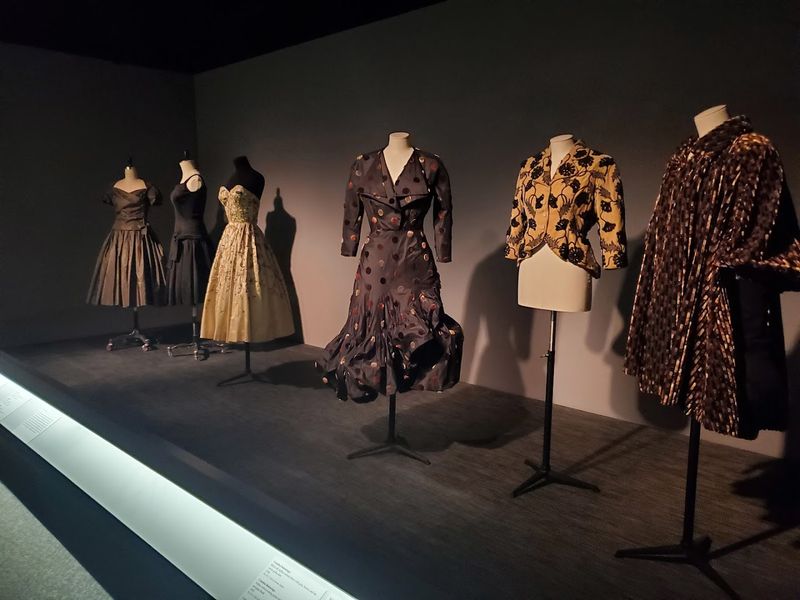
Fashion people know that the real action in New York’s style world happens well below the surface of the runway. The Museum at the Fashion Institute of Technology, known simply as the FIT Museum, sits at Seventh Avenue and 27th Street in Chelsea and is one of the most underrated cultural institutions in the entire city.
Best of all, admission is completely free, which feels almost criminal given the quality of what is on display inside.
The permanent collection holds over 50,000 garments and accessories spanning four centuries of fashion history, making it one of the largest and most significant fashion collections anywhere in the world. Special exhibitions rotate throughout the year and have covered everything from the history of denim to the evolution of gender in fashion design.
Each show is curated with the same seriousness you would expect from any major art museum.
The building is located on the FIT campus, and the museum operates Tuesday through Saturday during regular gallery hours. Students, designers, historians, and curious visitors all find something worth their time here.
If you have ever wanted to understand how clothing became culture, how fashion became art, and how New York became the center of it all, this museum answers every one of those questions beautifully.