
9 Off-The-Radar Washington Coast Destinations With Incredible Views
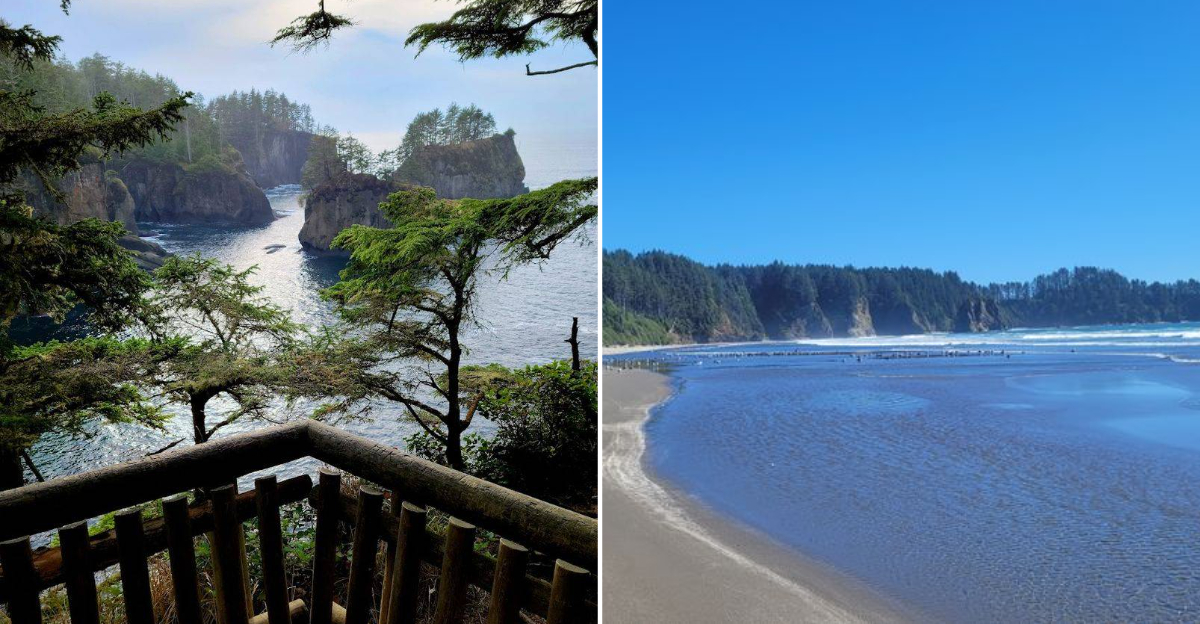
Most people who visit Washington stay close to Seattle. They drink the coffee, they see the market, they watch the ferries cross the sound.
They go home thinking they saw the state. They did not even see half of it.
The coast is out there waiting. It has been the whole time.
The Pacific coastline here is not the kind of place that asks for your attention. It does not need to.
The cliffs do what cliffs do. The tide comes in, pulls back, and leaves behind something worth looking at.
The fog settles over the water in the morning and burns off slowly, and by the time it clears, you are already standing somewhere that feels like the edge of the world. This is not Seattle’s coast.
This is older and quieter and considerably harder to forget. These destinations never made it onto the standard itinerary.
That is not a flaw in the planning. That is the whole point.
Pack for wind. Bring a camera.
Leave the itinerary loose.
1. Cape Flattery
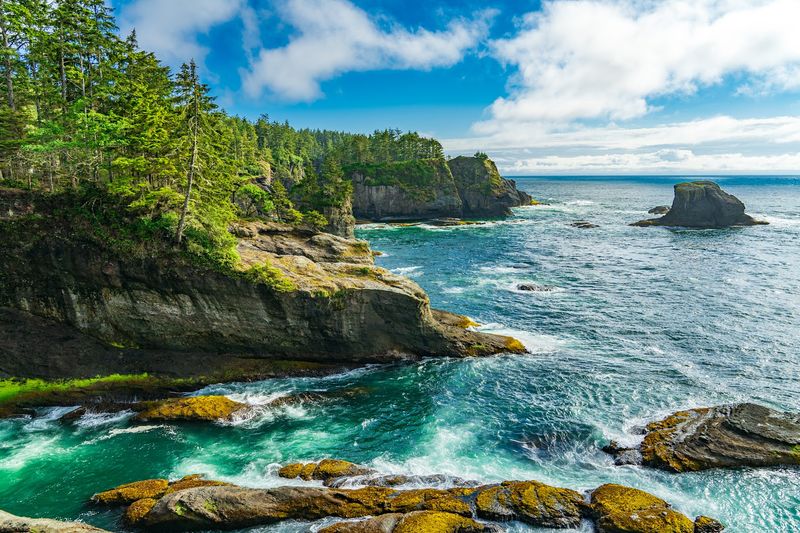
Standing at the absolute northwestern tip of the contiguous United States feels unreal. You are literally at the edge of the country, staring out at the Strait of Juan de Fuca and the open Pacific Ocean.
The trail to get here is short, about a mile round trip. It winds through old-growth forest with cedar trees so massive they feel prehistoric.
Four wooden observation platforms wait at the end of the trail. Each one gives you a different angle of the cliffs, sea caves, and crashing waves below.
Seabirds circle overhead constantly. Bald eagles are not rare sightings here at all.
On clear days, you can spot Vancouver Island across the water. It is genuinely one of the most dramatic coastal views in the entire state.
Whales pass through these waters during migration season. Seeing a spout rise above the waves from this vantage point is something you will not forget.
The Makah Tribe has called this area home for thousands of years. Visiting feels like stepping into both natural history and living culture at once.
You will need a Makah Recreation Pass to access the area. Pick one up at local vendors in Neah Bay before heading out.
Crowds are minimal compared to other famous viewpoints in Washington. Most days, you can stand on the platform and feel completely alone with the ocean.
2. Cape Flattery Observation Deck
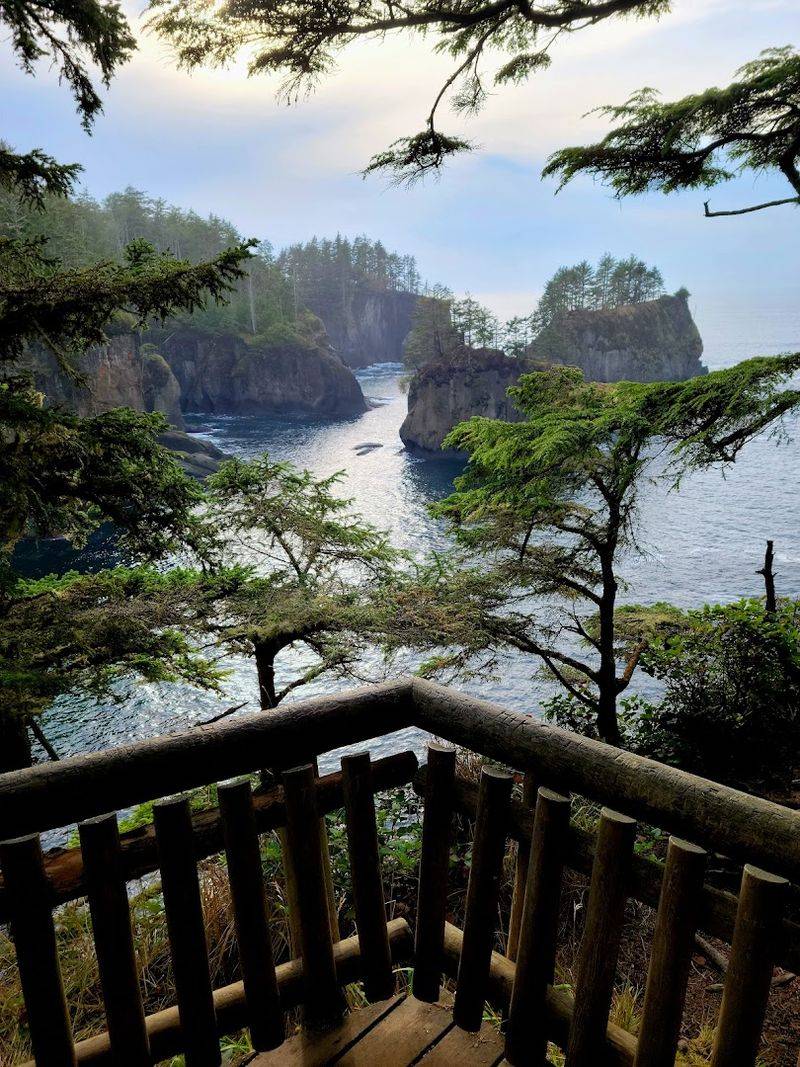
Not everyone knows the observation deck and the cape trail are technically two separate experiences. The deck itself is the crown jewel at the end of the path, and it deserves its own spotlight.
Built and maintained by the Makah Nation, the deck is sturdy and well-positioned. It hangs right over the cliff edge, giving you a straight-down view of the sea caves churning below.
The color of the water here is shocking. On sunny days, it shifts from deep navy to a bright teal that looks almost tropical.
Layers of basalt rock jut out from the cliffs in dramatic formations. Sea otters sometimes float in the calmer coves below.
Wind is a real factor up on the deck. Hold onto your hat and maybe skip the umbrella unless you enjoy watching it fly into the ocean.
Photographers absolutely love this spot during golden hour. The light hits the sea stacks at an angle that makes every shot look professional.
Families with kids tend to stay a long time here. There is so much to watch, from crashing waves to diving birds to distant boat traffic.
Interpretive signs on the trail explain the Makah cultural connection to this land. Reading them adds real depth to the experience.
Parking at the trailhead is free, but the Makah Recreation Pass is required. It costs just a few dollars and supports the tribe directly.
Head to Makah Indian Reservation, Neah Bay, WA 98357.
3. Shi-Shi Beach
Getting to Shi-Shi Beach requires some effort, and honestly, that is exactly why it stays so beautiful. A roughly four-mile round-trip hike through muddy forest trail keeps the crowds thin.
Wear waterproof boots. Seriously, the trail can be ankle-deep in mud, and regular sneakers will not survive the journey.
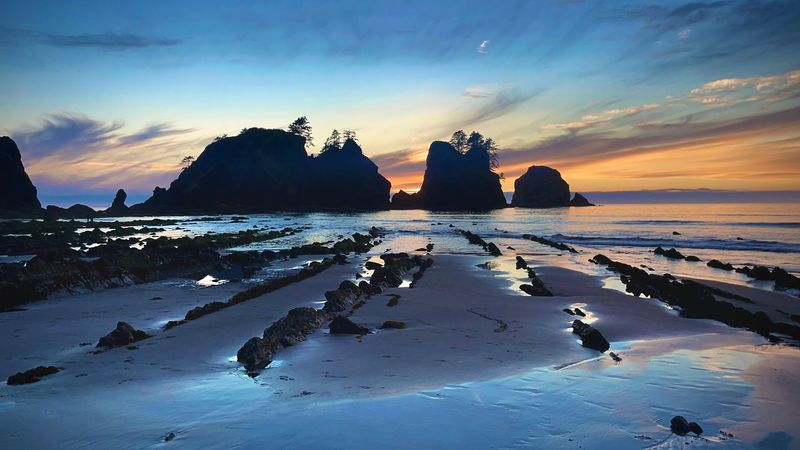
Once you break through the tree line and see the beach, your jaw will drop. Miles of wild, dark sand stretch out in both directions with almost nobody on it.
The sea stacks here are some of the most photogenic on the entire Washington coast. They rise straight out of the water like ancient guardians.
Tide pools at the base of the rocks are teeming with life. Purple sea urchins, anemones, and starfish all hang out in the shallow pools at low tide.
Camping on the beach is allowed with a permit. Falling asleep to the sound of waves crashing against those sea stacks is a whole different kind of experience.
You need both a Makah Recreation Pass and a National Park wilderness permit to visit. Getting both is straightforward and worth every bit of the small fee.
Wildlife sightings are common here. River otters, harbor seals, and shorebirds are regular visitors along this stretch of coastline.
Sunsets over the sea stacks are legendary among Pacific Northwest hikers. Plan your hike timing to catch the light going down over the water.
4. Point Of Arches
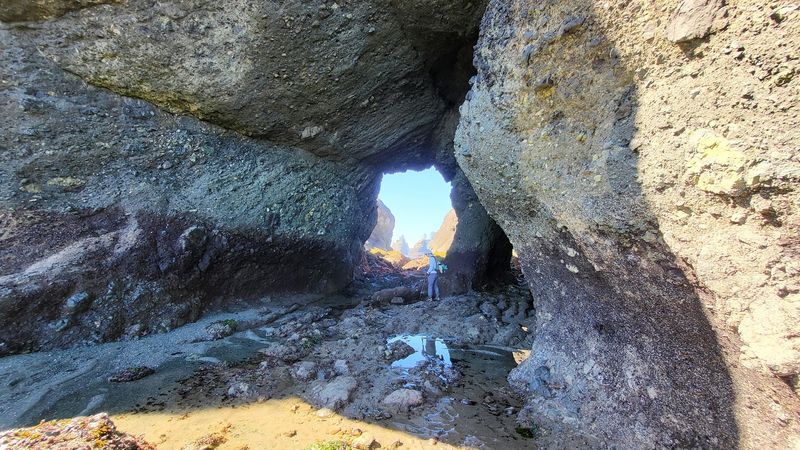
Point of Arches is the kind of place that appears in dreams. Natural rock arches carved by centuries of wave action frame views of the open Pacific in ways that feel almost unreal.
Reaching it means hiking through Shi-Shi Beach and continuing south along the shoreline. Timing your arrival with low tide is absolutely critical for safe access.
At low tide, you can walk right up to the base of the arches. The rock formations are massive up close, covered in barnacles and sea life.
This is part of Olympic National Park, so the wilderness permit requirement applies here, too. Plan, especially during the summer months when permits fill up faster.
Photographers treat this spot like a pilgrimage destination. The arches frame the horizon in a way that makes every composition look intentional and stunning.
Fog rolls in frequently along this stretch of coast. A misty morning at the arches gives the whole scene an eerie, magical atmosphere that clear days cannot match.
Black oystercatchers nest in the rocks nearby. Their loud, piping calls echo off the cliff walls constantly.
Bald eagles patrol the area regularly, scanning the tide pools for an easy meal. Watching one dive is a genuine highlight of any visit.
The walk back along the beach at sunset is just as rewarding as the destination itself. The whole coastline glows orange and pink as the sun drops behind the horizon.
5. Hobuck Beach
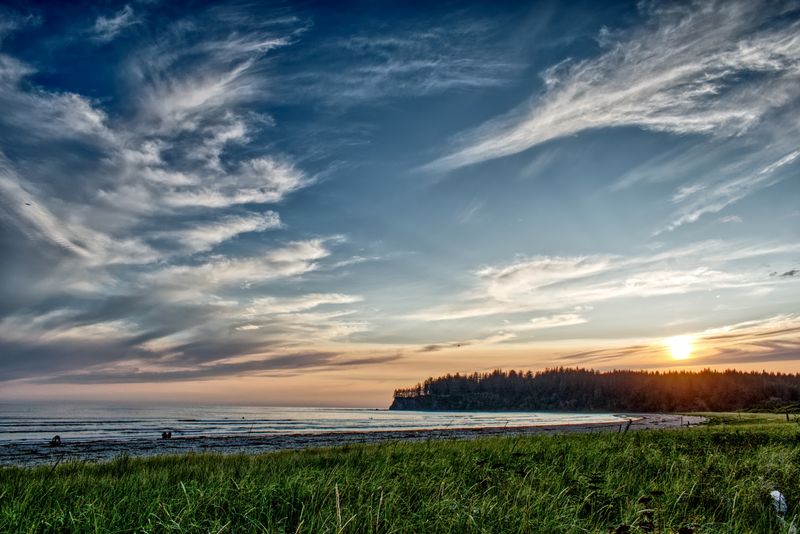
Hobuck Beach is the kind of place locals treasure, and visitors rarely find. It sits just outside Neah Bay, owned and operated by the Makah Tribe, and it has a laid-back energy that bigger beaches completely lack.
The beach is wide, sandy, and remarkably uncrowded. Even on weekends, you can find a stretch of sand that feels entirely your own.
Surfers show up here regularly because the wave conditions can get surprisingly good. Watching someone ride a wave with forested hills as the backdrop is a pretty wild visual.
The campground right on the beach is a major draw. Waking up in a tent with the sound of the Pacific just feet away is hard to beat.
Views of the Strait of Juan de Fuca open up clearly from the shoreline. On calm mornings, the water looks almost glassy and impossibly peaceful.
Shorebirds work the wet sand constantly at low tide. Dunlins, sanderlings, and occasional whimbrels pick through the surf zone in tight flocks.
The drive to get here passes through some genuinely beautiful Olympic Peninsula scenery. Dense forest lines the road all the way to the coast.
Facilities at the campground are basic but functional. Running water and restrooms are available, which is more than many remote beach camps offer.
A Makah Recreation Pass is required for access here, too. Fees support the tribe and help maintain this incredible stretch of coastline.
6. Rialto Beach
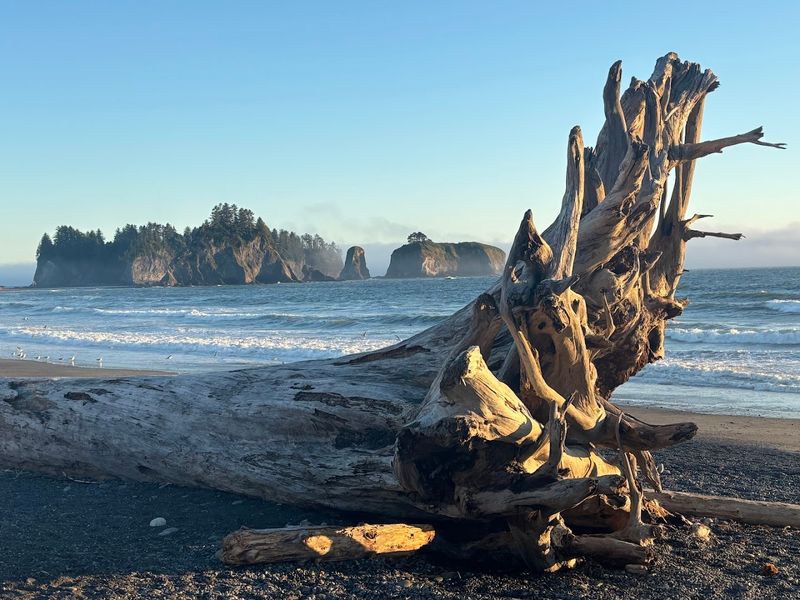
Rialto Beach hits differently than most beaches. Giant driftwood logs pile up along the shoreline like a natural sculpture garden, and the sea stacks in the distance give the whole scene a prehistoric feel.
The beach is part of Olympic National Park, so no camping fees apply if you have your park pass. Day use is easy, and parking is straightforward.
Walking north from the main access point leads you toward Hole-in-the-Wall, a famous sea arch carved right through a headland. It is about a mile and a half up the beach.
Hole-in-the-Wall is only accessible at low tide. Check the tide tables before you go, or you will be waiting on wet rocks longer than expected.
Storm watching here in winter is spectacular. Waves crash against the sea stacks with terrifying force, sending spray thirty feet into the air.
The beach is wide and rocky in sections, so sturdy footwear matters. Flip-flops will make you miserable on the cobblestone stretches near the waterline.
Bald eagles perch on the driftwood logs regularly. They seem completely unbothered by people walking just a few yards away.
Sunsets over the sea stacks from this beach rank among the best in Washington. The light turns everything golden, and the silhouettes of the rocks are dramatic against the sky.
La Push is just a short drive away if you want to grab food after exploring.
7. Second Beach Trailhead
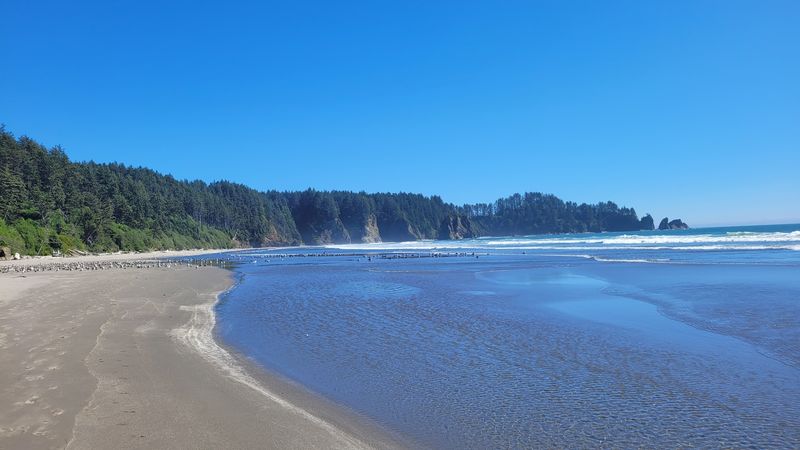
Second Beach is one of those places that rewards you almost immediately for the small effort it takes to reach it. The trailhead starts in a mossy old-growth forest, and the contrast when you emerge onto the beach is genuinely shocking.
The hike is about 1.4 miles round trip, which makes it very approachable. Families with kids handle it easily, and the payoff is absolutely worth the short walk.
The beach itself is wide and dramatic, framed by towering sea stacks just offshore. At low tide, the sand stretches out forever, and the sea stacks are reflected in shallow tide pools.
Sea stacks here have names, and locals know them well. The formations create a natural frame for some of the most photographed sunsets on the Washington coast.
Harbor seals haul out on the rocks near the sea stacks regularly. Binoculars are a smart thing to bring along if you have them.
The forest trail is magical on its own, especially on rainy days. Ferns, moss, and towering Sitka spruce create a green tunnel that feels completely wild.
Camping is permitted on the beach with a wilderness permit. Falling asleep under a sky full of stars with no light pollution is something city dwellers rarely experience.
The beach faces west, which means sunset views are outstanding almost every clear evening. Bring a blanket and plan to stay until the last color fades from the sky.
Find the trailhead along Washington 98350 near La Push on the Olympic Peninsula.
8. Ruby Beach
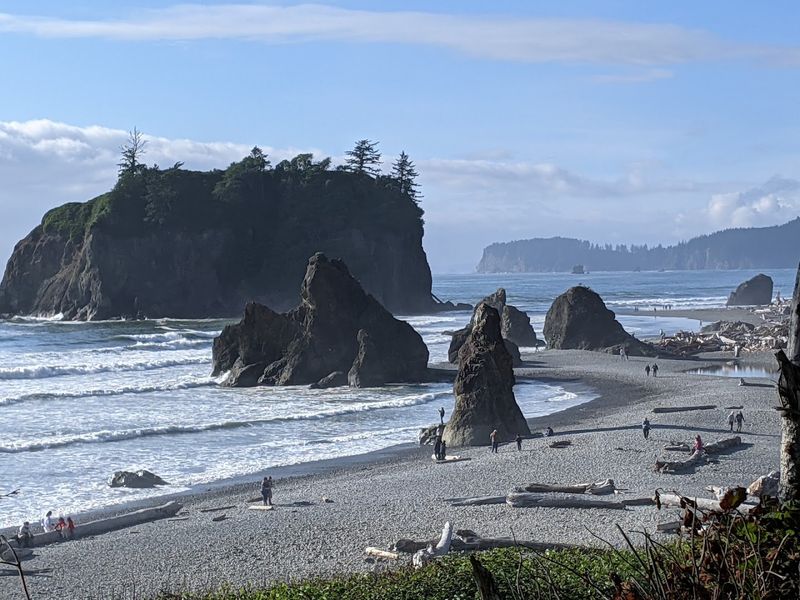
Ruby Beach earns its reputation every single time. The combination of richly colored pebbles, towering sea stacks, and driftwood-strewn shoreline makes it one of the most visually striking beaches in the Pacific Northwest.
Getting here is easy compared to other Olympic Coast beaches. A short path from the parking lot drops you right onto the beach in about five minutes.
The sea stacks at Ruby Beach are spread out across a wide area. Walking north along the shoreline reveals new angles and formations around every bend.
The pebbles on the beach range from dark basalt to reddish jasper. Collecting them is tempting, but remember that removing rocks from a national park is not allowed.
Bald eagles love this stretch of coast. Spotting three or four in a single visit is not unusual at all.
Tide pools near the base of the sea stacks hold a surprising amount of life. Giant green anemones, hermit crabs, and chitons all call these pools home.
The beach is part of the Kalaloch area within Olympic National Park. The stretch of coastline here is protected and remarkably well-preserved as a result.
Fog can roll in fast and thick, especially in the morning. That fog actually makes the sea stacks look even more dramatic and mysterious from the shoreline.
Photographers and painters visit Ruby Beach year-round for good reason. The light changes constantly here, and every visit looks different from the last.
9. Kalaloch Beach
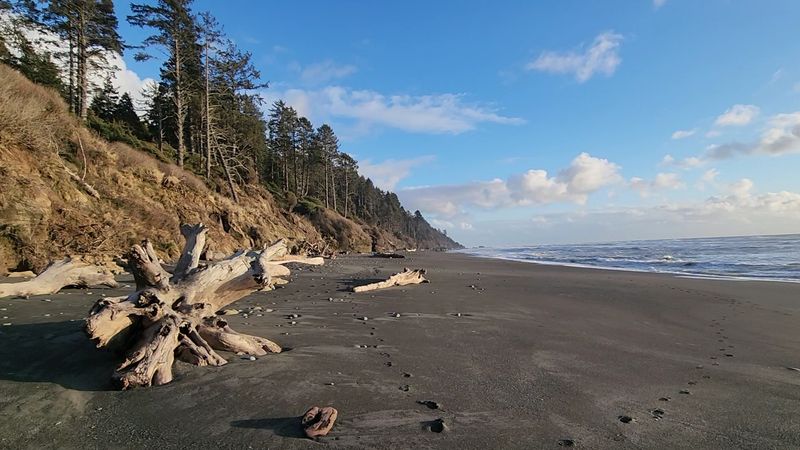
This beach has a slow, unhurried energy that is hard to find anywhere else on the Washington coast. The beach stretches for miles in both directions with almost nothing interrupting the view.
The famous Kalaloch Tree of Life grows right at the edge of the bluff just north of here. Its roots hang exposed over a washed-out cliff, and it somehow keeps thriving anyway.
That tree alone is worth the drive. People travel from across the country just to see it and wonder how it is still standing.
The beach itself is wide, sandy, and perfect for long walks. You can walk for an hour and feel like you have the whole coast to yourself.
Driftwood piles up in enormous quantities here after winter storms. Some of the logs are so large that they become landmarks that stick around for months.
The Kalaloch Lodge sits right on the bluff above the beach. Even if you are not staying there, the view from the grounds is worth stopping for.
Tide pools appear at low tide and are filled with fascinating creatures. Green anemones wave their tentacles in the current while tiny crabs scuttle across the rocks.
Razor clam season draws diggers to this beach when the season opens. Watching a seasoned clammer work is an oddly entertaining spectacle if you have never seen it before.
Sunsets here are long, wide, and breathtaking with nothing blocking the western horizon. Find Kalaloch Beach at 167422 US-101, Forks, WA 98331.