
9 Ohio Hiking Trails Hikers Should Know About During Black Bear Season
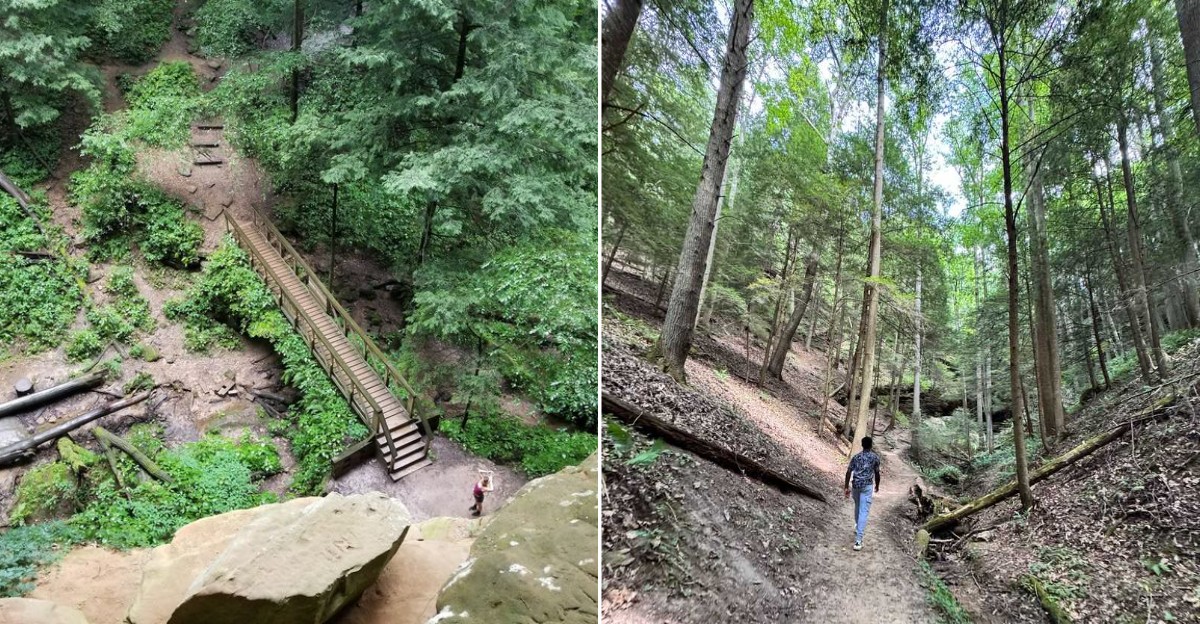
Ohio has black bears, and yes, that surprises a lot of people. They’re not common, but they’re also not going anywhere, and sightings keep climbing, especially from late May through early July when young males wander off to find their own territory.
Most of those sightings cluster in northeast Ohio near the Pennsylvania border, but bears do pass through Hocking, Vinton, Ross, and Athens Counties most years too, which just so happens to be where some of the prettiest trails in the state wait for you.
That does not mean you should cancel your hiking plans.
It means you should hike smart, keep your snacks packed away, and know a little about where you are going. Black bears here almost always want nothing to do with people.
They are usually young males weighing between 125 and 250 pounds, busy hunting for acorns, berries, and insects, not hikers. If you spot one, never approach it, never feed it, and slowly back away so it has room to leave.
1. Selinde Roosenburg Memorial Backpack Trail
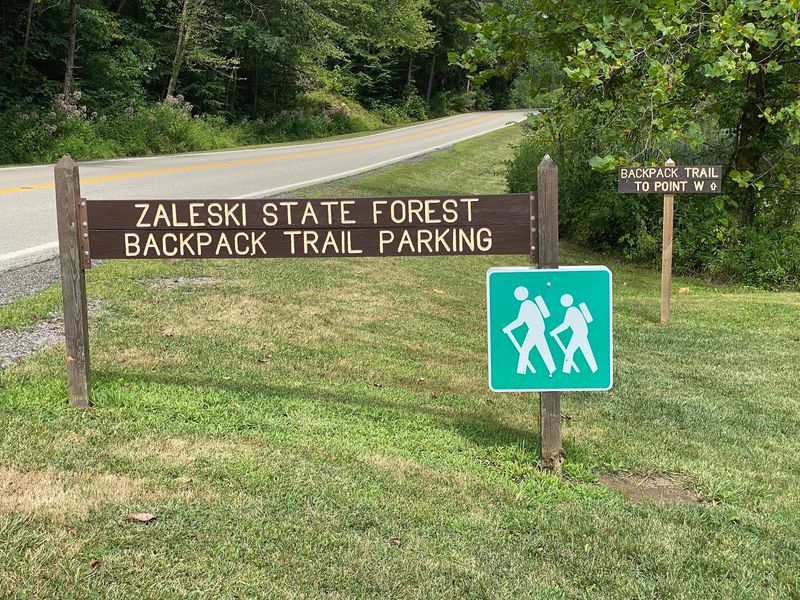
Second-largest state forest in Ohio, nearly 27,000 acres, and barely a cell signal in sight. Zaleski is where you go when you want the woods to swallow you whole for a while.
The Selinde Roosenburg Memorial Backpack Trail is the star here. You can pick a 9.7-mile loop, stretch it toward 30 miles, or take the 10-mile day loop if your legs want mercy.
Climbs reach about 300 feet, so expect your calves to file a complaint.
The path is easy to follow, though a few stretches get overgrown. Spring brings wildflowers.
Fall turns the maple, beech, and hickory into a wall of red and gold that photos never quite capture.
Camping overnight? Designated sites come with pit toilets and water cisterns, but carry your own supply as backup.
Old mining activity means stream water should always be filtered or treated first.
Bear-wise, this corner of Ohio sits in prime sighting territory. Hang your food, keep a clean camp, and never leave trash behind.
Weekends from spring through fall get busy with fellow backpackers, so a weekday trip feels wonderfully lonely. Go slow, listen to the birds, and let your shoulders drop.
Find the trailhead on State Route 278, right across from the old Hope Furnace, at 27331 OH-278, McArthur, OH 45651.
2. Wildcat Hollow Hiking Trail – Wayne National Forest
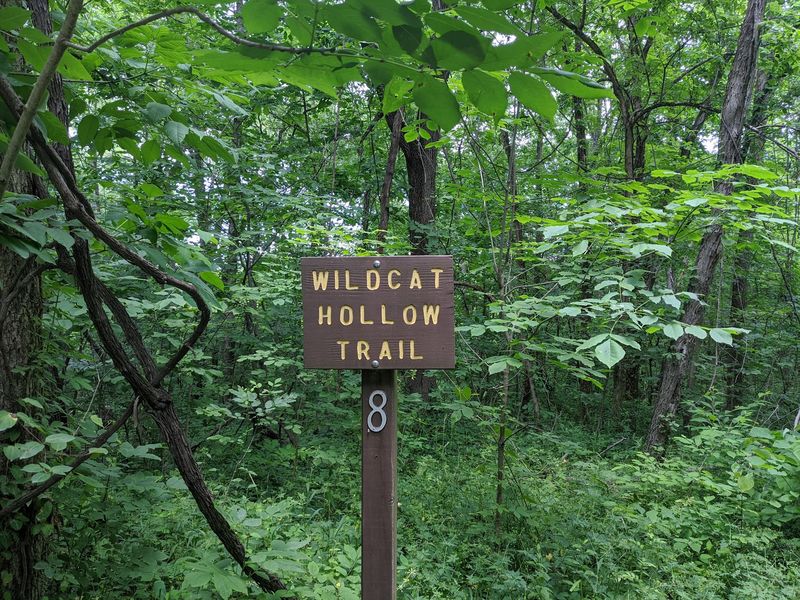
Ask around the Athens Ranger District and Wildcat Hollow comes up first, every time. It is the most popular trail in this stretch of Wayne National Forest, and the reason is simple: variety.
Choose the 5-mile loop for a solid day hike, or commit to the 15-mile or 17.2-mile version and sleep under the trees. Ridgetops, stream bottoms, white pine plantations, sunny meadows, deep hardwood forest, and odd rock outcrops all show up along the way.
Late April and early May bring a wildflower show worth planning around. Birdwatchers love it too, since the trail belongs to the Hocking Valley Bird Trail.
Butterflies drift across the meadows like confetti.
Practical stuff matters here. Stream crossings are frequent and the ground is rough, so wear boots with ankle support and accept that your socks may get wet.
No potable water exists at the trailhead or anywhere along the route. Because of past mining and active oil extraction, the Forest Service says skip natural water entirely, even filtered.
Pack every drop or cache jugs at road crossings.
Dispersed camping is allowed, and old fire rings mark spots others loved before you. This is bear country in southeastern Ohio, so store food properly overnight.
Start your walk at Co Rd 58, Glouster, OH 45732.
3. Buckeye Trail
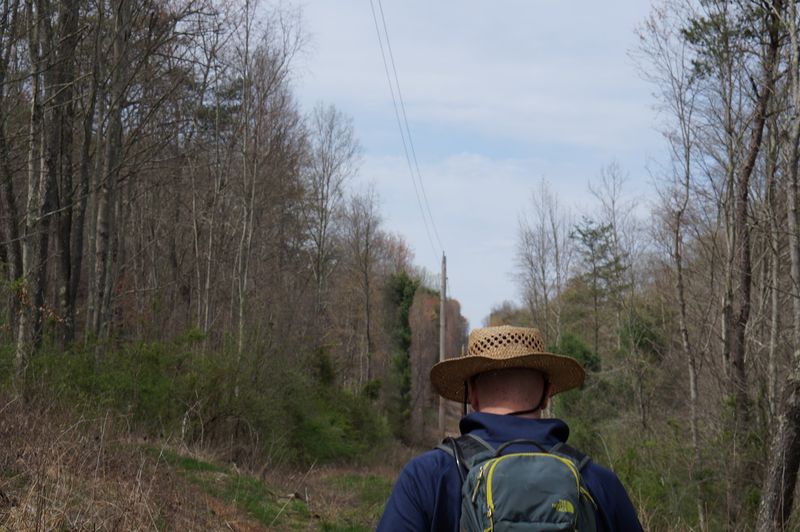
Over 1,400 miles long. Longest loop hiking trail in the entire country.
The Buckeye Trail wraps around Ohio like a giant blue-blazed ribbon, and you can hop on almost anywhere.
The Benton Township section, deep in the Hocking Hills region, is one of the finest pieces of the whole thing. Here the route often shares ground with the Grandma Gatewood Trail, linking Old Man’s Cave, Cedar Falls, and Ash Cave into one unforgettable walk.
Expect rugged sandstone gorges, waterfalls that roar after rain, and thick mixed hardwood forest. Some stretches are soft footpath.
Others follow quiet country roads. That mix keeps things interesting instead of repetitive.
Blue blazes painted on trees and posts guide you the whole way, so navigation is straightforward if you pay attention. Bring a paper map anyway, because signal drops in the gorges.
Wildlife sightings are part of the fun. White-tailed deer bolt across the path constantly, wild turkeys grumble in the brush, and black bears do occasionally turn up in Hocking, Vinton, and Athens Counties.
Do a three-hour day hike or string together several days with a pack. Either way, you get a real taste of what makes Ohio worth exploring on foot.
Point your car toward Benton Township, OH 43138, and start walking.
4. Hemlock Bridge Trail – Hocking Hills State Park
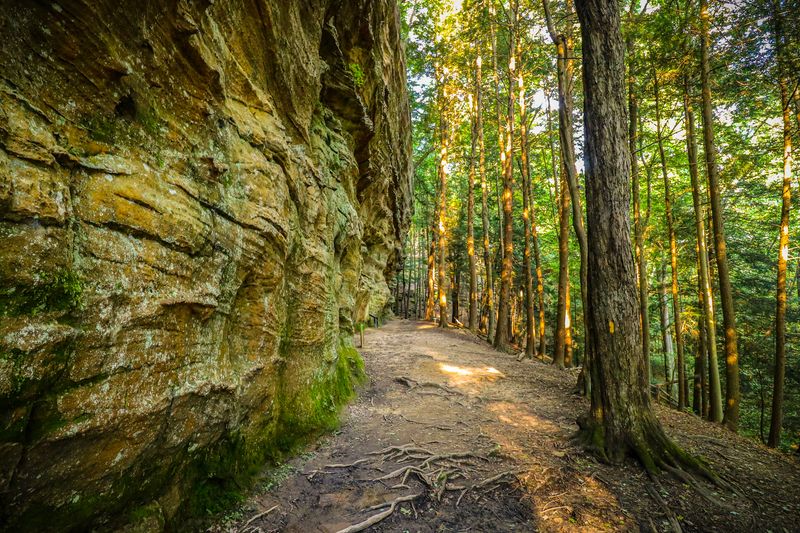
There is a swinging rope bridge in Ohio, and crossing it makes grown adults giggle like kids. Hikers have nicknamed it the Indiana Jones bridge of the Hocking Hills, and it bounces just enough to be thrilling.
The Hemlock Bridge Trail runs about 1.5 to 1.7 miles and takes roughly an hour. Around 150 stairs greet you if you begin near the lodge, and the footing turns slick and muddy after rain.
Shoes with real grip are not optional.
Towering eastern hemlocks shade the whole route. The sandstone walls beside you wear honeycomb weathering, those strange pockmarked patterns that look hand-carved but are pure erosion.
Your reward at the end is Whispering Cave, the second-largest recess cave in Ohio. It spreads about 300 feet wide and climbs 100 feet high, with a seasonal waterfall spilling over the rim.
Mist drifts through the air and the sound bounces off the stone.
Start from the Hocking Hills Lodge parking area near Old Man’s Cave, or fold this trail into a bigger 5-mile loop with the Grandma Gatewood Trail.
Bears are rarely seen here given the crowds, but keep snacks sealed anyway. Check park updates before you go.
Find the trail near Hocking Hills State Park Cabins, Logan, OH 43138.
5. Cantwell Cliffs
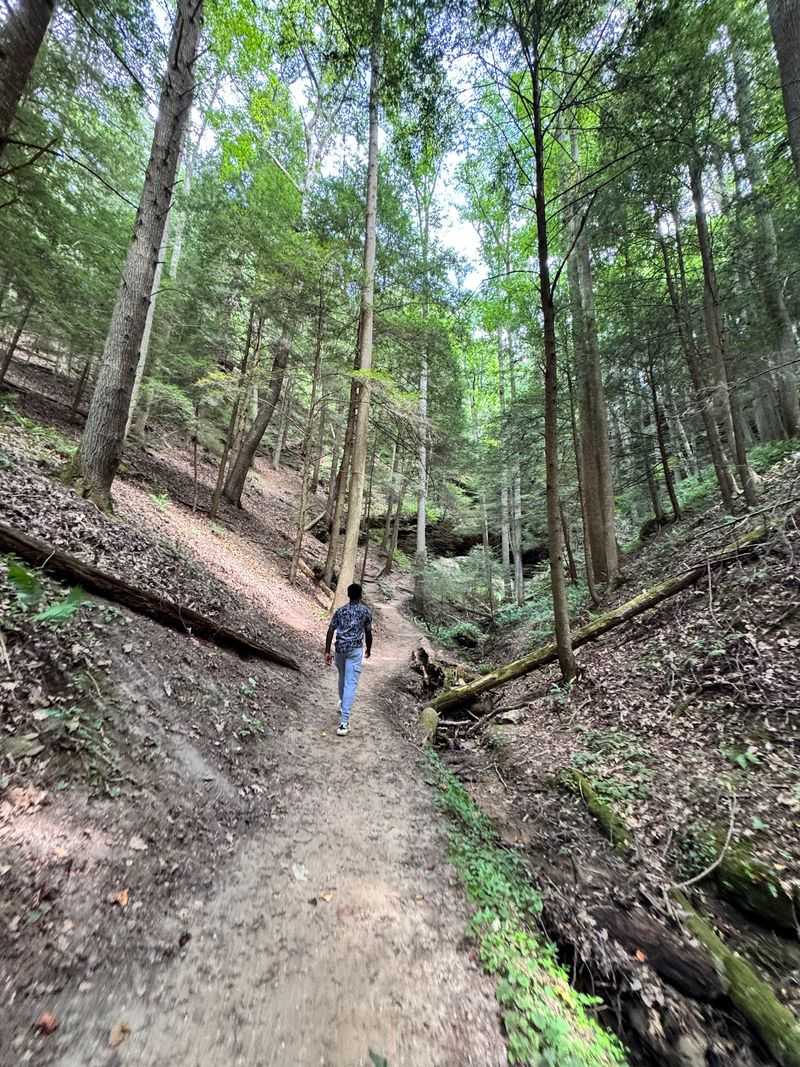
Fat Woman’s Squeeze. That is the actual name of the narrow rock passage you shimmy through at Cantwell Cliffs, and everyone laughs their way past it.
Sitting at the northern edge of Hocking Hills State Park, this spot draws fewer crowds simply because it takes a little extra driving. Your reward is quiet.
Sandstone walls climb 150 feet, and the gorge below stays cool even in July.
The main loop covers roughly 1.8 miles and earns a moderate-to-strenuous rating. Steps are everywhere, carved right into the rock, and some are steep enough to make you grab the railing.
Prefer something easier? The 1.1-mile Upper Rim Loop delivers big views without the descent, and the Lower Gorge Trail runs just a tenth of a mile.
Buck Run tumbles over a section of cliff to form a pretty waterfall, strongest after spring rain. Wildflowers explode across the slopes in April and May.
Sturdy shoes matter here more than almost anywhere else in Ohio. Loose gravel plus wet stone equals bruised pride.
Bear sightings are uncommon but possible in these thick woods, so hike with a buddy and make a little noise on blind corners.
Get there at 13640 OH-374, Rockbridge, OH 43149, and give yourself two unhurried hours.
6. Old Man’s Cave
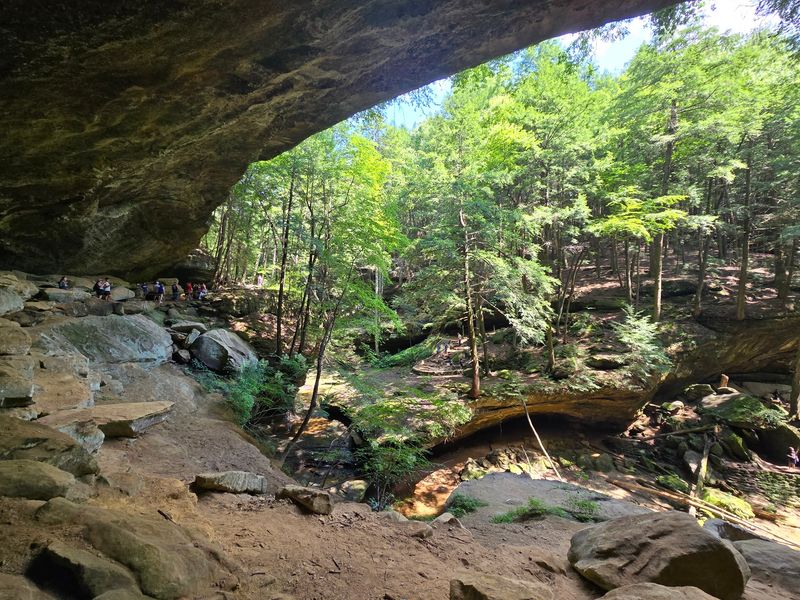
A hermit named Richard Rowe lived in this giant recess cave back in the early 1800s. His name faded, but his nickname stuck, and now Old Man’s Cave is the most visited spot in all of Hocking Hills.
The loop runs between 1.5 and 2.5 miles depending on your route, threading through a sandstone gorge split into five sections: Upper Falls, Upper Gorge, Middle Falls, Lower Falls, and Lower Gorge.
Waterfalls appear around nearly every bend. Stone stairways twist through tunnels.
Bridges arch overhead. The Devil’s Bathtub, a swirled pothole carved by centuries of rushing water, always draws a small crowd of photographers.
The main cave itself measures about 200 feet wide and 75 feet deep, a massive overhang that makes people go quiet when they walk under it. The gorge cuts through 150 feet of Blackhand sandstone, so you are literally looking at ancient layers of Ohio.
Most of the hike is moderate, but stairs and uneven rock make certain stretches work. Early morning or late evening visits mean fewer people and better light.
The Visitor Center at the parking lot has restrooms, exhibits, and a gift shop. Bears are rare here, though wildlife sightings happen year-round.
You will find this landmark in Logan, OH 43138.
7. Ash Cave
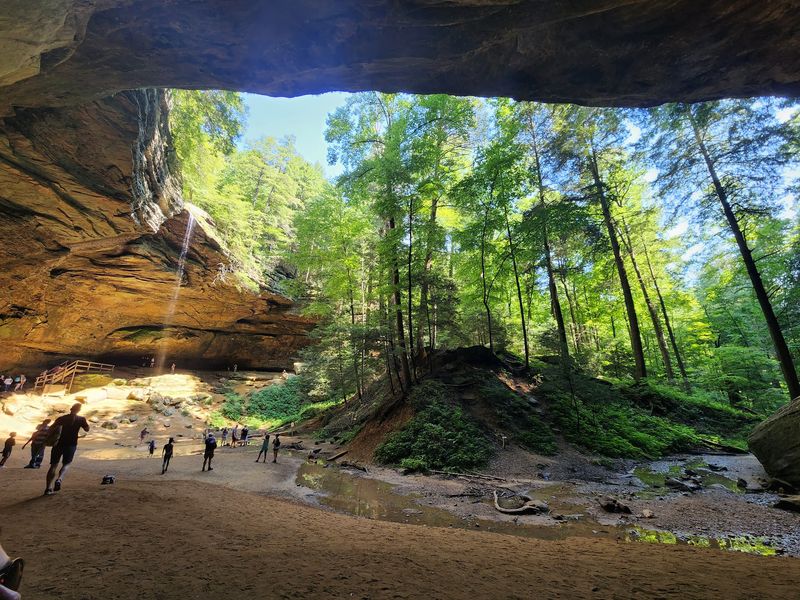
Biggest recess cave in Ohio, and it does not whisper about it. Ash Cave curves 700 feet end to end, sinks 100 feet deep, and rises 90 feet to its rim.
Standing beneath it makes you feel comfortably small.
Getting there is refreshingly easy. A paved, wheelchair-accessible path runs about a quarter to half a mile through a narrow gorge lined with hemlocks, beeches, and wildflowers.
Strollers roll fine. Grandparents keep up.
Everybody wins.
A slender seasonal waterfall drops from the rim into a shallow plunge pool below. Spring is peak flow, fed by snowmelt and rain, but even a dry summer visit delivers thanks to the sheer scale of the stone.
Here is the origin story: early settlers found enormous piles of ash inside, believed to be leftovers from Native American campfires burning across centuries. That is how the place got its name.
The acoustics deserve mention too. Certain spots act like whispering galleries, carrying soft voices surprisingly far.
Try it, then try not to grin.
Picnic tables and restrooms sit next to the parking lot, so bring lunch. This southern corner of Hocking County does see occasional bear activity, so pack out every crumb.
Head to 26400 OH-56, South Bloomingville, OH 43152.
8. Lake Logan State Park
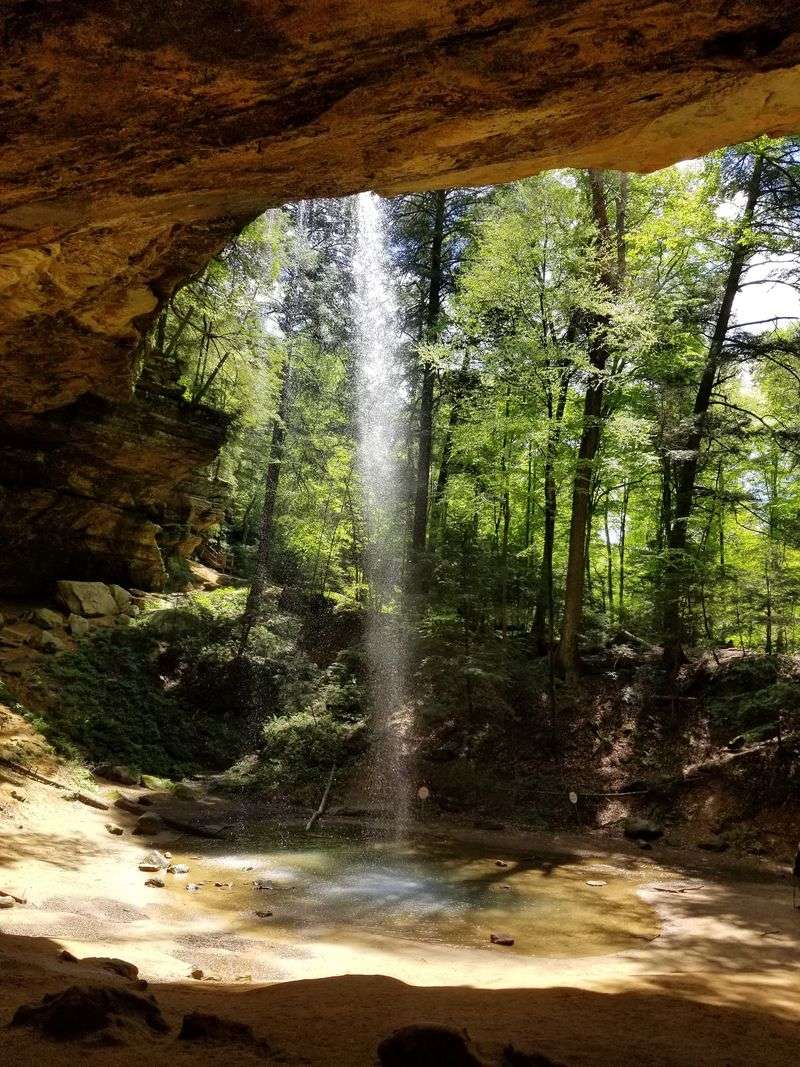
Sometimes your knees need a break from stairs. Lake Logan State Park delivers exactly that, with 318 acres of forest wrapped around a peaceful 400-acre lake.
Anglers rank this among the best fishing lakes in Ohio. Northern pike, bass, bluegill, crappie, catfish, and saugeye all live here, and someone is almost always pulling something in off the shoreline.
Swimmers get a designated beach area for cooling off. Boaters get two ramps, with a 10-horsepower limit that keeps things calm and quiet.
Seasonal rentals at the Lake Logan Marina include canoes, kayaks, paddleboards, pedal boats, and pontoons.
Hiking here is gentle compared to the gorges nearby. The Pine Vista Trail loops one easy mile, and the South Hiking Trail covers a half mile.
The Buckeye Trail also links in with 1.25 marked miles if you want more.
Oak and hickory dominate the woods, with wildflowers scattered across the forest floor in warmer months. Picnic areas ringing the lake come with grills, tables, and restrooms.
No camping inside the park since it is day-use only, but private campgrounds sit close by. Store food in your vehicle, since bears occasionally pass through Hocking County.
Plan your relaxed afternoon at 20160 St. Rt. 664, Logan, OH 43138.
9. Rock House
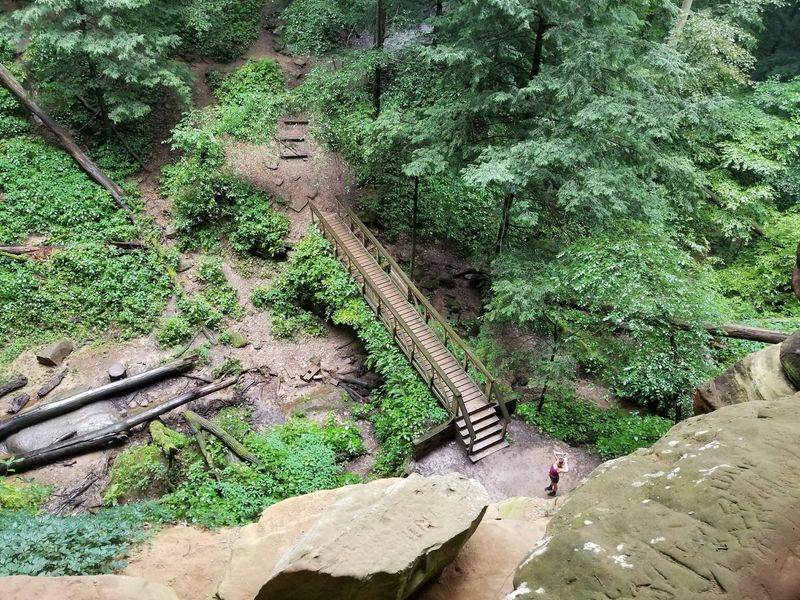
Bandits once hid here. Locals called it Robbers Roost, and standing inside the dim corridor, you understand why outlaws liked it.
Rock House holds a title no other Hocking Hills site can claim: it is the only true cave in the park. Not a recess overhang, but an actual tunnel running through the cliff, carved midway up 150 feet of Blackhand sandstone.
The chamber stretches 200 feet long, 20 to 30 feet wide, with a ceiling reaching 25 feet. Seven natural windows line one wall, throwing shafts of light across the stone floor.
The whole effect looks like a cathedral built by weather instead of people.
The trail is short, roughly 0.6 miles round trip, but carved stone steps and a moderate descent mean 30 to 45 minutes of real walking. Wheelchairs and strollers cannot manage it.
History runs deep here. Native Americans used the cave for thousands of years, and small recesses in the back wall are thought to have worked as baking ovens.
Forested ridges surround the parking area, so keep food sealed and stay alert during bear season in southern Ohio.
Check park hours before driving out, then find this one-of-a-kind Ohio wonder at 16350 OH-374, Laurelville, OH 43135.