
Ohio Is Home To The Longest Covered Bridge In The United States (And It’s Worth Seeing)
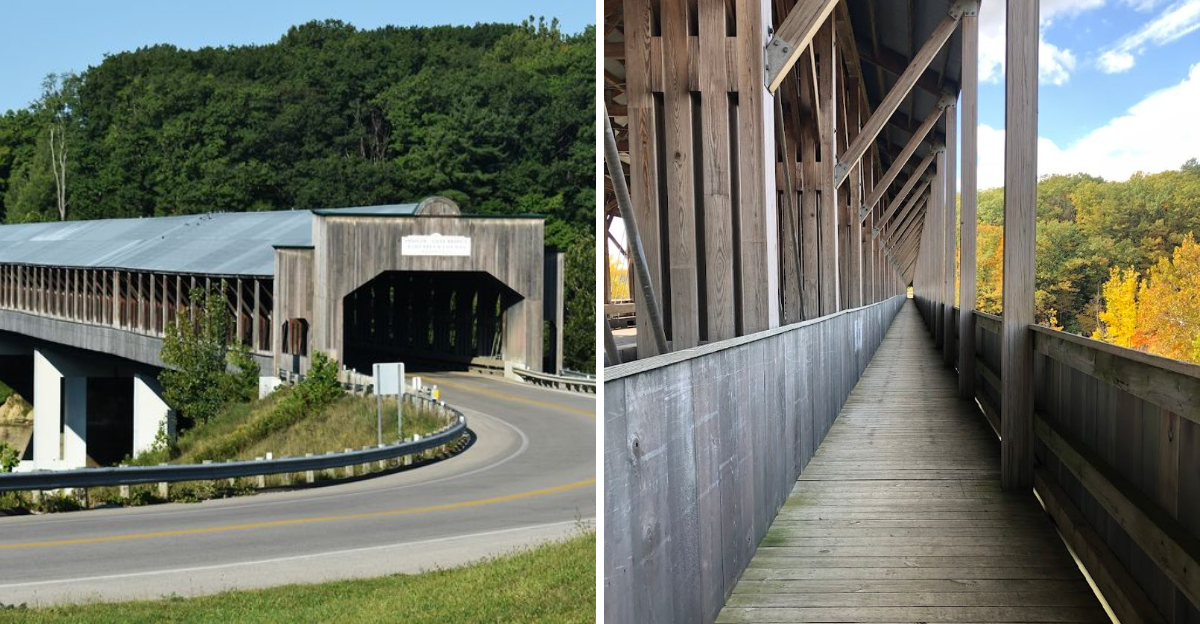
Most people think of covered bridges as old, weathered relics from another era, but Ohio has one that breaks every expectation. Stretching more than 600 feet, it holds the title as the longest covered bridge in the United States and feels far more impressive in person than you might expect.
Completed in 2008, this structure combines classic design with serious modern engineering, sitting 93 feet above the Ashtabula River. If you have ever wondered what a record-breaking covered bridge looks like up close, this one is absolutely worth the drive.
The Longest Covered Bridge In The United States Spans Over 600 Feet
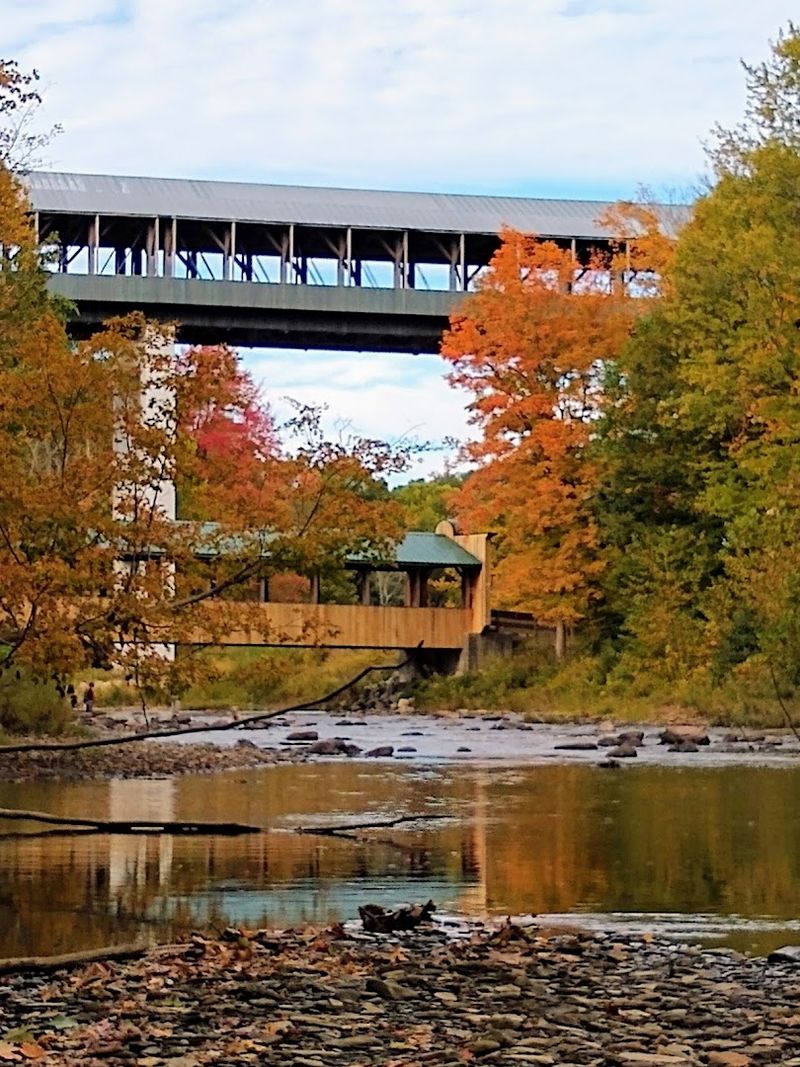
At 613 feet long, the Smolen-Gulf Covered Bridge holds a record that no other covered bridge in the United States can claim. That length is not just a number on a plaque, it is something you feel the moment you step inside and realize the far end seems almost distant.
The structure carries two full lanes of vehicle traffic while also providing pedestrian walkways along both sides.
Standing on those walkways and looking down at the Ashtabula River, 93 feet below, puts the sheer scale of the bridge into sharp perspective. The river moves quietly beneath, framed by the valley’s forested slopes in every direction.
For anyone who appreciates engineering feats wrapped in traditional aesthetics, this bridge delivers something genuinely rare.
Few structures in Ohio manage to be both record-holders and genuinely beautiful at the same time, but this one earns both descriptions without any stretch of the imagination.
Located In Ashtabula County, Ohio’s Covered Bridge Capital
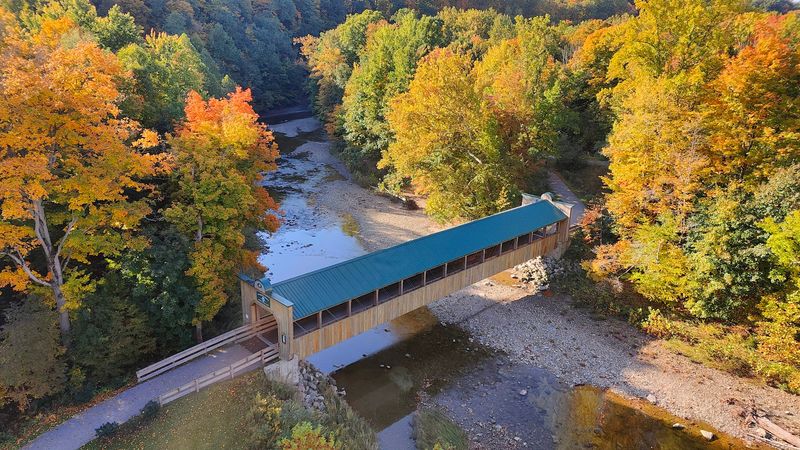
Ashtabula County carries a title that most Ohioans know well, the covered bridge capital of the state. With 19 covered bridges spread across its rural landscape, the county offers a concentration of these structures that is hard to match anywhere else in the Midwest.
The Smolen-Gulf bridge stands as the crown jewel of that collection.
The county’s geography plays a strong role in why so many bridges exist here. Deep river valleys, winding creeks, and forested terrain created a historic need for crossings, and the tradition of covered bridge construction took firm root in this part of northeastern Ohio.
That history is still very much alive today.
Visitors who make the trip to see the Smolen-Gulf bridge often find themselves drawn further into the county, stopping at additional bridges along the way, each one carrying its own quiet character and distinct setting along the rural roads.
Opened To The Public In 2008
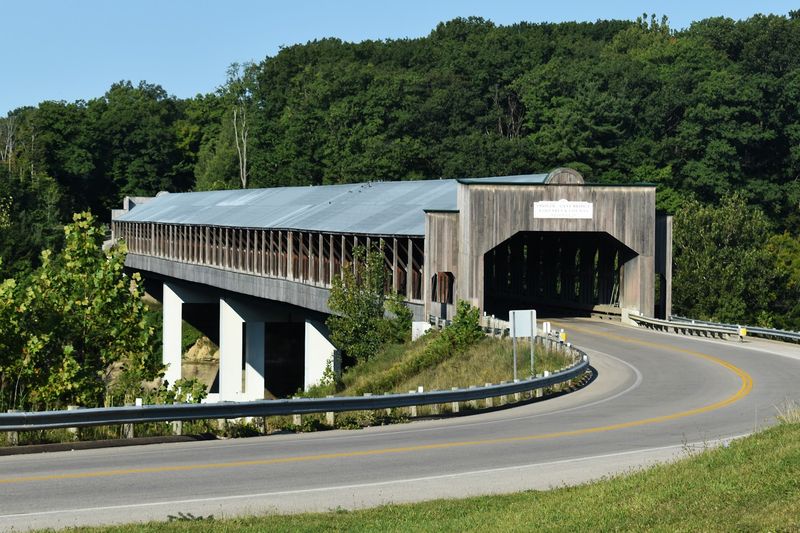
Completing a 613-foot covered bridge in the twenty-first century is not a small undertaking, and when the Smolen-Gulf bridge opened in 2008, it marked a meaningful moment for Ashtabula County. The project was years in the making, combining careful planning with a genuine commitment to preserving the covered bridge tradition in a functional, modern context.
What makes the 2008 completion date particularly interesting is that this bridge was not built as a museum piece or a tourist attraction in isolation. From day one, it was designed to carry real traffic loads on a public road, which is a distinction that separates it from purely decorative covered bridge restorations found elsewhere in the country.
The bridge is located at 4878 Plymouth Ridge Road, Ashtabula, Ohio, and remains open twenty-four hours a day, every day of the year, welcoming both drivers and walkers at any hour without restriction.
Blends Traditional Design With Modern Engineering
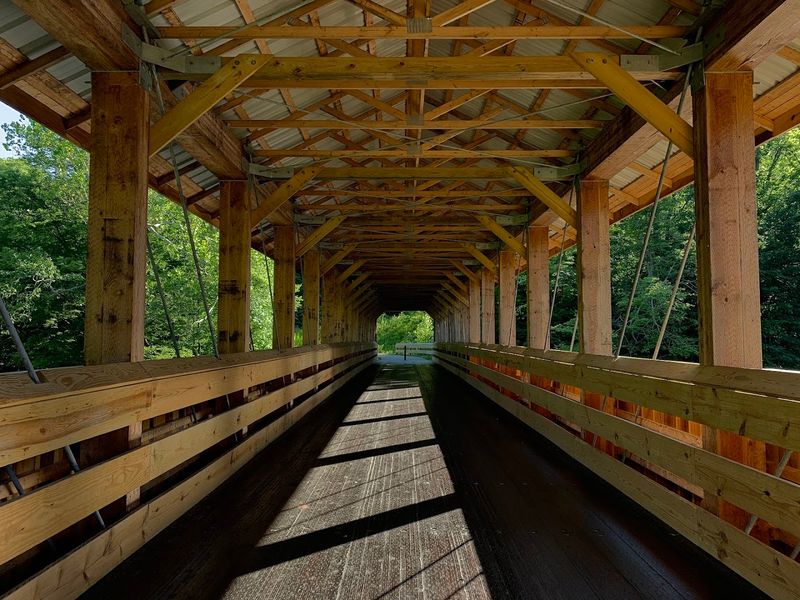
The Smolen-Gulf bridge was designed using a Pratt truss configuration, a structural system with roots going back to the 1840s. What sets this bridge apart from its historical predecessors is the material used to build that truss, glue-laminated Southern yellow pine, a modern engineered wood product that provides far greater strength and longevity than traditional timber framing alone could offer.
John Smolen, who served as the Ashtabula County Engineer for many years, designed the bridge with this hybrid approach deliberately in mind. The result is a structure that looks authentically traditional from the outside while performing to contemporary engineering standards on the inside.
That balance is not easy to achieve, and it shows in how seamlessly the bridge functions.
Walking through the interior, the laminated beams give off a warm, clean scent of pine that adds a sensory layer to the experience, making the engineering feel surprisingly personal rather than coldly technical.
Built For Both Vehicles And Pedestrians
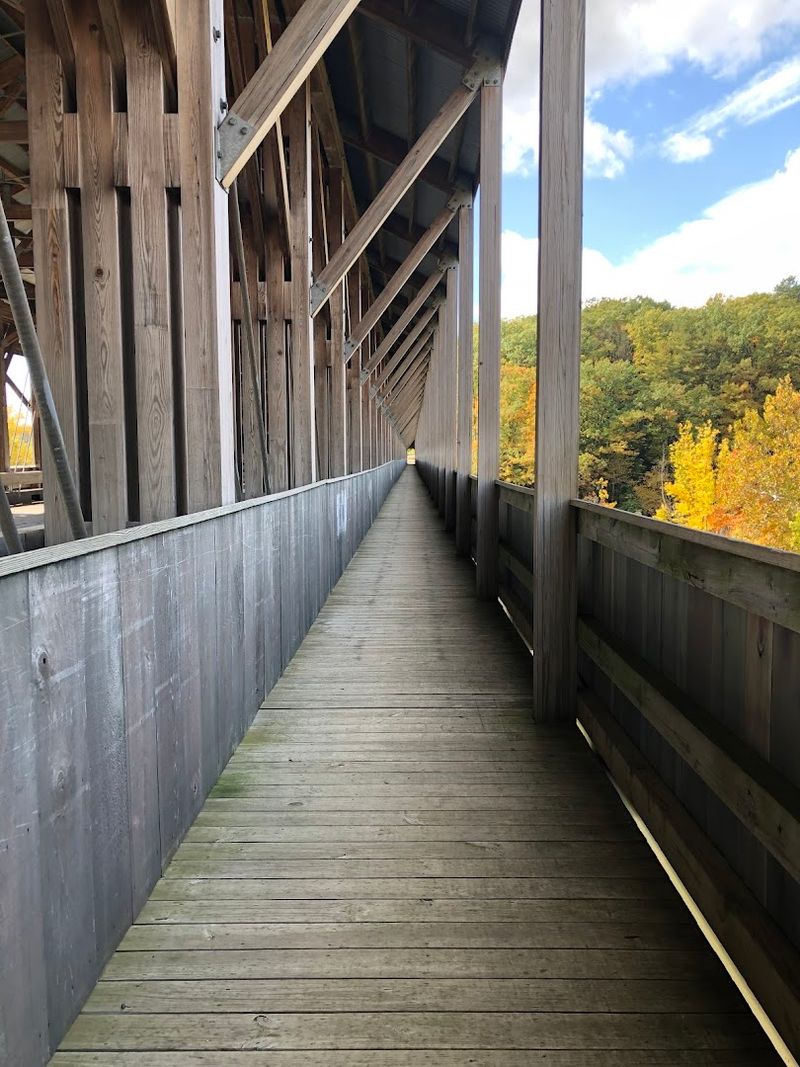
A covered bridge that carries two lanes of legal-weight traffic while also providing dedicated pedestrian walkways on both sides is genuinely uncommon. Most historic covered bridges were built for lighter loads and narrower uses, but the Smolen-Gulf bridge was engineered from the start to serve a full range of users without compromise on either side.
Pedestrians walking the bridge get a fundamentally different experience from drivers passing through. On foot, you slow down enough to notice the grain of the wooden walls, the rhythm of the overhead beams, and the sound of the river far below filtering up through the structure.
The walkways feel deliberately generous rather than squeezed in as an afterthought.
For families visiting with children, the pedestrian access is particularly valuable. Kids can take their time crossing, peer over the railing at the Ashtabula River below, and absorb the atmosphere of the bridge at a pace that a moving vehicle simply does not allow.
Overlooks The Scenic Ashtabula River Valley
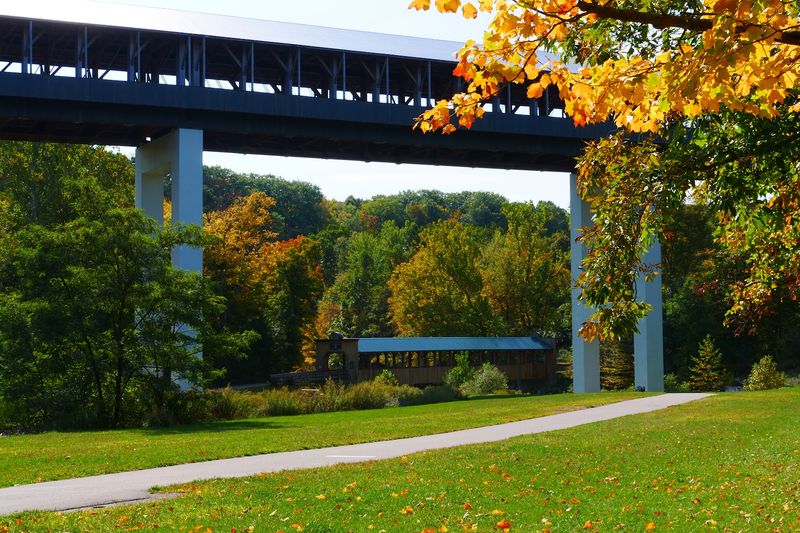
Sitting 93 feet above the Ashtabula River, the bridge offers one of the more dramatic natural views available from any covered bridge in the country. The valley below is wide and tree-lined, with the river moving through it at a pace that feels unhurried and genuinely calming when observed from that height.
Autumn transforms this view into something particularly striking. The forested slopes shift through gold, orange, and deep red, and the contrast against the bridge’s red exterior creates a scene that photographers return to year after year.
Even in summer, the dense canopy of green below gives the valley a lush, settled quality that rewards a long look.
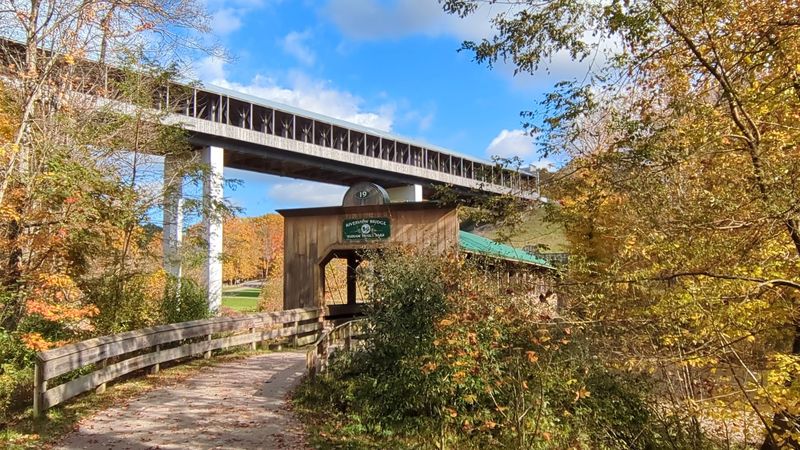
Below the main bridge, a second smaller covered bridge spans the same river at water level, accessible by a short walking trail from the parking area. Seeing both bridges from the riverbank simultaneously is one of those small surprises that makes the visit feel more complete than expected.
Named After A Local Family
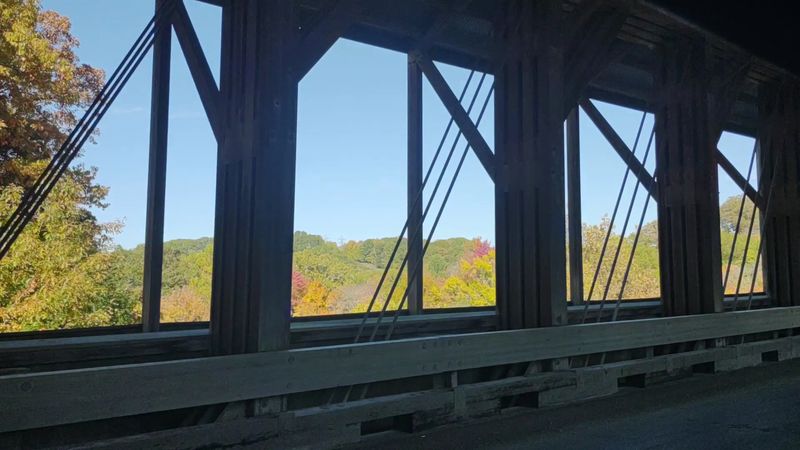
The name Smolen-Gulf carries two distinct references that reflect both the people and the place behind the bridge. John Smolen, the longtime Ashtabula County Engineer who designed the structure, is honored in the first half of the name, a recognition that feels appropriate given that his professional career was deeply tied to the county’s infrastructure and its covered bridge legacy.
The second part of the name, Gulf, refers to the Gulf Road area and the geographic character of the deep valley through which the Ashtabula River runs at this location. Local place names in northeastern Ohio often carry this kind of layered meaning, connecting family history with landscape in ways that reward a bit of curiosity.
Knowing the name’s origin adds a layer of appreciation to the visit. This is not a generic landmark assigned a bureaucratic title, it is a structure named with genuine intention, rooted in the people and the land it serves.
Part Of Ohio’s Covered Bridge Trail
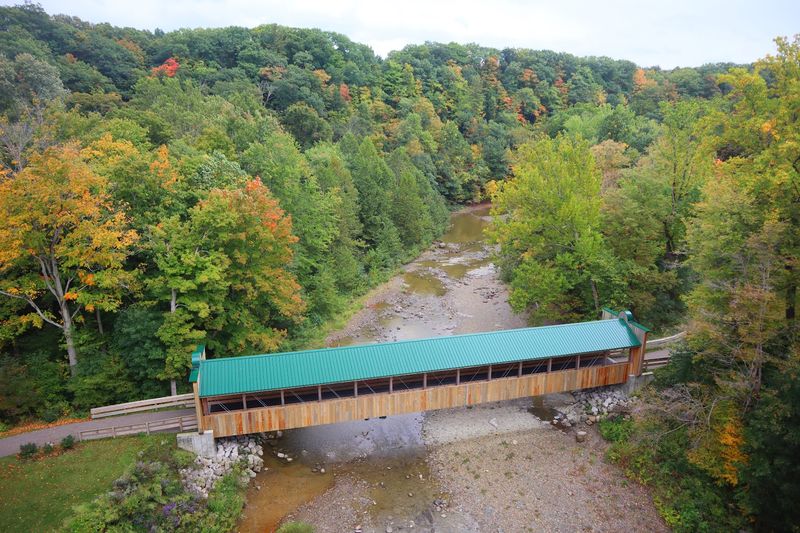
Ashtabula County maintains a covered bridge trail that connects its 19 bridges across a network of rural roads, making it possible to visit multiple structures in a single day if you plan the route thoughtfully. The Smolen-Gulf bridge serves as the most prominent stop on that trail, drawing visitors who then find themselves curious about what the other bridges look like.
The trail is self-guided, and an informational pavilion near the Smolen-Gulf bridge provides maps and background on each structure in the county. That pavilion is a genuinely useful starting point, especially for first-time visitors who arrive without a detailed plan.
It turns an unplanned stop into an organized afternoon excursion without much effort.
Each bridge on the trail has its own personality, different lengths, different truss styles, different settings along creeks and rivers. Moving through the county from one to the next builds a cumulative appreciation for how deeply the covered bridge tradition is woven into this part of Ohio.
Popular During The Annual Bridge Festival
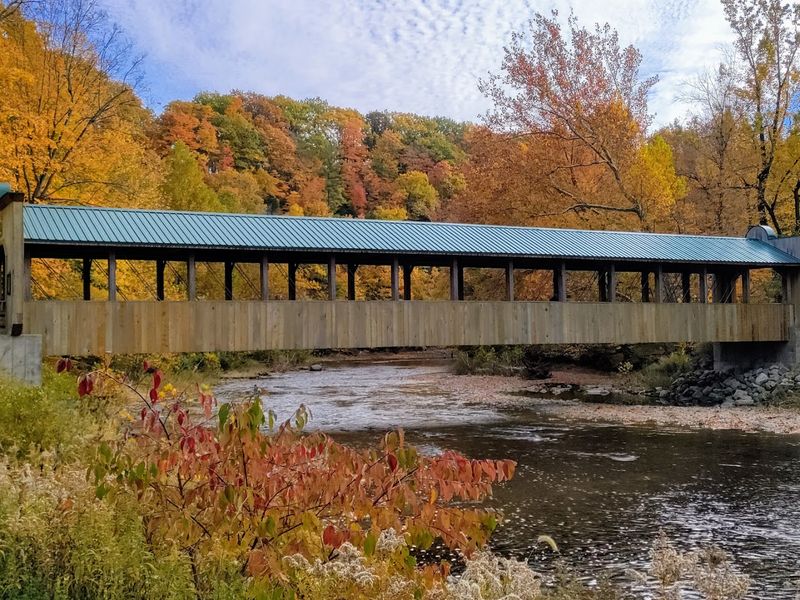
Every October, Ashtabula County hosts its annual Covered Bridge Festival, an event that draws visitors from across Ohio and well beyond its borders. The festival celebrates the county’s covered bridge heritage with tours, local food, artisan vendors, and organized drives along the bridge trail during peak autumn color season.
Timing a visit to coincide with the festival adds a social dimension to what is otherwise a quiet, personal experience.
The Smolen-Gulf bridge naturally becomes a focal point during festival weekend, drawing the largest crowds of any single stop on the trail. Even so, the bridge’s scale means it never feels overwhelmed, there is simply enough room for everyone to move through comfortably, on foot or by vehicle.
Outside of festival season, the bridge returns to its usual rhythm of steady local traffic and occasional visitors, which makes a non-festival visit appealing for those who prefer their landmark experiences without the surrounding commotion and crowds.
Features A Classic Red Exterior And Wooden Interior
Red is the color most people picture when they imagine a covered bridge, and the Smolen-Gulf bridge delivers exactly that, a clean, well-maintained red exterior that reads as both traditional and deliberate against the green of the surrounding valley. The paint is not faded or peeling; the bridge carries its color with the confidence of a structure that is still very much in active use.
Step inside and the wooden interior shifts the atmosphere entirely. The laminated pine beams overhead create a warm, enclosed feeling that is surprisingly pleasant even when vehicles are passing through.
Natural light enters through the openings at each end and through narrow gaps in the siding, giving the interior a soft, filtered quality that photographs beautifully at almost any time of day.
The combination of a bold red exterior and a warm wooden interior gives the Smolen-Gulf bridge a visual coherence that feels intentional rather than incidental, which is a credit to the care put into its original design.