
Ohio’s Biggest Mining Shovel Left Behind A Bucket So Large 20 Kids Fit Inside
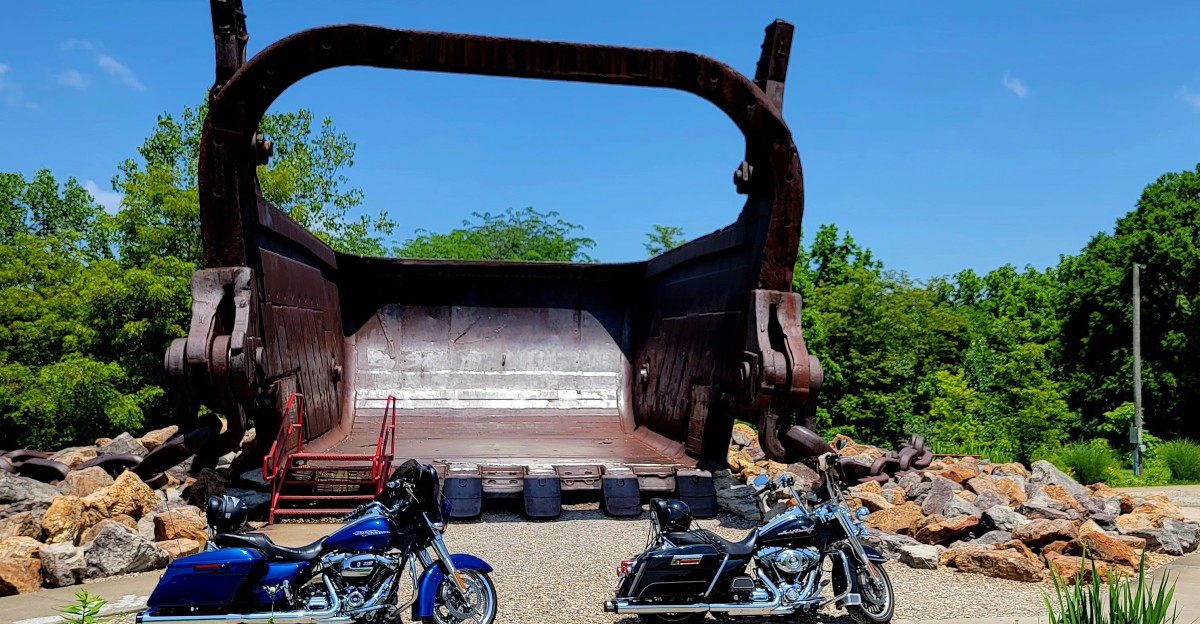
We only pulled off the road because the kids needed a stretch and a snack break. Twenty minutes later, all of us were standing inside a steel scoop big enough to park a few cars in, craning our necks at chain links heavier than our minivan.
Ohio has a way of hiding its strangest stories out in the hills, far from the interstate. This one belongs to a machine so enormous it reshaped the land itself, and the piece it left behind is still waiting for curious families to climb in.
A Giant Steel Scoop in Morgan County Hill Country
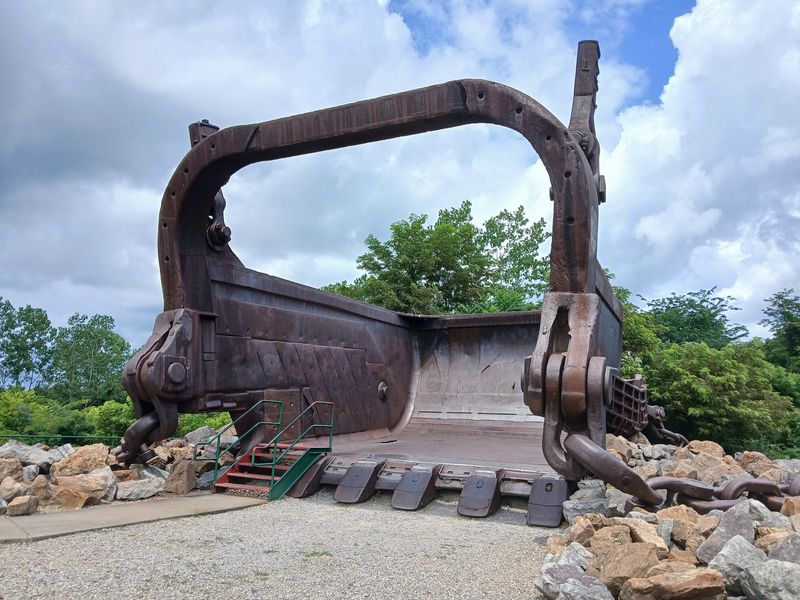
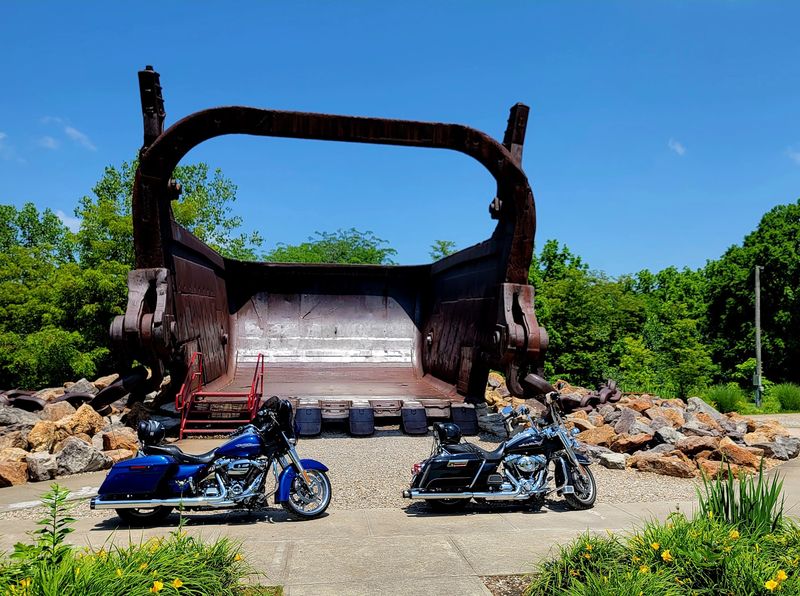
Out on State Route 78, a few miles from McConnelsville in Morgan County, a rust-colored steel bucket sits in a grassy clearing like a toy dropped by a giant. It is the only surviving piece of Big Muskie, a machine that once ranked as the largest single-bucket digging machine ever built.
Families find it at Miners’ Memorial Park, which sits inside Jesse Owens State Park.
What exactly is it? Picture an earth-moving scoop with a capacity of 220 cubic yards, weighing 460,000 pounds when empty.
Kids can walk right inside it, and there is room to spare for a whole crowd of them at once.
The address is 4470 OH-78, McConnelsville, and the setting is quiet farm and forest country in southeast Ohio. Around the bucket you will find picnic tables, small pavilions, educational signs, and a Wall of Honor for the men and women who worked the mines here.
Admission is free, which makes the stop an easy yes for families watching the budget. Most visitors spend somewhere between thirty minutes and a couple of hours, depending on how long the kids want to explore and how many photos everyone takes in front of that towering steel.
The Story of Big Muskie, 1969 to 1991
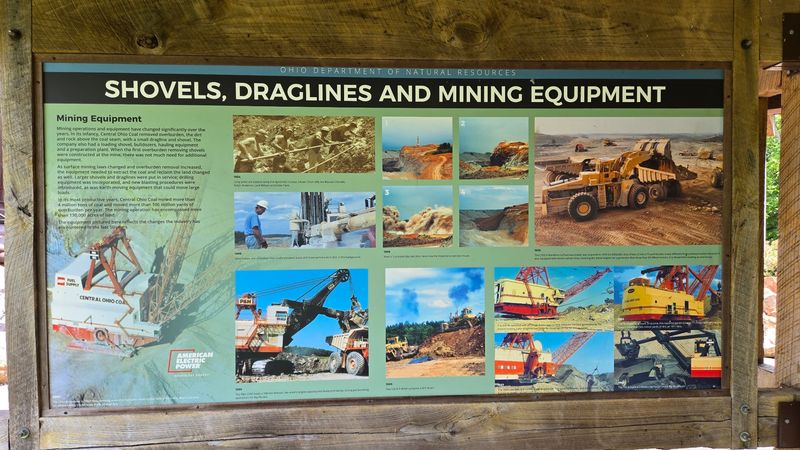
Construction on Big Muskie started right at the mine site in 1967. Moving the parts took more than 300 railcars and around 250 trucks, and assembly stretched past two years before the Bucyrus-Erie 4250-W dragline finally went to work at the Muskingum Mine.
Standing 240 feet tall, the machine rose about as high as a 22-story building. Its job was to peel back layers of earth and rock so crews could reach the high-sulfur coal buried underneath.
It ran around the clock, 24 hours a day, 364 days a year, for 22 years.
Here is a number that stuns most kids: over its working life, Big Muskie moved more than 483 million cubic yards of material. That is roughly twice what was dug out during the original construction of the Panama Canal.
Keeping it running took enough electricity to power about 27,000 homes.
By 1991, demand for high-sulfur coal had dropped and operating costs had climbed too high, so the machine was shut down. Saving the whole thing proved too expensive, and it was taken apart and recycled in 1999.
Only the bucket was spared, moved to the park where it rests today as a reminder of a very big chapter in Ohio mining.
Room for a Marching Band
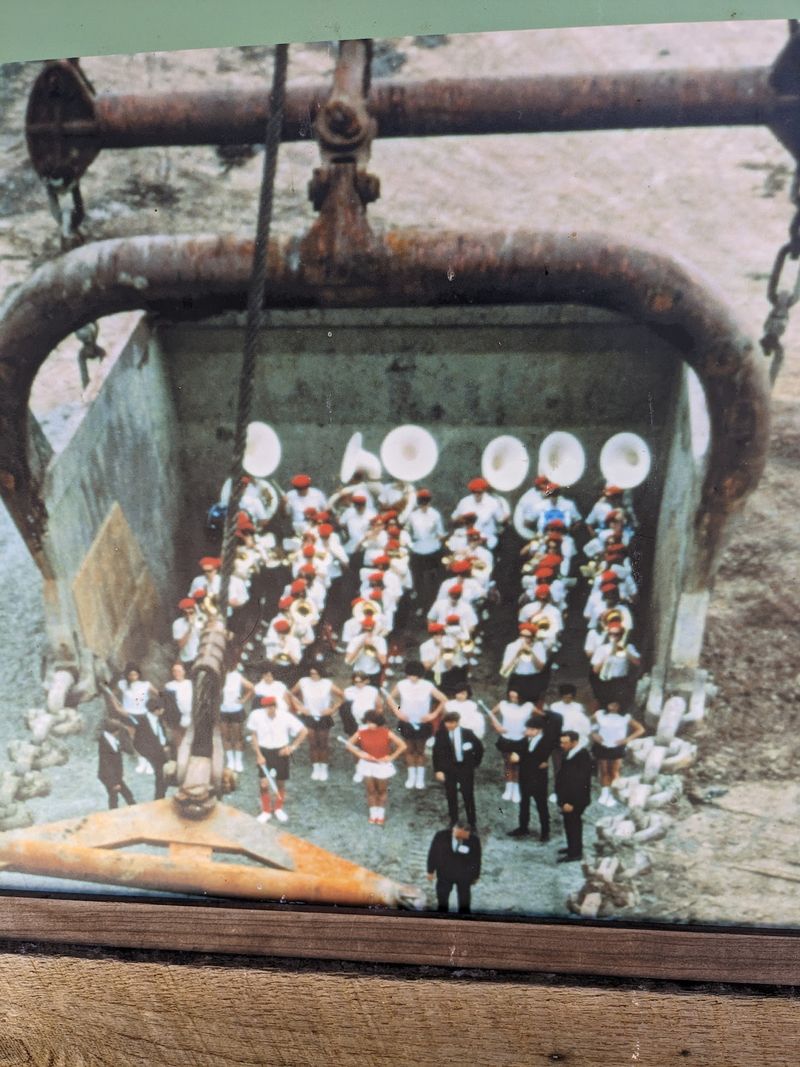
Back in 1969, a high school marching band squeezed into this bucket for its dedication, and old photos of that moment still get passed around. That tells you plenty about the size before you even park.
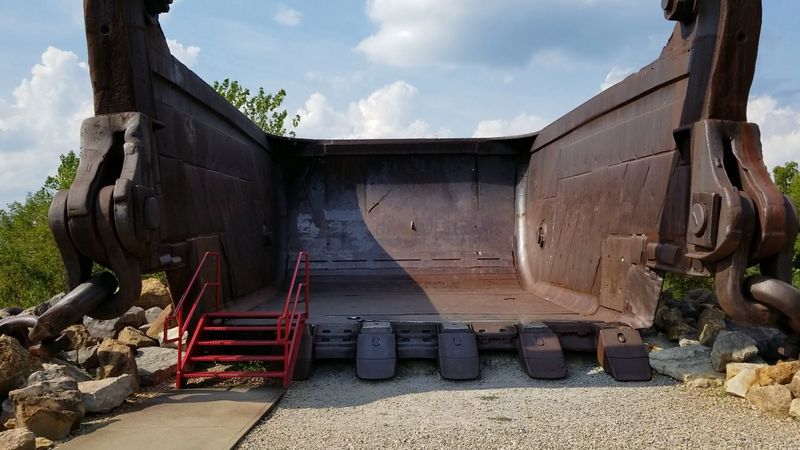
Step inside and the numbers start to feel real. The scoop has about the volume of a 12-car garage, and some descriptions say two Greyhound buses could fit side by side.
Twenty kids spreading their arms wide would still have space to wiggle, which is exactly the kind of test most families end up running.
Visitors often mention that photos never quite capture the scale. You really have to stand beside the curved steel walls to understand how much earth this thing hauled.
In one pass, it could lift about 325 tons of rock and soil.
Walking in is allowed, and kids usually treat it like the world’s biggest playhouse. The floor is open, so younger children can explore at their own pace while parents read the nearby signs.
A small heads-up: some visitors have spotted carving and spray paint on the metal over the years. Reminding kids to look and touch gently helps keep the bucket in good shape for the next family who pulls in.
Chains, Teeth, and Other Heavy Details
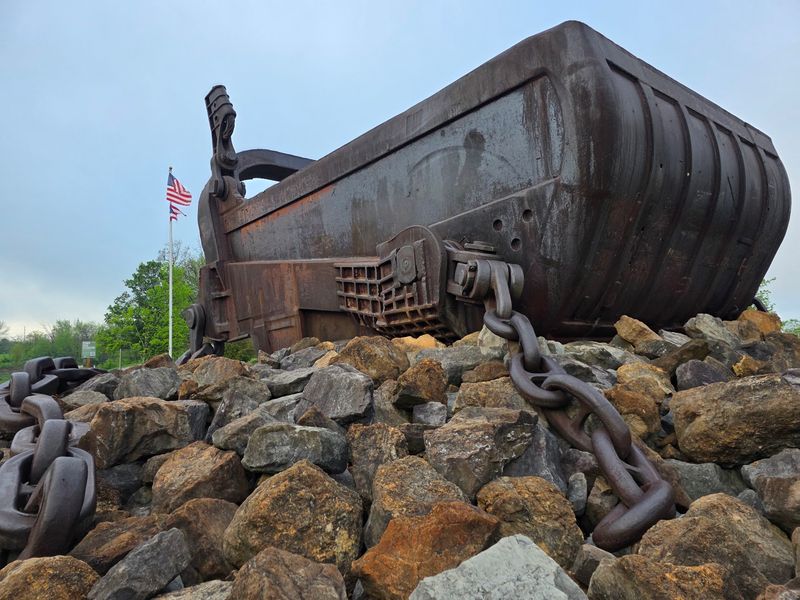
Ever seen a chain link bigger than a toddler? The massive links still hanging from the bucket stop a lot of people in their tracks, and standing next to them gives a real sense of the weight this machine swung around all day.
Then look down at the front edge. Each of the bucket’s teeth measured about three feet long and weighed around 1,000 pounds.
Those teeth bit into hillsides and ripped loose the rock covering the coal seams below, one enormous scoop after another.
For curious kids, the hardware becomes a hands-on science lesson. Parents can ask simple questions: how many of us would it take to lift one tooth?
What would happen if one of these chains snapped? The answers get everybody thinking about engineering without it feeling like homework.
Visitors regularly single out the chains as a highlight, partly because they make great photo props. Line the family up beside a link and the picture instantly explains itself when you share it later.
Take a moment to notice the wear marks, too. Scrapes and dents across the steel hint at two decades of nonstop digging across the Morgan County hills, long before this spot became a peaceful park.
Honoring the Miners of Central Ohio Coal
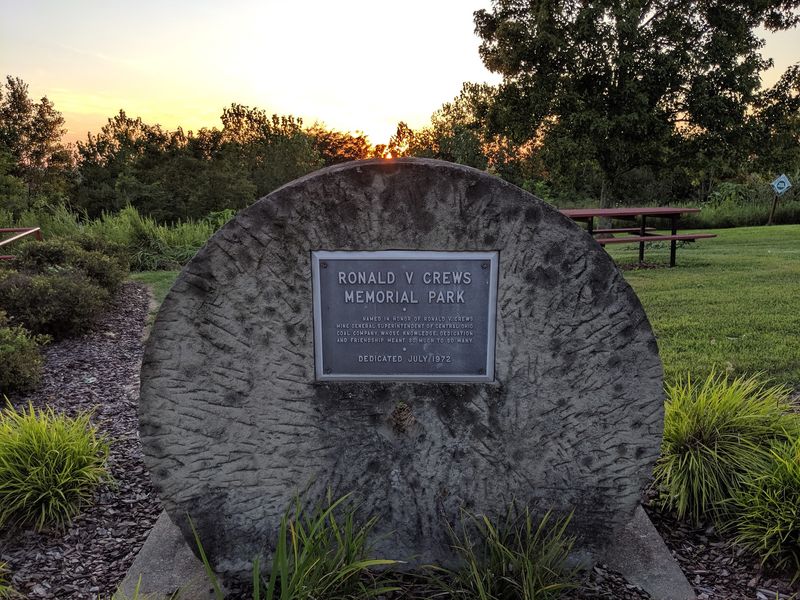
Behind all that steel were people, and the park makes sure you remember them. Miners’ Memorial Park serves as a tribute to the men and women of the Central Ohio Coal Company, the crews who kept Big Muskie running day and night.
A Wall of Honor stands near the bucket, and it tends to slow visitors down. Families often pause here, reading names and thinking about the hard work behind each shift at the Muskingum Mine.
Informational boards spread around the grounds explain how the mining worked, what the operators did, and how the region depended on coal. Visitors describe the signs as clear and genuinely informative, which helps older kids connect the giant bucket to real jobs and real communities.
An information center also shares mining history, and recent visitors have noticed construction on a new visitor center next to the bucket. Improvements may be ongoing, so some areas could look different depending on when you arrive.
For families with a grandparent who remembers the coal days, this corner of the park can spark wonderful conversations. Stories about shift work, dusty boots, and small-town mining life fit naturally here, turning a quick roadside stop into a meaningful piece of Ohio family history.
Reclaimed Land That Turned Green Again
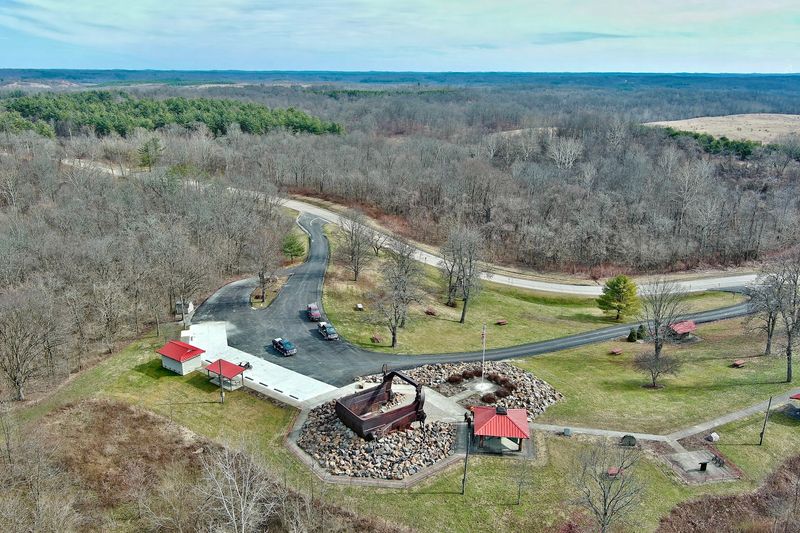
Look around from the bucket and you will see woods, meadows, and gentle hills. Hard to believe, but this entire area was once a sprawling strip mine where Big Muskie stripped away the ground layer by layer.
Since then, the land has been extensively reclaimed. Much of it now forms part of Jesse Owens State Park, while a large neighboring stretch became The Wilds, a well-known conservation center roughly ten minutes away.
Visitors often remark on how complete the recovery looks.
That contrast makes a great teaching moment. Kids can see the tool that dug the land up and, in the same glance, the forests and fields that grew back afterward.
One visitor suggested seeing the bucket before a safari at The Wilds, since it gives helpful context about the ground you will be touring.
Nature has moved back in, too. Some visitors have spotted wildlife near the park roads, including a bobcat crossing the pavement, so keep an eye out as you drive slowly through.
In autumn, the surrounding hills pick up color, adding another reason to plan a fall drive. Spring brings fresh green and occasionally muddy ground, so sturdy shoes make sense for little ones.
Picnic Tables, Pavilions, and a Camera Stand
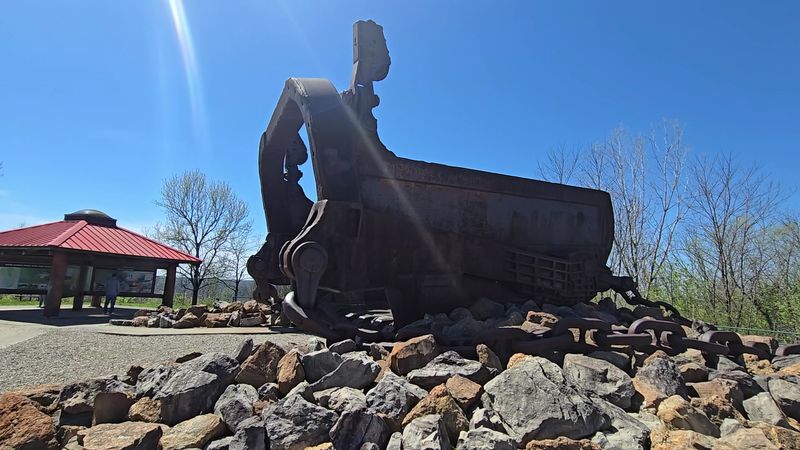
Pack sandwiches. Several picnic tables and a few smaller pavilions dot the grounds, and there is even a covered area where you can sit and eat when the weather turns gray.
Rainy days are not a deal breaker here. Visitors mention multiple spots to stay dry, which helps when an Ohio shower rolls through unexpectedly.
Food is not sold on site, so bringing lunch, plain snacks for picky eaters, and plenty of water is the smart move.
One small feature families love is a stand designed to hold your phone. Set the timer, run back to the bucket, and everyone makes it into the group photo, including whoever usually ends up behind the camera.
Restrooms are available, though they are latrine-style rather than plumbed. Reports vary: some visitors found them clean and well kept, while others felt they could use some attention.
Bringing hand sanitizer and wipes is a good idea either way.
A few visitors also noted heavy flies during certain warm stretches, so bug spray may come in handy in summer. Shaded areas offer a break from the sun, and the lawn gives kids space to stretch their legs after the car ride.
The Twisting Road Along OH-78
Half the adventure is the drive. State Route 78 curves, dips, and climbs through the hills so dramatically that one visitor compared it to a roller coaster, a description kids in the back seat tend to agree with.
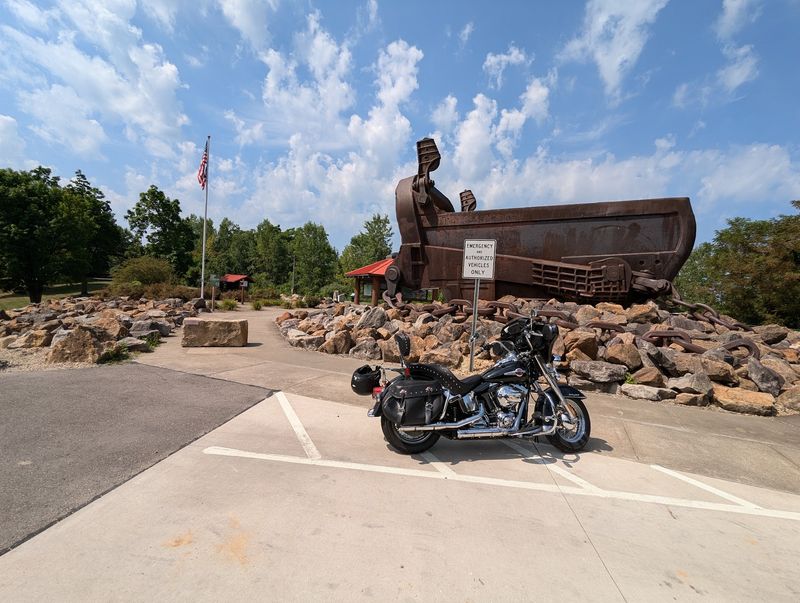
Motorcyclists love this road, and you will likely see bikes parked by the bucket on nice weekends. The park offers shaded areas that riders appreciate, and the stop sits fairly close to section 5 of the Great Ohio Adventure Trail, making it a natural break on longer rides.
Drivers with carsick kids should take the curves slowly. The route is paved and scenic, but it demands attention, and wildlife sometimes crosses without warning.
Distance-wise, the bucket is about 30 miles from Cambridge and interstate traffic on I-70, and it feels truly rural once you arrive. From Columbus, plan on a longer day trip through southeast Ohio farm country.
The good news for families towing a camper or driving something large: parking sits right next to the bucket, and there is room for campers and big rigs. That short walk makes the site easy to reach for strollers, grandparents, and visitors of every ability level.
Who Gets the Most Out of a Stop
Machine-crazy kids top the list. Any child who stops to watch a backhoe at a construction site will be thrilled to stand inside the bucket of a machine that once towered 22 stories high.
History fans get plenty, too. With dozens of signs about mining and the region, adults can easily spend an hour reading while the kids explore.
Visitors often say the place balances quiet reflection with genuine wonder.
What about families headed somewhere else? The bucket works nicely as a warm-up before The Wilds or as a leg-stretch during a southeast Ohio road trip.
Some visitors also mention free camping locations nearby, which can suit families who like rustic weekends.
People who crave a full day of attractions might find the site small. As one visitor put it in their own way, there is not a lot to see beyond the bucket, but what is there is unlike anything else.
The atmosphere is calm and uncrowded most of the time, with peace and quiet as a big part of the appeal. Expect more activity on pleasant weekends, especially when motorcycle groups roll through and families from across Ohio show up for photos.
Planning Notes and a Final Word
Free admission, easy parking, and a steel giant you can walk inside: few family stops in Ohio check those boxes so neatly. Still, a little planning helps the visit go smoothly.
Hours can change seasonally, and renovation work has been underway, so checking with the Ohio Department of Natural Resources before you drive is wise. Some amenities may be limited during construction, although visitors say the basics remained open during recent updates.
Bring the essentials: lunch, water, bug spray in summer, and sunscreen, since shade is limited near the bucket itself. Restrooms are latrine-style, and there are no food vendors on site.
Cell service may be spotty in these hills, so download directions ahead of time.
Timing matters too. Summer weekends and fall foliage season tend to draw more riders and road-trippers, while weekday mornings often feel nearly private.
So is the drive into rural Morgan County sensible for a family day? For kids who love big machines, parents curious about Ohio’s coal past, or anyone pairing the stop with The Wilds, the answer leans strongly yes.
Plan an hour or two, climb inside, snap that timer photo, and let the scale of Big Muskie do the rest.