
On Ohio’s Kelleys Island, Glaciers Left Limestone Grooves Deep Enough For Kids To Stand In
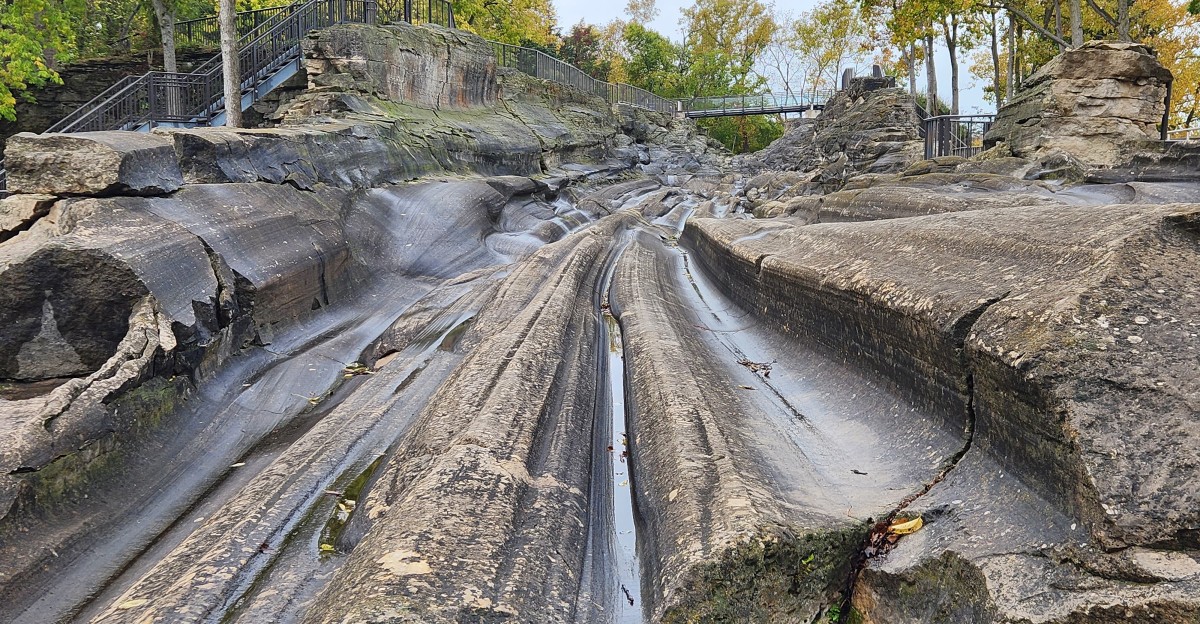
A twenty-minute boat ride across Lake Erie does not usually promise anything more dramatic than wind in your hair and a gull or two. Then you walk up to a fence on a quiet Ohio island and look down into a trench of pale rock so deep your kids could stand inside it with room to spare.
Ice did that, slowly, thousands of years ago, and the stone still holds the scratches and seashells to prove it. For curious families hunting for a free stop that turns into a real science lesson, this one sticks with you long after the ride home.
An Island Landmark at Division Street and Titus Road
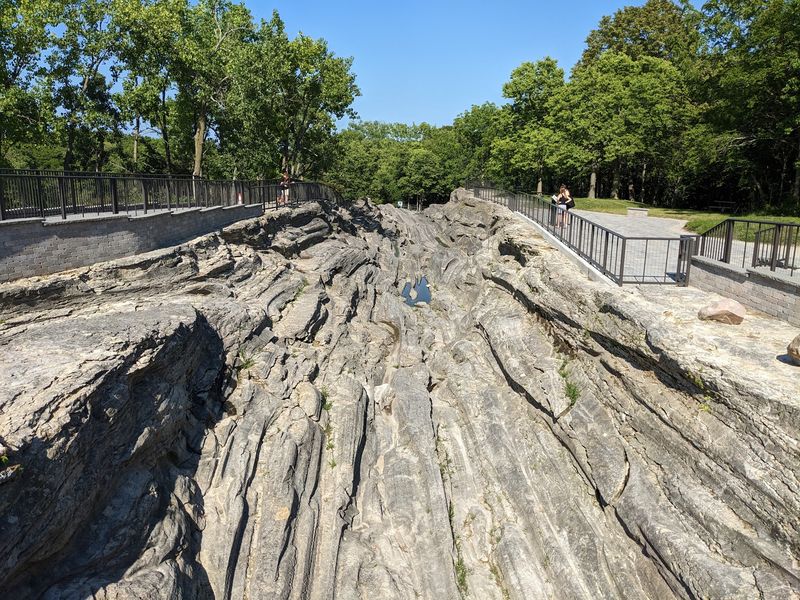
Pull a golf cart into the small paved lot about 1.5 miles north of downtown Kelleys Island, and the island’s best-known rock is waiting just past the fence. The Glacial Grooves State Memorial sits at 739 Division Street, where Division meets Titus Road, on an island in Lake Erie that belongs to Erie County, Ohio.
Many families spot the first curve of pale stone before the kids have even climbed out.
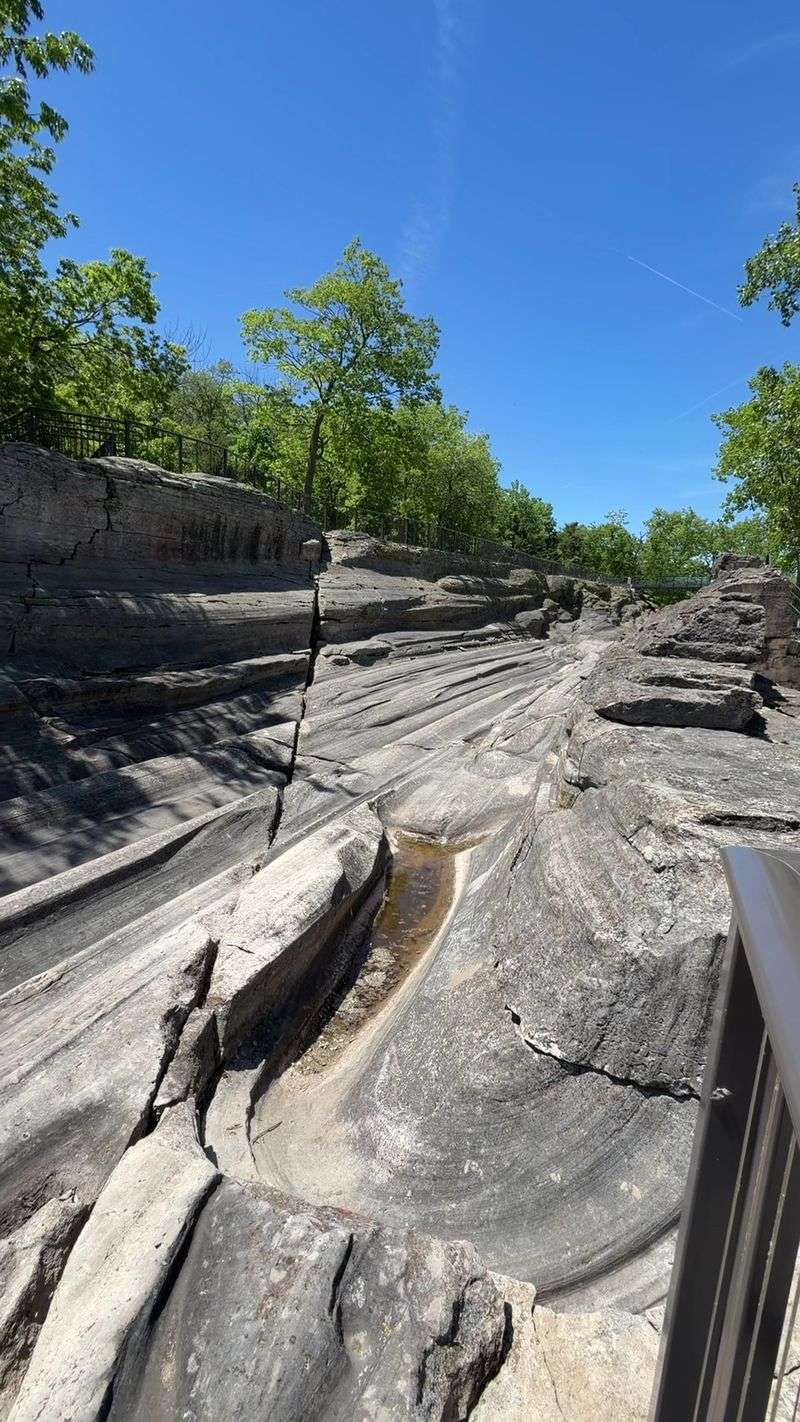
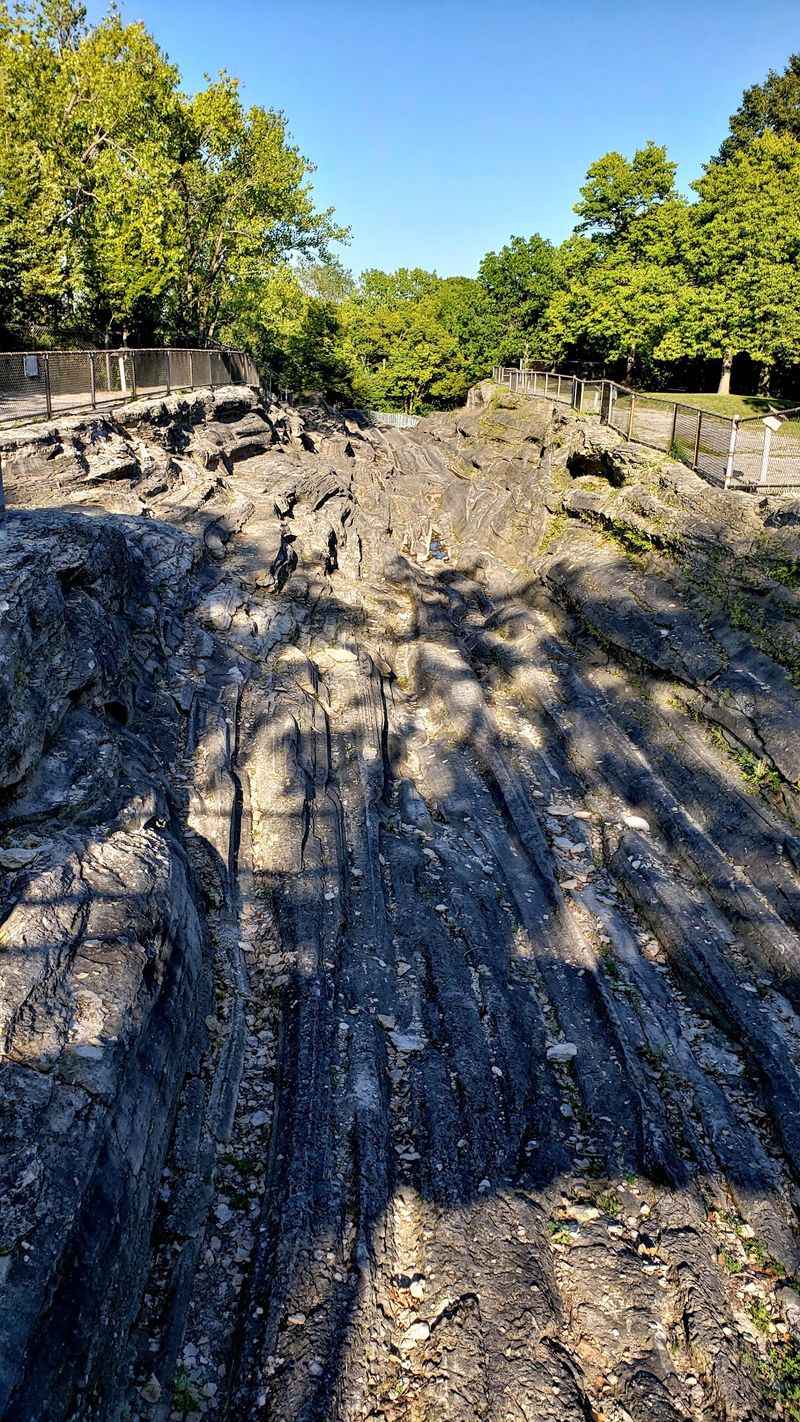
What exactly are you looking at? A long, wavy trench cut into solid limestone bedrock, polished and scratched by ice during the last Ice Age.
It is a National Natural Landmark, and it is widely described as the largest and most easily reached example of glacial grooves anywhere in the world.
The Ohio History Connection manages the site, which explains the tidy fencing, the stone steps, and the steady stream of signs. The island itself measures roughly four miles by two, so the grooves slot easily into a day that might also include a beach, a playground, and an ice cream cone.
Think of it as the island’s outdoor science classroom, open to anyone who wanders by. No tickets, no gate, just rock and sky.
Ice Age Glaciers and a Very Slow Carving Job
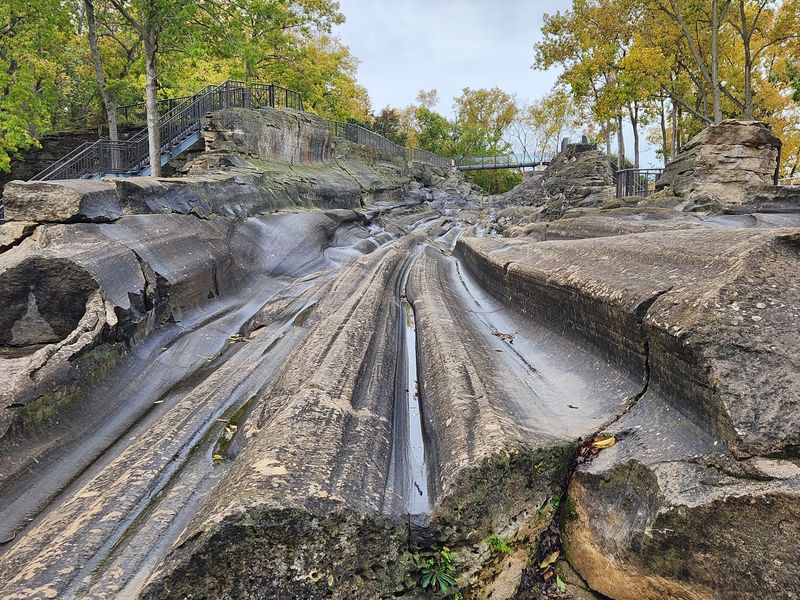
Picture a sheet of ice so thick it buried the land that would later become northern Ohio. Between roughly 18,000 and 35,000 years ago, during the Wisconsinan glaciation, glaciers pushed south across North America and ground right over this spot.
Ice alone is not much of a carving tool. The real work came from hard rocks and debris frozen into the bottom of the glacier, which acted like coarse sandpaper as the whole mass crept forward.
Under all that weight, the softer limestone gave way, furrow by furrow.
Water played a part too. Geologists point to high-pressure meltwater flowing beneath the ice, which helped scour and smooth the channels into the rounded, flowing shapes visible today.
Here is the fun part for kids: the grooves act like an arrow. Their direction shows which way the ice traveled, and that helps scientists understand how glaciers shaped the whole Lake Erie basin and the land around it.
One visitor described standing at the rail and imagining the ice inching across the bedrock. That is exactly the right mental picture, and the signs help younger kids build it step by step.
Slow does not begin to describe it.
Columbus Limestone and Its 400-Million-Year Backstory
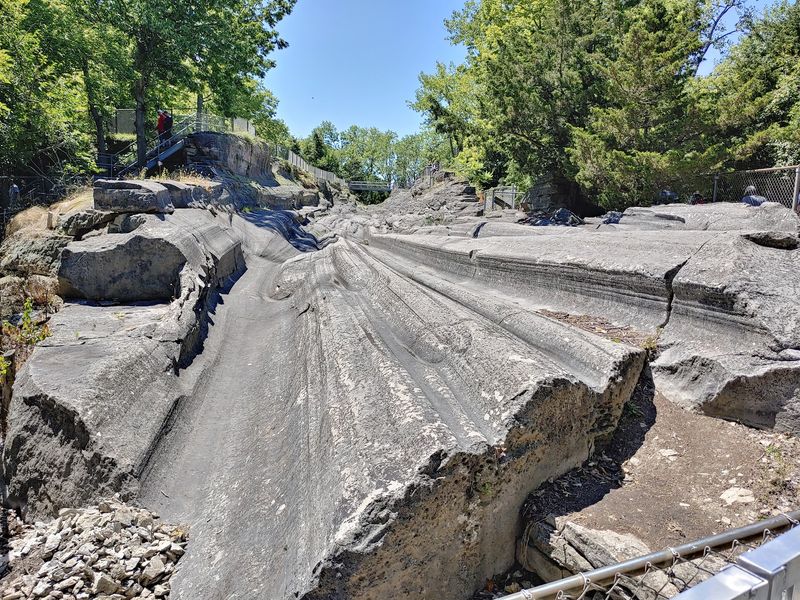
Long before any glacier arrived, the rock under your feet was the floor of a warm, shallow sea. The bedrock here is Columbus Limestone, and it dates back around 400 million years, to a time when Ohio sat south of the equator under saltwater.
That is a hard number for anyone to grasp, never mind a fifth grader. One way to explain it on site: the glaciers showed up yesterday, geologically speaking, and the limestone had already been waiting for hundreds of millions of years.
Limestone forms largely from the shells and skeletons of sea creatures that settle and harden over time. Because it is softer than the tougher stones the ice dragged along, it carved beautifully, taking on those smooth, swooping curves.
Adults tend to find the layering of time the most mind-bending part. You get two stories stacked in one spot: an ancient ocean that built the rock, then a frozen giant that sculpted it.
The interpretive panels walk through both chapters, from inland sea to ice sheet to the quarry era that came later. It is a lot of history packed into a short loop, and it rewards families who slow down and read.
A Trench Deep Enough to Hide a Fourth Grader
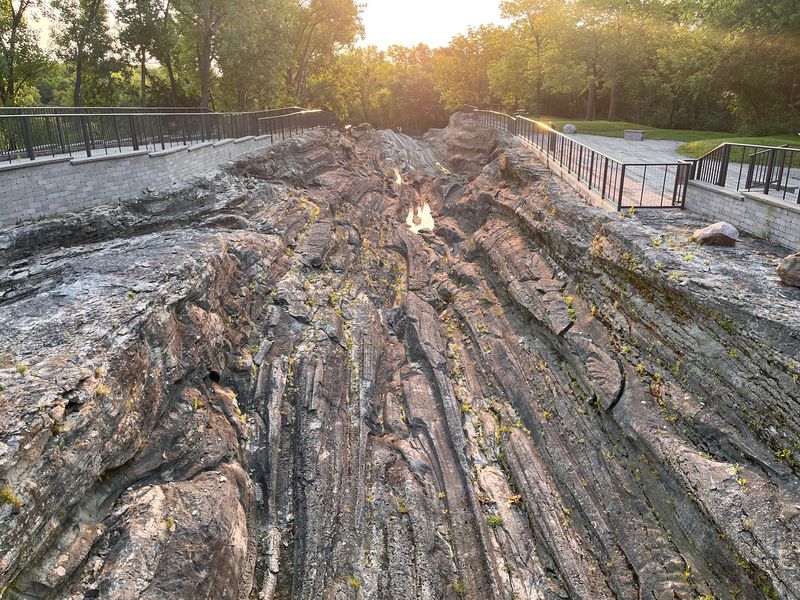
Four hundred feet long. Thirty-five feet wide.
Up to 10 to 15 feet deep in places.
Those measurements are why the grooves make such a strong impression, especially on kids who expect a few scratches on a rock. The main trench is deep enough that a child standing at the bottom would disappear below the rim, which makes it a great way to talk about scale.
Visitors today cannot climb down into the grooves, though. The site is fenced to protect it, and some longtime island visitors remember an era when people walked right on the rock and even painted names on it, which is exactly why the fence went up.
So how do you help kids feel the size? Try standing at one end of the walkway and counting steps to the other.
Ask them to guess how many of them, stacked head to toe, it would take to reach the bottom.
Signs note the grooves run nearly 400 feet, making them the longest example of glacial grooves that people can visit. From above, the ripples look almost like frozen waves, and every angle along the loop shows a slightly different curve.
Seashell Fossils Hiding in the Bedrock
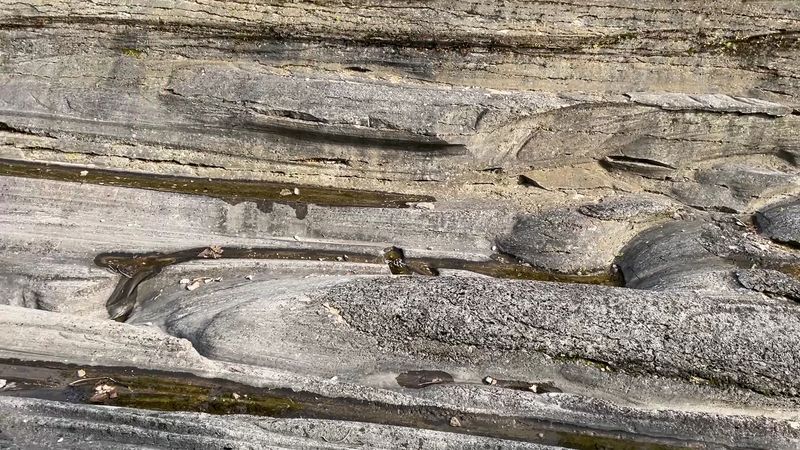
Get down close to the rail, look at the gray surface, and let your eyes adjust. Small shapes start to appear: ridges, fans, and curls that turn out to be the remains of ancient marine animals locked in the limestone.
The glaciers helped with the reveal. As the ice scraped away layers, it exposed fossils that had been buried for hundreds of millions of years, and many are visible without a magnifying glass once you know what to look for.
Visitors often mention spotting seashells in the rock, and that turns into a treasure hunt kids take surprisingly seriously. A quick tip: bring the kids to a panel first so they learn what shapes to scan for, then send them back to the rail with fresh eyes.
Fossil hunting here is look-only. The grooves are protected, so nothing gets picked up or pocketed, and that rule is easy to explain as keeping the site intact for the next family.
Midday sun can wash out detail on pale stone. Morning or late-afternoon light tends to throw small shadows across the surface, which can make shell outlines easier to pick out.
Patience helps more than sharp eyesight.
The Old Quarry Next Door
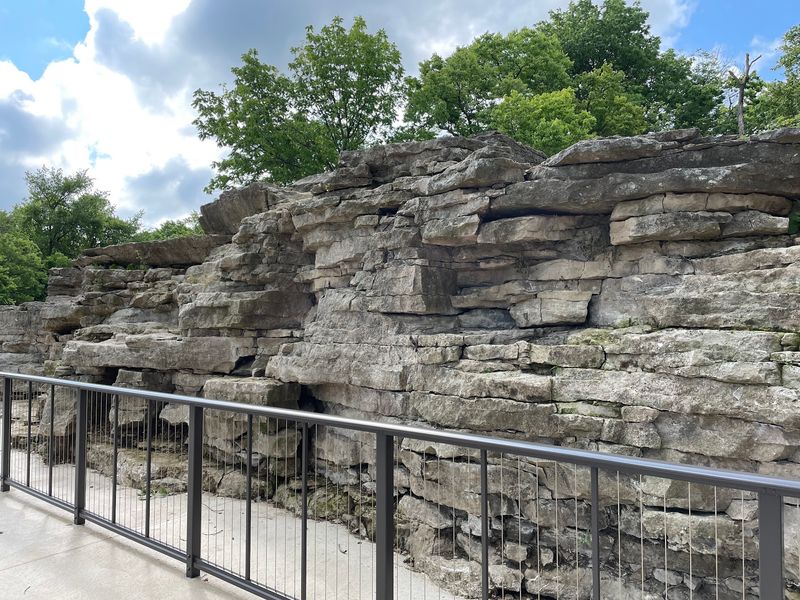
Here is a twist most families do not expect. The grooves that survive today are only a portion of what once stretched across this part of Kelleys Island.
Limestone was a valuable product, and quarrying on the island removed large sections of grooved rock long before anyone thought to protect them. The memorial sits within a former quarry site, and the neighboring quarry took much of the original formation.
Still, a massive section remains. The fact that any of it made it through the quarry years is part of what makes the site feel special, and it gives parents a natural opening to talk with kids about why places get preserved.
From several points along the path, you can look out over the old quarry. Sharp, cliff-like walls show where limestone was cut away, a very different shape from the smooth, rounded grooves the ice left behind.
Contrast is the lesson here. One landscape was shaped slowly by nature over thousands of years, and the other quickly by people with machines, and seeing them side by side makes both easier to understand.
Kids who shrug at geology often perk up at the quarry story.
Walkways, Ramps, and Decks From the 2023 Upgrade
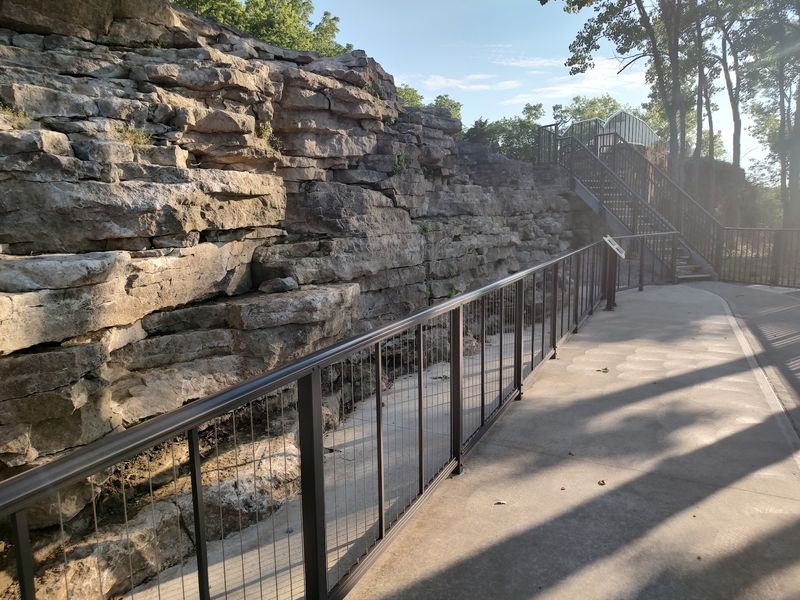
Anyone who visited years ago may barely recognize the place. In 2023, the site finished a $2.7 million upgrade that added accessible walkways, observation decks, and new interpretive signs.
The result is a loop of steps and footbridges that circles the grooves, with paved paths and pavers underfoot. An accessible trail runs up to the top, and visitors mention a ramp that makes the site wheelchair friendly.
For parents, that translates to good stroller news. The main paths are smooth enough to roll a stroller along, though the stair sections are easier with little ones on foot or in a carrier.
Several observation decks give different angles on the stone. Some face straight down into the trench, while others look across the whole length, which helps kids understand the shape as one long channel rather than a series of pits.
Many people notice how well the new stairs and railings blend into the trees and rock. The fence was upgraded too, keeping everyone on the path and the grooves protected.
One small wish some visitors share is for a few more benches, so grandparents may want to pace themselves.
Interpretive Signs Even Teenagers Read
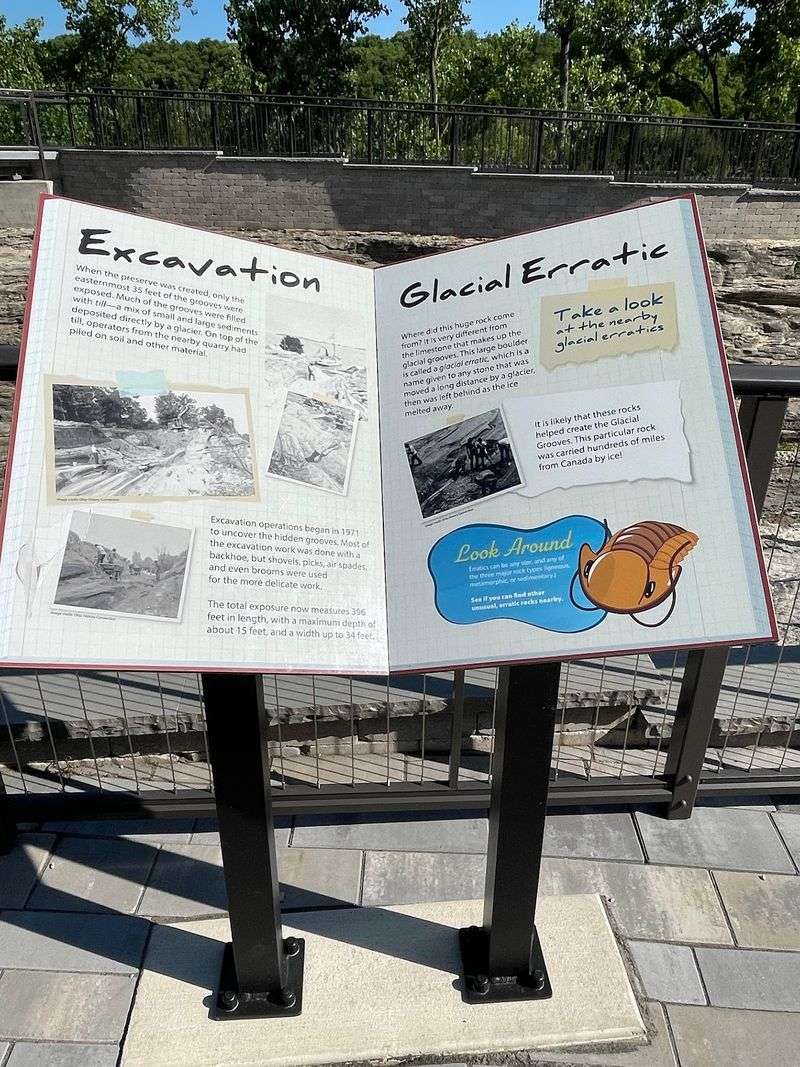
Getting a teenager to read a sign on vacation is no small feat. Here, families report that it actually happens.
The interpretive panels spread along the loop cover the glacial carving, the rock formation, the fossils, and the island’s human history. Adults find them detailed, while the language and visuals stay approachable enough for younger readers.
Visitors estimate that walking the full loop and reading every panel takes about 30 to 45 minutes. That timing is handy for planning, since it fits neatly between a ferry arrival and a beach afternoon.
Why do the signs work so well? They tie what you see to what happened, pointing out groove direction, fossil types, and quarry marks right where you can compare them to the real thing.
The connection keeps kids looking back and forth between panel and rock.
Homeschool families and teachers could easily build a lesson around a visit. Try a simple scavenger list before you go: one fossil, one spot showing the direction the ice moved, one view of the quarry wall.
Checking items off keeps younger siblings moving with the group and gives older kids a reason to read ahead.
Crusher Trail and a Fairy Trail Side Quest
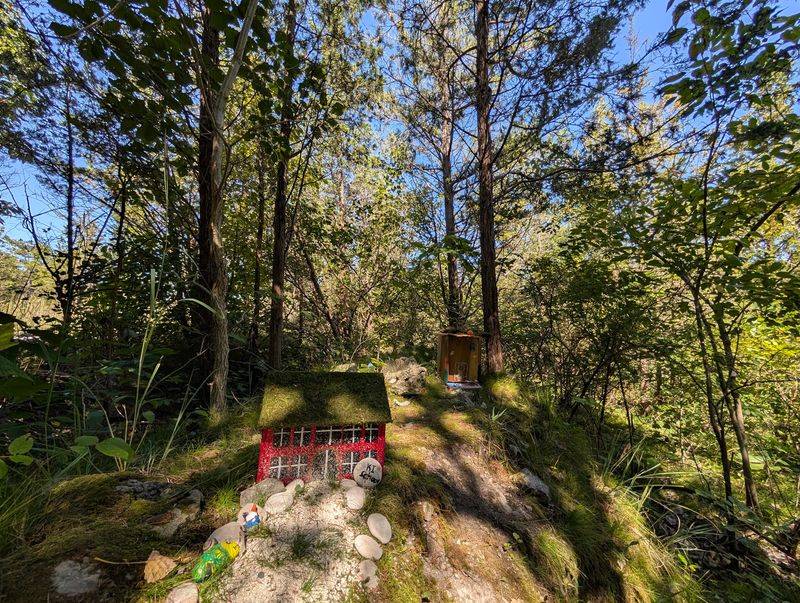
Once the loop is done, look near the entrance for the start of the hiking trails. They run alongside the memorial and offer a mix of easy stretches and more challenging sections, so families can choose based on energy levels.
A popular pick is the Crusher Trail, which leads to the old Stone Crusher Building. Along the way sits the Fairy Trail, a stretch that tends to delight younger kids who like looking for small surprises tucked along the path.
Other small trails dip down into the valley below the lookout. From there, you can see the sharp cliff shapes left by old limestone mining, which feels like stepping into the quarry story you just read about on the signs.
Footing on natural trails is different from the paved loop. Sturdy shoes are a smart idea, and strollers will likely need to stay behind on the rougher sections.
Trees fill in thickly around the site, so shade is easy to find in summer. Pack water, keep an eye on younger hikers near any drop-offs, and turn around whenever little legs say they are done.
Even a partial walk adds a nice outdoor chapter to the visit.
Picnic Tables, Charcoal Grills, and a Calm Beach Nearby
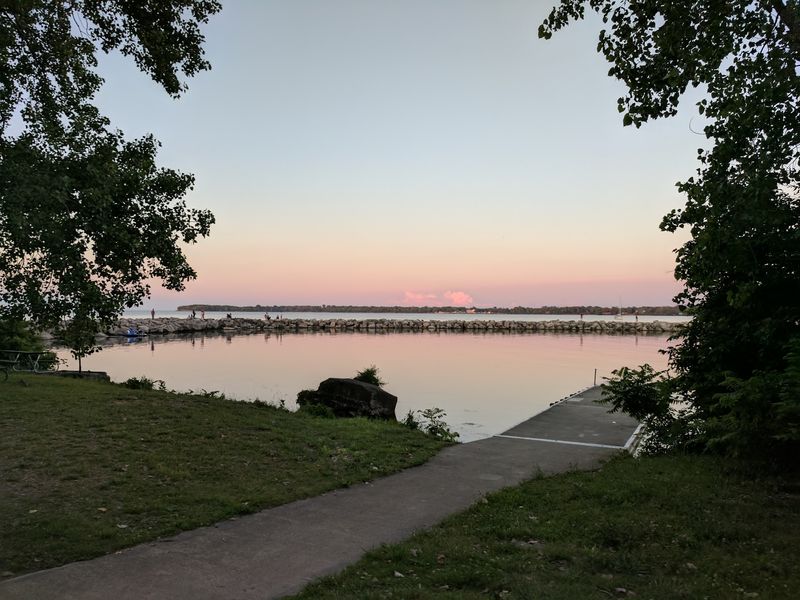
Hungry kids can end any outing early. Nothing wraps up a science lesson faster than a growling stomach.
Happily, the grooves come with a built-in lunch plan.
Picnic areas with tables and charcoal grills sit right at the Glacial Grooves site, and more are available at Kelleys Island State Park and across from the Kelleys Island School. Packing a cooler before the ferry keeps costs down and gives picky eaters exactly what they like.
The state park is within easy walking distance of the grooves, and its public swimming beach is known for calm, shallow water. That combination, rock lesson in the morning and splashing in the afternoon, makes for an easy family rhythm.
Prefer to buy lunch? Island eateries range from moderately priced to pricier, and families can usually find kid-friendly staples like pizza, tacos, and ice cream downtown.
Hours can shift with the season, so it helps to check before counting on a specific spot.
Grilling tip: bring your own charcoal, lighter, and utensils, since island stores may have limited supplies. A trash bag in the car also helps keep the picnic areas as tidy as the grooves themselves.
Cleanup is part of the deal on a small island.
Quiet Awe for Curious Kids, Teens, and Grandparents
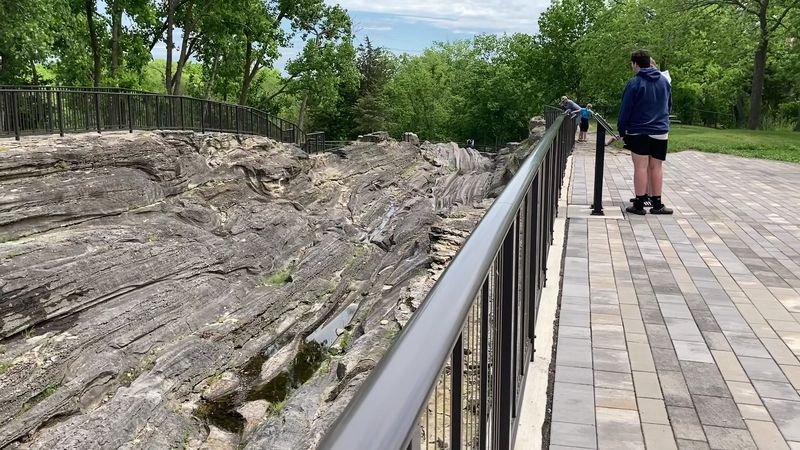
Some visitors call the experience humbling. Standing over rock that ice reshaped thousands of years ago has a way of quieting even a chatty car full of kids, at least for a minute.
The mood here is calm and reflective rather than theme-park busy. Trees surround the site, birdsong carries across the old quarry, and people tend to talk in low voices as they lean over the rail.
Who enjoys it most? Elementary kids love the fossil hunt and sheer size, teens often admit it is cool, and adults tend to get lost thinking about deep time.
Science-minded grandparents might have the best time of all.
Families using wheelchairs or strollers will appreciate the accessible paths, while hikers can add the nearby trails for more activity. The site suits a short stop or a longer lingering visit equally well.
Toddlers do fine too, as long as someone keeps a hand close near the stairs.
Crowds can build on summer weekends, when golf carts and bikes stream in from the ferry docks. Arriving early in the morning or later in the evening often means more elbow room at the best viewing points.
A weekday visit, if your schedule allows, can feel almost private.
Ferry Crossings From Marblehead, Sandusky, and Port Clinton
Every trip to the grooves begins on the water. Kelleys Island sits in Lake Erie off Ohio’s northern coast, and ferries are the main way across.
The Kelleys Island Ferry Boat Line leaves from Marblehead, on the peninsula east of Port Clinton, for a ride of about 20 minutes. It carries both passengers and cars and runs year-round, weather permitting, which makes it the go-to option for families who want their own vehicle on the island.
Prefer to leave the car behind? The Jet Express offers seasonal, passenger-only service from Sandusky and Port Clinton.
Schedules change through the year, so check departure times before leaving home.
Most Ohio drivers reach the Lake Erie shore by way of State Route 2. Plan roughly an hour from Toledo, about an hour and a half from Cleveland, and closer to two and a half hours from Columbus, depending on traffic and summer backups near the lake.
Once on the island, golf carts and bicycles are popular ways to get around. The grooves are about 1.5 miles north of downtown, an easy pedal or a quick cart ride for most families.
Cart rentals can go fast on busy weekends, so arriving early helps.
Hours, Free Admission, Parking, and Restroom Notes
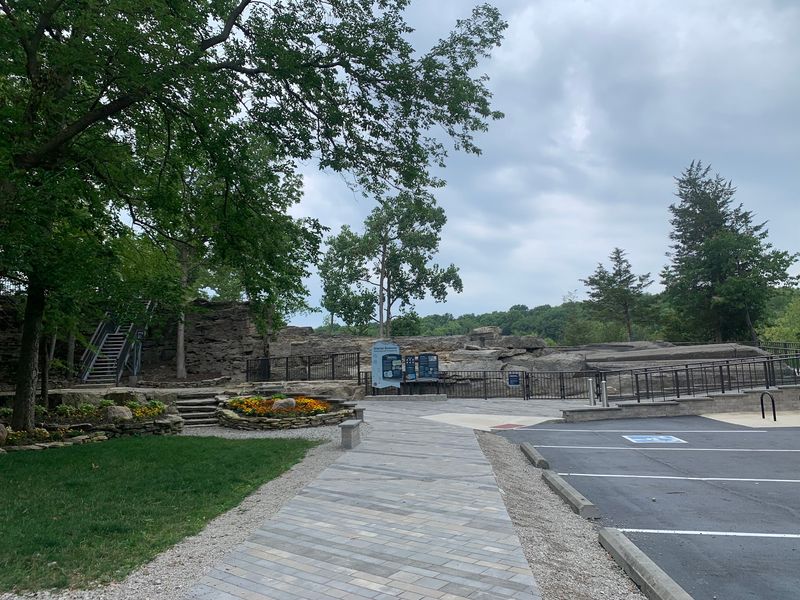
Good news for the family budget: there is no charge. Admission to the grooves is free, no tickets required, and parking is free as well.
That makes it one of the easiest yeses on an island itinerary.
Posted hours currently list the site as open daily from 6:30 AM to 8:45 PM. Hours can change seasonally, so a quick check before your trip is smart, especially outside of summer.
Parking is where things get tricky. The paved lot holds both cars and golf carts, but visitors note it can feel tight, particularly on busy weekends.
Swinging by early or near dinnertime usually makes finding a spot easier.
Restrooms deserve some planning with kids in tow. Public restrooms on the island are located downtown near the Town Hall and Police Department, and on Addison Road, so a pit stop before heading north is a wise move.
Winter and shoulder-season visits bring their own considerations, since ferry service can be affected by weather and many island businesses scale back roughly November through March. The grooves themselves stay put, but food and rentals may be limited.
Pack snacks and plan accordingly.
A Gentle Verdict on Ice-Carved Stone
Plenty of family outings cost a small fortune and fade from memory by the drive home. A free stop where kids can stare into stone carved by ice, hunt for 400-million-year-old seashells, and learn how Lake Erie took shape tends to stick around longer.
The grooves will not fill an entire day on their own. They do not need to, since the walkway loop takes under an hour and pairs naturally with the state park beach, a picnic, or a short hike along the Crusher Trail.
Is the ferry ride part of the appeal? For many kids, absolutely.
Crossing the water, hopping on a golf cart, and pulling up to a trench deep enough to hide a child makes the whole outing feel like an expedition.
Parents get something too: accessible paths, clear signs that do the explaining, free parking, and a calm setting that does not demand constant hovering. Just plan around weekend crowds, check ferry times, and remember restrooms are downtown.
For Ohio families looking to swap screens for something ancient and real, this corner of Kelleys Island makes a strong case. Bring curiosity and a good pair of shoes.