
One Of The Best Places To Spot Black Bears This Fall Is This North Michigan Forest
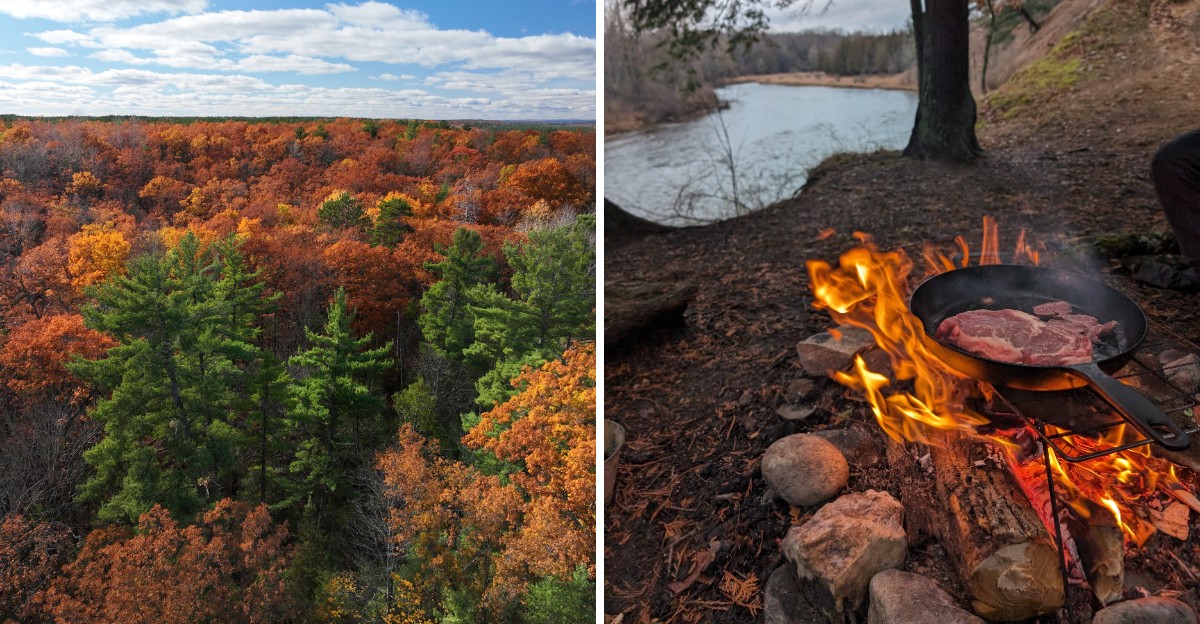
One forest. A real shot at spotting a black bear this fall.
Autumn flips a switch in every bear here, and hunger takes over. Trails wind past marshes, dunes, and thick timber where sightings happen quietly.
Michigan holds nearly a million acres of wild ground built for exactly this kind of search. Rivers cut through it all, and quiet coves reward anyone willing to sit still.
Early mornings and last light bring the most movement through the trees. Patience beats noise every single time out here.
Michigan rewards visitors who slow down and actually look. Birds, butterflies, and deer fill the gaps between bear sightings, so nobody leaves empty-handed.
Ready to see the woods differently this fall? Grab binoculars, find a quiet edge, and let this forest do the rest.
A Million Acres Split Between Two Coasts
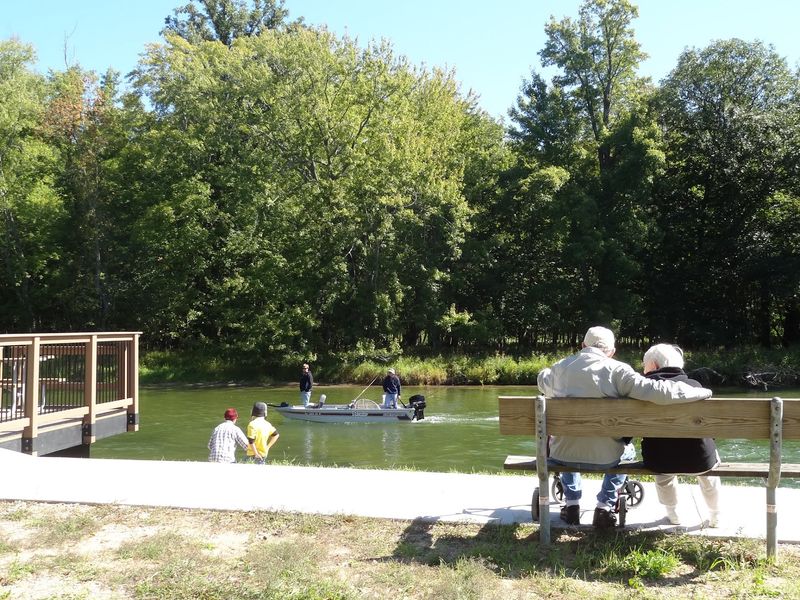
Two forests, one name, and a whole peninsula between them. The Huron-Manistee National Forests join the Huron National Forest in the east with the Manistee National Forest in the west, managed together as a single unit.
Together they cover close to a million acres of northern Lower Michigan. The terrain shifts constantly as visitors move through it.
Towering sand dunes give way to quiet river valleys. Rolling hills, thick woodlands, and clear lakes fill in the rest.
Geography matters here more than most people expect. The forests act as a bridge between the wild north and the farmed country to the south.
That middle position breeds unusual variety. Dry sand prairie remnants sit near coastal marsh, while oak savannas, fens, and bogs add even more habitat types.
All that patchwork is exactly why bears and hundreds of other species thrive. The Supervisors Office sits at 1755 S Mitchell St, Cadillac, MI 49601, a useful first stop for maps and current conditions.
Plan on driving between the two halves rather than hiking across. They are separate playgrounds with one shared personality.
Why Hungry Bears Show Up In October
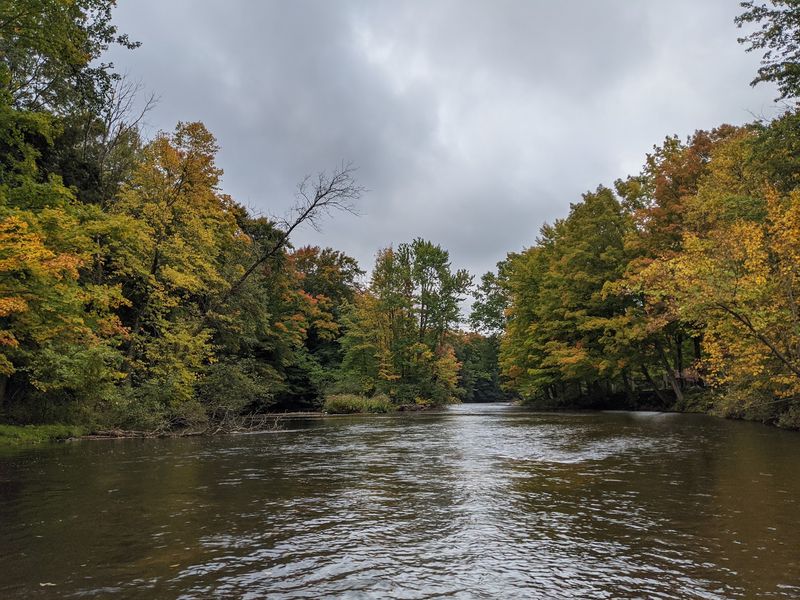
Autumn flips a switch inside every black bear. Biologists call it hyperphagia, and it simply means eating almost nonstop.
Bears need serious fat reserves before they den up for the Michigan winter. So they forage with real urgency, hour after hour.
Black bears are the only bear species found in Michigan. That makes any sighting in the Huron-Manistee National Forests a memorable one.
As the season wears on, berries and nuts grow scarce. Bears then widen their search, covering more ground than they would in summer.
Wider ranging means more chances to cross paths with people. Bears may wander near roads, campgrounds, or picnic spots where food smells linger.
None of that guarantees a sighting. Bears in the region stay skittish and usually slip away before anyone notices them.
Understanding the rhythm helps, though. Early morning and the last hour of daylight tend to bring the most animal movement.
Bring binoculars, keep voices low, and scan the edges where open ground meets heavy timber. Patience does more work than luck ever will.
Where The Bears Actually Hang Out
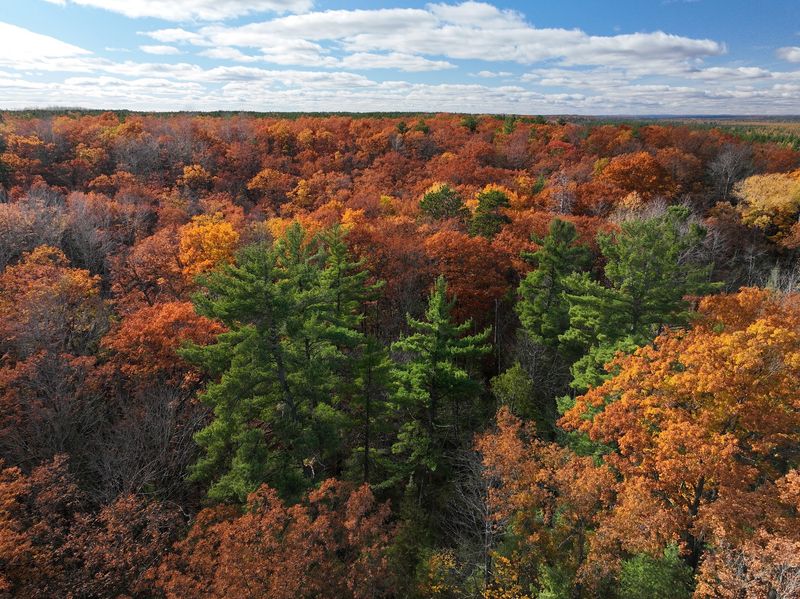
Habitat tells the story better than any tip sheet. Black bears in the Huron-Manistee National Forests favor dense hardwoods and mixed conifer stands.
Big, unbroken blocks of timber suit them best. Those tracts give cover, food, and distance from roads.
Bear numbers in Michigan’s northern Lower Peninsula have grown notably in recent decades. More bears across the landscape means better odds for patient watchers.
Still, nothing is promised. Sightings depend on weather, food supply, and plain chance.
Drier stretches can push bears to move more as they hunt for food. Wet years with heavy berry crops may keep them tucked away.
Quiet observation beats active searching. Pick a vantage point near a clearing, settle in, and let the forest forget about you.
Never follow tracks into thick brush hoping for a closer look. Distance keeps the encounter safe and keeps the bear behaving naturally.
Binoculars and a long lens are the right tools. A telephoto shot from far away beats a risky close approach every single time.
Trails That Go Long And Trails That Go Easy
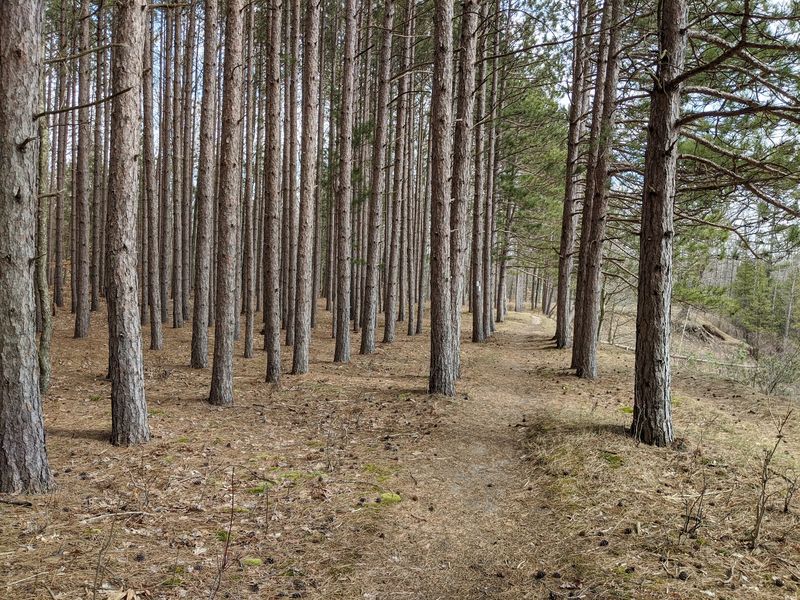
Over 330 miles of trails cut through these woods. Hikers and bikers get real choice here.
Some routes climb hard over ridges. Others roll gently beside water and take barely an hour.
Sections of the North Country National Scenic Trail run through the Huron-Manistee National Forests. Those miles carry walkers deep into Michigan backcountry.
Many paths are linear, built for long-distance travel rather than quick loops. Interpretive nature trails, by contrast, usually circle back to the parking area.
The Manistee River Trail stands out as a favorite. At roughly 10.5 moderate miles, it delivers big views over the valley without demanding expert skills.
Trail markings vary by area. Downloading a map before arriving saves a lot of second-guessing at unsigned junctions.
Weather changes quickly in this part of the state. Layers, sturdy boots, and extra water belong in every pack.
Check whether a recreation pass is needed at your chosen trailhead. Rules differ between sites, and a quick look ahead prevents an awkward start.
Rivers, Paddles, And Slow Water
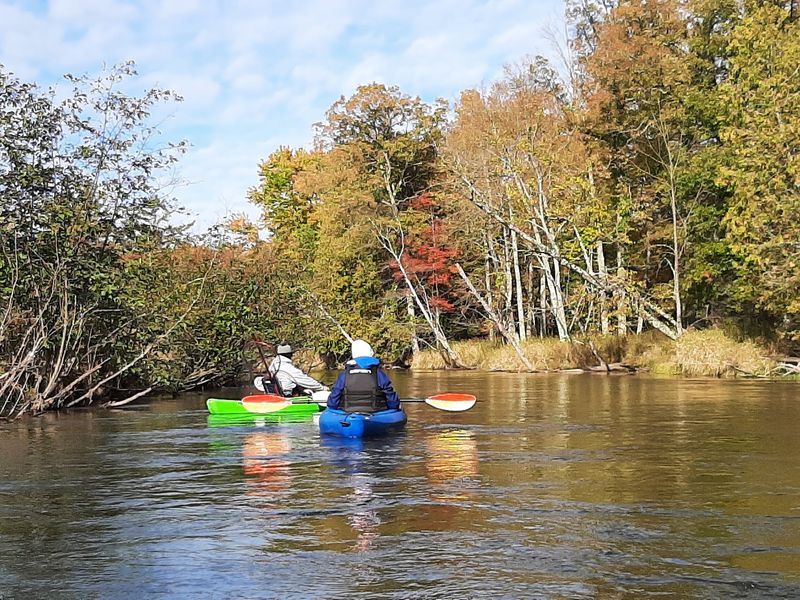
Water runs everywhere in this forest. More than 1,800 miles of rivers and 17,000 acres of lakes spread across the landscape.
Four rivers carry Wild and Scenic designation. The Pine, Manistee, Au Sable, and Pere Marquette all qualify.
Paddlers rate these among the finest runs in Michigan. Canoes, kayaks, and fishing boats all find suitable stretches.
The Au Sable offers an unrestricted 65-mile section from Grayling down to Alcona Dam. That distance opens up multi-day trips for anyone comfortable on moving water.
Riverside camping makes those longer journeys possible. Paddle a few hours, pitch a tent, and repeat in the morning.
Wildlife watching from a boat has a quiet advantage. Animals often ignore a drifting paddler far longer than a crunching hiker.
Mid-September through early October hits a sweet spot. The air stays mild while leaves start turning along the banks.
Current strength varies by section and recent rainfall. Ask locally about conditions before launching, especially with kids aboard.
Ancient Dunes Along Lake Michigan
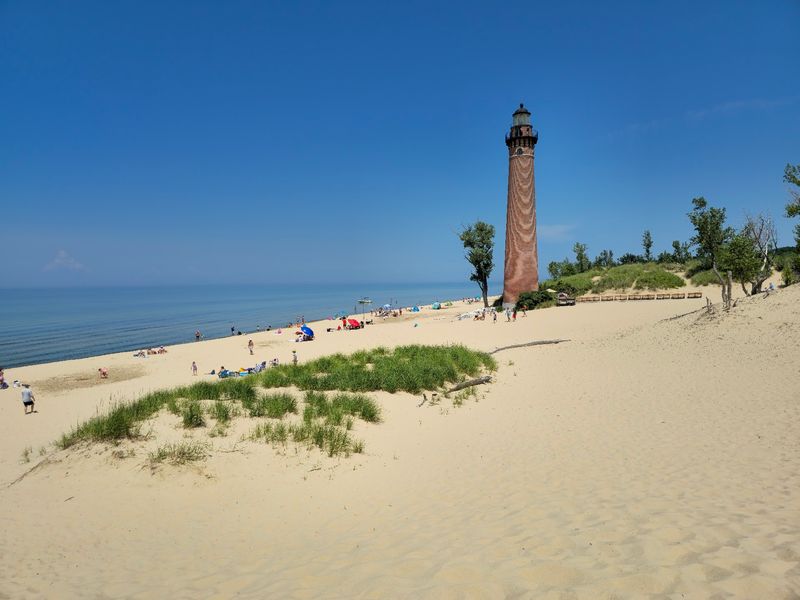
Sand mountains hide inside the western half. The Nordhouse Dunes Wilderness rises up to about 140 feet above the shoreline.
These dunes are old, estimated at 3,500 to 4,000 years. Time has let plants take hold across much of the sand.
Juniper, jack pine, and hemlock grow among the ridges. The result looks nothing like a bare, shifting dune field.
Roughly ten miles of hiking trails wander through the wilderness. Signs are minimal by design, so a map helps.
Beachcombing along Lake Michigan draws plenty of visitors. Sunset over the water ranks high on most itineraries.
Wildlife viewing works well here too. Quiet corners of the Huron-Manistee National Forests often reward those who arrive before the crowds.
Fall brings thinner crowds and cooler sand underfoot. Wind off the lake can bite, so a windproof layer earns its space.
Wilderness rules mean no mechanized equipment and few facilities. Pack out everything, and the dunes stay as good as they were found.
Echoes Of Michigan’s Logging Days
Timber built much of this region. The Lumberman’s Monument Visitor Center honors that chapter of Michigan history.
It stands as the only visitor center within the Huron-Manistee National Forests. That alone makes it worth a detour.
The site sits beside the Au Sable River near Oscoda. Interpretive displays explain how logging reshaped the state’s forests.
Visitors can step aboard a wannigan, a replica of the floating cooking shanty that fed river crews. Small details like that stick with kids.
The short Forest Discovery Trail loops through the grounds. It suits families who want fresh air without a serious hike.
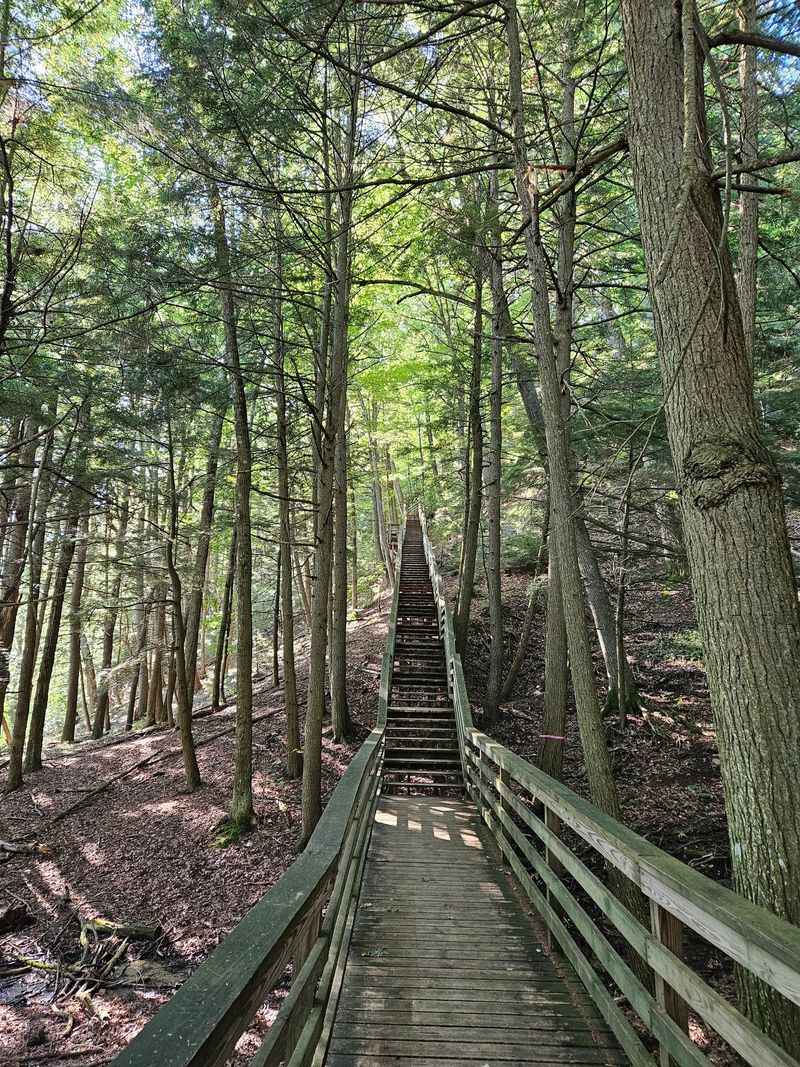
Overlooks above the river valley deliver wide autumn color. Stairs lead down toward the water for those wanting a workout.
Context changes how the surrounding woods look. Much of this forest is regrowth, planted and protected after heavy cutting.
Seasonal availability can shift, so confirming access ahead of a visit is smart. The views from the bluff remain regardless.
Smart Habits Around Bears
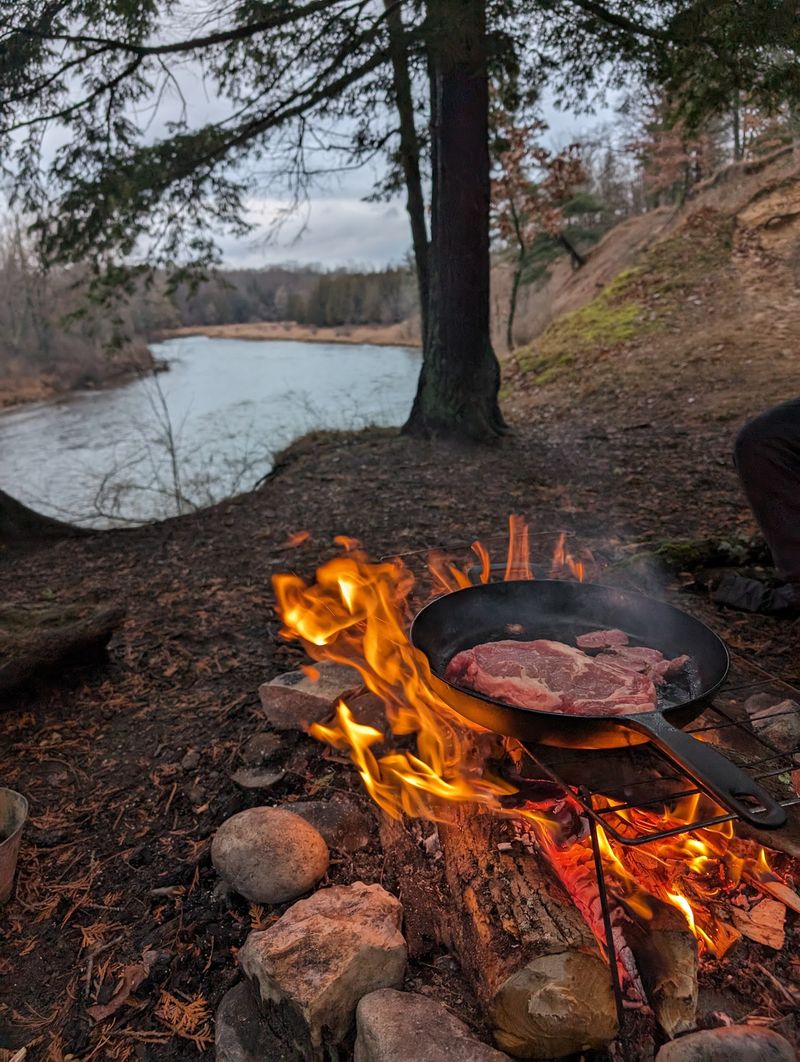
Respect turns a thrilling moment into a safe one. Bears in the Huron-Manistee National Forests avoid people by default.
Fall hunger can override that caution. A hungry bear may drift closer to campsites and trailheads than it would in June.
Let a bear know you are there. Speaking calmly beats surprising one at close range.
Never approach, and never move toward cubs. A mother bear defends her young without hesitation.
If a bear spots you, do not run. Running can trigger a chase response.
Back away slowly in the opposite direction instead. Give the animal an open route to leave.
Food management does most of the heavy lifting. Store coolers inside a hard-sided vehicle or a secure building.
Clean grills after every use, and pack out scraps. Bird feeders should come down from April through November.
A bear that finds food near people learns bad habits fast. Simple discipline protects both visitors and wildlife across Michigan.
Feathers, Butterflies, And Other Locals
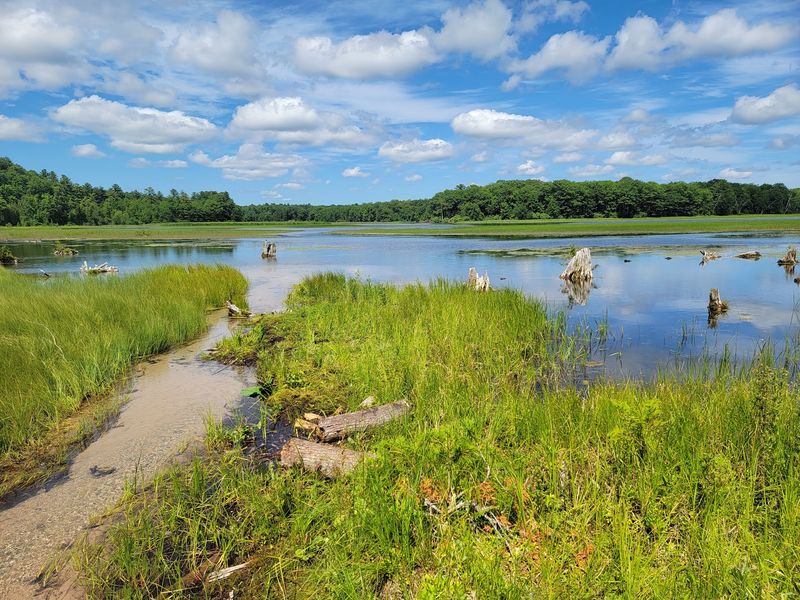
Bears get the headlines, but the supporting cast is huge. Hundreds of bird species have been recorded across these forests.
Close to 200 other wildlife species live here as well. That is a lot of company on any given hike.
White-tailed deer show up constantly, especially at dawn and dusk. Their red-brown summer coats fade to gray as cold weather arrives.
Rarities raise the stakes for birders. The Kirtland’s warbler breeds almost exclusively in young jack pine stands, much of it in Michigan.
Guided tours exist for anyone hoping to see that threatened songbird. Timing matters, since the birds are seasonal visitors.
The Karner blue butterfly depends on wild lupine and turns up in oak savanna openings. Tiny, blue, and easy to miss.
Eagles, hawks, foxes, and turtles round out a long list. Campers frequently report sightings without leaving their site.
Bring binoculars even on a casual walk. The Huron-Manistee National Forests reward anyone who slows down and looks twice.
Getting The Fall Trip Right
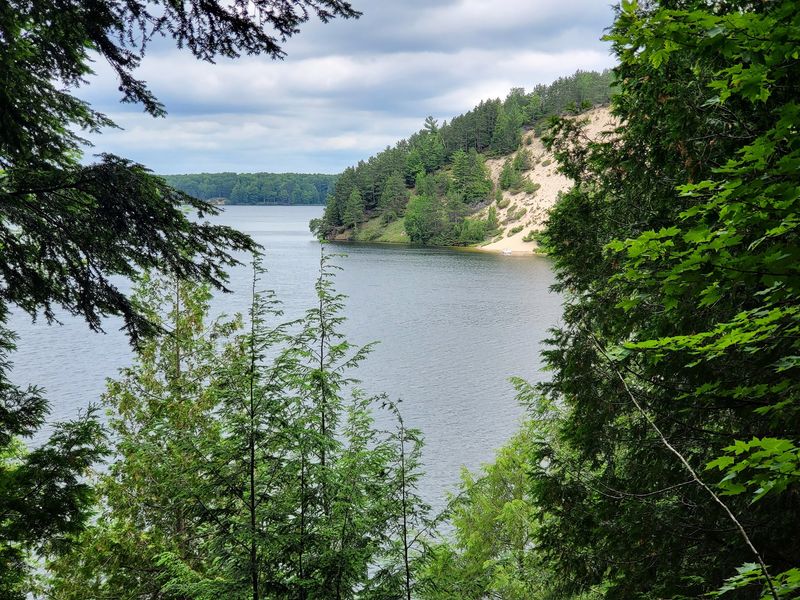
Timing makes or breaks an autumn visit. Peak color in this part of Michigan often lands around the second week of October.
Scenic drives stretch the season out. U.S.
Highway 23 follows Lake Huron toward the eastern forest, while U.S. Highway 31 traces the Lake Michigan shoreline to the west.
Camping options range widely. Developed campgrounds offer amenities, and primitive backcountry sites offer solitude.
Dispersed camping is allowed in many areas without a fee. Rules vary by district, so checking first avoids trouble.
Popular sites fill up during peak weekends. Booking early is the simplest way to skip disappointment.
Cool mornings call for layers. Temperatures can swing sharply between sunrise and afternoon.
Pack binoculars, a headlamp, and a camera with a decent zoom. Those three items cover most wildlife moments.
Weather here changes quickly, a point regular visitors repeat often. Flexibility beats a rigid schedule every time.
Autumn in the Huron-Manistee National Forests delivers color, quiet water, and a real chance at a bear sighting. Even without one, the woods send everyone home happy.