
Outdoor Art Spaces In Massachusetts With The Most Unusual Sculptures Worth Seeing This Season
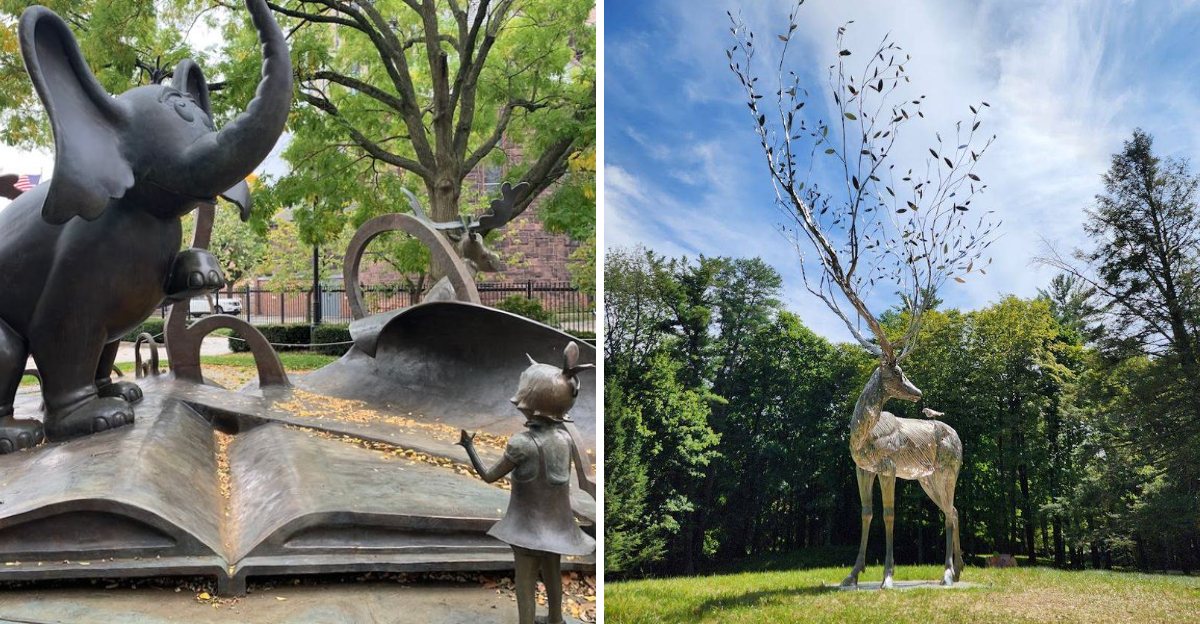
Massachusetts loves a good surprise, and outdoor art delivers plenty of them. Giant sculptures pop up in parks.
Strange shapes hide among the trees. Some pieces look like something out of a dream. Others make you stop and ask what you’re even looking at. That’s part of the fun.
These spaces don’t feel like stuffy museums. No hushed voices. No velvet ropes. Just open air, good light, and art that changes with the seasons.
Kids love running between the pieces. Adults love the photo ops. Everyone leaves with a favorite.
Some sculptures twist metal into wild shapes. Others sit so still they almost blend into the landscape.
Visit in spring and it feels one way. Visit in fall and it feels completely different. Massachusetts makes outdoor art feel like an adventure, not homework.
Grab a friend, pick a spot, and go see something weird and wonderful this season.
1. deCordova Sculpture Park And Museum, Lincoln
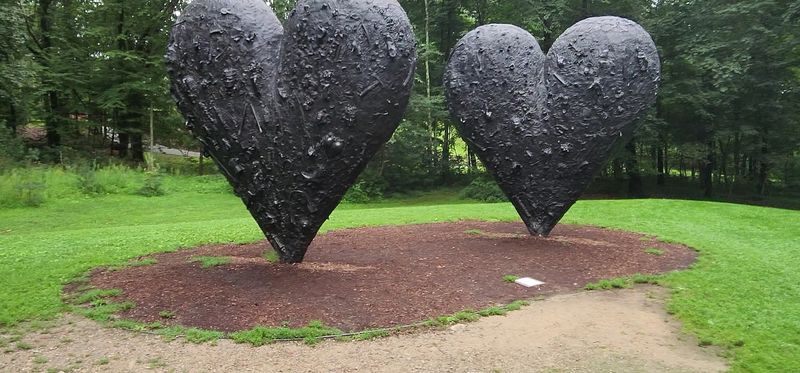
New England’s largest sculpture park does not ease you in gently. From the moment you step onto the 30 acres of deCordova Sculpture Park and Museum at 51 Sandy Pond Rd in Lincoln, the landscape itself becomes part of the art.
Roughly 60 works rotate through the grounds at any given time, meaning no two seasons look alike.
Dewitt Godfrey’s massive corten steel rings appear to tumble down a hillside as if gravity decided to get creative, while Ursula von Rydingsvard’s cedar and graphite creation could easily fool you into thinking it grew straight out of the earth.
Artists like Andy Goldsworthy, Antony Gormley, and Jaume Plensa have all left their mark here.
The park’s PLATFORM series commissions site-specific work from emerging artists, so there is always something freshly unexpected waiting around the next bend.
Rolling lawns give way to forest paths, open fields stretch toward Flint’s Pond, and every turn reveals a new conversation between human imagination and raw nature.
Whether you are an art enthusiast or just someone who enjoys a genuinely surprising afternoon outdoors, deCordova rewards curiosity in the most satisfying way possible.
2. TurnPark Art Space, West Stockbridge
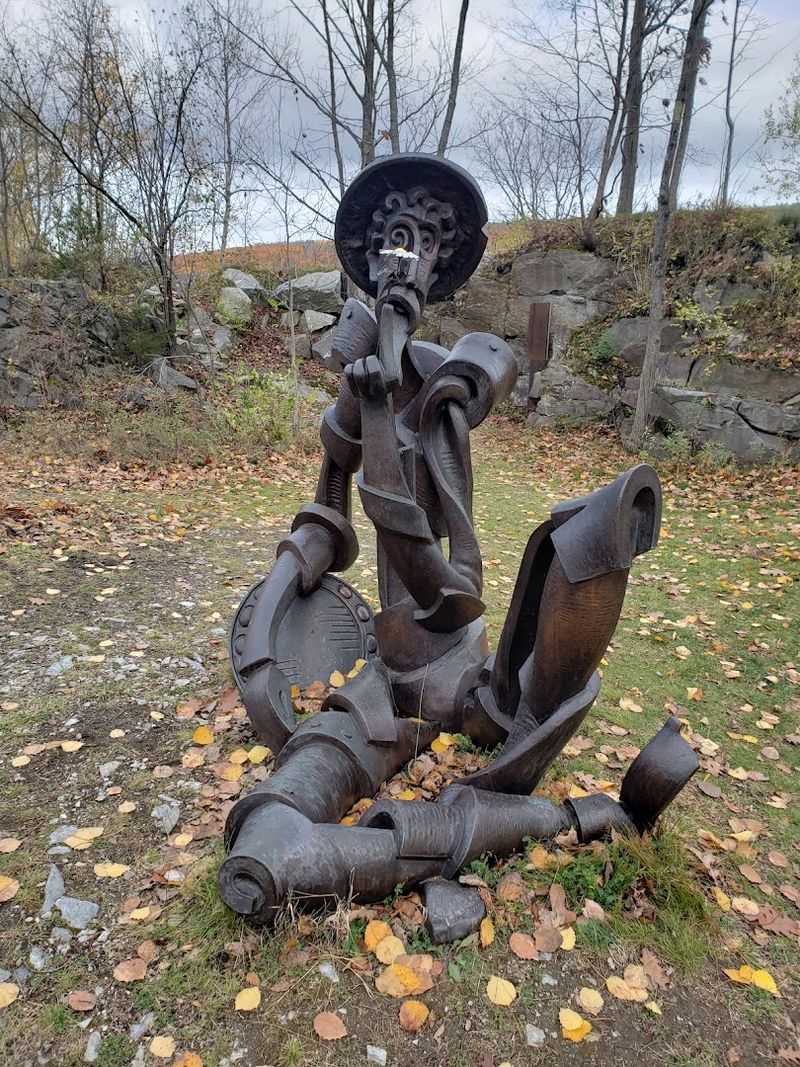
Carved from a former quarry in the Berkshire Hills, TurnPark Art Space in West Stockbridge is one of those places that feels almost impossible to categorize.
The 16-acre property at 2 Moscow Rd offers a dramatic landscape shaped by geology first and human design second.
A 65-foot vertical rock face towers over a tranquil lake, and the sweeping mountain views frame every sculpture like a painting that refuses to stay still.
The collection leans heavily into Soviet Nonconformist Art from the 1950s through the 1980s, featuring bold works by artists like Nikolai Silis that carry a distinct emotional weight.
The architectural framework, conceived by Alexander Konstantinov and Ekaterina Vlasenko, plays with the push and pull between straight lines and curves, deliberately echoing the contours of the surrounding hills.
Upper and lower levels each offer open-air gallery spaces that invite slow, thoughtful movement rather than a quick stroll.
TurnPark rewards those who take their time.
The interplay between industrial history, natural drama, and international artistic tradition creates an atmosphere unlike anything else in the Berkshires.
3. The Clark Art Institute, Williamstown
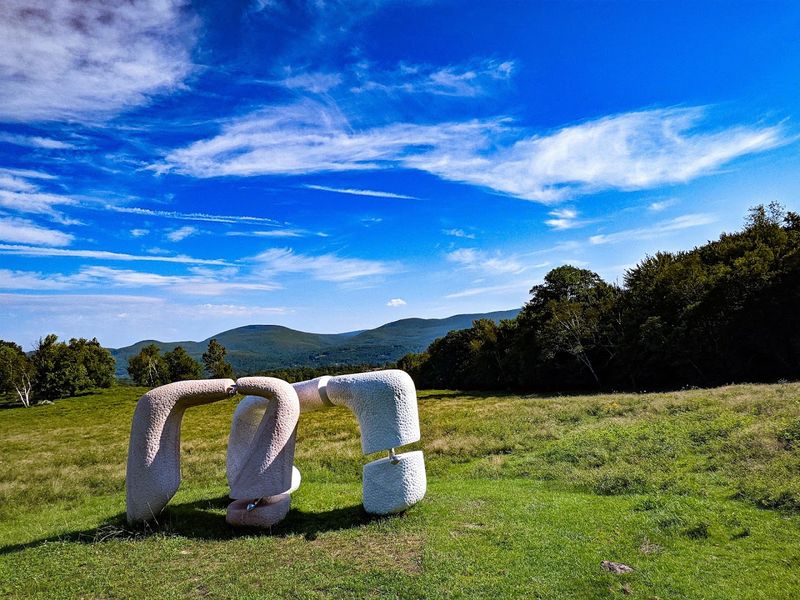
Most people know The Clark Art Institute in Williamstown for its stunning indoor collections, but the real surprise this season is happening outside.
The 140-acre campus of meadows, woodlands, and walking trails has become a full-scale outdoor exhibition space, and it absolutely earns the attention.
Ground/work 2025 is the exhibition to know about right now. Running through October 2026, it fills the grounds with monumental, site-specific sculptures by international artists who draw from global craft traditions in genuinely unexpected ways.
A towering stoneware form by Japanese ceramicist Yo Akiyama, intricate willow weaving by British artist Laura Ellen Bacon, and mosaic work by Mexican artist Javier Senosiain are just a few of the works waiting across the landscape at 225 South St.
What makes this exhibition particularly compelling is how the pieces transform with the light and weather.
A sculpture that looks one way at noon shifts entirely by late afternoon, and the Berkshire Mountains in the background change the mood with every season.
The Clark has always balanced art and nature beautifully, but Ground/work 2025 pushes that relationship into bold new territory, making the outdoor campus just as essential as anything hanging on the walls inside.
4. Chesterwood, Stockbridge
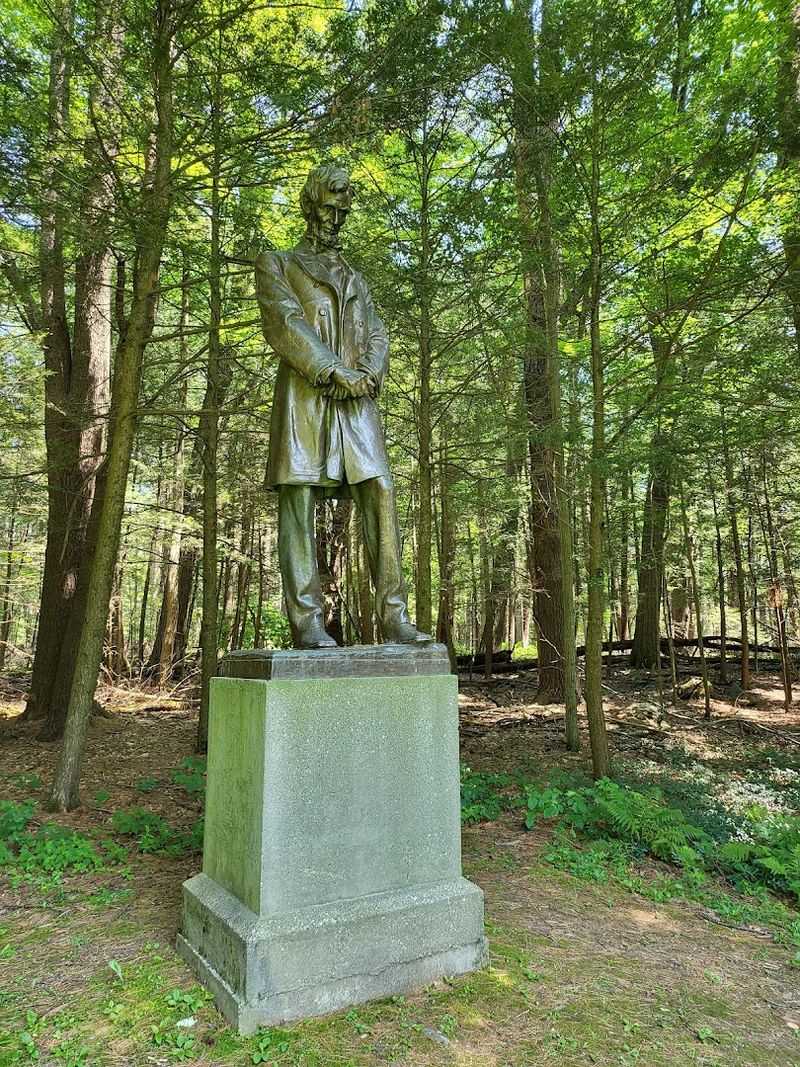
Long before outdoor sculpture parks became fashionable, Chesterwood was already doing it.
This 122-acre National Trust Historic Site was the summer home and studio of Daniel Chester French, the sculptor responsible for the Lincoln Memorial’s famous seated Abraham Lincoln.
Chesterwood launched its Contemporary Sculpture at Chesterwood exhibition back in 1978, making it one of the earliest venues in the United States to champion large-scale outdoor work.
That tradition continues today with rotating installations by New England and New York artists who bring abstract and figurative pieces into dialogue with the historic landscape.
Walking the grounds feels layered in a way that few art spaces manage. French’s original plaster models and design sketches are visible inside the studio, giving context to the monumental finished works elsewhere on the property.
Then, just steps away, a contemporary artist’s steel structure or carved wood form catches the afternoon light in a completely different register.
The conversation between past and present here is never forced. Chesterwood lets both eras breathe, and the result is a richly textured afternoon that makes you think about legacy, craft, and what it really means to make something built to last.
5. The Mount, Edith Wharton Cultural Center, Lenox
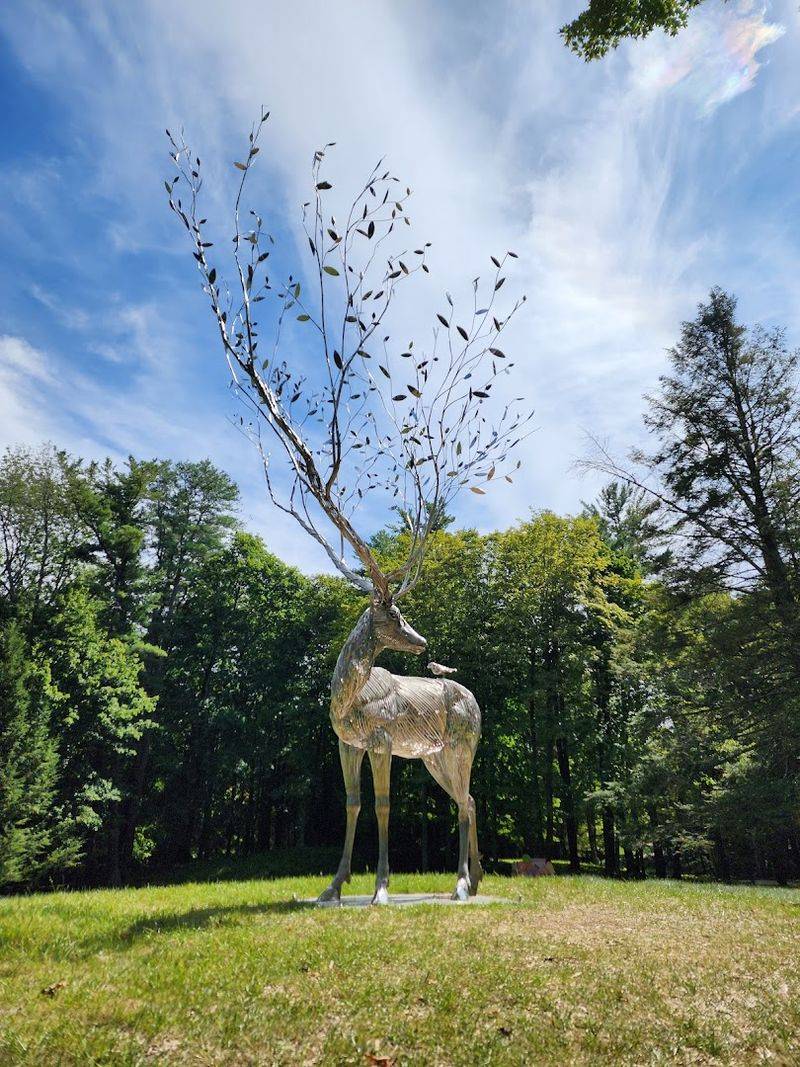
Edith Wharton designed The Mount as a place where beauty was intentional and every detail served a purpose.
That same philosophy now guides the annual Contemporary Sculpture at The Mount exhibition, which transforms the 49-acre estate at 2 Plunkett St in Lenox into an outdoor gallery from late spring through early fall.
The formal gardens, which Wharton herself designed drawing from grand European traditions, provide a structured and visually striking backdrop for large-scale contemporary works.
The contrast between historic garden architecture and bold modern sculpture is sharp in the best possible way.
The 2026 exhibition, titled Flourish, focuses on themes of connection, hope, and growth. Artists working in a wide range of materials place their work throughout the grounds, and each piece responds to the landscape in its own distinct way.
Some feel rooted and permanent, others appear almost temporary, as if they arrived on the wind.
The Mount is one of those rare places where the setting and the art genuinely compete for your attention, and somehow both win.
Wharton’s vision for the estate was always about harmony, and this exhibition makes that feel more alive than ever.
6. The Dr. Seuss National Memorial Sculpture Garden, Springfield
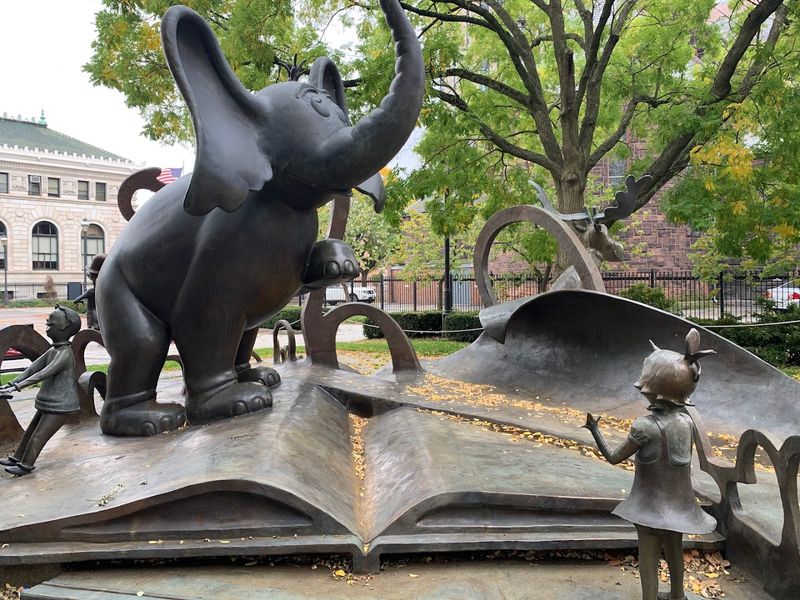
There is something genuinely joyful about rounding a corner and coming face to face with a 10-foot stack of bronze turtles. That is exactly the kind of moment waiting at The Dr. Seuss National Memorial Sculpture Garden at 21 Edwards St in Springfield-.
Springfield is the hometown of Theodor Seuss Geisel, the man behind the pen name Dr. Seuss, and this outdoor garden is a full-scale celebration of his imagination.
Sculptor Lark Grey Dimond-Cates, his stepdaughter, brought five major bronze installations to life, each one pulled directly from the pages of the classic stories most people grew up with.
Yertle the Turtle stacks up dramatically against the sky, while the Cat in the Hat stands beside Dr. Seuss himself at his drawing desk.
The Lorax speaks for the trees nearby, Horton the Elephant holds steady with his familiar determination, and the Grinch glowers magnificently alongside his loyal dog Max.
What makes this garden so unusual is how unapologetically playful it is. There is no self-conscious attempt to make the work feel serious or elevated.
It simply trusts that joy, imagination, and a little bit of absurdity are more than enough, and it is absolutely right.
7. Fuller Craft Museum, Brockton
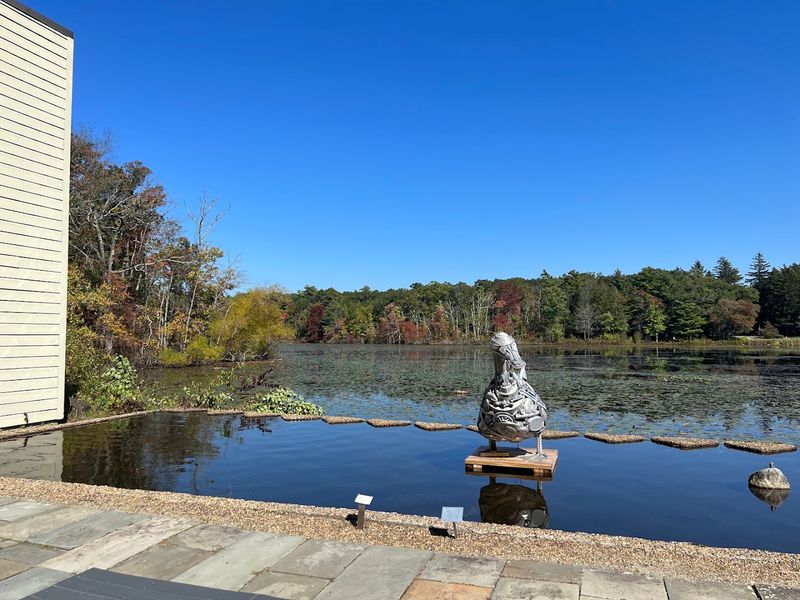
Craft art does not always get the dramatic outdoor treatment it deserves, but Fuller Craft Museum in Brockton makes a strong case for why it should.
The museum at 455 Oak St spreads across 22 acres where the boundary between building, landscape, and artwork is deliberately blurred.
The museum’s architecture, designed by J. Timothy Anderson and Associates, uses slate floors, natural wood beams, and floor-to-ceiling windows to dissolve the line between inside and out.
That same sensibility carries through to the outdoor sculptures placed across the courtyards and grounds.
Leo Sewell’s Duck is an immediate crowd-stopper: a sculpture assembled entirely from reclaimed everyday objects that somehow resolves into a recognizable form.
Joseph Wheelwright’s Sweet Face, carved from a single large piece of granite, has a quiet intensity that rewards a long, slow look.
Outdoor areas inspired by Zen stone garden principles add a contemplative layer to the whole experience.
Fuller Craft Museum is the kind of place that makes you reconsider what materials can do and what craft actually means. It is not a grand gesture kind of space.
It earns its impact through precision, ingenuity, and a genuine commitment to showing craft at its most inventive and unexpected.
8. Provincetown Art Association And Museum, Provincetown
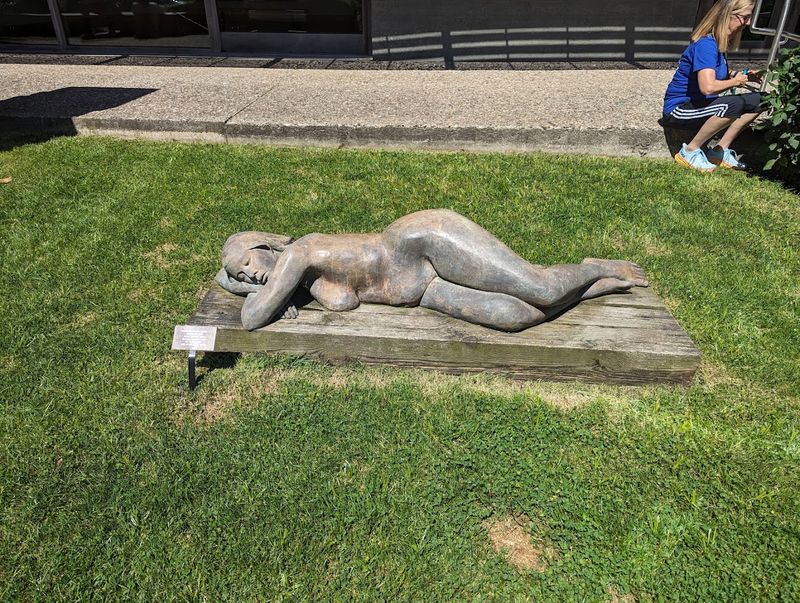
At the very tip of Cape Cod, where the land curls back on itself and the light hits the water at angles that painters have chased for over a century, the Provincetown Art Association and Museum has been holding its ground since 1914.
At 460 Commercial St, PAAM is both a cultural anchor and a genuinely engaging outdoor art experience.
Three distinct sculpture gardens sit on the property: the James and Frances Bakker, Berta Walker, and Dr. Donald Butterfield Sculpture Gardens.
Each one presents a rotating selection from the permanent collection, with works by artists like Chaim Gross and Penelope Jencks offering quiet moments of discovery among carefully considered plantings and pathways.
PAAM also periodically introduces outdoor sound installations, which layer an entirely different kind of sensory experience onto the coastal setting.
The combination of visual art, ambient sound, and salt air gives the gardens a quality that feels specific to Provincetown and nowhere else.
The town’s artistic legacy is long and storied, and PAAM sits right at the center of it.
Spending time in these gardens is less like touring a museum and more like stepping into a living conversation between artists, landscape, and the endlessly shifting Cape Cod sky above.
9. MIT List Visual Arts Center, Cambridge
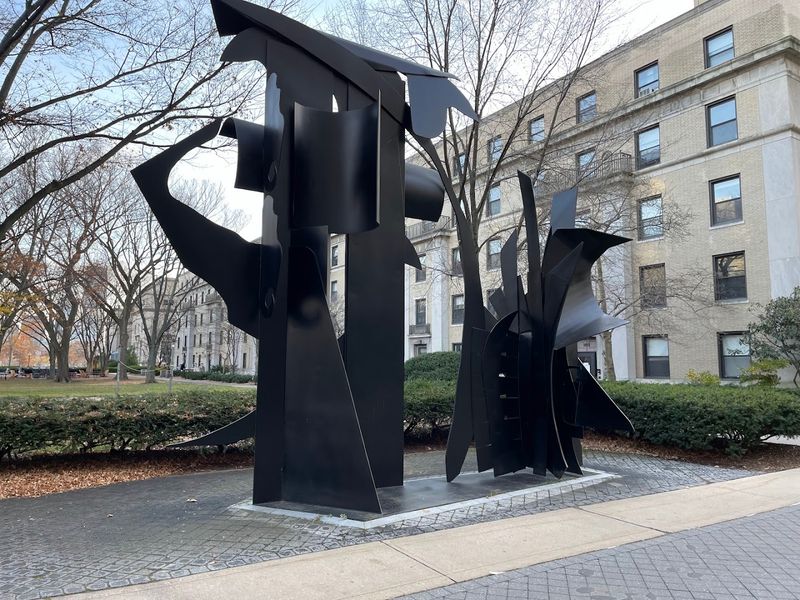
College campuses are not always the first place people think of when planning an outdoor art adventure, but MIT’s campus in Cambridge makes a genuinely compelling argument for reconsidering that assumption.
Thanks to the institute’s Percent-for-Art Program, public art is built into the physical DNA of the campus at 20 Ames St and well beyond.
The List Visual Arts Center oversees a public collection that spans disciplines, materials, and scales in ways that keep even regular passersby guessing.
Julian Charriere’s rock sculptures carry a slow, geological authority, while Sanford Biggers’ geometric forms feel charged with cultural and historical meaning.
One of the most technically fascinating works is Agnieszka Kurant’s The End of Signature, a dynamic LED installation that collects hundreds of individual signatures and translates them through an algorithm into a single, constantly shifting communal mark.
It is part technology demonstration, part meditation on identity, and entirely unlike anything else in the region.
Wandering the MIT campus with art on your radar turns an ordinary afternoon into something closer to a treasure hunt.
The works are spread across multiple sites, which means the discoveries keep coming long after you think you have seen everything the campus has to offer.
10. Field Farm Reservation, Williamstown
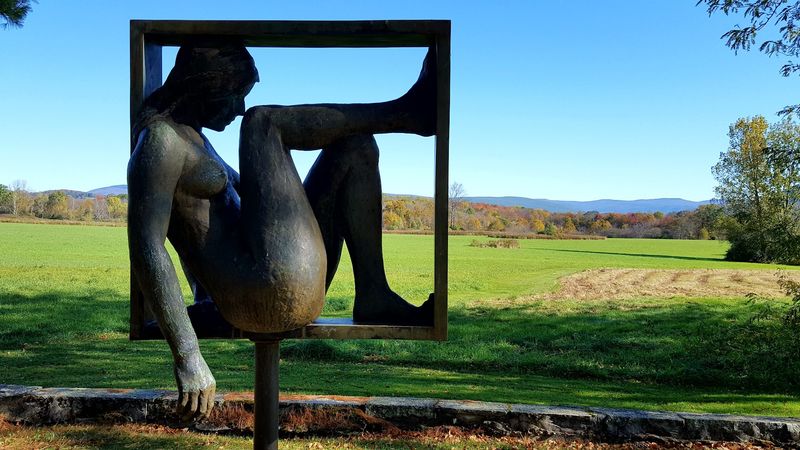
Most nature reserves ask you to leave everything as you found it. Field Farm Reservation in Williamstown, Massachusetts, made a different choice entirely.
The result is one of the most quietly extraordinary outdoor art experiences in the Berkshires.
Managed by the Trustees of Reservations, this 316-acre property at 554 Sloan Rd sits at the foot of the Berkshire Mountains and offers four miles of footpaths winding through open fields, dense woods, and verdant wetlands.
Thirteen permanent modern sculptures by artists including Richard M.
Miller and Herbert Ferber are placed throughout the landscape, each one chosen to create a specific tension with its surroundings.
The reservation also holds two architectural landmarks worth seeking out: a 1948 International Style house that looks like it arrived from a different era, and The Folly, a pinwheel-shaped guesthouse that manages to feel both eccentric and perfectly at home in the landscape.
Field Farm is the rare kind of place where art, architecture, and nature achieve something close to genuine equilibrium. The sculptures do not dominate the land, and the land does not swallow the sculptures.
They coexist with a balance that makes every step along the trail feel like a carefully composed frame worth remembering.