
12 Overlooked Ghost Towns In Idaho That Are Eerily Beautiful
Grab a jacket and a curious spirit, because Idaho’s forgotten towns have a way of getting under your skin.
Dusty streets, weathered storefronts, and mountain winds whisper stories you can almost hear if you pause long enough.
You will find beauty here that is quiet and haunting, tinged with history and rugged grit.
Walk with me through these overlooked places and see what still lingers long after the crowds moved on.
From fading signs and boarded hotels to cemeteries, river bends, and back roads where silence speaks louder than words, remembering forgotten lives, hard winters, small joys, and stubborn hope.
1. Bayhorse
Down a narrow canyon near Challis, Bayhorse clings to steep slopes like it never quite let go.
Old timbers and iron hardware still peek from buckled walls, and you can trace the path of ore carts just by following the scars on the hillside.
When the wind tunnels through the rock, it sounds like distant voices, or maybe it just feels that way when you listen too hard.
The town boomed on silver and lead, then quieted almost overnight when prices crashed and fires came through.
You can wander the charcoal kilns, their beehive shapes perfect for photos, and imagine workers feeding them with pinon and juniper.
Keep an eye out for rusted gears in the sage, because Bayhorse is generous with relics but stingy with explanations.
Getting here is part of the charm, a drive that shifts from river views to stark canyon drama.
Bring water, solid shoes, and time to linger, because the best details hide in shadows under the eaves.
If you love places where the past refuses to tidy itself up, Bayhorse will meet you halfway and leave you thinking about it all week.
2. Custer
Custer sits in the heart of the Yankee Fork, laid out along a dirt street that still feels ready for a parade that will never come.
Boardwalks creak, doors hang a little crooked, and interpretive signs tie threads between names that once filled the air.
You can smell pine resin as the sun warms the hills and imagine miners comparing pay dirt outside the General Store.
This place managed better preservation than most, so you get interiors staged with goods, tools, and everyday clutter.
The old assay office whispers of fortunes proved or dashed in a single test.
Stand by the schoolhouse and listen for echoes, because sometimes the quiet rings louder than any bell.
Plan a loop with the Yankee Fork Gold Dredge and nearby Bonanza to round out the story.
Bring a camera and patience, since good light slides quickly along the ridgelines.
Custer rewards slow walkers and curious minds, the kind of travelers who browse shelves with their eyes and read the walls like chapters.
3. Bonanza
Bonanza feels like Custer’s wilder cousin, stretched along the Yankee Fork with cabins spaced like pauses in a sentence.
The cemetery crouches on the slope, headstones tilted and names softened by time.
When leaves shake in the cottonwoods, you get that unmistakable sensation of being watched by history, not in a spooky way, but in a knowing one.
It boomed in the 1870s on quartz and dreams, then hit the familiar curve of bust and fire.
Scattered artifacts still lie in the grass, so step carefully and leave everything as you find it.
Stand near the old hotel site and you can almost hear boots scuffing the porch, waiting on news from the diggings.
Pair Bonanza with the dredge tour to understand how the river was turned inside out for gold.
Early evening light is gorgeous here, catching dust and outlining rooftops like halos.
If you prefer your ghost towns with a little breathing room and generous silence, this is where you linger and let the day soften around you.
4. Gilmore
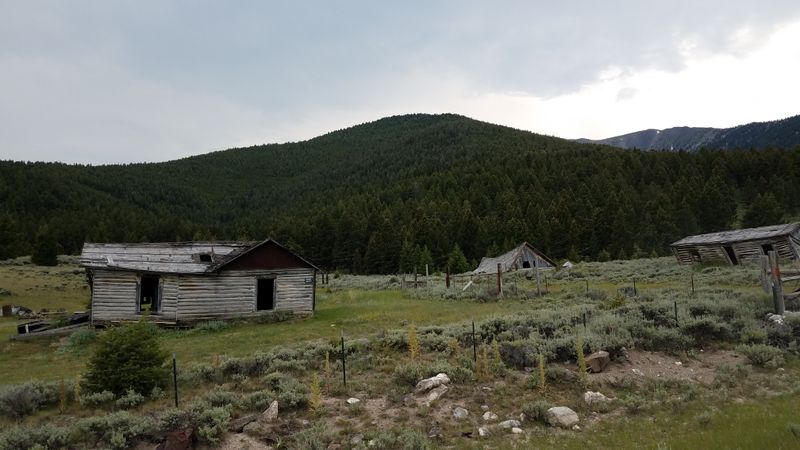
Gilmore greets you with emptiness that feels huge, a wide basin framed by the Lemhi Range and skies that go on forever.
Crumpled sheds, a leaning store, and the bones of a rail spur sit in sagebrush like a still life.
Wind rides the open plain and tugs at jacket zippers, reminding you there is no shelter but your resolve.
Silver and lead fueled its rise, and the Gilmore and Pittsburgh Railroad tied it to markets beyond the mountains.
When ore prices slumped, the track slipped into memory and the buildings followed.
Keep your distance from unstable walls, but take your time tracing that gentle grade where engines once pushed stubborn freight.
Photography lovers will eat this place up, especially on days with fast-moving clouds and ragged shadows.
Bring extra layers and plenty of water, because the elements are in charge and they do not negotiate.
If solitude is your barometer for beauty, Gilmore will register off the scale and leave you comfortably small.
5. Burke

Burke squeezes into a canyon so tight the hotel once straddled both road and creek.
The vertical drama makes you look up first, then around, taking stock of timbers clinging to rock and steel beams bridging impossible gaps.
Echoes bounce in here, and trucks sound like thunder even when they idle.
This was hard rock country, noisy and relentless, where the Tiger and Poorman Mines defined daily life.
Avalanches were common, and fires too, yet people persisted until technology and markets shifted.
You will find foundations, portals, and fragments that hint at a town built like a staircase against the mountain.
Parking is limited, so come early and stay aware of private property.
The magic lives in the contrasts, sunlight striping the canyon while the floor stays cool at noon.
Burke is not delicate, but it is unforgettable, a reminder that ambition sometimes chooses the narrowest places to prove a point.
6. Rocky Bar
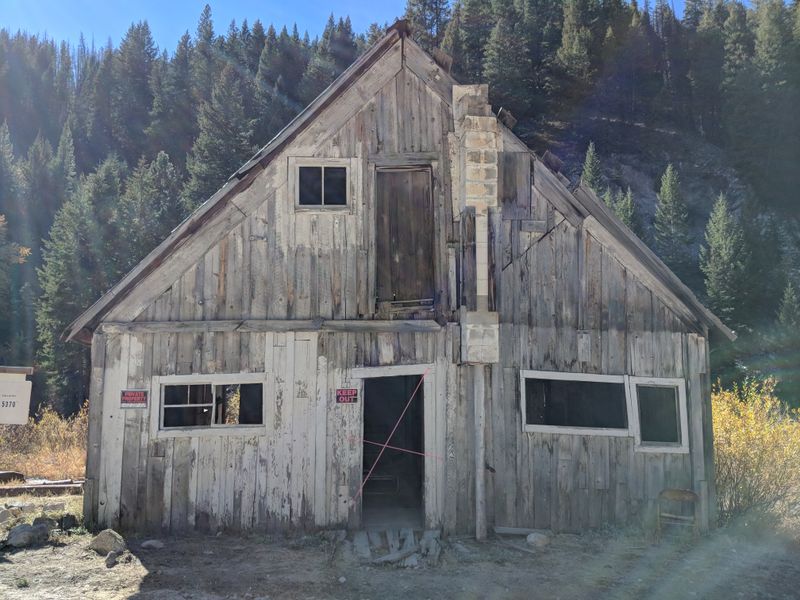
High in the Boise Mountains, Rocky Bar once imagined itself the future capital and almost pulled it off.
Brick safes and stone foundations still stubbornly outline the grid where saloons, stores, and hopes stacked up.
Fires tore through more than once, but the spirit of the place lingers like the aftertaste of strong coffee.
Wander the hillside and you will spot iron bits and glass softened by weather, clear reminders of a town that refused to be neat.
The courthouse site is a favorite stop, along with the remnants of the jail, small but persuasive.
Pines scent the air and chipmunks chitter like gossiping neighbors who saw it all.
A high clearance vehicle helps, especially after storms, and summer brings the friendliest roads.
Respect posted signs, step carefully around open holes, and bring a sense of curiosity sturdy enough for steep grades.
Rocky Bar rewards explorers who enjoy a little sweat with their history, and it pays out in views and stories.
7. Chesterfield

Chesterfield does quiet differently, with tidy lines and a sense of order that survived the years.
This was a Mormon settlement, not a rowdy mining camp, and the architecture tells that story in clean angles and careful brick.
Walking the lanes feels like stepping into a family album where the captions never faded.
Many buildings are restored or stabilized, so you can peek at interiors and understand daily life in a way ruins rarely allow.
The meetinghouse anchors everything, red brick warm in the sun, while houses keep watch over meadows. It is peaceful enough to hear fence wires sing when the breeze picks up.
Guided tours are sometimes available in summer, and donations help keep the work going.
Wear soft-soled shoes to spare floors and bring questions, because volunteers know the good stories.
If you want a gentler ghost town with a heartbeat you can still feel, Chesterfield makes a graceful case for staying awhile.
8. Silver City
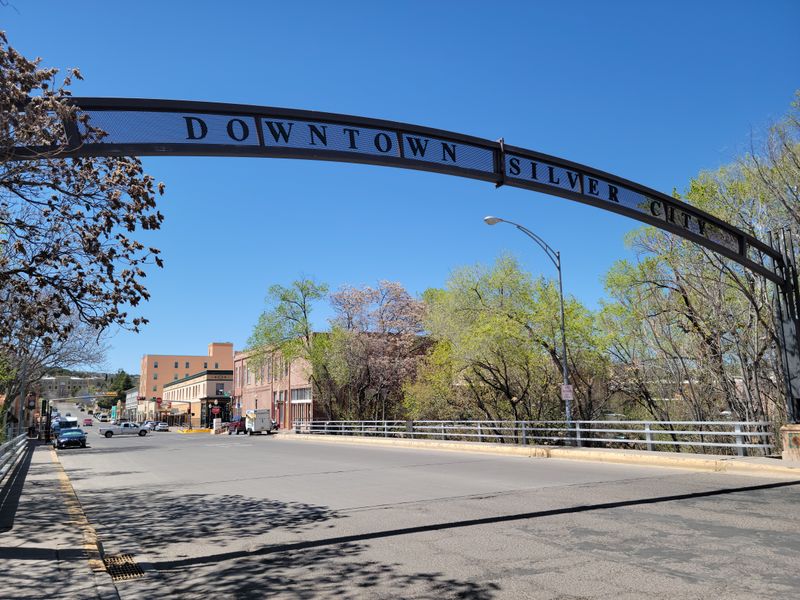
Silver City is the grand dame, a whole streetscape preserved in the high Owyhees where the air tastes clean and a little wild.
Wooden sidewalks click under your steps and the Idaho Hotel stands like a time machine with good posture.
You will smell wood smoke on cool evenings and catch bits of conversation drifting from porches.
This town thrived on silver, faltered, and then dodged the wrecking ball by being just remote enough.
Many structures are privately owned, which helps them survive but asks you to be respectful.
The cemetery on the hill carries names that match the mailboxes, living and gone woven together.
Summer access is best, and storms can turn roads messy quicker than you expect.
Bring cash for seasonal treats and patience for gravel switchbacks that test suspension.
Silver City gives you the rare thrill of a ghost town that still hums softly, like a violin tuned but waiting for the bow.
9. Florence
Hidden deep in the Nez Perce National Forest, Florence is more idea than town now, a scattered handful of relics amid enormous quiet.
The gold strike here was early and wild, and the camp swelled fast before drifting back into the trees.
You will find cellar holes, cabin fragments, and tailings that read like braided paragraphs.
Access can be rough, snow lingers, and maps matter, so plan with care and leave extra daylight.
When fog lifts off the ridges, the place feels newly invented, as if the day assembled it just for you.
Birdsong carries far, and every footstep crunches with the weight of a thousand others who tried their luck.
Leave no trace is essential here, because the forest is doing the delicate work of reclaiming.
Bring a capable vehicle, layers, and a sense of patience for long gravel stretches.
If your heart leans toward remote histories that require effort to earn, Florence will feel like a secret handshake.
10. Caribou City
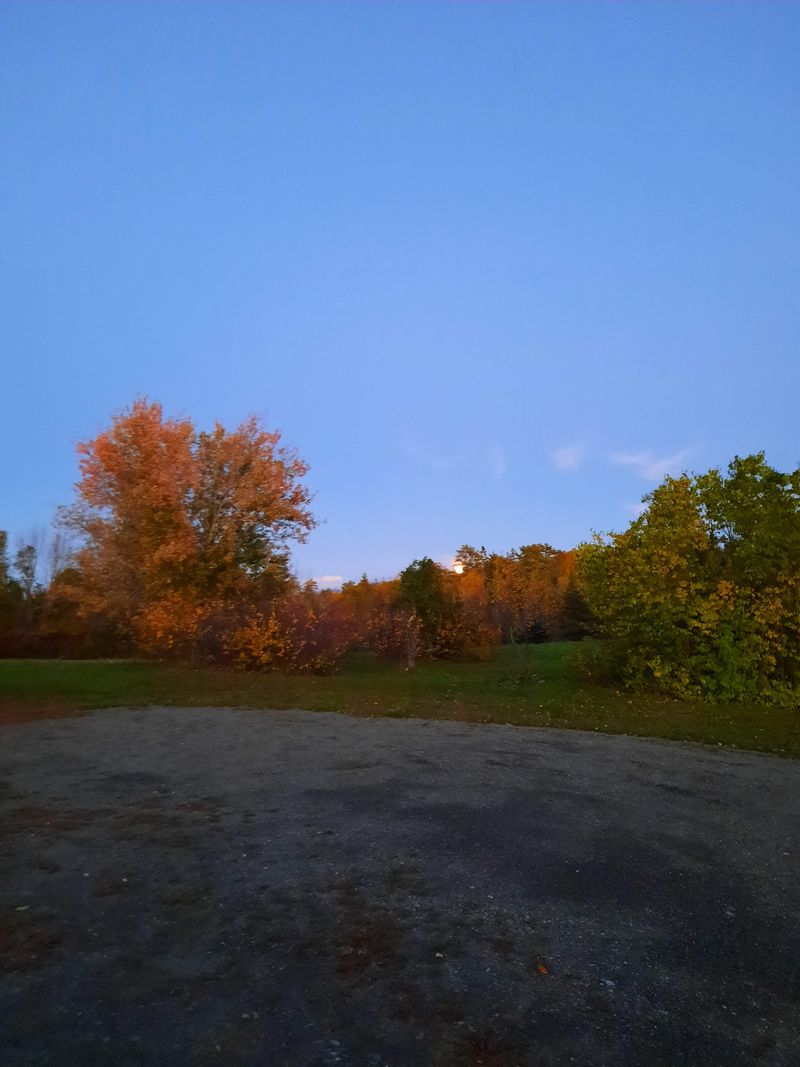
Caribou City rose with the 19th century gold rush in the Caribou Mountains, then faded back into pasture and scattered wood.
The landscape is open and friendly, with aspens that gossip in the wind and creeks that keep their own counsel.
What remains is subtle, so you have to tune your eyes for foundations and disturbed ground.
Locals mined placers first, then chased veins higher, building quickly and moving on just as fast.
Today you might find traces near old diggings and a cabin footprint or two, proof that lives unfolded here in simple lines.
It is not a showy site, but it has a softness that sneaks up on you as the afternoon leans golden.
Access varies with season, and private property dots the area, so double check maps and respect every gate.
Pack a thermos and a willingness to wander, because the best moments arrive between destinations.
Caribou City rewards listeners, people who let the breeze tell its version and nod like they understand.
11. Leesburg
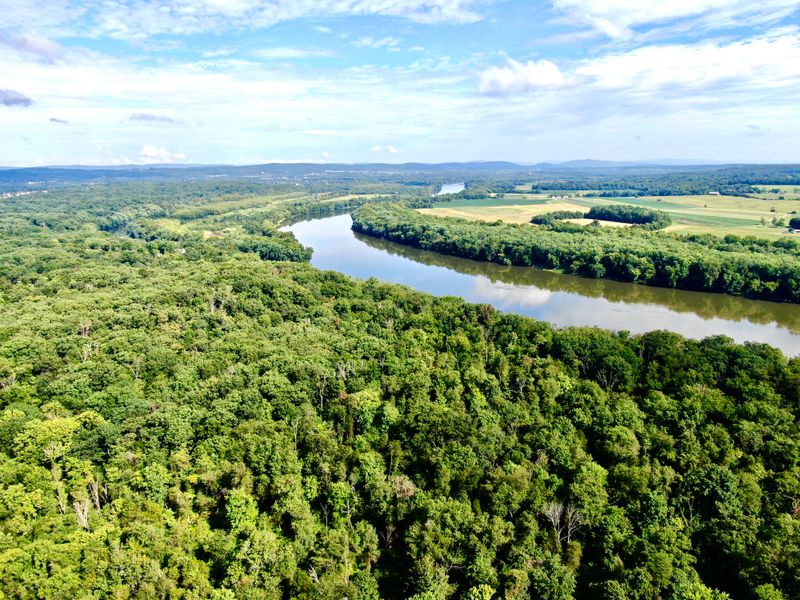
Leesburg sits close to Salmon, tucked near a creek that miners rearranged into looping rock tailings still visible from the road.
Cabins squat low against winter, windows narrow and practical, and the forest presses in like a friendly crowd.
If you listen, the water sounds busy, as if it still carries rumors of gold and long decisions.
Founded in 1866, the camp grew fast on placers and then settled into steady work.
Those tailings are the signature, rows and curls of stone that prove the scale of effort better than any plaque.
The surviving buildings feel honest, scarred by weather and all the more lovable for it.
Visitor etiquette is simple: tread lightly, photograph plenty, pocket nothing.
Early evening is lovely here, when shadows pool in doorways and swallows skim the water.
Leesburg makes a strong case that beauty can be practical and hardworking, with just enough mystery to keep you looking back.
12. Burgdorf
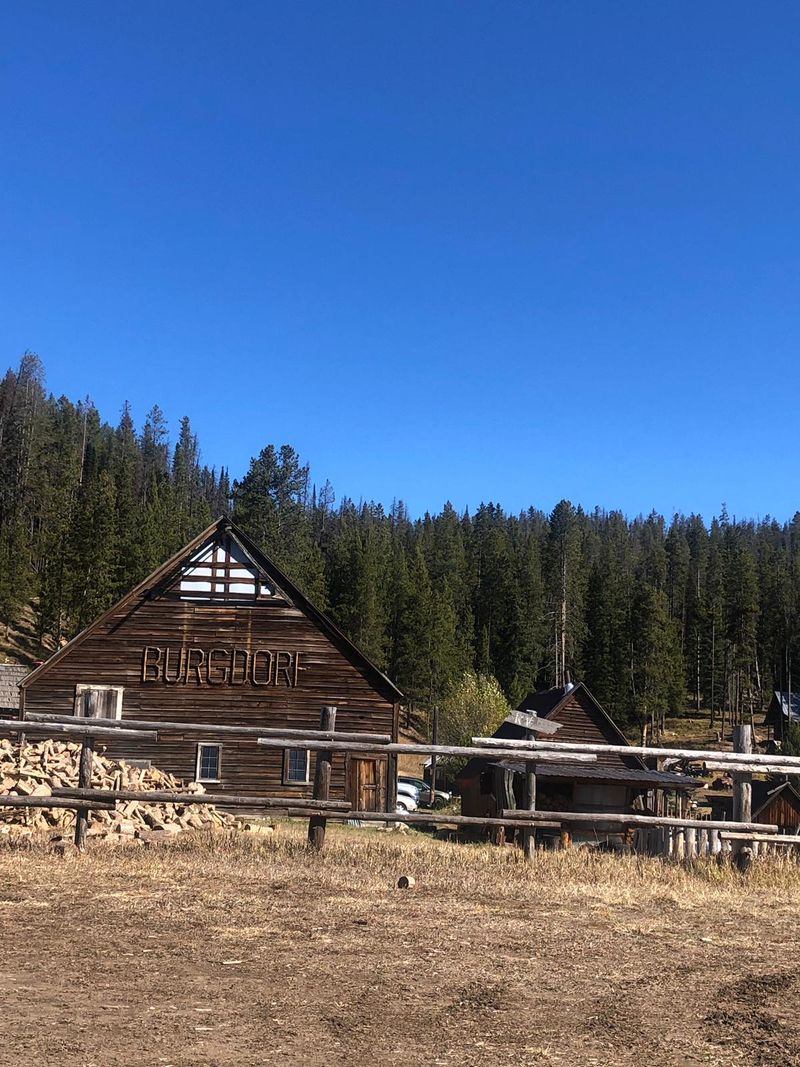
Burgdorf adds a twist to the ghost town experience with hot springs that steam like invitations even on the coldest days.
Log cabins ring the clearing and snow piles high, muffling footsteps until you feel like the last person awake.
The setting is mountain cozy, woodsmoke curling into air so clean it almost glitters.
Founded around a resort that dates to the 1860s, Burgdorf never truly died, it just slowed down and kept the lights dim.
The bathhouse creaks, benches creak, and your shoulders relax the second you slide into the mineral water.
History here is something you absorb through skin and smell as much as you read.
Winter access can require snow machines, and reservations matter in every season, so plan ahead. Pack towels, patience, and a camera that loves steam and frost.
If your ideal ghost town ends with a soak under stars, Burgdorf might ruin you for all the rest in the best possible way.