
6 Small Beach Towns On The Outer Banks Of North Carolina With Laid Back Vibes
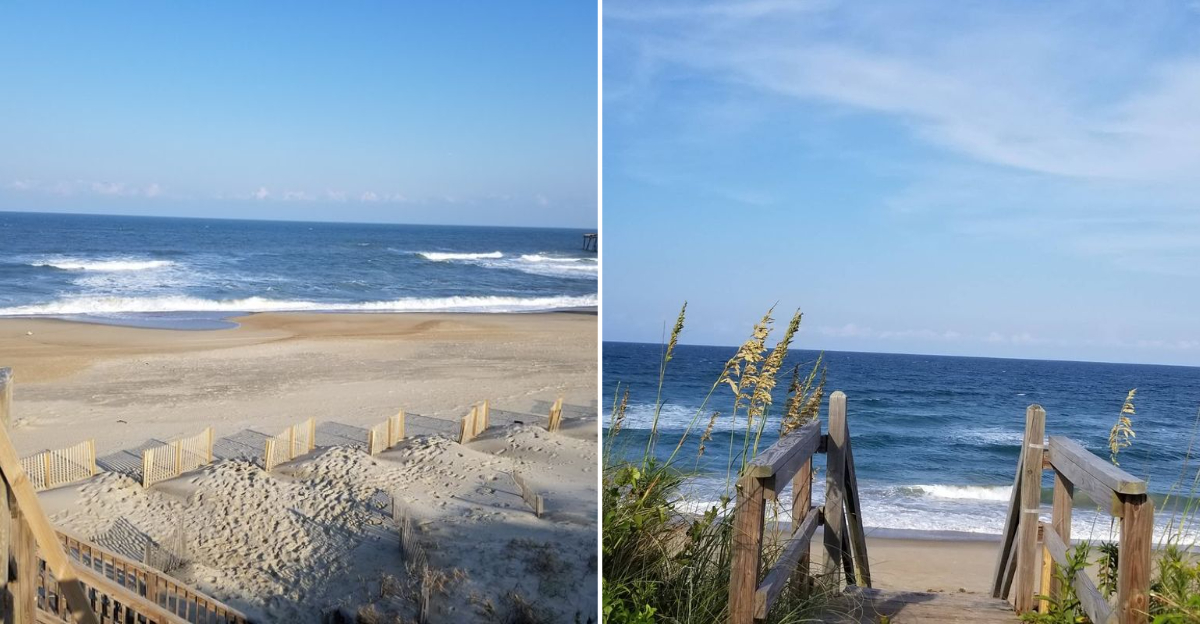
There are beach destinations built for Instagram. Then there are the Outer Banks, where the wifi is spotty, and nobody is upset about it.
North Carolina sits on a strip of barrier islands that never got the memo about becoming trendy. No rooftop pools.
No celebrity chef restaurants with a three-week wait. No influencers blocking the boardwalk for a shot, they will post six times with different filters.
Just sand roads, beach houses that have been in the same families for generations, and towns small enough that you recognize the guy at the bait shop by day two. The Outer Banks moves at its own pace.
Always has. The kind of place where the biggest decision of the day is whether to fish in the morning or the afternoon.
No agenda. No itinerary.
No notifications worth checking. Just wind off the Atlantic, a cooler full of something cold, and six small towns that have mastered the art of slowing everything down.
1. Duck
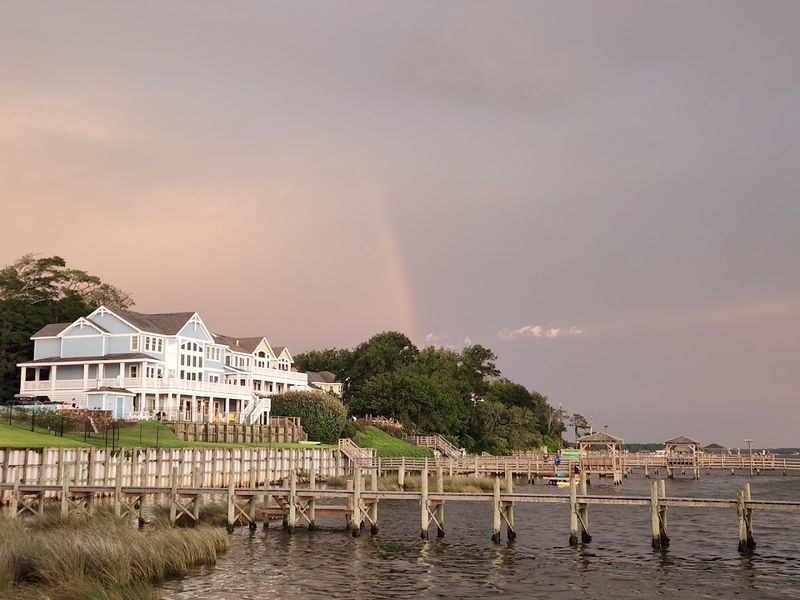
Duck is the kind of town in North Carolina that makes you wonder why you ever lived anywhere else. It sits on a narrow strip of land between the Atlantic Ocean and Currituck Sound.
That means you get two completely different water vibes in one small place.
The main strip through Duck is a wooden boardwalk that runs right along the Sound. Local shops, bakeries, and small restaurants line the path.
You can grab a coffee and watch kayakers glide past without even trying.
Duck was actually a pretty secretive spot for a long time. It had no paved road access until the 1980s, which kept crowds away for decades.
That slow-to-develop history is exactly why it still feels so calm today.
The beach here is wide and clean. Waves are usually manageable, which makes it great for families who want to splash around without drama.
Surfers exist, but Duck is more of a stroll-and-chill kind of beach.
Sunsets over Currituck Sound are genuinely jaw-dropping. Locals set up chairs right on the Sound side and watch the sky turn pink and orange every single evening.
It feels like a free light show that never gets old.
Shopping in Duck leans toward local and independent. You will find art galleries, boutique clothing stores, and specialty food shops.
Nothing feels like a generic tourist trap, which is refreshing.
Parking can get tight in summer, but the town stays surprisingly relaxed even during peak season. Most visitors walk or bike everywhere, which keeps the energy slow and neighborly.
Duck just has that easy rhythm that is hard to explain but impossible to forget. It’s the kind of place that follows you home long after the sand has left your shoes.
2. Kitty Hawk
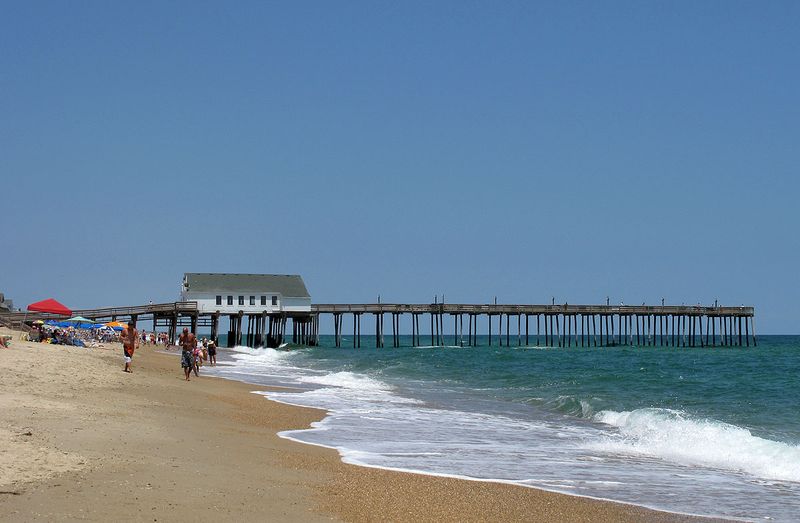
This town carries a name that echoes through history books, but the town itself is far more chill than famous. Yes, the Wright Brothers showed up here in 1900 to figure out human flight.
But today, Kitty Hawk is just a laid-back beach community with good food, great beaches, and zero pretension.
The Wright Brothers National Memorial is nearby, and it is genuinely worth a visit. Standing on the hill where those first flights happened gives you a weird, exciting feeling.
History hit different when you are standing on the actual ground where it happened.
Kitty Hawk Beach is wide, flat, and beautiful. The waves are steady but not aggressive, making it popular for beginners who want to try surfing or bodyboarding.
Local surf shops rent boards and give lessons without making you feel like a tourist.
The town has a solid mix of local restaurants and casual seafood spots. Fresh catch is everywhere, and nobody is dressing up to eat it.
You order at the counter, find a picnic table, and eat with your hands. That is the Kitty Hawk dining experience, and it is perfect.
Kitty Hawk Bay sits on the sound side of town and offers calmer water for paddleboarding and kayaking. Sunset paddleboard sessions on the sound are a popular activity.
You float out there and feel like the entire world slowed down just for you.
The town also has a nice mix of local shops and small grocery stores. Stocking up for a beach day here is easy and low-stress.
Nothing about Kitty Hawk tries too hard, and that is exactly why people keep coming back. There’s a quiet confidence to the place, like it knows it doesn’t need to impress anyone.
3. Southern Shores
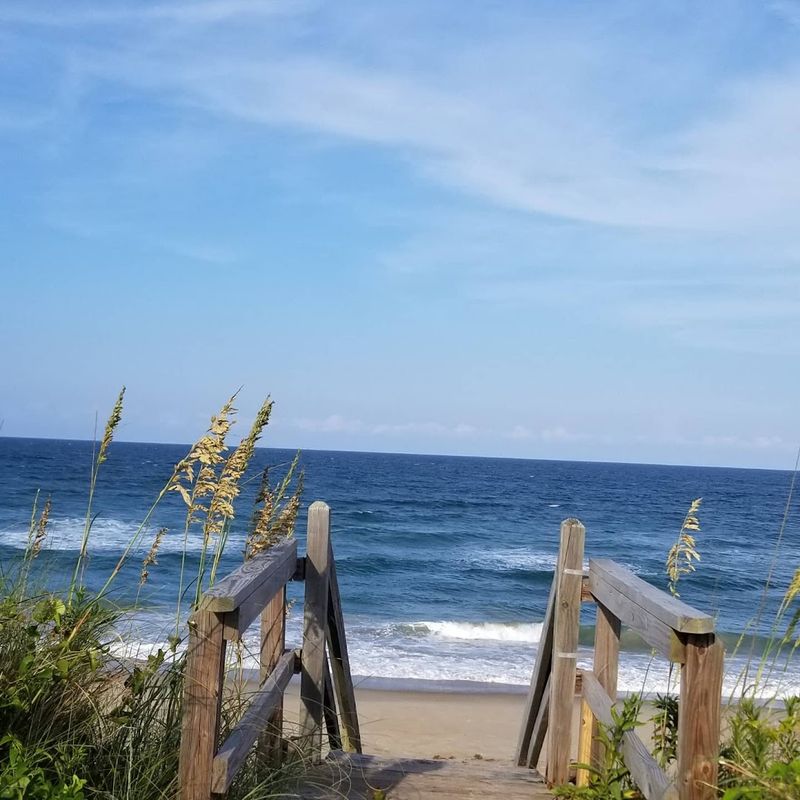
A spot like this is the neighbor everybody wishes they had. It sits right between Duck and Kitty Hawk, and it runs at a noticeably quieter frequency than both.
This town is mostly residential, and that is honestly its biggest selling point.
The beaches here are private-access, meaning fewer people and more room to breathe. You spread out your towel and actually have space around you.
That alone makes it worth knowing about.
One of the coolest things about Southern Shores is its maritime forest. Tall live oaks and pines line the streets and trails, giving the town a green, shaded feel that most beach towns lack.
It almost looks like a forest decided to grow right next to the ocean.
Biking is a serious activity here. The town has a network of scenic trails that wind through the trees and along the canals.
Renting a bike and just riding with nowhere specific to go is genuinely one of the best ways to spend a morning.
Southern Shores has very little commercial development. There are no big resort strips or flashy amusement spots.
What you get instead is peace, natural scenery, and the sound of wind moving through the trees.
The canals that run through parts of town add another layer of charm. Some homes have docks right on the water.
Watching kayakers paddle quietly through the canal while you sip your morning coffee is a pretty solid start to any day.
Wildlife shows up regularly here too. Deer, herons, and all kinds of shorebirds treat Southern Shores like their personal neighborhood.
You might spot a great blue heron standing completely still in a canal like it owns the place. Mornings especially tend to feel like a nature walk you didn’t plan on taking.
4. Kill Devil Hills
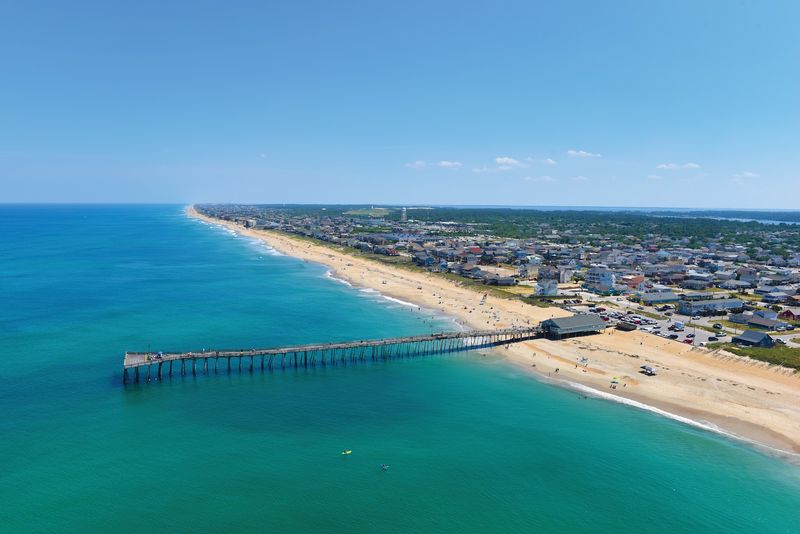
Kill Devil Hills has arguably the most dramatic name of any beach town in America, and it absolutely lives up to the vibe.
This is actually where the Wright Brothers made their first successful powered flight on December 17, 1903. The Wright Brothers National Memorial sits right here in town, with bronze markers showing exactly where each flight landed.
Walking those distances on foot is a surprisingly humbling experience.
Kill Devil Hills is one of the larger towns on the Outer Banks, but it still keeps a relaxed, unhurried energy. The main road has restaurants, surf shops, and small businesses that feel local and unpretentious.
Nobody here is rushing anywhere.
The beach access points are plentiful and easy to find. Wide, open stretches of sand give you room to set up a full beach camp with chairs, umbrellas, and coolers.
Lifeguards are on duty during summer, which is reassuring if you have kids.
Surfing culture runs strong in Kill Devil Hills. The waves here get good enough for intermediate surfers, especially during fall swells.
Local surf schools operate on the beach and cater to all skill levels without making beginners feel out of place.
There are also great fishing opportunities along the shore and at nearby piers. Pier fishing here is a slow, meditative activity that locals take seriously.
You cast your line, sit in a folding chair, and let the ocean do the talking. Half the reward is simply being out there, with the salt air and the sound of waves filling in every silence.
5. Nags Head
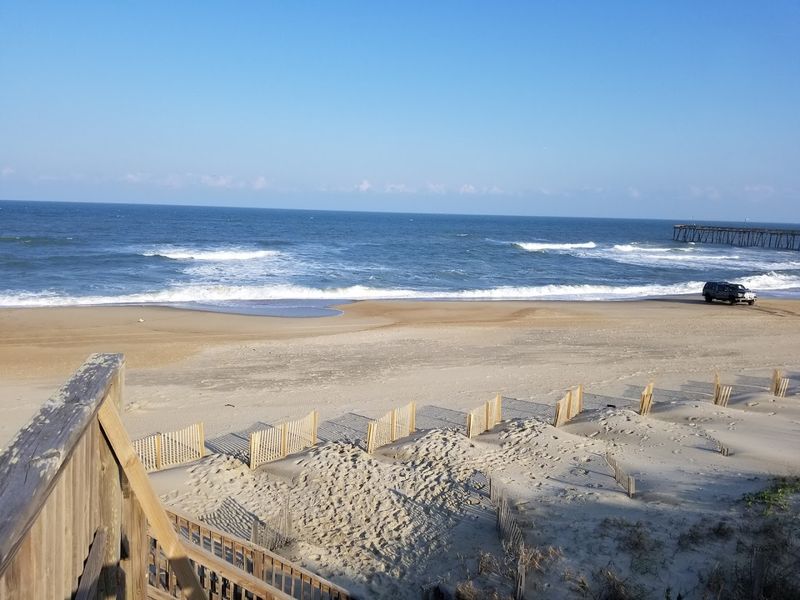
Nags Head is where the Outer Banks first started attracting visitors back in the 1800s, and somehow it has managed to keep its original beach-town soul alive.
The old-school striped beach cottages on stilts are still there, lined up along the shore like a postcard from another era. Walking past them feels like time-traveling without a machine.
Jockey’s Ridge State Park is the crown jewel of Nags Head. It holds the tallest living dune system on the East Coast, rising about 80 to 100 feet depending on the wind.
Climbing to the top and looking out over the ocean and sound at the same time is one of those moments that genuinely stops your breath.
Hang gliding lessons happen at Jockey’s Ridge regularly. Nags Head Hang Gliding School has been running lessons on those dunes for decades.
Running down a massive sand hill and briefly becoming airborne is both terrifying and completely worth it.
The beach in Nags Head is wide and well-maintained. Multiple public access points with parking make it easy to find your spot without a long walk.
Morning beach walks here have a peaceful, almost meditative quality that is hard to replicate anywhere else.
Seafood is serious business in Nags Head. Owens Restaurant has been a local institution since 1946, serving up classic Outer Banks seafood with old-fashioned charm.
Sitting in a booth there while eating fresh fish feels like honoring a tradition.
Fishing piers are a big deal here, too. Jennette’s Pier is a modern, well-equipped pier that draws anglers from all over the state.
Even if you do not fish, walking out to the end and watching the ocean from that perspective is worth the trip. There is something about standing over open water with nothing but the horizon in front of you that makes every problem on land feel significantly smaller.
6. Manteo
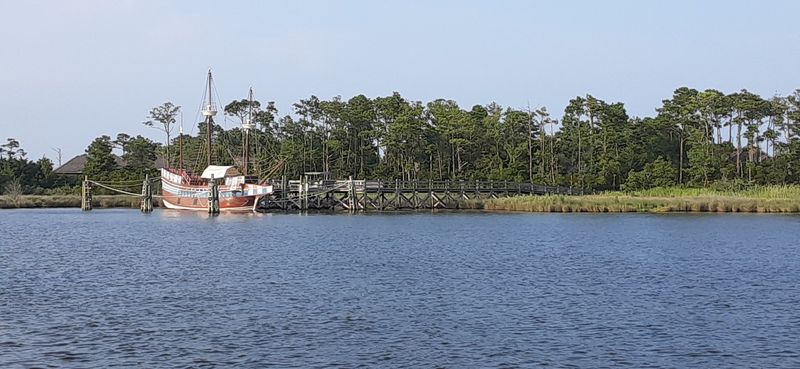
This is the Outer Banks town that surprises everyone who stumbles into it. It sits on Roanoke Island, which is tucked between the barrier islands and the mainland.
This is not a typical beach town. It is a waterfront village with serious history, serious charm, and a character all its own.
The Lost Colony is one of the most enduring mysteries in American history, and Manteo is ground zero for it. In 1587, a group of English settlers established a colony on Roanoke Island and then completely vanished.
Nobody has ever fully explained what happened, and that unsolved story hangs over Manteo like a fascinating fog.
The outdoor drama called The Lost Colony has been performed here since 1937, making it the longest-running outdoor drama in the United States. Watching it under the stars at the Waterside Theatre is genuinely moving and entertaining.
History becomes real when actors bring it to life on the actual land where it happened.
The downtown waterfront along Shallowbag Bay is walkable, beautiful, and full of independent shops and restaurants. Boats bob at the marina while people stroll along the boardwalk without any particular agenda.
The pace here is easy and unhurried in the best possible way.
The Elizabeth II, a recreation of a 16th-century sailing vessel, is docked right in town at Roanoke Island Festival Park. Going abroad and imagining crossing the Atlantic in something that small gives you a new appreciation for historical bravery.
It is equal parts educational and slightly alarming.
Local art galleries and bookshops line the streets of downtown Manteo. The creative community here is small but genuinely talented.
Picking up a piece of local artwork feels like taking a piece of Manteo’s story home with you. And in a town this quietly remarkable, that is a story worth telling.