
Some Places Do Not Need Description And This Wyoming State Park Full Of Ancient Stone Is One Of Them
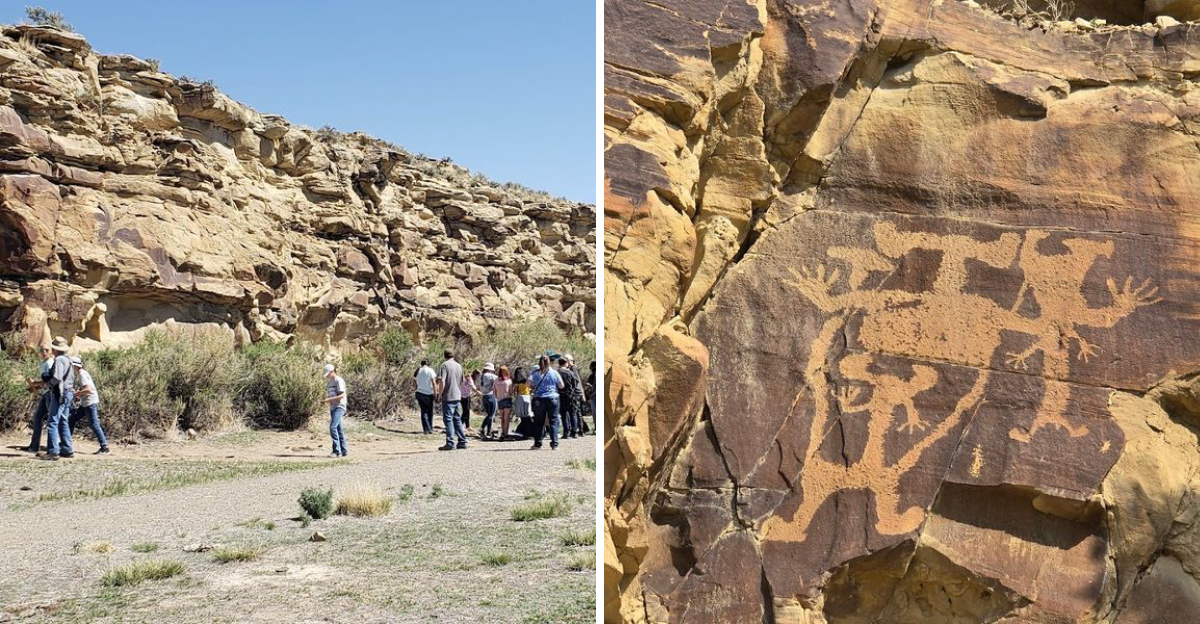
A wall of solid rock has been quietly talking for longer than most civilizations have existed. Every inch of that cliff carries carvings left by hands that vanished long ago.
Animals, spirits, and strange humanlike figures crowd the stone, blending real and otherworldly shapes nobody fully explains. Wyoming wind drifts through the valley while a creek still runs past that same ancient rock.
Researchers still argue over what half these images mean, and that mystery is the best part. Carvings older than written language rearrange your sense of time fast, once you stand before them.
Wyoming holds onto quiet, untouched corners most travelers never expect, and this cliff might be the most striking one yet. Worth chasing down on a slow drive through open country, just to see it yourself.
A Cliff That Has Been Talking For 10,000 Years
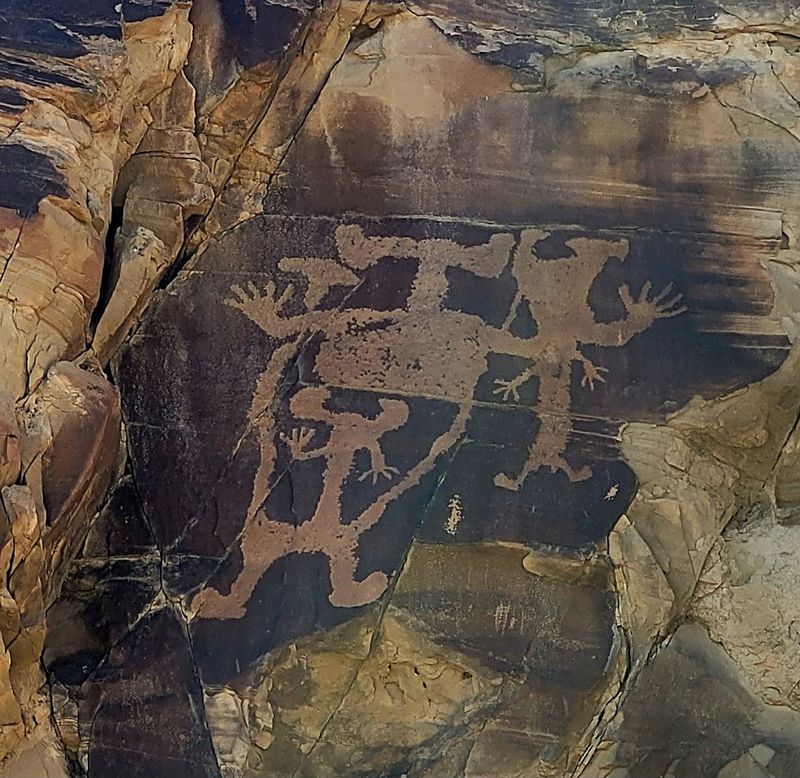
Rocks do not usually have stories. This one has thousands of them.
The sandstone cliff at Legend Rock stretches for several hundred meters, rising nearly vertical from the valley floor, and every panel along its face holds carvings left by people who lived here long before written language existed.
Scientific dating places the oldest images in the Paleo-Indian period, suggesting continuous use by Native Americans for at least 10,000 years. That is not a typo.
Ten thousand years of human presence recorded in stone, right here in Wyoming.
The carvings were not made all at once. Different groups returned to this cliff across many generations, adding their own marks over time.
The result is a layered visual record that archaeologists are still working to fully understand. Standing in front of it, even without expert knowledge, the weight of that timeline hits hard.
This is not a replica or a museum display. Every carving on that wall is the real thing.
The Dinwoody Tradition And Why It Matters
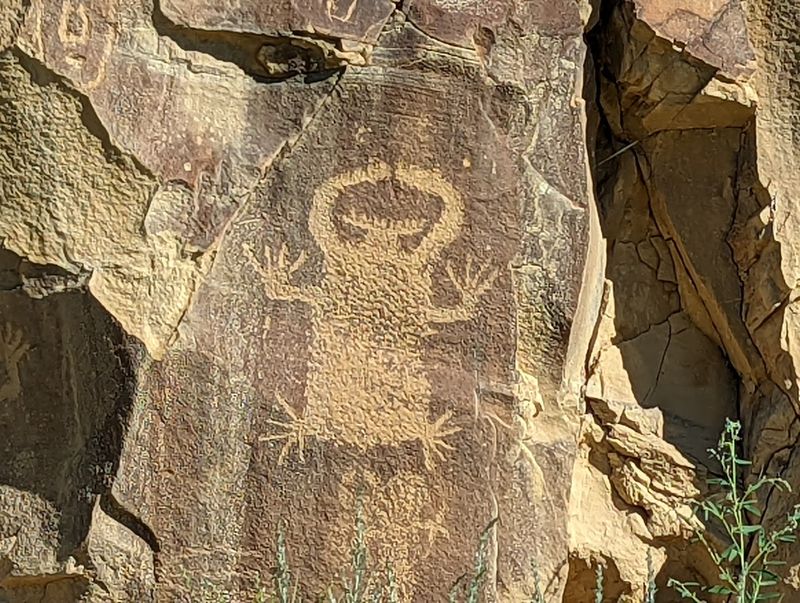
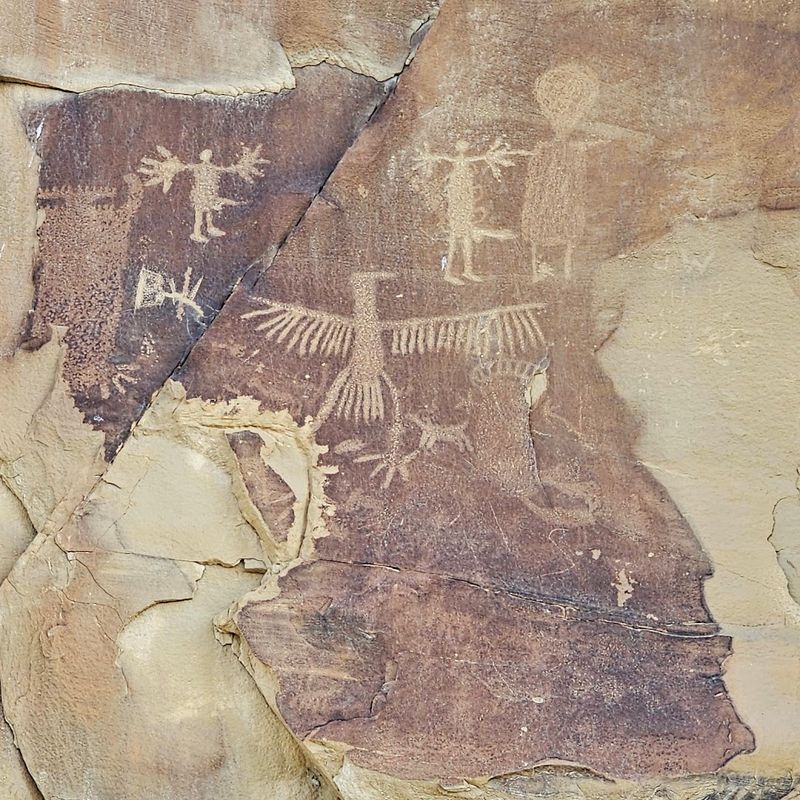
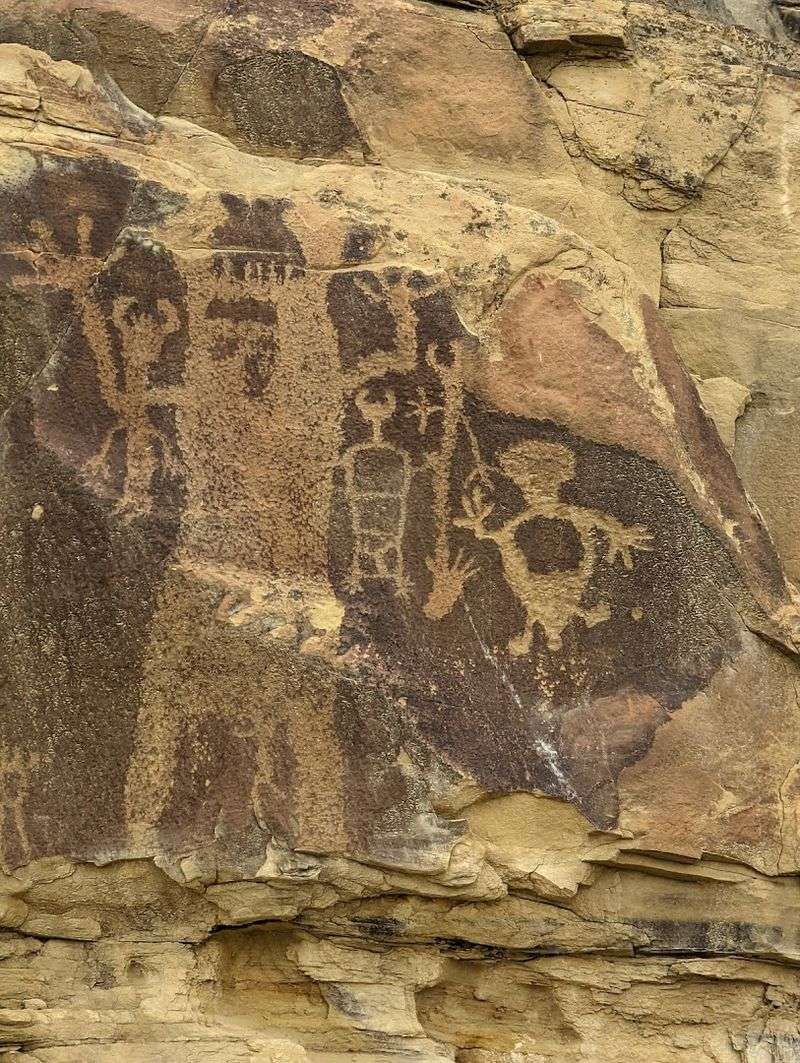
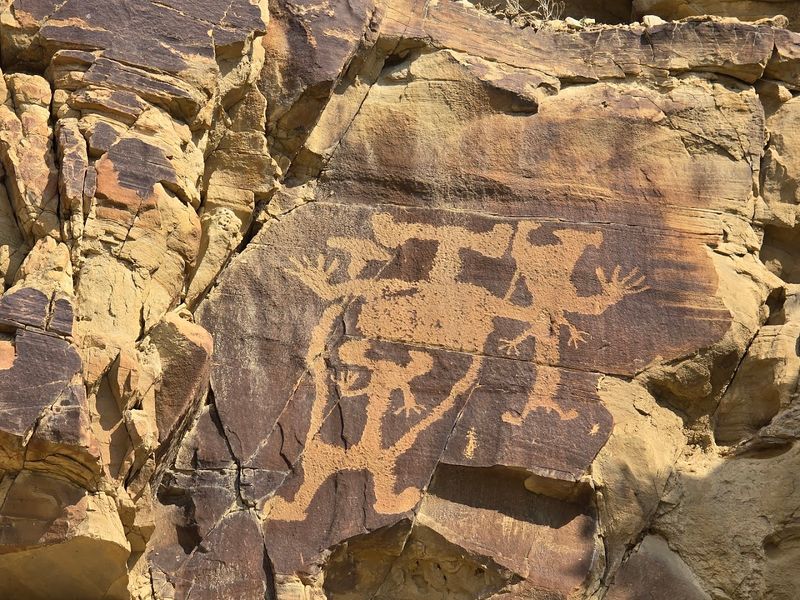
Most of the carvings at this site belong to what researchers call the Dinwoody Tradition. This style is recognized for its large, elaborate figures that look both human and otherworldly at the same time.
The figures often have decorated torsos, unusual headdresses, and abstract body shapes that suggest something beyond ordinary human experience. Many researchers believe these images were connected to spiritual or ceremonial practices, possibly representing beings encountered during vision quests or altered states of consciousness.
What makes the Dinwoody style especially significant is how rare it is. Legend Rock holds some of the oldest and best-preserved examples of this tradition found anywhere in the world.
That puts this Wyoming site on a very short list of places with global archaeological importance.
For anyone interested in Native American history, rock art, or ancient cultures, the Dinwoody panels here offer a visual experience that textbooks simply cannot replicate. The figures seem to watch back, which is either fascinating or slightly unsettling, depending on the time of day.
Animals Frozen In Stone Along The Rock Face
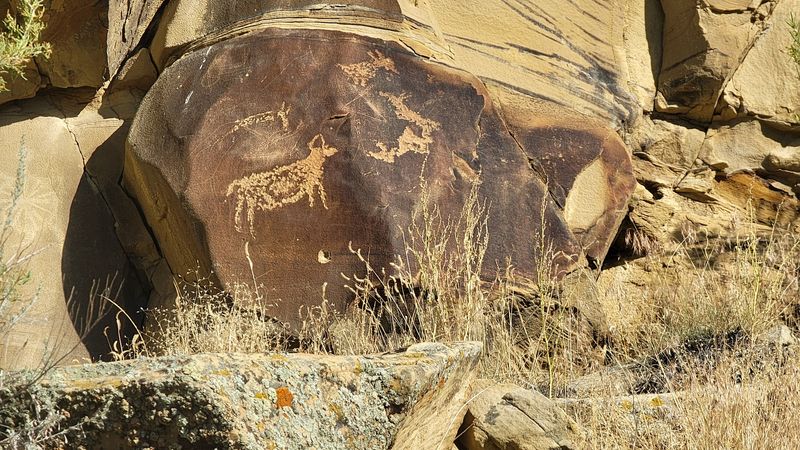
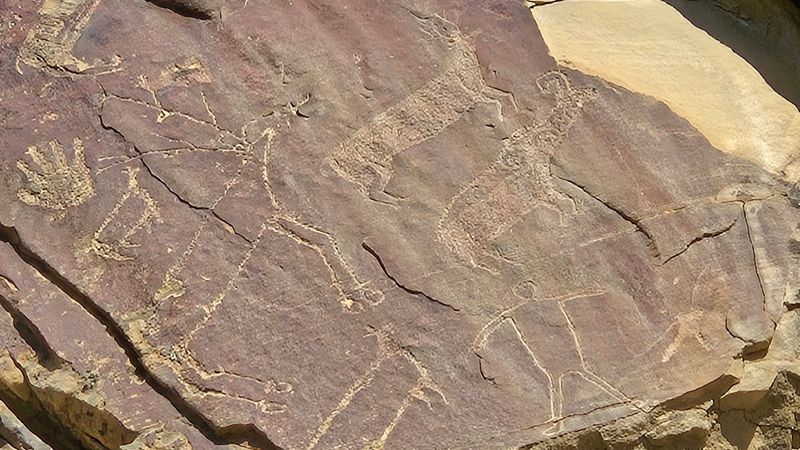
Not everything carved into the cliff is abstract or supernatural. Plenty of the petroglyphs depict animals that roamed this landscape for thousands of years, and many still do today.
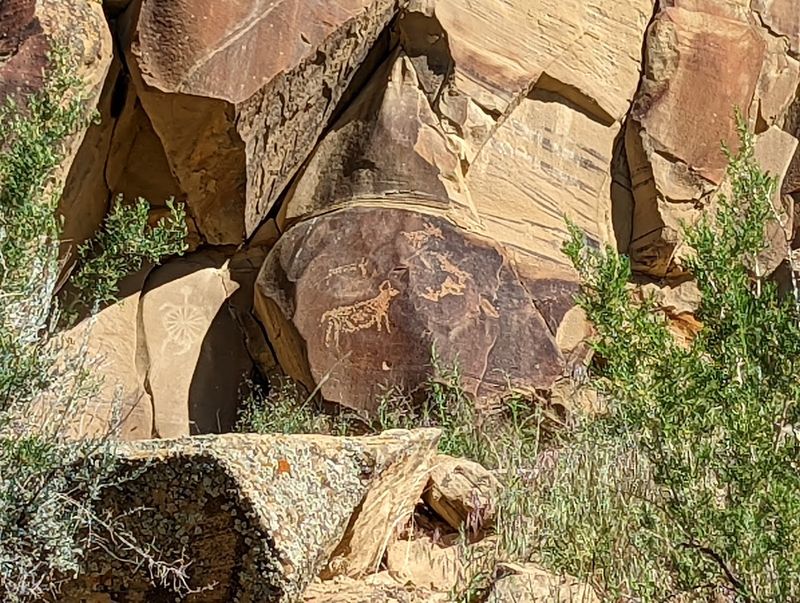
Bighorn sheep appear frequently, along with elk, deer, buffalo, horses, canids, and birds. Seeing a bison carved into rock by someone who hunted them thousands of years ago creates a strange kind of connection.
The animal is gone from this specific valley, but its image remains.
The variety of animals represented suggests that this site held meaning across many different seasons and cultural groups. Some carvings may have been tied to hunting rituals, while others might have served as records or territorial markers.
Researchers are careful not to assign one single meaning to all the images.
What visitors can say for certain is that the animal carvings are vivid and recognizable even after millennia of weathering. The skill of the people who made them is obvious.
These were not casual scratches. They were deliberate, careful, and clearly meaningful works of art.
Sacred Ground With A History Of Ritual And Prayer
Archaeologists who excavated the area in 1988 found no evidence that this was a permanent campsite. People did not live here.
They came here for something else entirely.
The current understanding is that Legend Rock served as a place for personal rituals, including prayer, fasting, and vision questing. These practices were deeply embedded in the spiritual lives of many Native American cultures.
The remote location, the dramatic cliff, and the presence of water nearby would have made this valley feel set apart from everyday life.
For the ancestors of the Eastern Shoshone, who are believed to have created most of the petroglyphs here, this was not just a scenic spot. It was a place where the physical world and the spiritual world came close together.
That sense of gravity has not entirely left.
Visitors today often describe feeling something quiet and heavy in the air at this site in Wyoming. That reaction is worth paying attention to.
Some places carry the weight of what happened in them, and this valley is one of those places.
How Wyoming Stepped In To Protect It
Local communities in Hot Springs County grew concerned about the preservation of this site long before most people outside Wyoming had ever heard of it. That concern led to action.
In 1973, the state acquired Legend Rock as a Wyoming State Petroglyph Site, putting official protection in place for the carvings and the land around them.
That same year, the site was added to the National Register of Historic Places. Both designations arrived together, which says something about how quickly the significance of this place was recognized once people started paying attention.
Management by Wyoming State Parks brought structure to the site. A visitor center was eventually completed in 2011, along with interpretive trails and a picnic shelter.
The infrastructure is modest but effective. The focus remains on the petroglyphs themselves, not on turning the place into a tourist attraction with gift shops and crowds.
The result is a site that feels protected without feeling commercialized. That balance is harder to achieve than it sounds, and Wyoming has done a reasonable job of it here at 2861 West Cottonwood Road, Thermopolis, WY 82443.
Getting There Is Part Of The Experience
The drive out to this site is not a casual highway cruise. The last stretch involves a gravel road that drops steeply into the valley before reaching the parking lot.
Four-wheel drive is not required, but it adds confidence on the way back up.
Navigation apps have sent more than a few visitors on the wrong route, including one that passes through an active oil field with warning signs about hazardous gases. The correct approach is Highway 120, turning onto Cottonwood Road when the brown signs appear.
Following those signs is far safer and more reliable than trusting a phone screen.
The drive itself passes through open Wyoming landscape that feels genuinely remote. Wildlife is common along the road, which gives some context for why so many animals ended up carved into the cliff.
This was not an imaginary landscape for the people who lived here. Every creature on that rock face was a real neighbor.
Plan for about 30 minutes of driving from Thermopolis, and add extra time if stopping to watch the scenery, which is very easy to do.
The Trail That Takes You Right To The Rock
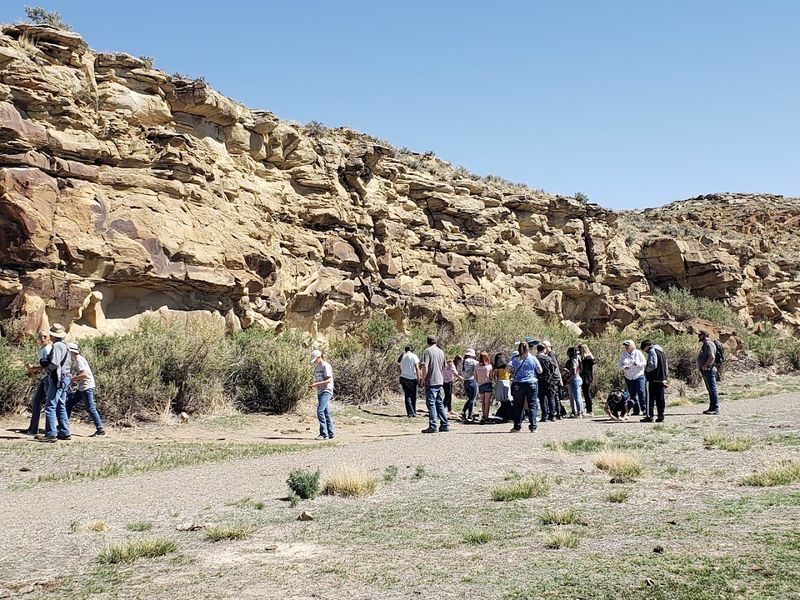
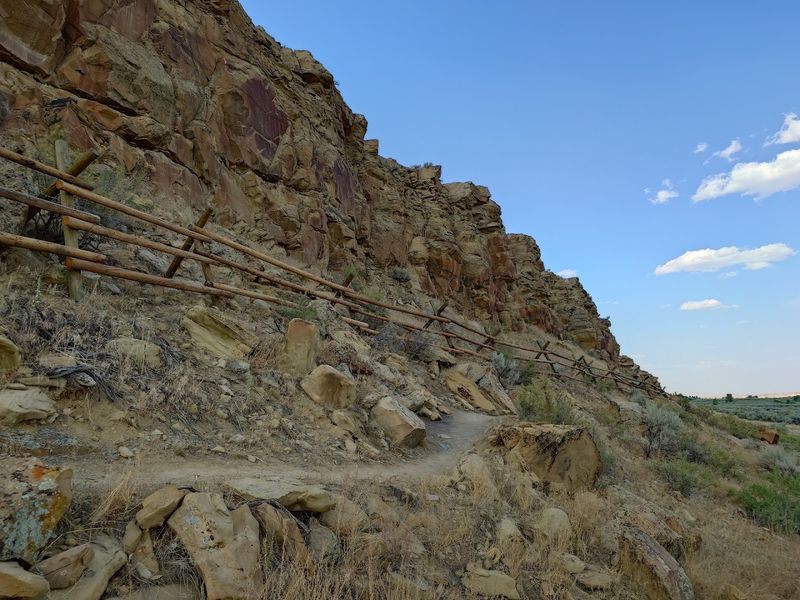
The main trail at Legend Rock is a short, relatively flat gravel path that runs directly along the base of the cliff. Most visitors can complete it comfortably in under an hour, though slowing down to study each panel can stretch that time considerably.
Numbered markers along the trail correspond to a brochure available at the site. Picking up that brochure before starting makes a real difference.
Without it, visitors are looking at remarkable carvings without knowing what they are seeing. With it, the panels start to tell a more complete story.
The main trail covers nearly every panel along the cliff, and a few visitors choose to scramble up onto nearby ledges for a closer look at the higher carvings. That scrambling is informal and uneven, so sturdy footwear matters even on an otherwise easy walk.
Rattlesnakes have been reported in the area, so watching where feet land is a reasonable habit to develop before heading out. The trail rewards patience and attention in equal measure.
What Over 300 Petroglyphs Actually Look Like Up Close
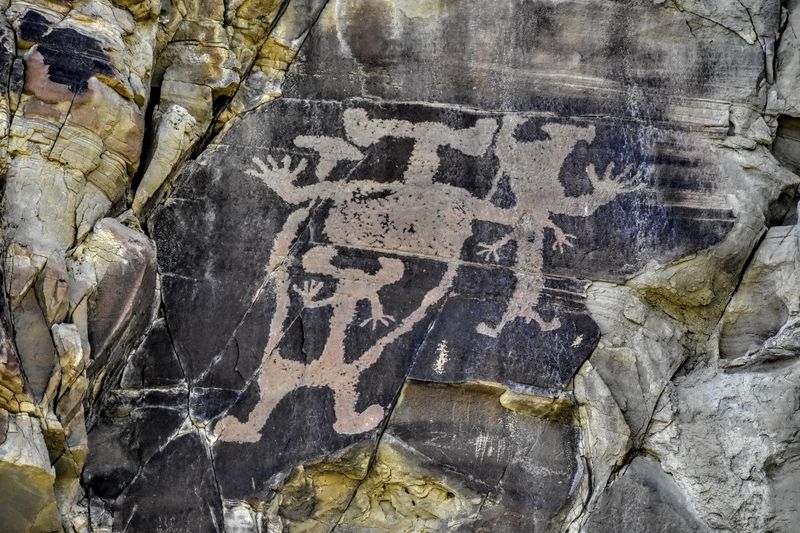
Numbers can be misleading. Hearing that a site has over 300 individual petroglyphs sounds impressive on paper, but it does not prepare visitors for what it actually looks like to stand in front of a cliff covered in ancient carvings from end to end.
The panels vary enormously in style, size, and apparent age. Some figures are large and deeply incised, with bold outlines that remain crisp after thousands of years.
Others are faint and small, requiring a moment of focused looking before the shapes resolve out of the rock texture.
Some panels cluster many images together, almost like pages from a book. Others have a single figure standing alone on a wide stretch of stone.
The variety keeps the experience from feeling repetitive. Every few steps along the trail brings something new into view.
Photography is allowed and encouraged, since touching the rock is not. Morning light tends to work well for capturing the carvings, as the angle of the sun brings out the depth of the incisions.
Afternoon can flatten the shadows and make some details harder to see.
Visiting In Summer Versus Winter At This Site
Summer access at Legend Rock is straightforward. From May through September, the gate is open and visitors can arrive and explore without any extra steps.
Early morning visits are especially popular because the light is better for photography and the temperature is cooler before midday heat sets in.
Winter access works differently. From October through April, a key is required to enter the site.
That key can be picked up from the State Bath House, the Thermopolis Chamber of Commerce, or the Hot Springs County Museum. A photo ID is needed to collect it.
Planning ahead for a winter visit avoids a long drive out to a locked gate, which has happened to more than a few people who skipped that step.
Summer crowds remain light compared to more famous Wyoming destinations. Arriving early on a weekday often means having the entire trail to yourself, which changes the experience completely.
Standing alone in front of a 10,000-year-old petroglyph panel with no one else around is a different kind of quiet than most people encounter in ordinary life.
Rules That Actually Make Sense Here
The rules at Legend Rock are not the kind that feel bureaucratic or arbitrary. They exist because the petroglyphs are genuinely fragile, and the damage caused by touching them is real and permanent.
Visitors are asked to stay on designated trails, avoid touching or defacing the carvings, and leave all rocks and artifacts exactly where they find them. The site is also under video surveillance, which is a practical response to past incidents of vandalism at similar sites across the country.
These guidelines are easy to follow and easy to understand once visitors see the carvings in person. The idea of touching something that ancient and irreplaceable starts to feel obviously wrong the moment you are standing in front of it.
No sign required.
Bringing out all trash is another expectation, and the vault restrooms in the parking lot are available for basic needs. The site asks very little of visitors in exchange for access to something extraordinary.
Respecting those simple rules is the least anyone can offer in return for what this place provides.
The Visitor Center And What It Adds To The Trip
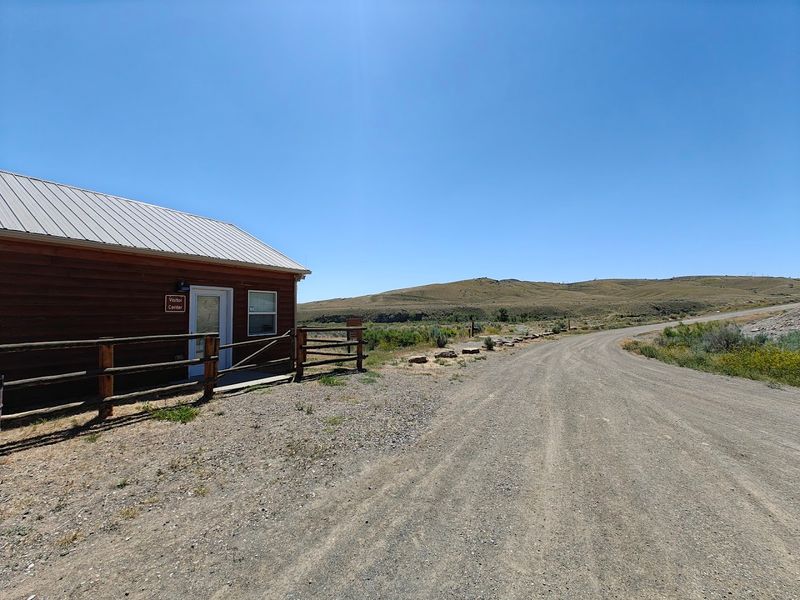
The visitor center at Legend Rock is modest in size but meaningful in content. Completed in 2011, it offers context for what visitors are about to see on the cliff face, covering the history of the site, the cultures associated with the petroglyphs, and the significance of the Dinwoody Tradition.
Staff and volunteers are not always present, and the center is sometimes closed on arrival. Picking up the numbered brochure from the box near the trailhead covers most of the interpretive gap when the center is unavailable.
That brochure is genuinely useful and worth reading before starting the walk.
When the center is open and staffed, the conversations available there can add real depth to the visit. People who work at sites like this tend to know details that do not appear in any printed material.
Asking questions is always worth the attempt.
The picnic shelter nearby makes a comfortable spot for a break before or after the trail. Bringing food and water is a good habit at any remote Wyoming site, and this one is no exception given its distance from town.
Why This Place Stays With People Long After They Leave
Most tourist stops fade from memory within a few weeks. This one tends not to.
Visitors who have explored petroglyph sites across the country consistently rank Legend Rock among their favorites, and the reasons they give are hard to argue with.
The combination of scale, age, preservation quality, and setting is unusual. The valley itself is beautiful in a spare, open way that suits the landscape of Wyoming.
The creek nearby adds sound to the silence. The cliff is dramatic without being theatrical.
What lingers most is the sense of continuity. People came to this specific spot for at least 10,000 years.
They looked at the same cliff, the same sky, and the same surrounding hills. The carvings they left behind are a form of communication that crossed every possible language barrier and outlasted every civilization that produced them.
That is not something most places can offer. Legend Rock offers it freely, at no cost, on a gravel road in Wyoming, to anyone willing to make the drive.
That fact alone is worth sitting with for a moment.