
Step Inside This Classic Illinois Diner Where Pancakes And Fresh Coffee Keep Locals Coming Back
Ray’s Diner has been serving breakfast and lunch in Elgin since 1969, building a reputation that draws crowds every single morning. The restaurant operates with a straightforward philosophy: make good food, pour fresh coffee, and treat every customer like a regular.
What started as a neighborhood breakfast spot has grown into a local institution where families return generation after generation, and where out-of-town visitors quickly understand why the parking lot fills up before sunrise.
Ray’s Diner Is A Favourite Breakfast Spot In Elgin
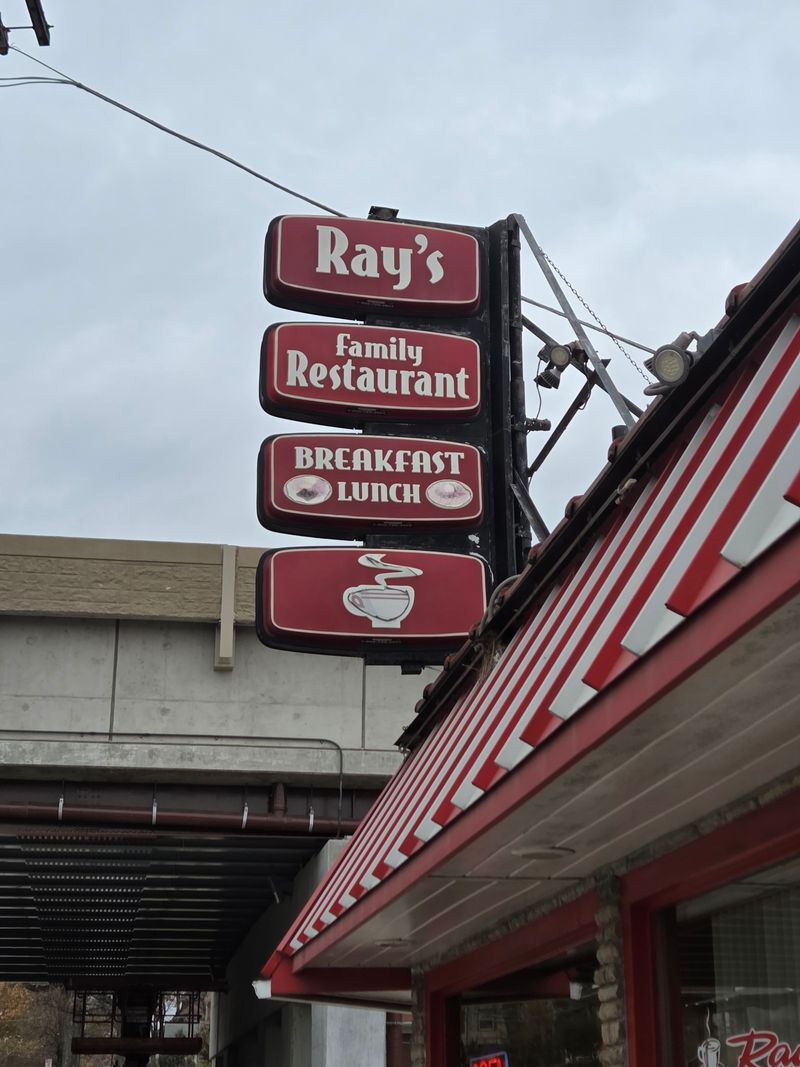
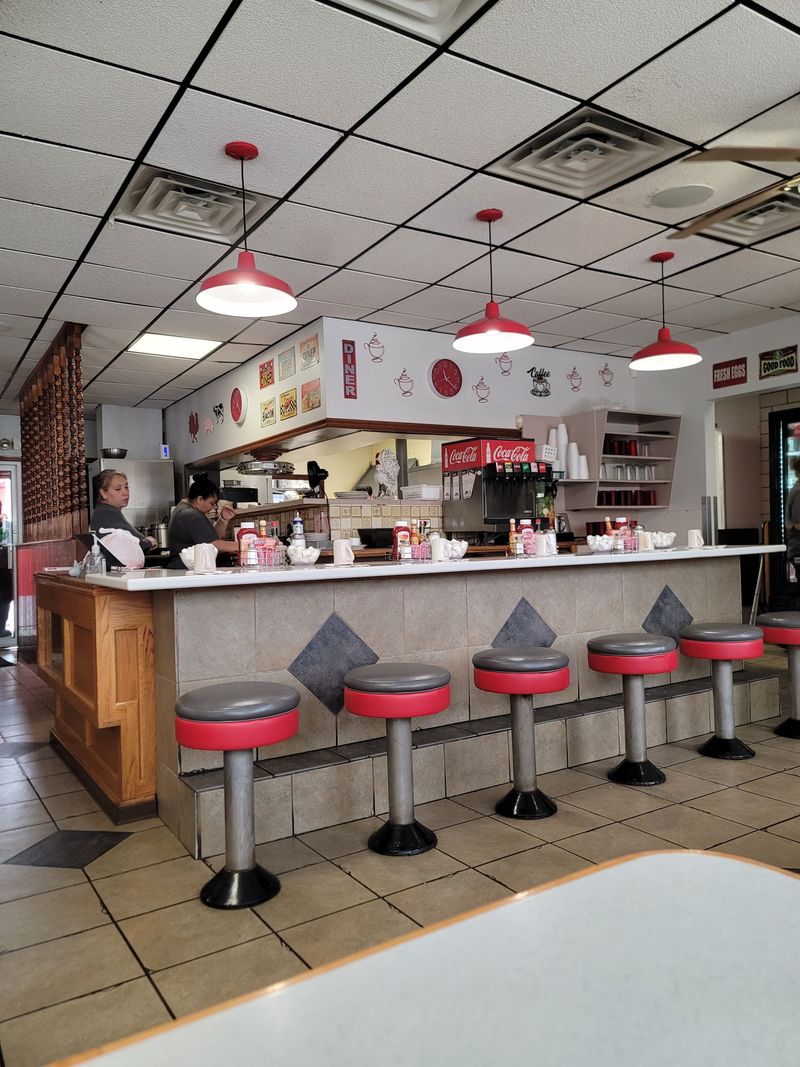
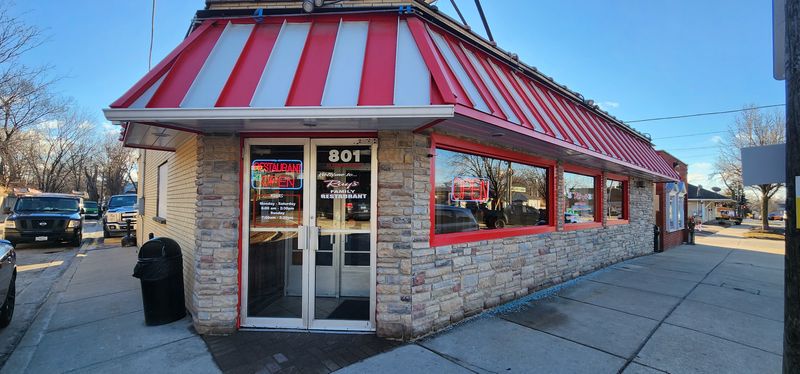
Walking into Ray’s Diner feels like stepping onto the set of a 1970s television show, complete with booth seating and a counter where regulars claim their favorite stools. The restaurant sits at 801 St Charles St, Elgin, IL 60120, operating Monday through Saturday from 6 AM to 2:30 PM and Sunday from 7 AM to 2:30 PM.
Customers often arrive before opening to secure a spot in line, particularly on weekends when the wait can stretch past half an hour.
The diner’s 4.8-star rating across more than two thousand reviews speaks to consistent execution rather than trendy innovation. Families who ate here as children now bring their own kids, creating a multigenerational customer base that values reliability.
The space maximizes every square foot, fitting tables into corners and arranging seating with efficiency that would impress an engineer.
Phone reservations are not accepted at 847-741-7110, reinforcing the first-come, first-served tradition that defines classic diner culture. This policy keeps the atmosphere democratic and unpretentious, where everyone waits their turn regardless of status.
Early Morning Crowds Show Its Strong Local Popularity
Popularity at Ray’s Diner is measured in minutes rather than marketing campaigns. By 7 AM on a Saturday, the waiting area fills with customers clutching coffee mugs offered by staff while they anticipate their table.
This ritual has become part of the experience, turning what could be frustration into community building as strangers discuss menu favorites and share recommendations.
The kitchen operates with precision during peak hours, coordinating orders from a dining room that seats approximately sixty people at capacity. Two cooks manage the entire breakfast rush, flipping pancakes and scrambling eggs with choreographed efficiency.
Servers navigate the tight quarters with trays balanced on one hand, refilling coffee cups without breaking stride.
Regular customers have learned to arrive either before 6:30 AM or after 9 AM to avoid the longest waits. The mid-morning lull offers a quieter experience but still delivers the same menu and service quality.
This consistent demand across operating hours demonstrates genuine popularity rather than manufactured hype, as customers adjust their schedules around the restaurant rather than expecting accommodation.
Pancakes Are Among The Most Popular Menu Items
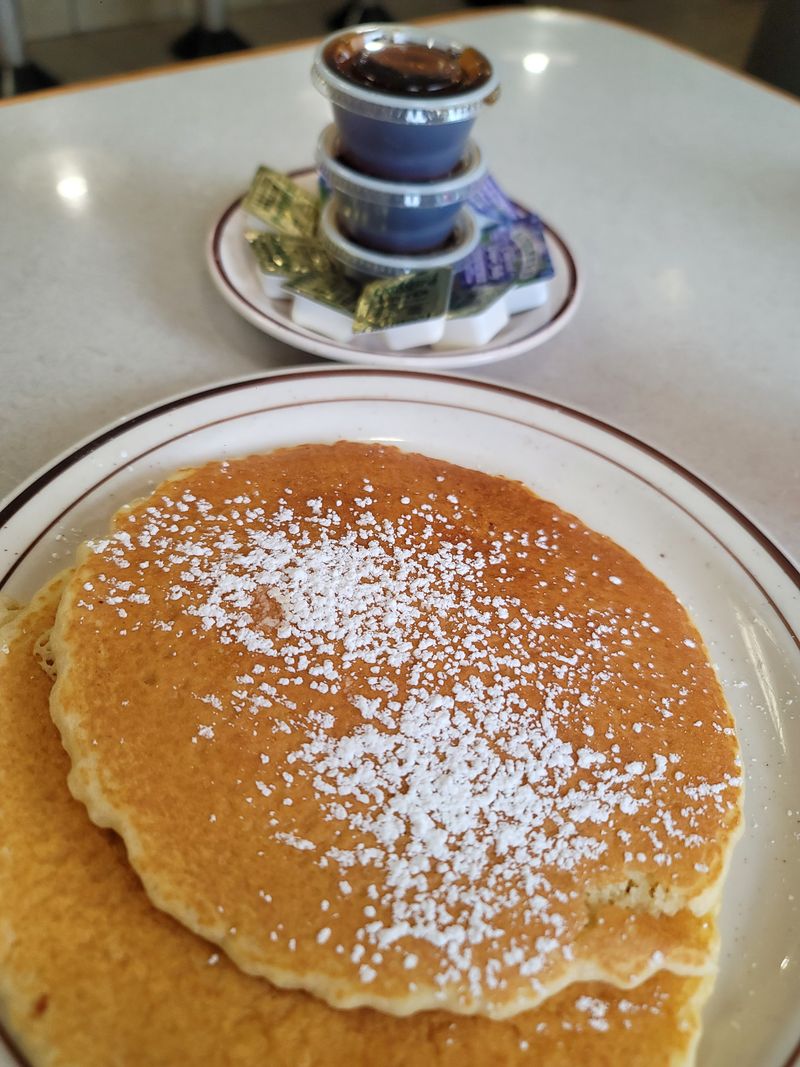
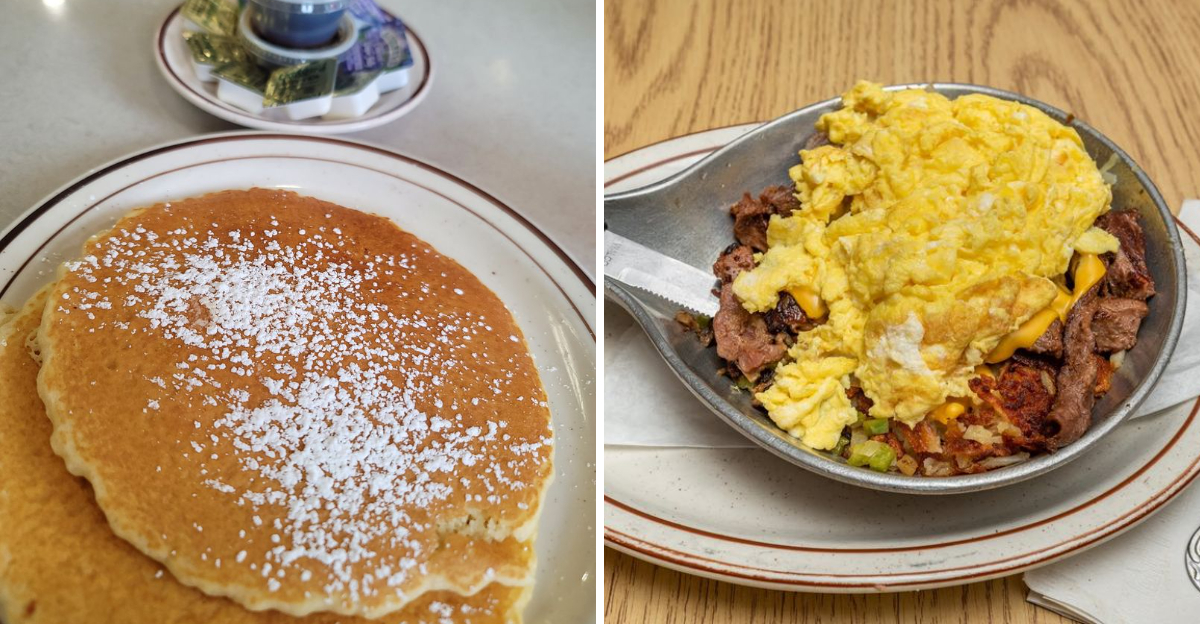
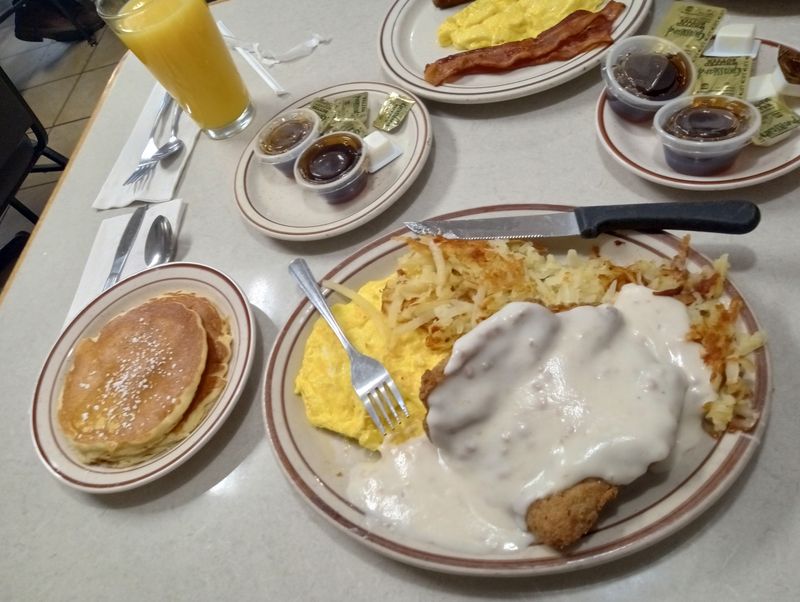
Pancakes at Ray’s arrive as substantial discs with golden-brown surfaces that show proper griddle contact without burning. The texture balances fluffiness with enough structural integrity to support butter and syrup without dissolving into mush.
Customers frequently mention the pancakes in reviews, often ordering them as sides to complement skillets or ordering short stacks as standalone meals.
The batter produces pancakes with a slight tang that suggests buttermilk, creating depth beyond simple sweetness. Cooks prepare them on a flat-top griddle visible from certain seats, allowing diners to watch their breakfast take shape.
The kitchen maintains consistent sizing across orders, ensuring predictable portions whether someone orders two pancakes or five.
Banana French toast appears on the menu as a variation, incorporating fruit into the batter rather than simply placing slices on top. This technique distributes flavor throughout each bite rather than concentrating it in pockets.
The pancakes pair particularly well with the diner’s coffee, as the slight bitterness of the brew cuts through the sweetness of maple syrup and provides balance across the breakfast plate.
Friendly Service Builds A Loyal Customer Base
Service at Ray’s operates with the kind of attentiveness that comes from experience rather than scripted training programs. Servers remember regular customers by name and often know their usual orders before menus are opened.
This familiarity creates an atmosphere where dining feels less transactional and more like visiting extended family who happen to serve excellent breakfast.
The staff maintains a brisk pace without appearing rushed, refilling coffee cups with impressive frequency while managing multiple tables simultaneously. One reviewer specifically mentioned a server named Beta, praising her pleasant demeanor and consistent quality of service.
The owner responds personally to online reviews, addressing concerns directly and thanking customers for positive feedback, demonstrating hands-on management.
Occasional service missteps do occur, as evidenced by a customer who felt rushed by a particular server. However, the owner’s immediate response and invitation to discuss the matter shows commitment to maintaining service standards.
The majority of reviews emphasize friendly interactions, suggesting that most customers experience the warmth and efficiency that define traditional diner hospitality at its finest.
A Traditional Breakfast Menu Keeps Guests Returning
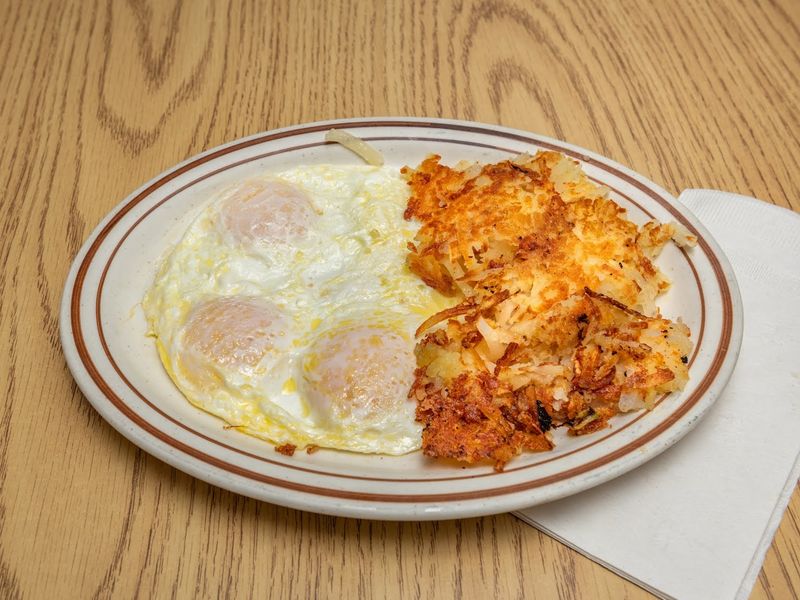
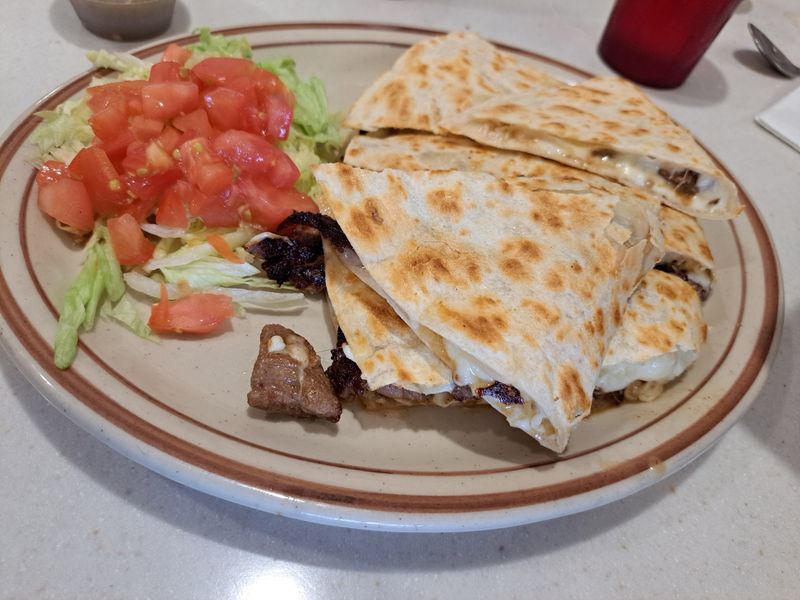
Ray’s menu reads like a catalog of American breakfast standards executed with care rather than innovation for its own sake. Eggs arrive cooked to specification, whether scrambled soft, fried over-easy, or folded into omelets stuffed with chorizo or vegetables.
The kitchen accommodates substitutions and modifications within reason, swapping toast for pancakes or adjusting ingredients to match dietary preferences.
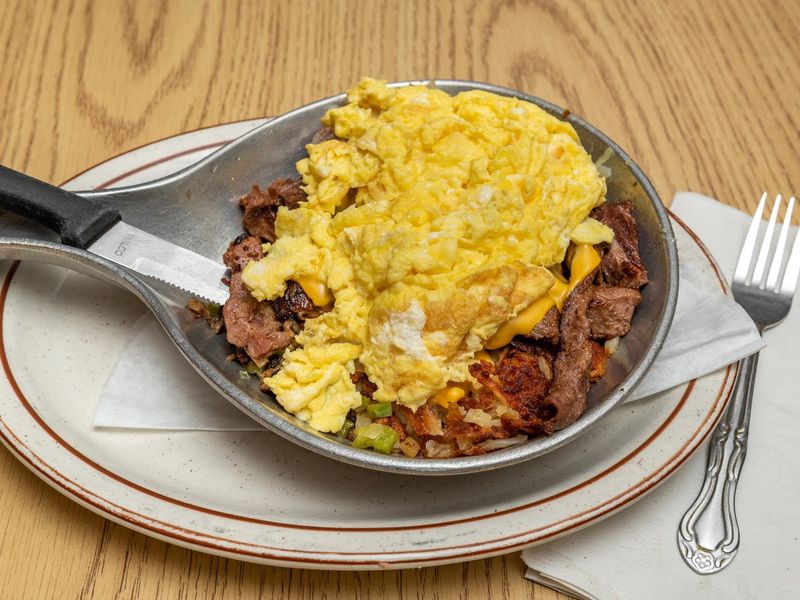
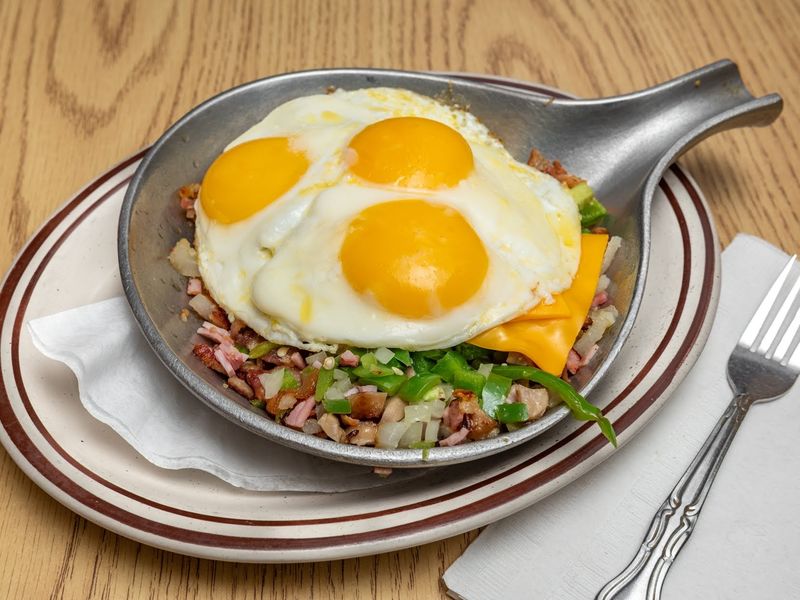
Skillets dominate the menu as combination plates that pack proteins, starches, and eggs into single dishes. The biscuits and gravy skillet earns particular praise, featuring house-made sausage gravy with hints of smoky bacon that elevate the dish beyond standard versions.
Corned beef hash appears frequently in reviews, prepared from quality beef rather than canned product, resulting in superior texture and flavor.
The menu extends beyond breakfast into lunch territory with patty melts and other sandwiches, though morning items clearly drive the business. Prices remain remarkably affordable, with most breakfast entrees falling under fifteen dollars and many closer to ten.
This value proposition combined with generous portions creates an equation where customers feel satisfied both gastronomically and financially.
Fresh Coffee Refills Define The Classic Diner Experience
Coffee service at Ray’s follows the unwritten diner code where cups never sit empty for long. Servers circulate with pots in hand, topping off mugs before customers need to ask.
One reviewer joked about being “jacked up on coffee,” suggesting the refill frequency borders on aggressive, though few complain about excessive caffeine availability at breakfast.
The coffee itself is straightforward diner blend, hot and fresh rather than attempting specialty roasts or elaborate preparation methods. It serves its purpose as a breakfast beverage that complements food rather than competing for attention.
The slight bitterness cuts through the richness of eggs and sausage, cleansing the palate between bites and preparing taste buds for the next forkful.
This commitment to keeping coffee cups filled represents a dying practice in modern restaurants where servers stretch themselves across too many tables. Ray’s maintains staffing levels that allow for attentive service, ensuring that the simple pleasure of a hot cup of coffee remains central to the dining experience.
The beverage becomes part of the meal’s rhythm rather than an afterthought.
Generous Portions Keep Customers Satisfied
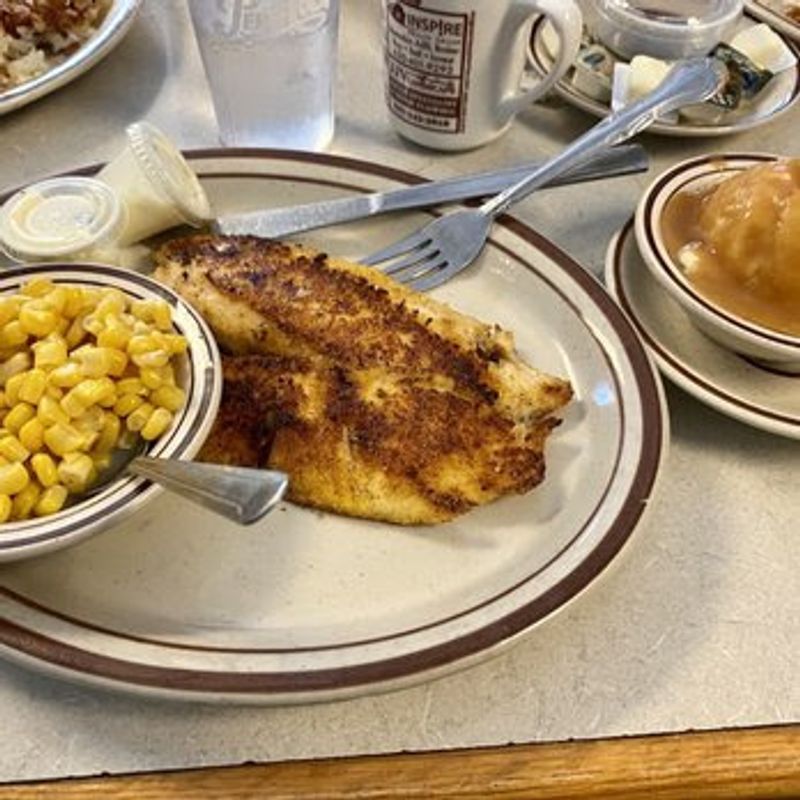
Portion sizes at Ray’s challenge even hearty appetites, with multiple reviews mentioning taking food home despite arriving hungry. The biscuits and gravy skillet arrives as a mountain of food that one customer admitted he could not finish.
Three eggs accompany most entrees as standard rather than the two-egg portions common elsewhere, immediately setting expectations for abundance.
The corned beef hash with eggs costs $11.25 and contains enough food for two modest eaters or one person with serious appetite. Skillets combine multiple components into single plates, layering hash browns, meats, vegetables, and eggs into constructions that require strategic eating to sample all elements in each bite.
This approach to portioning reflects traditional diner values where customers should leave satisfied rather than still hungry.
Prices remain proportional to quantity, meaning the value calculation works favorably for diners seeking substantial meals without premium charges. A couple can eat breakfast with drinks for around thirty dollars, walking away full and often carrying leftovers.
This combination of quality preparation and generous serving sizes creates the kind of satisfaction that turns first-time visitors into regular customers.
The Diner Maintains A Relaxed Old-School Atmosphere
Ray’s interior preserves the aesthetic of its 1969 opening with deliberate authenticity rather than manufactured nostalgia. Booth seating features the kind of vinyl upholstery that has witnessed decades of conversations, worn smooth in spots but maintained well enough to remain comfortable.
The counter offers front-row seats to kitchen operations, where customers can watch cooks work the griddle while nursing their coffee.
Decorative elements fill the walls without creating clutter, striking a balance between bare and overwhelming. The space feels lived-in rather than designed, as though the restaurant evolved organically over fifty-plus years rather than following a decorator’s vision.
Lighting provides adequate brightness for reading menus without the harsh glare of modern LED installations.
One customer described dining at Ray’s as stepping into a living narrative, perhaps overstating the case but capturing the sense that the restaurant exists as more than just a place to eat. The atmosphere encourages lingering over coffee and conversation rather than rushing through meals.
This relaxed pace suits the breakfast and brunch crowd, who often arrive without tight schedules and appreciate an environment that does not pressure them toward the exit.
Consistent Quality Drives Word-Of-Mouth Praise
Ray’s has accumulated over two thousand Google reviews while maintaining a 4.8-star average, a statistical achievement that requires consistent execution across thousands of meals. Customers return repeatedly because their second visit matches their first, and their tenth visit delivers the same quality as their hundredth.
This reliability becomes the restaurant’s signature, more valuable than any single spectacular dish.
The kitchen operates with just two cooks during busy periods, yet manages to maintain quality control across a diverse menu. Eggs arrive cooked as ordered, hash browns achieve proper crispness, and skillets emerge properly heated throughout rather than cold in the center.
These details matter more than culinary innovation, as customers seek dependability rather than surprise when ordering breakfast.
Owner responses to reviews demonstrate active engagement with customer feedback, addressing complaints directly and thanking diners for compliments. This accountability reinforces quality standards, as management clearly monitors public perception and responds to service failures.
The result is a feedback loop where good experiences generate positive reviews, which attract new customers, whose satisfaction perpetuates the cycle of word-of-mouth marketing that no advertising budget could replicate.
Breakfast And Brunch Shape The Diner’s Daily Routine
Ray’s operates exclusively during breakfast and lunch hours, closing at 2:30 PM and surrendering dinner service to other establishments. This schedule focuses energy and resources on the meals the restaurant executes best, rather than attempting to serve all dayparts with diluted quality.
The 6 AM opening accommodates early risers and workers starting shifts, while the Sunday 7 AM start acknowledges weekend sleeping patterns.
Brunch crowds arrive mid-morning on weekends, creating a second wave of customers after the early breakfast rush subsides. These diners often linger longer than weekday customers, ordering additional coffee and extending conversations beyond the efficient eat-and-exit pattern of morning regulars.
The menu serves both groups equally well, offering quick service for those on schedules and relaxed pacing for those treating breakfast as a social occasion.
The limited operating hours contribute to the restaurant’s popularity by creating scarcity and urgency. Customers cannot visit Ray’s for dinner or late-night breakfast, making each morning visit feel more special.
This constraint also allows staff to maintain energy and focus during operating hours rather than exhausting themselves across double shifts, ultimately benefiting food quality and service standards.
The Restaurant Serves As A Community Gathering Spot
Ray’s functions as more than a restaurant, operating as a community hub where neighbors encounter each other over breakfast and local news circulates alongside coffee refills. Regular customers recognize other regulars, creating an informal social network bound by shared appreciation for biscuits and gravy.
The restaurant provides neutral ground where different generations and backgrounds intersect around the common need for breakfast.
Families with young children sit near retirees reading newspapers, while construction workers occupy counter stools alongside office employees grabbing breakfast before work. This demographic mixing rarely occurs in modern restaurants that cater to specific target markets, making Ray’s an increasingly rare example of genuinely public space.
The reasonable prices ensure accessibility across income levels, preventing the economic segregation that characterizes many dining establishments.
Multiple reviews mention bringing children to the restaurant their parents took them to decades earlier, creating literal generational continuity. These family traditions anchor Ray’s within the community’s collective memory, transforming the restaurant from a business into an institution.
When customers describe the diner as feeling like home, they reference this sense of belonging and continuity that transcends simple commercial transactions between restaurant and patron.