
11 Tennessee Churches So Beautiful You’ll Swear You’ve Stepped Into Europe
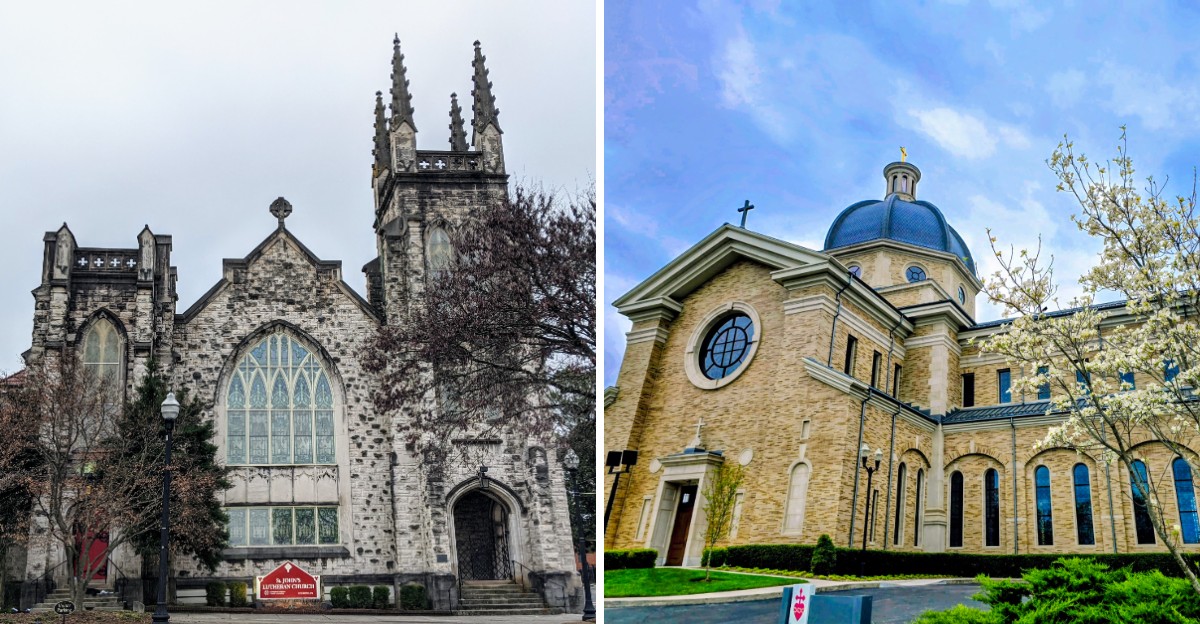
Ever walked past a church and wondered how something that grand ended up in Tennessee?
Across the state, soaring towers, stained glass windows, carved stone, and dramatic arches give certain churches the look of buildings you might expect to see on an old European street.
A few feel almost castle like at first glance. Others impress more slowly, with ornate ceilings, elaborate woodwork, and quiet sanctuaries filled with small details that reward a closer look.
Many also carry decades of local history inside their walls.
You do not need a passport or an overseas vacation to see architecture like this. A weekend drive can lead to Gothic spires, Romanesque stonework, colorful windows, and churches that seem completely unexpected for their surroundings.
These beautiful places prove that some of Tennessee’s most remarkable architecture has been sitting in plain sight all along.
1. All Saints’ Chapel, Sewanee
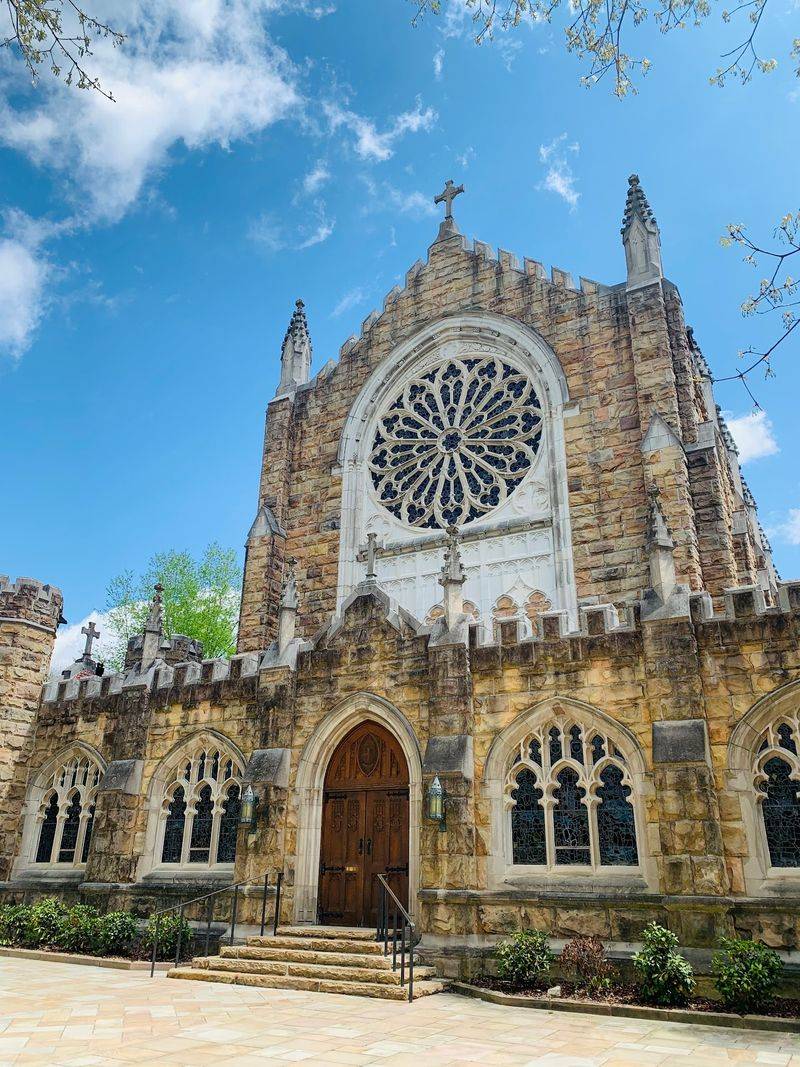
Mountain air, 13,000 acres of forest, and a stone chapel that looks like it wandered off from medieval France. That is the welcome waiting on the campus of The University of the South in Sewanee.
Most first-time visitors assume it is a cathedral. The scale explains why.
Built from local sandstone quarried right on the Cumberland Plateau, the chapel rose in stages between 1905 and 1959, with planning stretching back to the 1850s.
Architect Ralph Adams Cram drew the design. His other work includes the chapel at West Point, which tells you plenty about his talent for drama in stone.
Shapard Tower climbs 134 feet above the south porch. Inside it hangs the Leonidas Polk Memorial Carillon, all 56 bells of it.
When they ring across the campus known as The Domain, the whole mountain seems to listen.
The vaulted ceiling inside recalls Chartres and Amiens. Light pours through stained glass in long colored shafts across the floor.
The rose window nods directly toward Notre Dame de Paris. Around the chapel sit bluffs, rolling ridges, and thick woods. Bring comfortable shoes, because the campus begs for a slow wander afterward.
Few places in Tennessee blend architecture and scenery this generously.
2. Church Of the Holy Trinity, Nashville
Some buildings look like churches. Others look like small castles that happen to hold services.
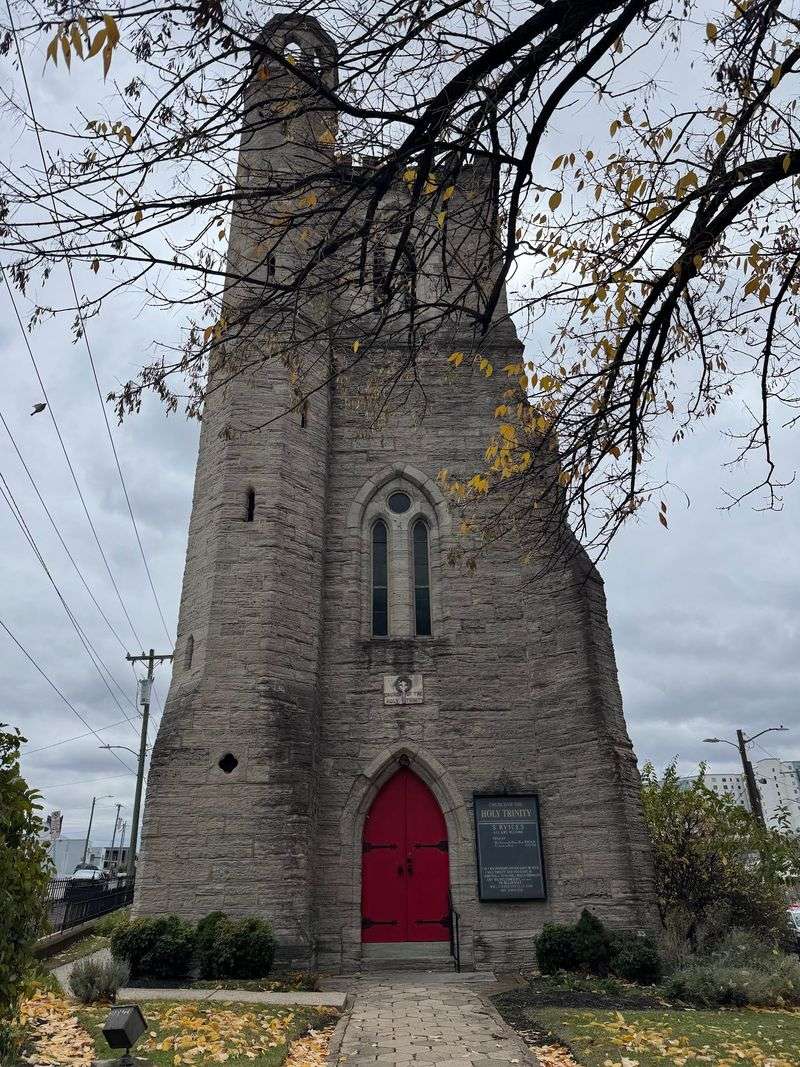
Holy Trinity, standing at 615 6th Avenue South in Nashville, lands firmly in the second group. Battlements crown the central tower. Native limestone ashlar forms the walls.
The steeply gabled roof and pointed arch windows complete the picture of an English village church that somehow found its way to Middle Tennessee.
Construction started in 1852. Completion did not arrive until 1888, which means the project outlasted more than three decades of Nashville history.
The interior rewards a careful look. A hammerbeam roof stretches overhead, the kind of exposed timber framework that turns a ceiling into sculpture. The carved altar shows similar craftsmanship.
Beyond the stonework, the congregation carries real weight in local history. Holy Trinity has long served as an important spiritual center for Nashville’s African American community.
Photographers tend to love the exterior in late afternoon, when shadows deepen the tower’s rough texture. The building sits close enough to downtown for an easy detour.
Spend a few minutes outside before going in. The contrast between quiet stone and the busy city around it makes the visit stick in your memory.
3. Christ Church Cathedral, Nashville
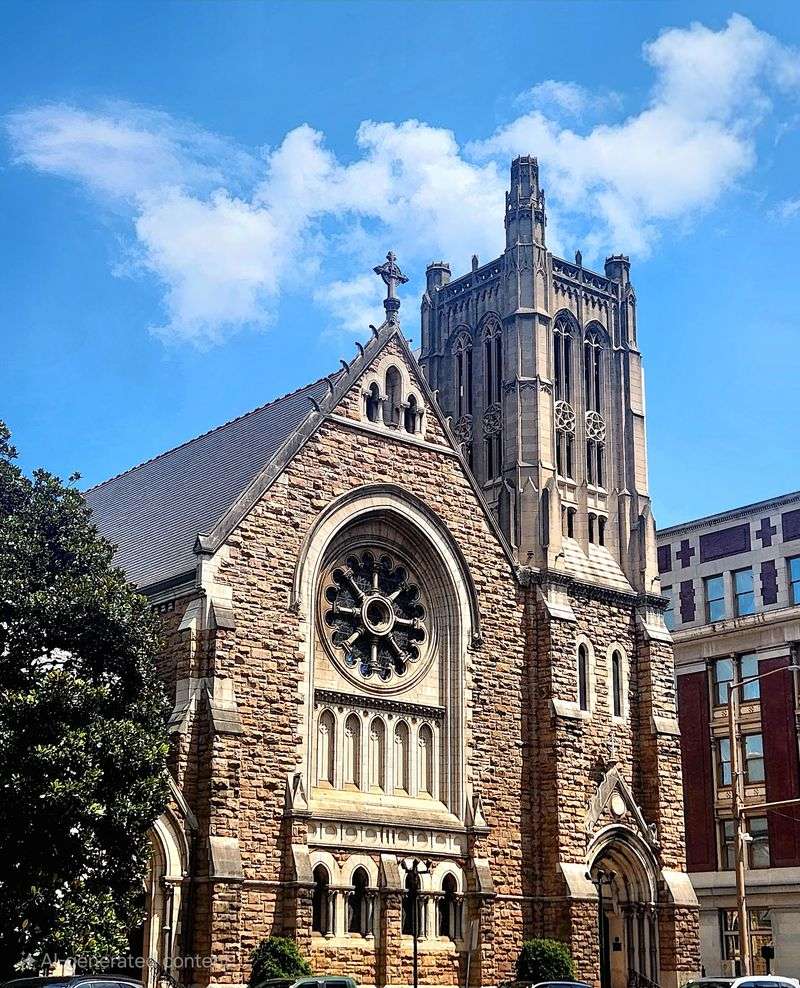
Gargoyles shaped like animals and birds peer down from the stonework here. That single detail sets the tone for one of downtown Nashville’s most theatrical buildings.
At 900 Broadway, Christ Church Cathedral shows off Victorian Gothic design at full volume. New York architect Francis H. Kimball finished the current structure in 1894.
The walls combine Sewanee sandstone with Bowling Green stone. Polished granite columns hold up the arcades inside.
Everything feels thick, solid, and built to outlast several centuries of weather.
The congregation itself dates to 1829, and the cornerstone for its first building was laid a year later. Long roots, in other words.
Inside, the wooden altarpiece deserves slow attention. Swiss emigrant Melchior Thoni carved it by hand.
Nearby, triptych stained glass windows from Tiffany Studios of New York glow whenever sunlight cooperates.
The tower came later than planned. Sketched in 1890, it was finally added in 1947 under Nashville architect Russell Hart.
In 1997 the parish became the Cathedral of the Diocese of Tennessee. Visiting is simple since Broadway runs right past the door.
Combine it with a downtown stroll and you get history, music, and masonry in one afternoon.
4. Cathedral Of The Incarnation, Nashville
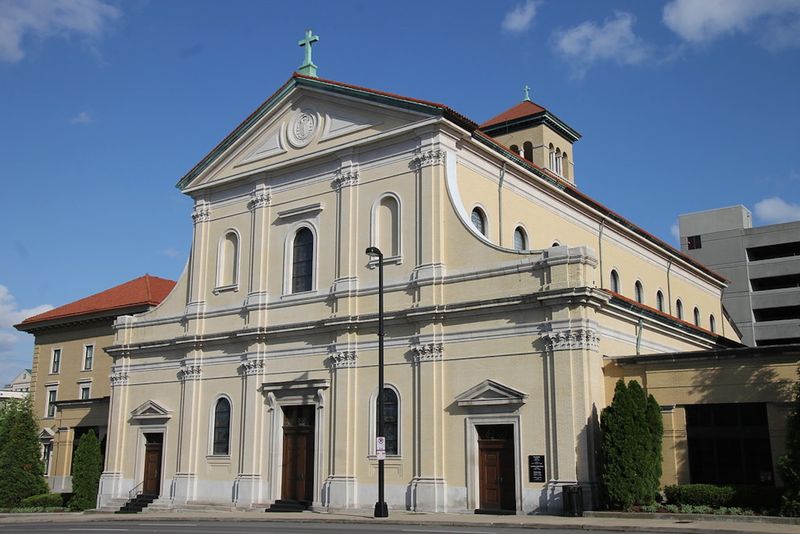
Yellow brick, a red tile roof, and a bell tower copied from Rome. Not exactly what most people expect on West End Avenue.
The Cathedral of the Incarnation sits at 2015 West End Avenue, a short walk from Vanderbilt University. Its design borrows from the Basilica of San Martino ai Monti in Rome.
The campanile takes its shape from another Roman landmark, the Basilica of San Lorenzo in Damaso. Faithful copies, not loose imitations.
Bishop Thomas Sebastian Byrne bought the property in 1902. Construction began in 1910, and the doors opened in 1914.
The interior is where things get wonderfully busy. Coffered ceilings, bas relief sculptures, and murals compete for attention in the best possible way.
Look down too, since the original white oak pews came from Jackson, Tennessee.
Recent restoration work has brightened the decorative finishes and murals. Colors that had softened over the decades now read clearly again.
The rectangular Roman basilica plan gives the space a long, processional feel. Sound carries beautifully under that ceiling.
Parking near campus takes patience, so allow extra time. Once inside, the noise of West End fades fast and Rome quietly takes over for a while.
5. Basilica Of Saints Peter And Paul, Chattanooga
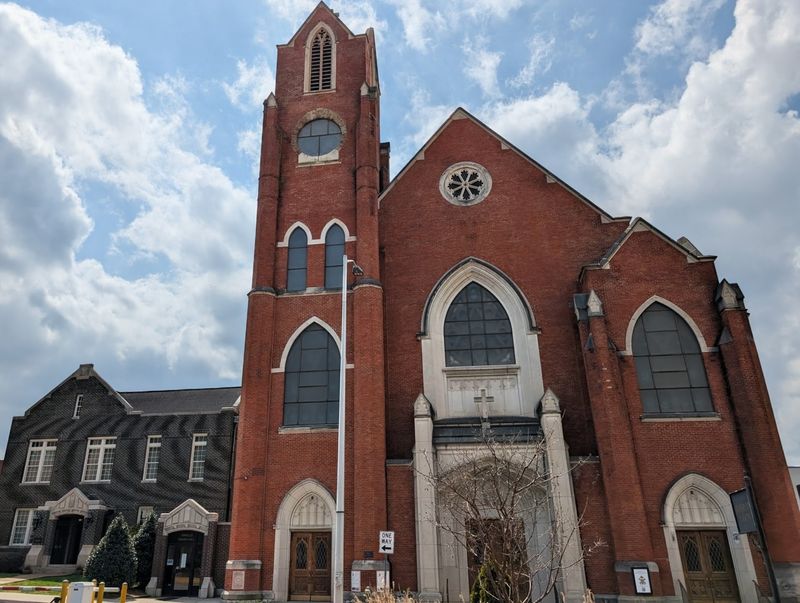
Only a handful of churches in the United States carry the title of minor basilica. Chattanooga has one, and it sits on a hill you cannot miss.
Ground broke at 214 E. 8th Street in 1888. Dedication followed in 1890.
Neo-Gothic design with Tudor touches gives the building a serious, no-nonsense profile. Brick rises from a limestone foundation. The gable roof pitches steeply. A two-story stone portal with carved engravings frames the main entrance like a picture.
The original plan was even bolder. Twin towers reached 174 feet, bristling with pinnacles and turrets, likely inspired by York Minster in England.
Crumbling sandstone trim forced their removal in 1939, and the east tower was shortened.
Step inside and the light changes everything. Louis Comfort Tiffany stained glass windows tell stories from the lives of Saints Peter and Paul in deep, saturated color.
A groined vault ceiling arches overhead. Fourteen polychrome Stations of the Cross line the walls, each one richly painted.
A pipe organ installed in 1936 fills the space with sound that suits the architecture. Pope Benedict XVI raised the church to minor basilica status in 2011, an honor Tennessee does not hand out often.
6. St John’s Episcopal Cathedral, Knoxville
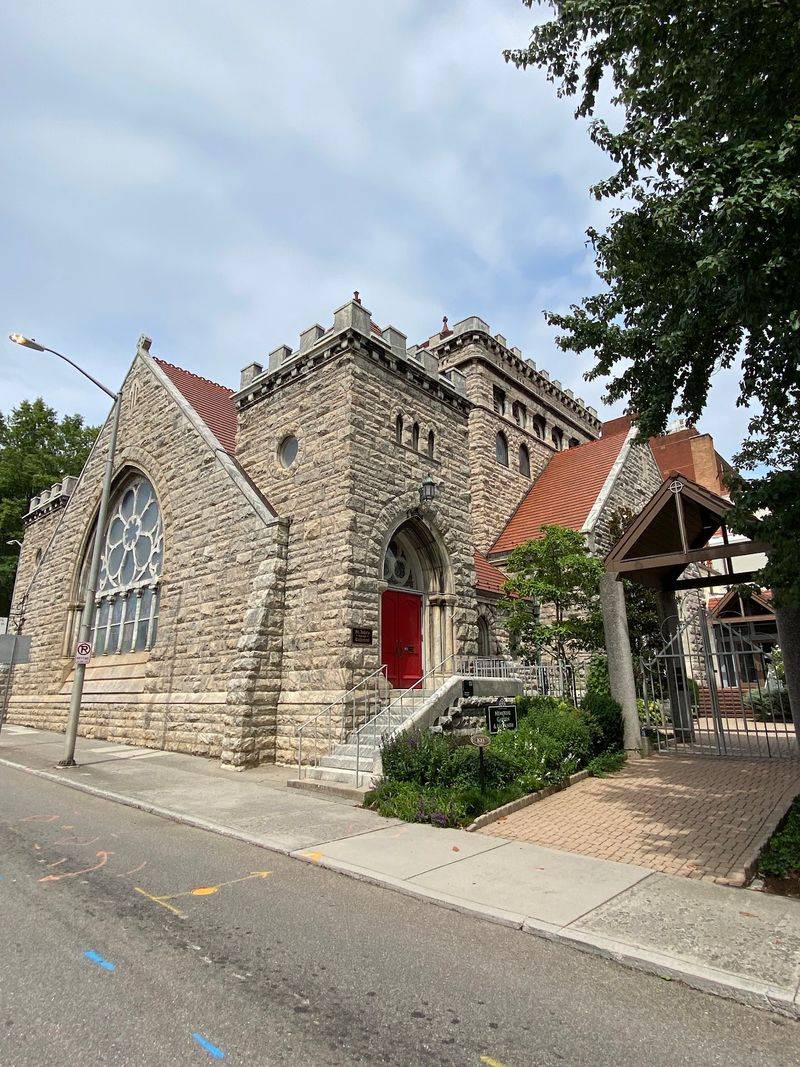
Heavy stone, rounded arches, and turrets that look faintly medieval. Richardsonian Romanesque is a mouthful of a style name, but the effect is easy to appreciate.
At 413 Cumberland Avenue in Knoxville, St. John’s Cathedral takes the shape of a Latin cross. The current stone building was completed in 1892, replacing an earlier structure on the site. J.W. Yost of Columbus, Ohio, drew the plans.
Buttresses brace the walls and a slate roof caps the whole composition. Large round rose windows anchor the design. Their patterns reward standing still for a minute rather than rushing past.
A fire in 1919 destroyed many original stained glass windows. Restoration came quickly, and the building recovered its glow.
Interior work in 1963 brought further changes, including an undercroft carved out beneath the nave floor. Practical space, neatly hidden.
The building gained cathedral status in 1986, when it became the seat of the bishop for the newly formed Diocese of East Tennessee.
Cumberland Avenue keeps a steady hum of traffic and students. All the more reason the thick stone walls feel like a pause button once you are through the door.
7. St. John’s Lutheran Church, Knoxville
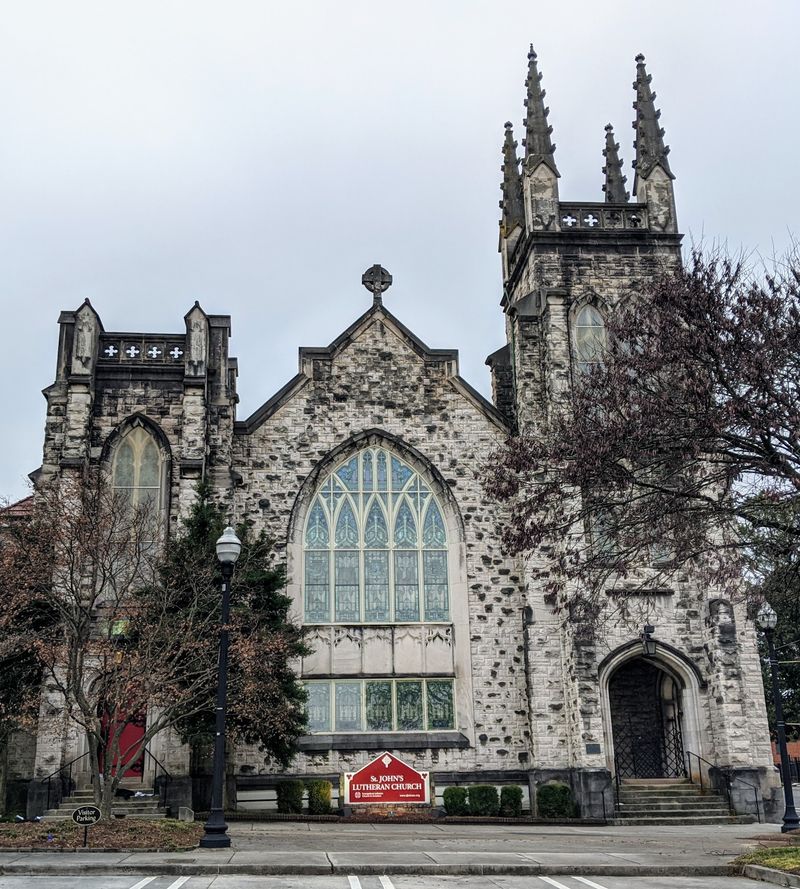
Sixty-one stained glass windows surround a single sanctuary. That number alone earns this Knoxville church a spot on any list of beautiful buildings.
Find it at 544 Broadway NW, in the Emory Place Historic District. Local architect R. F. Graf designed it, and the church was dedicated in 1912.
Gothic Revival details show up everywhere. Pointed arches crown the windows and doorways. Exterior buttresses and delicate tracery finish the look.
Inside, quarter-sawn oak warms the room. Hammerbeam trusses lift the ceiling to nearly 40 feet, a height that makes voices and organ notes travel beautifully.
Nine of those windows form a pictorial series. Read left to right and they walk through scenes from the Bible in order, almost like a stone-and-glass storybook.
Von Gerichten Art Glass of Cincinnati designed the windows. Workers assembled them on-site while the church was still going up.
The building exists thanks to Martha Henson, who donated land and funds in honor of her husband. Generosity with a lasting return.
Emory Place itself is worth a short walk. Old brick storefronts and quiet corners make an easy companion visit after seeing the sanctuary.
8. Cathedral Of The Most Sacred Heart Of Jesus, Knoxville
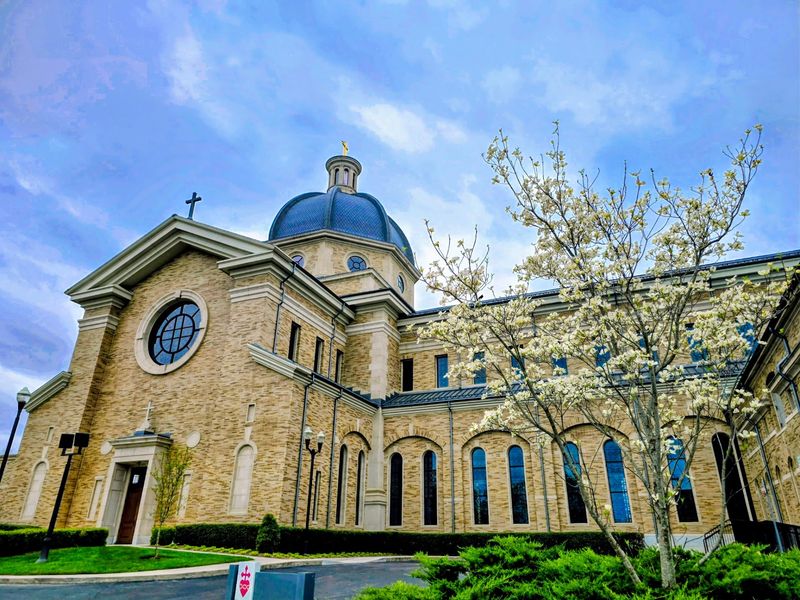
Proof that grand classical architecture did not end centuries ago. This Knoxville cathedral was dedicated in 2018, which makes it younger than most smartphones’ great-grandparents.
The address is The address is 711 S. Northshore Drive.
The plan is cruciform, and the exterior wears handsome Indiana limestone that looks warm rather than cold.
Crowning it all is a dome clearly inspired by the Duomo in Florence. Seeing it rise above East Tennessee treetops is a genuine surprise.
The interior keeps the classical promise. Scale and proportion work together to create a real sense of awe the moment you enter.
A great stone altar sits beneath a 45-foot baldachino. The four-columned canopy dominates the view down the nave and pulls every eye forward.
Look up into the dome. A 25-foot image of Christ with his Sacred Heart exposed floats there, ringed by saints in what feels like a heavenly garden.
Murals and bas relief sculptures fill the walls with color and story. Nothing about the decoration feels rushed or thin.
Newer buildings sometimes lack atmosphere. Not this one. Give yourself time to sit, look up, and let the details land slowly.
9. St. Mary’s Episcopal Cathedral, Memphis
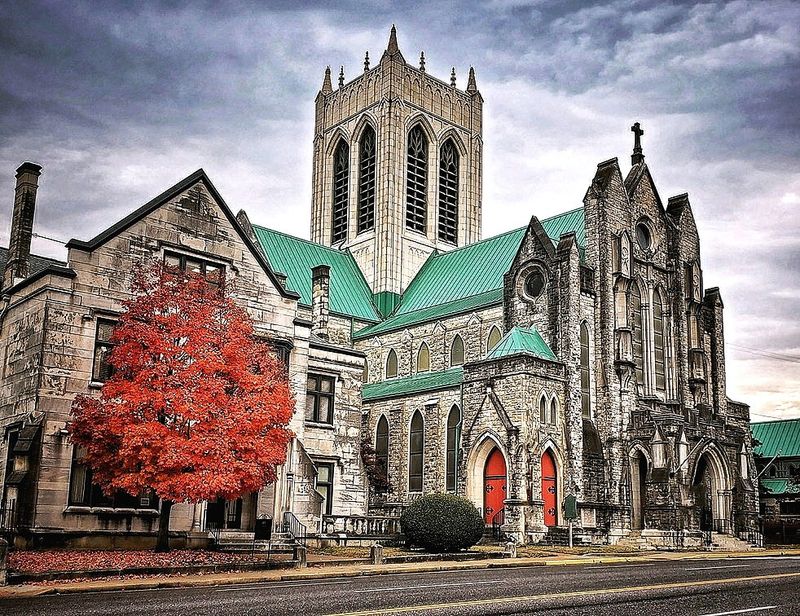
First Episcopal cathedral in the American South. Memphis claims that title, and the white-stone building at 700 Poplar Avenue wears it well.
English Gothic lines shape the design, later developing into full Gothic Revival. Pale stone gives the exterior a lighter mood than most churches on this list.
The story starts small. In 1857, the Ladies’ Educational and Missionary Society of Calvary Church founded a mission chapel in North Memphis.
Cathedral status arrived on January 1, 1871. Construction of the present building began in 1898 and wrapped up in 1926, a span that covered enormous change in the city.
Stained glass is the standout feature. The program began in 1925 under artist Len Howard, and the windows still carry his careful hand.
The altar known as Constance and Her Companions honors the nuns and priests who served during the 1878 yellow fever epidemic. It remains one of the most moving pieces of art in any Tennessee sanctuary.
Poplar Avenue puts the cathedral within easy reach of downtown attractions. Arrive with a little extra time and let your eyes adjust to the colored light.
The building repays patience more than a quick photo.
10. Cathedral Of The Immaculate Conception, Memphis
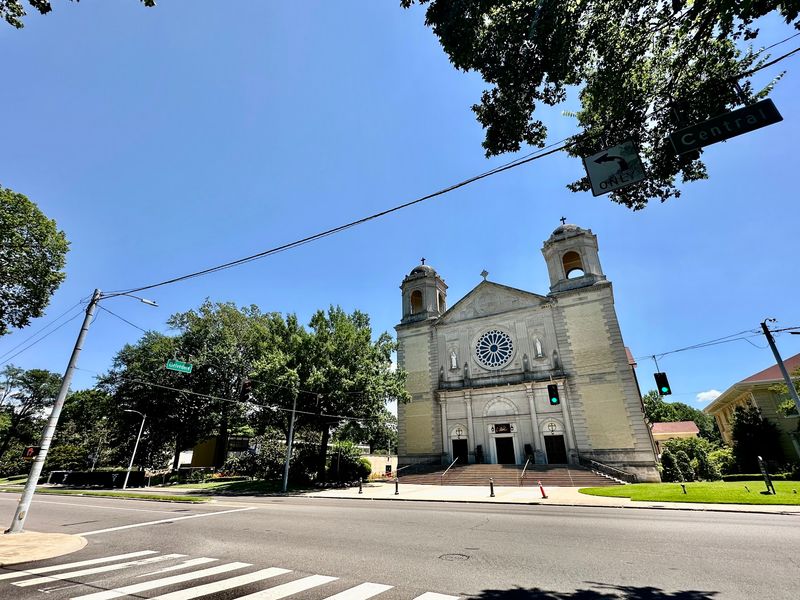
Copper domes and Spanish Colonial Revival styling give this Memphis landmark a Mediterranean personality all its own. Very little about it says Mid-South at first glance.
The address is 1695 Central Avenue, inside the Central Gardens Historic District. That neighborhood joined the National Register of Historic Places in 1982.
The cruciform building stretches roughly 173 feet long and 106 feet wide. Light brown brick trimmed with Indiana limestone covers the exterior.
Three round arch portals open the main facade. Above them sits a rose window that catches morning light beautifully.
Two flanking towers rise 115 feet, each capped with a copper-covered dome. On clear days the green patina stands out against the sky.
Inside, vaulted ceilings carry murals that stop most visitors in their tracks. Decorative designs were added in the late 1940s and still set the mood.
Here is an interesting bit of history. Construction began in 1927, and the lower crypt served as the working church for ten years. The upper church was finally dedicated on July 31, 1938.
Central Gardens rewards a slow drive afterward. Shaded streets and older homes make a fitting frame for the cathedral’s domes.
11. Calvary Episcopal Church, Memphis
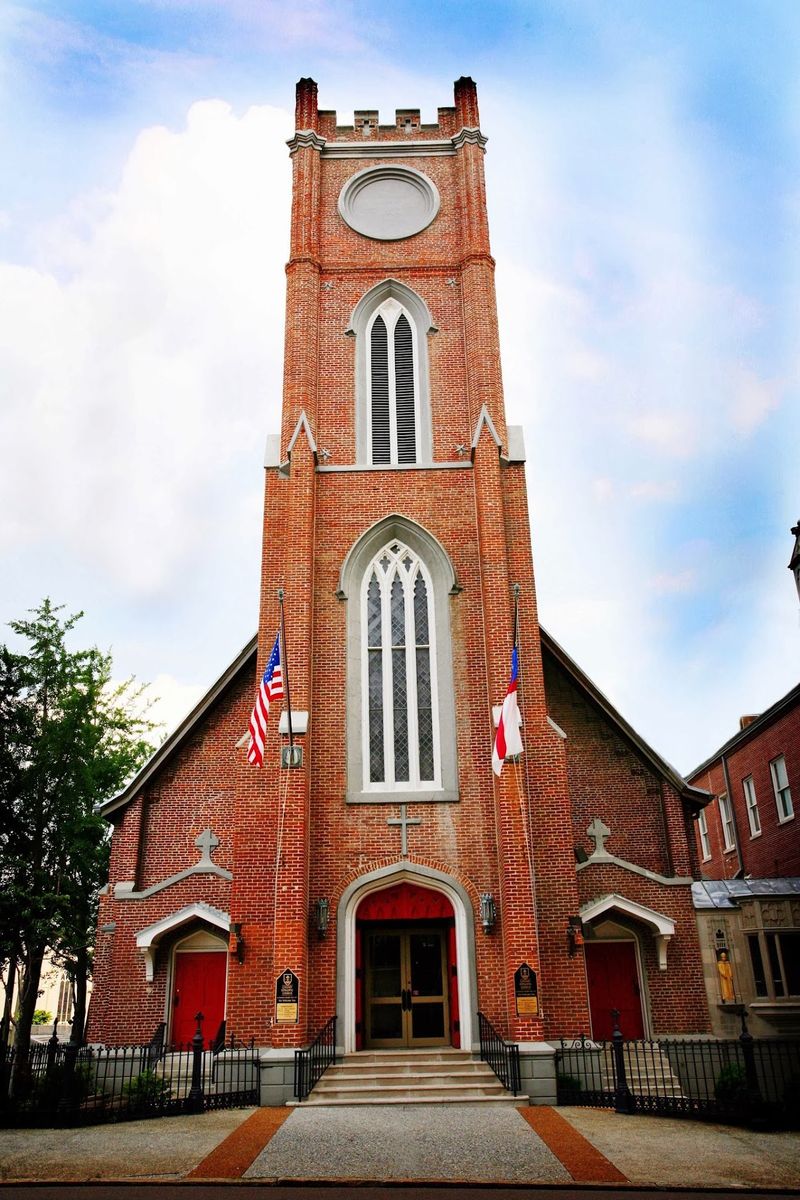
Oldest public building in continuous use in Memphis. That is a serious claim, and Calvary Episcopal Church has held it for generations.
You will find it downtown, where North Second Street meets Adams Avenue. The congregation formed in 1832, back when Memphis was still finding its footing.
Gothic architecture shapes the building, though the design came from an unexpected source. The Reverend Philip Alston served as the congregation’s minister and doubled as an amateur architect.
His nave was consecrated in 1844. Not bad for someone whose day job involved sermons rather than blueprints.
Additions followed over the years. A tower went up in 1848, and the chancel was added in 1881, each one deepening the church’s presence on the corner.
Calvary is known as the Mother Parish of the Episcopal Church in Memphis and Shelby County. Several daughter churches trace back to it, including St. Mary’s, now St. Mary’s Cathedral.
Its downtown setting shaped its mission. Community outreach programs grew naturally out of life on a busy city block.
The church and parish house joined the National Register of Historic Places in 1982. End your Tennessee church tour here and the whole trip comes full circle.