
Tennessee Has A Park So Serene It Feels Like A Peaceful Escape From Everything
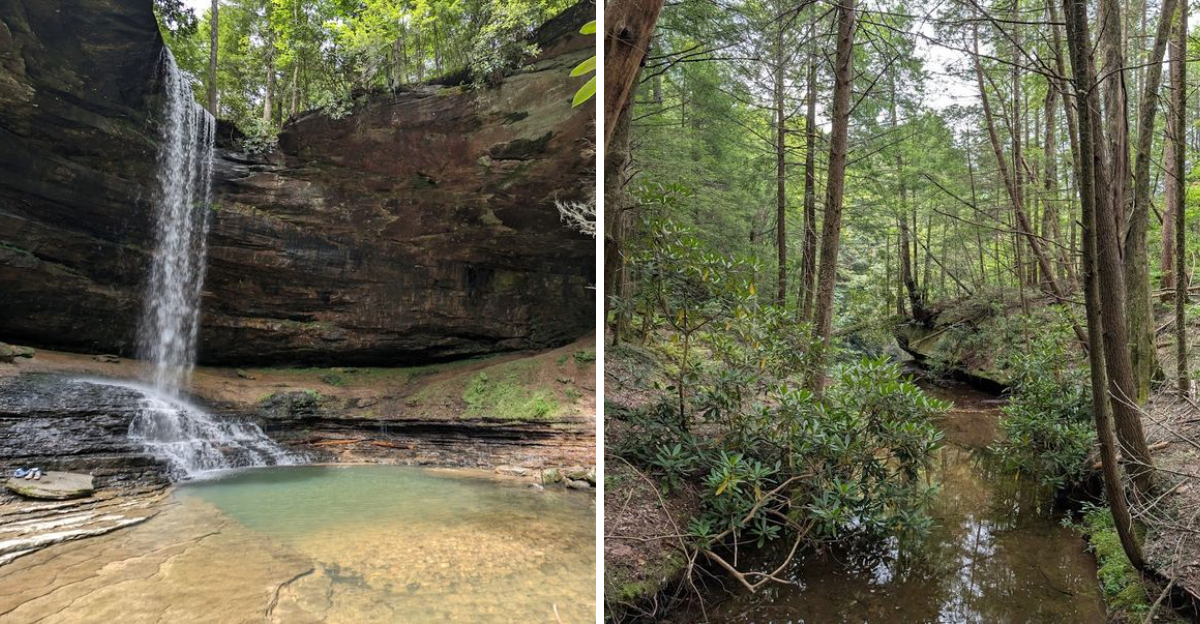
Some places do not need noise to make an impression. A quiet trail, cool shade, and the sound of water can do more for your mood than any packed weekend attraction ever could.
In Tennessee, one peaceful natural area feels made for anyone craving a slower day outside.
There is no need for a packed itinerary here. The scenery does the work.
Trees crowd the path, rocky walls add a little drama, and a waterfall gives the whole place that calm, almost storybook feeling. Want a walk that clears your head without turning into an all-day challenge?
This Tennessee spot delivers.
It is simple, scenic, and refreshingly low-key. For hikers, nature lovers, or anyone who just needs a break, this park feels like a deep breath in the middle of a busy world.
Northrup Falls
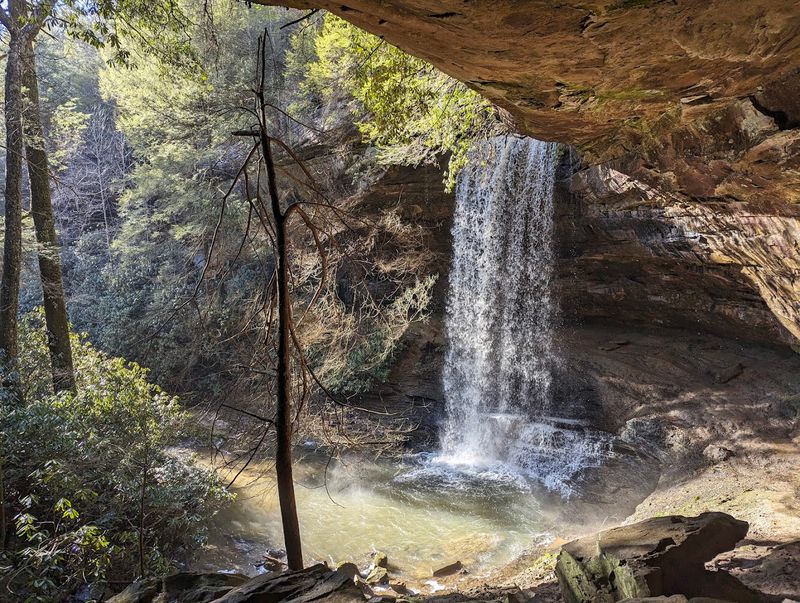
Standing at the base of Northrup Falls for the first time, most visitors go quiet.
The waterfall drops a full 60 feet over a sandstone ledge, sending a fine mist outward that cools the air noticeably even on warm days.
Big Branch Creek receives that plunge below, and the sound it creates is the kind that makes you forget you had a to-do list.
What makes this waterfall especially memorable is that you can actually walk behind it.
A narrow path along the rock face allows hikers to position themselves between the falling water and the cliff wall, looking outward through a moving curtain of white water.
Very few waterfalls in Tennessee offer that experience.
Northrup Falls is named after a family who ran a mill along this creek during the 1800s. That history adds a quiet layer of meaning to the visit.
The falls are accessible via a loop trail of roughly one to one and a half miles. No entry fee is required, and the reward at the end more than justifies the walk.
Old-Growth Hemlock Forest
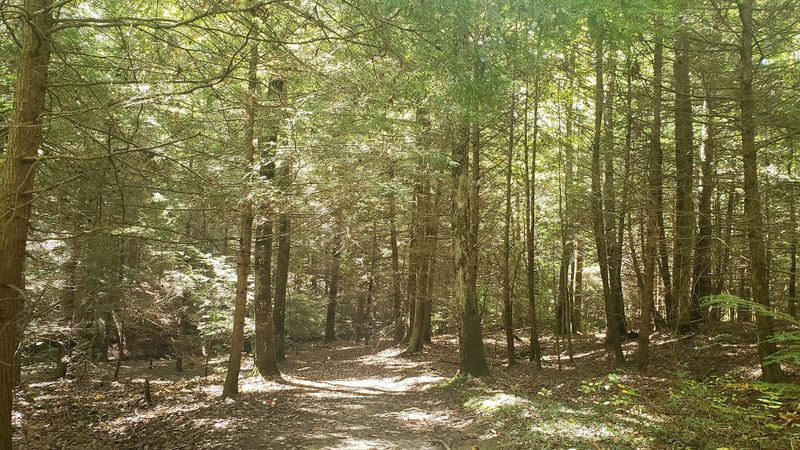
Most forests feel ordinary once you have walked through enough of them. This one does not.
The trail at Colditz Cove passes beneath hemlock and white pine trees that are believed to be over 200 years old.
Old-growth forests like this one are increasingly rare in the eastern United States.
Logging cleared most of them during the 19th and early 20th centuries, which makes the survival of these trees here feel like something worth acknowledging.
Walking among them carries a certain gravity that younger forests simply cannot replicate.
The air beneath the canopy is cooler and noticeably more humid than the surrounding landscape. That moisture supports a rich understory of mosses, ferns, and shade-tolerant wildflowers.
Partridge berries dot the forest floor in small clusters, and lady’s slippers appear in spring for those who look carefully.
The experience of walking this trail is less about covering distance and more about absorbing an environment that has been developing, largely undisturbed, for centuries.
The Loop Trail
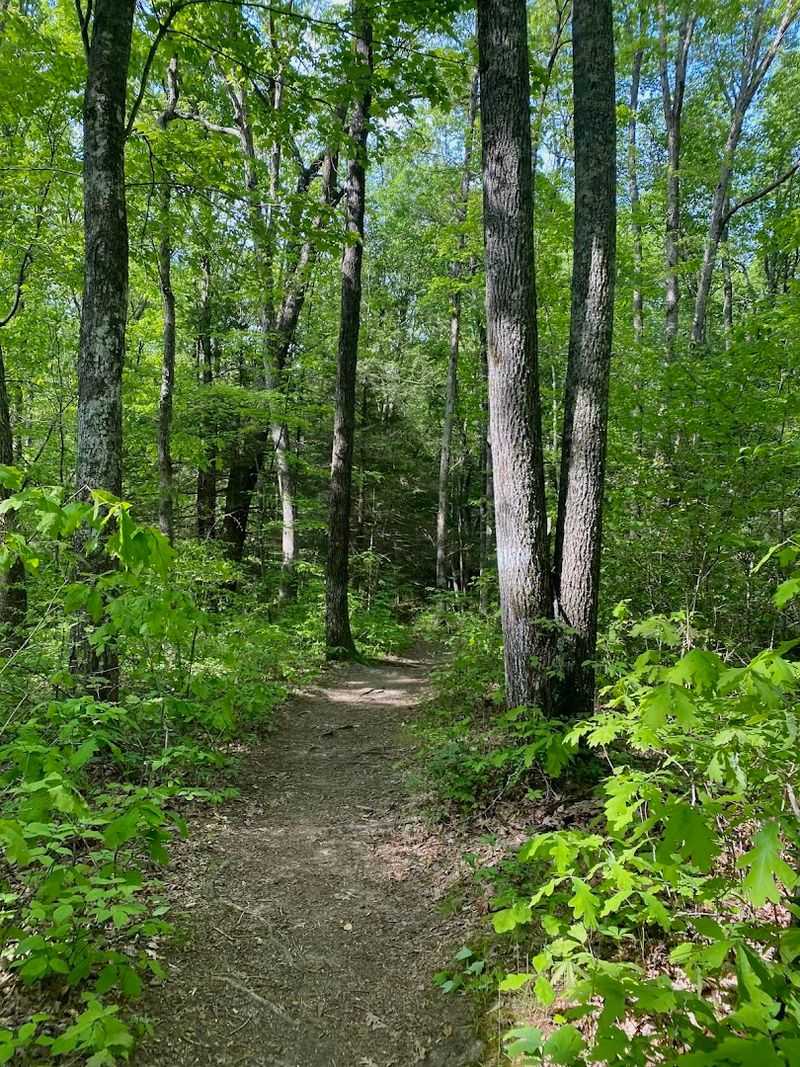
Calling this trail easy is accurate in the broadest sense, but it sells the experience a little short. The loop runs approximately one to one and a half miles, and the first portion moves gently through forest with minimal elevation change.
Then the path begins its descent toward the gorge, and the terrain shifts into something more engaging.
Tree roots cross the trail in thick tangles, and sections of exposed rock require deliberate footing. Visitors with hiking poles will find them useful, especially on the return climb.
Children who are old enough to manage uneven ground tend to enjoy it, and reviewers frequently mention bringing kids as young as two and three years old without serious difficulty.
What keeps the walk interesting is that the scenery changes consistently. Open ridgelines give way to dense rhododendron thickets.
Rock bluffs appear along one side of the path. The sound of the creek grows louder as you descend.
By the time Northrup Falls comes into view, the approach has already delivered enough variety to feel like a complete outing. Bring water, wear shoes with grip, and plan for about an hour round-trip at a comfortable pace.
Rock Houses Along The Creek
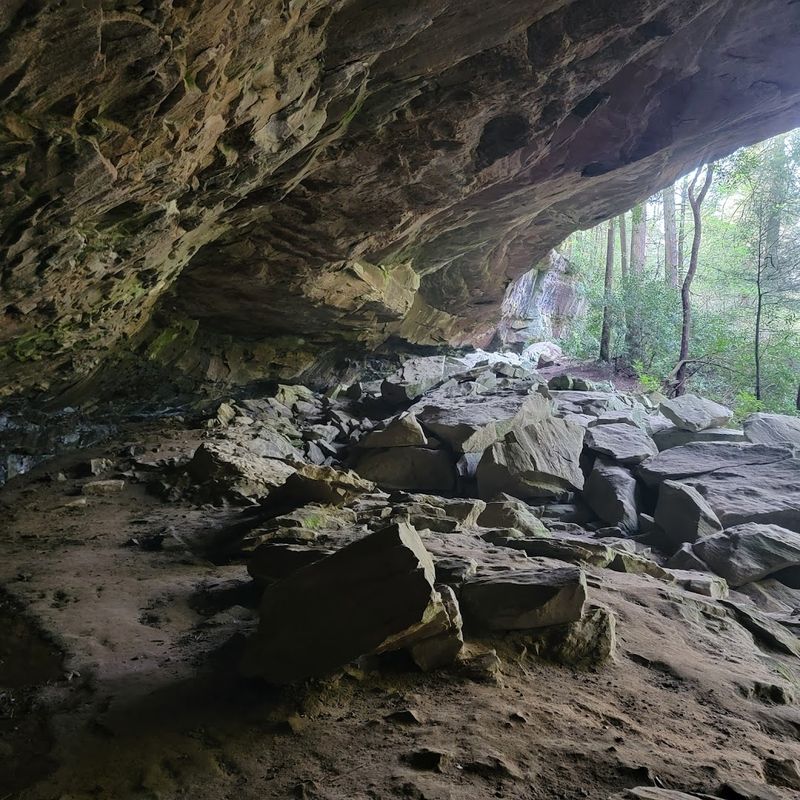
Along the walls of the gorge, the sandstone has eroded into what geologists and locals alike call rock houses. These are not caves in the full sense of the word.
They are shallow, open recesses in the cliff face, protected from rain by an overhanging ledge, wide enough to stand inside and look outward at the creek below.
Woodland Indians used these structures as shelters more than 3,000 years ago. That is not a minor detail.
Standing inside one of these recesses, looking at the same creek view those inhabitants once had, collapses the distance between the present and a very distant past.
Reviewers have mentioned eating lunch inside the rock shelter beside the falls, which is both practical and quietly atmospheric.
The geological process that created these formations involved the differential erosion of softer rock layers beneath harder caprock. Water and time did the work over thousands of years, producing structures that served both ancient people and, now, curious modern hikers.
They are scattered along the gorge in several locations, each one slightly different in size and character, and each one worth pausing at for a moment of reflection.
Salamanders, Shrews, And The Animals Most Visitors Never Notice
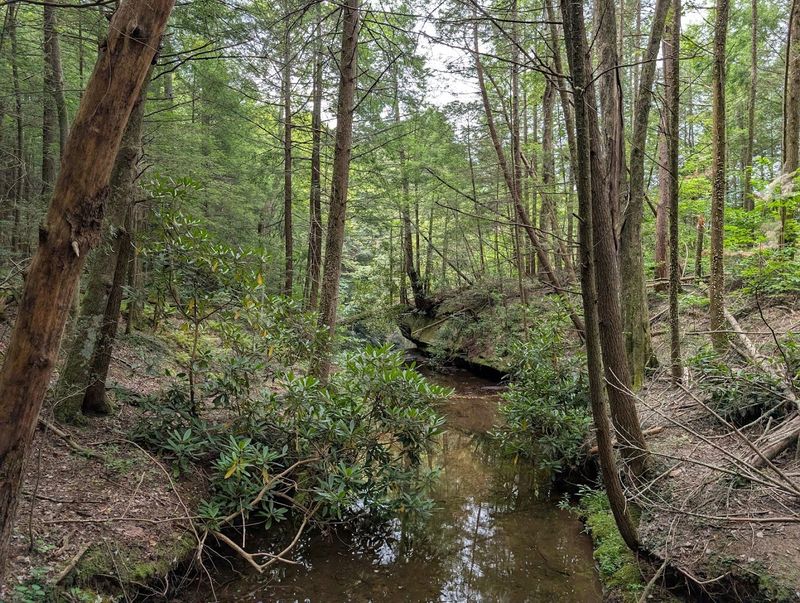
Colditz Cove is home to several animal species that most people will never encounter in their daily lives, and that fact alone makes it worth paying attention to your surroundings on the trail.
The Black Mountain dusky salamander lives here, a species with a limited range and specific habitat requirements that this gorge happens to satisfy.
Spotting one requires patience and a willingness to look under rocks near the creek.
Three shrew species have been documented in the area: the smoky shrew, the pygmy shrew, and the southeastern shrew. These are small, fast-moving mammals that most hikers walk right past without ever realizing.
The woodland jumping mouse also inhabits the natural area, a creature capable of leaping several feet when startled, which makes an accidental encounter genuinely memorable.
Birdwatchers have good reason to visit during spring and fall migration seasons.
The forest corridor and water source create conditions that attract a range of migratory species passing through Fentress County.
Bringing a small pair of binoculars and moving quietly through the trail in the early morning hours significantly improves the chances of meaningful wildlife observation. This is a place that rewards those who move slowly and look carefully.
Rhododendron And Mountain Laurel
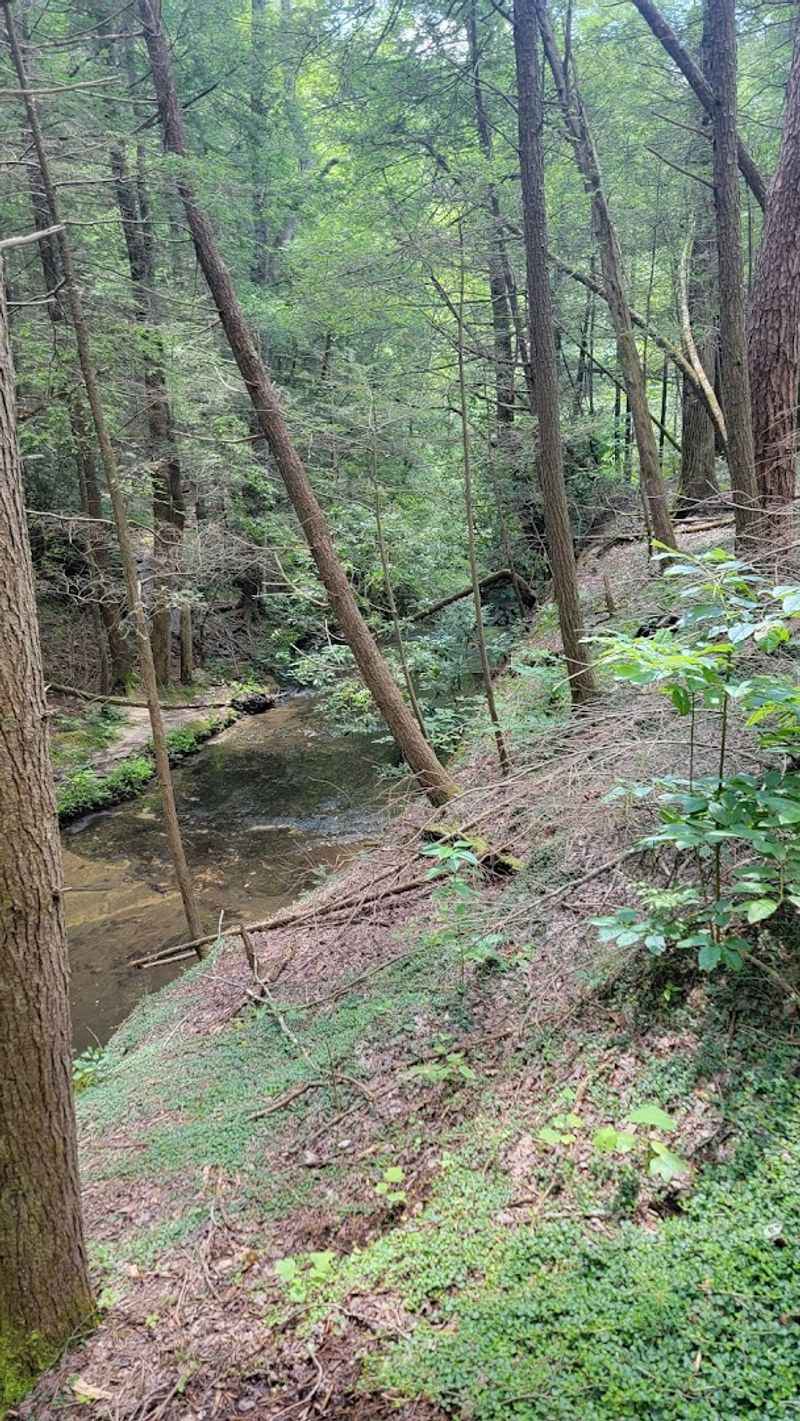
Spring arrives visibly at Colditz Cove.
The rhododendron thickets that line sections of the creek corridor bloom in late spring, producing clusters of pink and purple flowers.
Mountain laurel appears along the drier ridgeline portions of the trail, its flowers slightly smaller but no less striking. These shrubs are not just decorative.
Rhododendron in particular creates dense, low canopies along creek banks that provide critical habitat for the salamanders and small mammals that live in the gorge.
The thickets also reduce erosion along the streambank and maintain the moisture levels that support the fern communities nearby.
Timing a visit to coincide with peak bloom requires a little research, as flowering dates shift depending on the year’s weather patterns. Generally speaking, mid-April through late May offers the best chance of seeing both rhododendron and mountain laurel in full flower.
Even outside of bloom season, the evergreen foliage of these shrubs keeps the trail visually interesting year-round. Visitors who come in summer find the dense growth providing shade and a sense of enclosure that feels more like a botanical garden than a state natural area.
Winter Ice Formations
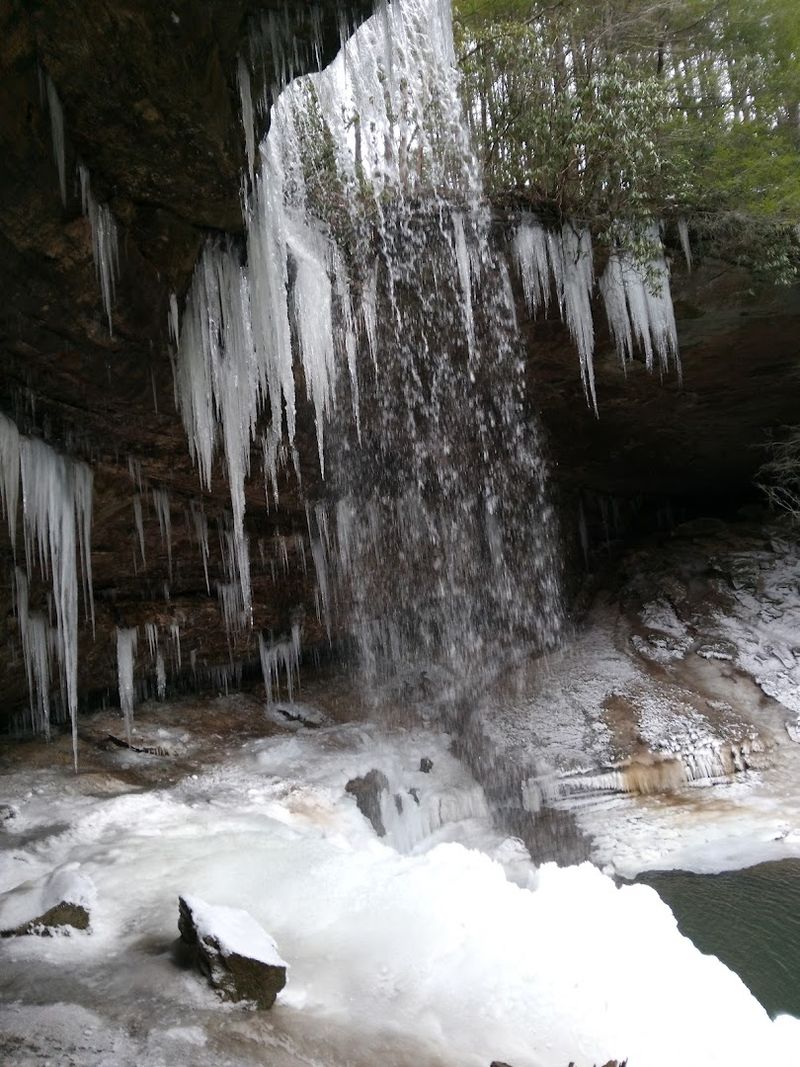
Most people think of waterfalls as a warm-weather destination. Northrup Falls operates differently.
When temperatures drop in Fentress County, the moisture-laden cliffs behind the falls begin to freeze, producing ice formations that can grow to impressive size over the course of a cold spell.
The cliff face transforms into a vertical landscape of frozen columns, curtains, and shelves that catch winter light in unusual ways.
The trail remains accessible during winter months, and the reduced foot traffic means a quieter, more solitary experience than summer visits typically allow.
The forest takes on a different character without its leaf cover, opening sightlines through the trees and revealing the underlying topography of the gorge more clearly.
The sound of the falls carries differently in cold air, sharper and more distinct. Visiting in winter does require appropriate preparation.
Trails can become slippery where moisture freezes on rock surfaces, and temperatures at the base of the gorge drop noticeably lower than at the trailhead.
Waterproof footwear and traction devices are strongly recommended for winter visits.
The combination of frozen formations, quiet forest, and the falls in full flow produces an experience that many visitors describe as their most memorable visit to the area.
The Spray Zone
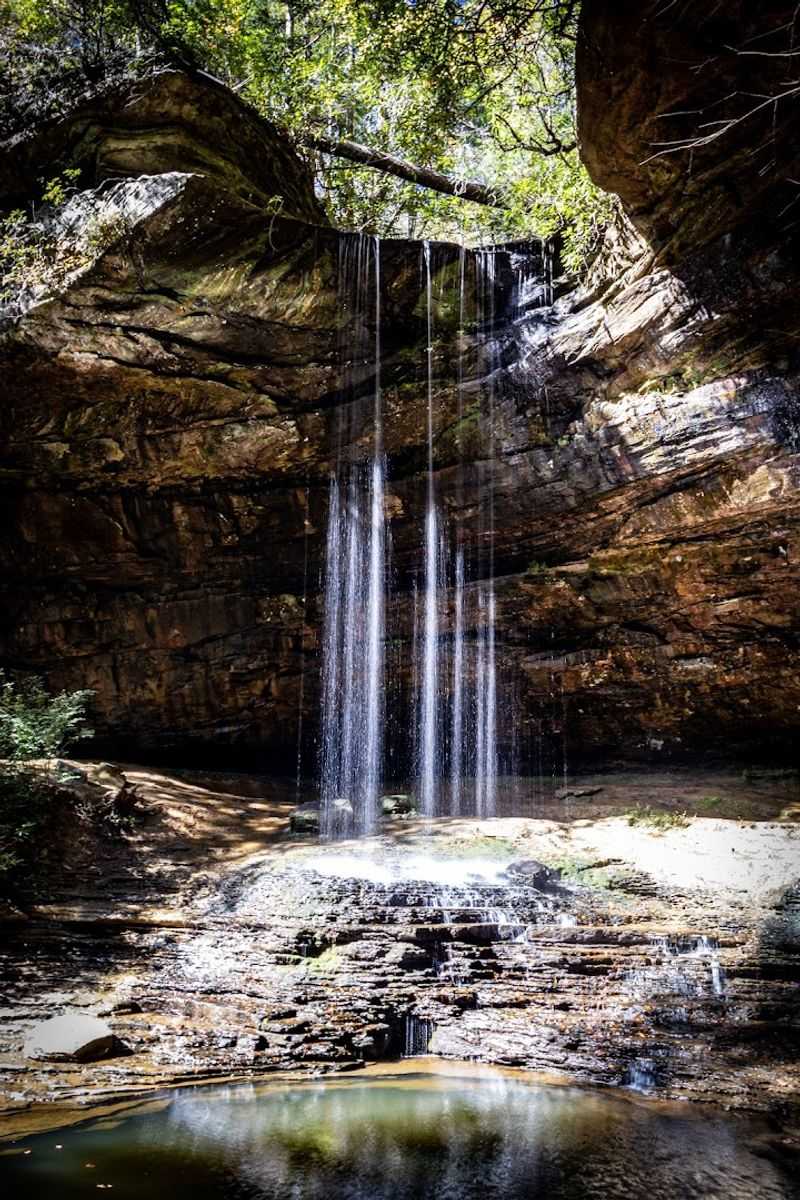
Immediately around the base of Northrup Falls, the constant mist creates growing conditions that differ significantly from the rest of the forest. Ferns thrive here in dense mats, taking advantage of the reliable moisture.
Sedges and rushes fill the wetter margins of the pool, and grass-of-parnassus, a delicate wildflower, appears in the spray zone during late summer and early fall.
Alumroot clings to the damp rock faces nearby, its small white flower clusters rising on thin stems above scalloped leaves. These plants collectively form a microhabitat that exists because of the waterfall and would disappear without it.
The spray zone is essentially a self-contained botanical community, maintained by the energy of falling water.
For visitors with any interest in botany, the area around the base of the falls is worth spending time examining at close range. Mosses cover rocks in overlapping layers of green and gold, and mushrooms appear along the margins of the wetter areas after rainfall.
The combination of geological drama above and botanical detail below gives this small section of the trail a density of interest that rewards slow, attentive observation.
No Entry Fee And Year-Round Access
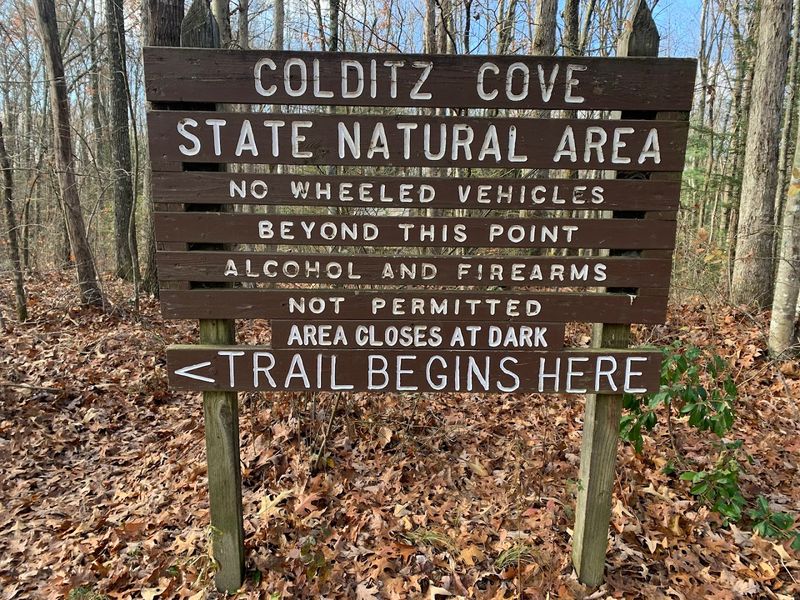
There is something straightforwardly generous about a natural area that charges nothing for admission and stays open every day of the year. Colditz Cove operates on exactly that basis.
The park opens at 8 AM daily and closes at 5 PM, with no entry fee required at any point. Visitors simply park, find the trailhead, and walk.
The land itself came to the state through a donation by brothers Rudolph and Arnold Colditz, with support from The Nature Conservancy. Trail development was handled by the Cumberland Mountain Chapter of the Tennessee Trails Association.
That combination of private generosity and volunteer effort is the reason this 165-acre natural area exists as a public resource today rather than as private land.
There are no facilities on site, which means no restrooms, no ranger station, and no concessions. Visitors should plan accordingly, bringing water, snacks, and anything else needed for a comfortable outing.
Pets are welcome but must remain on a leash throughout the trail. The address is 2552 Northrup Falls Rd, Jamestown, TN 38556, and the phone number for inquiries is 931-879-5821.
For a free outdoor experience in Tennessee, few places deliver this level of natural richness.
The History Behind The Name
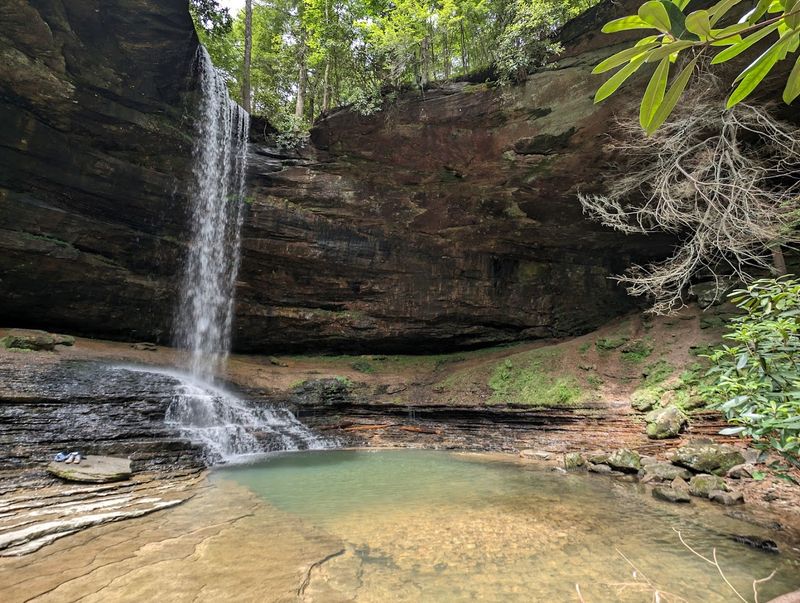
Every place worth visiting has a story behind its name, and Colditz Cove carries two of them. Northrup Falls commemorates the family that operated a mill along Big Branch Creek during the 1800s.
Mills like theirs were essential infrastructure in rural Tennessee, processing grain for surrounding communities and marking the creek as a working waterway rather than simply a scenic one.
The Colditz name comes from the brothers who donated the land to the state.
Rudolph and Arnold Colditz recognized the ecological value of what they owned and chose to transfer it to public stewardship rather than sell or develop it.
The Nature Conservancy facilitated that transfer, and the Tennessee Trails Association built the trail that now allows visitors to experience the result of that decision.
That chain of decisions is part of what gives this small natural area its particular character. It did not become a park through government acquisition alone.
It became one because specific people, at specific moments, chose to prioritize preservation. Walking the trail with that context in mind adds a dimension to the visit that maps and trailhead signs rarely communicate on their own.