
Tennessee’s Grandest Historic Auditorium Still Wows Audiences After More Than A Century
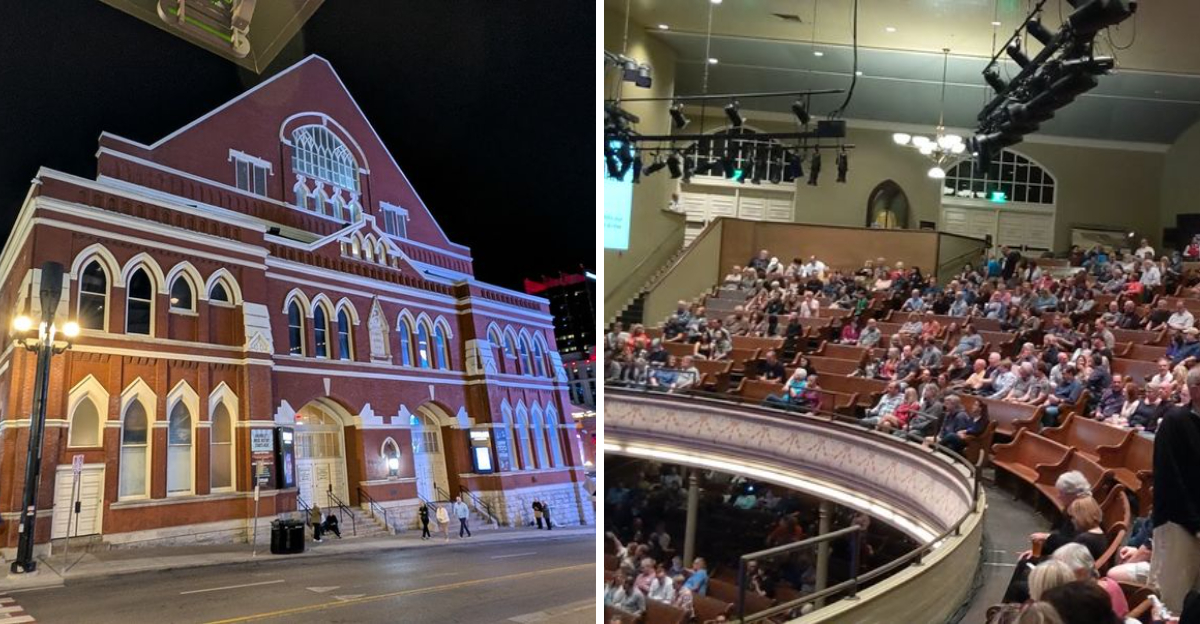
Some buildings just feel different the moment you walk in. Tennessee holds onto this one like a treasure, and it’s easy to see why.
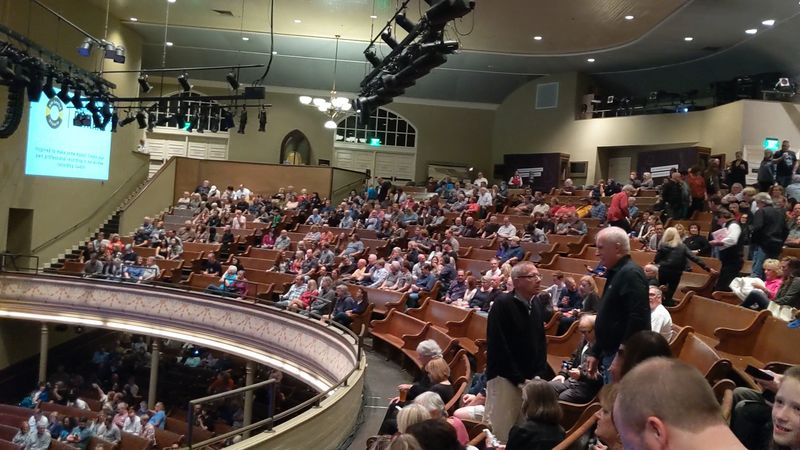
It opened more than a century ago, yet it still packs a punch today. Wooden pews line the floor, worn smooth by decades of visitors who came looking for something special.
Stained glass windows scatter colorful light across the stage during daylight hours. At night, the whole room turns electric, buzzing with anticipation before a single note plays.
Legendary performers have stood right where you’ll stand, leaving behind decades of history you can practically feel.
The acoustics? Still nearly perfect, drawing musicians who want that authentic sound. Ever wonder why so many people call this place sacred ground for music lovers?
Photos never quite capture the feeling. You really have to experience it yourself.
This landmark keeps Tennessee’s music history alive, giving every new visitor a small piece of something bigger than themselves.
Faith And Vision Laid The Foundation For Something Lasting
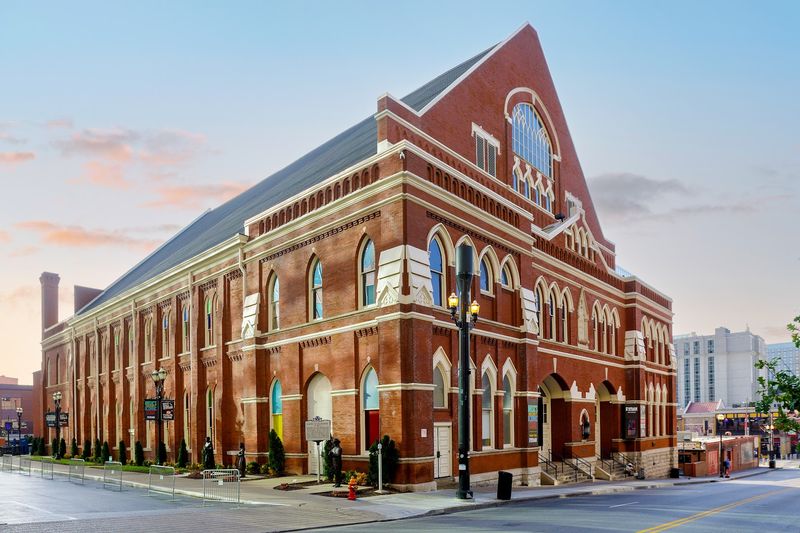
Before the first guitar chord ever rang through its rafters, this building existed for an entirely different purpose.
The Ryman Auditorium began its life as the Union Gospel Tabernacle, conceived by Nashville steamboat captain Thomas Ryman after he attended a fiery revival led by evangelist Samuel Porter Jones in 1885.
Ryman was so moved by that experience that he committed himself to building a permanent home for large spiritual gatherings.
Construction started in 1888 and wrapped up in 1892, producing a striking Gothic Revival structure designed by architect Hugh Cathcart Thompson.
The building featured red brick walls, tall arched windows, and a soaring interior that gave every spoken word remarkable clarity.
It was built to carry the voice, and that original purpose shaped every physical detail.
Thomas Ryman passed away in 1904, and the venue was formally renamed in his honor.
The congregation he once gathered inside those walls could never have imagined that their tabernacle would one day welcome Hank Williams, Johnny Cash, and Bruce Springsteen.
The building stands today as proof that great intentions leave lasting impressions on the places they create.
This Became Known As The Mother Church Of Country Music
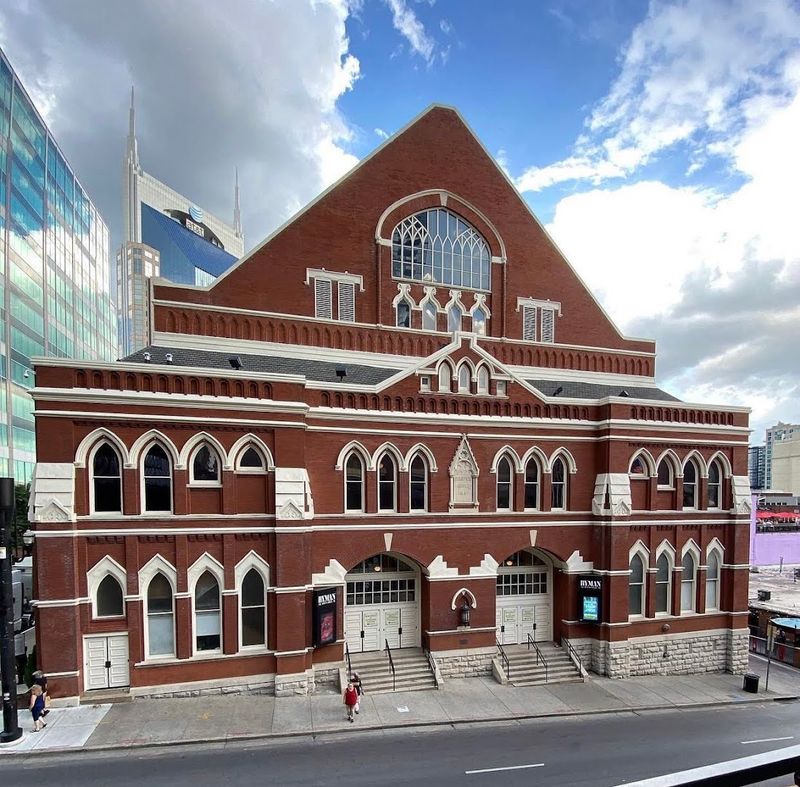
From 1943 to 1974, the Ryman Auditorium served as the permanent home of the Grand Ole Opry, and that three-decade run changed American music forever. Country artists who performed on that stage during those years became legends.
Hank Williams brought raw heartache to life. Patsy Cline floored audiences with a voice that felt almost too powerful for any room to contain.
Loretta Lynn, Dolly Parton, and Johnny Cash each found a devoted home here.
The affectionate nickname, Mother Church of Country Music, was not handed out lightly. It came from the reverence performers and fans felt standing inside those walls.
The wooden pews, the sloped floor, the intimate scale of the room, all of it created an experience that felt more like a gathering than a concert. People came expecting to feel something, and they almost always did.
The Country Music Association Awards were also held here from 1968 to 1973, further cementing the venue’s central role in shaping the genre’s public identity.
The Johnny Cash Show was recorded here between 1969 and 1971, bringing the Ryman’s unmistakable atmosphere directly into living rooms across the country.
That era defined what country music could be at its most honest and most powerful.
Where Bluegrass Found Its Defining Sound
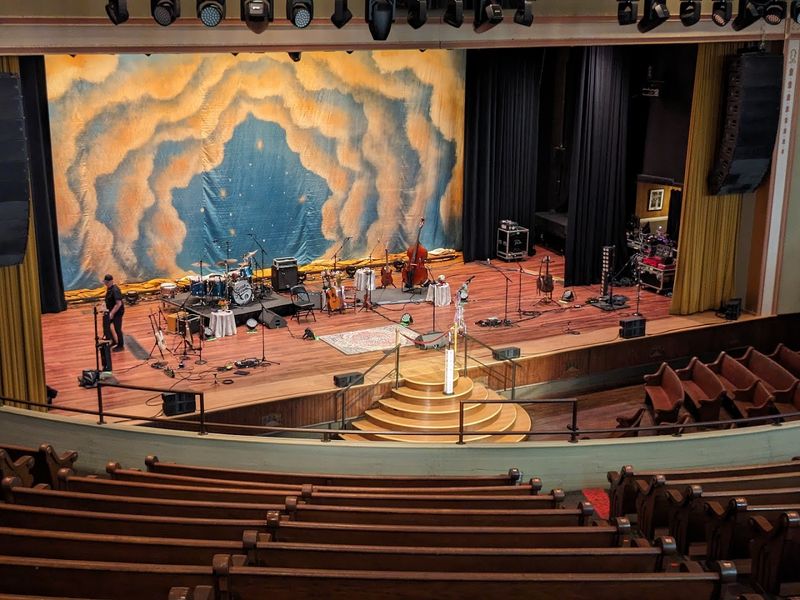
Not every musical revolution announces itself clearly at the time it happens. On a night in 1945, Bill Monroe and his Blue Grass Boys took the Ryman stage and delivered a performance that would quietly reshape American folk music.
The moment that made history came when a young Earl Scruggs picked up his banjo and introduced a three-finger rolling style that nobody had quite heard before.
That technique, precise, rhythmic, and breathtakingly fast, became the defining sound of bluegrass music. The genre that grew from that performance carries Monroe’s name in its very identity.
The Ryman is now widely recognized as the Birthplace of Bluegrass, a title that speaks to the specificity of what happened on that stage and the lasting impact it left on musicians and listeners alike.
Bluegrass today thrives in festivals, recording studios, and living rooms around the world, but its roots trace directly back to this Nashville auditorium.
For anyone who has ever felt something stir at the sound of a banjo running fast over a mountain melody, that feeling has a home address.
The Ryman gave bluegrass the stage it needed to become something permanent and genuinely American in character.
A Stage Where Every Art Form Has Found A Home
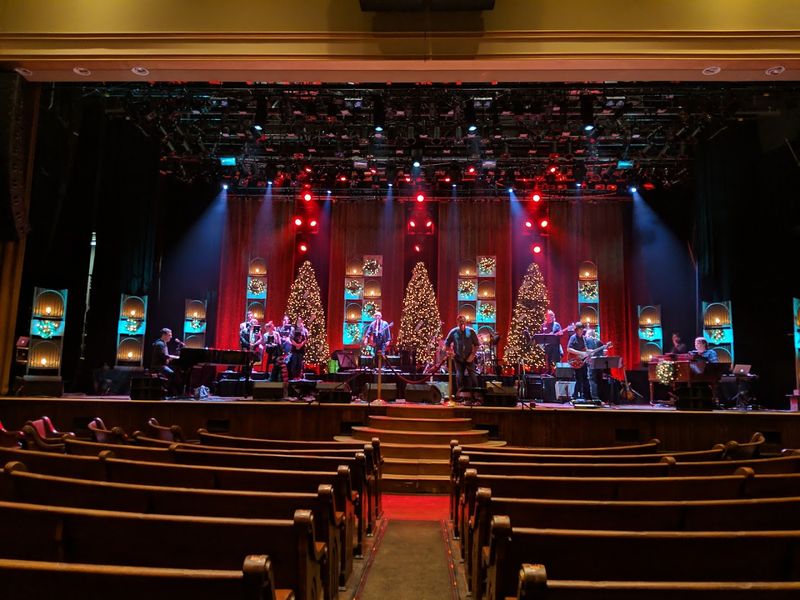
Country music may be the genre most closely associated with this hall, but the Ryman Auditorium has never belonged to a single sound.
Long before the Grand Ole Opry moved in, the stage hosted illusionist Harry Houdini, actress Mae West, and civil rights advocate Helen Keller.
The building was always designed to hold big ideas and bigger personalities, regardless of category.
Over its full history, the Ryman has presented Marian Anderson, Louis Armstrong, Elvis Presley, Bob Dylan, and Bruce Springsteen.
More recently, artists like Lizzo and the Wu-Tang Clan have performed here, demonstrating that the venue’s appeal crosses every genre boundary with ease.
In 2022, it was designated a Rock and Roll Hall of Fame Landmark, recognizing its contribution to American music far beyond country.
That breadth of programming has earned the Ryman another nickname: the Carnegie Hall of the South. The comparison is apt not just in terms of prestige, but in terms of the seriousness with which every performance is treated.
Audiences here tend to listen closely. The room seems to encourage that kind of attention, and artists consistently rise to meet the expectation the space quietly places on their shoulders.
The Kind Of Sound That Makes Every Note Feel Real
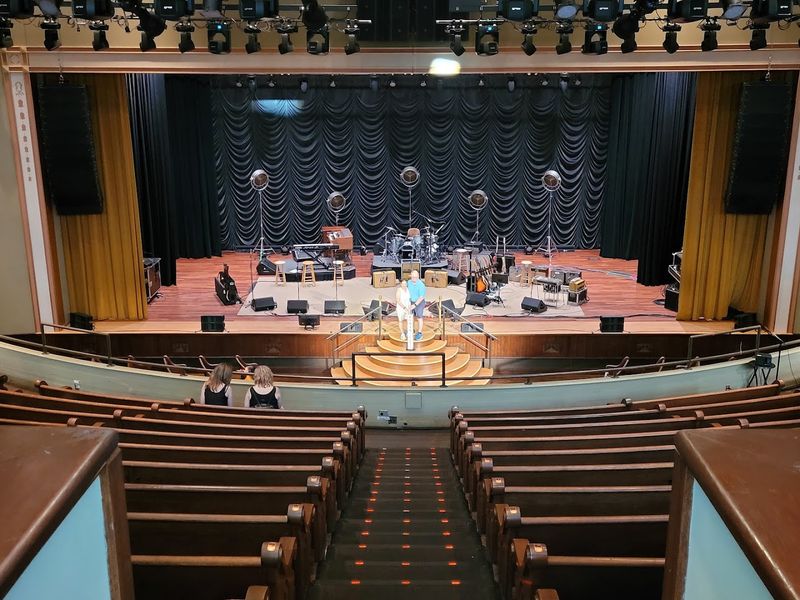
Ask almost any musician who has performed at the Ryman Auditorium what the experience felt like, and the conversation usually arrives at the same word: spiritual.
The acoustics in this building are not the result of modern engineering or expensive sound panels.
They come from the original design itself, the sloping wooden floor, the curved balconies, the high vaulted ceiling, and the dense wooden pews that line the main floor.
Sound moves through this room in an unusually natural and balanced way. Instruments stay distinct without bleeding into each other.
Voices carry with clarity and warmth to every corner of the hall. Performers often describe a sensation of being heard completely, as though the room is actively cooperating with them.
That quality is rare in live music venues, and audiences feel it from their very first note.
The building’s original function as a house of worship actually contributed to its acoustic excellence. Spaces designed for the spoken word and communal singing tend to handle sound with particular care.
The Ryman inherited that sensitivity and never lost it through renovation or expansion.
Sitting in those old church pews and hearing a live performance here is an experience that many visitors describe as unlike anything they have encountered at any other venue.
Restoration Efforts That Saved A National Treasure
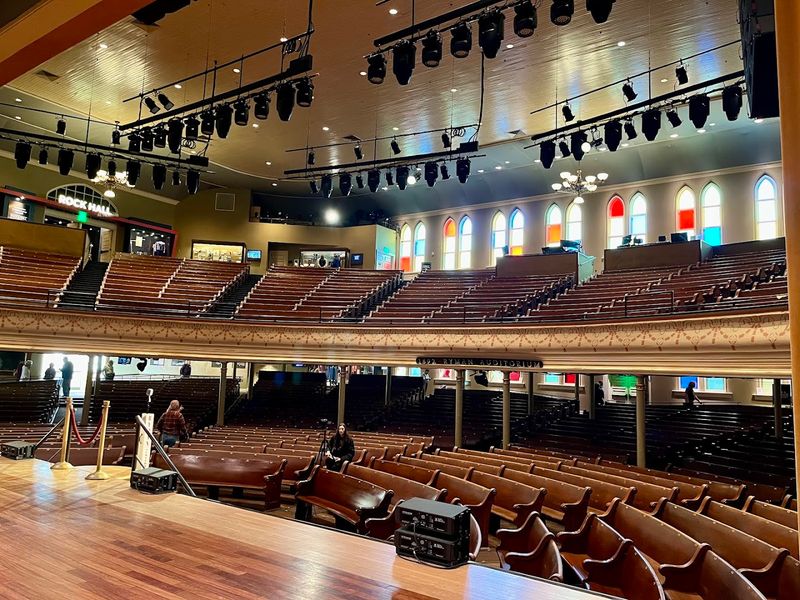
By the early 1990s, the Ryman Auditorium was in serious trouble. After the Grand Ole Opry relocated to a larger facility in 1974, the building sat largely unused and began to deteriorate.
Discussions about demolition were real and genuinely alarming to historians, musicians, and preservationists who understood what the world would lose if those walls came down.
A significant restoration effort in 1994 saved the structure and brought it back to life as an active performance venue.
A further expansion in 2015 added a larger lobby, improved restrooms, better retail space, and the Soul of Nashville Theatre, a dedicated space for daytime visitors to engage with the building’s history through film and exhibits.
Both projects were carried out with careful attention to preserving the original acoustic qualities and architectural character.
The team managing the Ryman today balances a genuinely complex task: keeping a 19th-century building functional for 21st-century audiences and performers without stripping away the very qualities that make it irreplaceable.
The fact that you can still sit in those original wooden pews and hear a show with virtually no electronic amplification required is a direct result of the thoughtful decisions made during those restoration years.
The building survived, and Nashville is measurably better for it.
Visiting The Ryman As A Daytime Experience
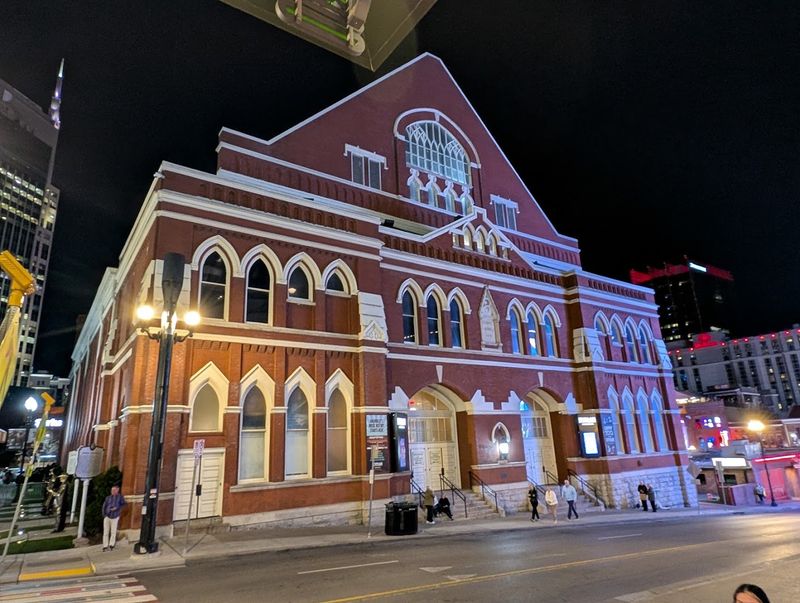
Attending a concert is only one way to experience the Ryman Auditorium.
During daytime hours, the venue opens its doors for self-guided and guided tours that take visitors through the building’s layered history in an engaging and unhurried format.
The experience begins with a short film that sets the tone beautifully, giving context to everything that follows in the exhibit spaces.
Displays throughout the tour include memorabilia from a remarkable range of artists and eras.
Visitors have spotted costumes worn by Dolly Parton, exhibits related to Jim Henson, and artifacts connected to Harry Houdini’s early performances on this very stage.
The variety consistently surprises people who arrive expecting only a country music museum.
A photo circle near the stairs allows visitors to take pictures and email them to themselves, and a stage photo opportunity is included with the ticket price, something many comparable venues charge extra for.
Tours run Tuesday through Sunday, with the venue open from 9 AM to 4 PM most days.
Combining a daytime tour with an evening concert on the same day is widely considered the most complete way to understand the Ryman.
Seeing the sound crew set up for a show during your afternoon visit and then returning that night for the performance itself creates a genuinely layered and memorable visit.
A Living Venue Still Drawing The World’s Best Talent
The Ryman Auditorium is not a museum that happens to host occasional concerts. It is an active, fully programmed performance venue that books talent year-round across an impressive range of genres and formats.
Singer-songwriter showcases, major touring acts, comedy shows, tribute concerts, and annual events like AmericanaFest all find a home here. The calendar stays full, and tickets for popular shows sell out quickly.
Performers continue to seek out this stage specifically because of what it offers that other venues cannot replicate.
The intimacy of the room, with a capacity of roughly 2,300, means that even the largest names in music perform in a setting that feels close and personal.
Audience members in the balcony are never far from the stage, and the sight lines are strong throughout most of the hall.
The wooden pew seating is part of the historic character, and most visitors embrace it as part of the experience.
The Ryman sits at 116 Rep. John Lewis Way N, in the center of downtown Nashville, surrounded by restaurants and other cultural landmarks.
Planning a visit around a live show remains one of the most rewarding things a music lover can do in this city. More than a century after its founding, the Ryman continues to earn every bit of its legendary reputation in Tennessee.