
The Abandoned Ghost Town In Nevada That’s Being Revived As A Desert Art Destination
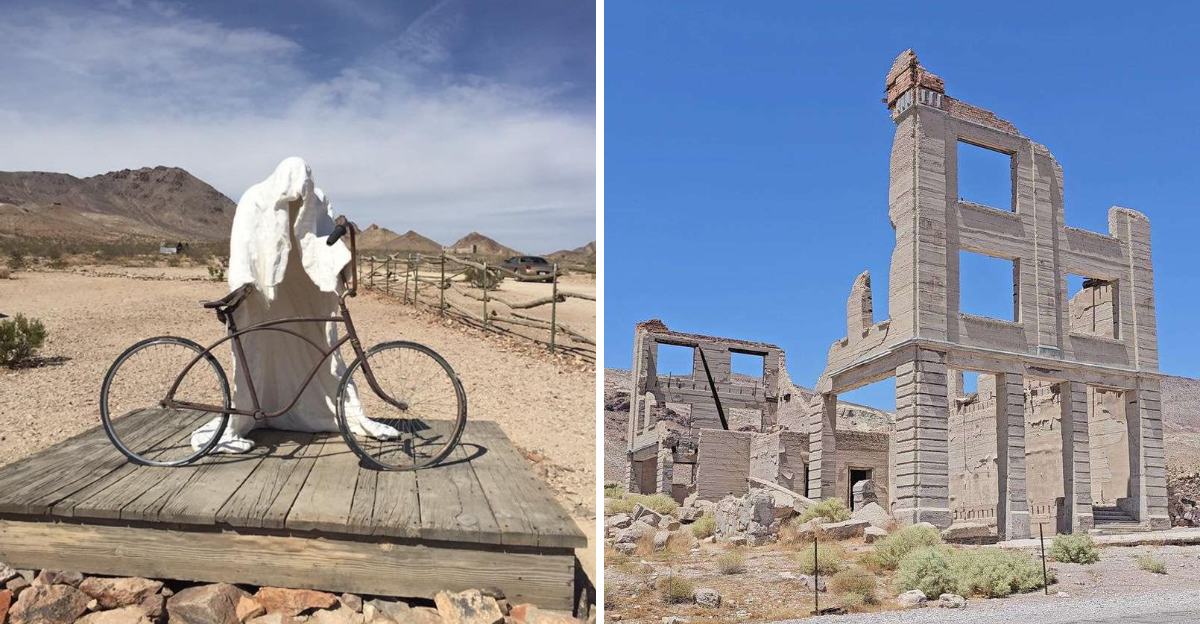
Hidden among Nevada’s dusty desert hills lies Rhyolite, a ghost town that simply refuses to stay dead.
Once a booming gold-rush city overflowing with optimism, electric lights, and thousands of hopeful residents, it collapsed almost as quickly as it rose when the mines went dry and fortunes faded.
But today, Rhyolite is experiencing an unexpected second life.
Thanks to a wave of bold desert artists and the arrival of quirky, surreal outdoor sculptures, this forgotten settlement is evolving into one of the most unusual, and visually striking, art destinations in the Southwest.
Among the crumbling ruins, ghostly figures, oversized installations, and open-air exhibits now create an atmosphere where history and creativity collide.
A Boomtown Born Overnight In Nevada’s Gold Rush
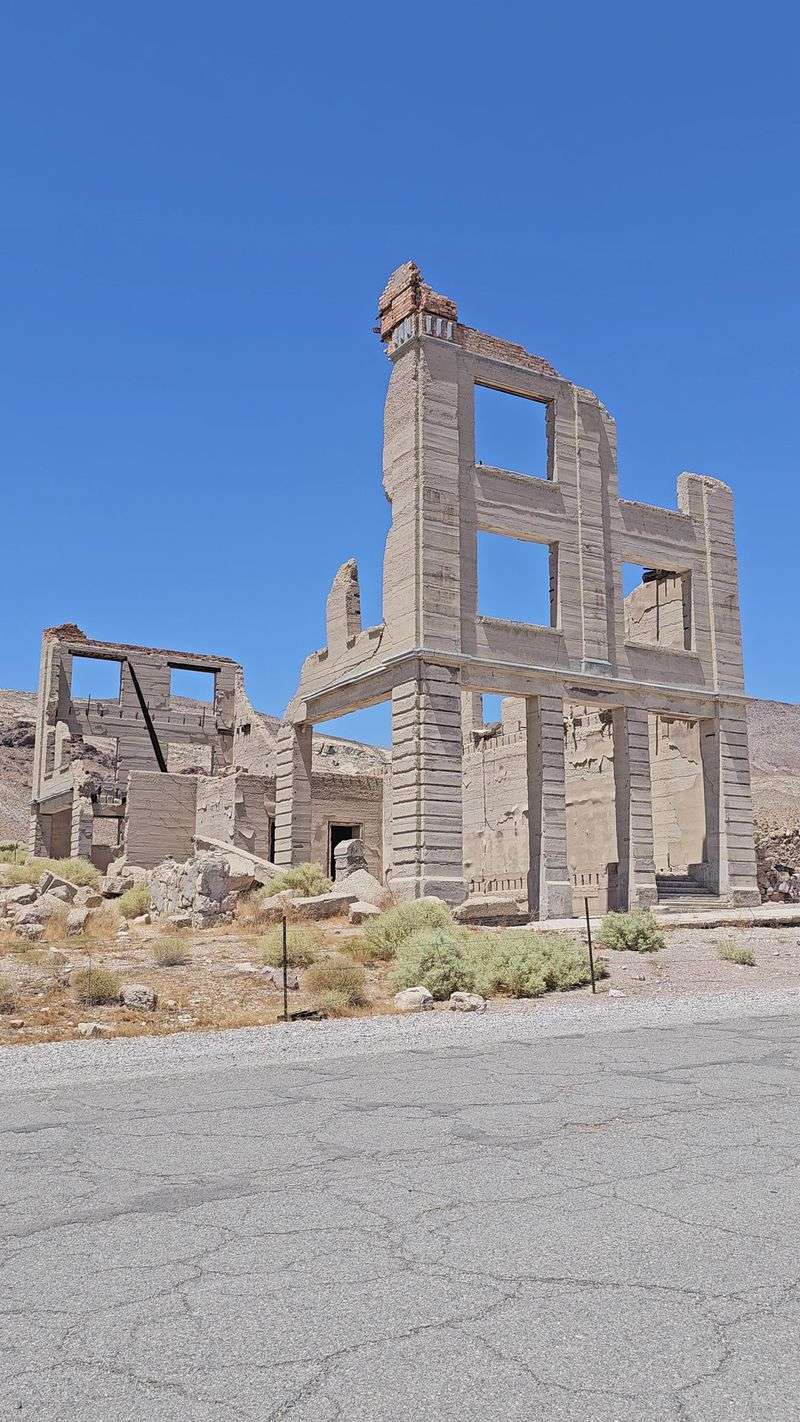
Gold fever struck hard in 1904 when prospectors discovered rich ore deposits near Bullfrog Mountain.
Within months, thousands of fortune-seekers flooded into the barren desert, pitching tents and staking claims faster than you could say “eureka.”
Rhyolite exploded from empty wasteland to a city of 5,000 people practically overnight.
By 1907, the town boasted electric lights, concrete sidewalks, an opera house, and even an ice cream parlor.
Nobody imagined this golden dream would rust away just as quickly as it had appeared.
How A Once-Thriving City Became One Of Nevada’s Most Photographed Ghost Towns
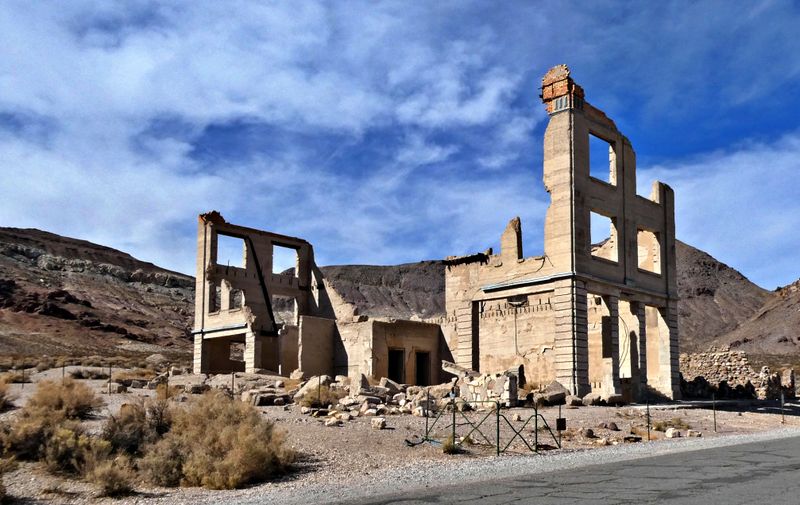
When gold prices plummeted and ore quality declined around 1910, Rhyolite’s fate was sealed faster than a tomb.
Residents abandoned the town in droves, leaving behind everything from furniture to dreams of striking it rich.
By 1916, the power was shut off, and Rhyolite officially became a ghost town.
What remains today draws photographers from around the globe who can’t resist capturing its haunting beauty.
Crumbling walls stand against endless blue skies, creating dramatic contrasts that make Instagram accounts weep with joy.
The Ruins That Still Stand: Rhyolite’s Iconic Cook Bank And Bottle House
Among the most photographed survivors stands the Cook Bank Building, its three-story concrete shell defying time and desert winds.
Built in 1908, this architectural skeleton once housed one of Nevada’s most prosperous financial institutions.
Today, its empty windows frame the desert landscape like nature’s own picture gallery.
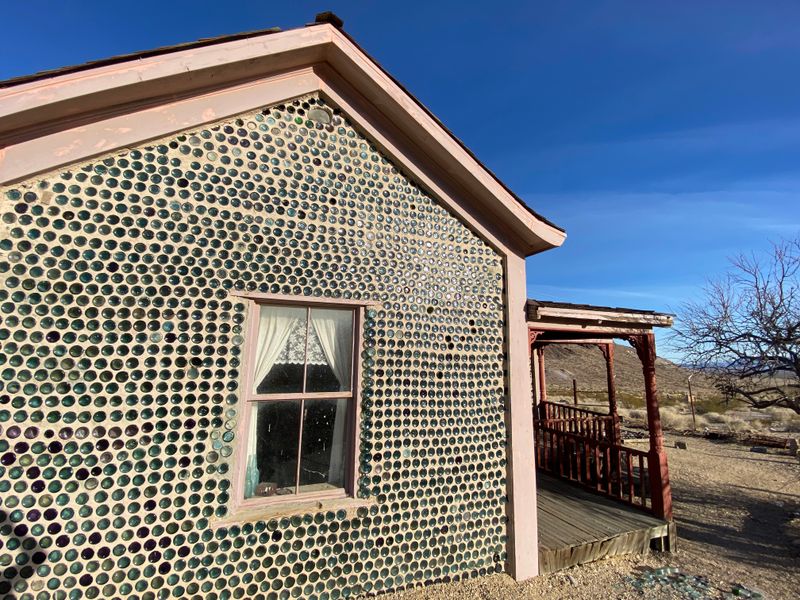
Even more bizarre is Tom Kelly’s Bottle House, constructed entirely from 50,000 glass bottles and mortar.
This quirky structure proves that necessity truly is the mother of invention, especially when you’re thirsty in the desert!
When Hollywood Came Calling: Rhyolite As A Film & Photography Backdrop
Hollywood directors discovered Rhyolite’s cinematic potential decades ago, transforming the ghost town into a wild west film set.
Movies like “The Air Mail” and music videos have used these authentic ruins to capture that perfect Old West atmosphere.
Photographers obsess over the way golden hour light plays across weathered walls and through broken windows.
Professional and amateur shutterbugs alike make pilgrimages here, chasing that perfect shot where history meets haunting beauty.
The town’s remote location and preserved ruins create an irresistible canvas for visual storytelling that keeps cameras clicking year after year.
The Desert Artist Who Sparked Rhyolite’s Modern-Day Revival
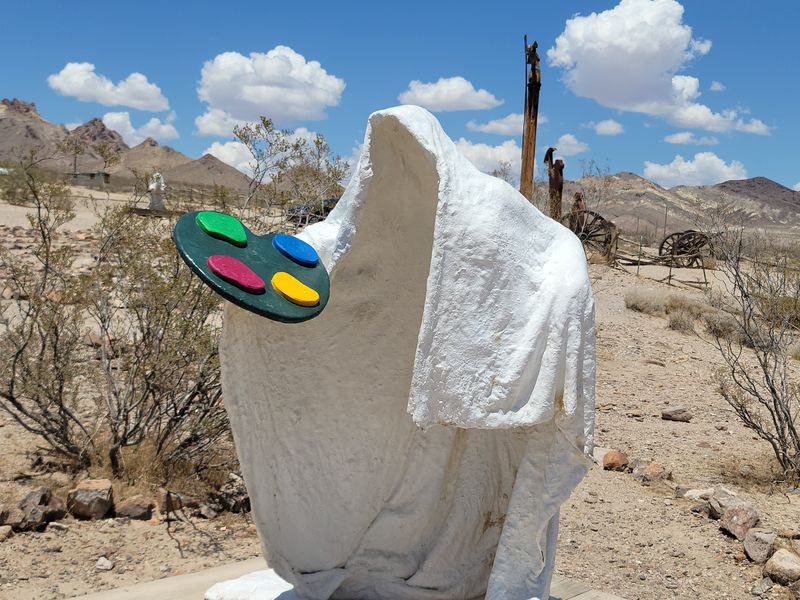
Belgian artist Albert Szukalski arrived in the Nevada desert during the 1980s with a wild vision that most people thought was certifiably crazy.
He imagined transforming this forgotten ghost town into an open-air sculpture gallery where art and abandonment could coexist beautifully.
His persistence eventually convinced others that Rhyolite deserved a second act.
Szukalski’s passion became contagious, attracting fellow artists who shared his eccentric dream of desert art installations.
Together, they established what would become the Goldwell Open Air Museum, proving that sometimes the best galleries have no walls.
The Goldwell Open Air Museum: Turning A Ghost Town Into A Gallery
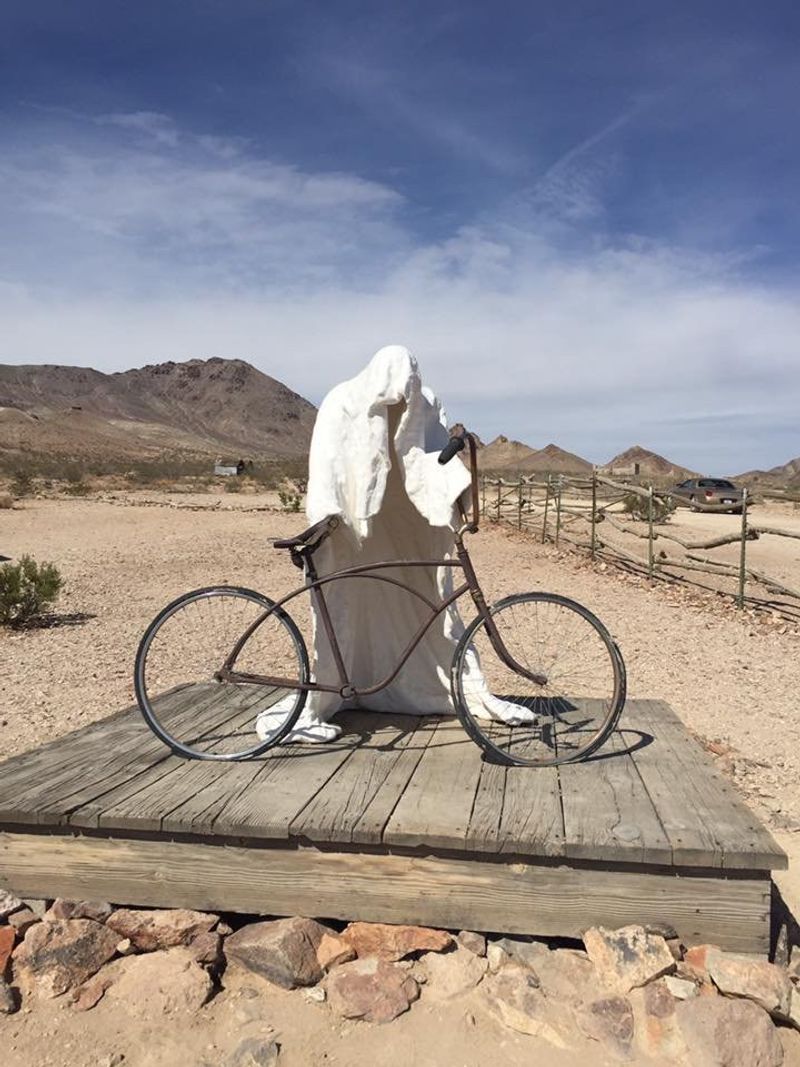
Established in 1984, the Goldwell Open Air Museum stretches across the desert like Salvador Dali’s fever dream come to life.
Large-scale sculptures dot the landscape surrounding Rhyolite, creating surreal juxtapositions between contemporary art and century-old ruins.
Seven major installations currently grace the museum grounds, each one weathering naturally under Nevada’s relentless sun and wind.
Artists deliberately chose materials that would age alongside the ghost town itself, creating an ever-evolving outdoor gallery.
This unconventional museum proves that art doesn’t need climate control to be powerful and meaningful.
The Last Supper: The Ghostly Sculptures That Made Rhyolite World-Famous
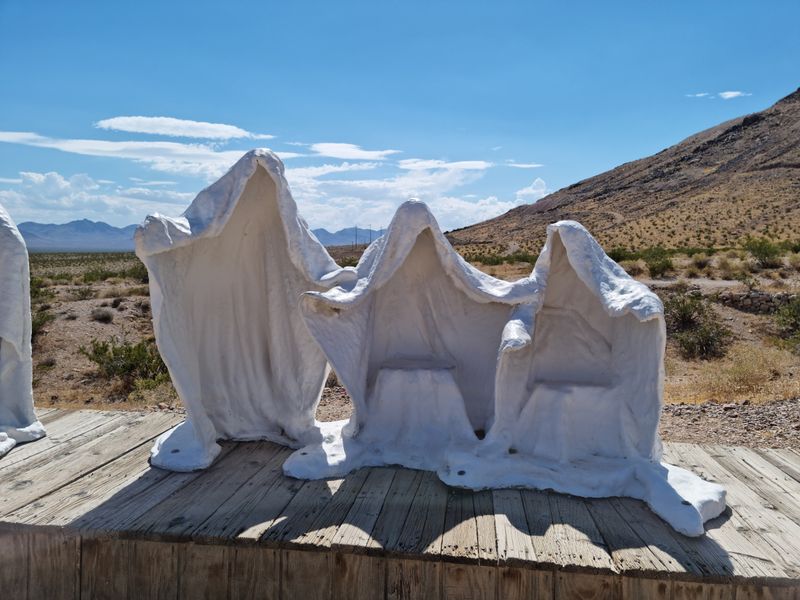
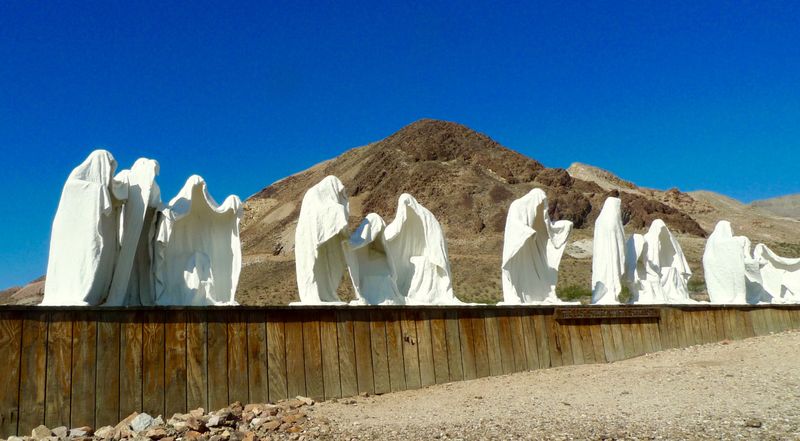
Albert Szukalski’s masterpiece “The Last Supper” features life-sized ghost figures seated at a table, seemingly frozen in eternal conversation.
Created from plaster-draped fabric over steel frames, these spectral diners have become Rhyolite’s most iconic and photographed artwork.
Visitors often report feeling genuinely spooked by how lifelike yet otherworldly these figures appear, especially at sunrise and sunset.
The installation perfectly captures the ghost town’s eerie atmosphere while adding layers of meaning about absence, memory, and time’s passage.
These phantom banqueters have appeared in countless magazines, documentaries, and social media posts, putting Rhyolite firmly on the international art tourism map.
Beyond The Ruins: New Sculptures Bringing Life Back To The Desert
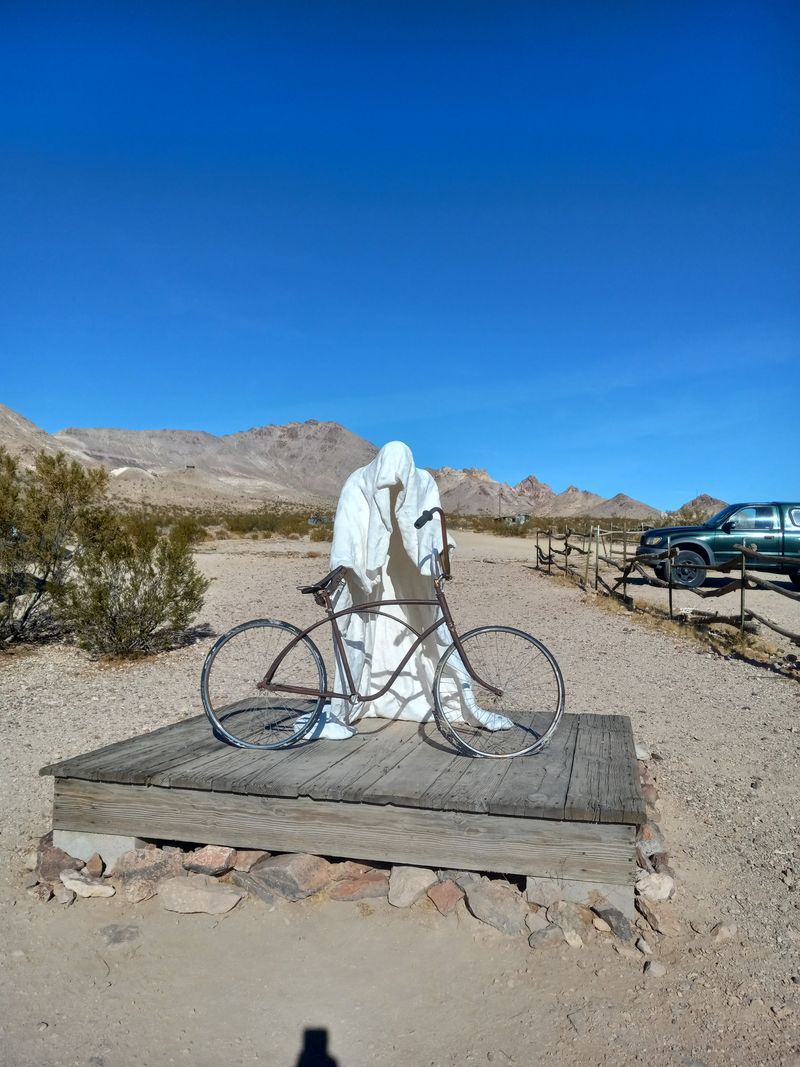
Contemporary artists continue adding fresh installations to Rhyolite’s desert canvas, ensuring the outdoor museum stays dynamic and relevant.
Recent additions include works exploring themes of environmental change, western mythology, and human impermanence in harsh landscapes.
Some pieces incorporate recycled materials from the ghost town itself, creating fascinating dialogues between past and present.
Others use modern materials that contrast sharply with the weathered ruins, highlighting the passage of time.
This ongoing artistic evolution means visitors discover something new with each return trip, keeping Rhyolite fresh despite its ancient bones.
How Art Tourism Is Breathing New Energy Into Rhyolite’s Abandoned Streets
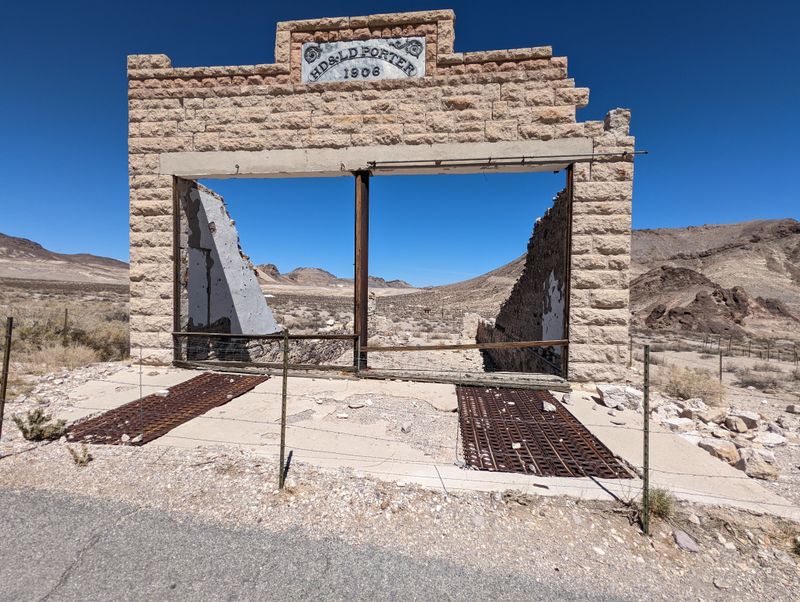
Thousands of art enthusiasts now trek to Rhyolite annually, bringing economic vitality to nearby Beatty and the surrounding region.
What was once just another forgotten ghost town has become a must-see destination for culture vultures exploring the Southwest.
Local businesses have noticed increased traffic from tourists seeking unique experiences beyond typical Nevada attractions.
Social media has amplified Rhyolite’s appeal exponentially, with visitors sharing surreal photos that inspire others to make the pilgrimage.
The town’s resurrection as an art destination proves that creativity can revitalize even the most desolate places.
Ghost towns don’t have to stay dead when imagination and artistic vision breathe new purpose into old bones.
Preserving A Past While Reimagining Its Future
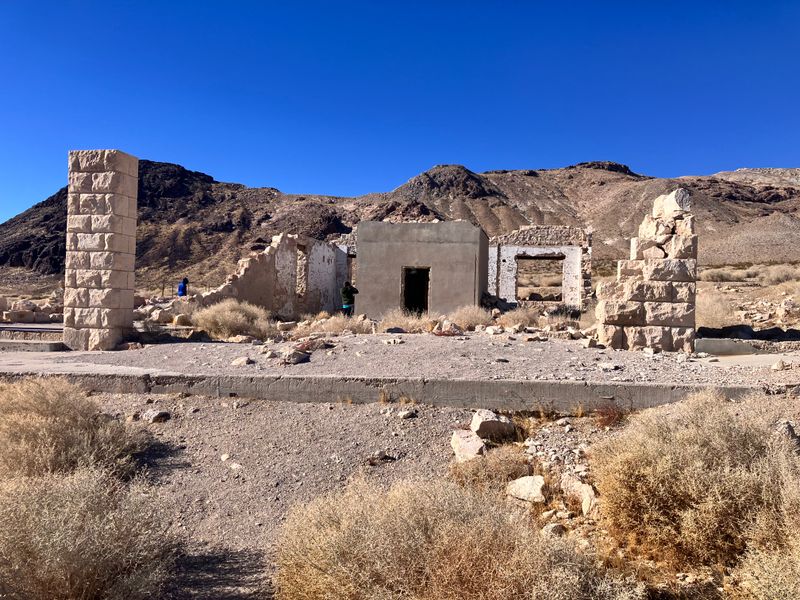
Balancing historical preservation with contemporary art installations requires careful consideration and respect for Rhyolite’s authentic heritage.
The Bureau of Land Management works alongside artists and historians to ensure new additions enhance rather than overshadow the town’s original structures.
Preservation efforts focus on stabilizing existing ruins without over-restoring them, maintaining that authentic weathered aesthetic that makes Rhyolite so photographically compelling.
Meanwhile, the outdoor museum continues welcoming new artistic voices that honor the site’s history while pushing creative boundaries.
This thoughtful approach ensures Rhyolite remains both historically significant and artistically relevant for generations ahead.
Why Rhyolite Is Becoming One Of The Southwest’s Most Unique Art Destinations
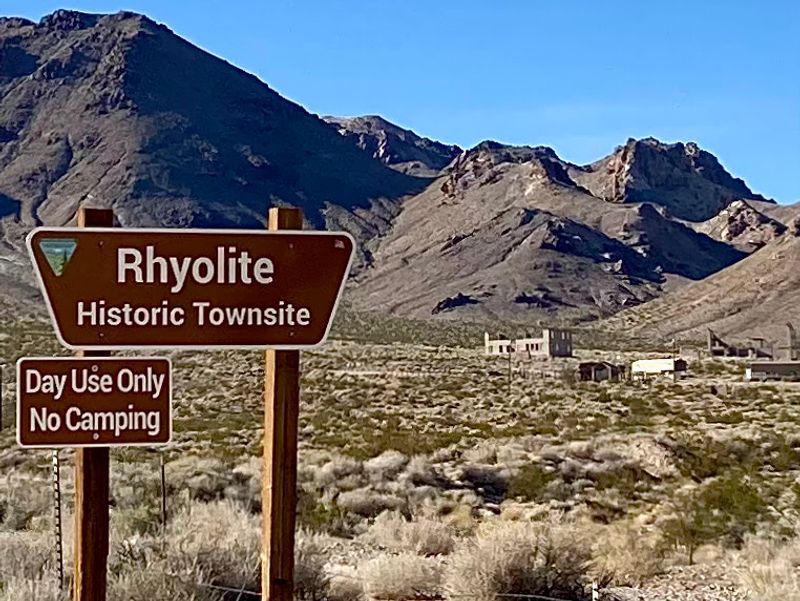
Nowhere else can you experience world-class outdoor sculptures against a backdrop of authentic Old West ruins and endless desert vistas.
Rhyolite offers something conventional museums and galleries simply cannot replicate: raw, unfiltered artistic expression meeting genuine historical decay.
Visitors rated this historical landmark 4.6 stars, praising its accessibility, free admission, and otherworldly beauty that photographs can barely capture.
Open daily from 8 AM to 5 PM, Rhyolite welcomes curious souls seeking experiences beyond mainstream tourist traps.
This desert art destination proves that sometimes the most extraordinary galleries have no roof, no admission fee, and absolutely no pretension whatsoever.