
The Abandoned New Jersey Factory Locals Only Talk About Off The Record
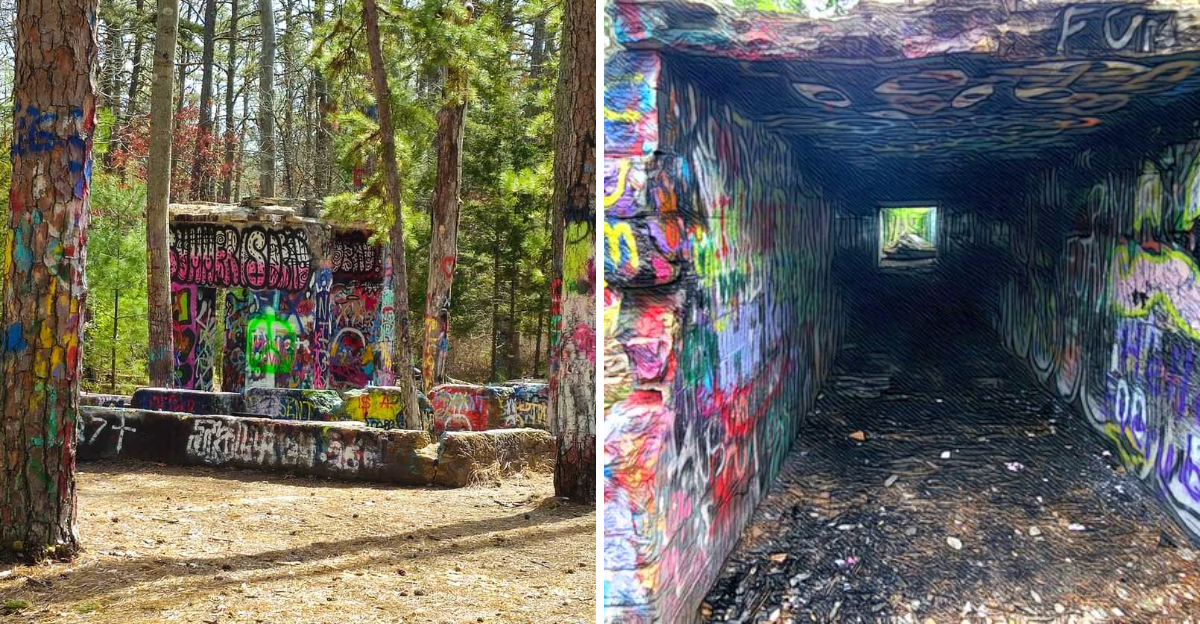
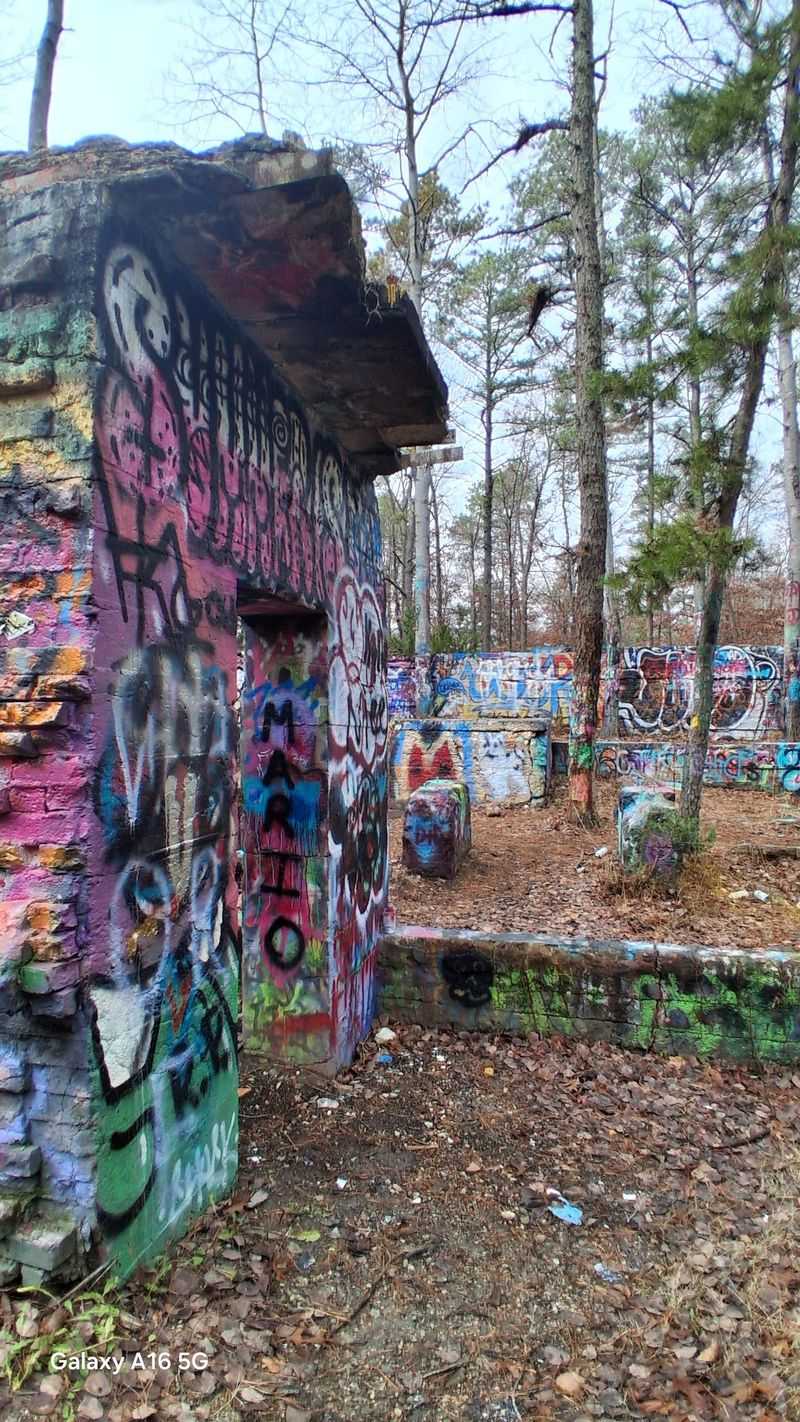
Deep in the Pine Barrens of Manchester Township sits a ruin that locals know well but rarely discuss openly. The Brooksbrae Brick Factory stands as a monument to industrial ambition that never quite materialized, its crumbling walls now covered in layers of vibrant graffiti.
Built in 1905 with grand plans to produce thousands of bricks daily, the factory never fulfilled its purpose, and today it exists as an eerie landmark that draws photographers, hikers, and those curious about New Jersey’s forgotten places.
The Forgotten Brooksbrae Brick Factory
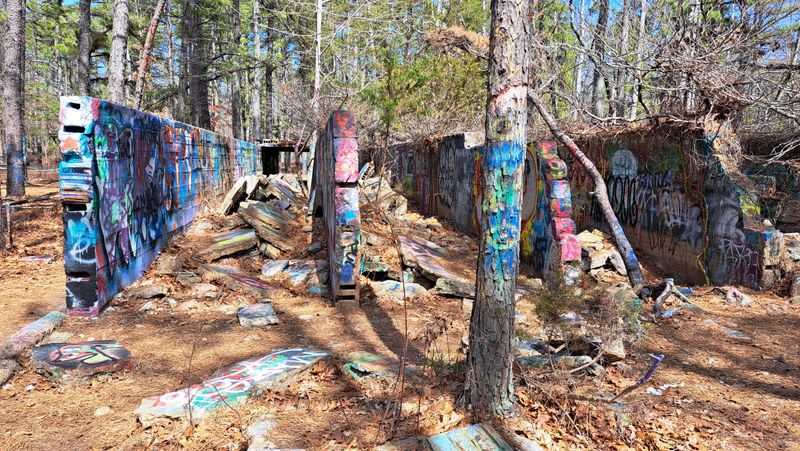
William Kelly had ambitious plans when he established the Brooksbrae Brick Factory in 1905 to support the Adams Clay Mining Company. The facility was designed to churn out thousands of clay bricks each day, capitalizing on the rich clay deposits found throughout the Manchester Township area.
Production goals were set high, workers were hired, and machinery was installed with confidence.
Kelly’s sudden death brought everything to a grinding halt before operations could properly begin. The estate became frozen in legal limbo, leaving the factory in a state of suspended animation.
Railroad workers nearby went on strike, further complicating any attempts to revive the dormant operation.
A devastating fire later swept through the already troubled site, and decades of harsh New Jersey summers and brutal winters finished what the flames started. Located off Pasadena Road near VHQ5+X9 in Manchester Township, the factory now stands as a shell of what might have been, its original purpose never realized despite considerable investment and preparation.
Why The Brooksbrae Brick Factory Still Haunts Locals
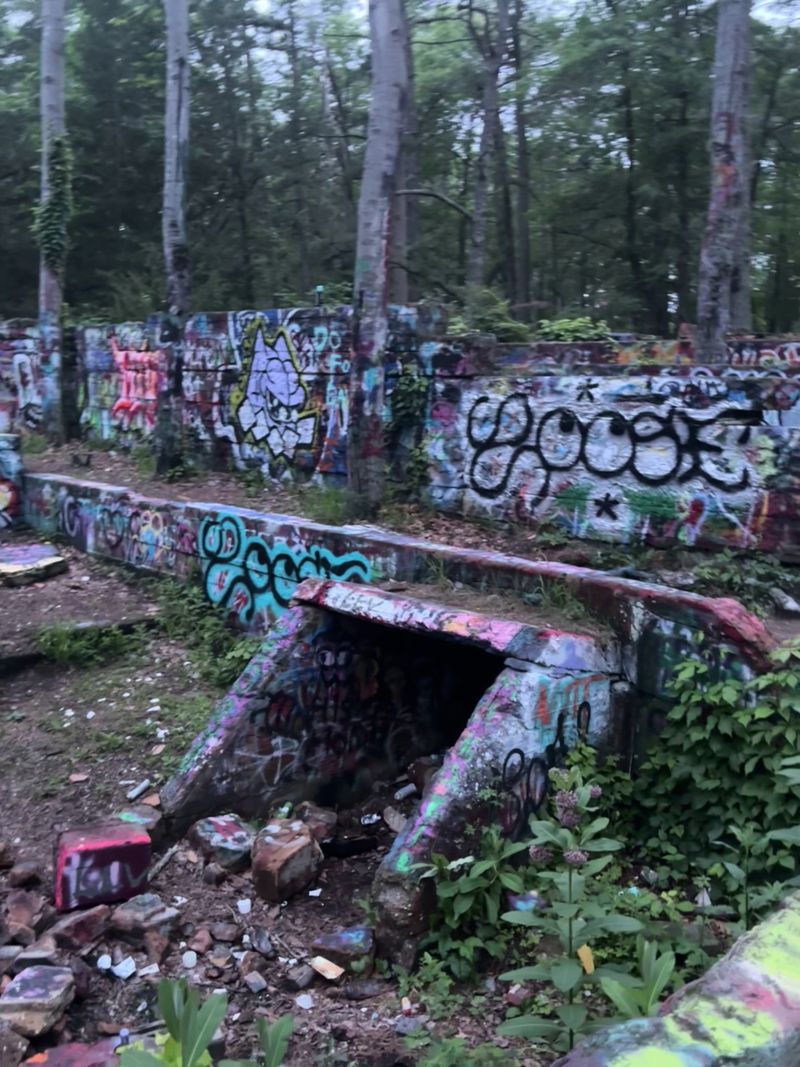
Residents of Manchester Township have developed an unusual relationship with the factory ruins over the generations. Many grew up hearing stories about the place from parents and grandparents, tales that blend historical fact with local folklore.
The site’s isolation deep in the Pine Barrens contributes to its unsettling reputation among those familiar with the area.
Some visitors report an uncomfortable feeling when exploring the grounds, particularly as daylight fades. The combination of deteriorating industrial architecture, dense surrounding forest, and the knowledge that the factory never served its intended purpose creates an atmosphere that lingers in memory.
Old railroad tracks cutting through the property add another layer to the haunting quality locals describe.
Stories about cryptids and the so-called New Jersey Triangle occasionally mention Brooksbrae in the same breath as other Pine Barrens mysteries. The factory’s failure before it could succeed seems to have marked it in the collective consciousness as a place where things went wrong and never recovered, a physical manifestation of interrupted dreams.
Exploring The Abandoned Brooksbrae Factory
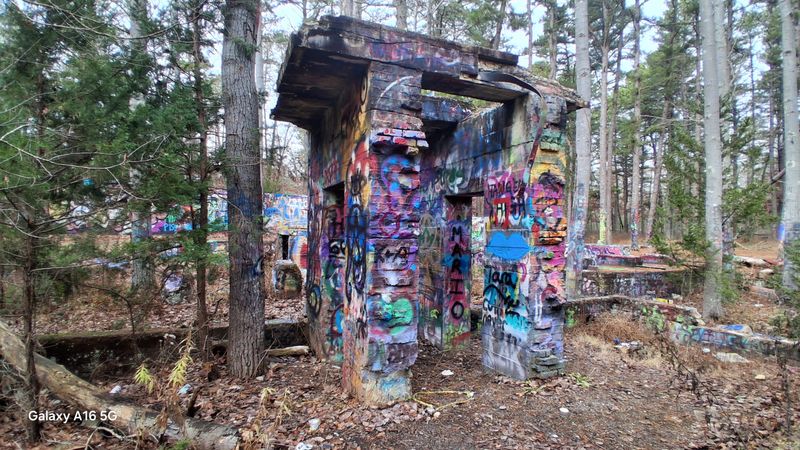
Reaching the factory requires following a specific route that confuses many first-time visitors. Park along Pasadena Road rather than Railroad Avenue, then follow the trail that crosses the old tracks into the woods.
GPS systems often provide misleading directions, and cell service disappears entirely once you enter the area, so preparation matters considerably.
The walk from the road takes only a few minutes, but the transition from pavement to forest to ruins happens quickly. Natural trails wind through the property, allowing visitors to approach the structures from multiple angles.
The out-of-service railroad tracks that once promised to carry thousands of bricks to markets now serve as a landmark for navigation.
Photographers find the site particularly rewarding during golden hour when sunlight filters through the pines and illuminates the graffiti-covered walls. Hikers appreciate the relatively easy terrain and the opportunity to bring dogs along the trails.
The absence of facilities means visitors must plan accordingly, but the brief walk and accessible location make Brooksbrae an attractive destination for those interested in industrial archaeology.
Brooksbrae Brick Factory: Rust And Local Legends
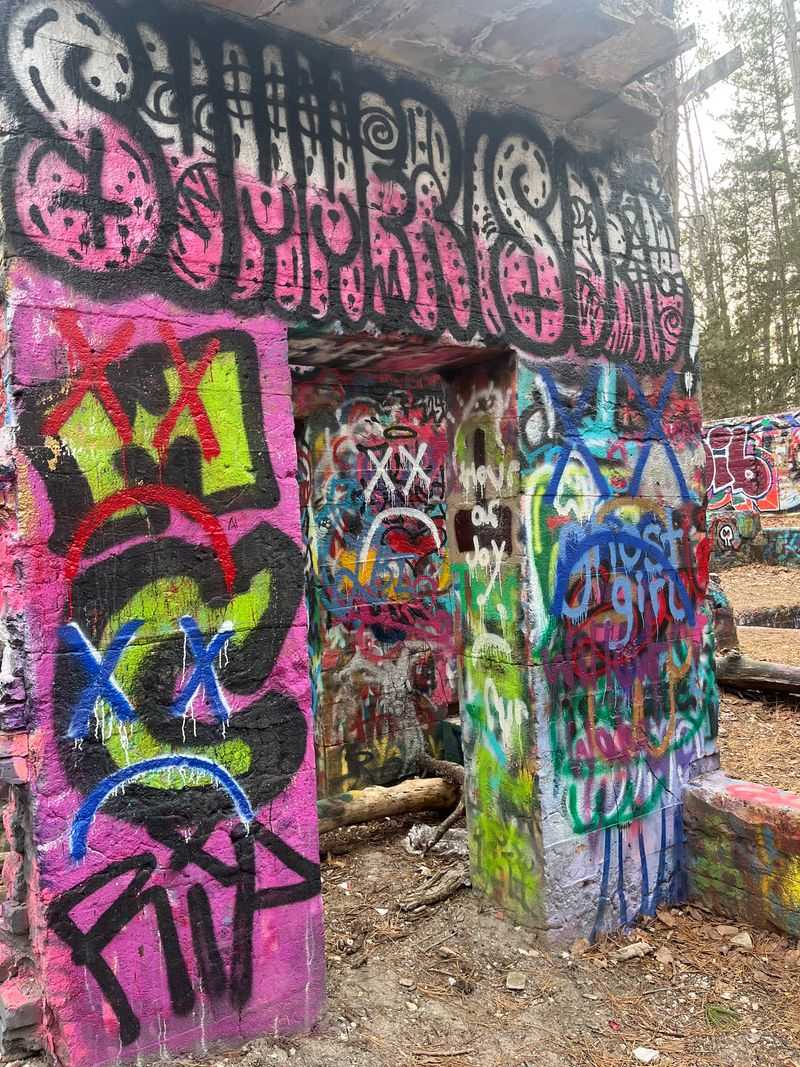
Metal remnants scattered throughout the property tell their own story of abandonment and decay. Rust has consumed whatever machinery was left behind, creating sculptural forms that blend with the brick and vegetation.
These corroded pieces serve as physical evidence of the factory’s brief moment of possibility before everything fell apart.
Local legends have grown around the site over the decades, with each generation adding new layers to the mythology. Some stories focus on workers who supposedly died during construction, though historical records remain unclear on such details.
Others speak of strange sounds heard near the ruins after dark, attributing them to everything from wind through broken walls to more supernatural explanations.
The graffiti that now covers nearly every surface has become part of the legend itself. Artists from across the region have transformed the ruins into an outdoor gallery, their work constantly evolving as new pieces appear and old ones fade.
This unofficial art installation has given Brooksbrae a second life completely different from its intended industrial purpose, creating a cultural landmark from what began as commercial failure.
The Brooksbrae Factory Ruins: An Uneasy Landmark
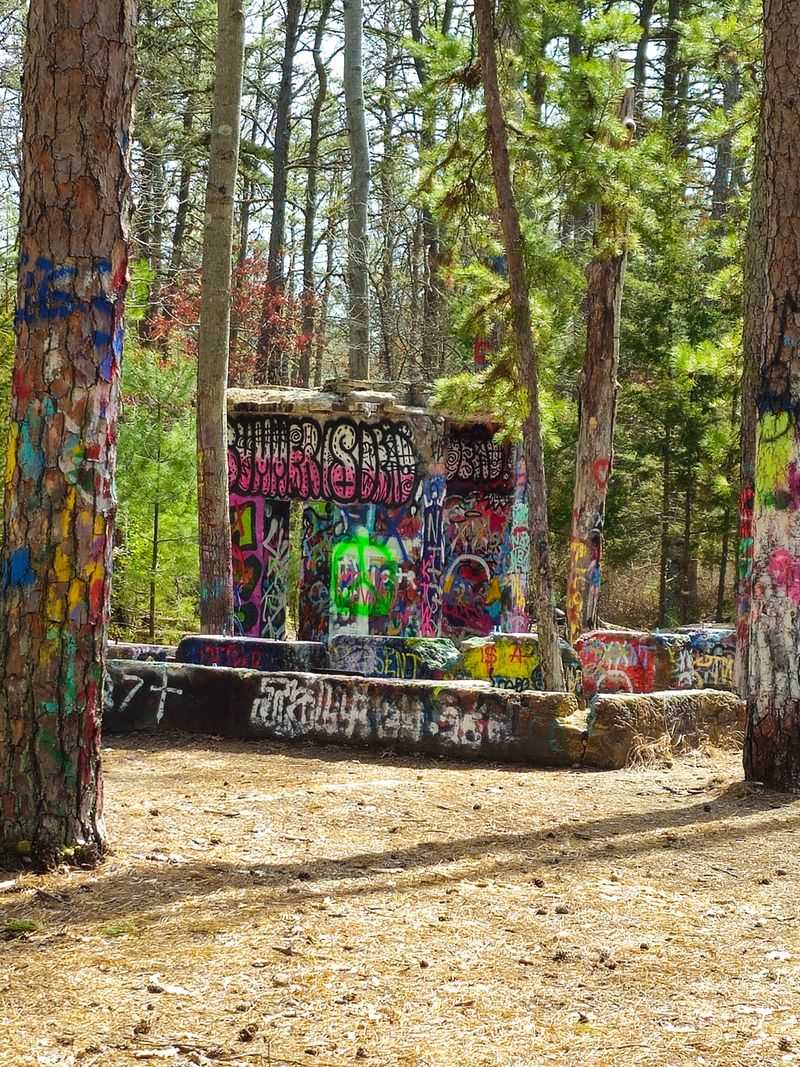
Recognition as a historical landmark brings attention that cuts both ways for the Brooksbrae site. The official designation acknowledges the factory’s place in New Jersey’s industrial history, yet it also highlights a failure rather than a success.
Most landmarks celebrate achievement, but Brooksbrae represents ambition that never materialized, making it an uncomfortable symbol of economic disappointment.
The 4.6-star rating from visitors reflects appreciation for the site’s visual appeal and accessibility rather than any triumphant historical narrative. People come to see colorful graffiti murals and photograph atmospheric ruins, not to celebrate brick production or industrial innovation.
This disconnect between intended purpose and actual legacy creates tension in how the site is understood and discussed.
Manchester Township residents often have mixed feelings about the attention Brooksbrae receives. Pride in having a recognized landmark competes with awareness that it represents a troubled past.
The factory never contributed to local prosperity as planned, never employed the workers it promised, never became the economic engine Kelly envisioned when he broke ground in 1905.
What Brooksbrae Factory Tells Us About NJ’s Decline
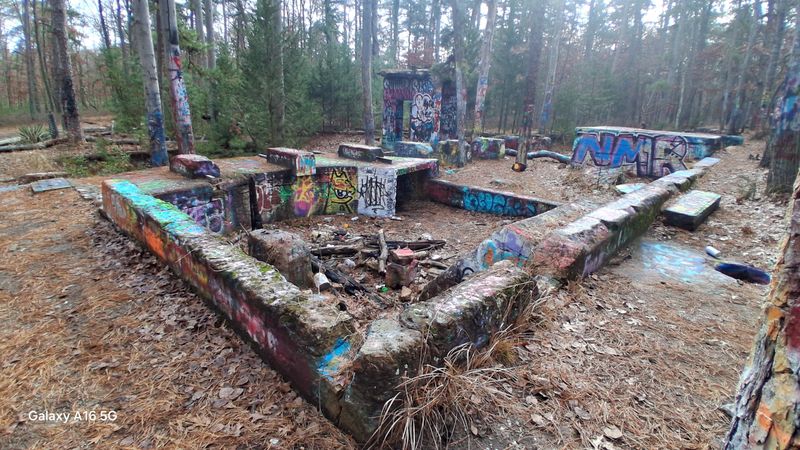
Industrial optimism characterized New Jersey at the turn of the twentieth century, with factories and mills sprouting across the state. The Brooksbrae project fit perfectly into this pattern of expansion and confidence in manufacturing’s future.
Clay deposits, railroad access, and available labor all suggested the venture would succeed as similar operations had elsewhere in the region.
Kelly’s death exposed how fragile these enterprises could be, particularly when dependent on a single individual’s vision and management. The frozen estate and subsequent complications revealed systemic vulnerabilities in how industrial development proceeded during that era.
Labor disputes and infrastructure problems compounded the situation, demonstrating how quickly promising ventures could collapse.
Brooksbrae’s failure foreshadowed larger patterns of industrial decline that would eventually affect much of New Jersey. Manufacturing that once seemed permanent proved temporary, leaving behind ruins like this factory as evidence of economic transitions.
The Pine Barrens now contain multiple such sites, each telling a similar story of ambition, investment, initial confidence, and ultimate abandonment as industries shifted and populations moved elsewhere.
Why Locals Avoid The Brooksbrae Factory After Dark
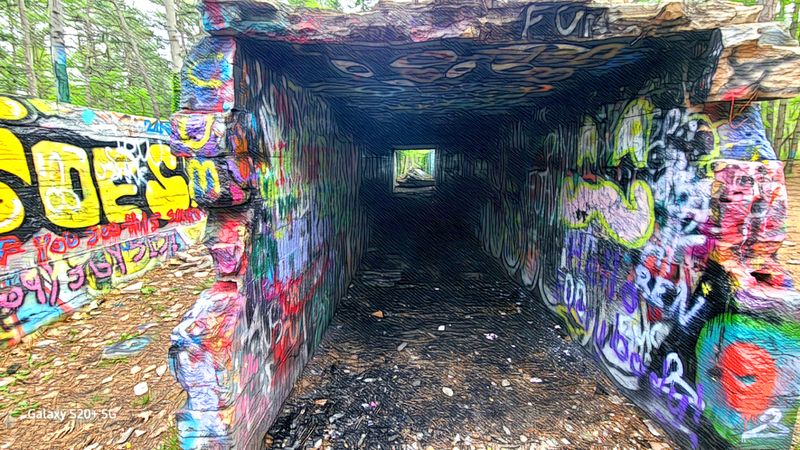
Practical concerns explain much of the reluctance to visit Brooksbrae after sunset. Complete absence of lighting combined with uneven terrain and crumbling structures creates genuine safety hazards once visibility drops.
The trails that seem straightforward in daylight become confusing in darkness, and the lack of cell service means help cannot be summoned if problems arise.
Beyond practical considerations, the atmosphere changes dramatically as night approaches. Sounds from the surrounding Pine Barrens take on different qualities, and the graffiti-covered walls that appear vibrant and artistic in sunlight become vaguely threatening in shadow.
The knowledge that the factory represents interrupted plans and unfulfilled purpose adds psychological weight to the physical environment.
Stories passed down through generations have created a cultural understanding that Brooksbrae is a daytime destination. Parents warn children away from the ruins at night, and even adults who dismiss supernatural explanations tend to schedule their visits for daylight hours.
This collective avoidance has become self-reinforcing, with the site’s emptiness after dark confirming the wisdom of staying away when the sun goes down.
The Hidden History Of Brooksbrae Brick Factory
Adams Clay Mining Company saw opportunity in the Manchester Township clay deposits and invested accordingly in processing infrastructure. The Brooksbrae factory represented a vertical integration strategy, allowing the mining company to control both extraction and manufacturing.
This business model made economic sense and had succeeded elsewhere in New Jersey and neighboring states.
Construction proceeded through 1905 with Kelly overseeing every detail of the operation. Workers installed kilns, built storage facilities, and prepared the site for continuous production.
The railroad connection was secured, ensuring finished bricks could reach markets throughout the region. Everything appeared ready for the operation to begin generating revenue and employment.
Historical records from the period remain incomplete, leaving gaps in the full story of what happened after Kelly’s death. Legal documents suggest complex estate issues that prevented quick resolution, but specifics are difficult to verify.
The fire that later damaged the facility is mentioned in various accounts but rarely with precise dates or details about its cause or extent. What remains certain is that the factory never produced bricks commercially, leaving only ruins and questions about what might have been.