
The Beautiful Coastal Bluff Walk In Alaska That Still Feels Like An Untouched Wilderness Experience
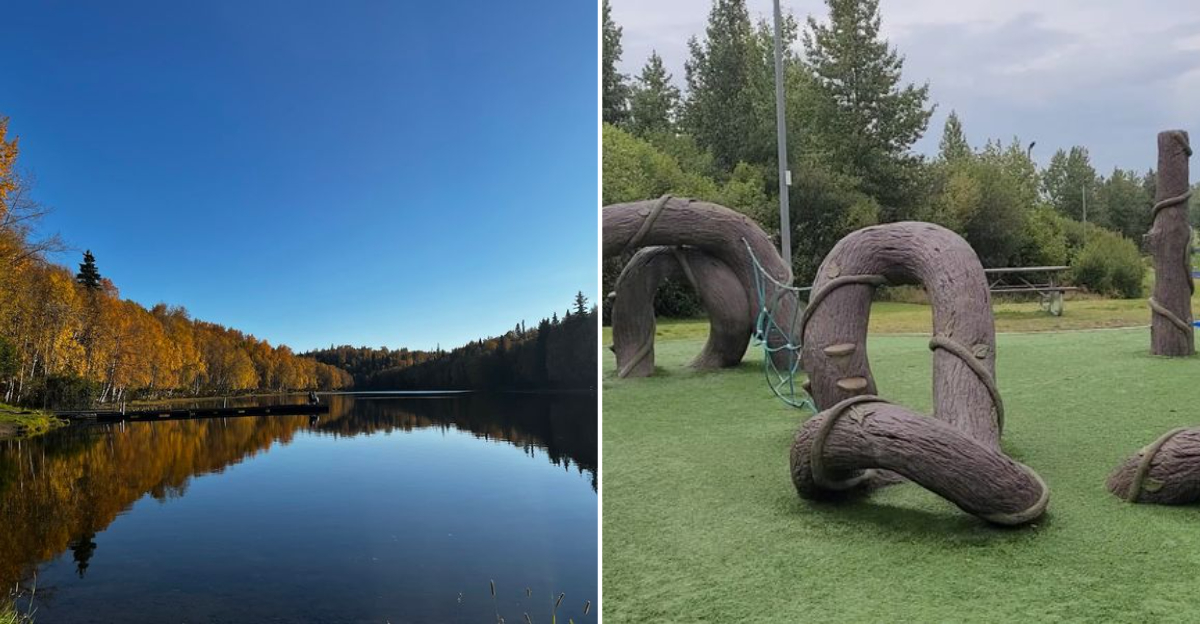
Most trails in Alaska come with a reputation attached. This one arrives without any introduction at all.
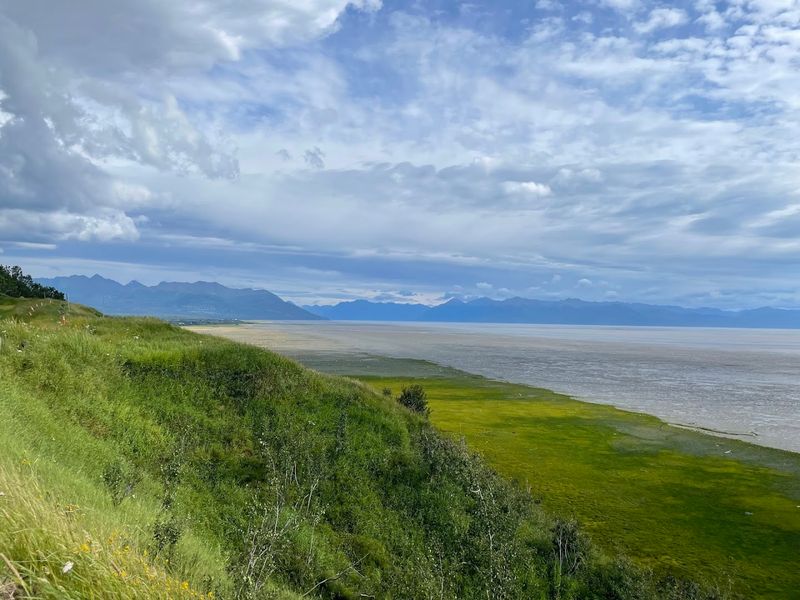
The bluff opens up gradually, the tree line pulling back just enough to reveal what the coastline is actually doing out here. Water stretches in every direction with nothing built on it and nothing interrupting it.
Footprints in the mud are the only evidence that anyone has passed through recently. Alaska has a way of making humans feel appropriately small, but this particular walk does it more quietly than most.
The kind of place that doesn’t appear on the first page of any search result. The people who know it found it through someone else who knew it, and the chain of that knowledge stays deliberately short.
Flora And Fauna Unique To The Coastal Bluff
This park hosts a surprisingly rich mix of plant life that you would not expect so close to a major city. Birch and spruce trees dominate the forested sections, creating a canopy that feels genuinely wild.
Willow thickets grow thick along the lower trail sections, providing natural cover for all kinds of creatures.
Wildflowers pop up along the bluff edges during summer, adding bursts of color against the gray-blue backdrop of Cook Inlet. Fireweed is especially dramatic here, painting entire hillsides in deep pink.
Cottonwood trees add a snowy, dreamy texture to the air on warm days.
The fauna matches the flora in diversity and surprise. Snowshoe hares dart across the trail without warning.
Porcupines cling to tree trunks like they are auditioning for a nature documentary. Foxes and lynx have both been spotted moving quietly through the brush at dawn.
River otters occasionally appear near the water below the bluffs, sliding around like they have nowhere important to be. Owls perch silently in the spruce canopy, watching everything.
The park spans roughly 1,400 to 1,500 acres on the western tip of Anchorage, and every acre seems packed with life. You can find the trailhead at 9401 Raspberry Rd, Anchorage, AK 99502.
The biodiversity here genuinely rivals far more remote Alaskan wilderness areas.
Seasonal Weather Patterns And Their Impact On The Trail
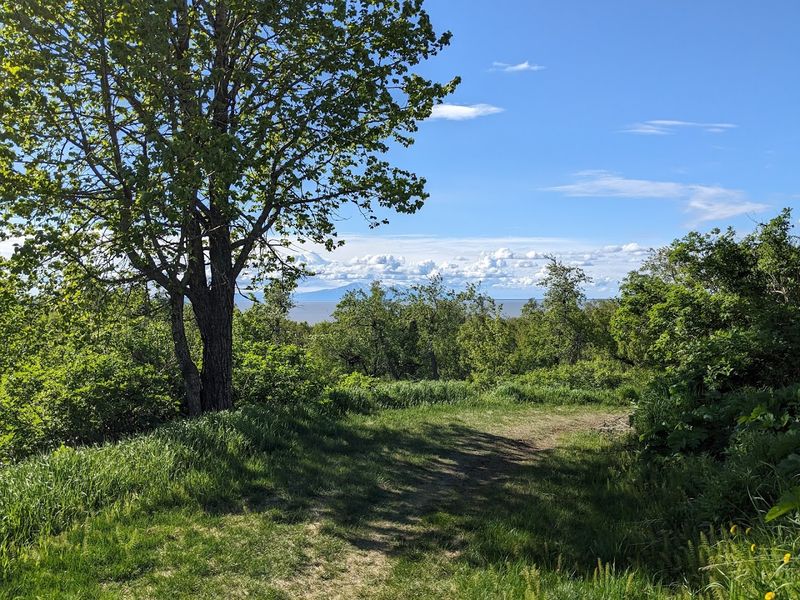
The weather at Kincaid Park changes the entire personality of the trail depending on when you visit. Summer brings long daylight hours, sometimes stretching past 10 PM, which means you can hike well into the evening.
The bluff trail stays relatively dry during July and August, making footing easier on the steeper sections.
Fall arrives fast in Anchorage, usually by late September. The birch trees turn gold almost overnight, and the bluffs become genuinely stunning.
Wind picks up considerably along the exposed cliff edges, so bring a jacket even if the parking lot feels warm.
Winter transforms the park into something almost magical. Snow covers the rolling terrain, and the bluff views become stark and cinematic.
Ice can form on the more rugged goat-path sections near the 300-foot bluffs, so traction devices on your boots are a smart call. Spring is muddy and unpredictable.
Trails soften significantly as snowmelt works through the soil. Some sections become slippery enough to slow your pace considerably.
The park opens daily from 10 AM to 10 PM year-round, which means you can catch golden evening light during most seasons. Rain is common across all seasons here.
Layering your clothing is simply non-negotiable. The weather shifts quickly near the inlet, and what starts as sunshine can become a cold drizzle within an hour.
Wildlife Sightings You Can Expect Along The Path
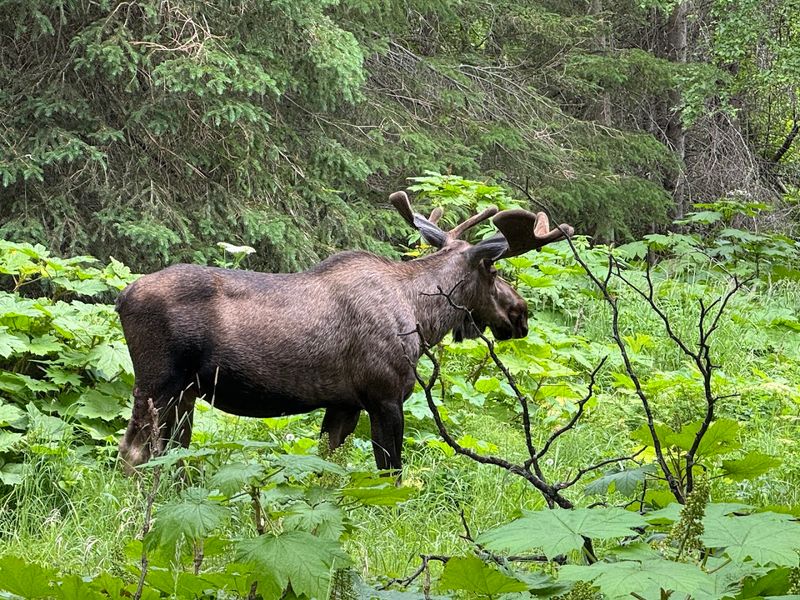
Moose are practically the park mascots at Kincaid, and spotting one is less a question of if and more a question of when. They wander through the birch-spruce forest and willow thickets with zero concern for hikers nearby.
Seeing a bull moose standing at full height just off the trail is one of those moments that stops you completely cold.
Black bears also frequent the park, especially during summer berry season and fall when they are actively feeding before winter. Bald eagles circle overhead regularly, riding thermals above the bluffs with effortless confidence.
Sandhill cranes have been spotted in the open fields, which is an unexpected treat.
One of the most surprising wildlife moments at Kincaid involves looking down from the bluffs toward Cook Inlet. Beluga whales occasionally swim close enough to the shore to be visible from the trail during high tide.
That is not something most urban parks can offer. Foxes move through the brush at the edges of open meadows, usually just before dusk.
Songbirds fill the trees with noise throughout spring and summer. The wildlife density here is genuinely high for a park this close to an airport and city center.
Pay attention to posted signs about active moose with calves. Give all animals significant space.
The trail rewards patient, quiet walkers far more than those moving fast.
Trail Maintenance And Preserving The Natural Environment
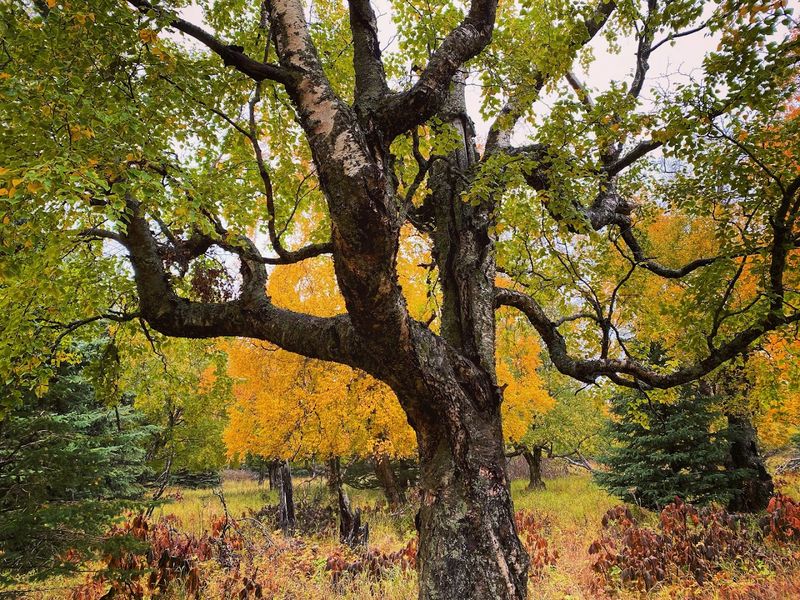
Parts of the Kincaid Bluff Trail are intentionally left in a raw, natural state. Dirt paths with exposed roots, fallen logs, and tall grass are common along the more rugged sections.
This is not neglect. It is a deliberate choice to preserve the wilderness character that makes this place worth visiting.
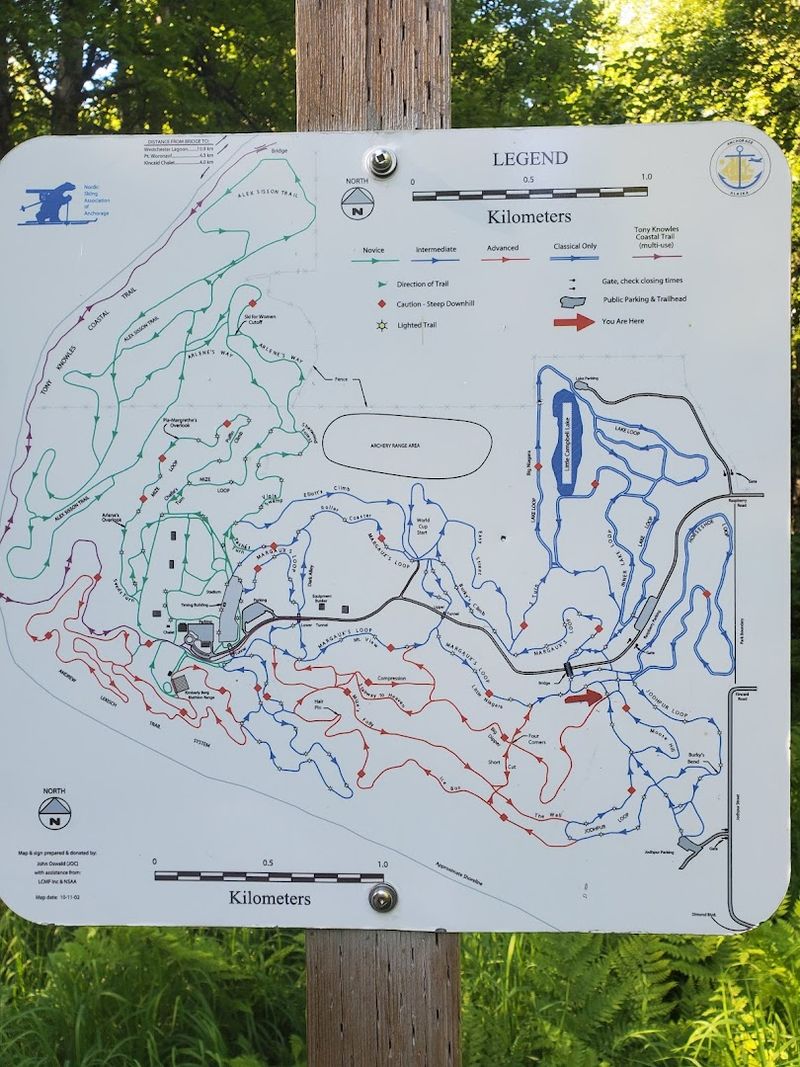
The park does maintain its primary trail network, which stretches over 35 miles in total. Groomed sections coexist alongside the rougher goat-path trails near the bluff edges.
The contrast between the two experiences is actually part of what makes Kincaid interesting to explore over multiple visits.
Visitors play a real role in keeping this environment intact. Staying on marked trails prevents erosion along the fragile bluff edges.
Packing out all trash is expected and genuinely matters here. The coastal bluff ecosystem is sensitive to foot traffic that strays off designated paths.
The municipality of Anchorage manages the park and works to balance access with conservation. You can reach the parks department at 907-343-6397 with questions about trail conditions.
Respecting wildlife by keeping safe distances also contributes to preserving natural animal behavior patterns. The park website at muni.org provides current trail status updates.
Kincaid feels untouched because people who visit tend to treat it that way. That shared responsibility is what keeps the bluff walk feeling like genuine wilderness rather than a worn-out urban trail.
Photography Tips For Capturing The Coastal Scenery
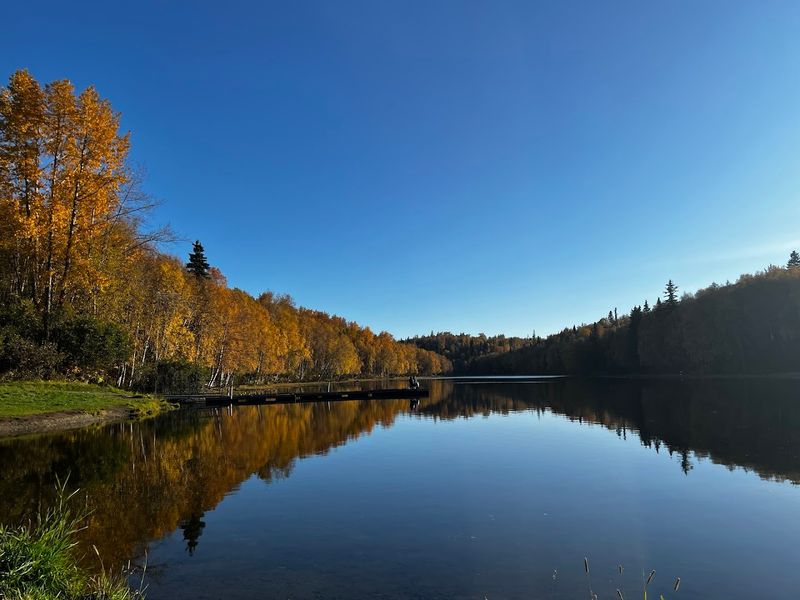
The coastal bluff at Kincaid offers some of the most dramatic photography compositions in all of Anchorage. Cook Inlet stretches wide in the foreground, with Fire Island sitting mid-frame and Mount Susitna rising in the background.
On clear days, Denali appears on the horizon like a rumor that turns out to be true.
Golden hour here is legitimately spectacular. The low sun angle during Alaskan evenings casts long shadows across the bluff terrain.
Arriving around 8 PM in summer gives you warm light that makes the inlet water look almost bronze. A wide-angle lens captures the full panoramic scope of the scene.
A telephoto lens is essential for wildlife shots, especially moose in the forest below the bluff.
Overcast days actually work well for landscape photography here, too. Flat light reduces harsh shadows and brings out the deep greens of the spruce canopy.
Fog rolling off the inlet creates a moody, atmospheric quality that is hard to replicate in editing. Shoot from the elevated bluff sections for the strongest compositional depth.
Include the trail itself as a leading line into the frame. Early morning visits reward you with quieter conditions and better wildlife activity near the path.
Bring a waterproof camera bag because coastal mist is common. Stabilizing your shot matters more on windy bluff edges than anywhere else on the trail.
Historical Significance Of The Coastal Bluff Region
Kincaid Park carries a history that most casual visitors walk right past without realizing it. During the Cold War, the site housed Nike missile installations designed to defend Anchorage from potential aerial threats.
The remnants of those bunkers still exist within the park, quietly sitting among the trees and open fields.
Before the Cold War era, the land was part of the broader Anchorage coastal landscape shaped by glacial activity thousands of years ago.
The bluffs themselves are glacial moraines, meaning they were literally built by ancient ice sheets depositing sediment as they retreated.
That geological history is visible in the varied terrain of rolling hills and rugged cliff faces.
Indigenous peoples of the Cook Inlet region have connections to this coastline stretching back far longer than any modern development. The Dena’ina Athabascan people traditionally used these coastal areas for fishing, hunting, and travel.
Understanding that layered history adds a different kind of weight to walking the bluff trail. The park also served as a site for the 1994 World Nordic Ski Championships, cementing its identity as a place of athletic and cultural significance.
The Tony Knowles Coastal Trail, which terminates at Kincaid, was named after a former Anchorage mayor and Alaska governor. History here is not confined to museums.
It lives in the land itself, in the bunkers, the bluffs, and the trails that connect them all.
Safety Precautions While Exploring Remote Wilderness Areas
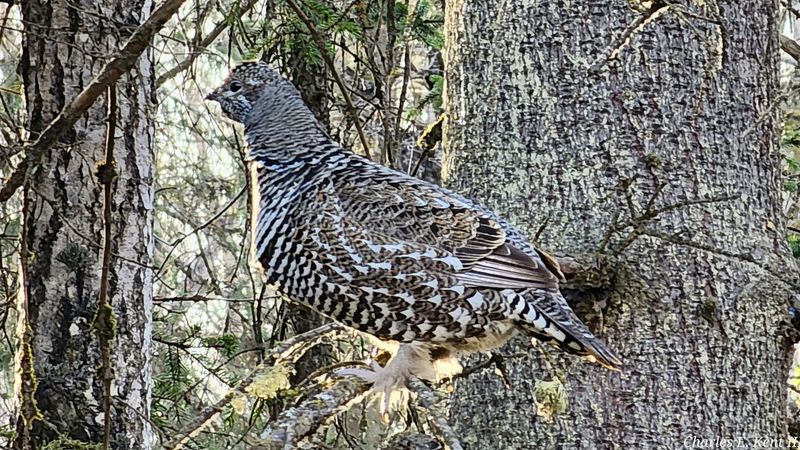
Bear spray is not optional at Kincaid Park. Black bears are active throughout the warmer months, and the dense vegetation along the bluff trail limits your sightlines considerably.
Carry it accessible on your hip, not buried in a backpack. Making noise while hiking helps animals hear you coming before you surprise them.
Moose encounters require a different approach than bear encounters. Never position yourself between a cow moose and her calf.
Back away slowly and give the animal a wide berth. Moose can move faster than you expect and have no particular patience for hikers who crowd them.
Signs posted around the park alert visitors when a moose with a calf has been spotted in a specific area.
The bluff edges are steep and in some sections reach 300 feet above the inlet. Stay well back from unstable cliff edges, especially after rain when the soil loosens.
The goat-path trails require sure footing and attention. Wearing sturdy, ankle-supporting footwear matters more here than on the groomed trail sections.
Tell someone your planned route before heading out on the longer bluff sections. Cell coverage can be inconsistent in the denser forested areas.
Bring water, a snack, and a basic first aid kit on any hike longer than one hour. The park closes at 10 PM daily, so plan your return with enough daylight buffer to navigate safely.
Accessibility And Facilities Near The Coastal Trailhead
Getting to Kincaid Park is straightforward from most parts of Anchorage. The park sits near the international airport, making it a surprisingly convenient stop even for travelers with a few hours between flights.
Parking is free and plentiful across multiple lots within the park boundaries.
Clean restrooms are available near the main parking areas, which is genuinely appreciated after a long hike back from the bluffs. The park chalet serves as a central hub for visitors and provides additional facilities during busy seasons.
Paved paths connect the parking areas to the main trail network, making the initial access point easy for most fitness levels.
The Tony Knowles Coastal Trail provides a well-maintained paved route for those who prefer a smoother surface before venturing onto the rugged bluff sections. Cyclists and hikers share this path, so staying aware of faster-moving bikes is worthwhile.
The park spans enough acreage that even on busy weekend days, crowding rarely becomes a real problem once you move beyond the main trailhead area. Lighting along a third of the trail network extends usability into darker fall and winter evenings.
The park operates daily from 10 AM to 10 PM, giving visitors a solid window for morning, afternoon, or evening exploration. For specific trail condition updates or facility questions, the parks department is reachable at 907-343-6397.
Disc golf, soccer fields, and archery ranges round out the recreational options for those bringing the whole family.