
The Giraffes Walk Right Up To The Bus At The Wilds In Southeastern Ohio
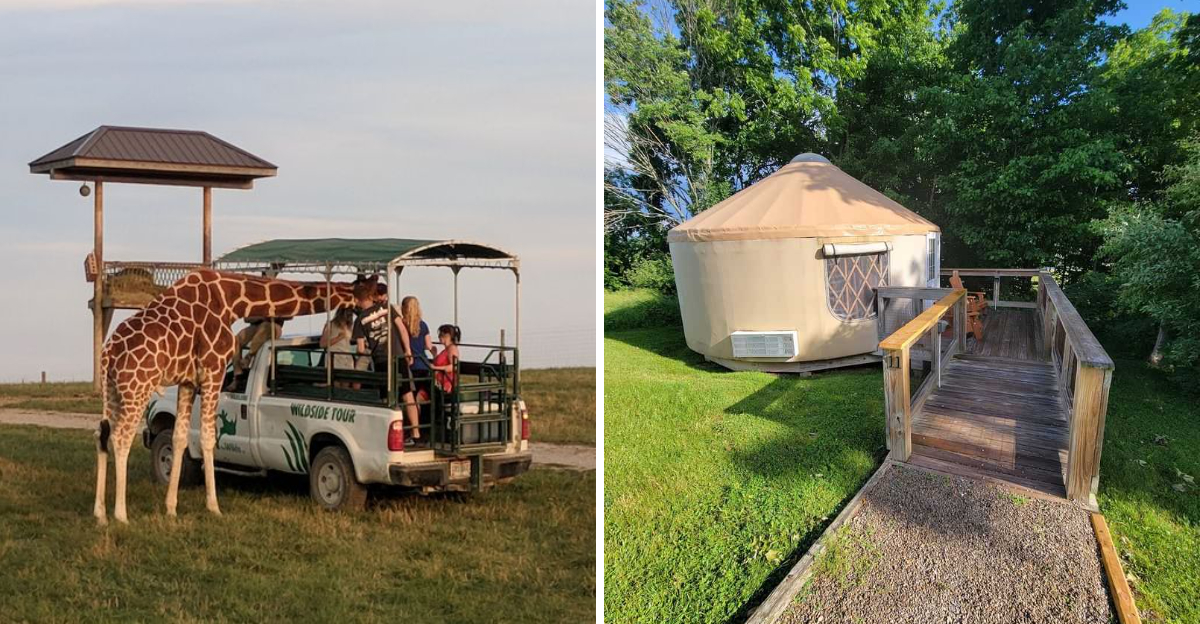
Somewhere in the rolling backcountry of southeastern Ohio, the road narrows, the gas stations disappear, and the hills start looking less like farmland and more like open savanna. Then a giraffe leans its head toward your tour bus, and you have to remind yourself which state you are in.
Nearly 10,000 acres of former strip mine have been reshaped into one of North America’s largest conservation centers, where rhinos, ostriches, and giraffes roam pastures big enough to lose sight of them. It is the kind of place that sounds unlikely until you are sitting on that bus with your camera up.
Ten Thousand Acres in Muskingum County
Set at 14000 International Rd in Cumberland, Ohio, The Wilds spreads across nearly 10,000 acres of southeastern Muskingum County. It is a safari park and conservation center, managed by the Columbus Zoo and Aquarium, and counted among the largest facilities of its kind in North America.
The scale is the first thing that registers. Rather than pathways looping past enclosures, you board a vehicle and travel through pastures where rare and endangered animals move as they please.
Giraffes, rhinos, ostriches, camels, and zebras share those hills, and where they happen to be standing on any given day is entirely up to them. One guest who lives nearby noted that animals shift around constantly, so two visits rarely look the same.
Getting there takes some planning. Visitors consistently warn that the area is remote, with the nearest fuel roughly 17 miles away, and staff mention this when you book.
Many people base themselves in Zanesville, about a 30-minute drive, and describe the countryside approach as part of the appeal rather than a chore to endure.
From Strip Mine to Sanctuary
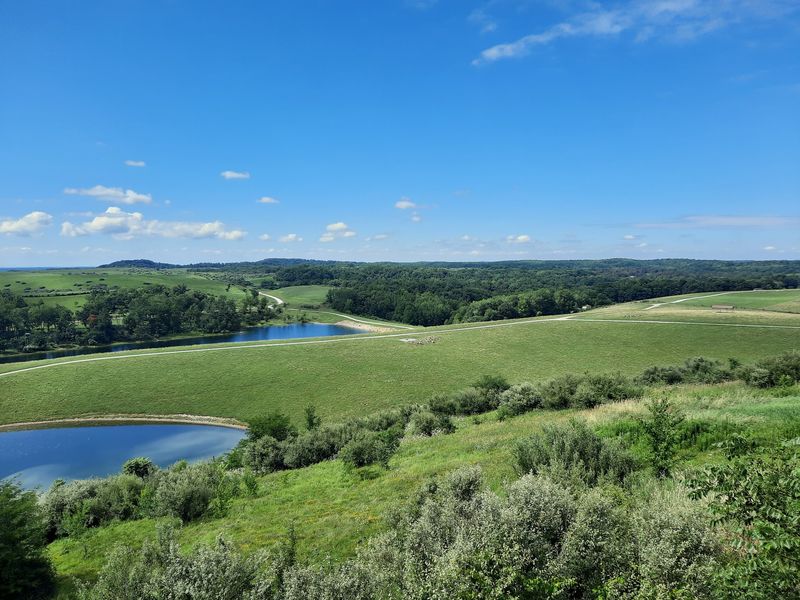
Coal shovels once worked this ground. The land beneath the pastures was formerly a strip mine, and its transformation into grassland habitat is arguably as remarkable as the animals grazing on it.
Guests who take the time to listen to the guides often say the land’s backstory rivals the wildlife for interest. Rolling hills, scattered lakes, and reclaimed meadows now support herds that would have had nowhere to go otherwise.
Conservation science sits at the center of everything here. The Wilds runs breeding and research programs for species with dwindling populations, along with education initiatives for schools and visiting groups.
Rhinos come up in conversation more than almost anything else. Visitors repeat what guides tell them: outside of Africa, this is one of the most successful rhino conservation operations anywhere, and the mentions of rhinos in guest feedback run into the hundreds.
Guides explain that the long-term goal for some animals involves returning them to native ranges. One guest noticed the pastures felt sparse at moments, then learned that the emptiness is intentional.
Space is the whole point.
The Open-Air Safari and Its Converted School Buses
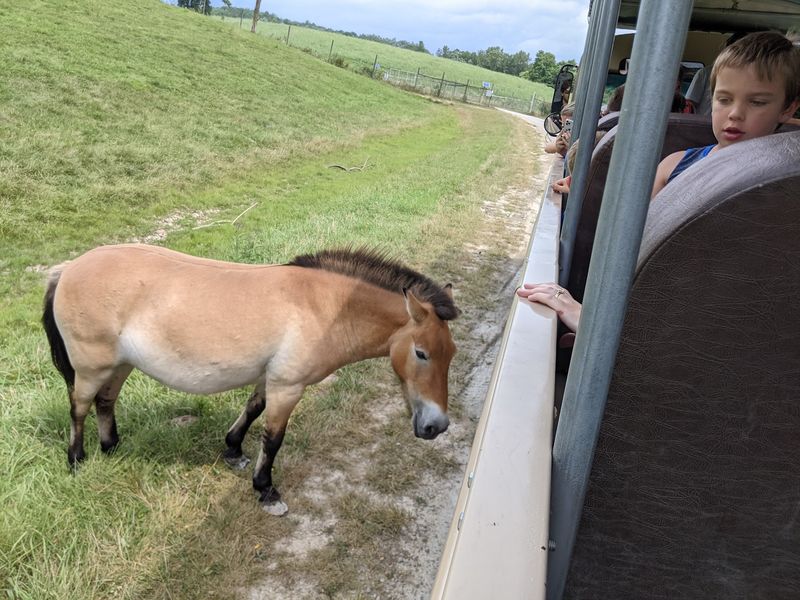
Picture a school bus with the sides opened up, rumbling along a gravel road while a guide narrates over the engine. That is the Open-Air Safari, the signature tour and the one most first-timers choose.
Runs last roughly two to two and a half hours and operate daily from May 1 through October 31. The vehicle stays on the roadway, but the animals face no such rule.
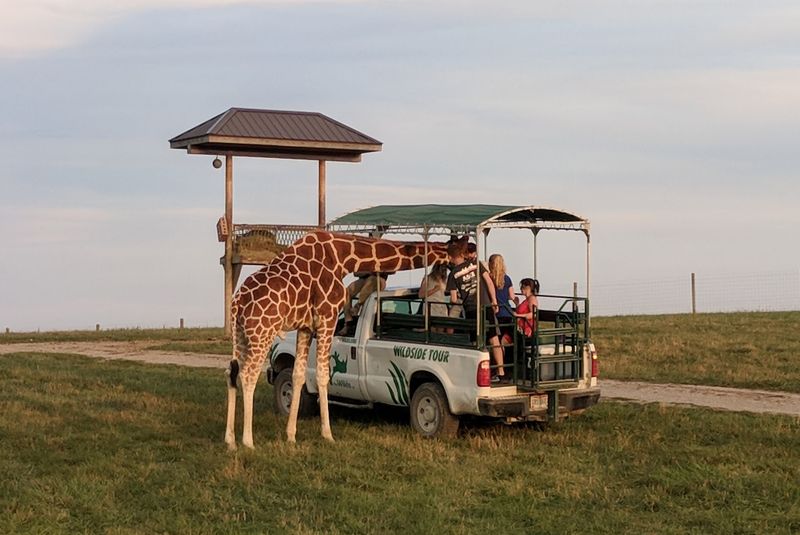
Giraffes routinely wander over to investigate the bus, sometimes stopping close enough that passengers get eye-level views. One visitor described a giraffe trotting after the bus for a short stretch as it pulled away, which is not a sight you forget.
Guides stop frequently, cut the engine, and let people look and photograph without rushing. Guests mention drivers who pack the ride with facts and trivia and still keep the mood light, even when a downpour rolls through mid-tour.
Halfway along, there is a refreshment stop that requires stepping off the bus and walking a bit. Anyone with mobility concerns should flag it when booking.
Wildside Tour: Off the Road, Closer to the Herd
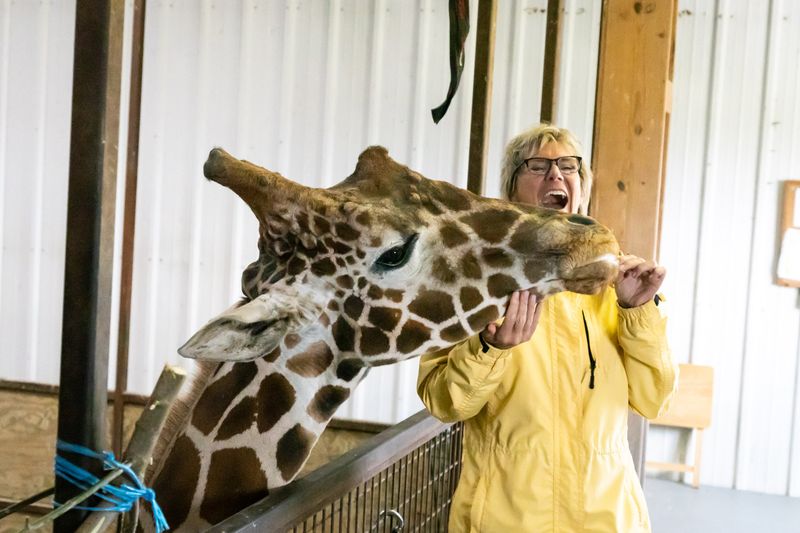
Want to leave the gravel behind? The Wildside Tour swaps the bus for a specially modified four-wheel-drive truck that heads off-road, threading between herds instead of passing them at a distance.
Guides park, talk, and give everyone room to soak it in. Guests describe petting camels and rhinos and hand-feeding giraffes, all in the same outing, with the guide pulling right up alongside the animals.
Camels apparently have a reputation for being the friendliest of the bunch, leaning in without much prompting. Feeding giraffes shows up in dozens of visitor accounts and tends to be the moment people talk about afterward.
Some folks like it enough to book twice. One party did a Wildside tour in the evening and another the next morning, and because the animals had relocated overnight, the second trip delivered a different lineup entirely.
Cold-weather visitors get their own version. From November through April, the Winter Wildside Tour may include feeding giraffes inside their heated barn, which puts you remarkably close to a very tall animal.
Yurts, Ziplines, Horseback Rides and Other Ways to Linger
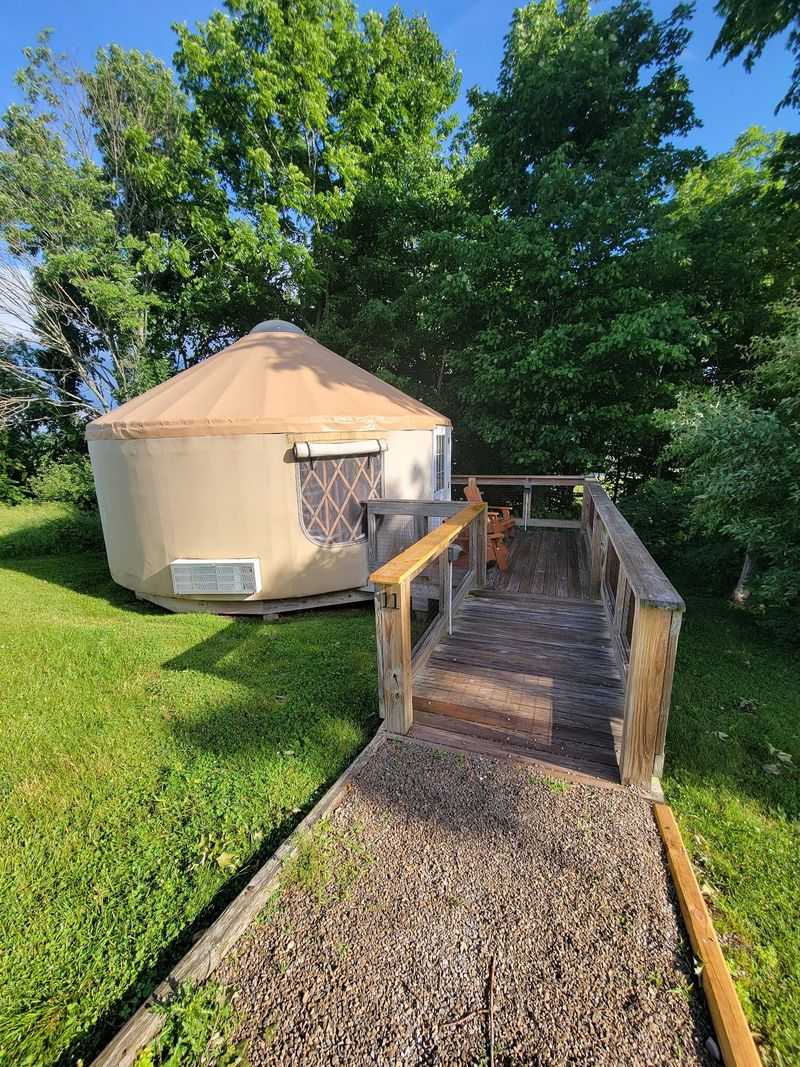
Staying the night changes the whole experience. The yurts overlooking the preserve draw enormous enthusiasm, with well over a hundred guest mentions, and the package includes dinner and breakfast.
Dinner is served by waitstaff from a menu of around eight entrees, and breakfast arrives as a hot buffet. Guests choose between easy, moderate, and difficult walking paths to reach their yurt, and those who take the steeper gravel steps insist the views justify the climb.
Beyond lodging, there are ziplines strung over the landscape, horseback wildlife rides, fishing, and guided sunset outings. Straker Lake accommodations get positive nods too, from people who wanted quiet water and dark skies.
A gift shop and cafe sit at the top of the hill near the tour meeting point, so lunch and souvenirs are covered without leaving.
The recurring regret in guest accounts is not the price or the drive. It is showing up for one tour and realizing too late that a full day, or a full weekend, would have been the smarter plan.
The Mood on Board and Who Enjoys It Most
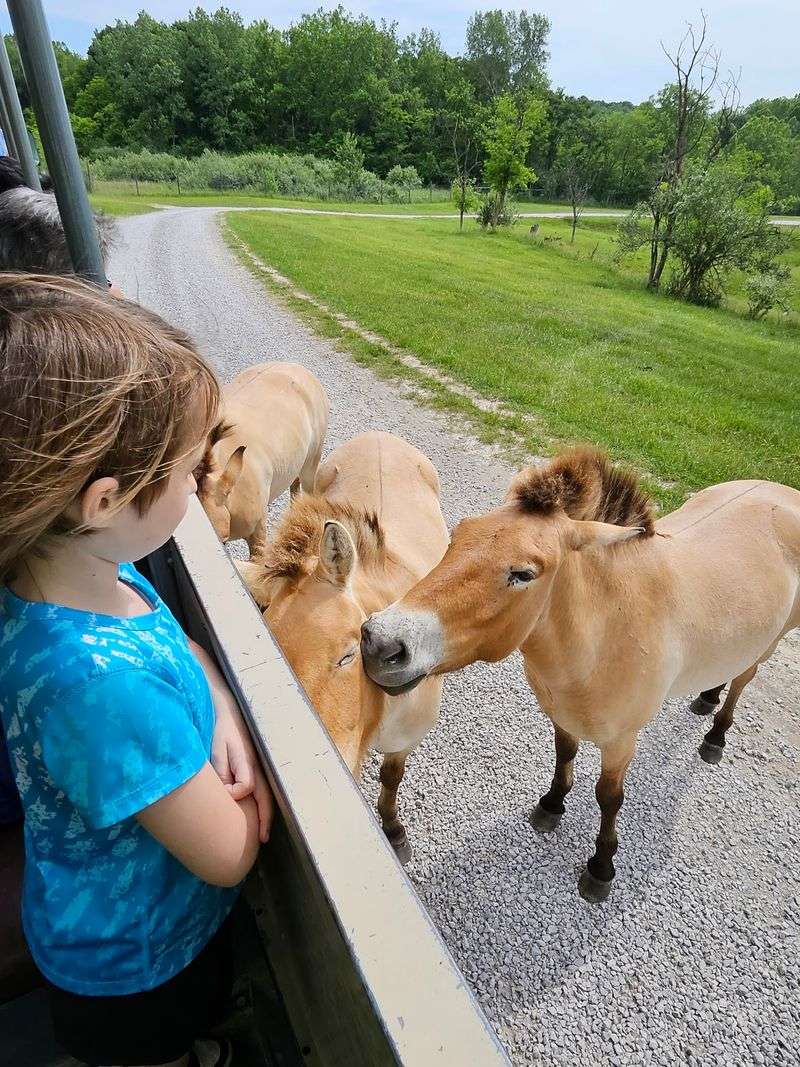
Quiet is the word guests reach for most. Between animal sightings, the loudest thing on the preserve is wind moving through the grass, and several people describe the atmosphere as genuinely peaceful in a way zoos never manage.
Families do well here. A grandparent traveling with a seven-year-old called the day exceptional, and guides seem practiced at reading a group and adjusting their delivery accordingly.
Couples find it works just as well. One pair marked a 19th anniversary with an open-air safari; another described an overnight yurt stay as among their most memorable outings together.
Staff enthusiasm comes up repeatedly, from parking attendants to animal management teams to the guides themselves. Visitors say the crews clearly care about conservation, and that passion tends to be contagious by the time the tour ends.
People arriving with low expectations often leave surprised. A visitor from Texas admitted they had pictured something entirely different and thought Ohio should be proud of what exists out here.
Holding a 4.8-star average across more than 4,200 reviews, the place has plenty of company in that opinion.
Booking, Parking and Practical Details Worth Knowing
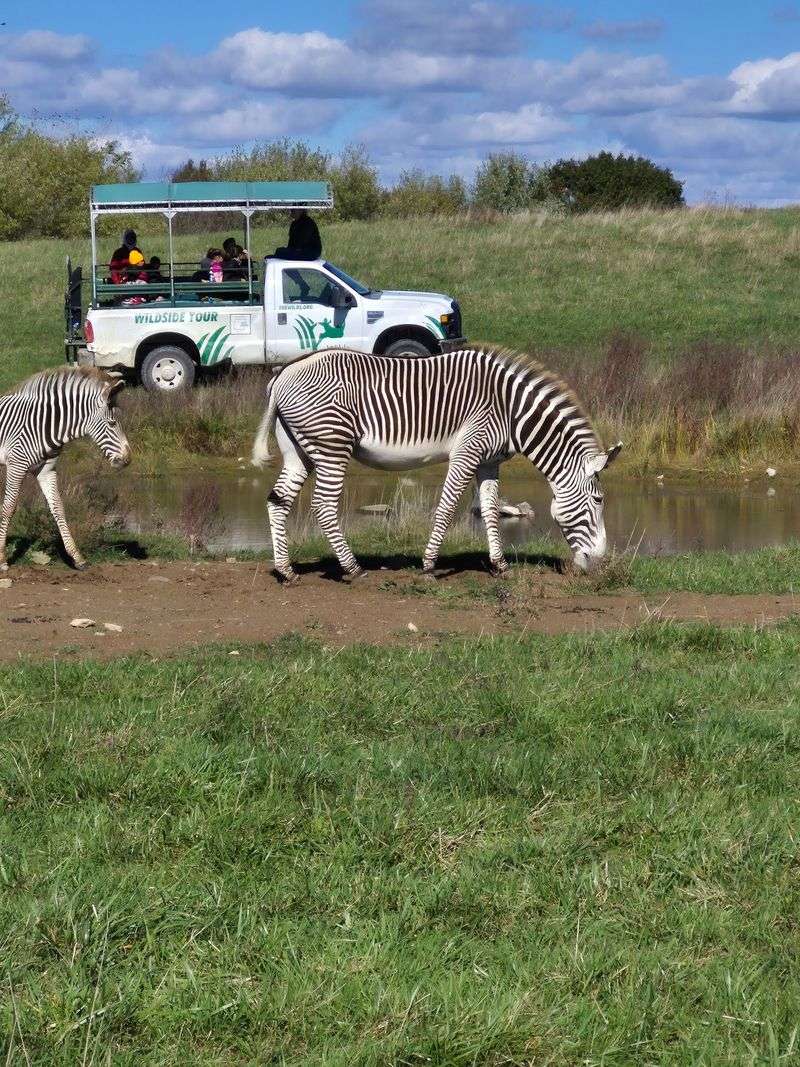
A few logistics make or break the day. Open-Air Safari tours run daily May 1 through October 31 and last about two to two and a half hours, and experienced guests advise reserving your tour time at least four hours ahead to avoid trouble at the gate.
Parking works on two tiers. Leave the car in the lower lot and ride the frequent shuttle up for nine dollars, or park at the top, where tours meet and the cafe and gift shop sit, for thirty dollars.
Most people take the shuttle and report it as quick and painless. The facility is cashless, so bring a card rather than bills.
Fill your tank before heading out. The nearest gas station is about 17 miles away, and staff mention this at booking for good reason.
Weekdays run noticeably calmer than weekends, according to regulars who suggest timing a visit accordingly. Anyone needing accessibility accommodations should mention it when reserving, since the mid-tour refreshment stop involves getting off the vehicle and covering some ground on foot.
Why That Giraffe Encounter Stays With You
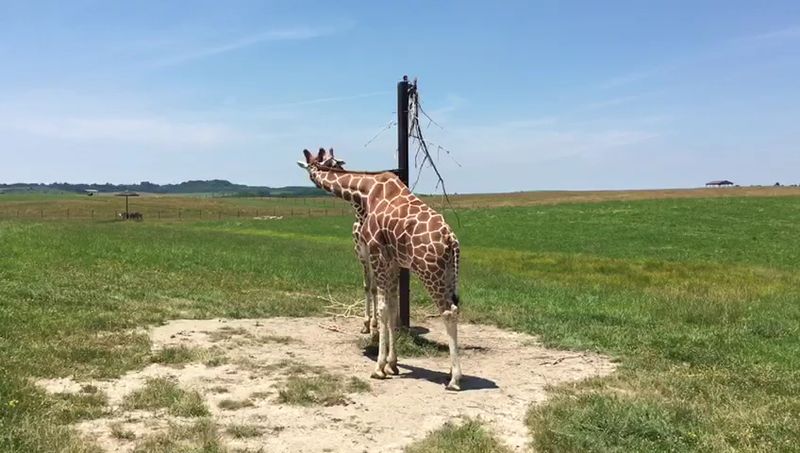
Long after the drive home, the detail people replay is the same: a giraffe’s head arriving at the edge of the bus, unhurried and curious, with nothing but open air between you.
That moment carries weight because of what surrounds it. The animal came over by choice, on ground it shares with hundreds of others, on land that once served an entirely different purpose.
Guests describe leaving with more than photographs. Several mention walking away with real appreciation for the breeding and research work happening on those hills, credit they hand to guides who explain the mission without lecturing.
If you have an afternoon, the Open-Air Safari delivers plenty. If you have a weekend, the Wildside Tour and a yurt night stack up into something people talk about for years and often turn into a membership.
Between the remote roads, the cashless gates, and the advance bookings, it asks a little effort. Southeastern Ohio hands back a savanna, a conservation story, and a giraffe close enough to count its eyelashes.