
The Hidden Alaska Coastal Town Where A Legendary Fish And Chips Spot Draws Visitors From Miles Away
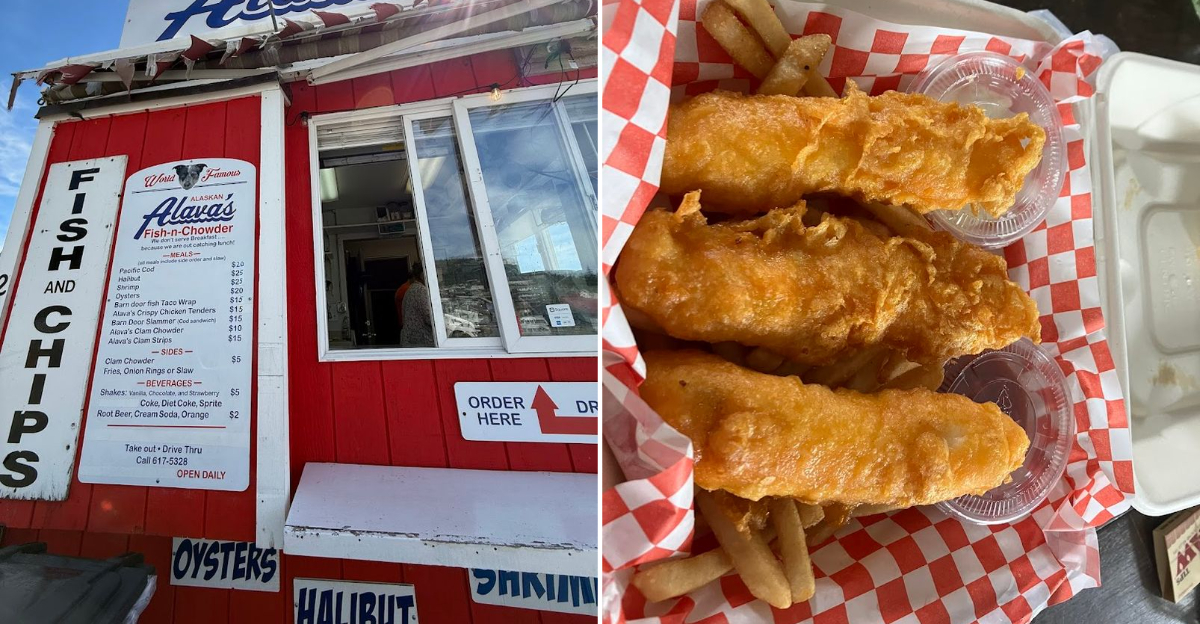
The directions involve a ferry for some people and a very specific turn for everyone else. Neither stops anyone who has heard about the fish and chips.
Word about this spot spreads slowly through fishermen, locals, and the occasional visitor who stumbles upon it.
Alaska has coastline restaurants that trade on scenery alone. This one doesn’t need to.
The batter recipe isn’t discussed openly, and the sourcing doesn’t need explaining, given the geography.
Fish pulled from these waters and prepared by people who have been doing it long enough to stop thinking about it produce a result that justifies the detour completely.
Visitors who make the trip once tend to start planning the next one before they’ve finished eating.
History Of Fish And Chips In The Region
Fish and chips arrived in Alaska the same way most great food traditions do. Fishermen needed a fast, filling meal after long days on the water.
Ketchikan, known as the Salmon Capital of the World, built its entire identity around the sea. The town sits on Revillagigedo Island with no road connections to the mainland, so everything here revolves around what the ocean provides.
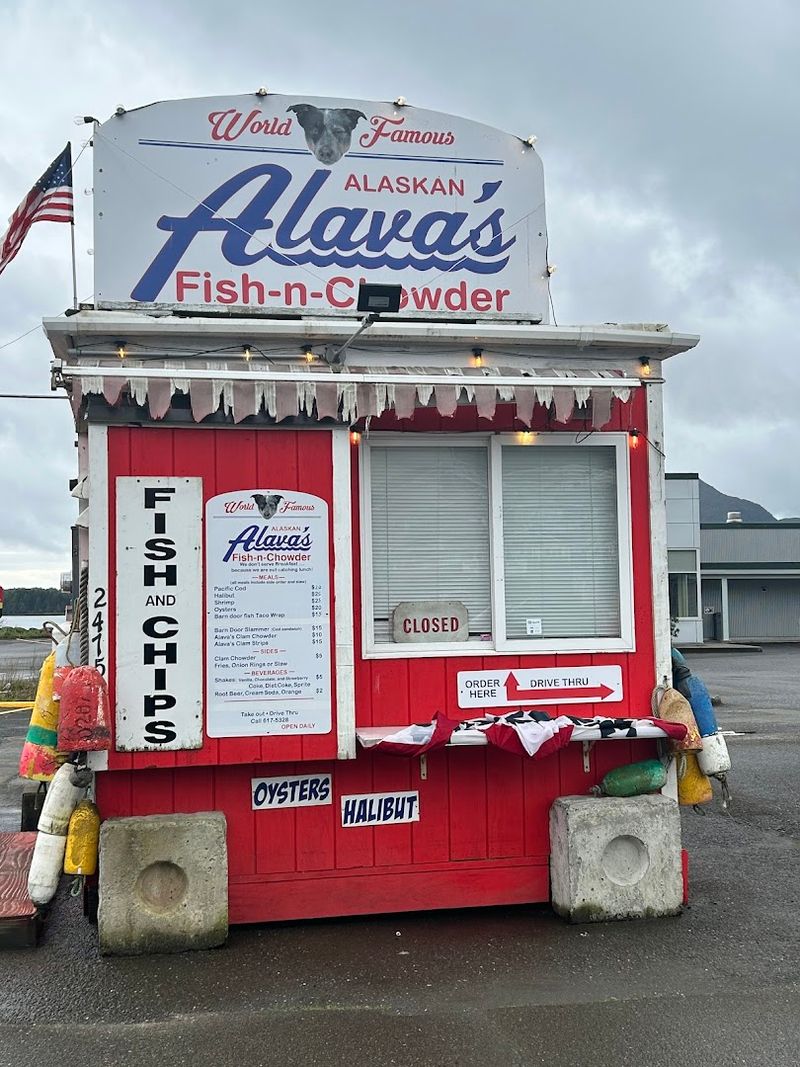
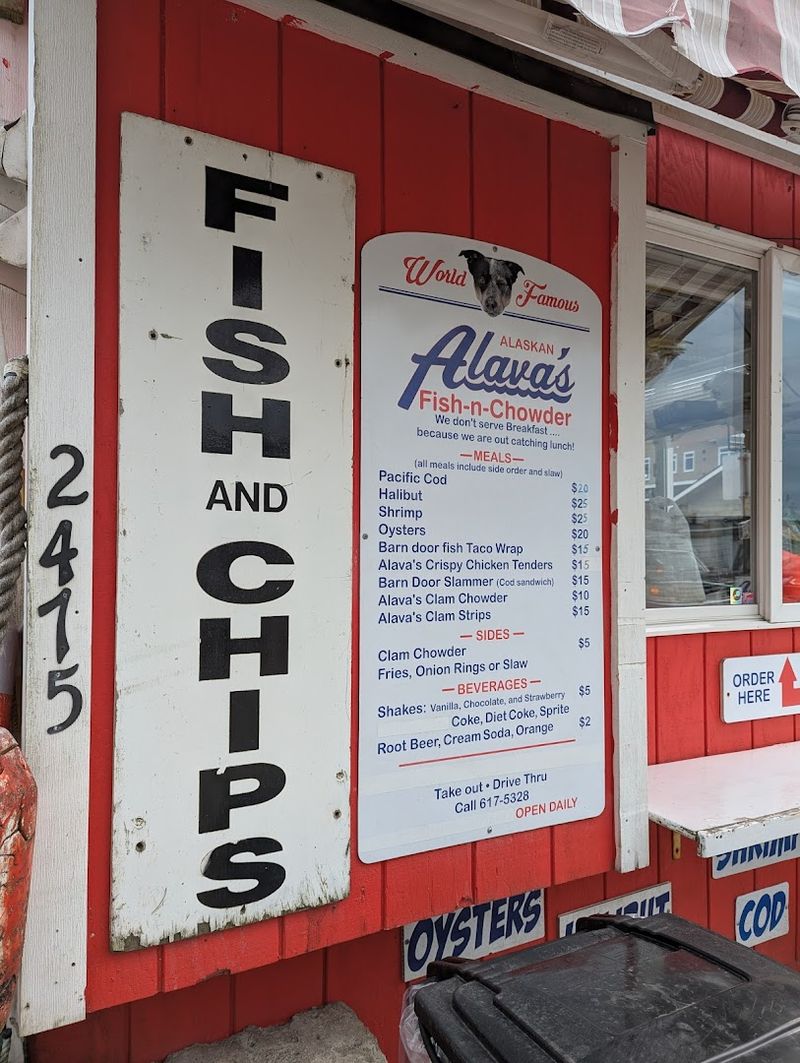
The owner of Alava’s Fish-n-Chowder has been running this bright red shack for about 15 years. That kind of commitment to a single craft does not happen by accident.
The motto says it best: “We don’t serve Breakfast because we are out catching lunch.” That line is not just clever marketing. It reflects a genuine approach to freshness.
Ketchikan has always been a working fishing town, and places like Alava’s keep that spirit alive. The fish and chips culture here did not come from a franchise manual.
It grew naturally from a community that lives and breathes the sea every single day. Alava’s Fish-n-Chowder at 2417 Tongass Ave, Ketchikan, AK 99901, carries that tradition forward with real pride.
Unique Flavors That Define The Local Cuisine
Halibut changes everything. Most fish and chips spots use cod or pollock, but Alava’s gives you the choice of halibut or Pacific cod.
Halibut has a firm, meaty texture that holds up beautifully inside a crispy tempura-like batter. The result is something that feels completely different from anything you have tried before.
The batter is light but crunchy. It does not feel heavy or greasy when you bite in.
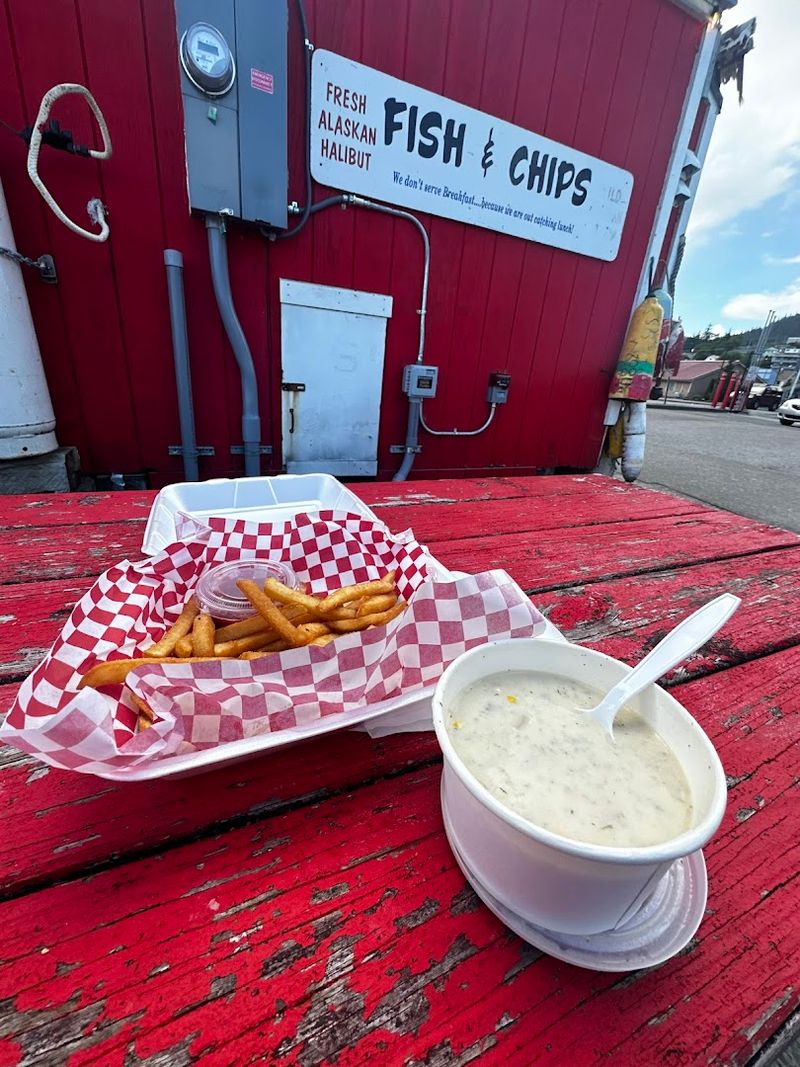
The fries come out perfectly cooked every time, and the tangy slaw on the side cuts through the richness in exactly the right way. These flavors work together like they were designed specifically for each other.
The clam chowder adds another layer to the local flavor story. It is rich and creamy, loaded with clams, corn, and carrots.
Some visitors say it has a cult following, and honestly, that tracks. Ketchikan has no shortage of seafood options, but the combination of freshness, technique, and honest ingredients at Alava’s creates something that stands apart.
The flavors here are not complicated. They are just done right, every single time, with ingredients pulled from nearby waters.
Sourcing Fresh Ingredients From Nearby Waters
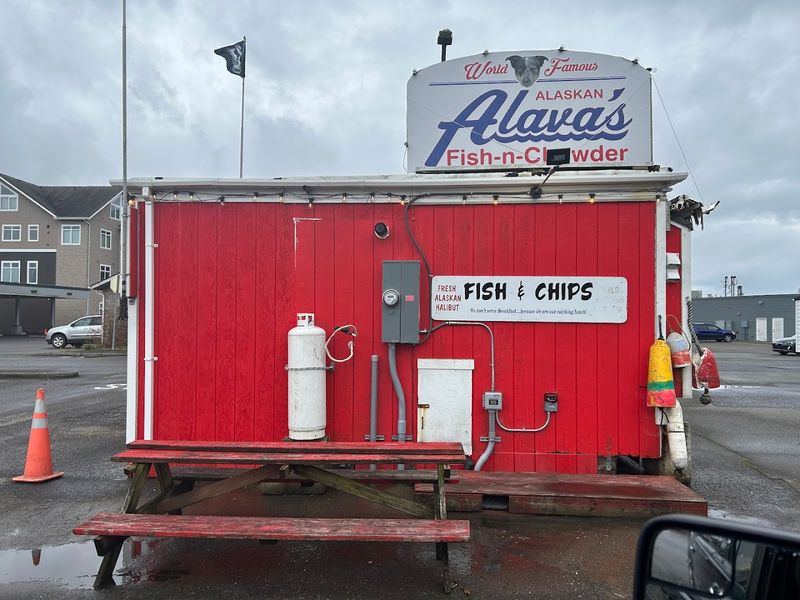
Ketchikan sits inside the Tongass National Rainforest, surrounded by some of the richest fishing waters in the world. The Inside Passage runs right through this region, and it is absolutely teeming with halibut, cod, salmon, shrimp, and clams.
When a place like Alava’s says their food is fresh, they mean it in a way that most restaurants simply cannot match.
The motto about catching lunch instead of serving breakfast is not just a fun line. It points to a real sourcing philosophy.
The seafood at Alava’s does not sit in a freezer for weeks. The clam chowder is packed with clams that taste like the ocean, not like a can from a warehouse shelf.
That difference is noticeable in every single bite.
Ketchikan is called the Salmon Capital of the World for a reason. The waters here produce some of the finest seafood available anywhere in North America.
Alava’s benefits directly from that geography. Being located right in the heart of this fishing community means access to ingredients that city restaurants can only dream about.
Fresh halibut caught in nearby waters, paired with a thoughtful recipe, is what makes the fish and chips here genuinely hard to forget after you leave town.
Traditional Cooking Techniques Preserved Over Time
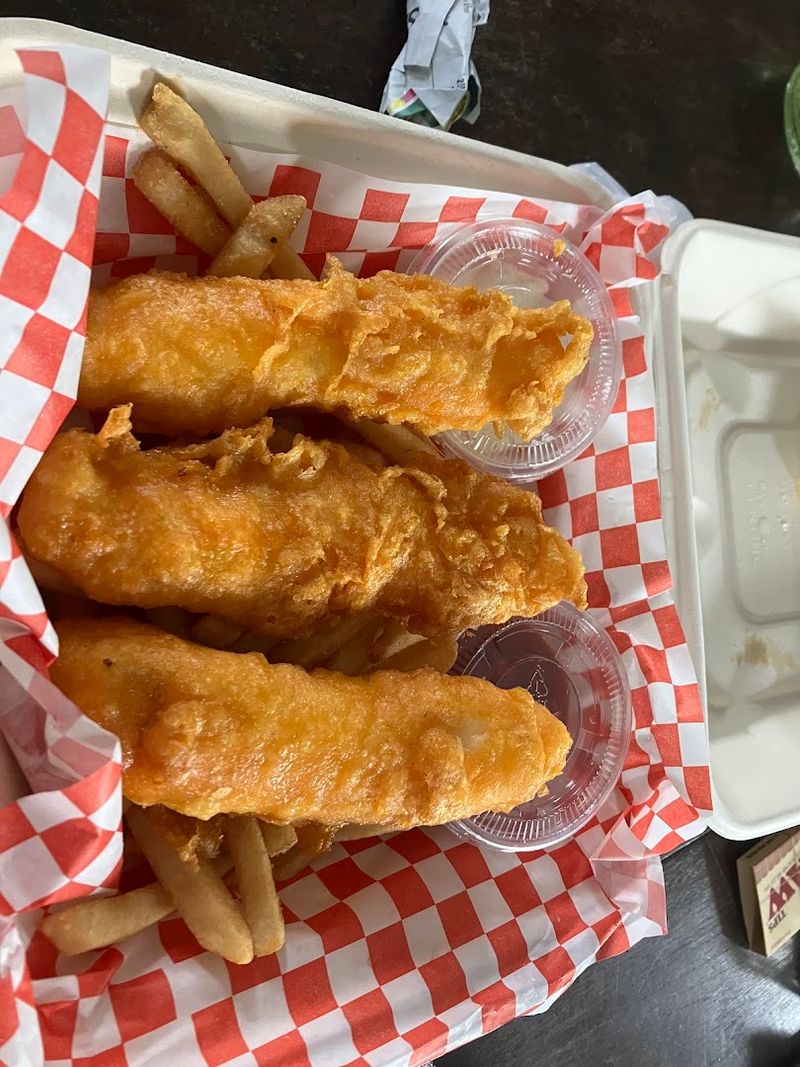
Frying fish sounds simple until you realize how many ways it can go wrong. Too heavy a batter and you lose the fish.
Too hot an oil and the outside burns before the inside cooks. Alava’s has clearly figured out the balance.
The tempura-style batter they use is light, airy, and incredibly crispy without overwhelming the natural flavor of the fish underneath.
Peanut oil is part of the technique here. It handles high heat well and adds a subtle richness to the finished product.
The key is timing. Knowing exactly when to pull the basket out of the oil is a skill that takes years to develop.
After 15 years of running this spot, the owner has clearly mastered that timing completely.
Traditional frying techniques in coastal Alaska were shaped by practicality. Fishermen wanted food that was fast, satisfying, and made from what was available that day.
Alava’s honors history without making it feel old-fashioned. The cooking method is straightforward but executed with real precision.
Nothing here feels rushed or careless. Each piece of fish gets the same attention, which is exactly why people keep coming back.
Consistency is rare. At Alava’s, it is the standard.
Popular Side Dishes That Complement Fish And Chips
Onion rings at Alava’s deserve their own conversation. They are crispy, huge, and cooked with the same care as the fish.
Plenty of people show up specifically for the onion rings as their chosen side. Tater tots are also on the menu and have their own loyal fan base among regulars who know what to order.
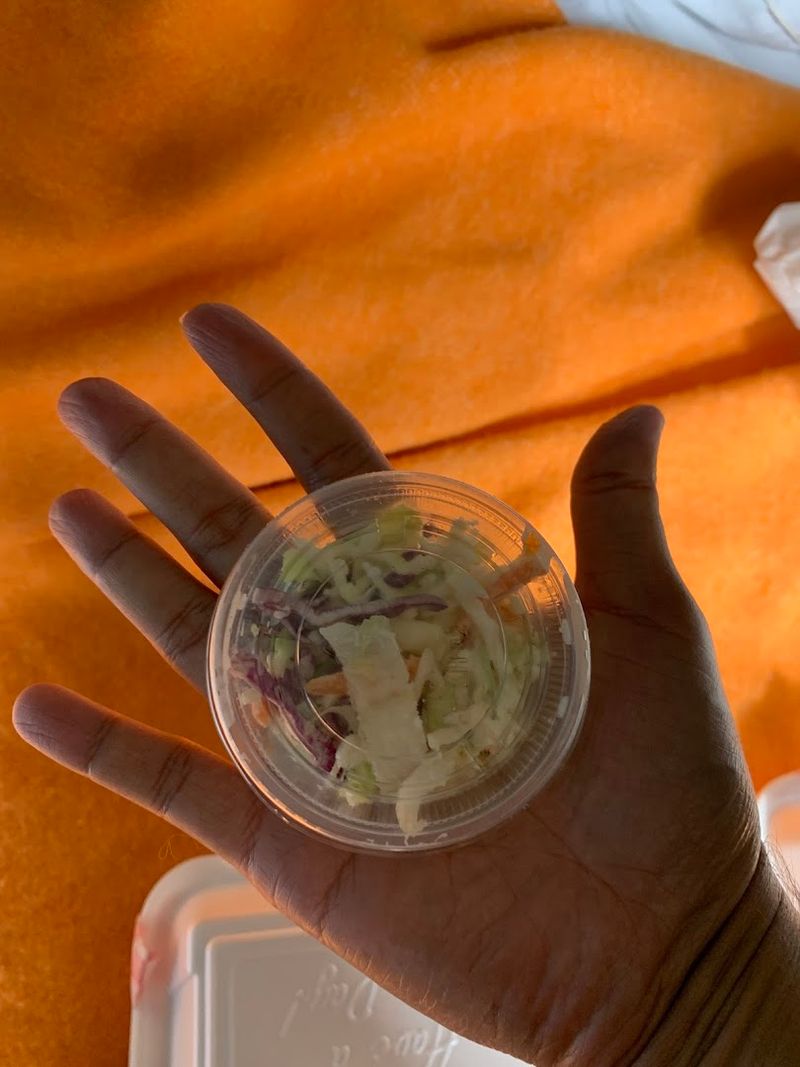
The tangy coleslaw is a classic pairing with fried seafood. It brings brightness and a little crunch to balance the richness of the batter.
It is a small side, but it does a big job on the plate. Some visitors have noted the portion is on the smaller side, so ordering extra is never a bad call.
The clam chowder can also work as a side dish, though most people end up treating it as the main event. It is creamy, filled with clams, corn, and carrots, and served hot.
The combination of chowder plus fish and chips plus a side of onion rings is basically the full Ketchikan seafood experience in one order. You will not leave hungry.
The sides here are not afterthoughts. They are built to complete the meal, and they absolutely do their job every single time.
Seasonal Variations That Enhance The Menu
Alaska has a fishing calendar, and Ketchikan follows it closely. Different species are more abundant at different times of year, which naturally shapes what shows up on the menu at places like Alava’s.
Halibut season runs through summer, which lines up perfectly with cruise ship traffic and tourist visits to town. That timing is not a coincidence.
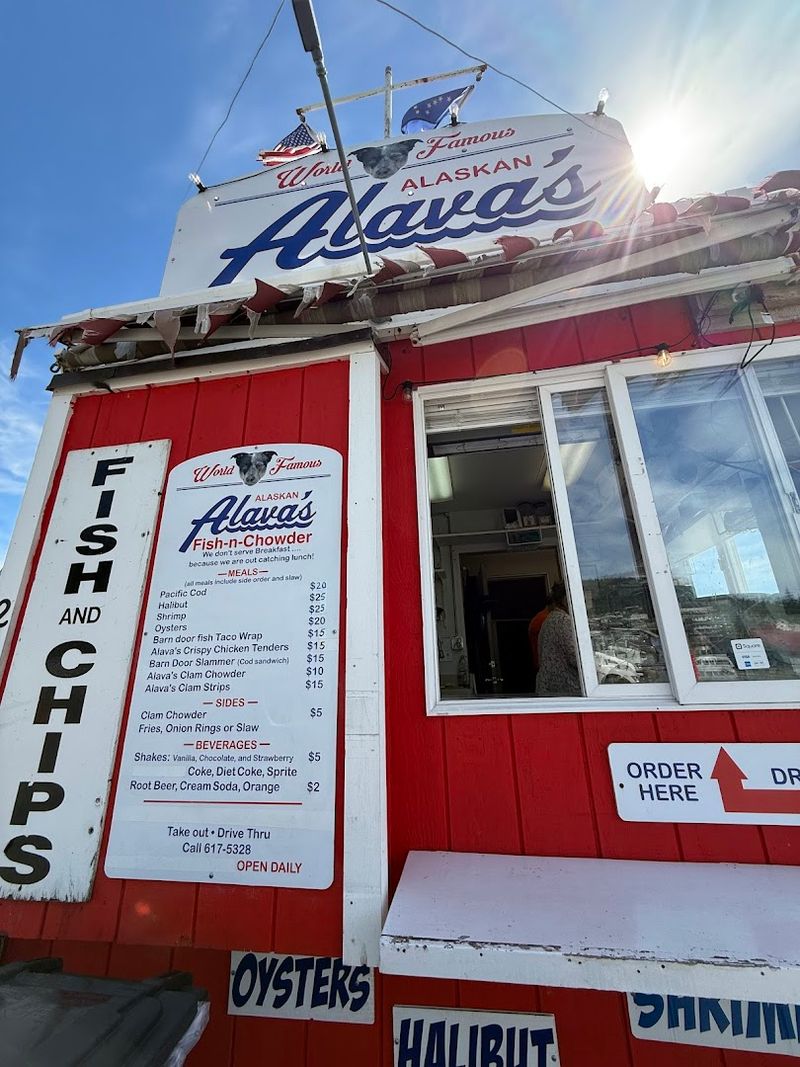
Shrimp appears on the menu and has its own admirers. Visitors who have ordered the shrimp with fries and slaw describe it as amazing.
Red snapper also makes appearances, giving regulars a reason to keep trying new things each visit. The menu is not locked into one rigid format.
It responds to what is fresh and available from nearby waters.
Ketchikan gets a lot of rain, which is part of its charm and part of its identity. The seasons here are dramatic.
Summers bring long daylight hours, active fishing, and steady boat traffic through the Inside Passage. That seasonal energy feeds directly into the food.
Early closures happen because the food sells out, not because of slow business. If you are visiting during the peak summer season, arriving early is genuinely smart advice.
The freshest catches move fast, and once something is gone for the day, it is gone for good.
Cultural Significance Of Seafood In Local Communities
Ketchikan holds the world’s largest collection of standing totem poles. That fact alone tells you how deeply rooted Indigenous culture is in this town.
For Native Alaskan communities, the ocean has always been a source of life, food, and identity. Salmon, halibut, and shellfish are not just menu items here.
They are woven into the history of the entire region.
The town’s nickname, Salmon Capital of the World, reflects generations of fishing culture. Commercial fishing, subsistence fishing, and sport fishing all coexist here.
Families have fished these waters for centuries. A small operation like Alava’s fits naturally into that tradition by keeping the focus on fresh, local seafood without unnecessary complexity.
Creek Street, a boardwalk built on stilts over Ketchikan Creek, once served as a commercial district and is now a cultural landmark. The whole town is layered with stories about people who built their lives around the sea.
Alava’s is part of that ongoing story. A family-run spot that sources locally, cooks simply, and serves the community connects directly to values that Ketchikan has always held.
Seafood here is not just food. It is the reason this town exists, the reason people stay, and the reason visitors keep returning year after year.
Tips For First Time Visitors To The Coastal Town
Ketchikan is only accessible by sea or air. There are no roads connecting it to the rest of Alaska.
Most first-time visitors arrive on cruise ships, which makes Alava’s especially convenient since it is an easy walk from the cruise docks along Tongass Avenue. You do not need a car or a tour to find it.
Arrive early. Alava’s opens at 11 AM Tuesday through Sunday, and the food genuinely sells out before closing time.
If you show up at 5 PM hoping for halibut, there is a real chance it is already gone. Lunch hours are your best bet for the full menu.
The drive-through option is also available if you want to grab food on the move.
Bring layers. Ketchikan earns its reputation as the Rain Capital of Alaska honestly.
It rains a lot. Outdoor picnic tables are available near the water, and eating outside with a view of the channel is actually a great experience even in light rain.
A light jacket makes that meal much more enjoyable. Also, expect reasonable prices compared to other Ketchikan restaurants.
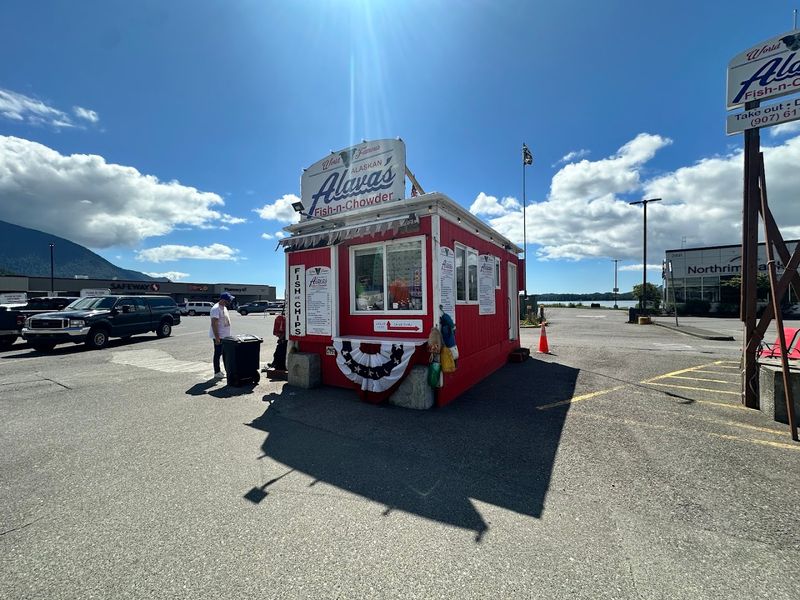
Fresh, local seafood at fair prices is rare anywhere, but especially rare in Alaska. Alava’s at 2417 Tongass Ave is worth every step of the walk from the docks.