
The Hidden Desert Oasis In Arizona That Locals Secretly Love
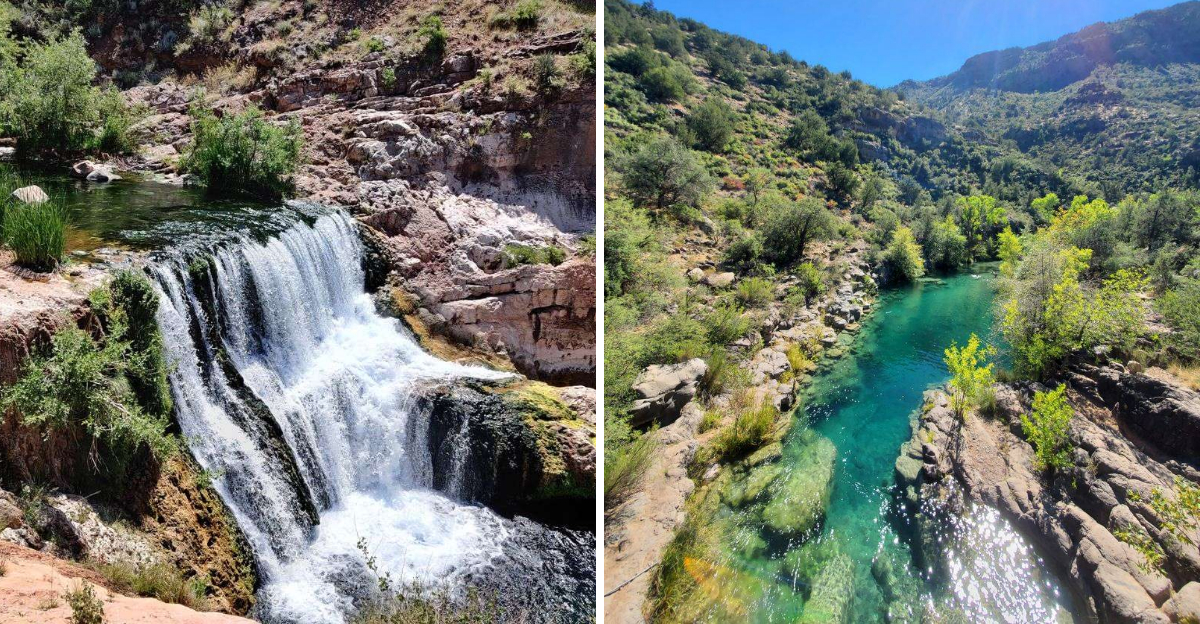
Tucked away in the rugged heart of central Arizona, Fossil Creek offers a startling contrast to the surrounding desert: turquoise water cascading over travertine ledges, thick greenery, and pools so clear you can count every stone below.
This rare perennial stream has earned a devoted following among locals who guard its location like a treasured secret.
For those willing to navigate the permit system and make the trek, Fossil Creek delivers an experience that feels worlds away from the arid landscape just beyond its banks.
Arizona’s Hidden Oasis In The Heart Of The Desert
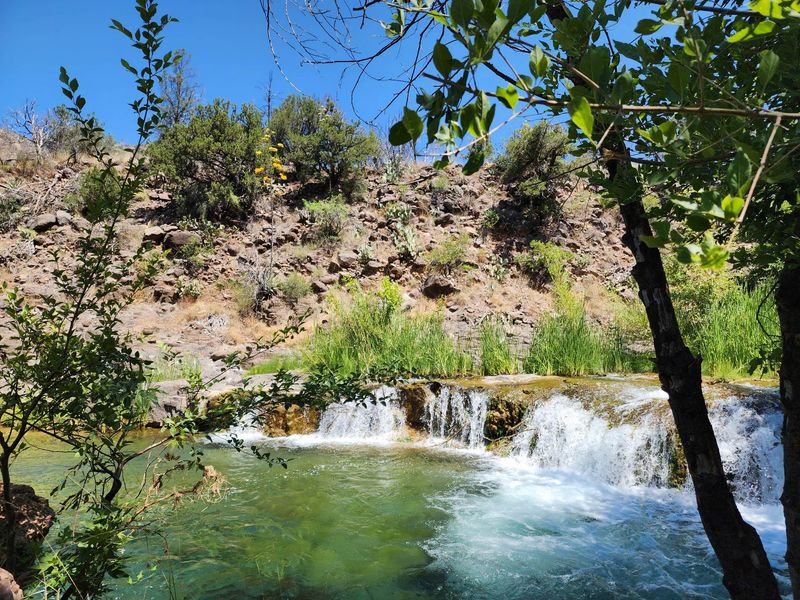
Fossil Creek emerges from underground springs near Camp Verde, Arizona, delivering roughly twenty thousand gallons of water per minute into a landscape that rarely sees sustained rainfall. The creek carves through limestone and basalt, creating a corridor of life that defies every expectation of the Sonoran Desert.
Cottonwoods and sycamores tower overhead, their roots anchored in banks thick with moss and fern. Wildlife congregates here in numbers that surprise first-time visitors: herons stalk the shallows, deer tracks pattern the muddy edges, and insects hum in clouds above the water.
Reaching the main waterfall requires a hike of several miles, depending on your chosen trailhead, but the reward justifies the effort for anyone seeking genuine solitude.
How Fossil Creek’s Crystal-Clear Water Defies Arizona’s Arid Landscape
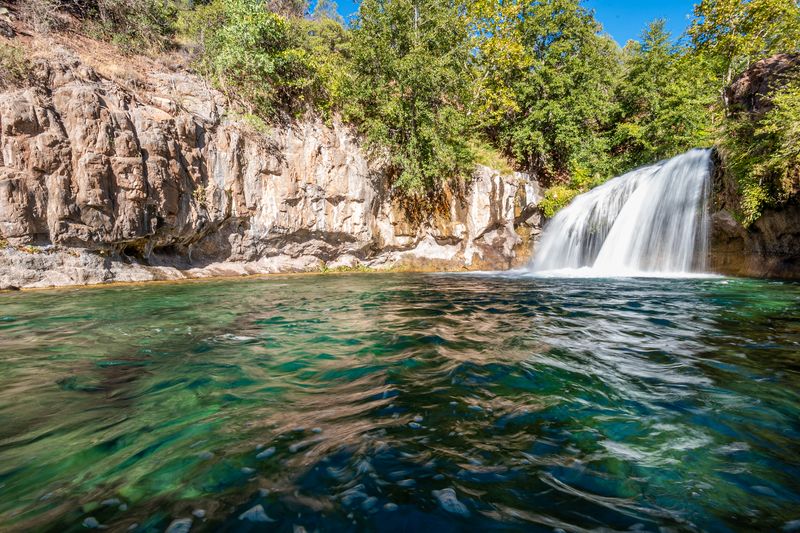
Water temperature at Fossil Creek holds steady around seventy-two degrees year-round, fed by springs that draw from deep aquifers insulated from seasonal swings.
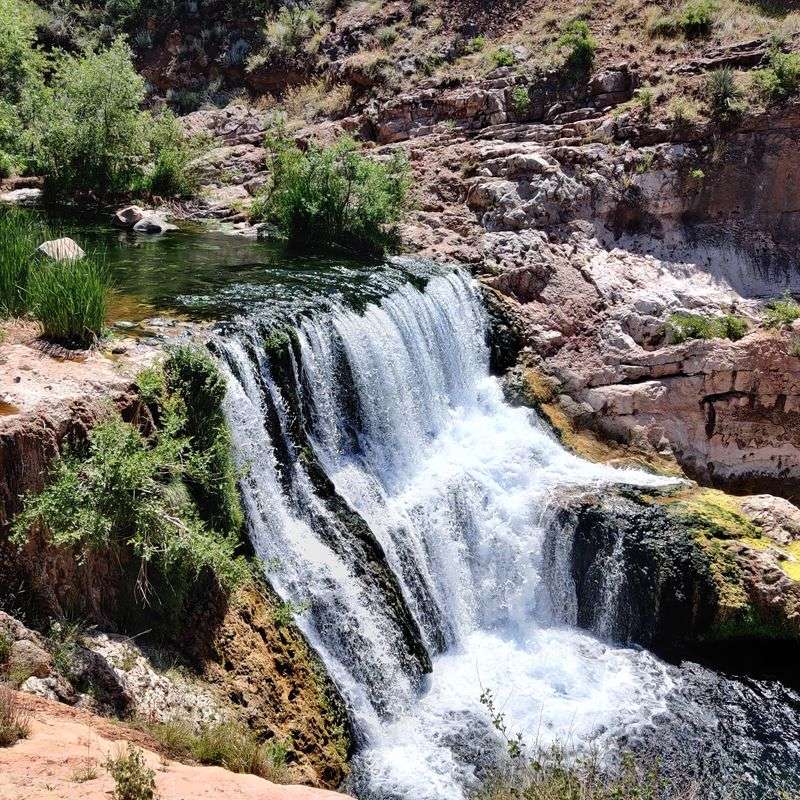
Minerals dissolved in the water precipitate as travertine, building delicate terraces and lending the creek its signature blue-green hue.
Visibility often exceeds fifteen feet, allowing swimmers to observe native fish species and the intricate geology beneath the surface.
The clarity results from constant flow and natural filtration through limestone, a process that has continued uninterrupted for thousands of years.
This geological oddity makes Fossil Creek one of only a handful of such systems in the entire Southwest.
The Riparian Paradise: Lush Greenery And Wildlife Along Fossil Creek
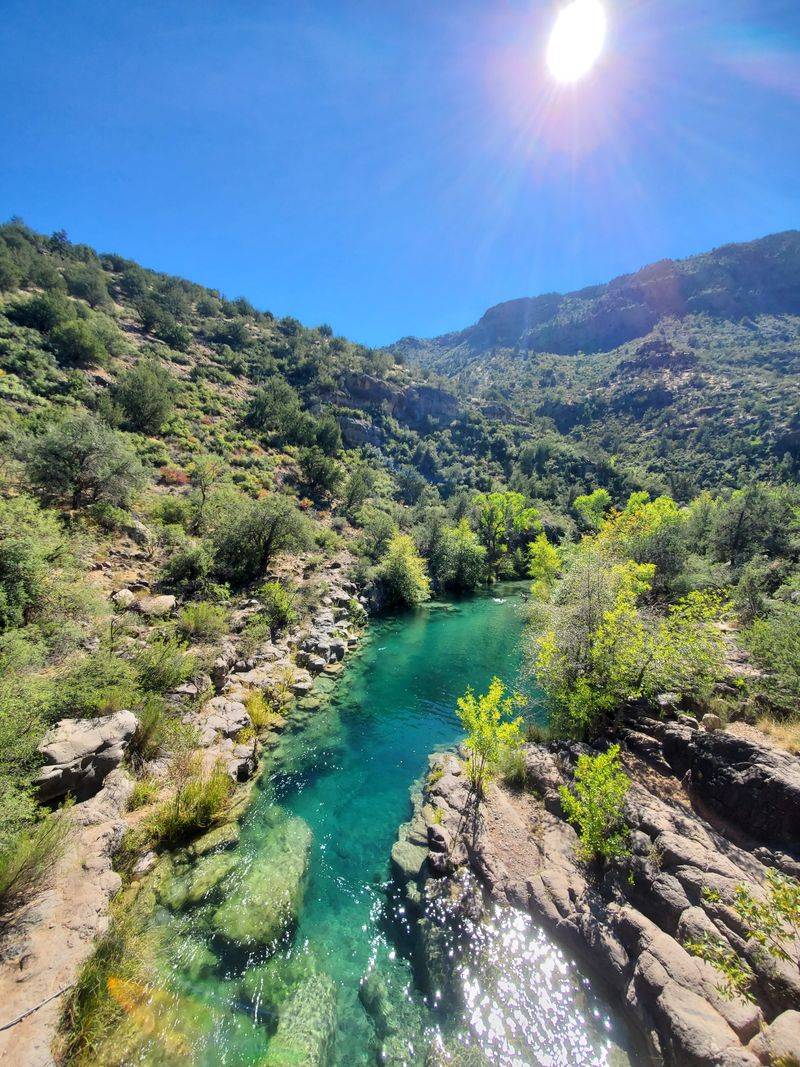
Biologists classify Fossil Creek as a rare riparian corridor, supporting plant and animal communities typically found hundreds of miles north or at far higher elevations.
Arizona sycamores spread broad canopies that shade the water, while willows and wild grape vines tangle along the banks.
Birdwatchers record sightings of species rarely seen elsewhere in central Arizona: black hawks, yellow warblers, and the occasional great blue heron.
Amphibians thrive in the permanent water, and invertebrate populations support a food web that feels almost tropical in its abundance.
Walking the trail feels like stepping through a portal into a different climate zone entirely.
A Waterfall Worth The Trek
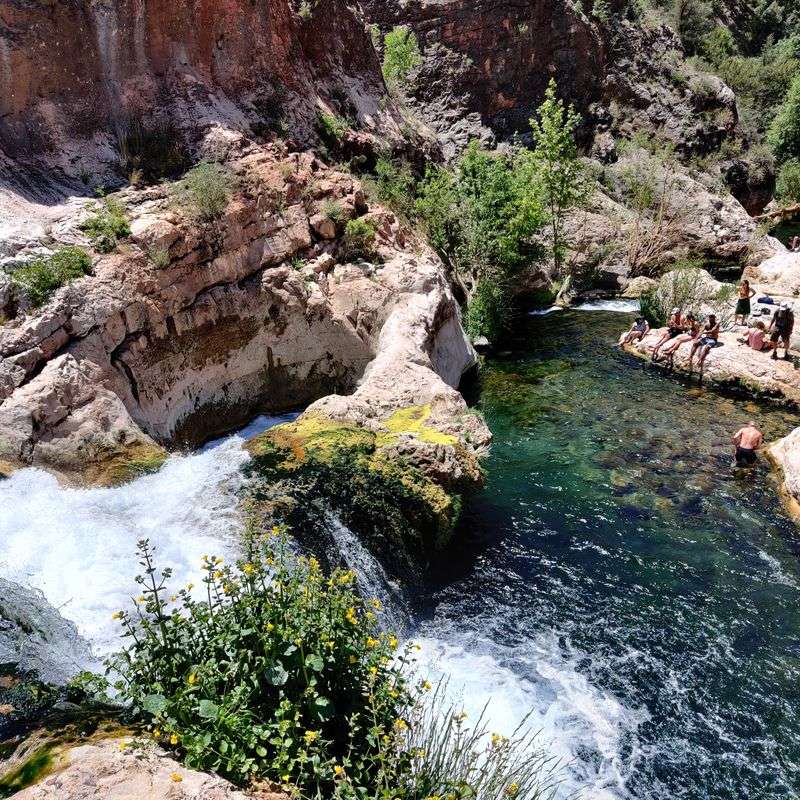
Fossil Creek’s main waterfall drops roughly twenty-five feet over a travertine shelf, emptying into a broad pool that locals have claimed as their summer sanctuary for generations.
The falls themselves shift in character depending on seasonal flow, sometimes splitting into multiple channels, other times consolidating into a single powerful column.
Swimming beneath the falls offers a rare thrill: cold spray, the roar of water, and a view back toward the canyon that feels entirely private.
Most visitors arrive early to claim a spot on the surrounding rocks, spreading towels and settling in for hours.
This is the kind of place people return to every summer without fail.
A Rare Perennial Stream In The Desert Southwest
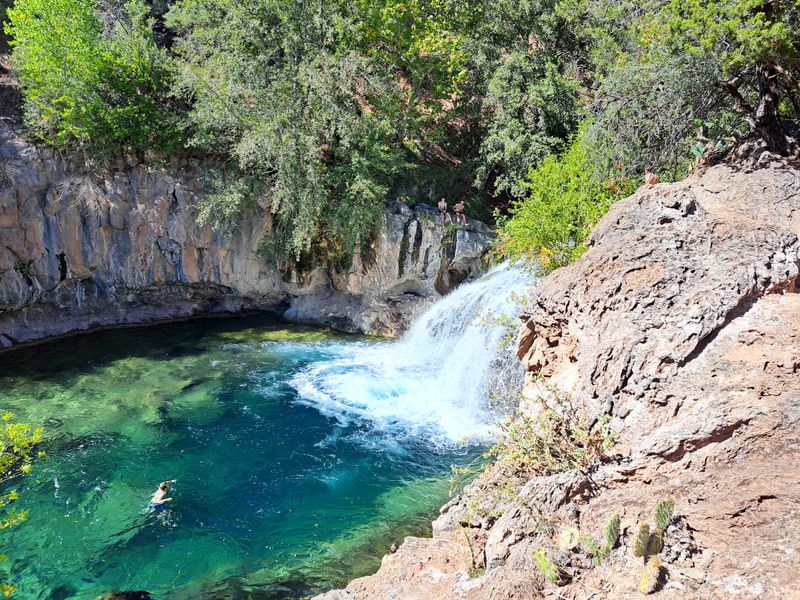
Perennial streams are uncommon in Arizona, where most watercourses run only after storms and dry to dusty beds within weeks.
Fossil Creek flows continuously, fed by springs that tap into the Verde Valley aquifer, a vast underground reservoir recharged over millennia.
The watershed covers roughly thirty square miles, draining into the Verde River downstream.
Hydrologists study Fossil Creek as a model for understanding how desert ecosystems respond to reliable water sources.
Its persistence through droughts that have dried neighboring creeks entirely underscores the geological uniqueness of the system.
For residents of Camp Verde and Strawberry, the creek represents both a recreational treasure and a reminder of water’s scarcity across the region.
Swimming Holes And Hidden Pools
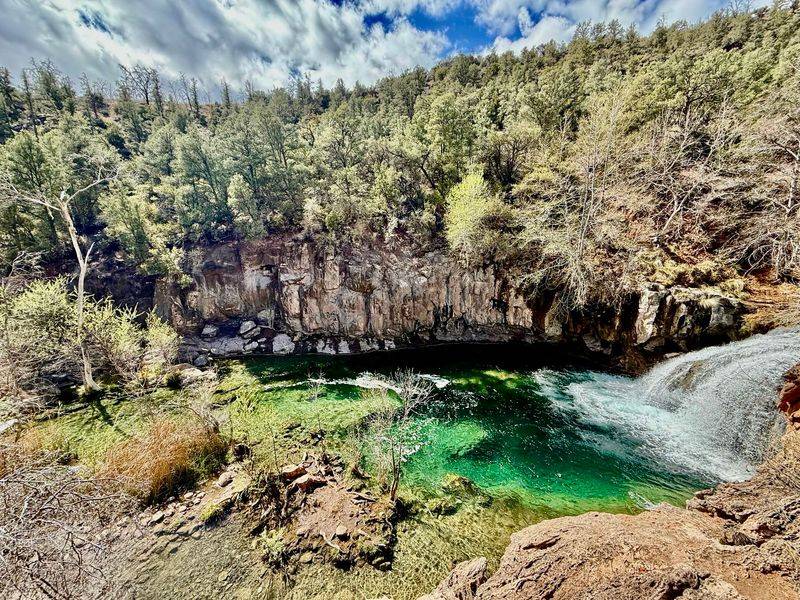
Beyond the main waterfall, Fossil Creek hides dozens of smaller pools, each with its own character.
Some are deep enough for diving, others shallow and warm, perfect for children or anyone hesitant about cold water.
Locals know the names of certain pools by reputation—Sally May Spring, Bob Bear Creek crossing, and others—though these names rarely appear on official maps.
Exploring upstream or downstream from the main trail reveals secluded spots where you might spend an entire afternoon without encountering another soul.
Bring water shoes; travertine can be slippery, and the creek bed alternates between smooth rock and loose gravel that challenges bare feet.
Respecting A Fragile Oasis: The Permit System And Preservation Efforts
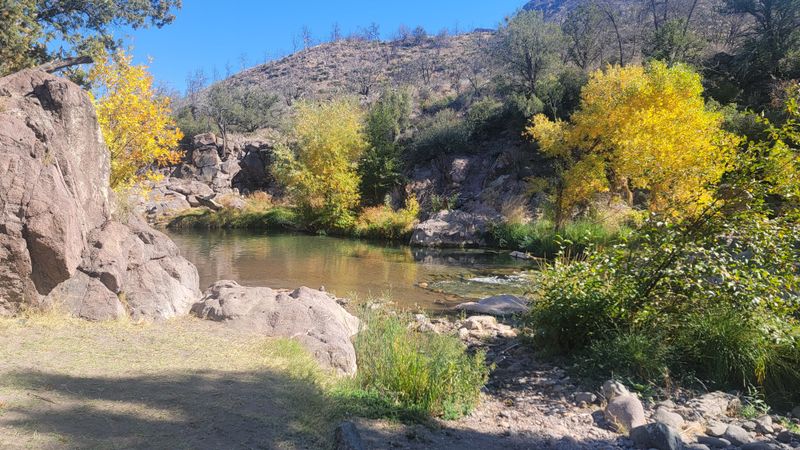
Fossil Creek requires advance permits for day use, a system implemented by the U.S. Forest Service to limit visitor numbers and protect the ecosystem from overuse.
Permits are available online and often fill up weeks ahead during peak summer months.
The rules are straightforward: pack out all trash, stay on designated trails, and avoid disturbing wildlife or vegetation.
Rangers patrol regularly, and violations can result in fines or closure of access points.
These measures have proven effective; since the permit system began, erosion has slowed and native plant communities have rebounded.
Respecting these guidelines ensures Fossil Creek remains pristine for future generations.
Photography And Scenic Views

Photographers find endless subjects at Fossil Creek: the interplay of light on water, patterns in travertine deposits, the contrast between desert scrub and riparian jungle.
Midday sun can wash out colors, so early morning or late afternoon light yields the richest tones.
Polarizing filters help cut glare and reveal underwater details, while wide-angle lenses capture the sweep of the canyon.
Wildlife photography requires patience and a telephoto lens; herons and hawks are skittish, and close approaches disturb their behavior.
Respect other visitors by keeping noise low and avoiding drones, which are prohibited in wilderness areas and can disrupt the tranquility everyone comes to experience.
Seasonal Flow And Weather Tips
Summer brings the highest visitor numbers, with temperatures in the canyon climbing past ninety-five degrees by midday.
Spring and fall offer milder weather and fewer crowds, though water levels remain consistent year-round thanks to the spring-fed flow.
Winter visits are possible but less common; air temperatures can drop below freezing at night, and the water remains cold enough to cut short any swimming plans.
Monsoon season, from July through September, brings afternoon thunderstorms that can turn trails muddy and flash floods that make creek crossings dangerous.
Check weather forecasts before heading out, and always carry extra water and sun protection regardless of season.
Beyond The Waterfall
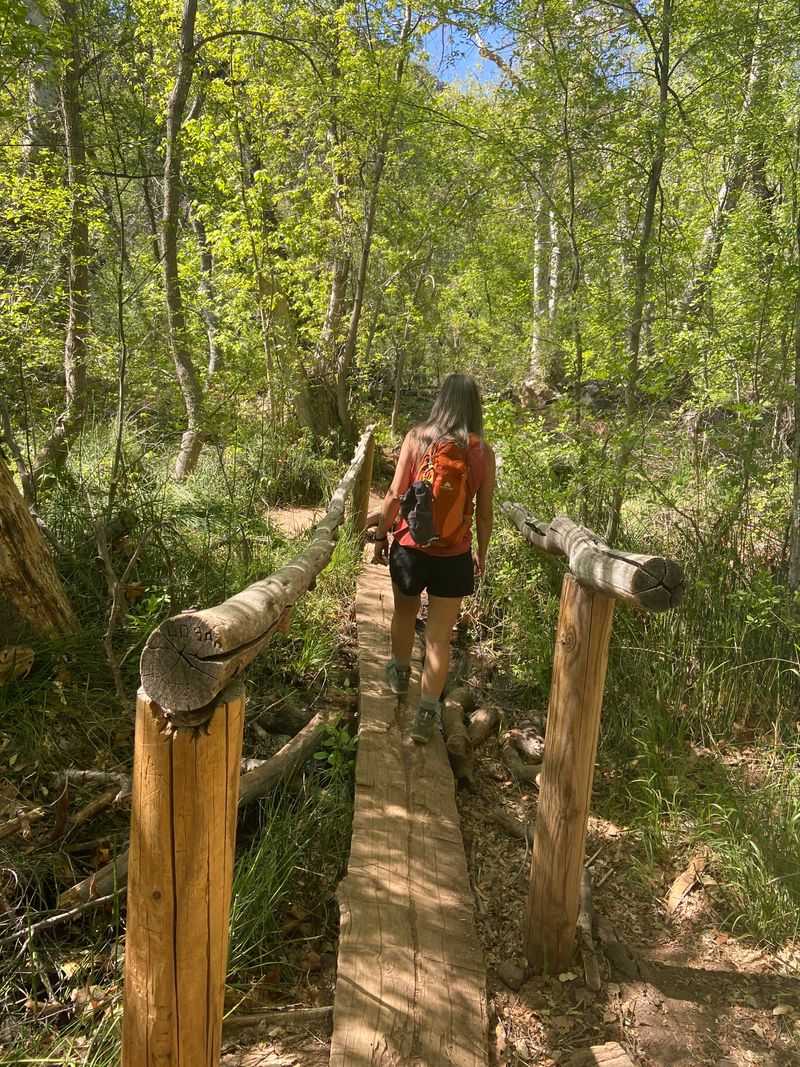
Several trails access Fossil Creek, each offering different terrain and distances.
The Fossil Creek Trail from the Waterfall Trailhead covers roughly four miles one-way, descending steeply through juniper and manzanita before reaching the creek.
The Flume Road route provides a longer but gentler approach, suitable for families with older children.
Both trails are hot and exposed in summer, so plan accordingly.
Once at the creek, exploration continues on foot along the water’s edge, hopping rocks and wading through shallow sections.
Located near Camp Verde at coordinates 34.414666, -111.605467, Fossil Creek rewards those who come prepared with sturdy boots, plenty of water, and a sense of adventure.