
The Hidden Georgia Lakeside Town That Feels Miles From Everything
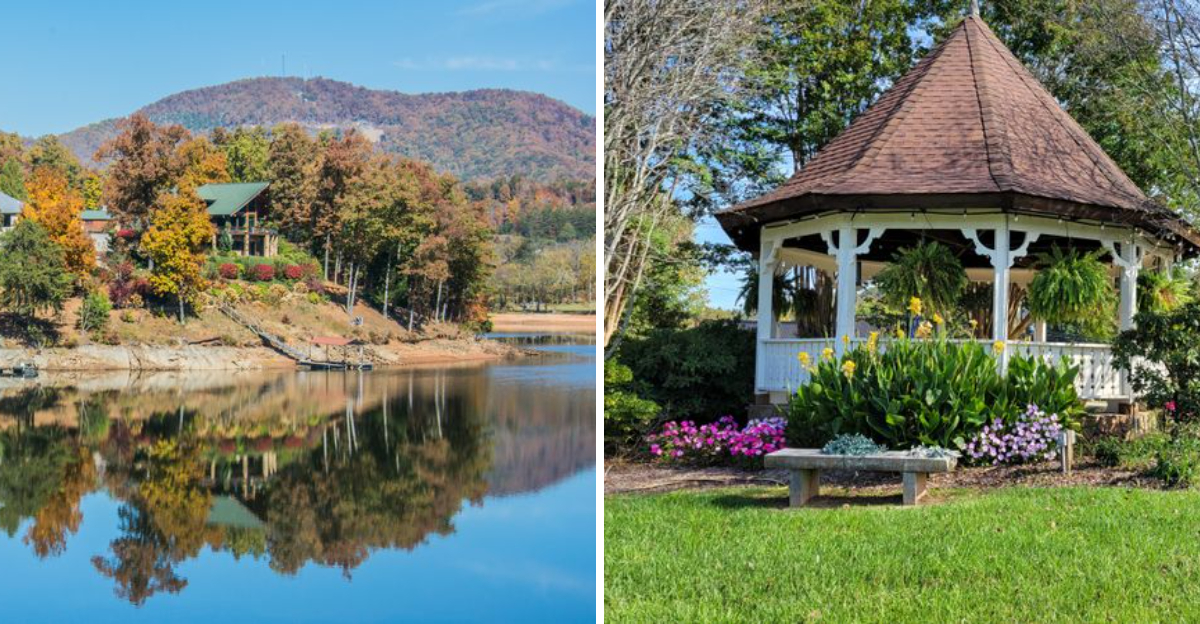
Hiawassee sits quietly in the northernmost corner of Georgia, far enough from Atlanta’s sprawl that the air feels different and the pace slows to something almost forgotten. With fewer than a thousand residents and a lakefront that stretches into mountain ridges, this small town offers a rare kind of separation from the noise and urgency that define so many other places.
People come here not for attractions or entertainment districts, but for the stillness that comes with wide water views and forested trails that seem to lead nowhere in particular. It is a place that rewards those who seek less rather than more.
Set On The Shores Of Lake Chatuge With Wide-Open Mountain Views
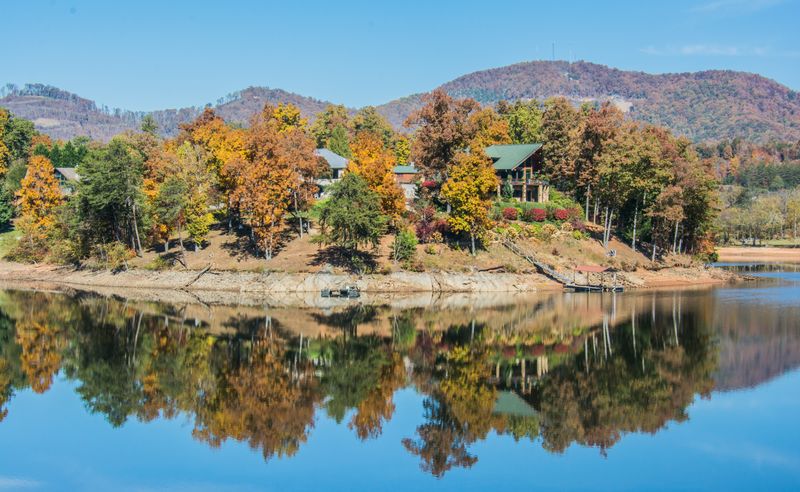
Lake Chatuge forms the centerpiece of Hiawassee’s geography, a reservoir created in the 1940s that now defines the rhythm of life here. The water stretches across more than seven thousand acres, bordered by ridgelines that shift from green to blue depending on the light.
Standing along the shore, you see mountains in every direction, their peaks softening into haze as distance increases.
The lake itself was built by the Tennessee Valley Authority as part of a broader effort to control flooding and generate power. Today it serves a quieter purpose, offering a backdrop that feels both vast and contained.
Mornings here are particularly striking, with mist rising off the water and the mountains emerging slowly from shadow.
Hiawassee’s downtown sits just above the lake, close enough that you can walk from the main street to the water in minutes. The proximity shapes everything about the town, from the businesses that cater to boaters to the rhythm of daily life that slows when the sun sets over the ridges.
Surrounded By The Blue Ridge Mountains Yet Far From Big-City Noise
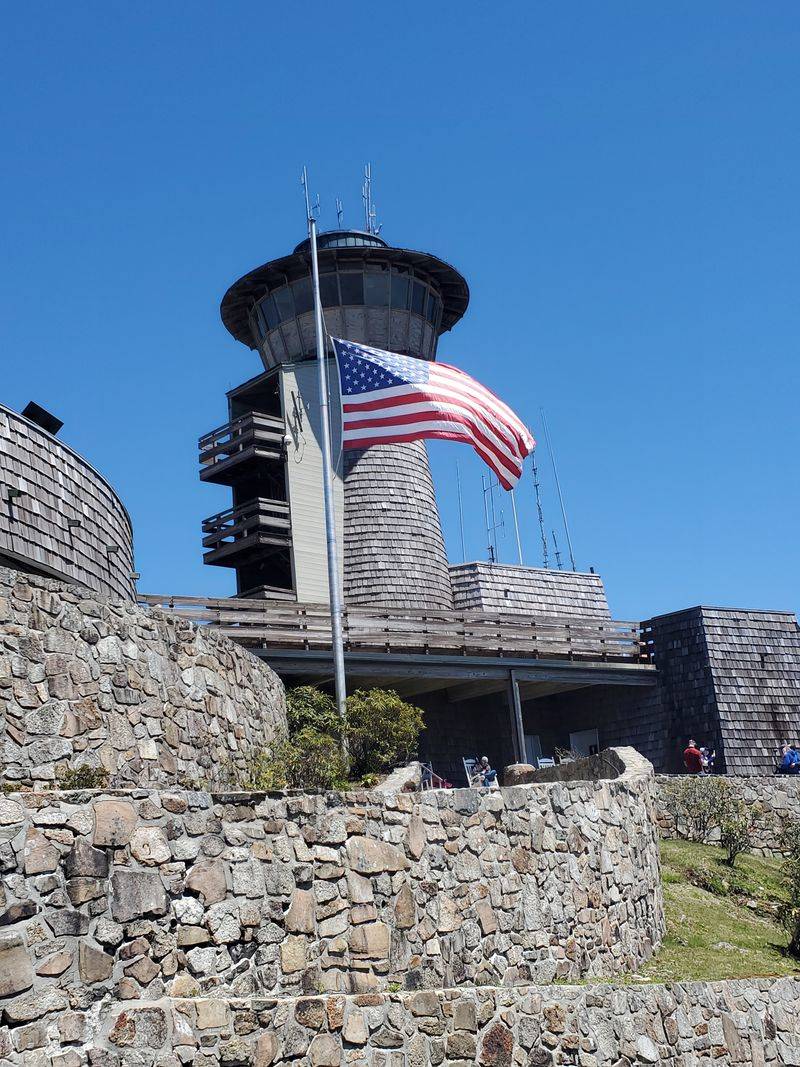
Hiawassee occupies a pocket in the Blue Ridge Mountains, far enough north that Tennessee is closer than most Georgia cities. The drive up from Gainesville takes over an hour, winding through national forest land and small communities that thin out the farther you go.
By the time you arrive, the sense of separation is complete.
The mountains here are old and worn, their rounded peaks covered in hardwood forests that turn brilliant shades of red and gold in autumn. They create a natural barrier that keeps the town insulated from the sprawl and traffic that define metro areas.
There are no chain stores lining the highway, no subdivisions creeping up the hillsides.
This isolation is intentional for many who live here. The population hovers around 981, according to the most recent census, and the town occupies just a few square miles.
The quiet is not an accident but a feature, maintained by geography and a collective preference for distance from the noise and complexity that come with larger populations.
A Small Town With A Population Under 1,000
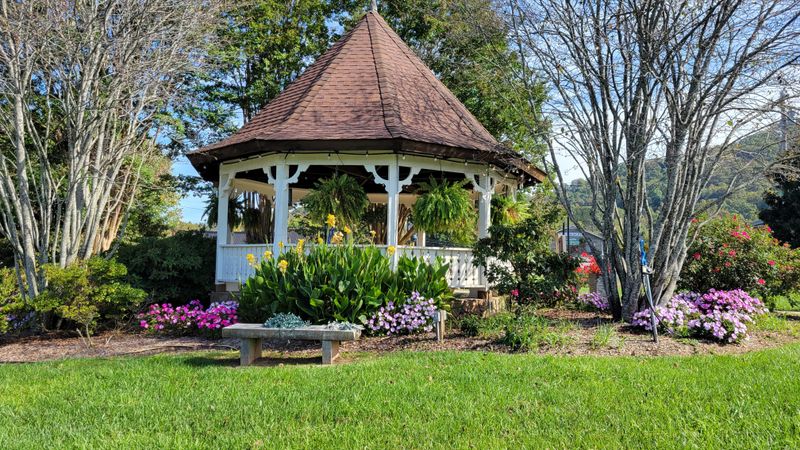
Hiawassee functions as the county seat of Towns County, one of the smallest counties in Georgia by population. The town itself is home to fewer than a thousand people, a number that has remained relatively stable for decades.
This scale shapes everything about the place, from the speed of daily life to the familiarity among residents.
You notice the size immediately when you drive through. The main street runs for just a few blocks, lined with locally owned businesses and county offices.
There are no traffic lights to speak of, and parking is rarely a concern. The compactness creates a sense of coherence that larger towns often lack.
Despite its small population, Hiawassee serves as a hub for the surrounding area, drawing visitors from neighboring counties and states. The Georgia Mountain Fairgrounds host events throughout the year, and the lake attracts seasonal residents who double the population during warmer months.
Still, the town never feels crowded, and the rhythm remains unhurried even during peak times.
Home To The Georgia Mountain Fairgrounds And Year-Round Events
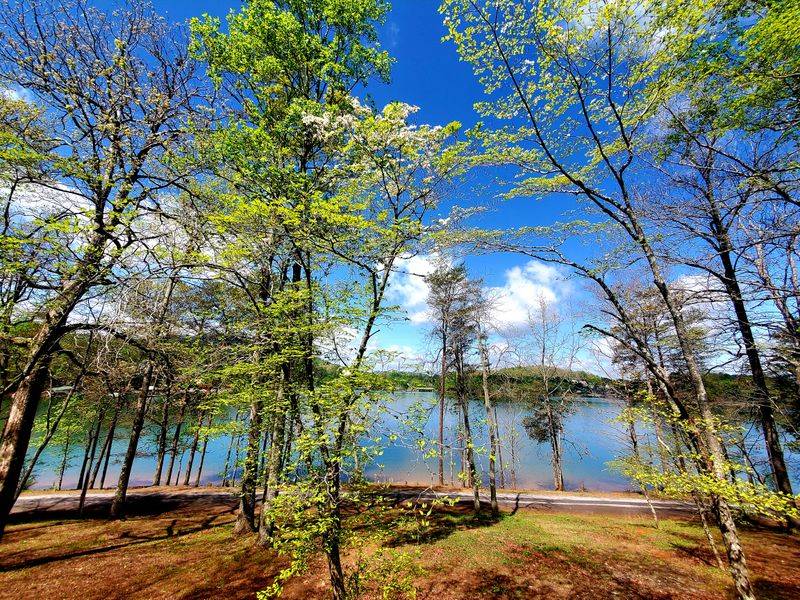
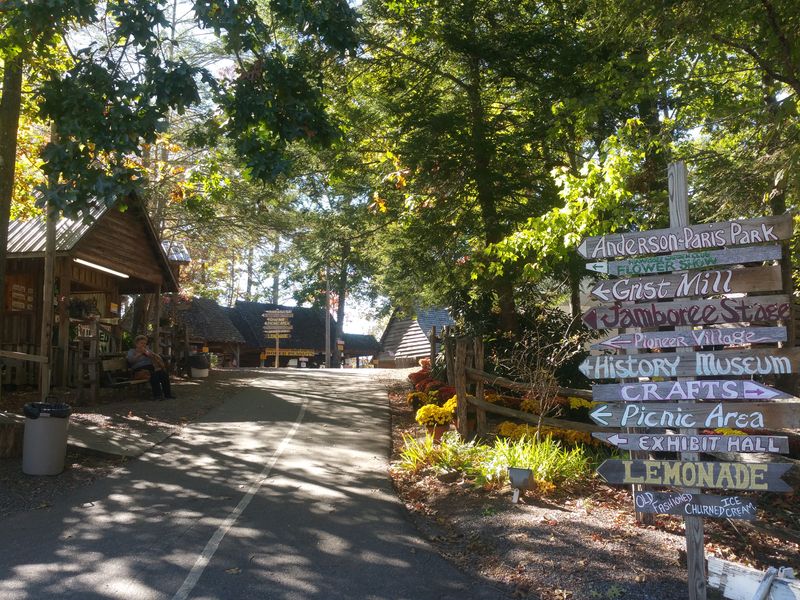
The Georgia Mountain Fairgrounds sit just outside downtown Hiawassee, occupying a large tract of land that comes alive several times a year. The facility hosts the Georgia Mountain Fair each August, a tradition that dates back to 1950 and draws thousands of visitors for music, crafts, and agricultural exhibits.
The fair runs for twelve days and feels like a throwback to an earlier era of regional gatherings.
Outside the fair season, the grounds host a variety of other events, from antique shows to holiday markets. The venue includes multiple buildings, outdoor stages, and open fields that can accommodate large crowds.
It functions as a gathering place for the region, offering a rare venue of its size in such a small town.
The fairgrounds contribute significantly to Hiawassee’s economy and identity. They bring visitors who might not otherwise make the drive, and they provide a focal point for community activity throughout the year.
The events maintain a distinctly local character, emphasizing regional crafts and music over commercial entertainment.
Lake Chatuge’s 130+ Miles Of Shoreline Offer Quiet Water Escapes
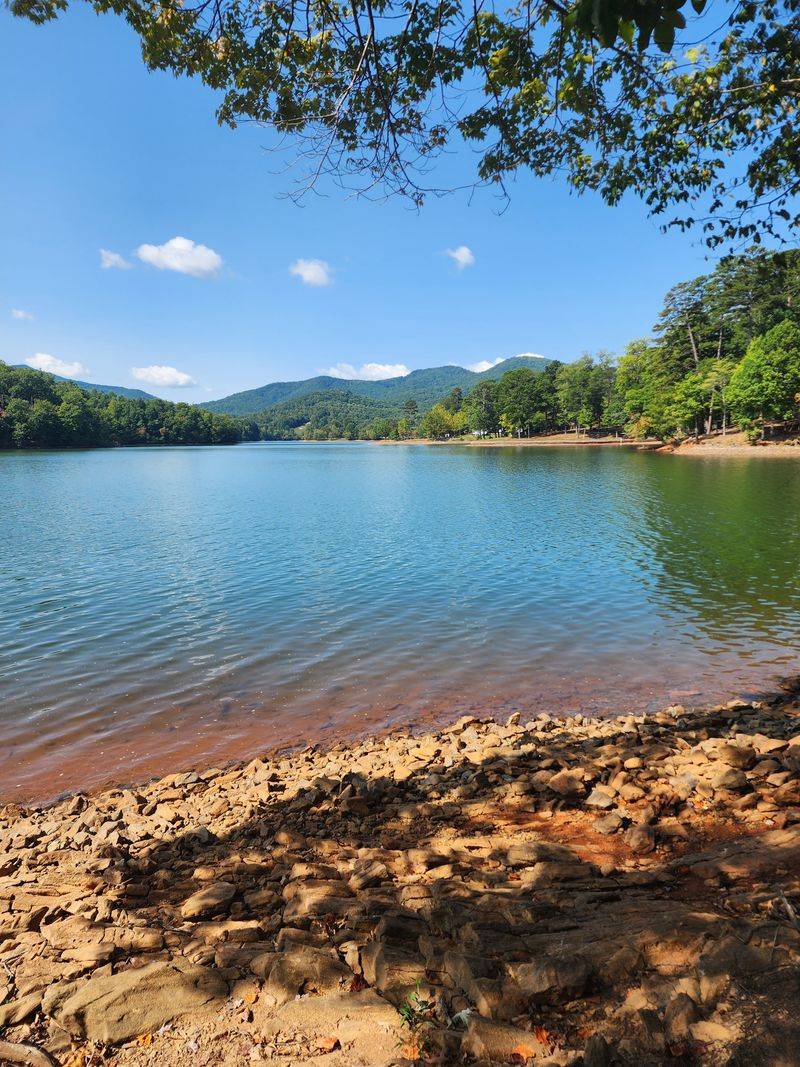
Lake Chatuge offers more than 130 miles of shoreline, much of it undeveloped and accessible only by water. The irregular shape of the lake creates countless coves and inlets, each offering its own version of seclusion.
You can spend hours on the water without encountering more than a handful of other boats, especially on weekdays outside of summer.
The shoreline varies from rocky outcrops to gentle sandy areas, with most of it heavily forested. Pines and hardwoods grow right down to the water’s edge in many places, creating a sense of enclosure that feels almost private.
The lack of commercial development along much of the shore preserves this quality, keeping the lake feeling more wild than managed.
Several public access points allow visitors to launch boats or simply walk along the water. The lake sits at an elevation of nearly two thousand feet, which contributes to its clarity and cooler temperatures.
The water remains calm most days, making it ideal for paddling or simply floating in one of the quieter coves far from the main channels.
Easy Access To Boating, Fishing And Kayaking Without Resort Crowds
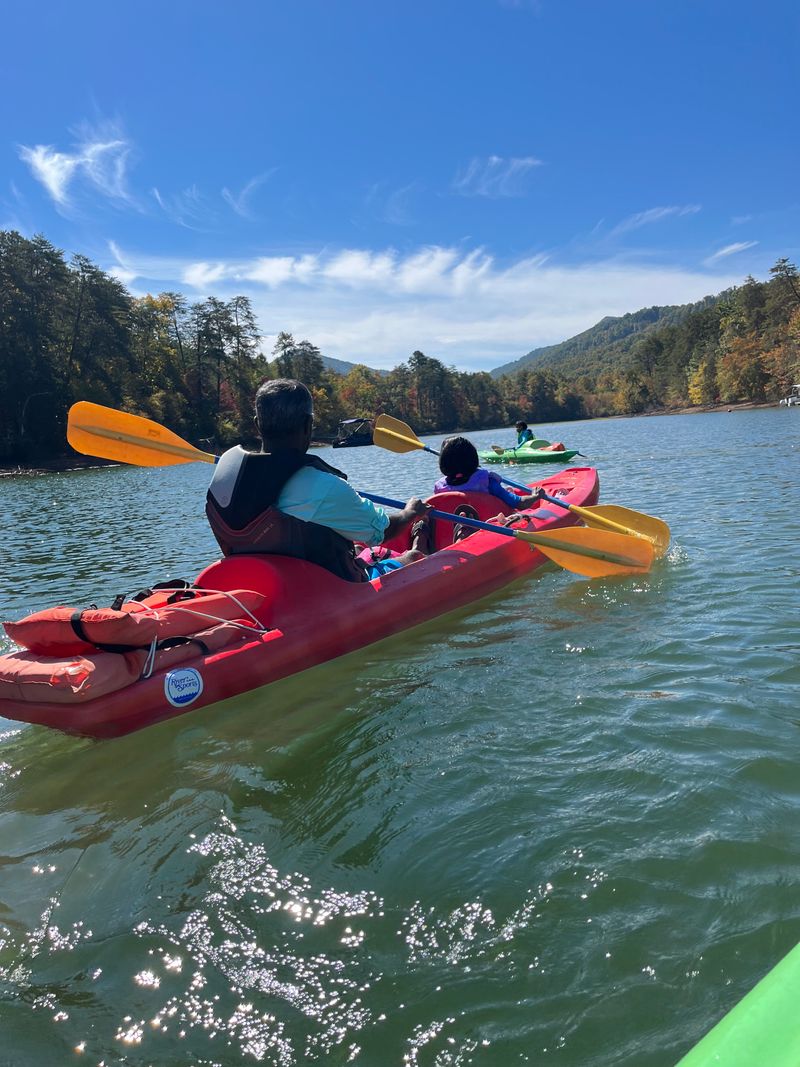
Lake Chatuge supports a range of water activities without the infrastructure or crowds associated with larger resort lakes. Several marinas provide boat rentals and launching facilities, but the scale remains modest.
You will not find jet ski rental operations or party boats, which keeps the atmosphere quieter and more focused on individual recreation.
Fishing draws many visitors, with the lake holding populations of bass, crappie, and trout. The cooler water temperatures, maintained by the lake’s depth and elevation, support trout year-round in certain areas.
Local anglers speak highly of the fishing, particularly in the early morning hours when the water is still and the fish are most active.
Kayaking and canoeing work particularly well on Lake Chatuge due to the protected coves and generally calm conditions. You can paddle for hours exploring the shoreline, stopping at small beaches or simply drifting in the quieter sections.
The lack of commercial pressure means you can move at your own pace without feeling rushed or crowded out by larger watercraft.
Bell Mountain Provides One Of North Georgia’s Most Striking Overlooks
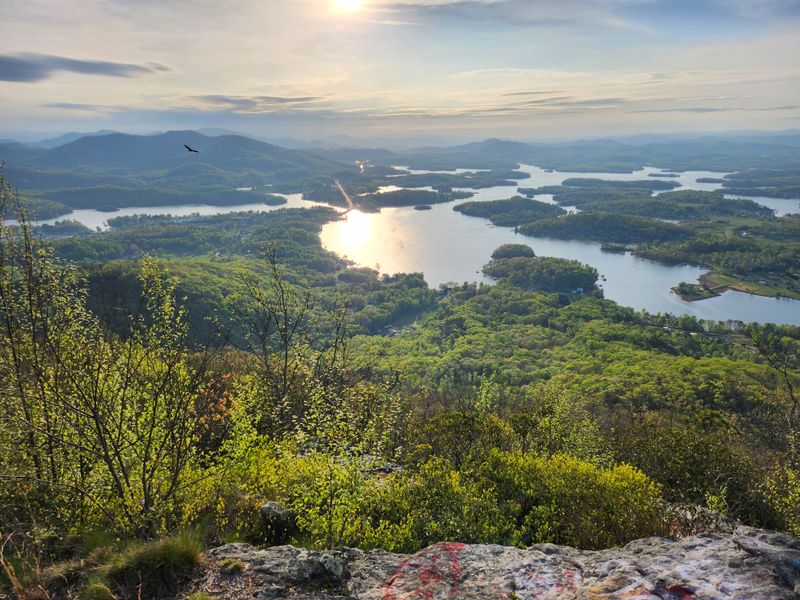
Bell Mountain rises just south of Hiawassee, offering one of the most accessible overlooks in the region. The summit sits at nearly 4,000 feet, providing views that stretch across multiple states on clear days.
The hike to reach it is moderate, covering about three miles round trip with a steady but manageable climb.
The trail passes through mixed hardwood forest before opening up to exposed rock at the summit. The views from the top take in Lake Chatuge to the north, with mountain ridges extending in every other direction.
On particularly clear days, you can see into Tennessee and North Carolina, with layers of peaks fading into blue distance.
Bell Mountain sees regular use but rarely feels crowded, even during peak hiking season. The trail is well-maintained but not overly developed, retaining a backcountry feel despite its proximity to town.
Sunrise and sunset are particularly rewarding times to make the climb, though the exposure at the summit means you should prepare for wind regardless of conditions in the valley below.
Close To Appalachian Trail Access Points For Peaceful Hikes
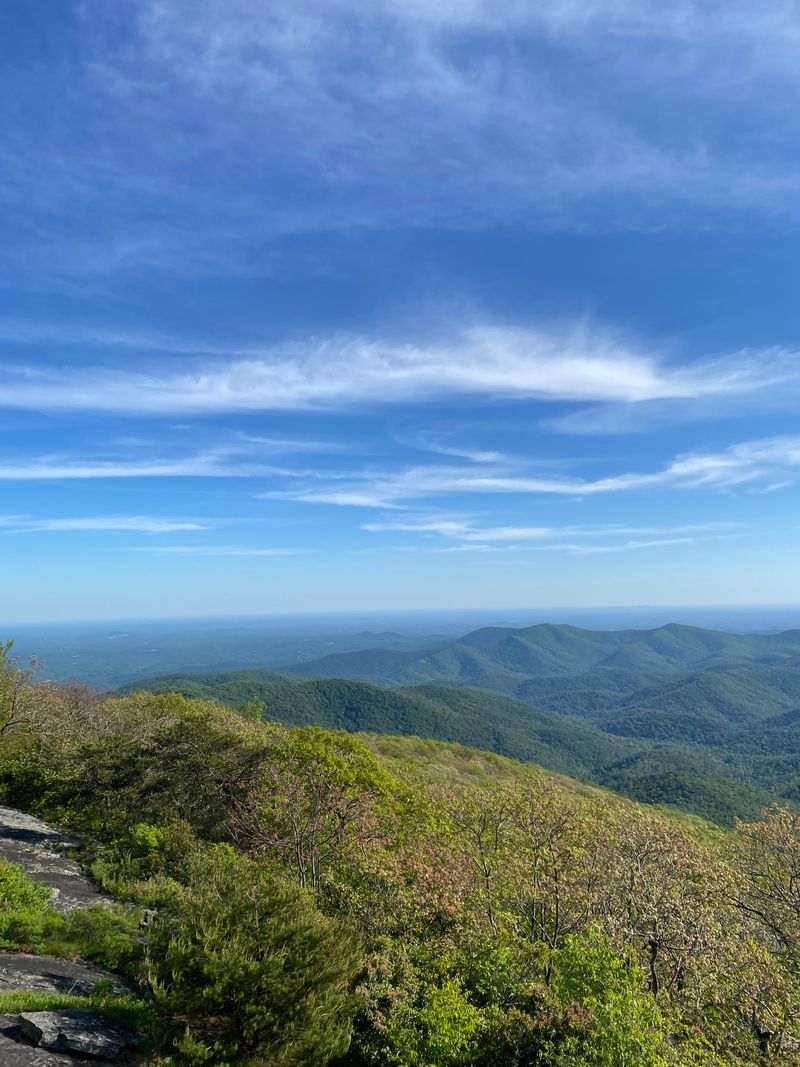
The Appalachian Trail passes within a short drive of Hiawassee, with several access points allowing day hikes of varying lengths. The trail in this section runs through some of its most remote stretches, crossing high ridges and descending into gaps where small streams cut through the forest.
The terrain is challenging but rewarding, with frequent elevation changes and views that open up at unexpected moments.
One popular access point is at Unicoi Gap, about fifteen miles from town, where the trail crosses Highway 75. From there you can hike north toward North Carolina or south deeper into Georgia, with options ranging from short walks to full-day excursions.
The trail here sees steady use from thru-hikers in spring and fall, but day hikers can usually find solitude by walking just a few miles in either direction.
The proximity to the Appalachian Trail adds another dimension to Hiawassee’s appeal for those interested in backcountry exploration. The town serves as a resupply point for thru-hikers, and several outfitters cater to trail users, but the focus remains on quiet, self-directed adventure rather than guided experiences or commercial tourism.
A Compact Downtown With Local Shops And Laid-Back Cafés
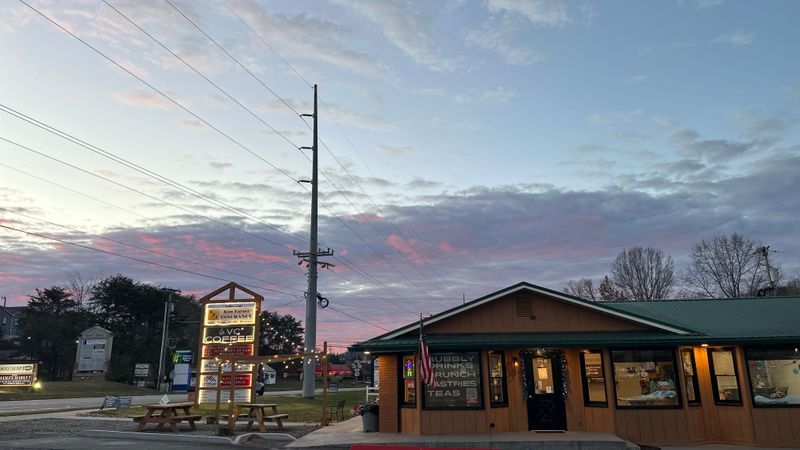
Downtown Hiawassee consists of a few blocks centered around the intersection of Main Street and the highway that runs through town. The buildings are modest, mostly single-story structures that house locally owned businesses.
You will find a mix of antique shops, outfitters, and small restaurants, along with the county courthouse and a few professional offices.
The shops reflect the town’s character, emphasizing practical goods and local crafts over tourist trinkets. One hardware store has operated for decades, serving both residents and visitors who need supplies for lake houses or camping trips.
The antique stores draw collectors from across the region, with inventory that rotates regularly and prices that remain reasonable.
Several cafés and restaurants offer casual dining with an emphasis on Southern cooking and mountain specialties. The atmosphere is uniformly relaxed, with most places offering outdoor seating when weather permits.
Service is friendly without being intrusive, and the pace allows for conversation and lingering over coffee. The downtown never feels rushed, even during busy weekends when visitors fill the parking spaces along Main Street.
Cooler Mountain Temperatures Make Summer Feel Manageable
Hiawassee sits at an elevation of roughly 1,900 feet, high enough to moderate the intense heat that characterizes much of Georgia in summer. While temperatures still reach the eighties and occasionally low nineties, the humidity is noticeably lower than in lower elevations, and evenings cool down significantly.
The difference is striking if you arrive from Atlanta or other cities where summer nights remain oppressive.
The cooler temperatures make outdoor activities more comfortable during the hottest months. You can hike or paddle without the overwhelming heat that makes such activities punishing elsewhere in the state.
The lake water stays refreshingly cool, fed by mountain streams and shaded by the surrounding ridges for much of the day.
This climate advantage draws many seasonal residents who spend summers in Hiawassee to escape the heat of Florida and coastal Georgia. The town sees increased activity from June through August, but the population never swells to the point of overwhelming the local infrastructure.
The cooler weather extends the comfortable season well into fall, when temperatures drop further and the forests begin their annual color transformation.