
The Hidden Nevada Slot Canyon That Feels Like A Secret Worth Protecting
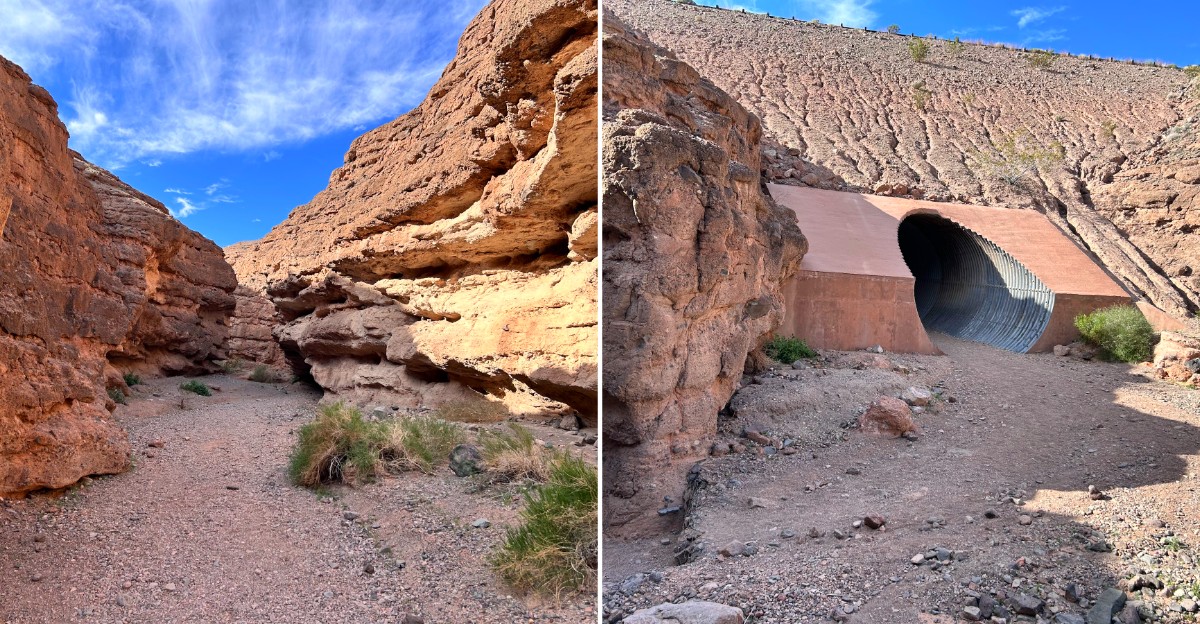
Some trails make you work just to find the good part. This one gets interesting almost immediately. The path drops into a dry wash, then slips between tall stone walls that grow tighter with every turn. Soon, the desert feels very far away.
Nevada is full of dramatic landscapes, but this short canyon walk delivers something different. You get cool pockets of shade, echoing passages, twisting rock, and just enough scrambling to keep things fun.
Look closely and you may even spot freshwater clam shells scattered across the ground, reminders that parts of this landscape once sat beneath Lake Mead. The walls squeeze close in places. Owls sometimes nest high above. Every bend feels like it might reveal something new.
It is short, quiet, slightly strange, and much more memorable than its modest trailhead suggests. Here is what to know before you head out.
Why The Narrow Walls Feel So Unexpected
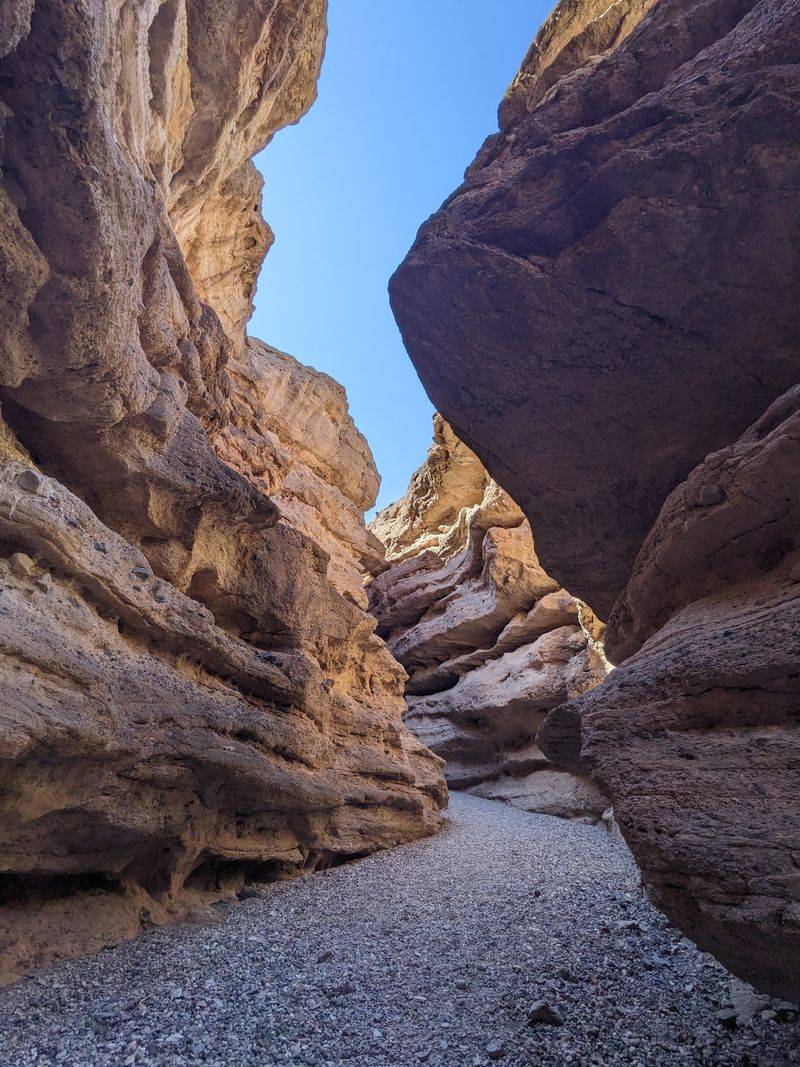
Most people picture Nevada as wide open desert with distant mountains and very little shade. That image falls apart the moment the walls close in around you at Owl Canyon Trailhead.
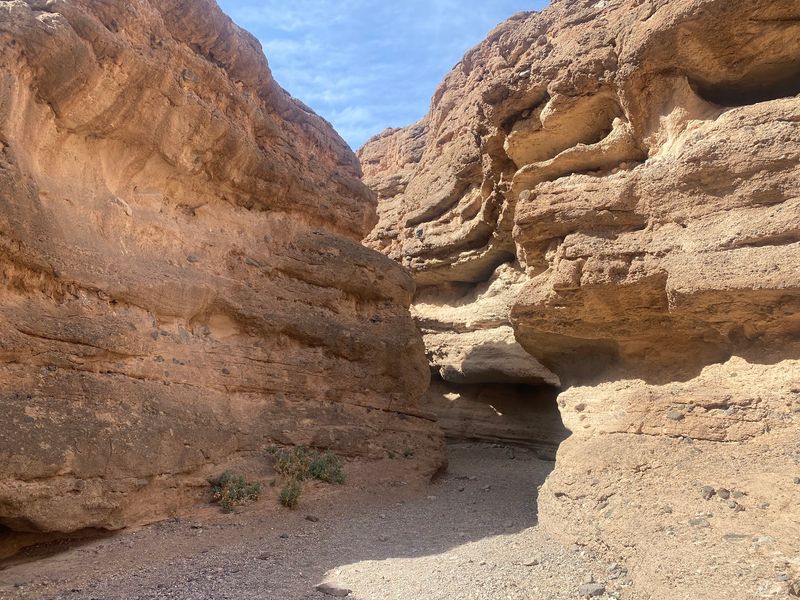
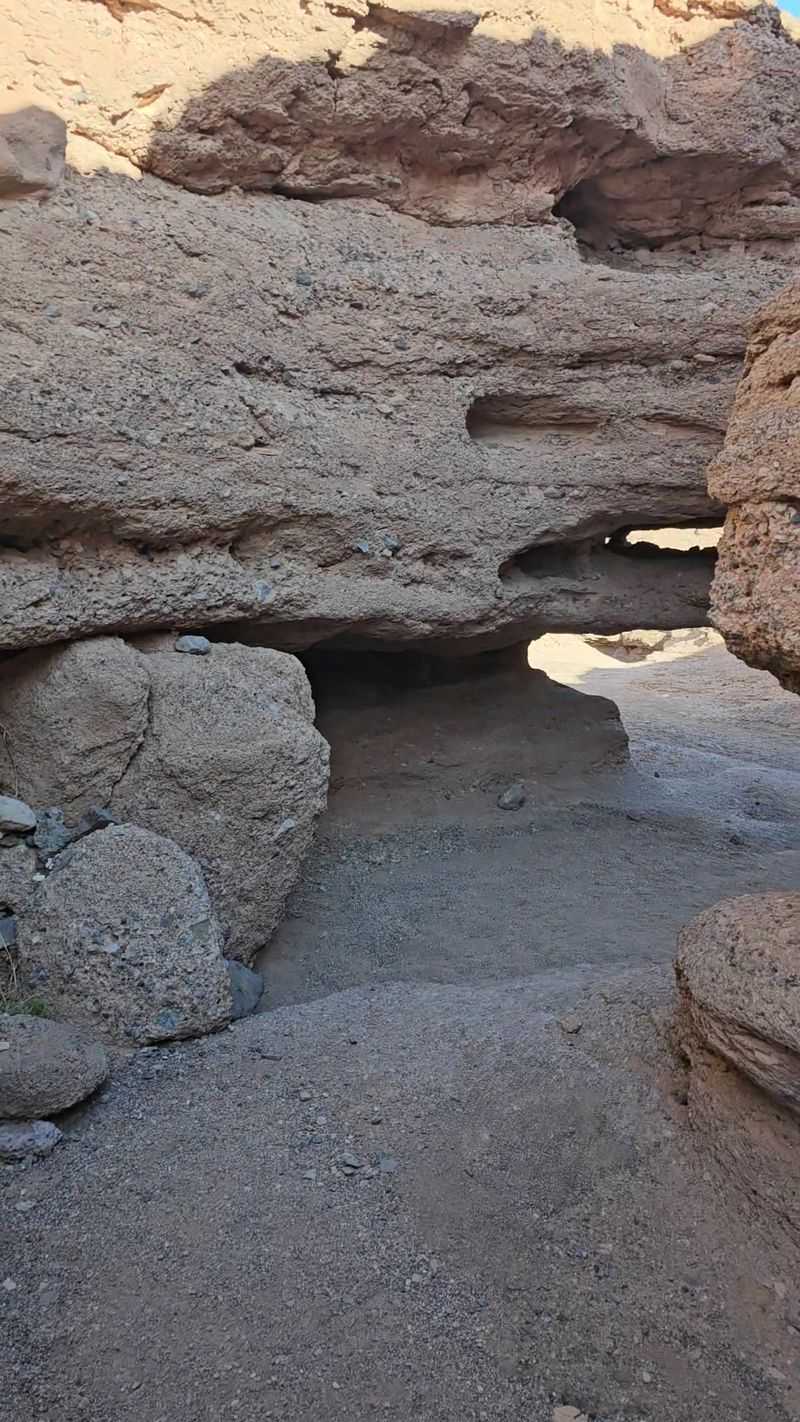
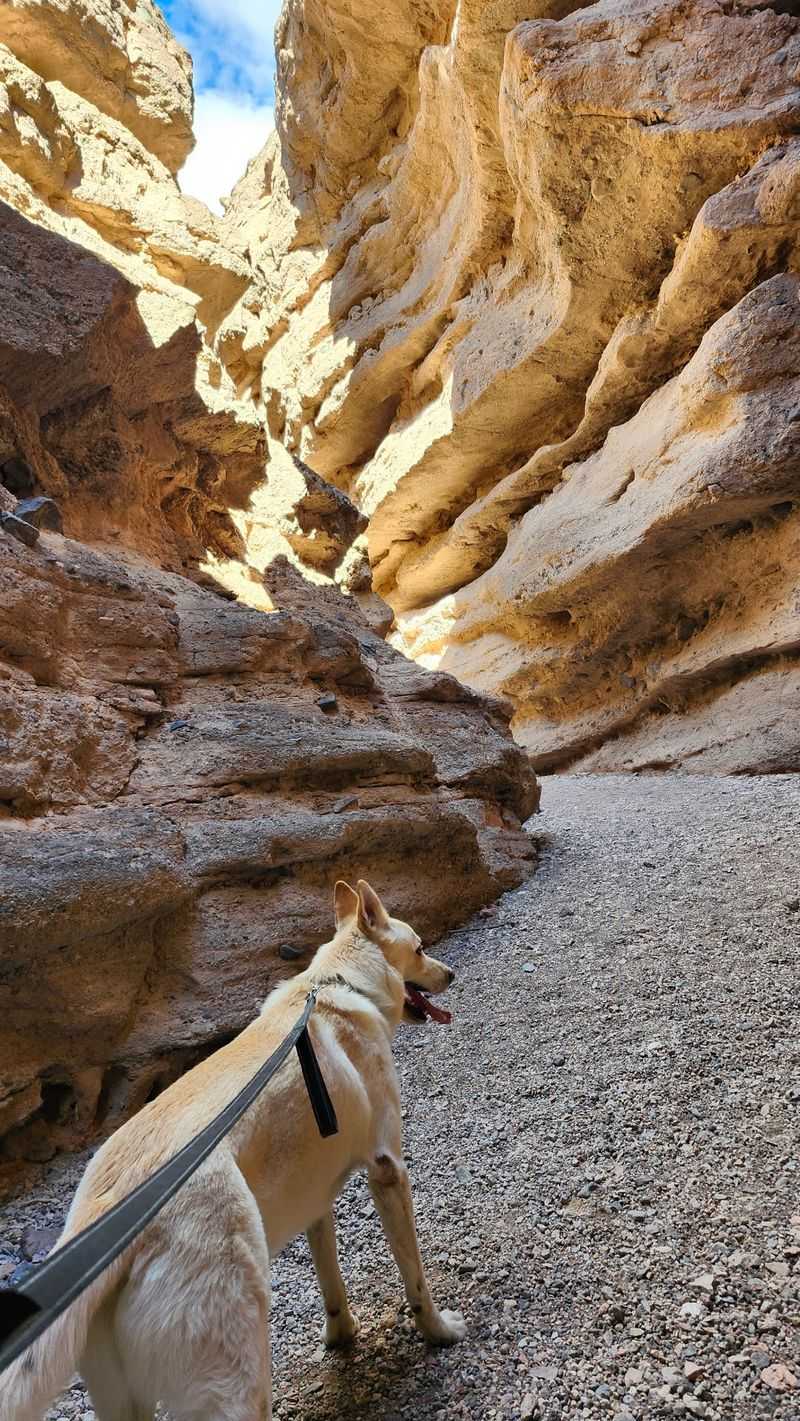
The canyon squeezes down in sections until sunlight only reaches the top edges. Walls rise well above your head, striped with layers of pale rock and darker mineral bands. The floor stays sandy and gravelly, so your footsteps go quiet.
What surprises most first-timers is how quickly the change happens. One minute you walk across open gravel with full sun overhead. A few minutes later you stand in cool shade between stone.
You can stretch your arms and nearly touch both sides in the tightest spots. That closeness is what makes people slow down and start looking up instead of ahead.
Photographers like the morning light here because the shade stays even and soft. Kids like it because the walls feel like a maze.
You should plan extra time for this stretch. Rushing through the narrows misses the whole point of coming out here in the first place.
The Steep Start That Catches People Off Guard
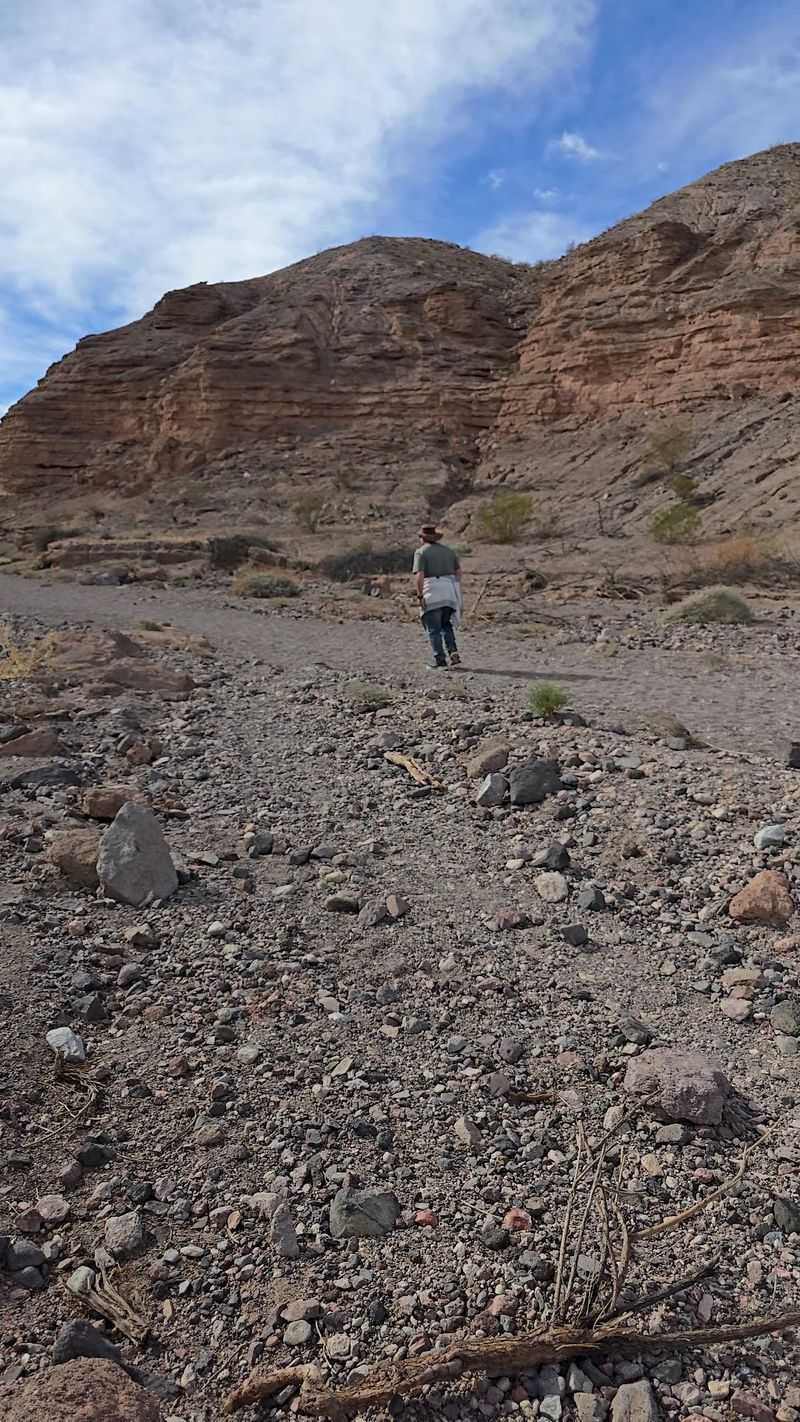
Right after you leave the parking area, the ground drops away fast. The first few minutes involve a steep downhill on loose dirt and small rocks, and plenty of hikers mention it as the toughest part of the whole outing.
You should take that section slowly. Loose gravel rolls underfoot, and trekking poles help a lot if you carry them.
Shoes matter here more than anywhere else on the route. Smooth-soled sneakers slide, while hiking shoes or boots with real tread give you confidence.
Remember that the same slope waits for you at the end. What feels like an easy descent at the start becomes a short uphill climb when you finish.
Save some water and energy for that final push. It is not long, but it comes when your legs already feel warm.
Once you reach the bottom and cross the wash, the terrain flattens out considerably. From there the walking gets much easier and stays fairly gentle through most of the canyon.
Knowing about the drop in advance turns it from a surprise into a simple warm-up at Owl Canyon Trailhead.
Tunnels With Echoes You Will Want To Test
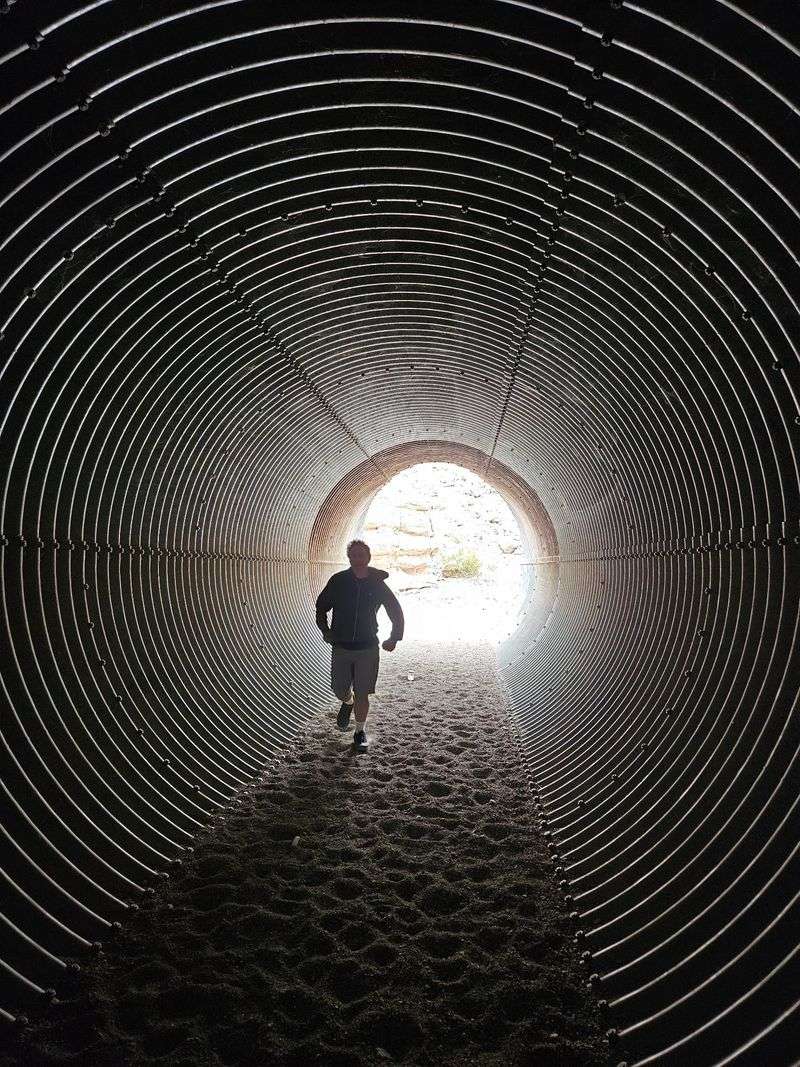
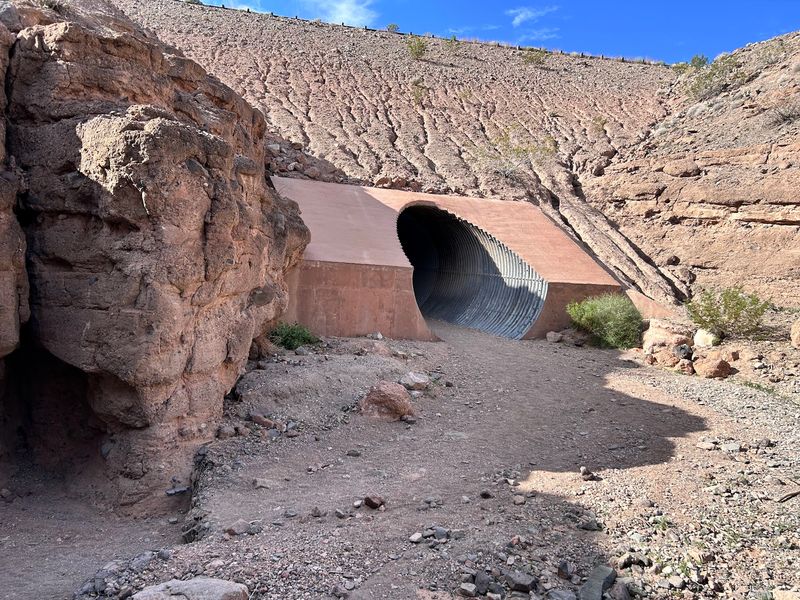
Two sets of tunnels sit along the route, and they turn out to be one of the most memorable pieces of the walk. These are wide drainage culverts that pass beneath Lakeshore Road and the River Mountains Loop Trail.
The echoes get everyone. Voices bounce off the curved walls, and families almost always stop to hear their own sounds come back.
The trail begins at the 33 Hole Scenic Overlook, with parking off 33 Hole Canyon Road inside Lake Mead National Recreation Area. That location explains the leftover engineering scattered through the landscape.
Walking through the first tunnel gives you a clear landmark to measure your progress. Many hikers turn around at the second tunnel and call it a satisfying day at around two miles round trip.
Bring a small light if you want to look closely at the walls inside. The tunnels are short enough that daylight reaches through, but a flashlight adds detail. Kids especially love this part, so expect a few extra minutes of stalling before anyone agrees to keep hiking.
Looking Up For The Birds That Named The Place
The name is not decoration. Owls really have been seen around the canyon, and patient hikers occasionally spot them while exploring the area.
You improve your odds by scanning slowly instead of walking fast. Ravens and hawks ride the air currents above the canyon rim throughout the day.
Plenty of visitors finish the hike without seeing a single owl, and that is normal. Wildlife sightings vary, although dawn and dusk can be good times to watch for owl activity.
Binoculars are worth the extra weight in your pack. A small pair lets you study ledges without scrambling up loose rock.
Keep your voice low in the narrow sections and give any bird you find plenty of space. Nesting animals abandon sites when people crowd them. Treating wildlife gently is part of what keeps Owl Canyon Trailhead feeling wild rather than worn out.
Seashells In The Middle Of The Desert
Here is the detail that stops people mid-step: small white shells scattered across the dry ground near the beginning of the hike. You are standing in a desert, miles from any shoreline, yet the evidence of water sits right at your feet.
Many of these are freshwater clam shells left behind as Lake Mead receded. Parts of Owl Canyon were once submerged beneath the reservoir, so the exposed lakebed still carries evidence of that much higher water level.
Take a good look, then leave them exactly where they sit. Removing natural objects from a national recreation area is not allowed, and the next hiker deserves the same surprise you just had.
The shell zone makes a good teaching moment for anyone hiking with children. It shows how much a landscape can change over long stretches of time. Photograph them instead of pocketing them. A close-up shot with your boot in the frame gives useful scale.
Details like this separate Owl Canyon Trailhead from a simple walk through pretty rocks. The ground itself tells a story about how dramatically Lake Mead’s shoreline has changed over time.
Choosing Between The Loop And The Out-And-Back
You get options here, and that flexibility is part of the appeal. A loop runs roughly clockwise or counterclockwise with similar effort either way, and a straightforward out-and-back lets you turn around whenever you feel finished.
The standard NPS route is about 2.2 miles round trip, although hikers sometimes connect additional paths to create longer loop variations. Others stop at the second tunnel for a shorter two-mile trip.
Going left at the early fork means you descend the scramble rather than climb it. Choose that direction if you prefer downhill hand-and-foot work over an uphill push.
The trail is not maintained, so carrying an offline map is a smart precaution, especially if you plan to explore beyond the standard route.
Faint side paths branch off in several places, and some simply end. Losing the main route happens easily, which is another reason a GPS map on your phone earns its keep. Owl Canyon Trailhead rewards people who plan their route before the trailhead rather than during the hike.
Timing Your Visit Around The Desert Heat
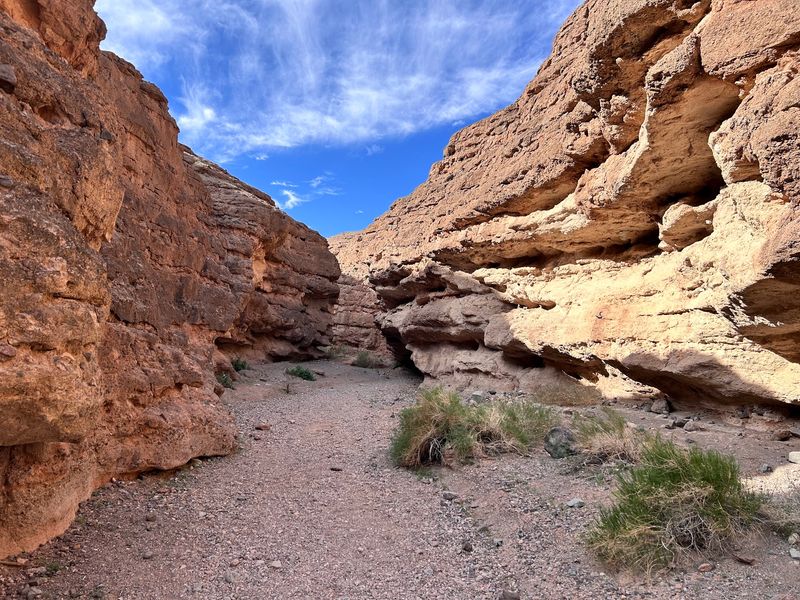
Temperature decides whether this hike feels wonderful or miserable. Slot canyons trap heat, and the deeper sections can climb far past comfortable once the sun sits high in summer.
Early mornings are usually the better choice during warmer weather. Arriving shortly after sunrise gives you shaded canyon walls, cooler air, and a real chance at having the narrows to yourself.
Cooler months generally bring the most comfortable hiking conditions, with November through March especially well suited to desert hikes around Lake Mead.
You should carry more water than feels necessary. A hydration pack beats a single bottle because it holds more and keeps your hands free for scrambling.
Sunscreen, sunglasses, a hat, and sturdy shoes round out the basics. Gloves help if you plan to touch rock on the climbing sections.
Give yourself a couple of hours minimum. Most people spend longer than expected because of photo stops and side exploring. Planning around the clock and the calendar turns Owl Canyon Trailhead into an easy morning outing instead of an endurance test.
Small Habits That Keep This Canyon Worth Protecting
Quiet places stay quiet because visitors take care of them. Parking areas, picnic tables, and restrooms sit near the start, and an entrance station covers access to the recreation area, so the basics are handled before you take your first step.
Packing out everything you bring makes the biggest difference. That includes dog waste, since the trails welcome leashed pets and the wash shows every bit of litter.
Sticking to established paths protects fragile desert soil that takes decades to recover. Cutting new routes across slopes speeds up erosion in ground that already crumbles easily.
Skip climbing on loose walls where rock breaks away under weight. Falling debris endangers hikers below and damages the formations people came to see. Avoid the canyon when storms threaten, since dry washes can flood quickly even when rain falls some distance away.
Nevada holds a lot of well-known scenery, yet Owl Canyon Trailhead still feels personal and unhurried. Treating it gently means the narrow walls, echoing tunnels, and nesting owls remain here for everyone who comes looking next.