
The Hidden North Carolina Beach Locals Rarely Mention But Visitors Never Forget
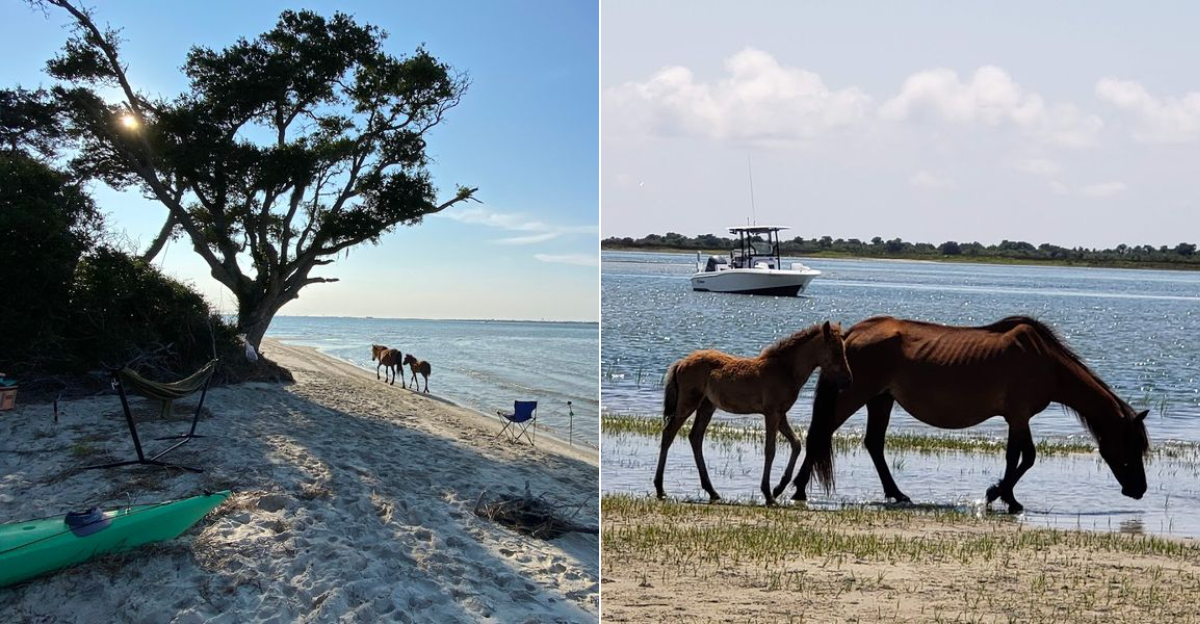
A beach day gets a lot wilder when the only way in is by boat. North Carolina gives adventurous travelers a barrier island with open sand, roaming horses, and zero traffic noise waiting on the other side.
The crossing is part of the fun. Once the ferry pulls away, the busy world starts feeling wonderfully far behind.
There are no roads, shops, or easy shortcuts here, so the reward is pure coastal freedom. Walk the beach, watch for shells, scan the dunes, and keep a respectful distance if the wild horses appear.
This is the kind of shoreline that asks visitors to come prepared and then gives them something unforgettable in return. It feels raw, beautiful, and just remote enough to make the whole trip feel special.
Wild Horses That Roam Free
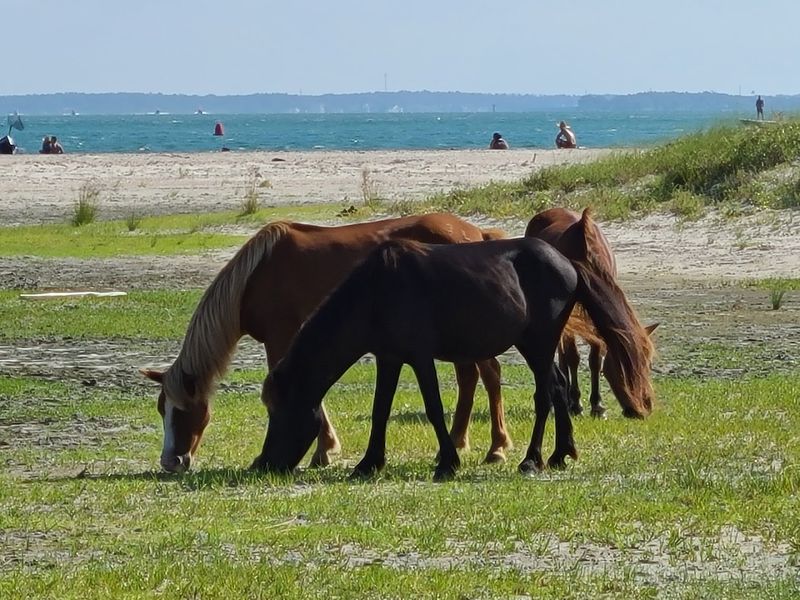
Picture this: you step off a ferry onto a wild, roadless island, and within minutes, a group of horses just walks past you like they own the place. They do.
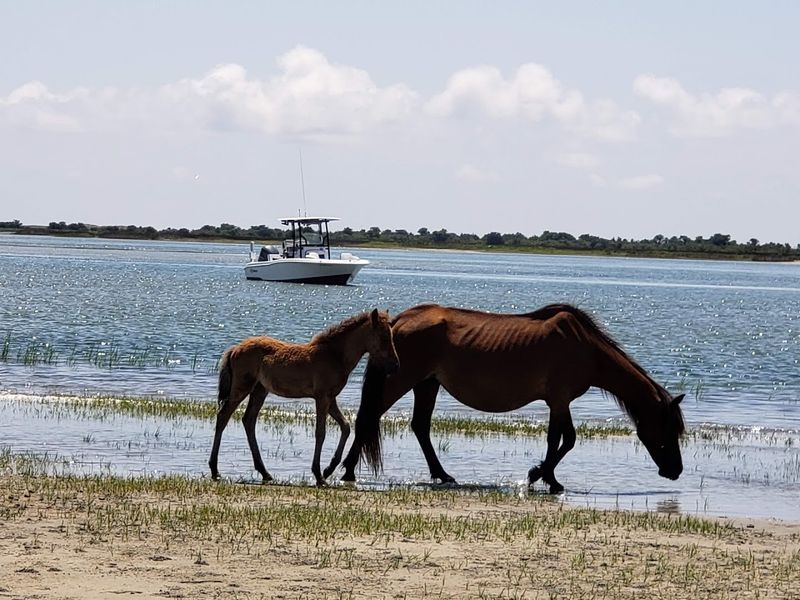
Shackleford Banks is home to around 100 to 130 wild horses, known as Banker ponies. These are not tame animals.
They are fully wild and find their own food and water every single day.
Scientists believe they are descendants of Spanish mustangs whose ancestors may have arrived after shipwrecks in the 1500s. That means these horses have been surviving on this island for hundreds of years.
The herd is federally protected and managed by Cape Lookout National Seashore and the Foundation for Shackleford Horses. Visitors must stay at least 50 feet away from the horses at all times.
Want the best chance of spotting them? Walk toward the center of the island, away from the beach.
Horses often move through tall grasses and between the dunes. Wear shoes you do not mind getting dirty.
Watching a wild horse graze calmly against an open ocean backdrop is one of those moments that genuinely stops you in your tracks. No zoo.
No fence. No script.
Just a living piece of history doing exactly what it has always done.
A Ferry Ride Worth Taking
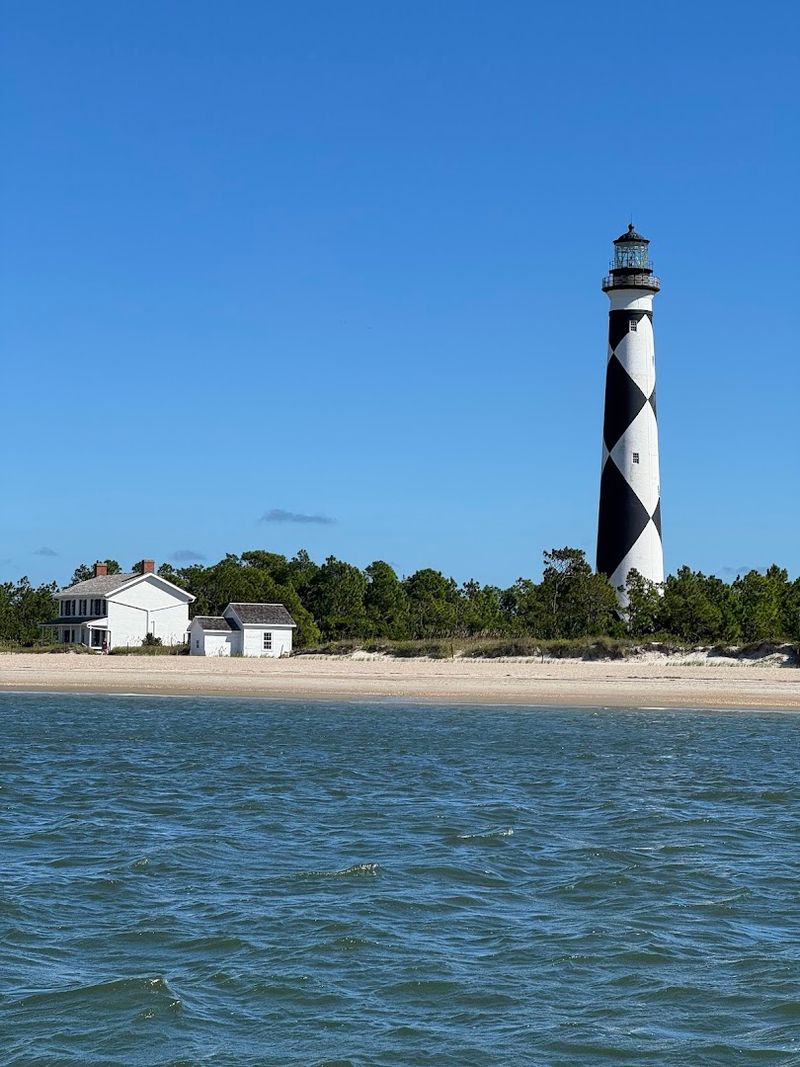
Getting to Shackleford Banks is half the fun. There are no bridges and no roads connecting the island to the mainland.
The only way in is by boat.
Passenger ferries depart from Beaufort and Harkers Island in Carteret County, North Carolina. The ride from Beaufort across Back Sound takes about 20 minutes each way, and the views during the crossing are already worth the trip.
Round-trip ferry tickets from Harkers Island run around thirty dollars per person. Ferries typically run on a schedule, picking up passengers about once an hour, so planning your timing matters.
Booking in advance is a smart move, especially during summer months when spots fill up fast. Private boats are also welcome for those who have access to one.
There are no steps or docks at the drop-off point, which means you step right onto the sand the moment you arrive. That detail alone sets the tone perfectly.
Could there be a better way to arrive at a beach than stepping directly from a boat onto untouched shoreline? Ferries generally operate on specific days and hours, so checking current schedules before planning your visit is a must.
The island rewards those who come prepared and ready to explore on foot.
Shelling Like You Have Never Done Before
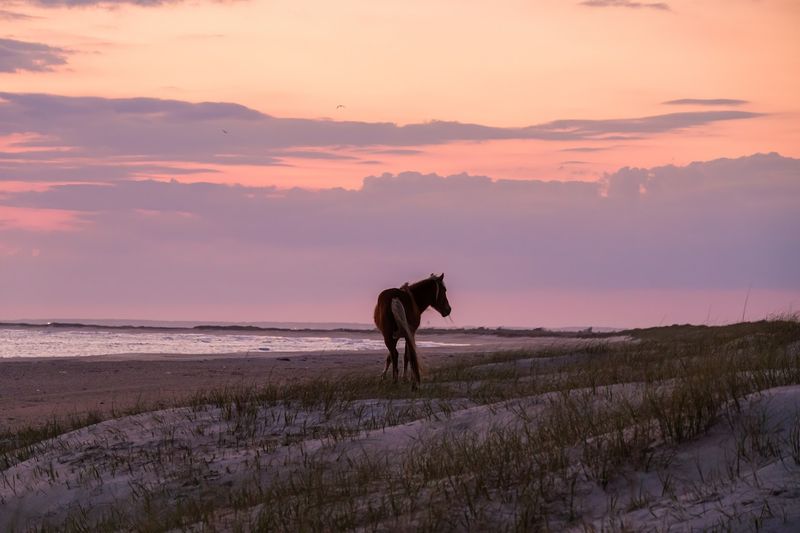
Some beaches have shells. Shackleford Banks has shells that make your jaw drop.
Wide, undeveloped shoreline means there is almost no competition for what the ocean washes up.
Whelks, olive shells, augers, sand dollars, and even the Scotch bonnet, which is North Carolina’s official state shell, can all be found along the beach. Some visitors report finding shells the size of their head near the southern shoreline.
The east end and inlet beaches are known for producing the best finds. Low tide is the sweet spot for searching, and the hours right after a storm can be absolutely spectacular.
Visitors are allowed to collect up to a five-gallon bucket of shells per person per day. Just make sure to check that nothing living is still inside before packing up your treasures.
Wearing water shoes is a practical tip from experienced visitors. The island also has patches of small cacti hiding in the sandy areas, so flip-flops are not the best choice for exploring beyond the waterline.
Whether you are a serious collector or just picking up a few pretty pieces for the windowsill, the shelling here feels like a real reward. Every step along the shoreline holds the possibility of finding something extraordinary that the ocean decided to leave just for you.
Swimming On Both Sides
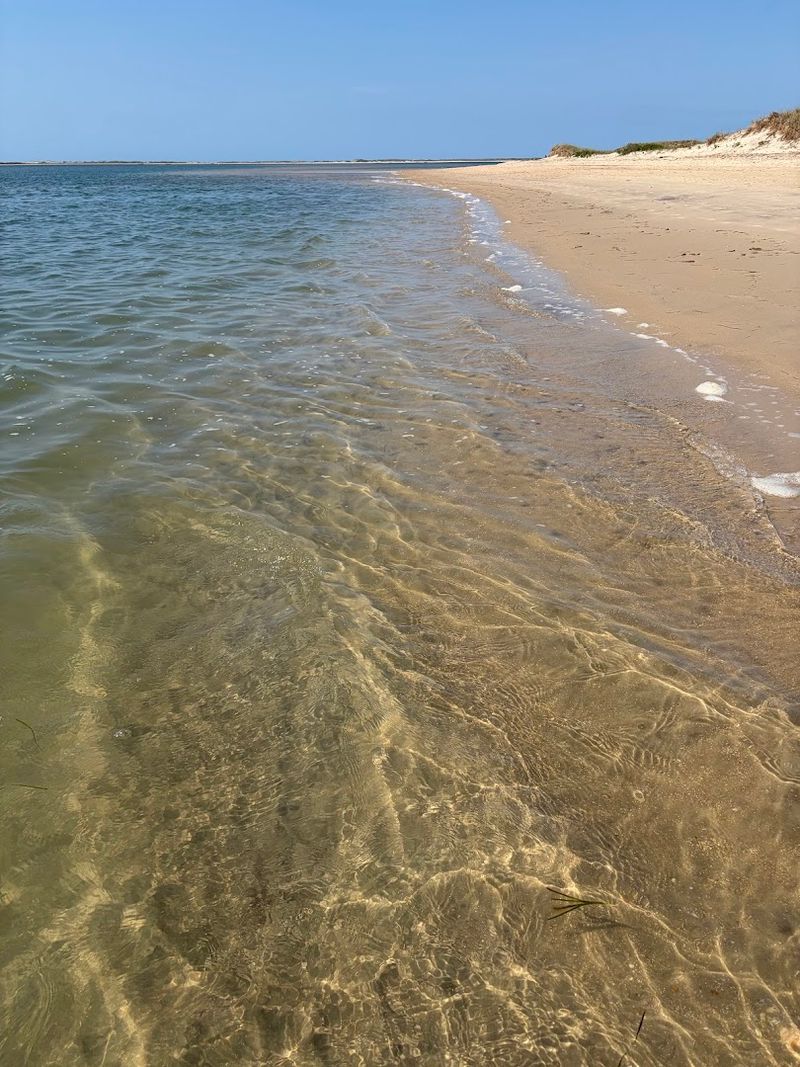
Not all beaches are created equal, and Shackleford Banks actually gives you two completely different swimming experiences on one island. That is a rare thing.
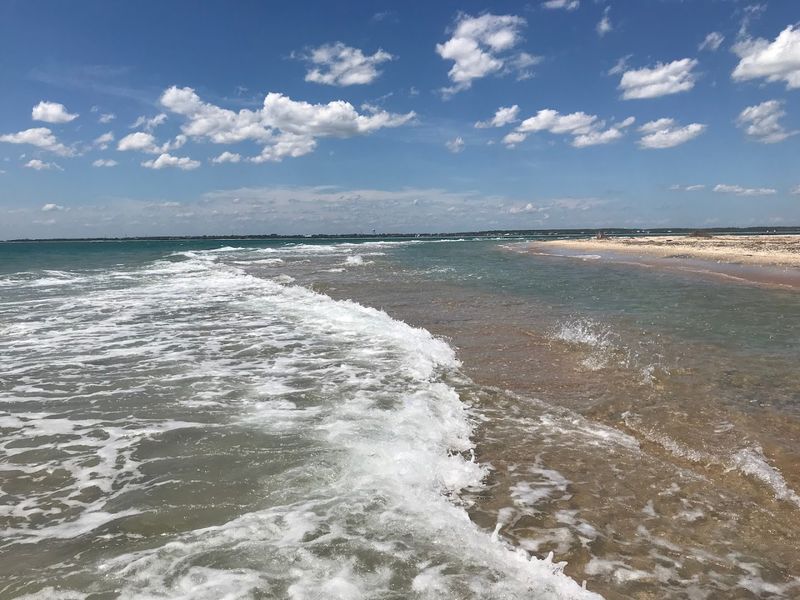
The ocean side, facing the Atlantic, has active surf with real waves. It is energizing, breezy, and great for those who love that classic beach feeling.
The sound side, facing inland, is a completely different story.
The water on the sound side is calm, clear, and shallow for a long way out. One visitor described walking about fifty meters from shore and still only being knee-deep.
That kind of calm is hard to find anywhere along the East Coast.
The sound-side waters are especially popular with families and anyone who just wants to float peacefully without worrying about waves. The clarity of the water is something people consistently talk about after visiting.
There are no lifeguards on the island, so swimming responsibly and knowing your limits is important. The ferry drop-off area on the east end is close to the calm sound-side waters, which makes it a natural first stop for most visitors.
Two beaches, two completely different moods, and one island to enjoy them both. Which side sounds more like your kind of afternoon?
Pack sunscreen, bring plenty of water, and let the island decide the pace of your day.
Birdwatching At Its Finest
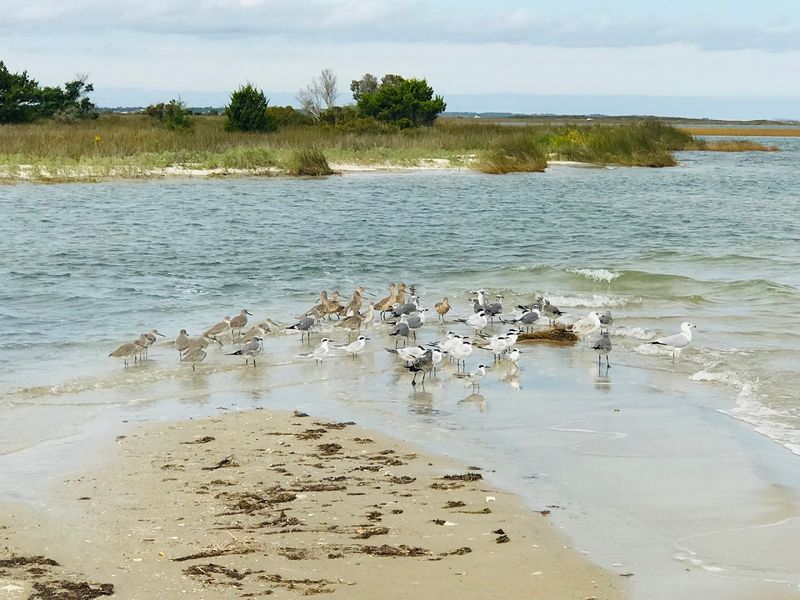
For anyone who has ever looked up at a bird and thought, I want to see more of those, Shackleford Banks is going to feel like a personal invitation. The island’s variety of habitats makes it a birdwatcher’s dream.
Wide beaches, rolling dunes, salt marshes, maritime forests, and shrub thickets all exist within the island’s roughly eight and a half miles. Each habitat attracts different species, which means the variety of birds you can spot in a single day is genuinely impressive.
Shorebirds, wading birds, and birds of prey are all regular sights here. During migration seasons, the island becomes a rest stop for dozens of species passing through the Atlantic Flyway.
You do not need to be an expert to enjoy this. Simply walking the shoreline or sitting near the marsh edge for a few minutes usually produces some remarkable sightings.
Binoculars are worth bringing along.
Sea turtles also nest on the island during summer, which adds another layer of wildlife magic to the experience. Ghost crabs, gray foxes, and otters round out the cast of creatures calling this place home.
The whole island feels like a nature documentary that you somehow get to walk around inside. Bring a camera with a good zoom, keep your voice low near the marsh areas, and let the wildlife come to you.
Camping Under The Stars
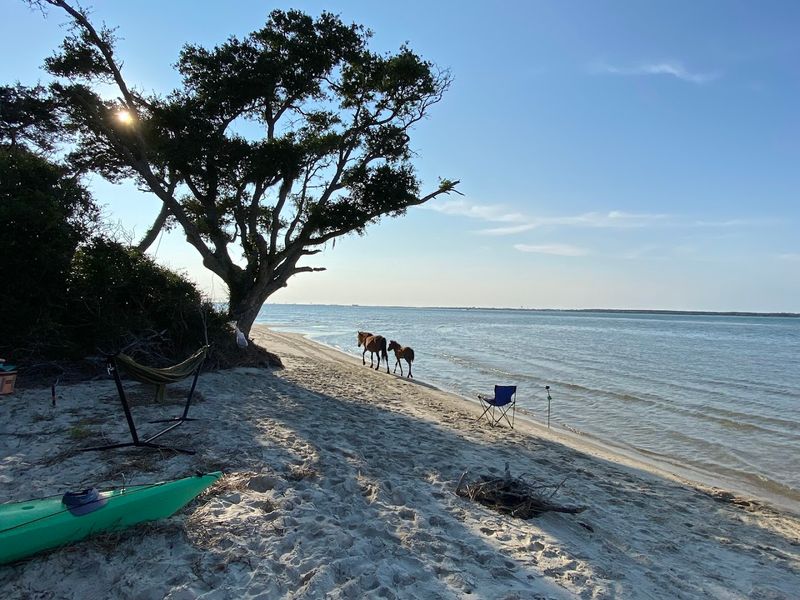
Spending the night on a wild, roadless barrier island with horses roaming nearby and stars filling the sky above sounds like something from a novel. At Shackleford Banks, it is just a Tuesday.
Primitive backcountry camping is allowed on the island with a free permit from Cape Lookout National Seashore. No cabins, no campgrounds, no amenities waiting for you.
Just open land and the sound of the ocean.
Campers need to bring absolutely everything they need, including all food, water, and a way to pack out all trash. There are no stores, no running water, and very limited facilities on the island.
The reward for doing it right is extraordinary. Waking up on a beach with no roads, no traffic, and wild horses grazing nearby is a morning experience that is very hard to top.
A tent, plenty of water, sturdy shoes, bug spray, and sun protection are the basics every camper needs. Mosquitoes can be intense depending on where you set up camp, so bug spray is not optional.
Overnight visitors consistently describe the experience as one of the most memorable trips of their lives. Ready to trade the hotel room for something a little more wild?
Check permit requirements and plan your overnight stay well in advance, especially for summer weekends.
History Hidden In The Sand
Long before it became a protected national seashore, Shackleford Banks had a whole life of its own. The island was originally known as Cart Island before John Shackleford acquired it in 1713, and the name has stuck ever since.
A community called Diamond City once stood on the island, home to families who made their living from the sea. After a powerful hurricane in 1899 devastated the settlement, most residents packed up and left.
By 1902, the last permanent residents had gone.
Another hurricane in 1933 opened Barden Inlet, which physically separated Shackleford Banks from the Core Banks to the east. That natural event reshaped the island’s geography in a way that is still visible today.
The island became part of the National Park Service in the 1960s, officially protecting it from development. That decision is a big part of why it still looks the way it does today, wild and almost entirely untouched.
Walking across the island, it is easy to forget that people once built homes and raised families here. The land has reclaimed nearly everything.
Only the stories remain, carried forward by historians, park rangers, and curious visitors.
History does not always need a museum to feel real. Sometimes it just needs an empty stretch of land and the knowledge that something remarkable once happened right where you are standing.
Guided Tours That Change Everything
Showing up to Shackleford Banks without any local knowledge is still a great time. Showing up with a knowledgeable guide, though, is a completely different level of experience.
Guided tours are available for visitors who want more than just a walk on the beach. Some tours focus specifically on tracking the wild horses and understanding their behavior and history.
Others zero in on the best shelling spots at different tide times.
Cape Lookout National Seashore offers seasonal programs, including what they call Horse Sense and Survival Tours. These tours take a closer look at how the Banker ponies have adapted to island life over hundreds of years.
Ferry tickets are often included in the tour price.
Eco-tours led by local guides offer a more personal experience. Guides share stories about the island’s history, point out wildlife that most visitors would walk right past, and help make sense of the landscape in a way that sticks with you long after the trip is over.
First-time visitors especially benefit from a guided experience. The island is eight and a half miles long with no marked trails, and it is easy to wander further than planned without realizing it.
Tours generally run on specific days and seasons, so checking availability ahead of time is important. Booking early during peak summer months is strongly recommended.
A good guide turns a nice day trip into a story worth telling.