
The Iowa Heritage Farm Keeping The Tradition Of The Old Fashioned Threshing Bee Alive
The metallic roar of antique steam engines echoes across the wide valley before the morning mist fully clears. Giant leather belts spin between rusted iron wheels to power the wooden separators.
This yearly harvest ritual keeps the agricultural past alive for thousands of curious onlookers. Iowa soil has always demanded hard work, and these towering machines represent the peak of vintage sweat.
Older farmers watch with knowing smiles as thick sheaves of wheat vanish into the mechanical jaws. The air fills with the sharp smell of coal smoke and dry chaff within minutes.
Neighbors work side by side to feed the threshers just like their ancestors did a century ago. The heavy grain pours into wooden wagons with a steady, satisfying rhythm.
It is a noisy celebration of survival that refuses to be forgotten.
Historical Farming Techniques Used In Iowa
Long before tractors ruled Iowa fields, farming was a full-body workout with no days off. At Living History Farms, you get to watch three eras of agricultural life play out in real time.
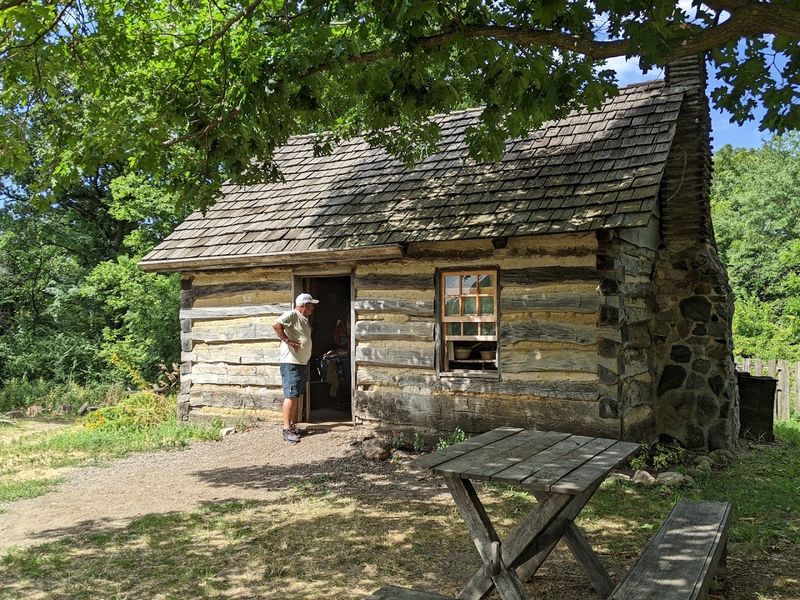
The 1700 Ioway Indian Farm shows how indigenous women grew corn, beans, and squash using bone and stone tools. No metal.
No oxen. Just skill and knowledge passed down through generations.
The 1850 Pioneer Farm switches things up with oxen doing the heavy plowing. Crops like corn, potatoes, and wheat take center stage here.
You can also watch wool spinning and candle making, which were everyday survival tasks back then.
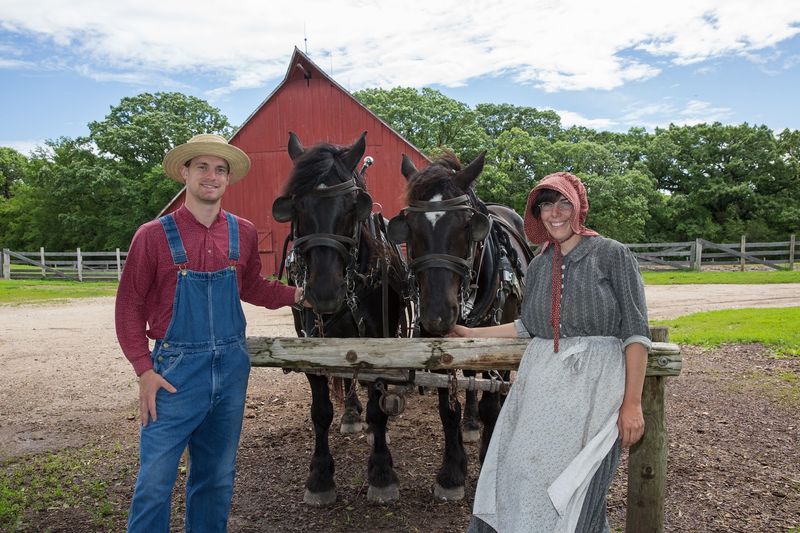
Move forward to the 1900 Horse-Powered Farm and you will see Percheron draft horses pulling plows and planters across the land. These horses were not pets.
They were working partners. Horse-drawn machinery marked the beginning of a slow shift toward mechanized farming.
Each era tells a different story about how Iowa farmers adapted to their time and resources. The contrast between the three farms is striking.
You realize just how much changed in 200 years of agricultural life. Visiting this place at 11121 Hickman Rd, Urbandale, IA 50322, United States gives you a front-row seat to that transformation.
Seasonal Activities That Celebrate Farming Heritage
Farming was never a year-round routine at just one speed. At Living History Farms, the seasons shape everything, and the calendar fills up fast.
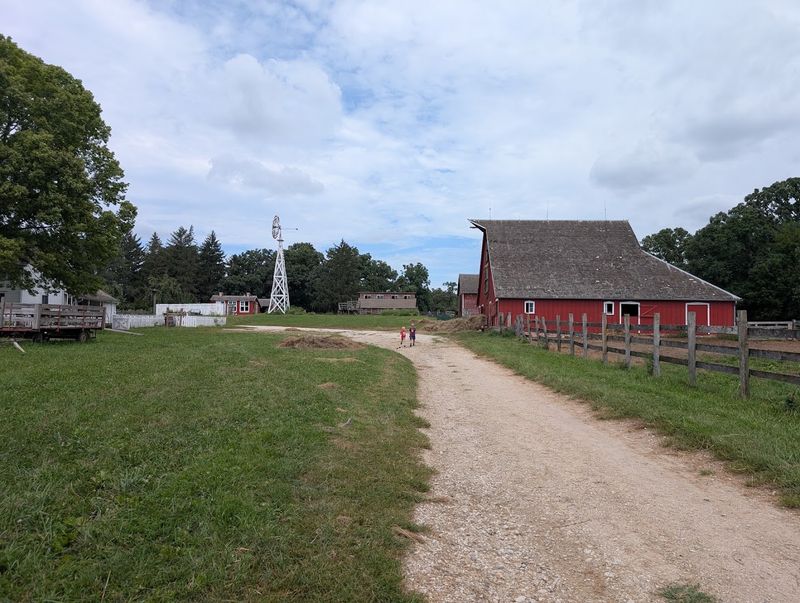
General touring runs from May through October, giving visitors months of hands-on exploration across the 500-acre site.
July brings the annual Grain Harvest event, which is probably the most old-fashioned thing you will do all summer. Guests actually help with historic harvest methods.
It is not a demonstration you watch from behind a rope. You get involved, and that changes everything about how you understand early farm life.
September brings Applefest, a celebration of the apple harvest season that feels warm and community-driven. The smell of the season, the activities, and the atmosphere make it a favorite for families.
It is a good reminder that harvest was once a reason to celebrate together, not just a deadline to meet.
Independence Day and Family Halloween events round out the seasonal lineup with their own unique energy. Each event connects a modern celebration to its agricultural roots.
Living History Farms does not just mark the calendar. It uses the seasons to teach something real about how Iowa farm families lived, worked, and found joy in the rhythm of the land throughout the year.
Community Events Focused On Agricultural Traditions
There is something powerful about a community gathering around shared work, and that is exactly what the annual Grain Harvest event at Living History Farms brings back to life. Guests are not spectators here.
They are invited to help with historic harvest methods that once required entire neighborhoods to show up and pitch in. That spirit of collective effort is rare to find anywhere today.
Indigenous Iowans Day is another standout event on the farm calendar. It honors the Ioway people whose farming knowledge shaped this land long before European settlers arrived.
The event brings cultural awareness and historical respect into the same space, which is not always easy to do well. Living History Farms manages it thoughtfully.
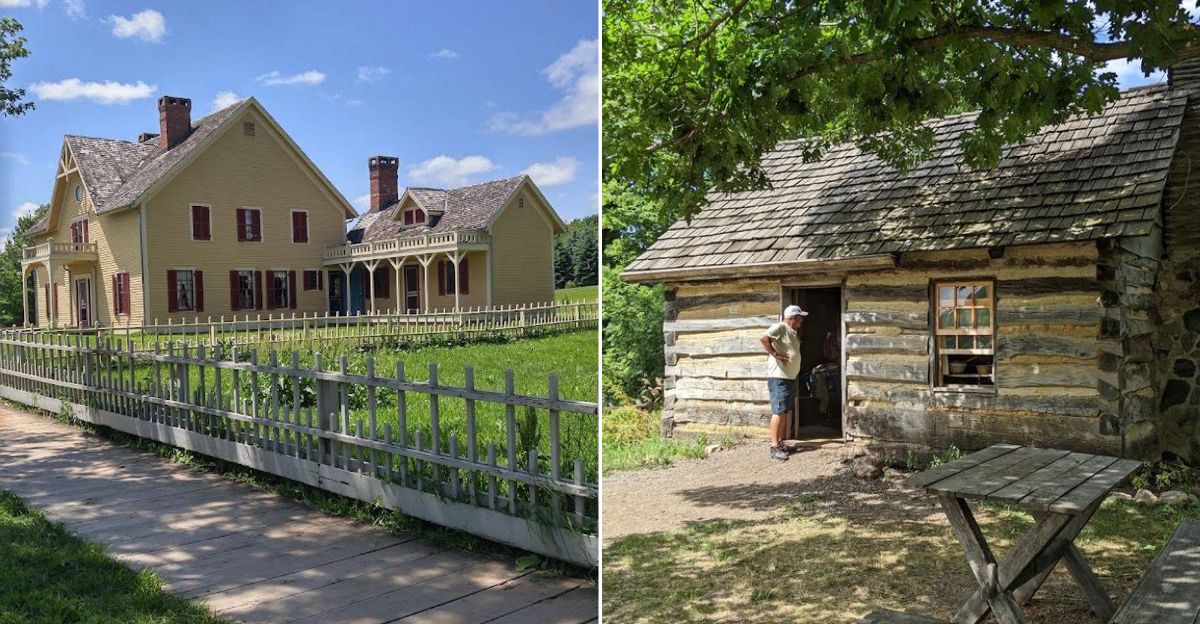
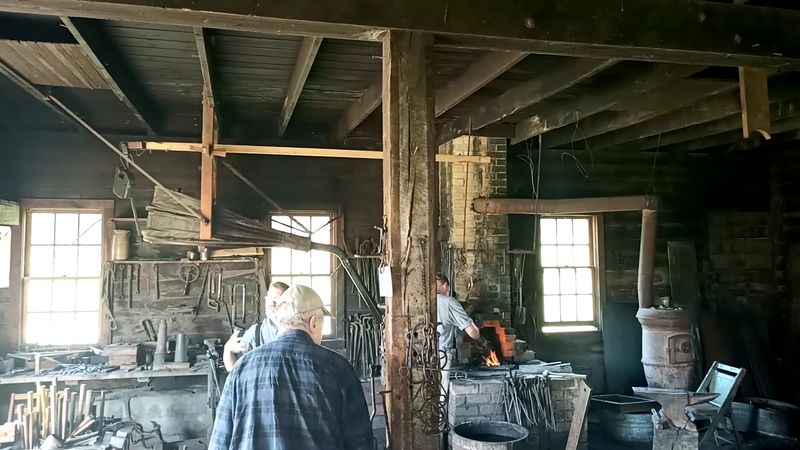
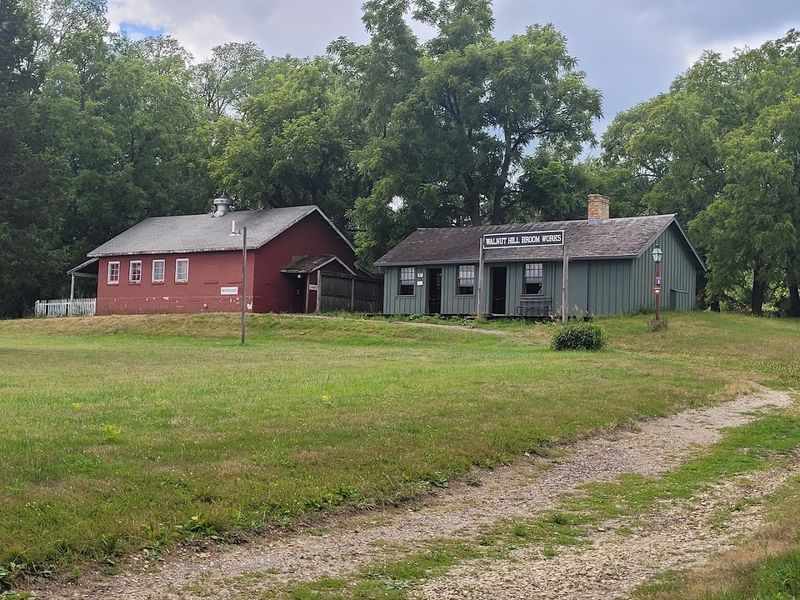
The 1876 town of Walnut Hill adds another layer to the community experience. This recreated frontier town features craftsmen working in period-accurate trades.
A printer, a blacksmith, and a general store owner each tell a piece of the story that built rural Iowa. Walking through Walnut Hill feels like flipping through a very detailed history book, except the characters talk back.
These community-centered events remind visitors that agriculture was never just about crops. It was about people working together, sharing skills, and building something larger than any single farm could manage alone.
That tradition is still worth celebrating.
Tools And Equipment From Traditional Threshing
Before machines took over, separating grain from stalks was done by hand with a simple but brutal tool called a flail. A flail has a long wooden handle connected to a heavy swinging club.
You swing it repeatedly over cut grain until the kernels fall free. Try doing that for an entire harvest season, and you will understand why mechanization was so welcome.
Mechanical reapers and threshing machines eventually replaced the flail, and the change was dramatic. What once took weeks of backbreaking labor could be completed in far less time.
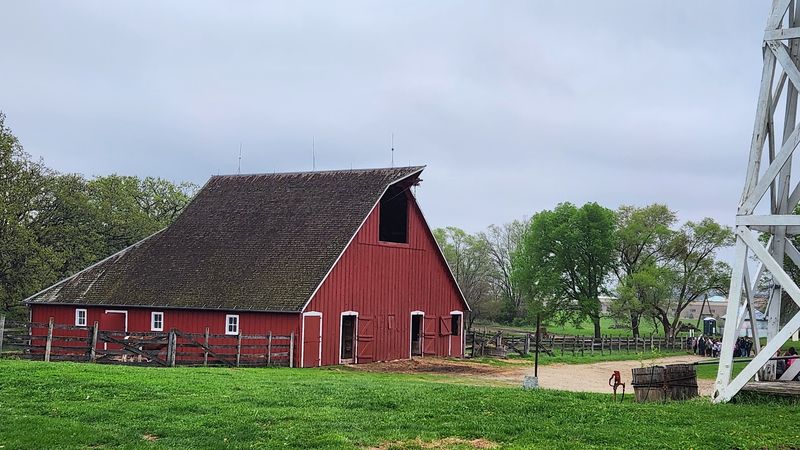
At the 1900 Horse-Powered Farm at Living History Farms, a 1913 Wood Brothers steam engine powers actual threshing demonstrations. Watching it run is genuinely impressive, even if you have zero interest in farm equipment.
The progression of tools on display across the three farm eras tells a story of human ingenuity. Each invention solved a specific problem that farmers faced.
The flail solved the problem of hand-separating grain. The mechanical reaper solved the problem of cutting crops fast enough.
The steam engine solved the problem of scale.
Seeing these tools in action rather than behind glass makes a real difference. You grasp the weight of a flail differently when someone is actually swinging it.
That hands-on quality is what sets Living History Farms apart from a typical history exhibit.
Educational Programs Dedicated To Farm
School field trips to Living History Farms are not your average sit-and-listen experience. Students get pulled into real farm activities.
They learn about Ioway culture and pioneer life through hands-on tasks that make history feel relevant and immediate. Teachers often say the farm does in one afternoon what a textbook takes weeks to cover.
Outreach programs extend the farm experience beyond its 500-acre boundaries. Living History Farms brings its programs directly into classrooms and community groups across Iowa.
These sessions include activities tied to specific historical periods, giving students context they can connect to what they see on the farm later.
Exploration programs offer a deeper look for groups that want more than a quick tour. Participants engage with farm interpreters who guide them through daily routines from different centuries.
The focus is always on making the past feel real, not distant. That approach works especially well for younger visitors who learn best by doing.
The educational reach of Living History Farms goes well beyond school groups. Adult learners, community organizations, and heritage groups all find value in the programs offered.
The farm treats education as a living process, one that happens in the fields, in the barns, and in the conversations between visitors and interpreters. That commitment to learning is woven into every part of the experience here.
Impact Of Heritage On Local Culture
Living History Farms is not just a museum. It is an economic engine and cultural anchor for the greater Des Moines area.
The farm generates roughly six million dollars annually and supports around 85 jobs in the local community. That kind of impact makes it far more than a weekend attraction for history buffs.
The farm connects Iowans to their Midwestern rural roots in a way that feels personal. Families who visit often come back with their own children years later.
That generational pull is rare. It means the farm is doing something right in how it presents heritage as something worth caring about, not just something to observe.
Cultural preservation is another major piece of what Living History Farms contributes to the region. The farm actively maintains diverse cultural expressions, from Ioway indigenous traditions to European pioneer practices.
Keeping those stories visible helps prevent them from fading into footnotes.
Local pride runs deep here. Urbandale and the surrounding communities point to Living History Farms as a landmark that defines the region’s identity.
It tells the story of how Iowa became Iowa. That narrative matters to longtime residents and newcomers alike.
When a place can hold that kind of meaning for an entire community across generations, it has earned its place in the cultural landscape of the state in a lasting and meaningful way.
Evolution Of Crop Harvesting Methods Over Time
Harvesting crops in 1700 looked nothing like harvesting in 1900, and Living History Farms lays out that entire journey in a single visit. The 1700 Ioway Farm demonstrates hand-harvesting using basic bone and stone tools.
Every kernel of corn was gathered by hand. Every squash was carried out of the field by someone walking.
The labor required was extraordinary.
Fast forward to the 1850 Pioneer Farm, and flail threshing enters the picture. Farmers swung hand tools to separate grain from stalks, which was an improvement over some earlier methods but still exhausting work.
Harvesting an acre of grain in 1850 took approximately 23 hours of human labor. That number is worth sitting with for a moment.
By 1900, horse-drawn machinery changed everything. The same acre that took 23 hours in 1850 could be harvested in roughly 8 hours by 1900.
Horse-drawn reapers and planters did the heavy lifting, and farmers finally had something close to breathing room during harvest season.
Watching this progression play out across three working farms is genuinely eye-opening. The numbers tell one story.
The physical demonstrations tell another. Together, they give visitors a real understanding of how much human effort went into feeding communities before modern agriculture arrived.
The evolution of harvesting methods is one of the most compelling stories Living History Farms tells across its entire 500-acre site.
Stories From Generations Of Iowa Farmers
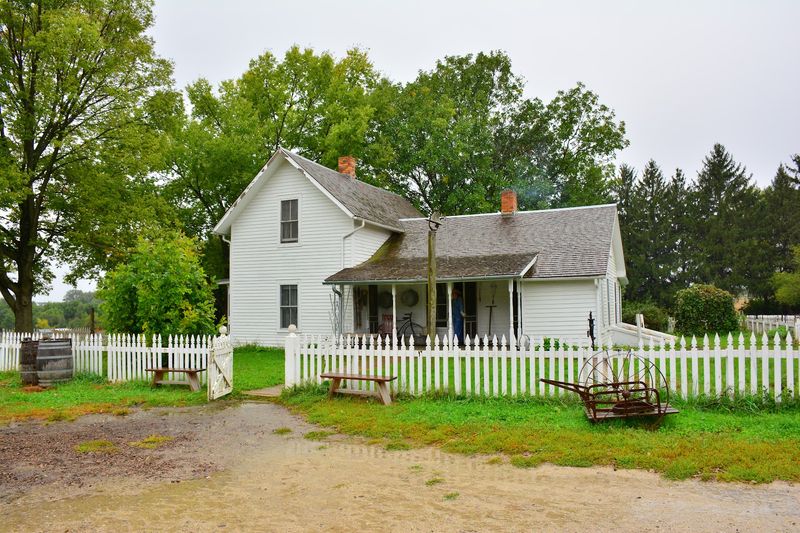
History gets real when someone in period costume looks you in the eye and describes what it meant to bring in a harvest before the first frost hit. At Living History Farms, interpreters do exactly that.
They recreate daily farm routines with the kind of detail that comes from serious research into diaries, letters, and recipe books left behind by real Iowa farm families.
Community outreach programs specifically highlight the women who kept farm households running. Their role in food preparation, preservation, and daily survival is often overlooked in standard history lessons.
Living History Farms uses historic recipes and firsthand accounts to bring those contributions into focus. It is a quieter story, but an important one.
Old-time farming required a level of self-sufficiency that most people today can barely imagine. Families grew, preserved, and prepared nearly everything they ate.
When harvest season came, neighbors showed up to help. That mutual dependence built communities in ways that went far beyond farming.
The threshing bee was not just about wheat. It was about trust.
Listening to interpreters share these generational stories adds a human dimension to the farm that no exhibit panel can replicate. You hear about the long days, the weather anxiety, and the pride that came with a good yield.
Those feelings connect directly to the Iowa farmers of today, making the past feel far less distant than it actually is.