
The Magical Glowing Waters Of Florida’s Indian River Lagoon Are Worth Seeing
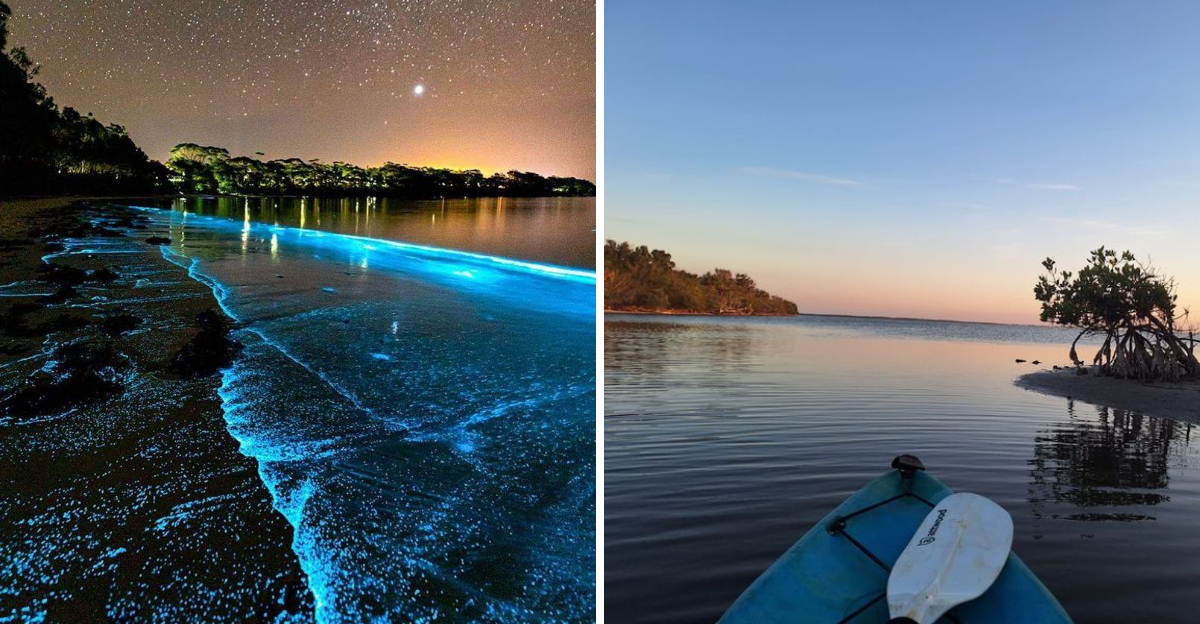
Imagine dipping your hand into dark water and watching it burst into a swirl of glowing blue light. Along Florida’s Atlantic coast, that surreal moment is not a special effect or a trick of the eye.
On warm summer nights, an entire stretch of coastal water can shimmer with a soft electric blue-green glow that looks almost otherworldly. The effect comes from microscopic organisms that light up whenever the water moves, turning paddles, fish, and even gentle waves into flashes of living light.
Each year, curious visitors travel from across the country hoping to witness this rare natural spectacle for themselves.
The Lagoon Lights Up At Night With Natural Bioluminescence
Few natural events are as quietly astonishing as watching a body of water begin to glow after the sun disappears. The Indian River Lagoon, located along Florida 32951, produces a blue-green luminescence on warm summer nights that genuinely stops first-time visitors in their tracks.
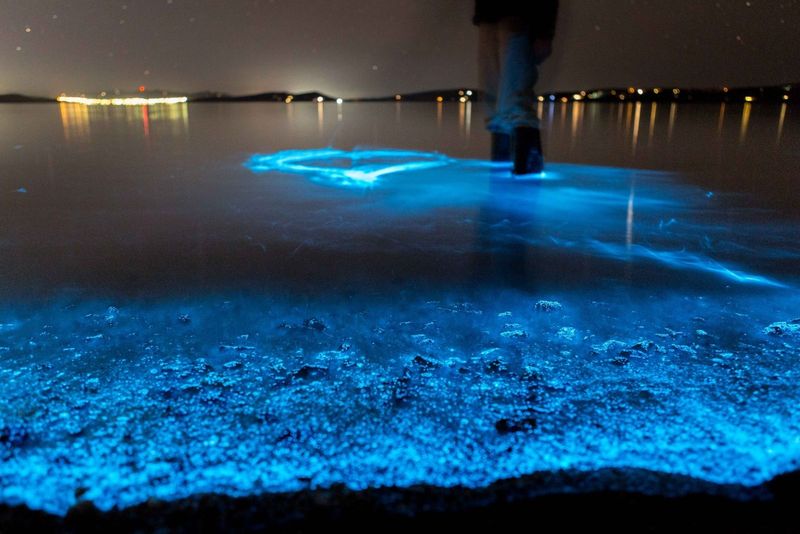
The glow is not faint or subtle. On the right evening, it radiates with enough intensity to cast soft light across the surface of the water and illuminate the outline of a paddler’s hands.
Bioluminescence in the lagoon is not a recent discovery, but growing awareness of it has made this stretch of Florida coastline one of the more talked-about natural destinations in the southeastern United States. The experience is entirely free to observe from the water’s edge, though being out on the lagoon itself makes the encounter far more personal.
Bringing a waterproof camera and arriving with low expectations often leads to the most satisfying visits, since the lagoon has a way of exceeding them.
Tiny Marine Organisms Create The Lagoon’s Famous Glow
The organism responsible for the lagoon’s glow is called Pyrodinium bahamense, a single-celled dinoflagellate that produces light through a chemical reaction when physically disturbed. These creatures are invisible to the naked eye during daylight hours, drifting through the lagoon in concentrations that can reach millions per liter during peak summer months.
At night, however, every splash, every paddle stroke, and every fish that breaks the surface triggers a burst of cold blue-green light.
The chemistry behind the glow involves a compound called luciferin reacting with oxygen in the presence of an enzyme called luciferase. The result is light produced without heat, a process scientists call cold light.
Understanding this mechanism does not diminish the experience at all. If anything, knowing that each flash represents a living organism responding to the world around it makes the whole thing feel more remarkable.
Researchers from the University of Florida have studied these organisms extensively, noting their strong seasonal patterns and sensitivity to water temperature and salinity.
Kayaking After Dark Is One Of The Best Ways To See The Glow
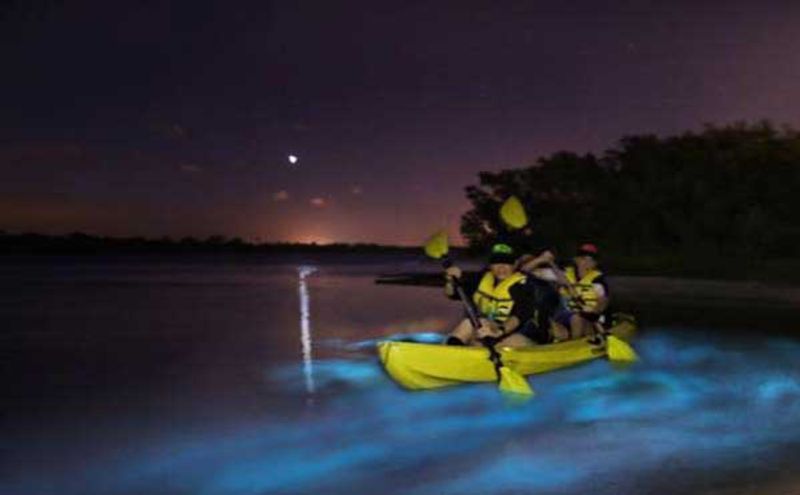
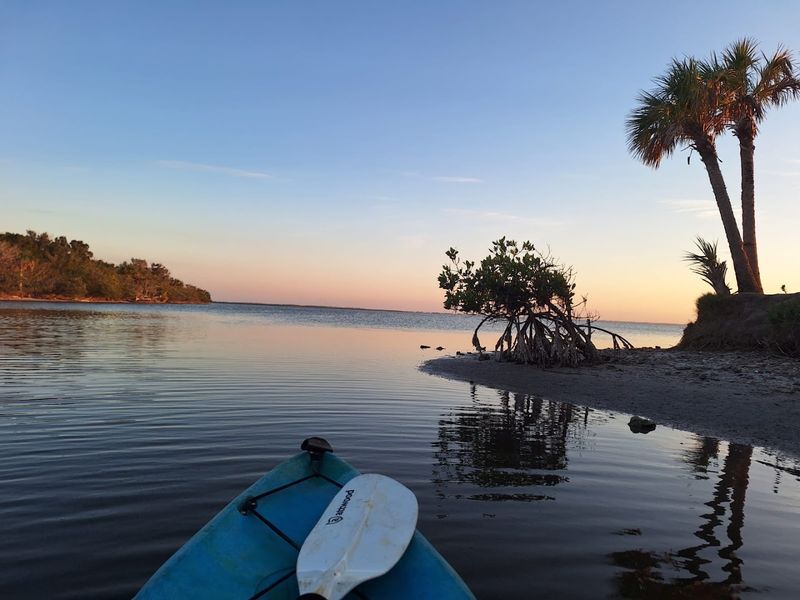
Sitting inside a kayak on a moonless night while the water around you pulses with living light is an experience that is genuinely difficult to describe to someone who has not done it. Every paddle stroke leaves a glowing trail behind it, and the bow of the kayak pushes a small wave of blue-green light forward as it moves through the water.
Guided tours offered by companies such as A Day Away Kayak Tours and BK Adventure operate regularly during the summer months, providing equipment, safety briefings, and knowledgeable guides who know the lagoon well.
Beginners are fully welcome on these tours. Kayaking experience is helpful but not required, and most guides are patient with first-timers who spend the first ten minutes trying to paddle in a straight line.
The tours typically launch from areas near Titusville and the Merritt Island National Wildlife Refuge, which sits just west of Cape Canaveral.
Booking in advance is strongly recommended, as summer tour slots fill up weeks ahead of schedule.
Warm Summer Nights Bring The Brightest Displays
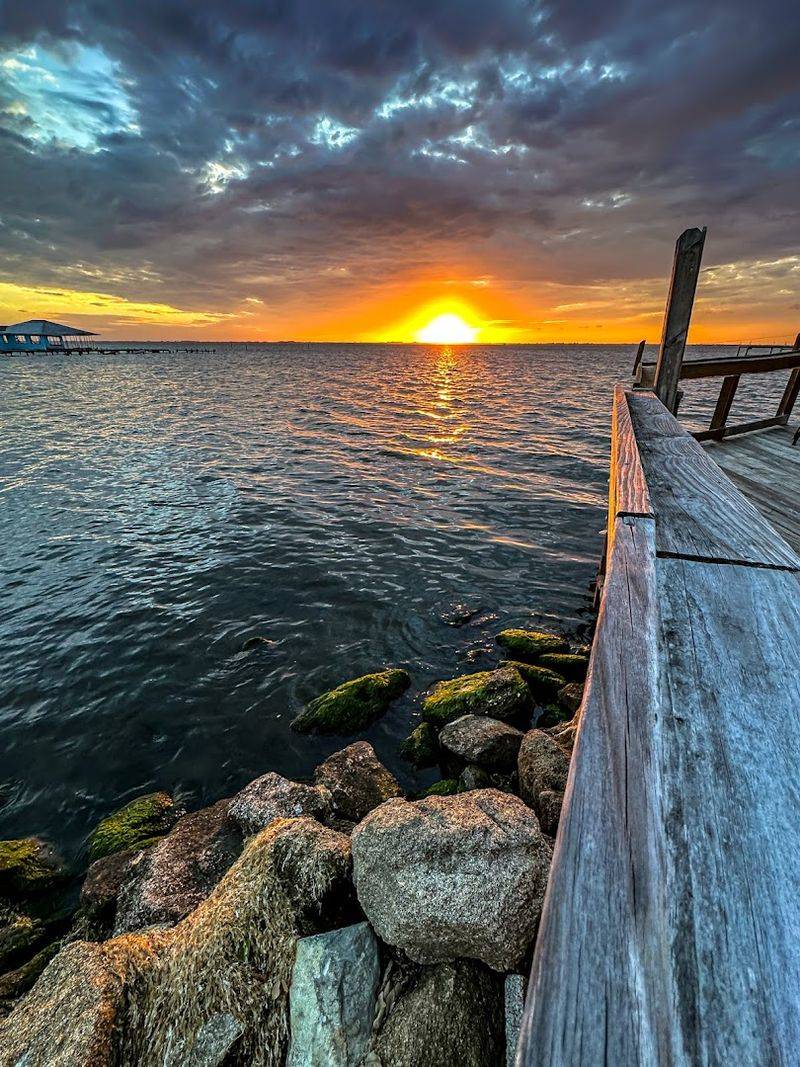
June through September represents the prime window for experiencing the lagoon’s bioluminescence at its most vivid. During these months, water temperatures climb into the range that Pyrodinium bahamense finds most hospitable, and populations of the organism swell considerably.
The glow during peak summer nights is noticeably brighter than what visitors might encounter in the shoulder months of May or October, making the timing of a visit genuinely worth planning around.
Heat and humidity are part of the package during a Florida summer, and visitors who arrive unprepared for both will find the experience less comfortable than it could be. Lightweight, breathable clothing and a solid insect repellent are practical necessities rather than optional additions.
Mosquitoes along the lagoon’s shores are persistent during warm months, and ignoring them is not a realistic strategy.
Planning a visit around the new moon phase during July or August gives the best statistical chance of encountering a strong display, combining the warmest water temperatures with the darkest possible sky conditions.
The Lagoon Is One Of The Most Biologically Diverse Estuaries In North America
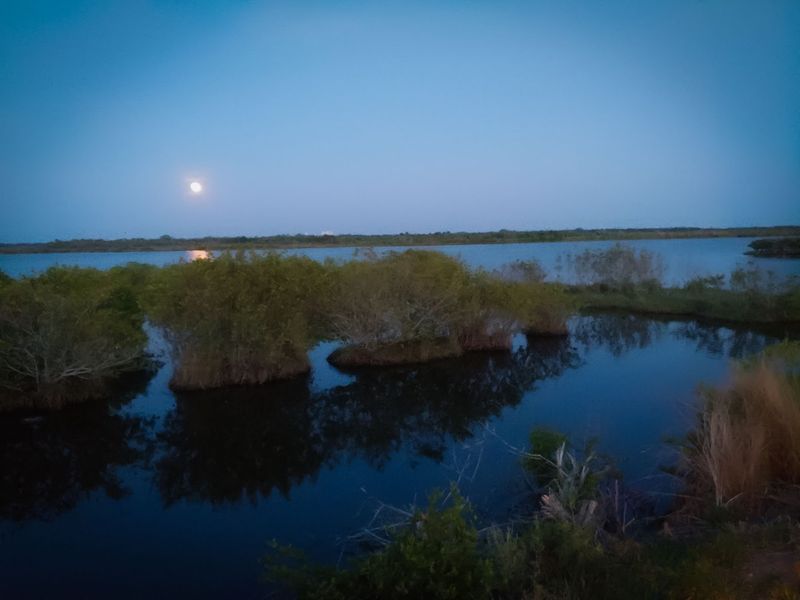
Beyond its nighttime spectacle, the Indian River Lagoon holds a distinction that marine biologists speak about with genuine enthusiasm. It is considered one of the most biologically diverse estuaries on the entire North American continent, supporting more than 4,300 species of plants and animals within its 156-mile length.
Manatees, bottlenose dolphins, sea turtles, ospreys, and roseate spoonbills all call this system home at various points throughout the year.
The lagoon functions as a critical nursery habitat for numerous fish species, providing shallow seagrass beds where juvenile fish can feed and shelter away from open-water predators. The health of the lagoon’s ecosystem directly affects commercial and recreational fishing throughout the surrounding region, making conservation efforts here both ecologically and economically significant.
Visitors who explore the lagoon during daylight hours by boat or kayak will encounter wildlife in quantities that feel almost implausible for a waterway situated so close to developed communities. The lagoon rewards slow, quiet movement and a willingness to simply observe without agenda.
Fish And Dolphins Can Leave Trails Of Light In The Water
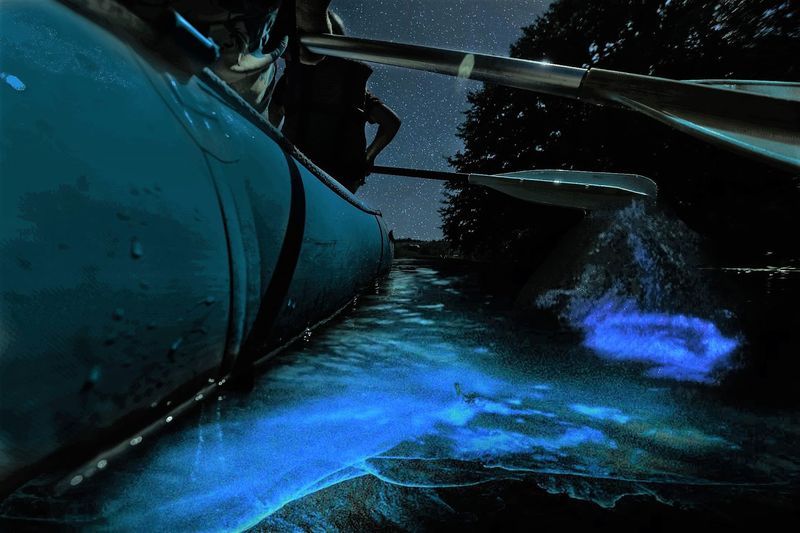
One of the more surreal moments a visitor can experience on the lagoon at night involves watching larger animals move through the water. Bottlenose dolphins, which are year-round residents of the Indian River system, occasionally feed after dark, and when they do, their bodies carve luminous blue trails through the water that are visible from a kayak at close range.
Watching a dolphin surface and dive while wrapped in cold blue light is the kind of thing that stays with a person for years.
Fish moving through the shallows produce a similar effect on a smaller scale, leaving brief flickers of light that dart beneath the surface and vanish as quickly as they appear. Mullet, which are abundant in the lagoon and prone to leaping from the water without apparent reason, create sudden bursts of scattered bioluminescence when they land back on the surface.
The combination of familiar animals behaving in familiar ways while rendered in extraordinary light gives the nighttime lagoon an atmosphere that is both calming and quietly astonishing.
The Glow Appears When The Water Is Disturbed
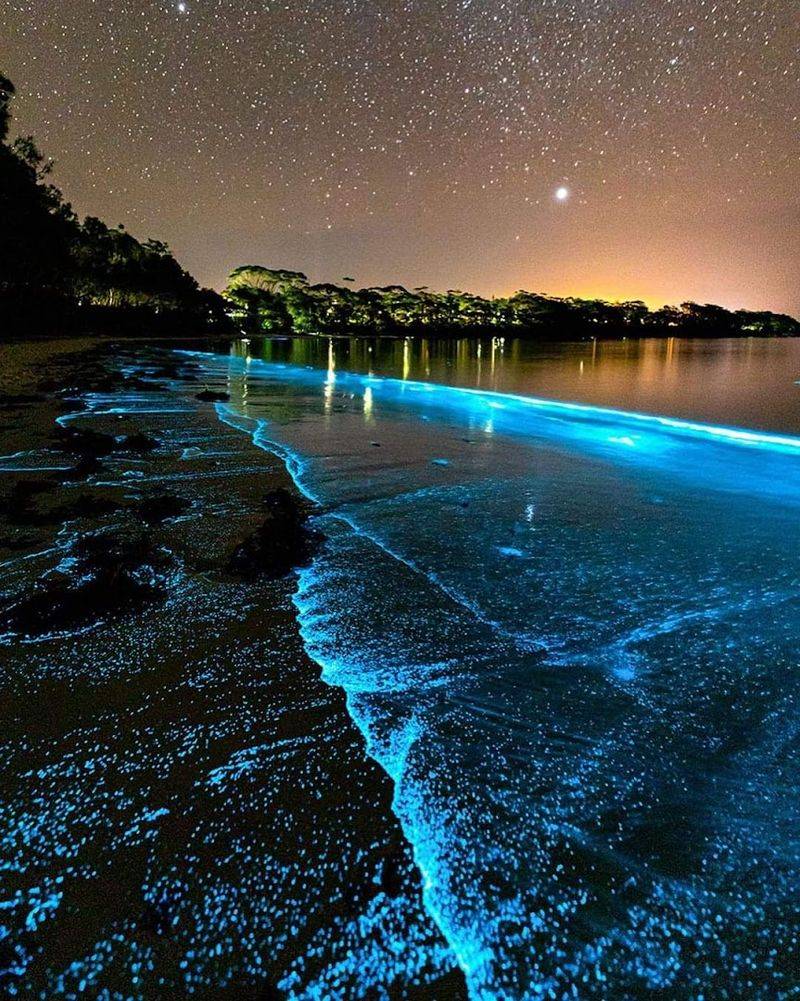
Pyrodinium bahamense does not glow continuously. The light is a defensive response, triggered by mechanical disturbance in the water.
A passing boat, a splashing hand, a jumping fish, or even a strong gust of wind creating surface ripples can activate the organisms and produce a visible flash. This reactive quality makes the experience interactive in a way that few natural phenomena are.
Visitors quickly discover that they can create their own light show simply by trailing a hand through the water beside a kayak.
The intensity of the response depends on the concentration of organisms present, which varies by location and time of year. In areas with very high dinoflagellate populations, even a gentle disturbance produces a satisfying burst of light.
In zones where concentrations are lower, the effect is more subtle but still visible on a sufficiently dark night.
Scientists note that the glow serves as a form of bioluminescent burglar alarm, startling or attracting predators toward whatever is disturbing the dinoflagellate, which may give the organism a survival advantage.
Several Florida Communities Sit Along The Lagoon’s Shores
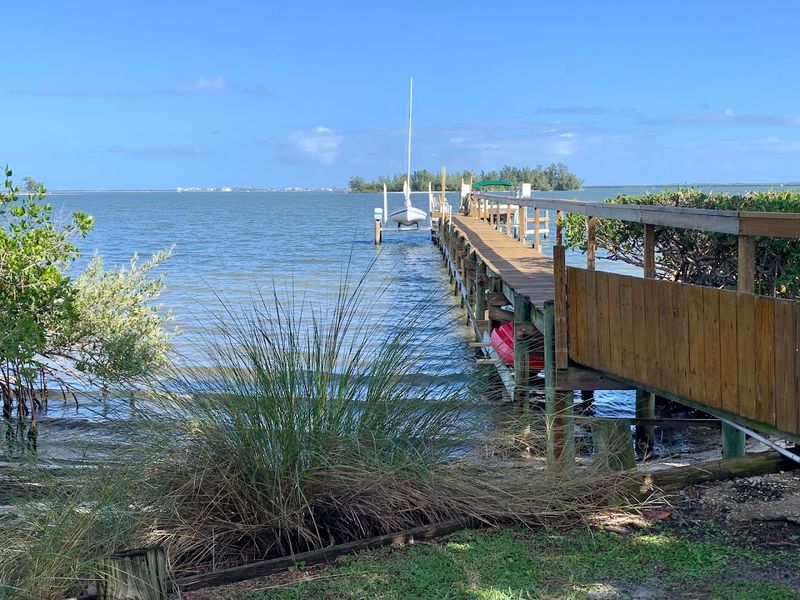
The Indian River Lagoon runs through several distinct Florida communities, each offering its own character and its own point of access to the water. Titusville, situated at the northern end of the Merritt Island National Wildlife Refuge, is perhaps the most popular base for bioluminescence tours and provides easy access to launch points including the Beacon 42 boat ramp and Bairs Cove.
Cocoa, Melbourne, and Vero Beach each sit along the lagoon’s corridor further south, offering marinas, waterfront dining, and their own perspectives on this remarkable system.
The communities along the lagoon share a relationship with the water that goes back generations, built around fishing, boating, and a general appreciation for the natural environment that surrounds them. Local shops and outfitters in these towns are generally well-stocked for kayaking and water-based activities, and staff at most establishments are accustomed to helping visitors plan a first lagoon excursion.
Spending a day exploring one of these towns before heading out on the water at night gives context to the experience and connects the natural setting to the human communities it supports.
Moonless Nights Often Offer The Most Dramatic Light Shows
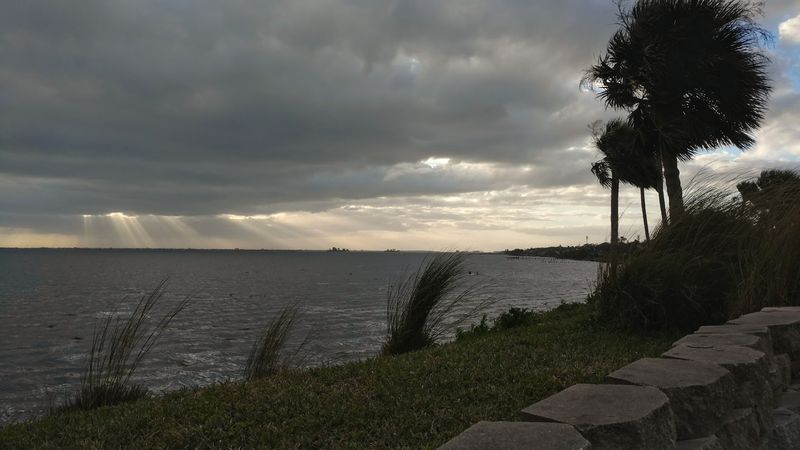
Timing a visit to coincide with the new moon phase is one of the most reliable strategies for maximizing the visual impact of the lagoon’s bioluminescence. Moonlight, even at partial phases, washes out the blue-green glow in much the same way that ambient city light dims the visibility of stars.
On a genuinely dark night, with no moon and minimal cloud cover, the contrast between the black water and the glowing organisms is sharp enough to make the experience feel almost theatrical.
Checking a lunar calendar before booking a tour or planning an independent paddling trip takes about thirty seconds and can make a substantial difference in the quality of what you see. Tour operators in the Titusville area typically schedule their bioluminescence tours around the lunar cycle, concentrating their bookings in the days immediately surrounding the new moon each month from June through September.
Arriving at the launch site well before full darkness settles in allows the eyes to adjust gradually, which improves the overall perception of the glow once the tour is underway.
The Lagoon Stretches Along Florida’s Atlantic Coast For More Than 150 Miles
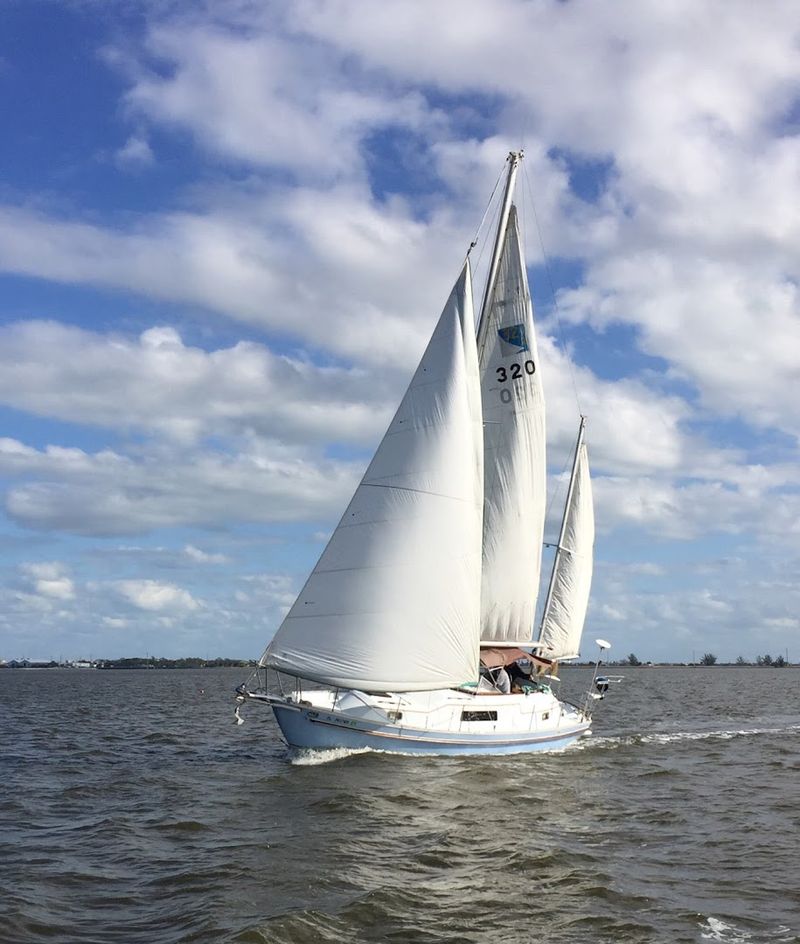
At more than 150 miles in length, the Indian River Lagoon is not a single body of water in the way most people imagine a lagoon. It is a long, narrow estuary system running from Ponce de Leon Inlet in Volusia County down to Jupiter Inlet in Palm Beach County, encompassing three distinct water bodies: the Indian River, Mosquito Lagoon, and Banana River.
Together, these connected segments create one of the longest lagoon systems in the United States.
The scale of the system means that conditions vary considerably from one end to the other. The northern sections near Mosquito Lagoon and the Banana River tend to produce reliable bioluminescence displays and are popular with guided tour operators.
The southern sections offer different wildlife encounters and a quieter atmosphere overall.
Visiting more than one section of the lagoon across a multi-day trip reveals how varied a single connected waterway can be. Each stretch has its own rhythm, its own wildlife patterns, and its own relationship with the Florida landscape surrounding it.