
9 Of The Most Beautiful Spring Destinations In Tennessee
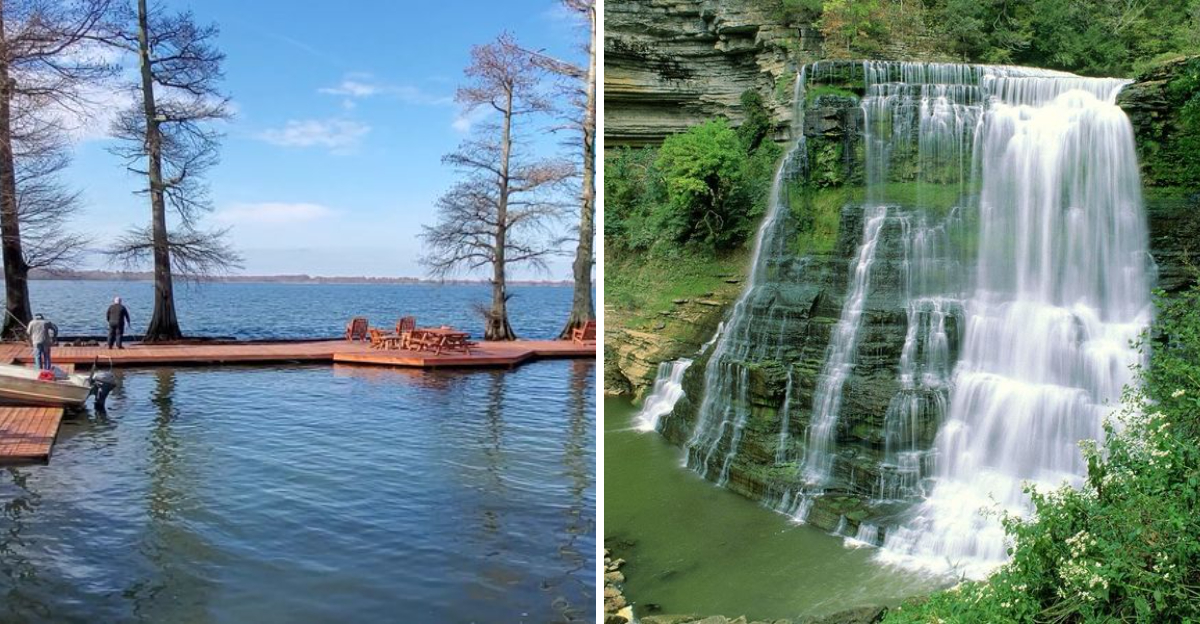
Spring in Tennessee does not arrive quietly. It rolls across the mountains, brightens riverbanks, fills gardens with colour, and makes small towns feel ready for lazy afternoon wandering.
One weekend might mean waterfall views after a short walk. Another could bring blooming trails, peaceful lakes, or a main street that feels extra pretty under soft seasonal light.
The best part? You do not need a complicated plan to enjoy it.
Just pick a place, grab your camera, and let Tennessee show off while the weather still feels fresh and forgiving.
1. Shelf Road Scenic Overlook, Sewanee
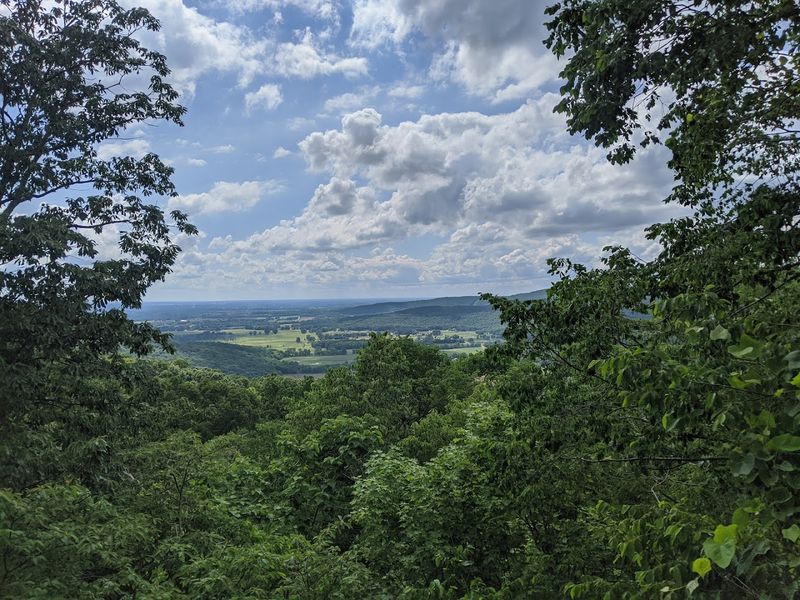
Standing at the edge of the Cumberland Plateau in Sewanee, Tennessee, the Shelf Road Scenic Overlook has a way of making you forget whatever was on your mind two minutes ago.
The view from this spot drops down into a wide valley that, in spring, transforms into a rolling canvas of green treetops and flowering canopies that stretches so far you start to wonder where Tennessee ends.
What makes this overlook special is how few people actually know about it. While more famous Tennessee viewpoints fill up with tour buses and selfie sticks, Shelf Road stays refreshingly quiet, giving visitors a rare chance to absorb the scenery without the crowd noise.
Spring fog often lingers in the valley during early morning hours, creating a dreamy, layered effect that photographers absolutely love. The light changes dramatically throughout the day, so arriving at different times rewards you with completely different moods and colors.
Sewanee itself is a charming college town worth exploring before or after your visit, with wooded trails, stone architecture, and a genuine small-town warmth that feels welcoming to any traveler passing through.
There is no admission fee, no long hike required, and no crowds to navigate, which makes this one of the most rewarding low-effort spring stops in all of Tennessee. Quiet roads, big skies, and a view that earns every mile of the drive.
2. Cades Cove, Great Smoky Mountains
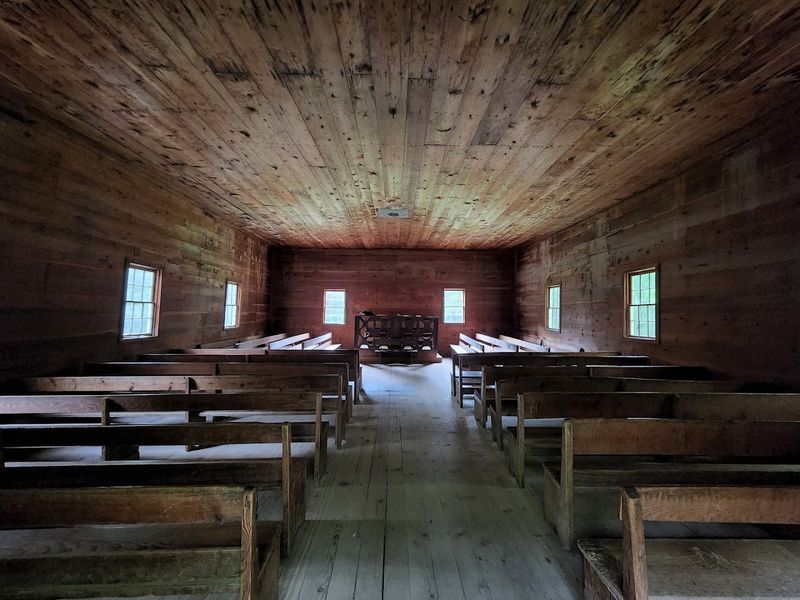
Located along Cades Cove Loop Road near Townsend, inside Great Smoky Mountains National Park, this open valley sits surrounded by ancient mountain peaks that funnel spring fog into the meadows at sunrise in the most cinematic way possible.
White-tailed deer graze without much concern near preserved 19th century log cabins and grist mills, creating a living history experience that families genuinely enjoy at any pace. The wildflowers that carpet the meadow floor in spring include species you simply will not find in many other places, partly because the Smokies host more than 1,500 types of wildflowers, more than any other national park in the country.
The 11-mile loop road is ideal for slow driving with the windows down, stopping whenever something catches your eye, which will happen often. Cyclists and walkers also use the loop on certain mornings when it is closed to vehicles, making it feel even more peaceful.
Wildlife sightings beyond deer are common too, with black bears occasionally spotted along the tree line during spring months when they are most active. Cades Cove is the kind of place that earns a permanent spot on your personal list of places to return to every single year.
3. Roan Mountain, Roan Mountain
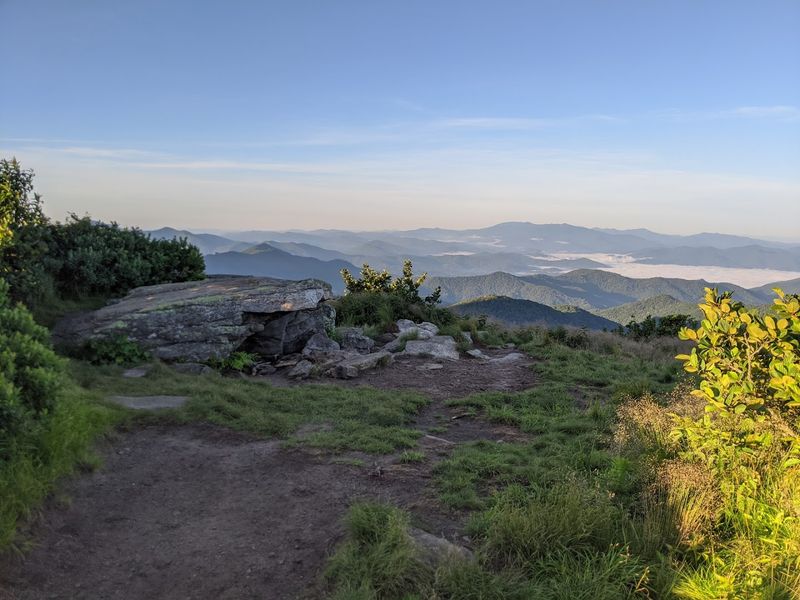
Nowhere else on earth can you stand inside the largest natural rhododendron gardens in existence, and yet that is exactly what Roan Mountain in Roan Mountain, Tennessee, offers every late spring season.
When the blooms hit their peak, typically in mid to late June, the entire mountaintop erupts in a breathtaking sweep of purple and pink that spreads across the ridgeline in every direction. The color is so saturated and so unexpected at that elevation that first-time visitors often stop walking just to take it all in.
The area sits along the Tennessee and North Carolina border and is accessible via the Roan Mountain Scenic Highway, which delivers impressive elevation changes and transitioning forest scenery on the drive up alone. The Appalachian Trail crosses Carver’s Gap nearby, making this a beloved stop for long-distance hikers and day visitors alike.
Spring also brings a vivid wildflower display to the foothills of Roan Mountain State Park before the rhododendrons even open, meaning the beauty starts well before you reach the summit. The views from the open balds stretch across the Southern Appalachians in every direction on clear days.
Visiting on a weekday morning gives you the best combination of light, cooler temperatures, and smaller crowds. Roan Mountain is the kind of natural spectacle that photographs beautifully but honestly has to be experienced in person to be fully understood.
4. Normandy Lake, Normandy
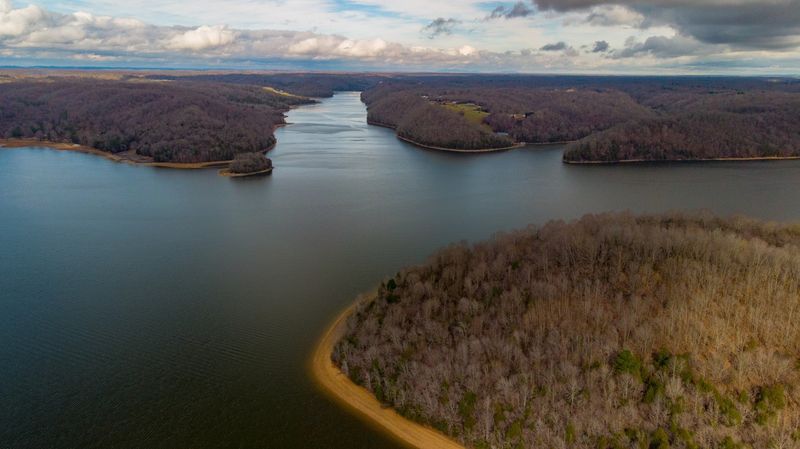
Most people driving through rural Middle Tennessee have no idea that one of the most quietly stunning lakes in the entire state is sitting just off the road near Normandy.
Normandy Lake, accessible via Normandy Dam Road, is the kind of place that feels like a personal discovery every time you visit. Spring turns the shoreline into a soft, colorful border of wildflowers, and the afternoon light on the water creates a warmth that makes the whole scene feel almost painted rather than real.
The lake was created by the damming of the Duck River and covers over 3,200 acres, offering plenty of space for fishing, kayaking, and quiet shoreline walks without ever feeling crowded. Largemouth bass and trout fishing are popular here in spring when the water temperatures rise and the fish become more active near the surface.
What surprises most first-time visitors is the stillness. There are no major resort developments, no loud commercial strips nearby, and no lines to wait in, just clear water, green hills, and the occasional heron drifting past.
The rural landscape surrounding the lake adds to the feeling that you have found something the rest of the world has not quite caught up to yet.
Bringing a picnic and spending a slow spring afternoon here is one of the most restorative things you can do in Tennessee. Simple, beautiful, and completely worth the detour.
5. Ijams Nature Center, Knoxville
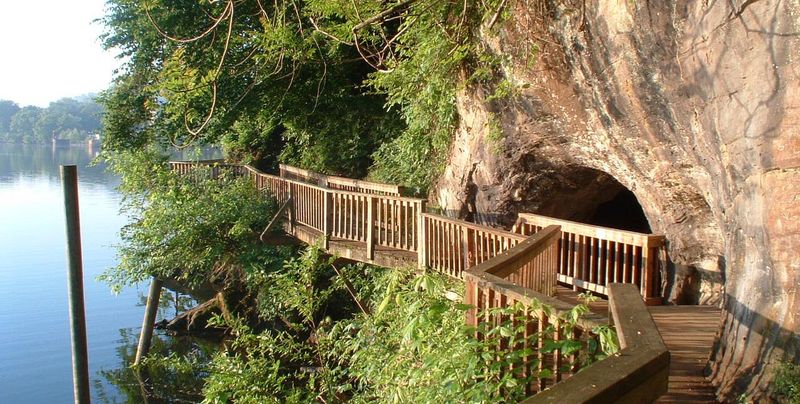
Right inside the city limits of Knoxville, there is a 300-acre nature preserve that consistently surprises people who expect urban green spaces to feel small and ordinary.
Ijams Nature Center, located at 2915 Island Home Ave along the Tennessee River, delivers limestone bluffs, wildflower meadows, kayak launches, and spring birdsong that has drawn ornithologists from across the region who come specifically to document the seasonal activity. The variety of bird species passing through during spring migration is genuinely remarkable for a place this close to downtown.
Trails wind through several distinct habitat types, from rocky riverside terrain to open meadows bursting with native spring wildflowers, giving every visit a slightly different feel depending on the route you choose. The limestone bluffs above the river are a particular highlight, offering elevated views of the water and the surrounding tree canopy that change color dramatically in April and May.
Kayak and paddleboard rentals are available on site, making it easy to explore the river corridor without needing your own equipment. The water-level perspective of the bluffs and overhanging spring foliage from a kayak is one of the most underrated visual experiences in East Tennessee.
Admission to the trails is free, and the center hosts regular spring programming for families and school groups. Ijams proves that some of the most beautiful spring experiences in Tennessee are hiding in plain sight, right in the middle of a city.
6. Natchez Trace Parkway, Middle Tennessee
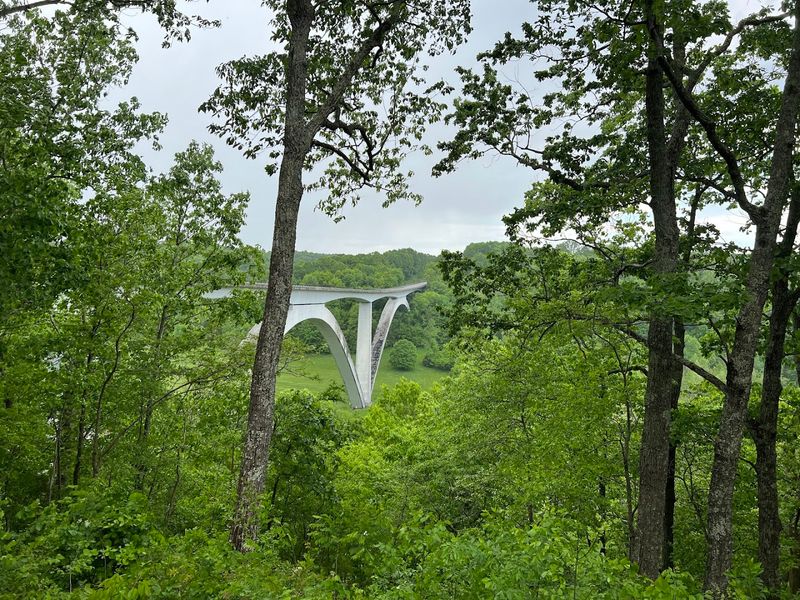
Few roads in America deliver a spring drive quite like the Natchez Trace Parkway, and the Middle Tennessee section is where the seasonal color show truly reaches its peak.
Every spring, dogwoods and redbuds line the entire corridor in clouds of white and pink that turn a simple drive into something you will want to tell people about. The parkway runs through Tennessee with no commercial trucks, no billboards, and no traffic lights, creating a rare, unhurried experience that feels almost out of time.
Ancient history lines the route as well, with pull-offs for Native American mounds, Civil War sites, and waterfall overlooks appearing at regular intervals. The Old Trace, a path once used by Natchez people, early settlers, and traveling merchants, runs parallel to the modern road in several sections and is hikeable on foot.
Spring wildflowers bloom along the roadside and forest floor in April and May, adding layers of color beyond just the tree blossoms. Pastoral farmland views open up between wooded stretches, giving the drive a pleasant rhythm that alternates between enclosed canopy tunnels and wide open sky.
Cyclists love this road for its smooth surface, gentle grades, and total absence of commercial traffic. Whether you drive it slowly with the windows down or pedal it at your own pace, the Natchez Trace in spring is one of those experiences that resets your appreciation for the beauty sitting right in your own backyard.
7. Pickett State Park, Jamestown
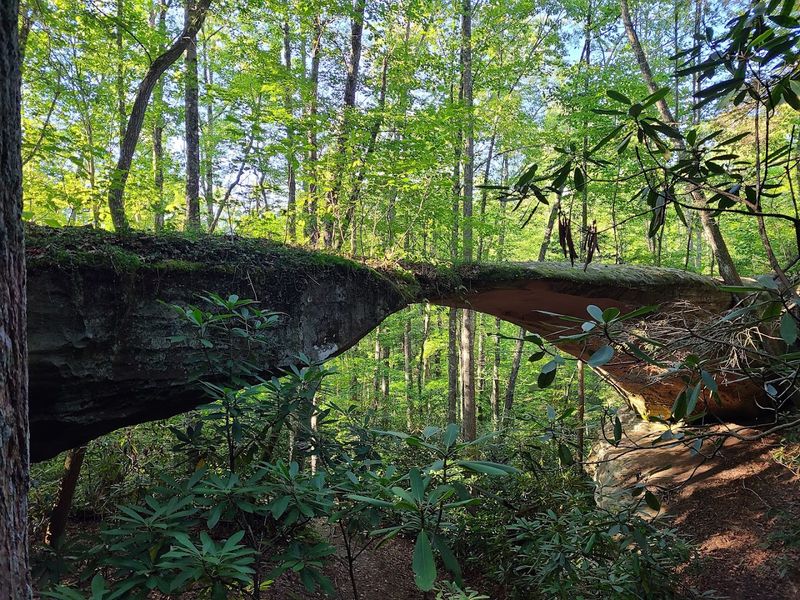
Tennessee’s most remote state park earns that description honestly, and for visitors willing to make the drive to Jamestown, the reward is a landscape that looks like it belongs in a different part of the world entirely.
Pickett State Park, located at 4605 Pickett Park Hwy, sits in a geologically unique corner of the Cumberland Plateau where natural sandstone arches, cave formations, and suspension bridges create a trail system unlike anything else in the state. Botanists have specifically studied this area because the plant diversity here is extraordinary, with spring wildflowers blooming in combinations and densities rarely found elsewhere in Tennessee.
The arches and rock shelters were used by indigenous peoples thousands of years ago, and the sense of deep time in this landscape is genuinely palpable when you stand beneath them. Spring light filtering through the new leaf canopy and landing on the pale sandstone creates a color palette that photographers return for year after year.
Trails range from easy strolls to more challenging routes that involve some scrambling over rock formations, making the park accessible to a wide range of fitness levels. The backcountry campsites allow overnight visitors to experience the park after day visitors leave, when the forest sounds take over completely.
Pickett shares a boundary with the Big South Fork National River and Recreation Area, effectively doubling the wild terrain available to explore. This is a destination that rewards the curious traveler who is willing to go just a little further off the beaten path.
8. Burgess Falls, Sparta
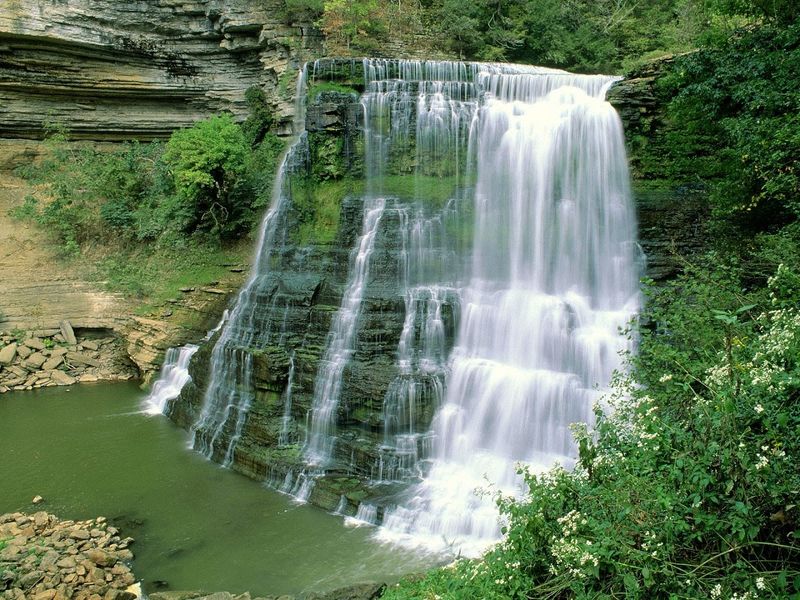
Four waterfalls connected by a single trail, all running at full spring power through a gorge so green and lush in April that the whole experience feels almost tropical for Tennessee.
Burgess Falls State Park, located at 4000 Burgess Falls Dr near Sparta builds anticipation beautifully as you hike downstream and encounter each waterfall in sequence, with the main Burgess Falls arriving last at a dramatic 136-foot drop that sends spray drifting across the viewing area. The roar of the water during spring runoff is physical, something you feel in your chest as much as you hear with your ears.
The surrounding wildflower forest in April adds a softness to the otherwise dramatic scene, with trilliums, phlox, and other native species blooming along the trail edges. The contrast between the raw power of the water and the delicate spring flowers growing just feet away is one of those small visual details that sticks with you long after the visit.
Visitors can actually paddle to the base of Burgess Falls by water, which offers a completely different and equally stunning perspective of the main drop. The trail itself is moderate in difficulty, with some uneven terrain near the lower falls, but the payoff at each stop makes every step worthwhile.
Spring is unquestionably the best time to visit, when the water volume is highest and the surrounding forest is at its most vibrant. Burgess Falls in April is Middle Tennessee’s most viscerally rewarding natural experience.
9. Reelfoot Lake State Park, Tiptonville
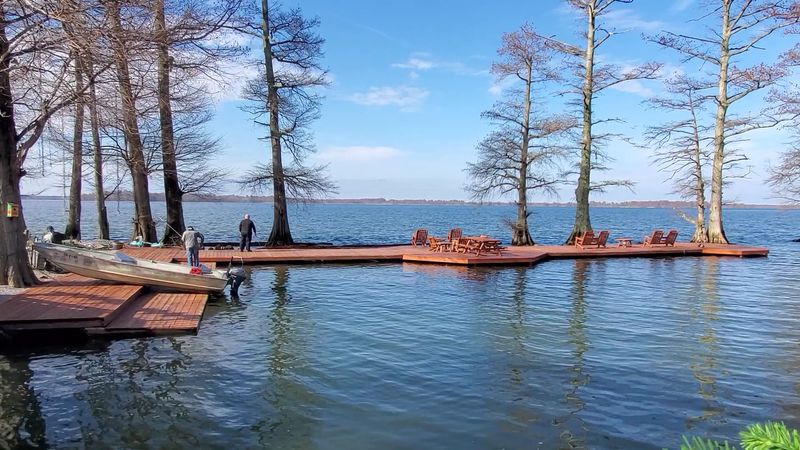
Created by the 1811 New Madrid earthquake, one of the most powerful seismic events in recorded North American history, Reelfoot Lake in Tiptonville, Tennessee, carries a geological backstory that makes the landscape feel even more extraordinary once you know it.
Ancient bald cypress trees rise straight out of the water in silent rows, their root systems creating otherworldly shapes at the surface, while bald eagles soar overhead in spring numbers that draw wildlife watchers from across the country. The whole scene looks genuinely primordial, like a landscape that existed long before humans arrived and somehow still does.
Located at 2595 State Rte 21 E in far West Tennessee, Reelfoot is accessible by boat tours that weave through the cypress stands and provide some of the most memorable wildlife viewing in the entire state. Spring is peak season for bald eagle activity, with dozens of birds often visible from a single vantage point during morning hours.
The lake also supports an exceptional diversity of fish and waterfowl, making it one of the top fishing and birdwatching destinations in Tennessee regardless of season. Crappie fishing in the cypress shallows during spring is a beloved local tradition that draws anglers from neighboring states.
First-time visitors consistently describe Reelfoot as feeling unlike anything else they have experienced in America, and that reaction is completely understandable. There is a stillness and a strangeness here that you simply cannot manufacture, only discover for yourself on a quiet spring morning.