
The New York Boardwalk Trail Where You Can Reach A Hidden Beach Without A Hard Climb
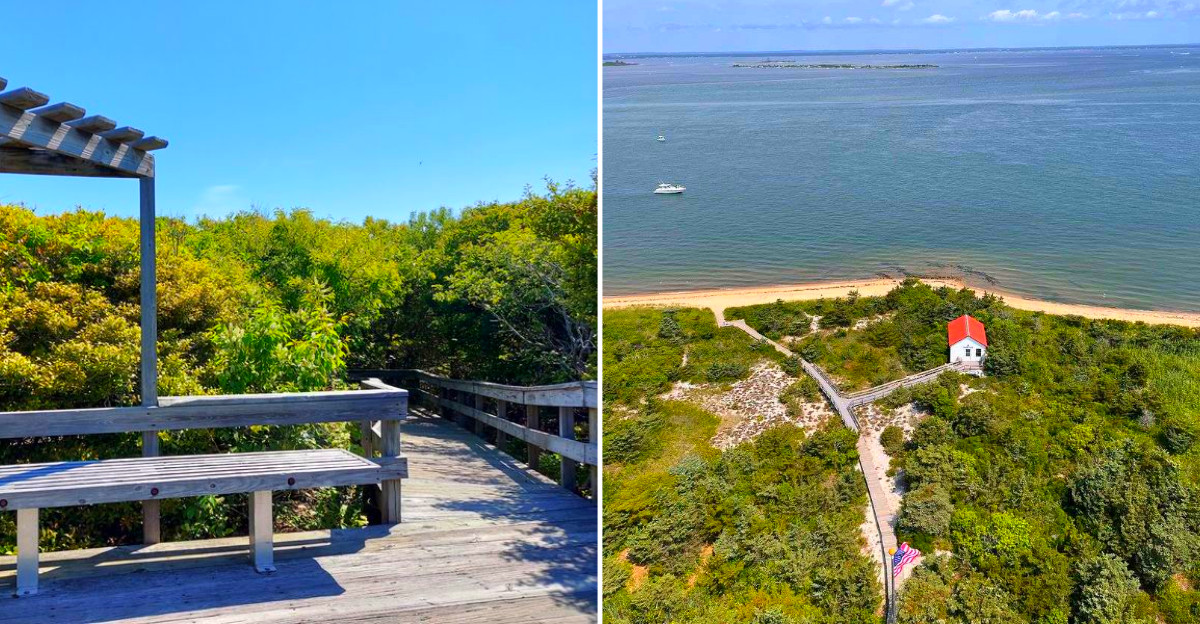
Most beach days in New York begin with a parking lot, a long slog through hot sand, and a scramble over a dune before anybody sees water. There is a gentler route to the Atlantic, and it runs along a wooden walkway curling through a shadowy forest of ancient holly trees.
Flat the whole way, shaded most of it, and short enough that small legs manage it without complaint. What waits at the end is a stretch of shoreline where the crowds thin out to almost nothing, which is the part that makes the easy version feel like cheating rather than compromise.
Ocean views usually cost something. Earning them with a stroll instead of a climb is a rare arrangement, and it holds up better in August than any dune scramble does.
A Forest That Grows Below The Dunes
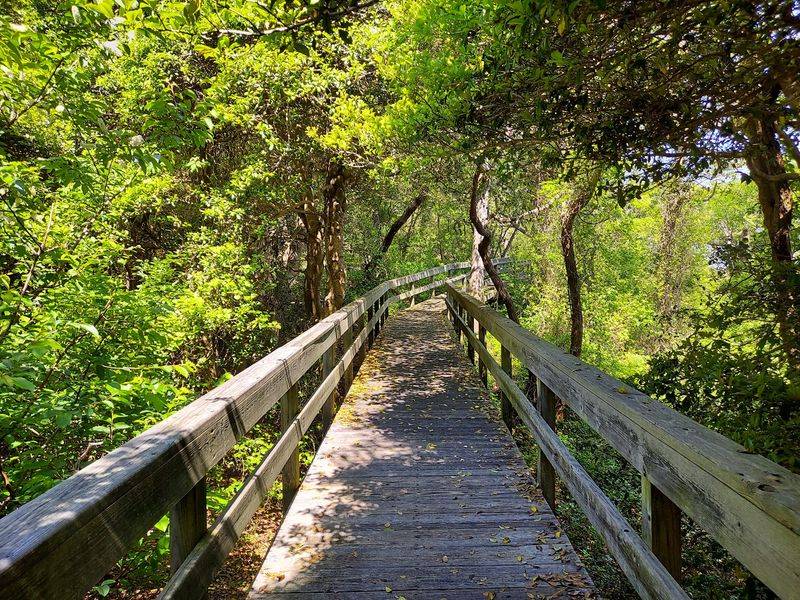
Barrier islands are not supposed to have forests. Salt spray usually clips any tree that dares grow tall. Yet on this narrow ribbon of sand off Long Island, a woodland thrives in a hollow that sits below sea level.
The secret is the dunes. They act like a wall, blocking the salty wind and letting American holly, sassafras, and shadblow grow for centuries. Some of the holly trees here are estimated to be more than two hundred years old, with trunks bent into strange shapes.
Walk under the canopy and the temperature drops a few degrees. Light filters through in green flecks. Vines twist overhead like natural rope bridges, and the air smells faintly of damp leaves instead of sunscreen.
What makes the whole place remarkable is how easy it is to see. A raised wooden walkway carries you through the heart of it without a single steep step. No scrambling, no sliding backward in loose sand, no huffing up a hill.
Then the trees part. The path lifts slightly, the ocean appears, and you are standing at a beach that feels borrowed rather than shared.
Meet The Sunken Forest At Sailors Haven
Officially, the trail carries the name Sunken Forest Nature Trail, and it sits within the Sailors Haven area of Fire Island National Seashore. The wider park address is listed as Ocean Beach, NY 11770, a mailing point for a barrier island that stretches for miles along the south shore of Long Island.
Congress established the national seashore on September 11, 1964. The National Park Service has cared for it ever since, keeping the boardwalks repaired and the dunes protected.
Sailors Haven itself is a compact hub. There is a marina, a snack bar, a visitor center, and a lifeguarded swimming beach, plus the trailhead you came for.
The loop runs about 1.6 miles and mixes paved sections with raised boardwalk. Elevation change is close to nothing, which is rare for any coastal hike.
Interpretive signs along the route explain the plants, the soil, and why the forest survives in such an unlikely spot. Reading them slows you down in the best way.
Most visitors finish the loop in under an hour. Add beach time and you have a full, unhurried afternoon.
Ferry Rides Beat Traffic Every Time
Cars cannot reach Sailors Haven. Getting there means catching a ferry from Sayville on Long Island, which turns the commute into part of the fun.
The crossing hops over the Great South Bay, a shallow stretch of water dotted with clam beds and small boats. Gulls trail the boat. Kids press against the rail counting osprey nests on channel markers.
Buy your ticket, grab a seat outside if you can, and let the mainland shrink behind you. The ride is short but it resets your brain in a way that a highway never will.
Once you step off the dock, the trailhead is right there. No shuttle, no long march, no hunting for a trail sign in the sun.
Ferries run on a seasonal schedule, so check the timetable before you go and note the last boat back. Missing it would be an expensive lesson in island life.
Pack light and pack smart. Cash, water, sunscreen, and bug spray earn their keep here, since the forest section can get buggy in humid weather.
Wagons are welcome and genuinely useful.
Flat Planks, Friendly Footing
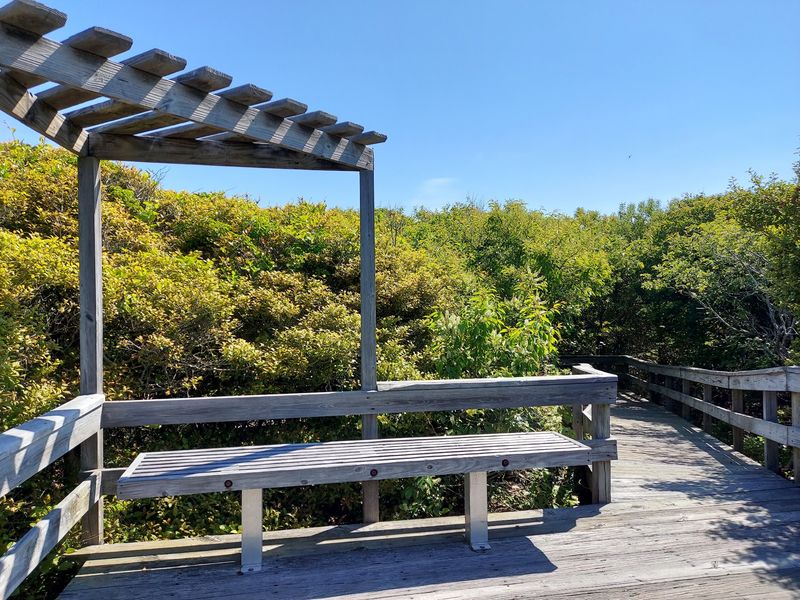
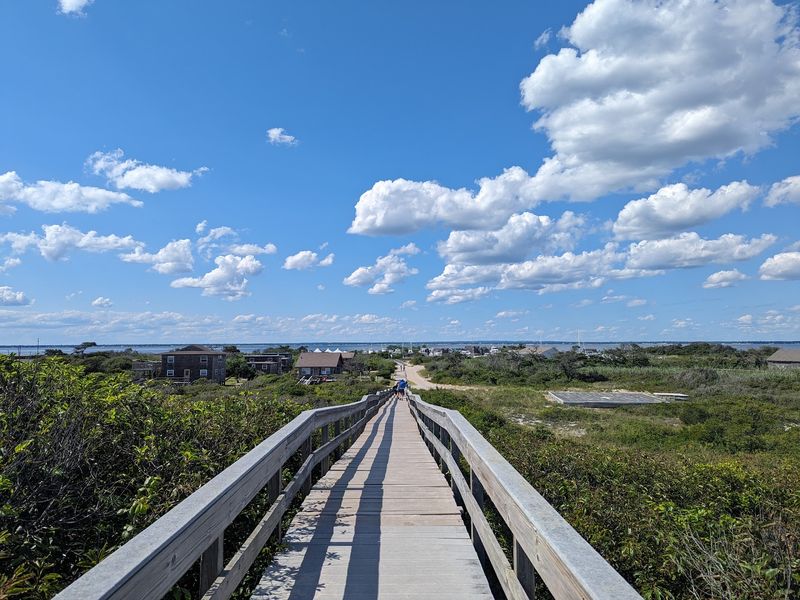
Plenty of scenic trails ask for strong knees. Not this one. The boardwalk stays level, with rails in the right spots and a surface that does not shift under your shoes.
Strollers roll fine. Grandparents keep up. Anyone who has ever wrestled a beach cart through soft sand will appreciate how much easier the wooden route feels.
Because the walkway is raised, the fragile forest floor underneath stays undisturbed. You get the view, the roots get their peace, and nobody tramples the moss.
Sturdy sneakers work better than flip flops. There are a few short sets of steps in places, and the planks can be slick after rain.
Sections of the loop are paved, which helps on the return leg when everyone is tired and thinking about ice cream.
Benches appear at sensible intervals. Sitting for a minute in the green quiet is half the reason to come.
The distance is manageable for most families, and the shade makes summer heat far less punishing than an open beach walk.
Sunset light through the canopy is worth timing your visit around.
The Quiet Sand Most People Skip
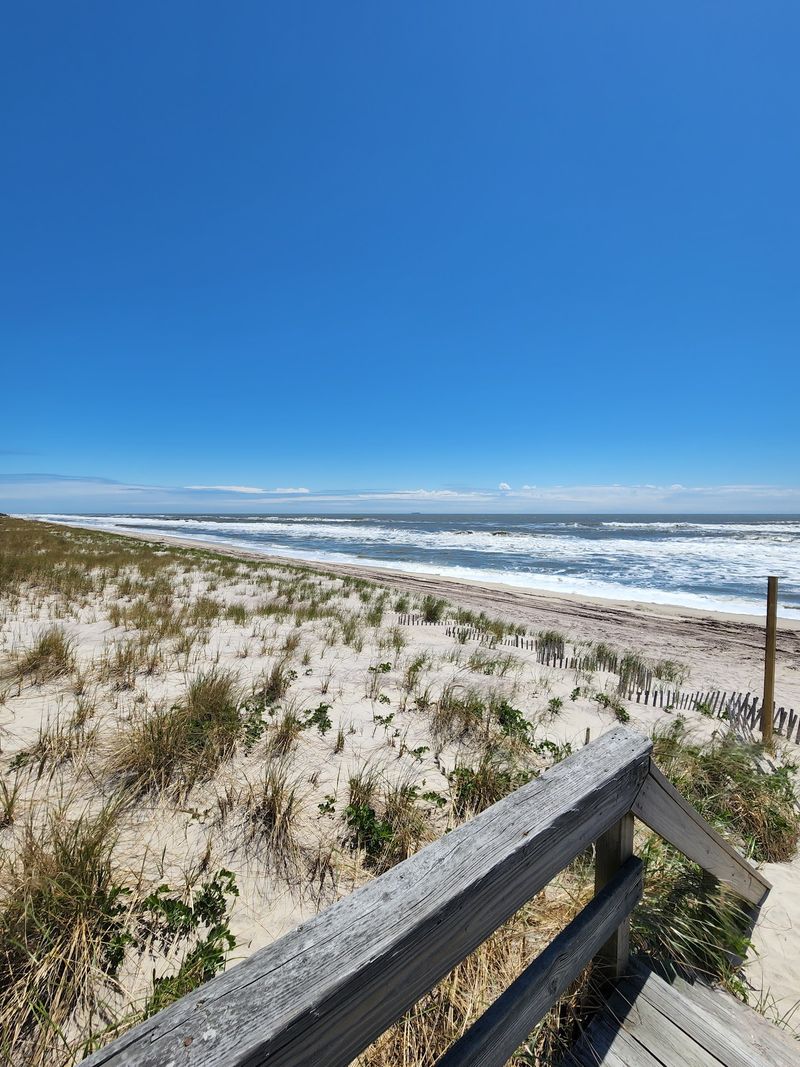
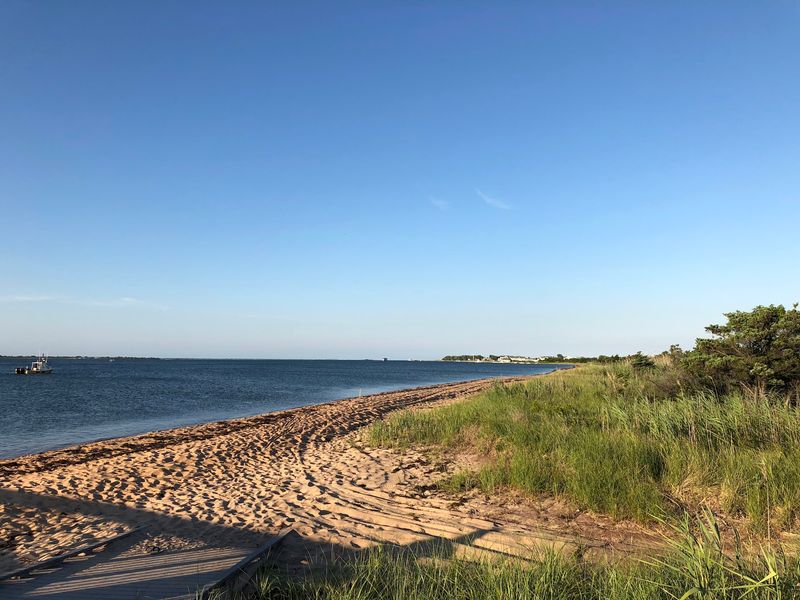
Here is the payoff. Partway along the loop, a second walkway crosses the dune and drops you onto the Atlantic shore well away from the main swimming area.
Hardly anyone bothers with it. Most day trippers park their towels near the ferry dock and never wander further, which leaves this stretch nearly empty even in July.
Sand here is pale and fine, the kind that squeaks a little underfoot. Shells collect in tidy lines where the waves retreat.
Because no lifeguard covers this section, treat it as a walking and shell hunting beach rather than a swimming spot. Save the ocean dips for the guarded area back at Sailors Haven.
Bring a hat and water. Shade disappears the moment you leave the trees.
Early mornings reward you with tracks in the sand from foxes and shorebirds. Evening brings long gold light across the dunes.
Stay off the dune grass. Those roots hold the whole island together, and the park asks visitors to use the crossings.
Few places this close to a major city feel this genuinely still.
Deer, Birds, And Other Neighbors
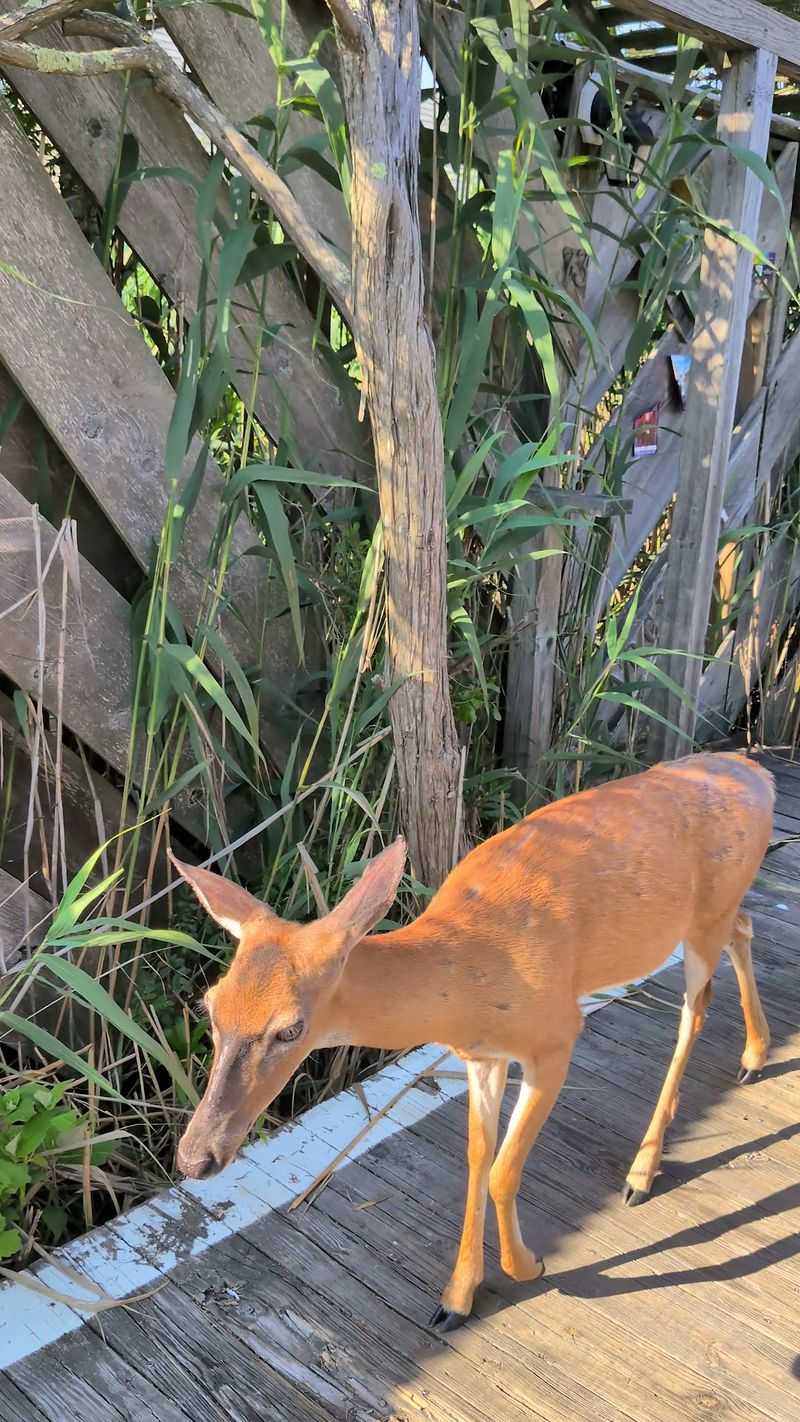
Wildlife sightings come easily here. White tailed deer wander the forest and often stand within a few yards of the boardwalk, entirely unbothered by cameras.
Admire them from a distance and never offer food. Feeding wildlife is prohibited, and it also teaches animals habits that hurt them later.
Birders do well on this loop. Warblers pass through during migration, and osprey circle above the bay side with fish clutched in their talons.
Listen for catbirds in the underbrush. Their odd mewing call sounds exactly like the name suggests, which never stops being funny.
Down on the sand you may spot piping plovers during nesting season. Roped areas protect their nests, so give those markers a wide berth.
Ticks live here too, so long pants and a quick check afterward are smart moves. Insect repellent handles the mosquitoes that gather in still, humid air.
Poison ivy grows thick beside parts of the trail. Staying on the planks solves that problem neatly.
The whole ecosystem runs on balance, and visitors who tread lightly keep it that way for the next crew.
Visitor Center Hours Worth Noting
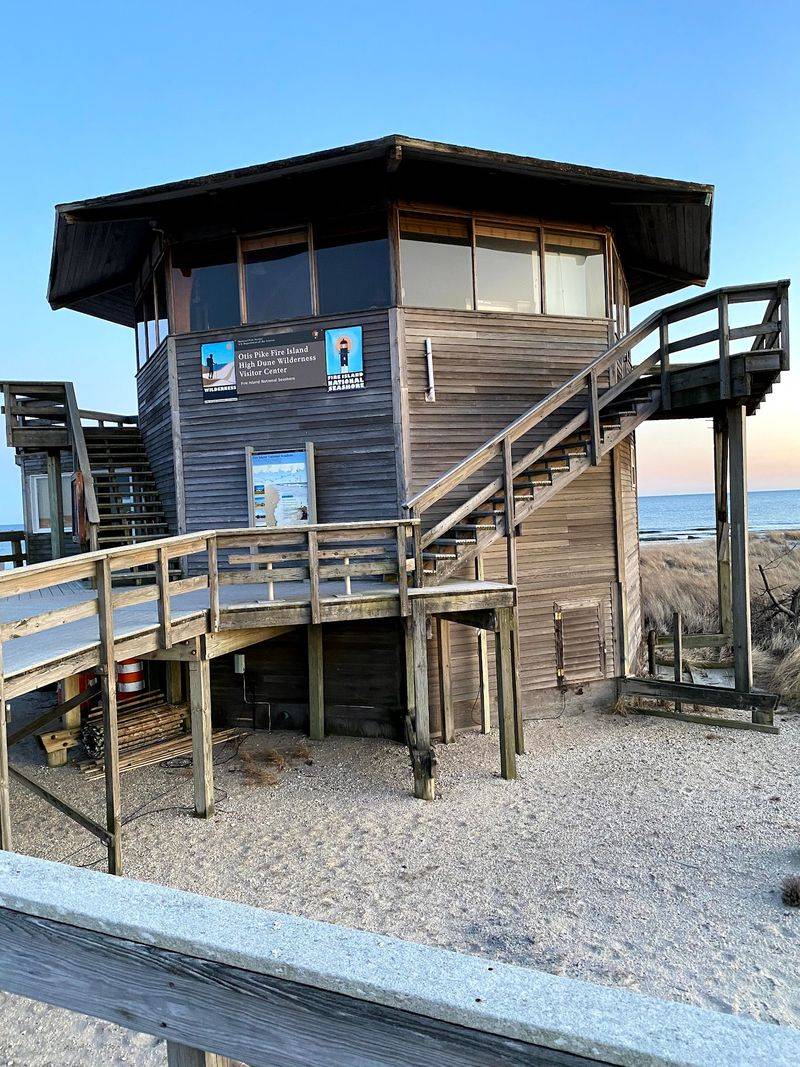
Ranger knowledge turns a nice walk into a memorable one. The Sailors Haven Visitor Center runs on a seasonal schedule, so a quick check before you travel saves disappointment.
From mid May through June, the center opens on weekends between 10:00 AM and 2:30 PM. July through Labor Day brings wider access, Wednesday through Sunday, same hours.
After Labor Day and up to Columbus Day, weekend hours shift to 11:00 AM until 2:30 PM. The center closes for the rest of the year.
The broader Fire Island National Seashore generally operates from 8:00 AM to 4:30 PM, so plan your ferry around that window.
Inside you will find exhibits explaining how the sunken forest formed and why the dunes matter so much. Rangers sometimes lead guided walks along the loop.
Restrooms and a snack stand sit nearby, which matters more than you think after a morning outdoors.
Ask about recent trail conditions. Storms occasionally close boardwalk sections for repair, and staff will steer you toward whatever is open.
A few minutes at the desk usually pays off in better sightings later.
Timing Your Trip Like A Regular
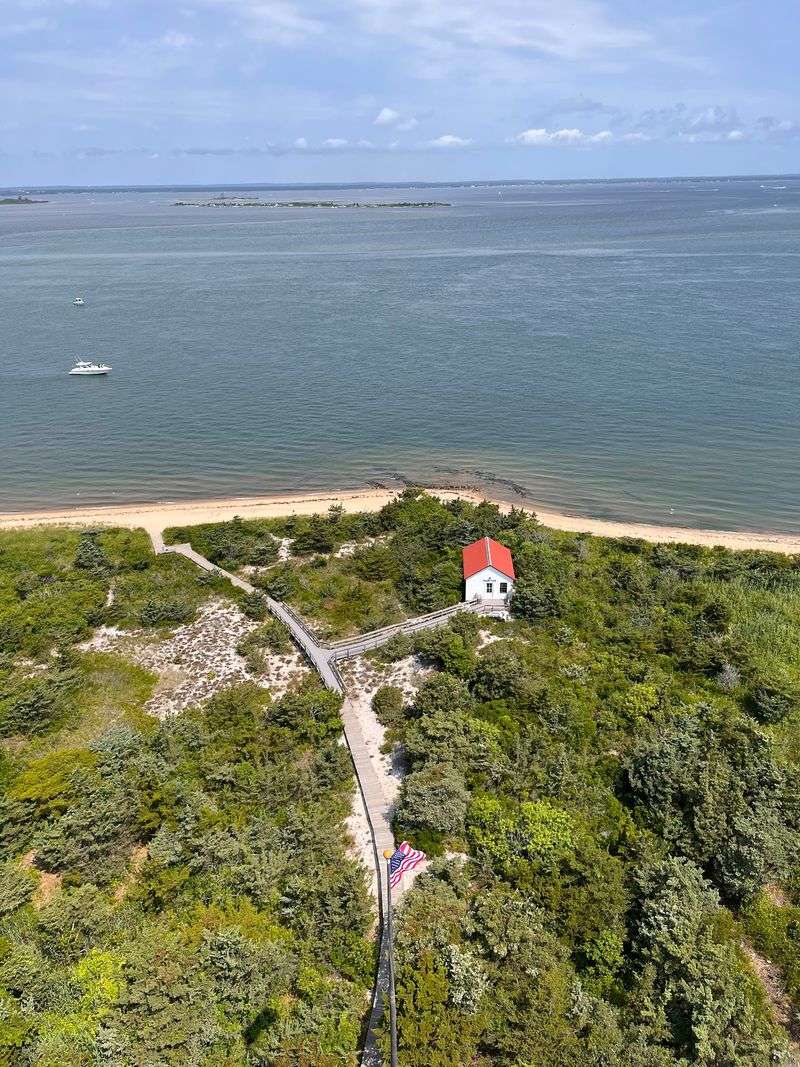
Weekday mornings are the sweet spot. Ferries are calmer, the boardwalk is nearly empty, and the forest still holds cool air from overnight.
June and September both deliver excellent conditions. Bugs are lighter than midsummer, the ocean stays swimmable in early fall, and the crowds thin considerably.
Give yourself around three hours total. That covers the loop, a long stop at the quiet beach, and a snack before the return ferry.
Check tide charts if you plan to walk the shoreline. Low tide widens the sand and exposes more shells.
Rain changes the mood rather than ruining it. Wet holly leaves gleam and the forest smells rich, though the planks turn slippery.
Autumn brings a different palette. Vines redden, migrating birds pour through, and the beach belongs almost entirely to walkers.
Book nothing rigid on the mainland afterward. Ferry schedules can shift with weather, and rushing spoils the whole point of the day.
New York offers few escapes this complete within a couple of hours of the city.
Pack a picnic, since food options on the island are limited and pricey.
Pair The Walk With Island Extras
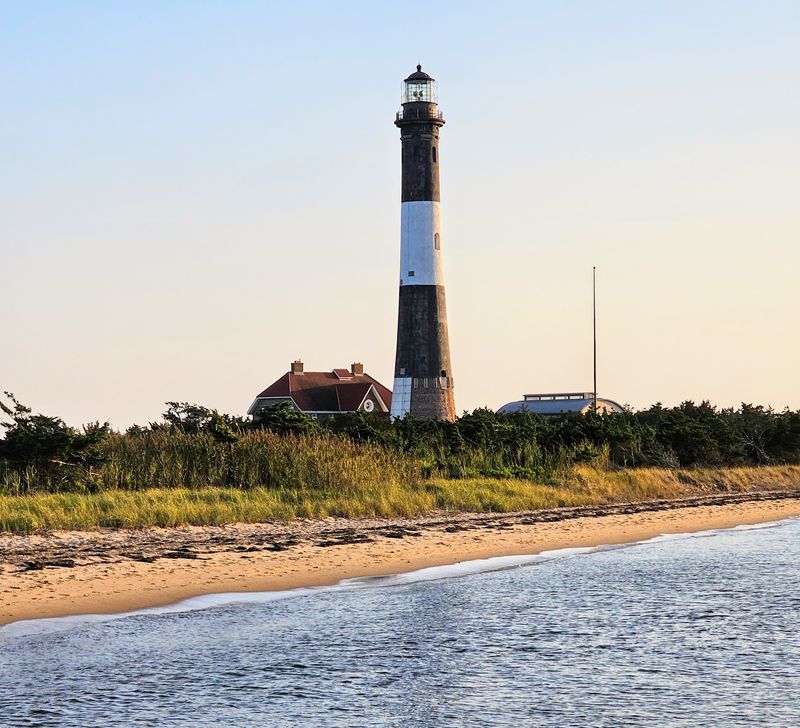
One trail rarely fills a whole day, and the seashore has more waiting. The Fire Island Lighthouse stands to the west, with a museum, a gift shop, and a tower climb of 192 steps for anyone craving elevation after all that flat walking.
Boardwalks lead to the light station from the parking area, and deer often graze alongside the path.
Toward the eastern end, the Otis Pike Wilderness offers unspoiled dunes with no buildings and very few people. Access comes from near Smith Point.
Watch Hill, reachable by ferry from Patchogue, adds a campground and a marina to the mix.
Small beach communities dot the island between the park areas. Shops are limited, so carry water and snacks rather than counting on finding them.
Swimming is only advised where lifeguards are posted, and their schedules follow the summer season.
The shoreline stretches for miles, which means you can always find sand with nobody on it.
String two or three of these stops together and the barrier island stops feeling like a day trip and starts feeling like a proper getaway.