
The New York Churches With Stained Glass And Spires That Belong In Europe
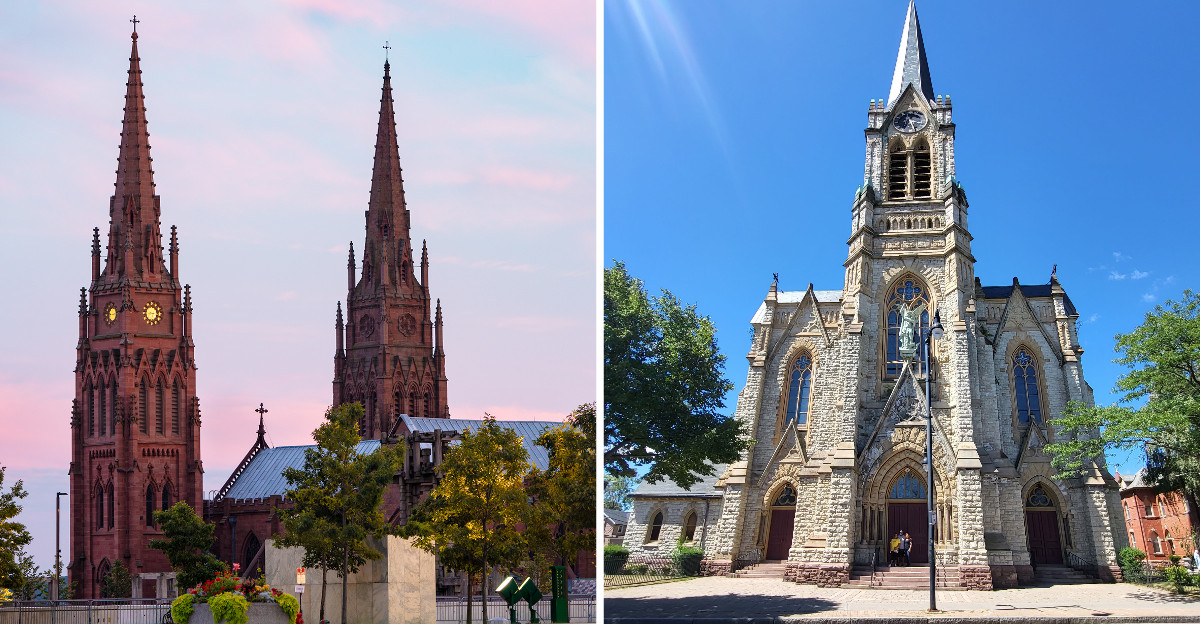
Look up before you look ahead. That is the rule inside these churches, where stained glass climbs toward vaulted ceilings and stone arches pull your eyes higher with every few steps.
New York has historic churches whose soaring spires and intricate windows could easily make travelers think of the great cathedrals of Europe.
The closer you look, the more impressive the details become. Colored glass turns sunlight into patches of red, blue, and gold. Carved stonework reveals hours of patient craftsmanship that most people rush past.
Even the doors and columns can feel worthy of their own photographs. These buildings are places of worship first, but their architecture gives curious visitors another reason to slow down and notice just how much beauty was built into every corner.
1. St. Patrick’s Cathedral
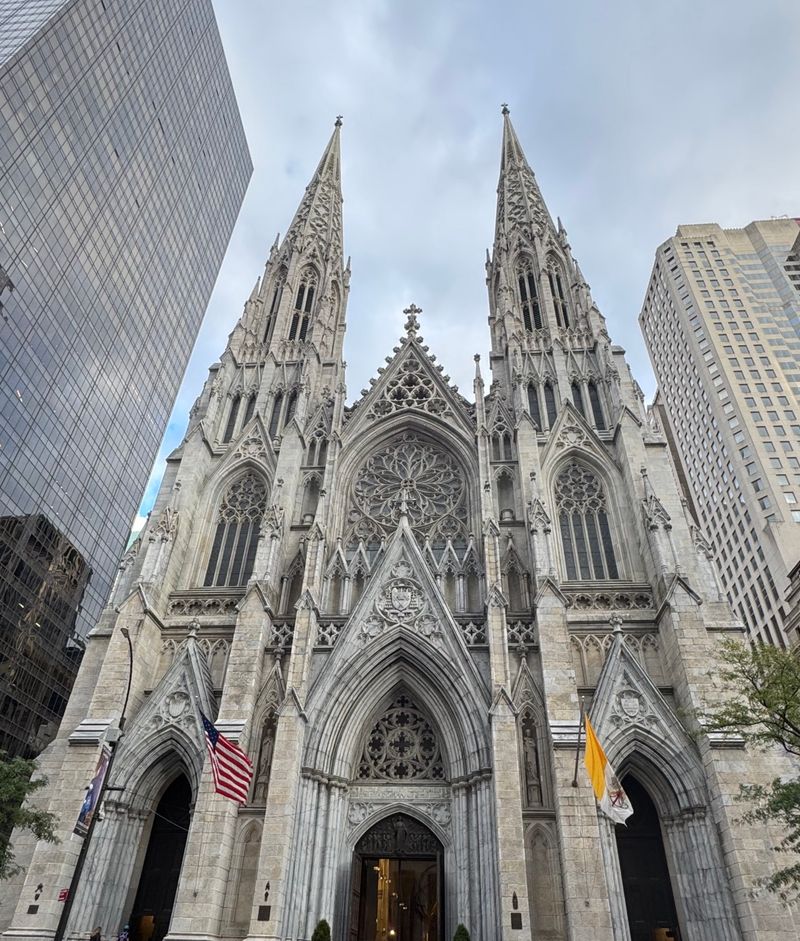
Midtown has plenty of tall towers, but only one pair of spires feels like a prayer carved in marble. Architect James Renwick Jr. spent years studying Europe before he drew this cathedral. He blended English, French, and German Gothic styles into one grand design.
You will find it at 631 Fifth Avenue, right across from Rockefeller Center. The twin spires reach about 329 feet and were finished in 1888. The building fills an entire city block, so give yourself time to wander.
Look up once you pass the bronze doors. Light pours through stained glass windows made in Chartres, France, and Birmingham, England. The great Rose Window stretches 26 feet wide and glows like a giant jewel box above the organ loft.
Here is a fun fact for your next trivia night. St. Patrick’s is the largest Gothic Revival Catholic cathedral in North America. That is a big title for a building surrounded by fancy shops and busy sidewalks.
Arrive early in the morning for a calmer visit. Crowds swell around midday and during holidays, especially near Christmas. Remember that services happen daily, so keep your voice soft and your phone flash off.
Honestly, the hush inside feels unreal for New York. Traffic roars outside while candles flicker within. It is the city taking a deep breath, and you get to breathe with it.
2. Grace Church
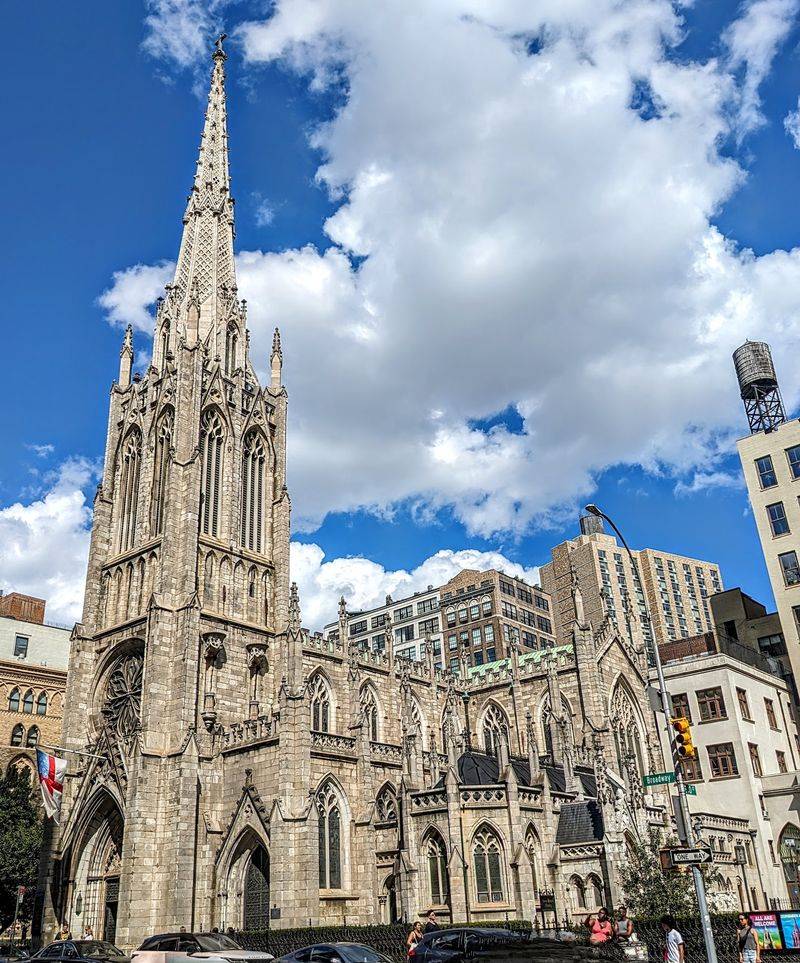
Broadway takes a gentle bend in Greenwich Village, and the reason is gorgeous. Grace Church sits right at that curve, standing pale and elegant like a bride at the altar. The street literally turns to make room for her.
James Renwick Jr. designed this one too, years before St. Patrick’s. It opened in 1846 at 802 Broadway near East 10th Street. Many people call it his first big win, and the confidence shows.
The slender white spire catches sunlight beautifully in the late afternoon. Bring a camera and stand across the street for the best angle. The marble almost shimmers when the sky turns golden.
Inside, the stained glass tells Bible stories in bold reds and deep blues. The windows came from respected English and American studios. Each panel rewards slow looking, so do not rush past them.
Grace Church is also a National Historic Landmark. It hosts concerts and choir performances that sound heavenly under the vaulted ceiling. Check the church calendar before you go, since music events fill up quickly.
Pair your visit with a stroll around nearby Union Square. The neighborhood bustles with bookstores and cafes, giving you plenty to explore afterward. Think of Grace Church as the quiet opening act to a lively Manhattan afternoon.
Visiting feels like finding a secret garden in a city of concrete. Simply put, this church has grace by name and grace by nature.
3. Trinity Church Wall Street
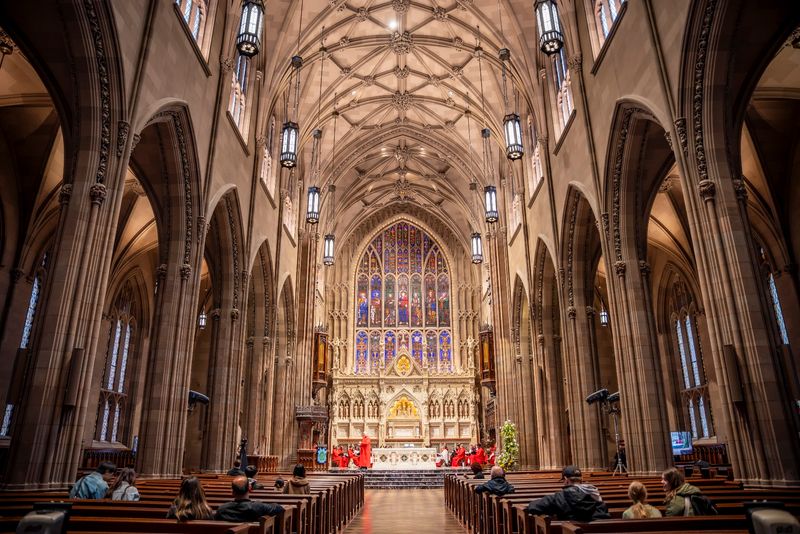
Money talks on Wall Street, yet one brownstone church has been speaking softly for centuries. Trinity Church stands at 89 Broadway, facing straight down Wall Street like a calm teacher watching a noisy classroom.
Skyscrapers crowd around it, but the old spire refuses to feel small.
Architect Richard Upjohn designed the current building, which opened in 1846. Back then its spire was the tallest point in New York City. Sailors in the harbor used it as a landmark when they came into port.
The stained glass deserves your full attention. A large window above the altar glows with rich colors, and morning sun makes it sparkle. Take a seat in a pew and let your eyes adjust to the warm light.
History buffs will love the churchyard outside. Alexander Hamilton rests there, along with other famous early Americans. Read the old stones slowly, since many carvings have softened with age.
Trinity also offers free concerts and tours throughout the year. The music program is famous, and the choir sounds wonderful in that tall space. Look at the parish website for current times.
Plan a lunch break visit if you work downtown. The churchyard benches offer a peaceful spot among the hustle. For a few minutes, the bustle of finance fades and the Gothic arches take center stage.
That is a solid return on investment.
4. Cathedral Of The Immaculate Conception
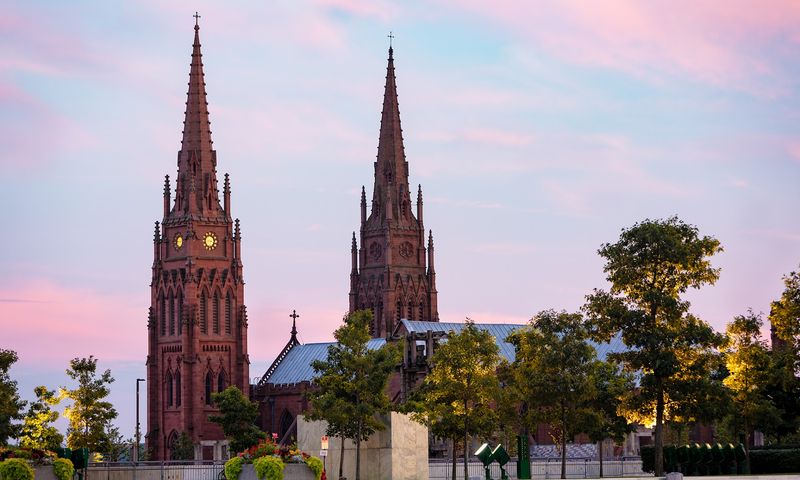
Albany may be famous for politics, but its finest debate winner is made of brownstone. The Cathedral of the Immaculate Conception rises with twin spires that could easily pass for a church in northern France. Patrick Keely designed it, and the cathedral was dedicated in 1852.
Find it at 125 Eagle Street, just steps from the Empire State Plaza. The contrast is striking. Modern government towers sit nearby while this Gothic beauty holds its ground with old school charm.
The stained glass windows here are a real treasure. Many came from respected European and American studios in the nineteenth century. When afternoon light hits them, the floor turns into a patchwork quilt of color.
The cathedral went through a major restoration in recent decades. Workers cleaned the stone, repaired the windows, and brightened the interior. Today it looks fresh while keeping its historic soul.
Visitors can join tours on certain days, and guides share fun details about the carvings. Ask about the windows, because each one has a story. You will leave knowing far more than you expected.
Budget extra time to explore downtown Albany afterward. The State Capitol is close by and worth a peek. Together these buildings make the capital of New York feel like a European city wearing an American jacket.
It is a holy roller of a day trip.
5. St. Peter’s Episcopal Church
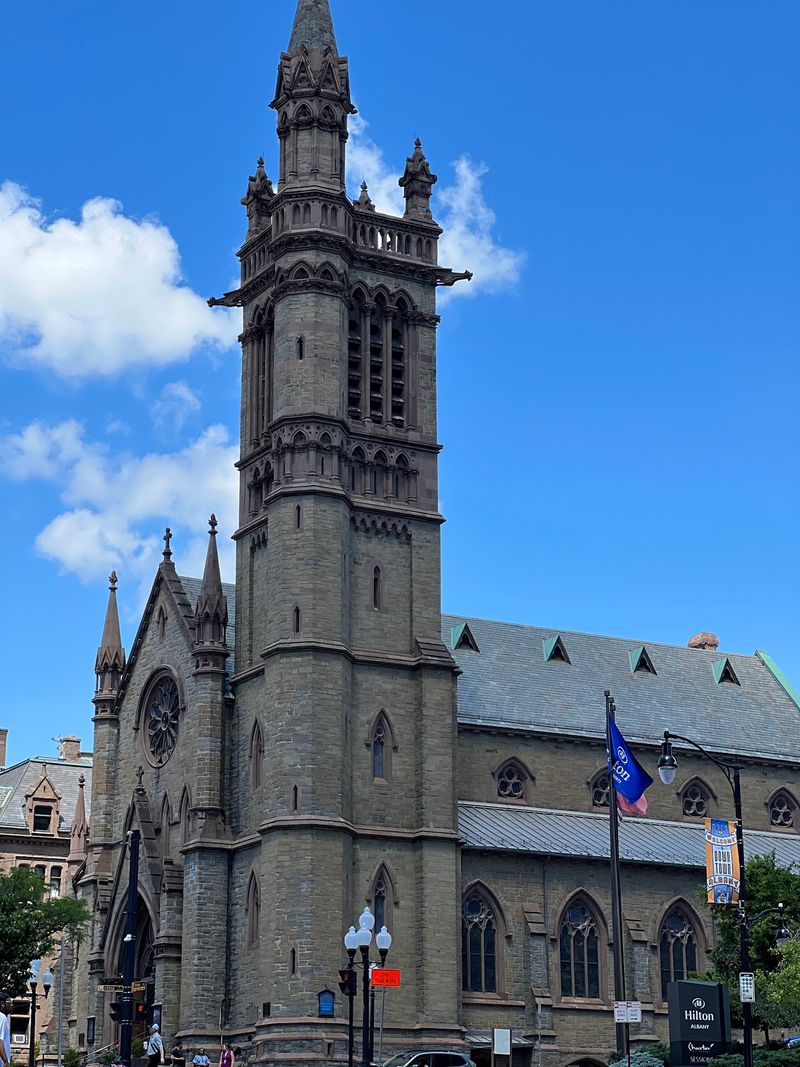
Few churches can claim roots older than the United States itself. St. Peter’s Episcopal traces its congregation back to the early 1700s, which makes it a true elder of Albany. The current building opened in 1860 and still looks ready for a royal visit.
Richard Upjohn designed the church in a French Gothic style. Later his son added the tall tower, which brings real drama to the skyline. You can find it at 107 State Street, close to the State Capitol.
Now for the showstopper. Several stained glass windows came from the famous studio of Tiffany, while others were made by English artists. Seeing them up close is like flipping through a museum catalog in living color.
The church is a National Historic Landmark, and the honor is well earned. Carved stone details decorate the entrance and walls. Take a slow lap outside before heading in.
Fans of history will enjoy learning about the early colonial congregation. Ask staff about visiting hours, since they can vary. Sunday services welcome guests, though quiet weekday visits let you linger longer.
Plan a walking loop through downtown with St. Peter’s as your highlight. State Street climbs a hill, so wear comfy shoes. Your legs might grumble a little, but your eyes will thank you.
Consider it a pilgrimage with bonus cardio.
6. St. Paul’s Church
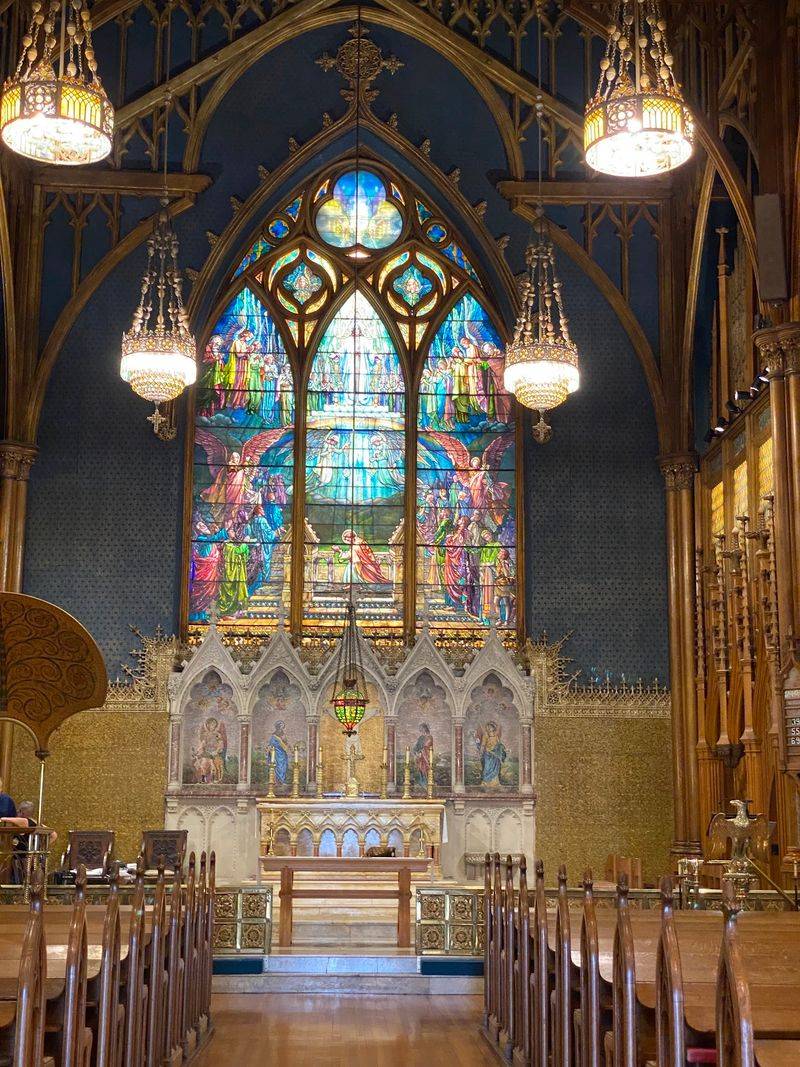
Troy hides a glittering secret that art lovers whisper about. St. Paul’s Episcopal Church holds one of the most complete Tiffany interiors anywhere. The whole space was designed by Tiffany Glass and Decorating Company in the 1890s.
The church stands at 58 Third Street in downtown Troy. Its stone exterior looks serious and solid, like a wise old professor. Inside, though, the room bursts into color.
Glowing windows wrap the walls in jewel tones of amber, violet, and green. Tiffany’s famous opalescent glass gives each panel a soft, milky shine. Even the lamps and decorations follow the same artistic plan.
Troy is a city full of preserved nineteenth century buildings. Walking here can feel like visiting an old European town, especially near the river. St. Paul’s fits right into that storybook setting.
Call ahead or check online before your visit. Smaller churches sometimes keep limited hours, and you want to see those windows with good daylight. Bright mornings tend to show off the glass best.
After your visit, stroll to the Troy Waterfront Farmers Market on Saturdays. It is a fun way to round out the trip with fresh bread and local treats. Then wander the side streets and admire the brownstones.
Trust me, Troy is a little slice of upstate New York magic that deserves more applause.
7. Basilica Of The Sacred Heart Of Jesus
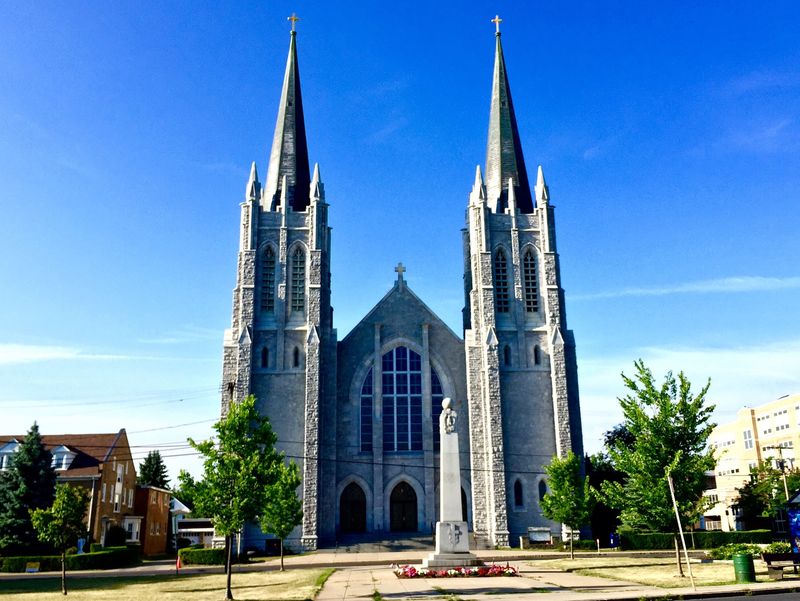
Syracuse gets famous for snow, but its Polish basilica deserves headlines too. The Basilica of the Sacred Heart of Jesus was built by Polish immigrants in the early 1900s. They poured their pride and hopes into every brick and beam.
You will find it at 927 Park Avenue on the west side of the city. The twin spires stand tall over the neighborhood like proud parents at graduation. Their Gothic shape gives the street a distinctly Old World look.
Inside, colorful stained glass fills the long walls with saints and stories. Painted ceilings and detailed altars add even more sparkle. The overall effect feels warm, rich, and full of heart.
In 1998 the church was raised to the rank of minor basilica. That honor recognizes its beauty and its importance to the faithful. Not many churches in the state carry that title.
The parish keeps its Polish roots alive with traditions and festivals. Keep an eye out for community events, especially around holidays. You might catch delicious homemade pierogi at a church sale.
Bundle up if you visit in winter, since Syracuse snow is no joke. The good news is that the glowing windows look even lovelier on a gray day. Consider it a cozy escape with serious style.
Syracuse proves that New York beauty stretches far beyond Manhattan.
8. Saint Michael’s Church
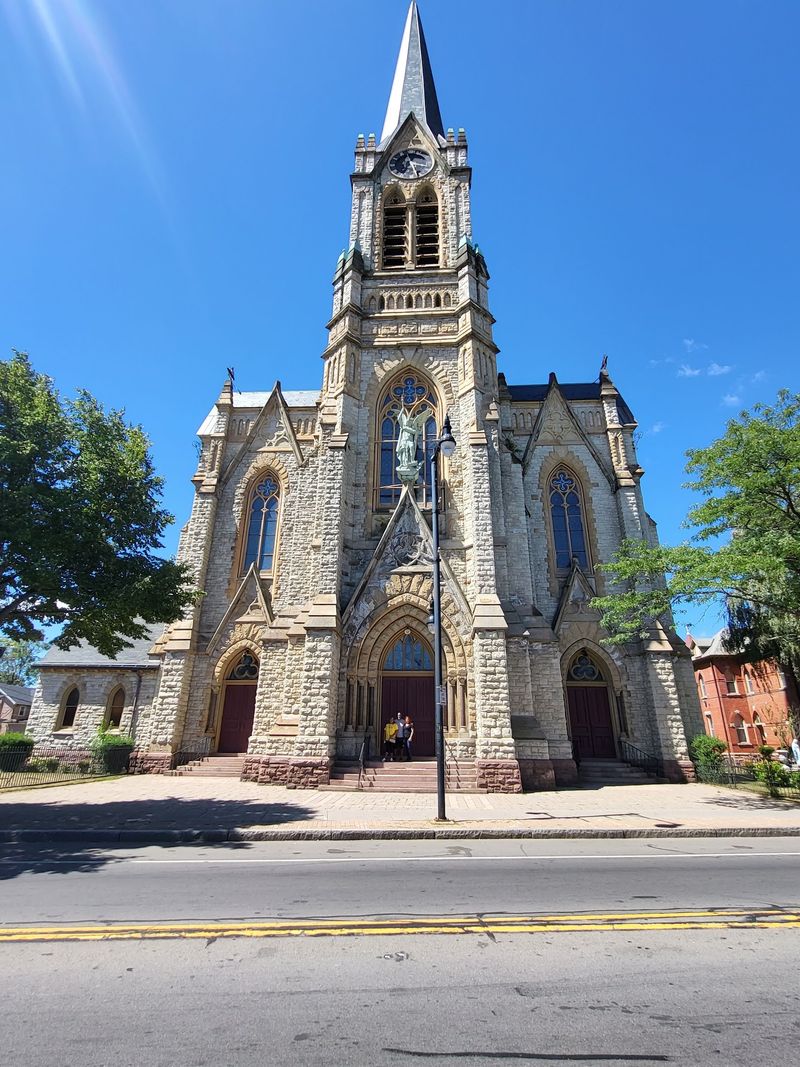
Rochester’s skyline has a needle that points straight to the clouds. Saint Michael’s Church boasts one of the tallest spires in the city, and it is impossible to miss. German Catholic immigrants built it, and it was completed in 1890.
Head to 859 North Clinton Avenue to see it in person. The red brick tower rises gracefully above nearby homes. From a distance it looks like something lifted out of a Bavarian village.
The stained glass windows are the real headliners. Many were crafted by the respected Mayer studio of Munich, Germany. Their vivid colors and lifelike figures feel almost like paintings made of light.
Here is a cool detail for curious minds. Mayer windows are prized around the world for their fine detail and rich shading. Rochester got some beauties, and they still glow brightly today.
The church has strong ties to its neighborhood and welcomes visitors. Check the parish schedule for Mass times and open hours. Weekend services often give you the easiest chance to see inside.
Spend a little time admiring the exterior brickwork too. The craftsmanship shows how much the original builders cared. Every arch and corner looks carefully planned.
Bring binoculars if you want to study the spire up close. Your neck may get sore, but the view is worth every stretch. Saint Michael’s truly aims high.
9. St. Stanislaus Kostka Church
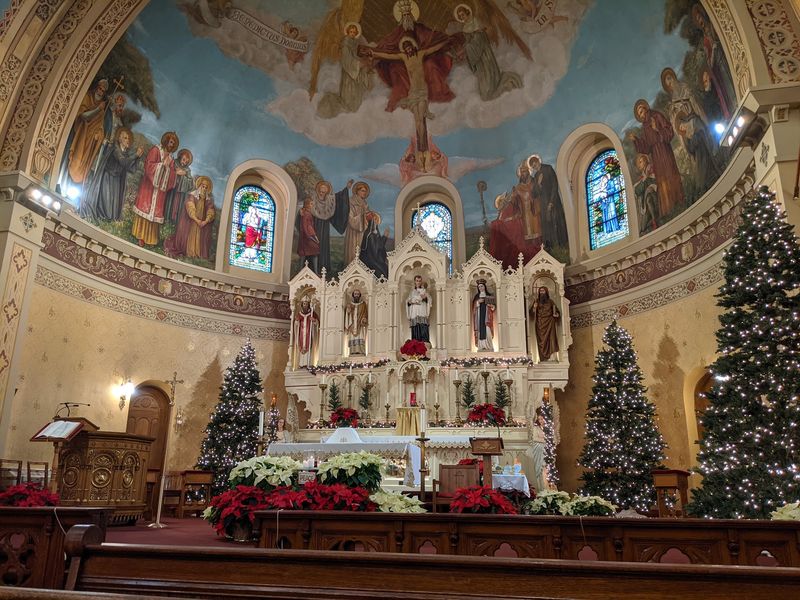
Polish pride shines brightly on a quiet Rochester street. St. Stanislaus Kostka Church was founded by Polish immigrants in the late 1800s. It served as a home base for families building new lives far from Europe.
The church sits at 1124 Hudson Avenue in northeast Rochester. Its twin towers and brick walls give it a sturdy and friendly presence. It feels like a neighborhood anchor that never lets go.
Inside, stained glass windows bathe the pews in soft color. Saints, symbols, and scenes reflect the parish’s deep Polish heritage. You can almost hear old hymns sung in the language of Krakow.
The church remains active, and parishioners keep their traditions strong. Polish services and community gatherings happen throughout the year. Visitors often feel welcomed like long lost cousins.
Fans of food should watch for parish festivals. Polish pastries and hearty dishes sometimes make an appearance. Arrive hungry and leave happy, which is always a solid plan.
Respect parish hours and service times when you visit. A short call ahead can save you from a locked door. Kind staff often share helpful tips about the building’s history.
Pair this stop with Saint Michael’s for a Rochester church double feature. Both show how immigrant faith shaped New York neighborhoods. Together they make a heartfelt tour that is truly a Polish gem.
10. St. Louis Roman Catholic Church
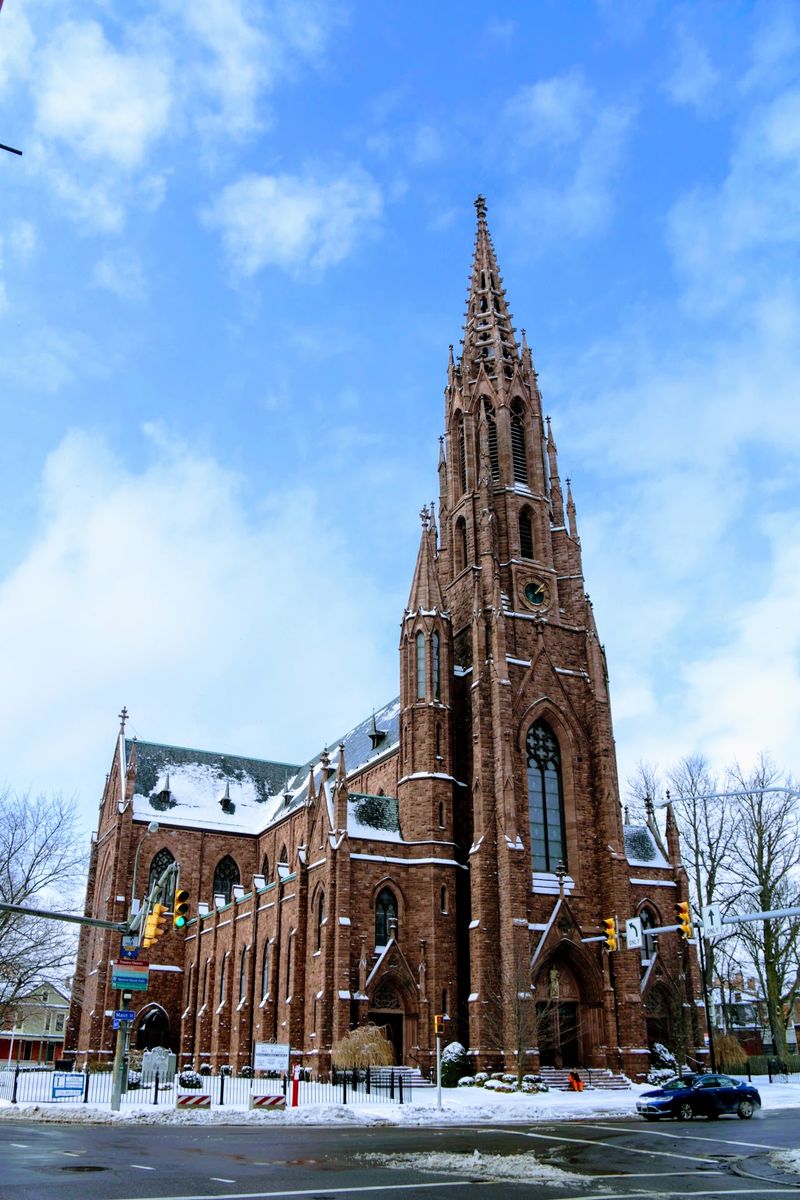
Buffalo saved one of its best surprises for the end of our tour. St. Louis Church boasts a rare openwork stone spire that you can actually see through. The lacy design recalls the famous spires of Germany.
The parish was founded in 1829, making it the oldest Catholic parish in Buffalo. The current church was completed in 1889. Find it at 780 Main Street, right where downtown meets Allentown.
The building uses warm red Medina sandstone from western New York. In sunset light, the stone blushes a deep rosy shade. Photographers absolutely adore that glow.
Inside, the stained glass windows add brilliant color to the tall nave. A grand rose window brightens the space with patterns that look like spinning flowers. The soaring ceiling makes everyone instinctively whisper.
Check the parish website before you go, since open hours can change. Sunday Mass provides an easy chance to see the full interior. Weekday visits may need a quick call first.
Afterward, explore the nearby Allentown neighborhood. Colorful Victorian houses and quirky shops make it a fun place to roam. Buffalo has a big heart and a bigger sense of style.
Leave a little time to admire the spire from across the street. The stone lace looks delicate yet strong. It is the perfect grand finale for a church lover’s road trip.