
The New York Waterfall Trail Near Cornell That Feels Like A Secret Passage Through A Fantasy Wonderland
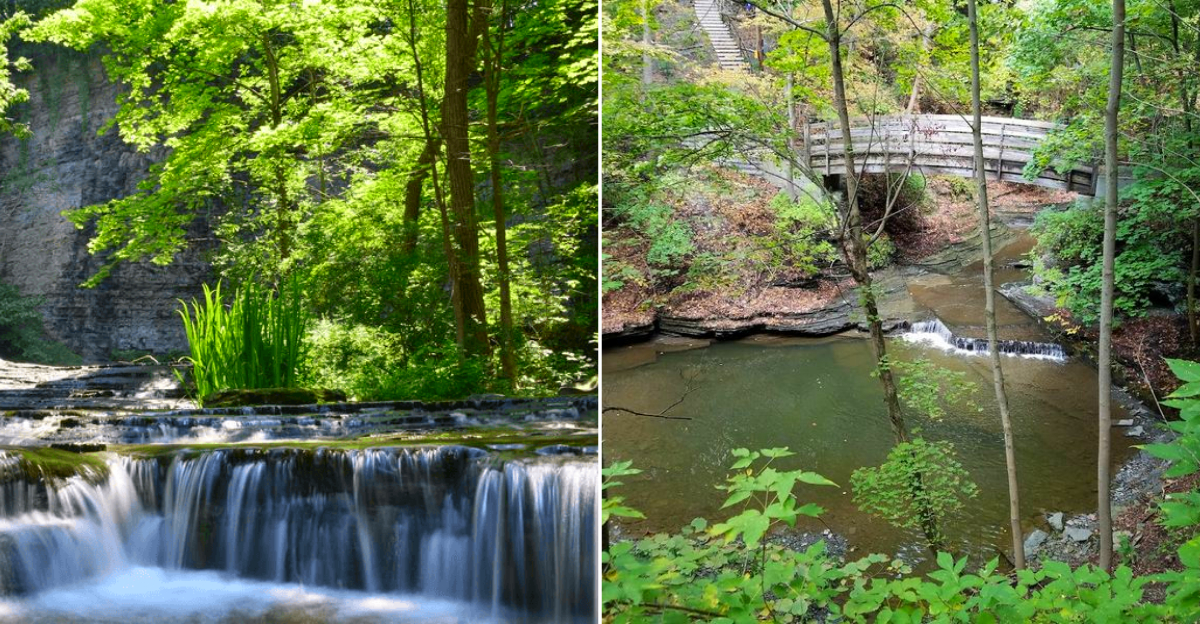
College towns are not supposed to hide places that feel this dramatic, which is what makes this New York trail so startling.
Near Cornell, New York, a short walk can turn into a descent through stone steps, narrow gorge walls, rushing water, and waterfalls that seem far removed from campus life.
The path feels less like an ordinary hike and more like a passage carved through ancient rock, with 370-million-year-old layers rising around you as the sound of water gets louder. You do not need a huge time commitment or remote wilderness plan to feel transported.
That is part of the thrill. One moment you are near city streets and student energy.
Then the gorge closes in, the waterfalls take over, and Ithaca suddenly feels like it has opened a secret door into a fantasy world.
A Trail That Stops You Cold Before You Even Know Its Name
Some trails greet you with a gentle slope and a nice view. Cascadilla Gorge ambushes you with something far more theatrical the moment you set foot on its stone path.
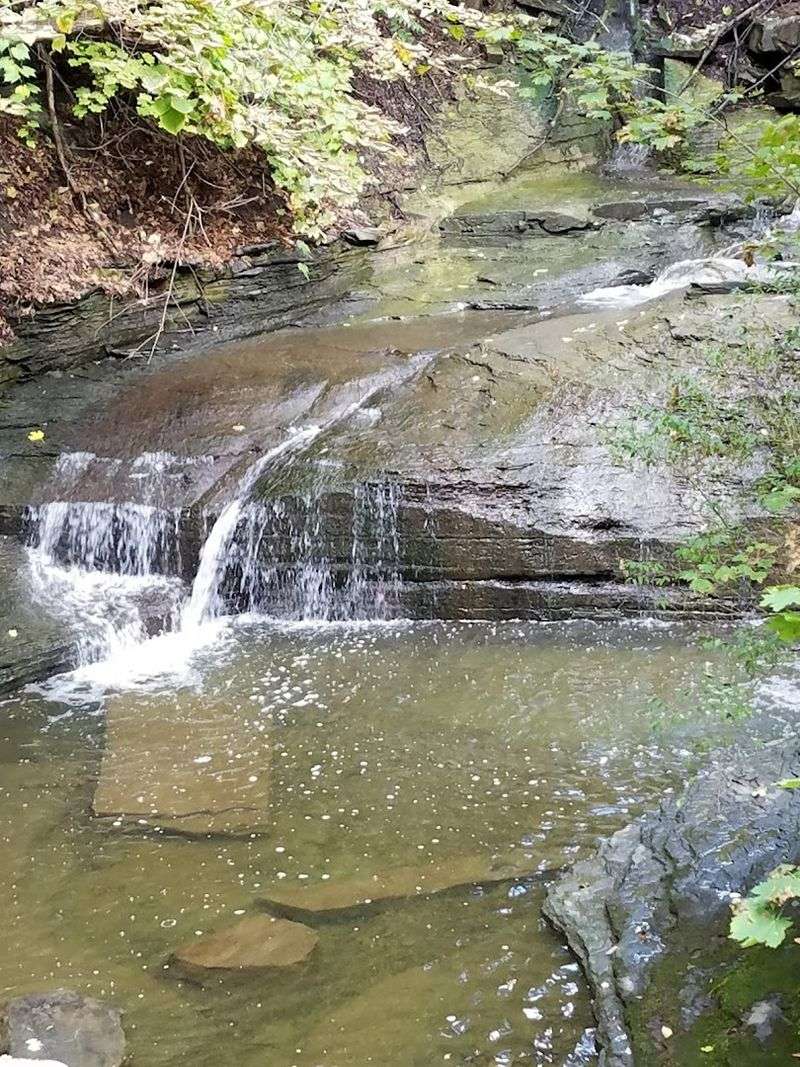
The sounds of downtown Ithaca fade almost instantly. In their place comes the deep, steady rush of Cascadilla Creek tumbling down a 400-foot drop through walls of shale, siltstone, and sandstone that have been standing since the Late Devonian Period, roughly 370 million years ago.
The trail is roughly 0.75 to 1.3 miles long depending on your route, but the experience stretches far beyond the physical distance.
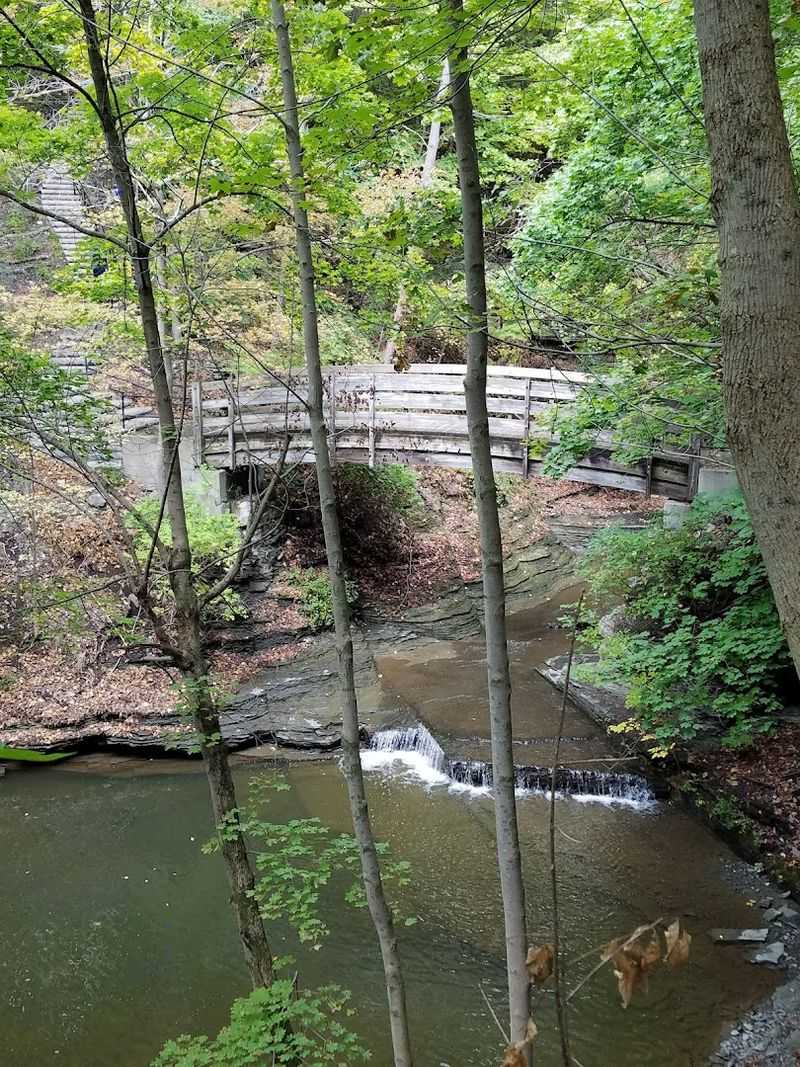
Stone-faced bridges arch over the creek. Ancient staircases carved into the gorge walls rise and dip with surprising drama.
The whole corridor feels deliberately designed for wonder, even though nature did most of the heavy lifting.
Glacial activity more than 12,000 years ago shaped the sharp drops and carved channels that now send water cascading in spectacular fashion. No two sections of the trail look alike, which keeps your eyes busy and your pace slow.
Few trails in the northeastern United States pack this much geological storytelling into such a short walk. The gorge earns every bit of its reputation.
Cascadilla Gorge: The Fantasy Corridor Between Ithaca And Cornell
Cascadilla Gorge sits at the heart of Ithaca, New York, serving as a stunning natural corridor that links downtown Ithaca to the Cornell University campus.
The trailhead on the downtown side starts at Treman Triangle Park, while the upper end emerges behind Cornell’s Schwartz Center for Theatre Arts.
The address for the gorge is Ithaca, NY 14850.
The gorge is maintained by the Cornell Botanic Gardens, which keeps the trails in solid condition for most of the year. The trail is open from early spring through late November, closing during winter months when icy conditions make the stone staircases hazardous.
Cascadilla Falls is often the first dramatic sight visitors encounter when approaching from downtown. It is a 20-foot multiple cascading fall that sets the tone beautifully for everything upstream.
Altogether the gorge features anywhere from six to ten waterfalls depending on water levels, with heights ranging from eight feet to an impressive 80 feet. Each one has its own personality and rhythm.
Cornell students have been walking through this gorge for generations as a shortcut to campus, which means one of the most spectacular natural trails in New York has quietly doubled as a daily commute. That detail alone is pretty extraordinary.
Water, Rock, And 370 Million Years Of Pure Drama
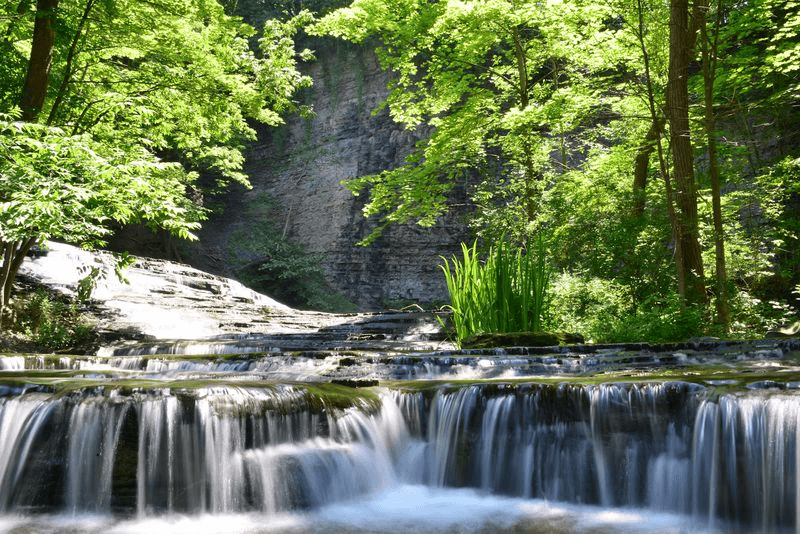
Geology rarely gets a standing ovation, but Cascadilla Gorge makes a strong case for changing that. The exposed rock walls lining the gorge are a layered record of the Late Devonian Period, a time when shallow seas covered much of what is now New York State.
Shale, siltstone, and sandstone were deposited in those ancient waters over millions of years. The varying hardness of each rock layer is precisely why the gorge looks the way it does today.
Softer layers erode faster, creating the dramatic drops and ledges that send Cascadilla Creek into freefall at multiple points along the trail.
Glaciers then moved through the region more than 12,000 years ago, deepening the channels and sharpening the gorge walls into the steep, dramatic formations visible today.
Standing at the base of one of the taller falls and looking up at those layered walls gives you a strange, grounding feeling. You are reading a timeline that predates every human civilization ever recorded.
The gorge does not need interpretive signs or guided tours to make its story compelling. The rock itself speaks with enough authority.
Bring curiosity and comfortable shoes, and the gorge will handle the rest of the education entirely on its own terms.
The Staircases And Bridges That Make History Feel Walkable
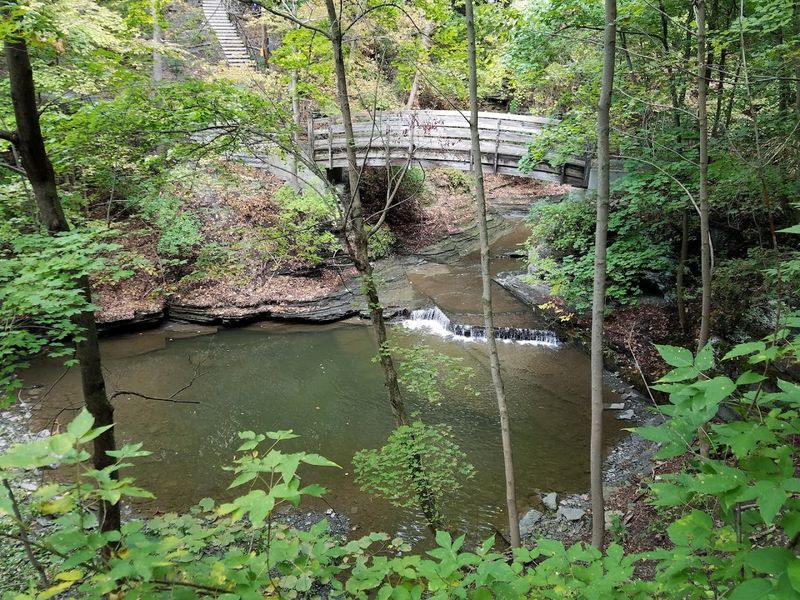
Not everything remarkable about Cascadilla Gorge is millions of years old. The human-built elements of the trail have their own compelling story worth paying attention to.
Stone-faced staircases and bridges were constructed along the gorge, with some sections dating back to the late 1920s.
The craftsmanship is evident in how well these structures have held up alongside rushing water and seasonal freezing temperatures for nearly a century.
The staircases are steep in places and require a reasonable level of fitness, which is why the trail earns a moderate difficulty rating. The total elevation change from bottom to top is approximately 400 feet, spread across a trail that is less than a mile and a half at its longest.
Every bridge crossing offers a different angle on the creek and the gorge walls. Some frames frame a waterfall perfectly, almost as if the builders knew exactly what they were doing from an aesthetic standpoint.
The combination of ancient geology and century-old masonry creates a layered visual experience that feels genuinely rare. You are walking through two different kinds of history simultaneously, and neither one competes with the other.
Plan for a slower pace than you might expect. The trail rewards those who stop frequently, look around carefully, and resist the urge to rush toward the exit.
Six To Ten Waterfalls And Every Single One Earns Its Spotlight
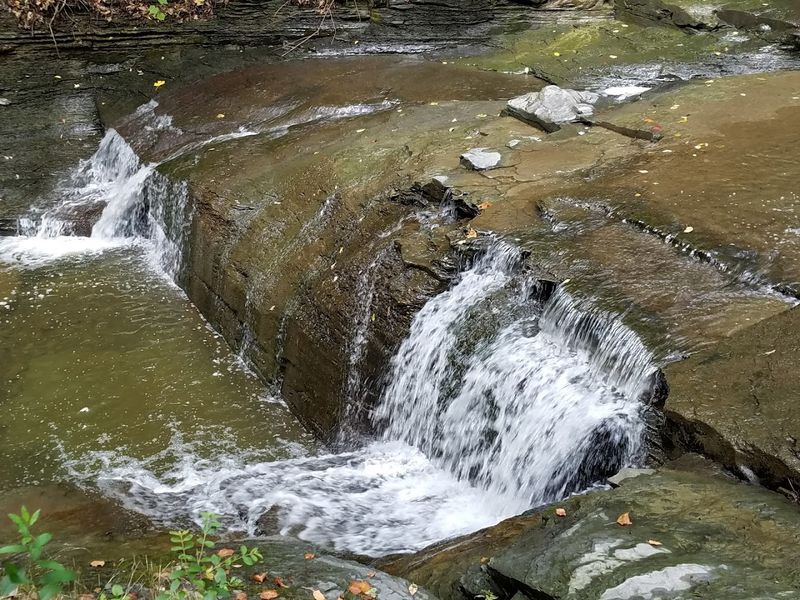
Most waterfall trails offer one big payoff and a lot of walking in between. Cascadilla Gorge operates on a completely different model, stacking waterfall after waterfall along its entire length without any filler in between.
Depending on water levels and the season, hikers can encounter anywhere from six to ten distinct waterfalls along the trail. Heights range from a modest eight feet to a thundering 80 feet, which means the variety keeps things genuinely interesting rather than repetitive.
Cascadilla Falls near the downtown trailhead is a 20-foot cascade that spreads across multiple drops. It is photogenic from almost every angle and serves as a strong opening act for what follows upstream.
Higher up, the creek narrows and the gorge walls close in, amplifying the sound of the water considerably. At certain points the roar is loud enough to make conversation difficult, which honestly adds to the atmosphere rather than detracting from it.
Spring visits offer the most dramatic water volume as snowmelt feeds the creek from above. Summer visits bring lush green canopy overhead that filters the light into something genuinely beautiful.
Autumn turns the surrounding trees into a full color display that frames each waterfall with warm reds and golds. Every season brings a different version of the same extraordinary trail.
Planning Your Visit Like Someone Who Has Done Their Homework
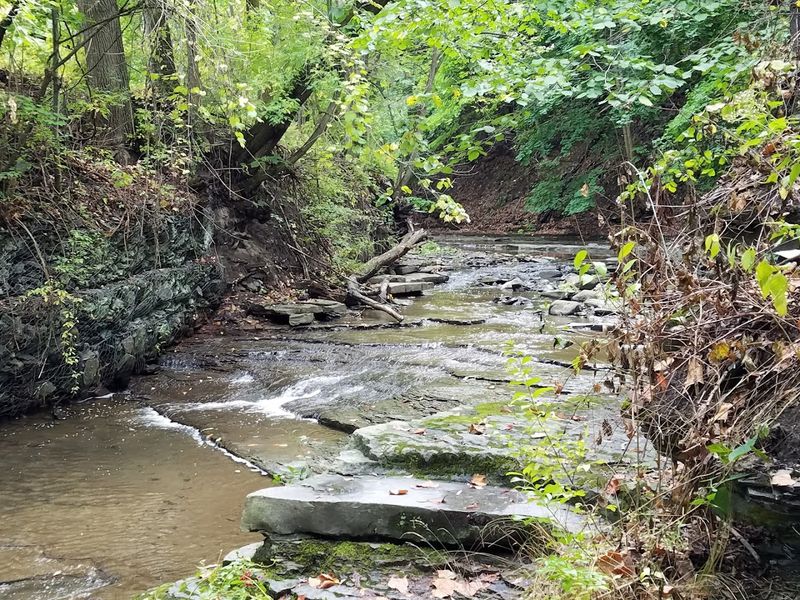
A little preparation goes a long way on a trail like Cascadilla Gorge. The stone staircases can be slippery when wet, so proper footwear with grip is genuinely important rather than optional advice.
The trail is open from early spring through late November. Winter closures exist for good reason since ice on stone steps is not a combination that ends well for anyone.
Check trail conditions with the Cornell Botanic Gardens before visiting during shoulder seasons like early March or late November.
Note that a section of the trail between Stewart Avenue and College Avenue has been closed for construction, with an expected reopening in Spring 2026. Plan your route accordingly so the closure does not catch you off guard mid-hike.
Swimming is prohibited in the gorge, and the rules are enforced. The creek water looks inviting on a warm day, but the restriction exists to protect both visitors and the fragile ecosystem.
The trail is free to access and does not require reservations or permits. Parking near the downtown trailhead at Treman Triangle Park is the easiest starting point for most visitors coming from outside Ithaca.
Starting from the downtown end and walking uphill to the Cornell campus gives you a natural reward structure. The hardest climbing comes first, and the views keep improving as you ascend through the gorge.
Why Cascadilla Gorge Deserves A Permanent Spot On Your New York List
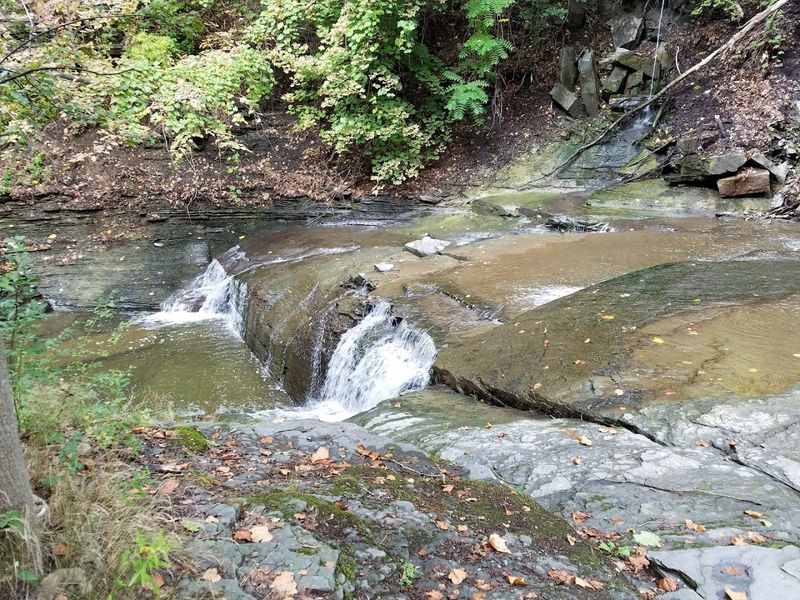
New York State has no shortage of spectacular natural attractions, but Cascadilla Gorge occupies a category of its own.
Very few places in the state allow you to walk through tens of millions of years of geological history, cross century-old stone bridges, and watch a series of waterfalls unfold, all within a single short trail.
The gorge also carries a quiet cultural weight. Cornell students have used it as a daily passage for generations, which means this extraordinary landscape has been woven into the ordinary rhythms of academic life for over a century.
That contrast between the remarkable and the routine is part of what makes the place so endearing.
Photographers, geology enthusiasts, casual hikers, and architecture admirers all find something meaningful here. The trail does not cater to a single type of visitor, which is a genuine strength rather than a compromise.
Ithaca itself is worth building a longer trip around. The downtown food scene, the nearby state parks, and the general energy of a university town all complement a gorge visit nicely.
Cascadilla Gorge is the kind of place that earns a second visit before you have even finished your first one.
Go once and you will understand immediately why people keep coming back to this particular stretch of ancient, rushing, magnificent New York rock.